Georgia Homeowners Should Deal With Mistletoe In Big Yard Trees This Way
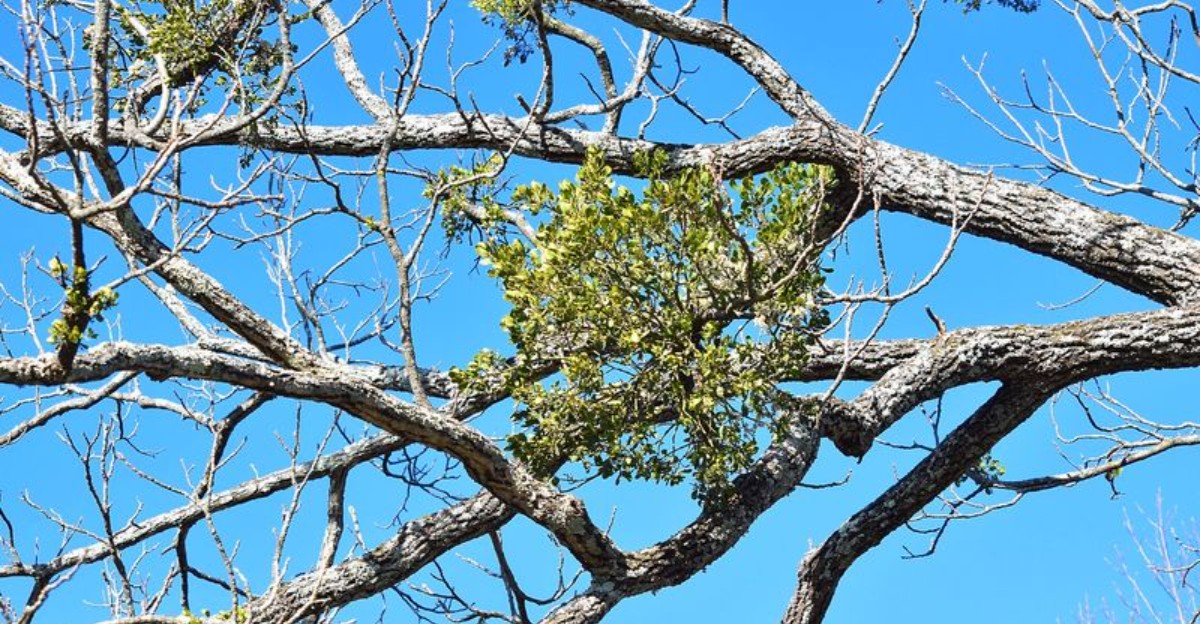
Once the leaves start dropping, those round green clumps high in your oak or pecan are hard to miss. Many homeowners first notice mistletoe in late fall, even though it has been there a while.
Mistletoe is a parasite that pulls water and nutrients from the branch it grows on. A few clumps may not cause much trouble, but heavy infestations can weaken limbs.
In older Georgia neighborhoods full of big shade trees, a single canopy can hold many clumps.
Knocking down the visible part seems like the obvious fix, but it often grows back from the same spot.
The source of the problem sits inside the branch, where you cannot see it.
Grab a pair of binoculars and count how many clumps you can spot in your largest trees.
1. Bare Winter Branches Make Those Green Clumps Hard To Miss
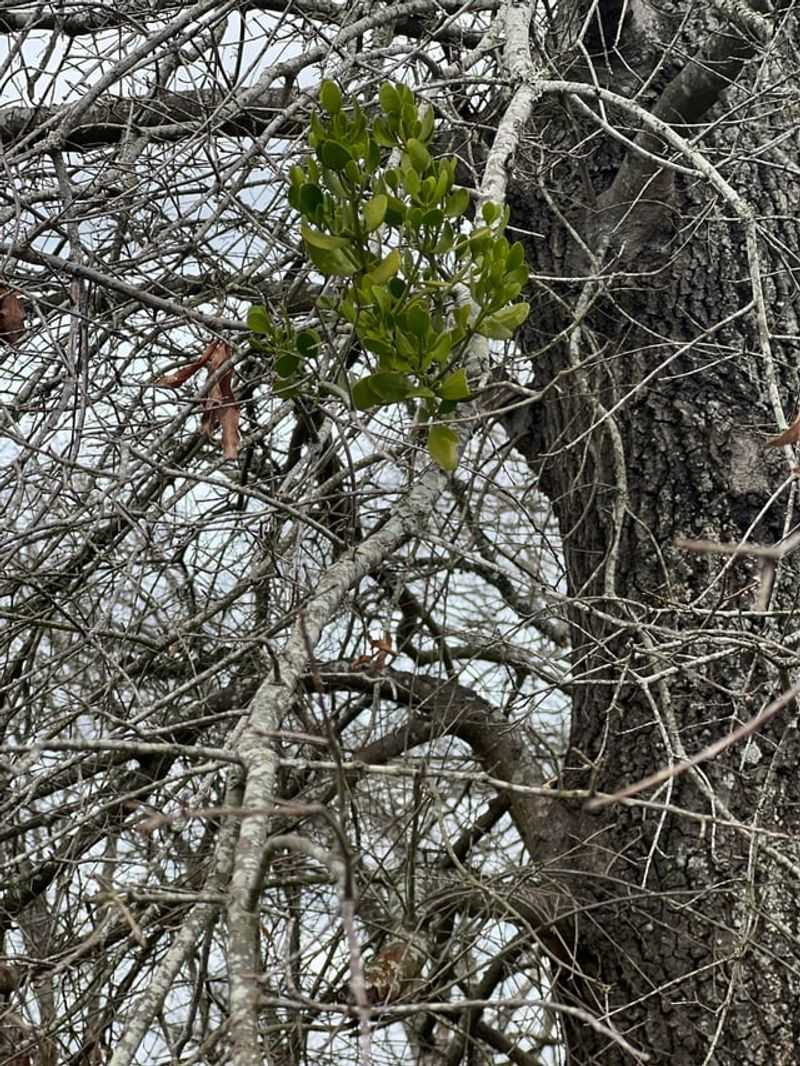
Winter strips the disguise away. Once oaks and pecans lose their leaves, mistletoe stays green and suddenly stands out like a bird nest painted bright green.
December through February is the easiest time to take stock of what is growing in your trees.
Grab a pair of binoculars and walk slowly around each big tree in your yard. Look for rounded clumps that range from the size of a fist to the size of a beach ball.
Water oaks, laurel oaks, pecans, and hickories are common hosts across Georgia, though red maples and other hardwoods can carry it too.
Count the clumps and note which limbs they sit on. A quick sketch or a phone photo makes it easier to track changes from one winter to the next.
Pay attention to how high each clump sits and how thick the branch is beneath it.
Those two details will guide almost every decision you make later. A clump on a low, thin twig is a weekend project, while one forty feet up on a heavy limb calls for professional help.
Squirrel nests can fool you at first glance, so look for green leaves rather than brown ones before deciding what you are seeing.
2. It Makes Its Own Food But Takes Water And Nutrients From Its Host
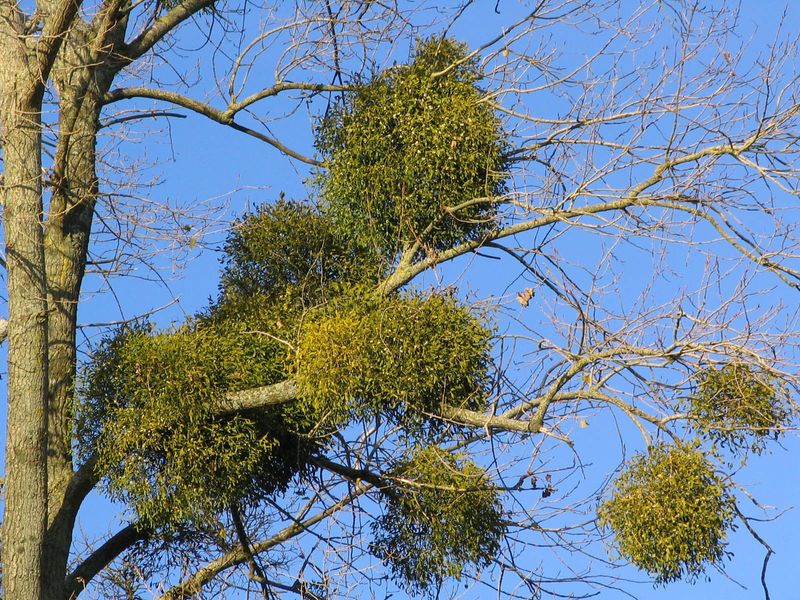
Mistletoe is a bit of a freeloader, though not a total one. Its green leaves carry out photosynthesis, so it produces its own sugars just like other plants do.
Water and minerals are a different matter, since it pulls those straight out of your tree.
Botanists call it a hemiparasite, which simply means a partial parasite. American mistletoe, the type found in Georgia, taps into the branch with special tissue that connects to the tree’s water-carrying system.
During a hot, dry summer, that extra draw can add stress to a tree already struggling for moisture.
Stress builds slowly rather than overnight. A branch carrying a large clump may grow weaker beyond the attachment point, and you might notice thinner leaves or smaller growth out toward the tip.
Keeping your tree well watered during long dry spells can help offset some of that strain.
Your Georgia Garden Changes Every Week. Your Plan Should Too.
Gardening in Georgia changes quickly throughout the season. Every Friday you’ll receive a simple weekly plan showing exactly what to plant, prune, fertilize, harvest, and protect so you never miss the right timing.
Mulch spread over the root zone, kept a few inches from the trunk, holds in moisture and protects the roots. Neither step removes mistletoe, but both help the tree handle the extra demand while you plan your next move.
3. Light Infestations Seldom Threaten A Healthy Tree
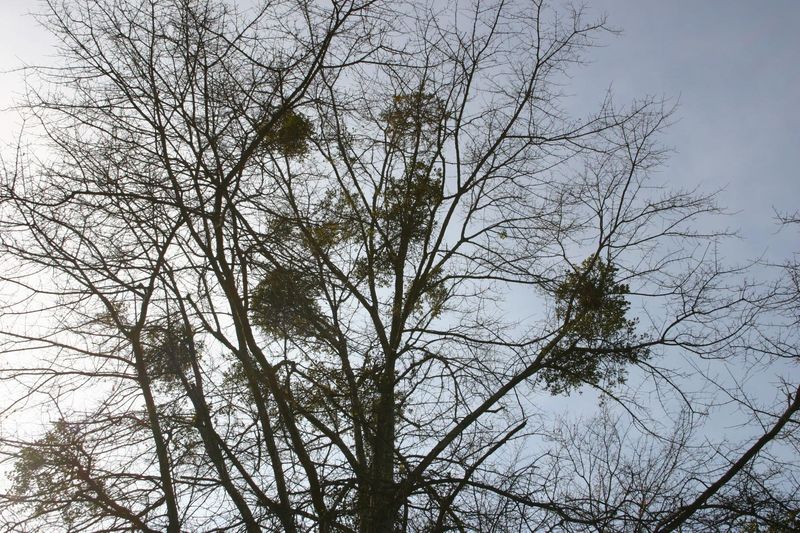
Relax a little if you only see a clump or two. A vigorous, mature tree can usually carry a light load of mistletoe for years without serious harm.
Panic often leads to rushed pruning that does more damage than the plant itself.
Trouble tends to grow with numbers and time.
Dozens of clumps spread across the crown, especially on an older or already stressed tree, can lead to weak limbs and declining growth in the upper branches.
Drought, root damage from construction, and old age can make a tree less able to cope.
Georgia summers can swing from soaking rain to weeks of dry heat, and those swings matter. A tree that handles mistletoe fine in a wet year may show more strain after a long drought.
So watch the overall health of the tree, not just the clumps.
Signs worth noting include thinning leaves, branches leafing out late in spring, or limbs with no leaves at all. If those show up alongside heavy mistletoe, it is time to act sooner rather than later.
A light case on a strong tree can often be handled during routine pruning on a normal schedule.
4. Sticky Seeds Get Wiped Onto New Branches By Feeding Birds
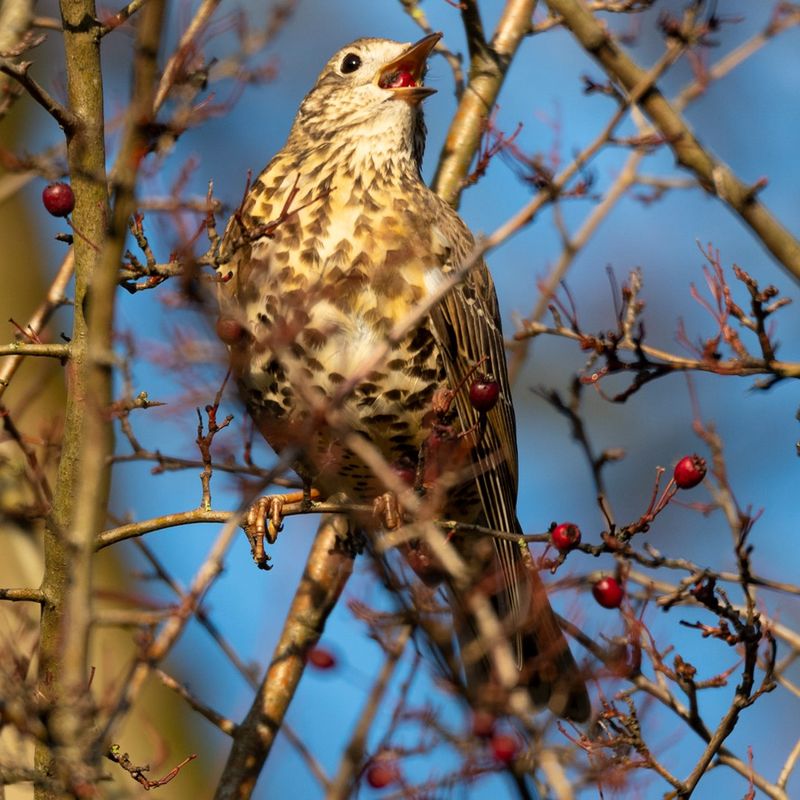
Blame the birds for that new clump on the next branch over. Cedar waxwings, bluebirds, and mockingbirds eat the white berries that ripen through late fall and winter.
Each berry holds a seed wrapped in a gooey, glue-like coating.
Some seeds pass through the bird and land on branches below. Others stick to a beak, and the bird wipes it off on a twig, leaving the seed glued right in place.
Once it sticks, the seed can sprout and slowly work its way into the bark.
Spread usually happens close to existing clumps first, since birds feed and perch in the same tree. That is why one plant left alone can turn into several on the same oak within a few seasons.
Neighboring trees can pick it up too, so a heavily infested tree next door may seed yours.
Removing clumps before berries ripen cuts down on the seed supply in your yard. In Georgia, aiming for late summer or early fall pruning on smaller limbs can reduce how many berries birds have to share, though some will still arrive from nearby trees.
5. Cutting Well Below The Attachment Point Removes Hidden Root-Like Tissue
What you see is only part of the plant. Underneath the bark, mistletoe spreads thin strands of tissue called haustoria that run along and into the branch wood.
Those strands are what let it come back after the leafy top is gone.
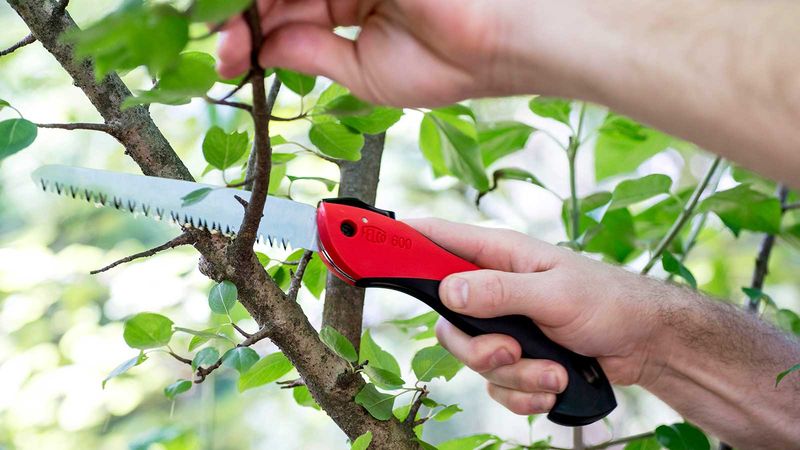
Removing the whole infected branch is the most reliable fix. Extension experts commonly suggest cutting at least 12 to 18 inches below the spot where the clump attaches, since the hidden tissue can extend past it.
Make your cut just outside the branch collar, the slightly swollen ring where a limb joins a larger one.
Cutting there helps the tree seal the wound naturally. Flush cuts against the trunk or long stubs left behind can slow healing and invite decay.
Skip wound paint or tar, since most tree experts now say it does not help the tree heal.
Sometimes the clump sits too close to the trunk or a major limb to take the branch off. Removing that much wood could unbalance or weaken the tree.
In those cases, an arborist may suggest repeatedly removing the top growth instead, which limits spread without sacrificing a key limb.
6. Snapping Off The Visible Clump Invites Regrowth
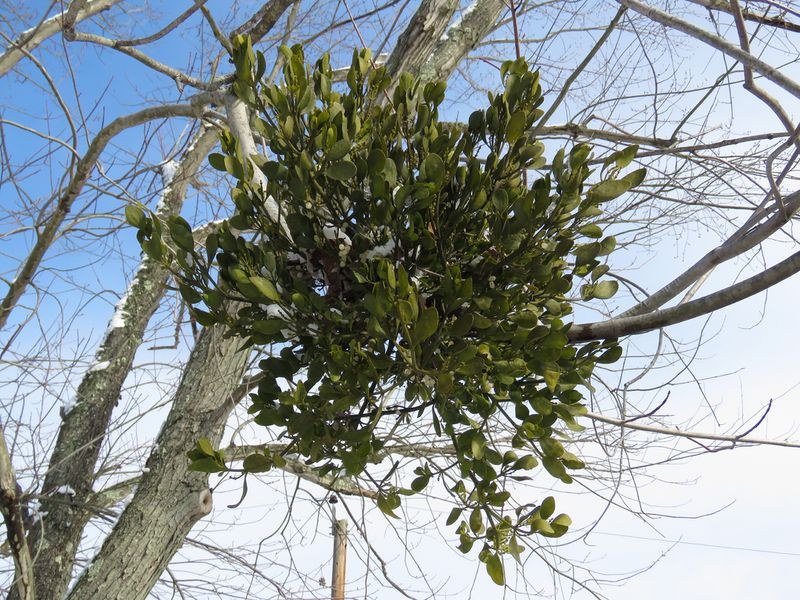
Yanking it off feels like a win, but it rarely lasts. Pull a clump free and the living tissue inside the branch stays put, ready to push out new shoots.
Within a year or two, you may see fresh green sprigs sprouting from the same knobby spot.
Knocking clumps down with a pole or shotgun blast, an old habit in parts of rural Georgia, has the same problem. It also risks damaging bark and sending broken limbs crashing toward people or roofs.
Still, breaking off top growth is not totally useless.
Removing the leafy part stops the clump from producing berries for a while, which slows the spread. It can also cut back on how much water the plant pulls from the branch.
Think of it as a temporary trim rather than a cure.
Some homeowners wrap the bare spot with black plastic after removing the top, hoping to block light and weaken regrowth. Results vary, and it works best on smaller branches you can reach safely.
Check the wrap now and then, since it can loosen in wind and rain.
7. High, Heavy Limbs Are A Job For A Certified Arborist
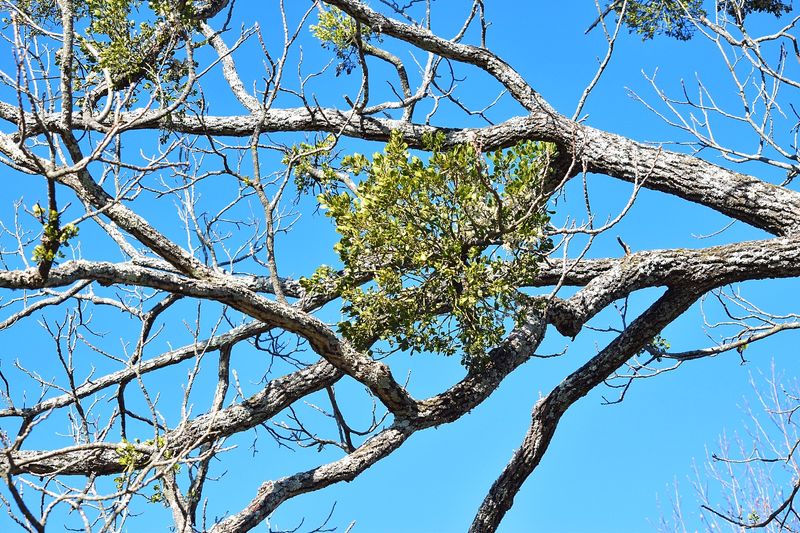
Ladders and chainsaws make a risky pair. Every year, homeowners get hurt trying to cut big limbs from shaky ladders or while balancing in a tree.
Once a branch is higher than you can reach from the ground, it is safer to call a pro.
Heavy limbs can swing or kick back in ways that are hard to predict. Power lines, roofs, fences, and cars below raise the stakes even more.
A certified arborist uses ropes, rigging, and climbing gear to lower wood in controlled pieces.
Look for someone certified through the International Society of Arboriculture. You can search their online directory to find credentialed arborists working near you in Georgia.
Ask for proof of liability insurance and workers compensation before anyone climbs.
Good arborists will also check the overall health of the tree while they are up there. They can tell you which limbs are worth removing and which clumps are better handled by trimming the top growth.
Get a written estimate that spells out what will be cut and how cleanup will be handled. Late fall and winter are often a good time to book, since bare branches make mistletoe easier to target.