The California Native Tree That Creates Dense Shade Without Constant Cleanup
Shade trees bring welcome relief during long California summers, but many of them come with a price. Sycamores, mulberries, and maples can bury patios, gutters, and pools under heaps of fall leaves.
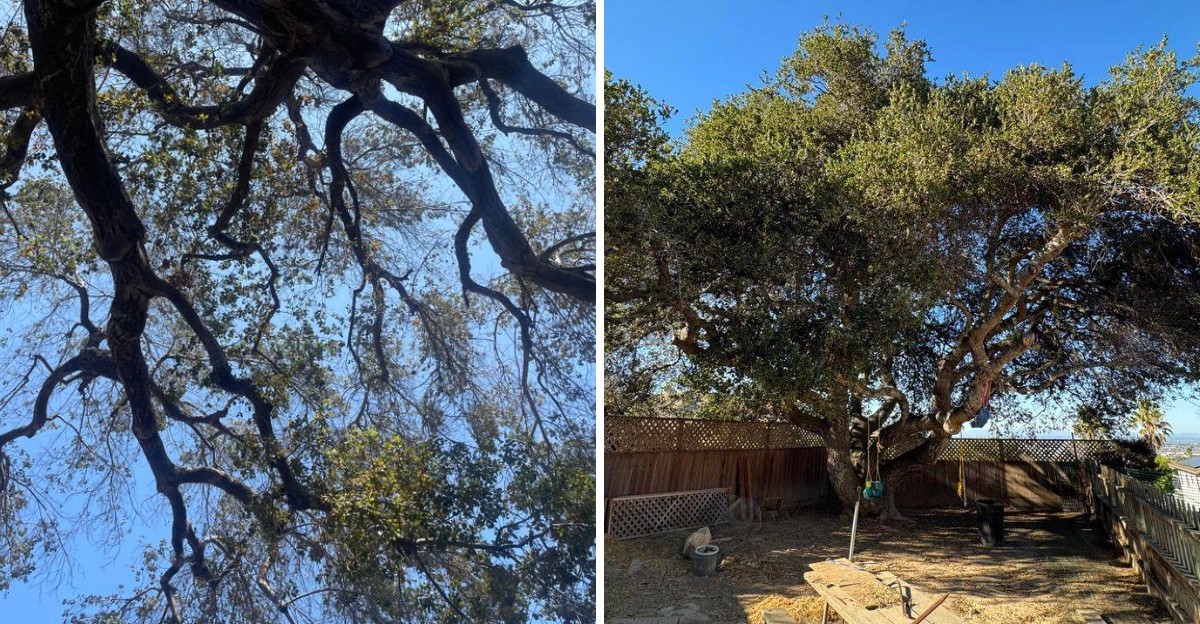
Coast live oak takes a calmer approach. As a California native evergreen, it never drops its entire canopy in one messy autumn rush.
Old leaves fall a few at a time, mostly in spring, while the crown stays thick and green all year.
The tree isn’t mess-free, of course. Acorns, catkins, and the occasional twig still need attention.
It does have strong preferences about water, space, and placement. Getting those details right keeps cleanup light and the tree healthy for generations.
Coast Live Oak Casts Deep Year Round Shade
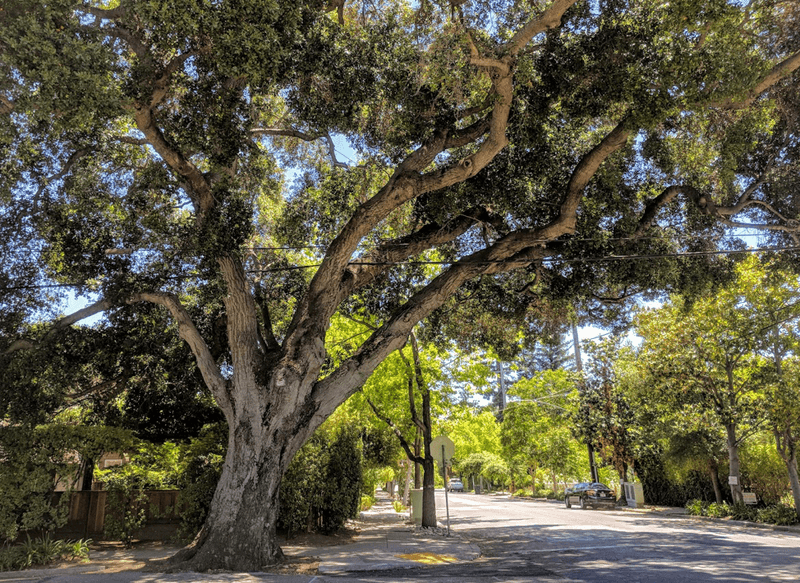
A July afternoon under a mature coast live oak can feel several degrees cooler than the surrounding yard. Sunlight barely sneaks through the thick, leathery leaves, and kids, dogs, and patio chairs all seem to drift toward that pool of shade.
Quercus agrifolia grows naturally along the California coast and in nearby valleys, from roughly Mendocino County south into Baja California. It thrives on hillsides, in canyons, and beside creeks, often forming shady woodlands.
California Native American communities relied on its acorns as an important food for thousands of years. The tree remains a defining part of the coastal landscape today.
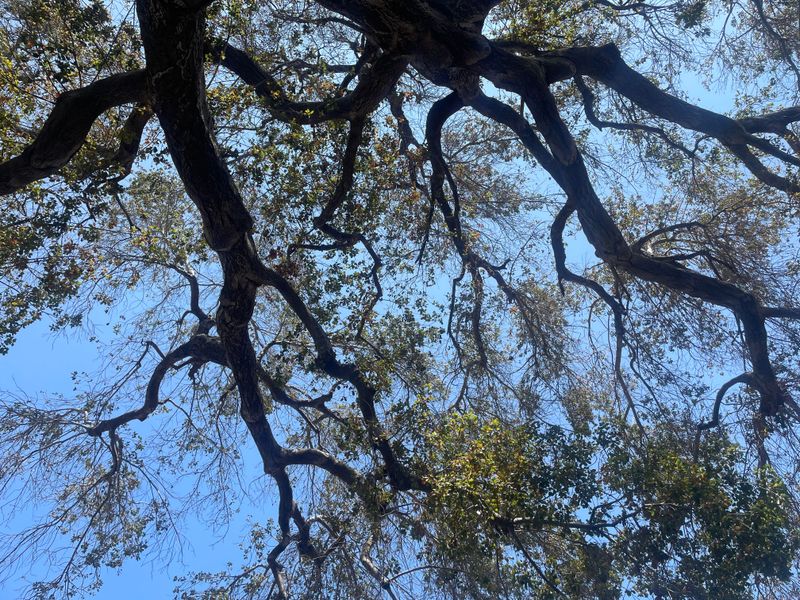
The leaves are small, glossy, and dark green, with a cupped shape and spiny, holly-like edges. They grow close together on twisting branches, building a dense, rounded crown that stays full in January just as it does in August.
Year-round cover brings real perks. Summer shade can cool a nearby wall or yard, while the winter canopy still blocks wind and shelters birds.
That same canopy also blocks winter sun. A spot away from south-facing windows that need warm light in cold months works best.
Growth is moderate, often a foot or two per year when young, depending on soil and rainfall. Patience pays off, though.
A healthy coast live oak can live well over a century. The shade planted today may cool family picnics for generations to come.
Evergreen Leaves Drop Gradually Not All At Once
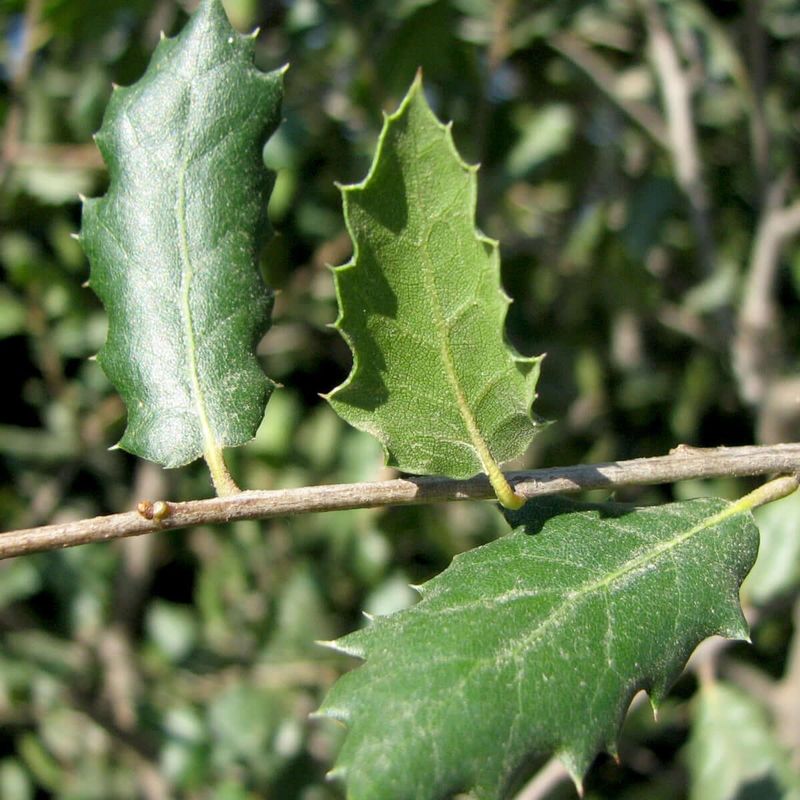
A maple in November can let go of every leaf in two windy weeks, leaving homeowners to spend entire weekends bagging piles. Coast live oak works on a very different schedule.
Evergreen doesn’t mean leaves last forever. Each leaf usually hangs on for about a year or a little longer before being replaced.
Old leaves turn yellow or brown and fall a few at a time. As a result, the tree never looks bare, even in late winter.
According to UC and native plant sources, the heaviest drop usually comes in spring, as fresh new leaves push out at branch tips.
A flurry of crispy brown leaves on the patio around March or April is normal, though weather and drought can shift the timing.
Spring drop has a clear upside. The litter arrives in one modest wave rather than a giant autumn avalanche, with only a light sprinkle the rest of the year.
Your California Garden Changes Every Week. Your Plan Should Too.
Gardening in California changes quickly throughout the season. Every Friday you’ll receive a simple weekly plan showing exactly what to plant, prune, fertilize, harvest, and protect so you never miss the right timing.
A quick sweep or leaf blower pass once or twice a week during that season usually handles it.
Small, stiff leaves also tend to stay put under the tree instead of blowing across the neighborhood. That keeps cleanup confined to a predictable area.
The spiny edges can poke bare feet, so shoes are a smart choice during cleanup. It’s a prickly little reminder from a tree that clearly prefers to be leaf alone.
Fallen Leaves Make Natural Mulch
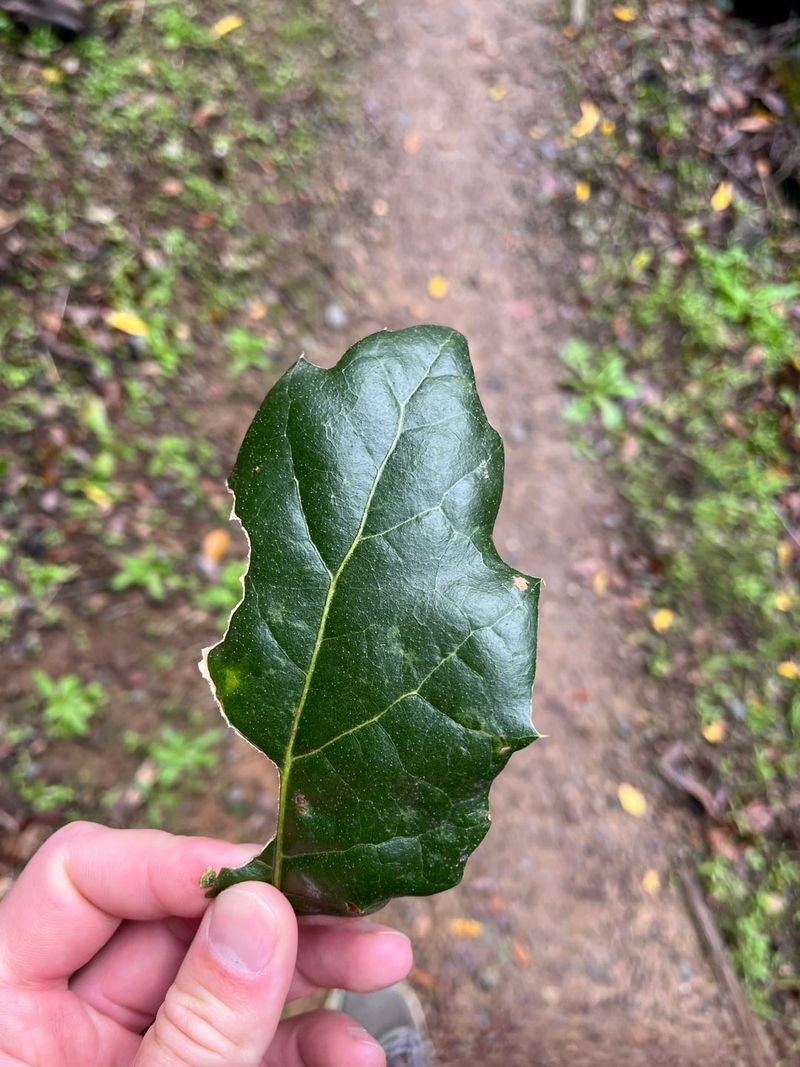
Raking every last leaf out from under an oak ranks among the most common mistakes in California yards. Those leaves are free mulch, delivered right where the tree needs it most.
Natural oak woodlands carry a soft, crunchy layer on the ground for good reason. Leaf litter shades the soil, holds in moisture, and slowly breaks down into food for the tree.
It also supports helpful fungi that partner with oak roots. Beetles, sow bugs, salamanders, and ground-feeding birds like towhees all hunt and hide in that layer.
Oak leaves break down slowly because they’re tough and waxy. A layer about 2 to 4 inches deep makes a good target under the canopy.
Keeping that layer a few inches from the trunk lets the bark at the base stay dry. That small gap helps protect the tree’s crown from moisture problems.
Fire safety deserves attention, too. Dry leaves burn easily, and wind-blown embers can ignite them.
CAL FIRE guidance calls the first 5 feet around a home Zone 0. That area should stay free of leaves, mulch, and other burnable material.
Leaves belong well away from walls, decks, and spaces under eaves. Gutters and roofs need regular clearing, especially before fire season.
Farther from buildings, leaves can settle and do their quiet work. High-hazard areas may have stricter rules, so a quick check with the local fire agency is worthwhile.
Acorns Are The Main Mess To Plan For
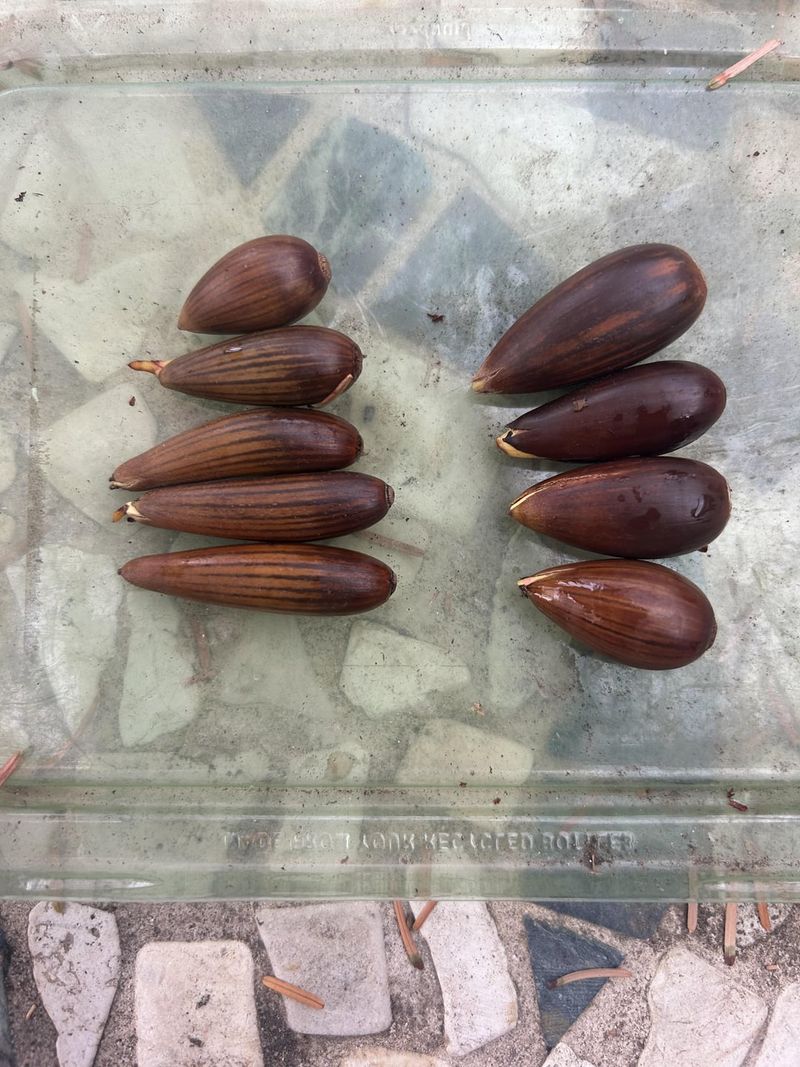
Crunch, crunch, ouch. Anyone who has walked barefoot under a coast live oak in autumn knows that sound, and acorns are the biggest cleanup chore this tree brings.
Coast live oak acorns are slim and pointed, about 1 to 1.5 inches long, and they ripen in a single season. Most fall from roughly September through December.
Some years bring a huge crop, called a mast year, while others stay light. The amount can vary quite a lot from one fall to the next.
On lawns and paths, a sturdy rake or rolling nut gatherer makes quick work of them. Clearing walkways and driveways matters most, since acorns can roll underfoot and cause slips.
Acorns left in garden beds may sprout into seedlings. Those pull out easily while small and tender.
Spring brings two more modest chores. Long, dangling flower strands called catkins drop in large numbers for a few weeks, along with pollen that coats cars and patio tables.
Twigs and small, brittle branches also fall after windstorms. A quick pickup after a blustery day keeps things neat and safe.
The acorns do feed plenty of guests, including acorn woodpeckers, scrub jays, deer, and squirrels. Jays even bury acorns and forget some, helping plant new oaks across the hills.
Leaving a few in a wild corner feeds the whole neighborhood, feathers and fur included.
Skip Summer Water To Protect The Roots
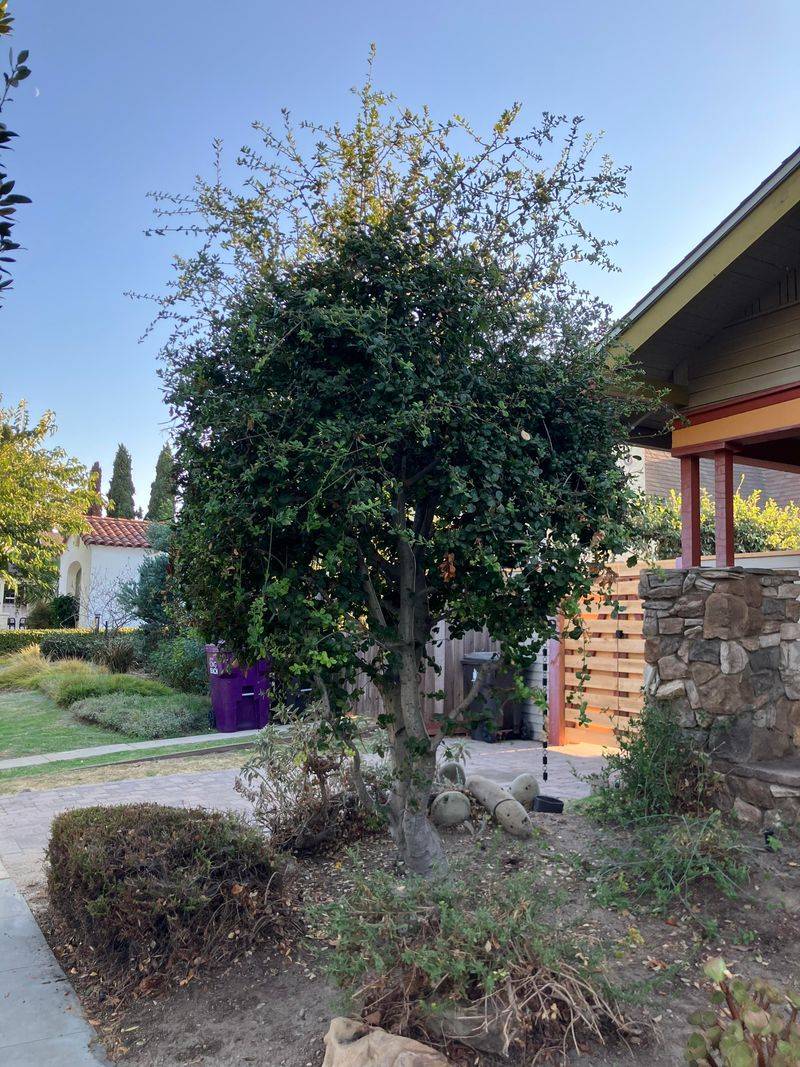
A hot August afternoon can tempt any homeowner to give a big oak a long, generous soak. That kind gesture, however, can seriously harm an established coast live oak.
Native oaks evolved with California’s pattern of wet winters and long, dry summers. Their roots expect warm, dry soil from late spring through fall.
UC ANR warns that regular summer irrigation near the trunk creates moist, warm conditions where harmful fungi and water molds thrive. Two major troublemakers are oak root fungus, Armillaria mellea, and root and crown rot caused by Phytophthora.
Both can weaken roots and the base of the trunk, sometimes slowly and without obvious early signs. By the time a tree looks unhealthy, the damage below ground may already be severe.
Lawns, vegetable beds, and thirsty flowers belong outside the root zone, especially near the trunk. Many experts suggest keeping soil within several feet of the trunk dry and avoiding regular irrigation inside the dripline.
Sprinkler spray should stay off the trunk entirely. That simple adjustment protects the most vulnerable part of the tree.
Young oaks follow different rules. Newly planted trees need occasional deep watering during their first few years until roots establish.
Established trees may only need help in extreme drought. Even then, a deep, infrequent soak near the dripline in winter or spring is far safer than summer watering.
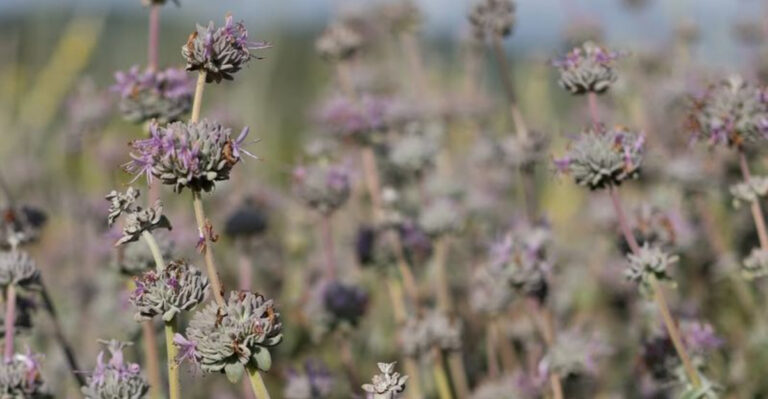
Leaf mulch or dry-loving natives like hummingbird sage suit the area under the canopy.
Give It Room To Spread Wide
A small five-gallon oak in a nursery pot can be deceiving. Give it a few decades, and it may tower over the roofline.
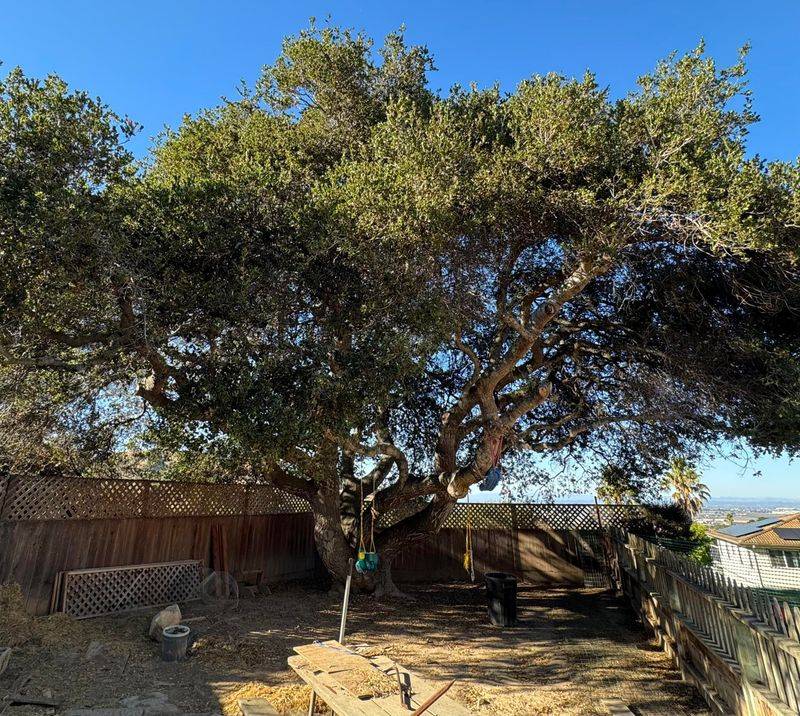
Small yards and big oaks need a careful plan from day one. Mature coast live oaks commonly reach 30 to 70 feet tall, with a canopy that often grows just as wide or wider.
Older trees in open spaces can spread their limbs 80 feet or more. Branches tend to reach outward and sometimes dip low, creating that classic sprawling California look.
Roots spread even farther than the branches. Most feeder roots sit in the top couple of feet of soil and may extend well past the dripline.
Trenching, paving, or piling soil over this area can damage them. Planning utilities and hardscape before planting avoids those problems.
A sensible starting point is planting at least 20 to 30 feet from the house and other buildings. Overhead power lines, septic systems, and narrow side yards are all best avoided.
Pruning should stay light and, when possible, be handled by a certified arborist. Heavy cuts can stress the tree and invite pests.
Many California cities and counties protect native oaks by size or trunk diameter. Some require a permit before major pruning or removal, so a call to the local planning department comes first.
Fines can be steep, and an old oak can’t be quickly replaced.
Place It Away From Pools And Patios
Leaves floating in the pool, sticky pollen on the windshield, and acorns pinging off the car roof all trace back to one common issue. Most oak complaints come from a tree planted in the wrong spot.
Smart placement can cut cleanup more than any rake. Prevailing wind direction in the yard makes a good starting point.
Planting the oak downwind of the pool lets light debris drift away from the water instead of into it. Enough distance to keep the mature canopy off the pool deck helps even more.
Patios deserve similar thought. A seating area just beyond the canopy edge still enjoys afternoon shade without catching every falling catkin.
Gravel or decomposed granite hides small leaves better than smooth concrete. It also lets water and air reach the roots below.
Driveways come next. Parking under an oak means spring pollen, sticky drips from insects, and an occasional thump from a falling acorn.
The driveway works best off to the side rather than beneath the widest limbs.
Gutters fill quickly when branches arch over the roof. Planting far enough away keeps the mature crown clear of the house, and gutter guards help on nearby roofs.
Late afternoon sun from the west offers a final clue. An oak placed to shade a patio or west wall without crowding it delivers the cooling benefits.
A little planning now saves hours of sweeping later.