Why Your Rhododendron Leaves Curl In Cold Weather
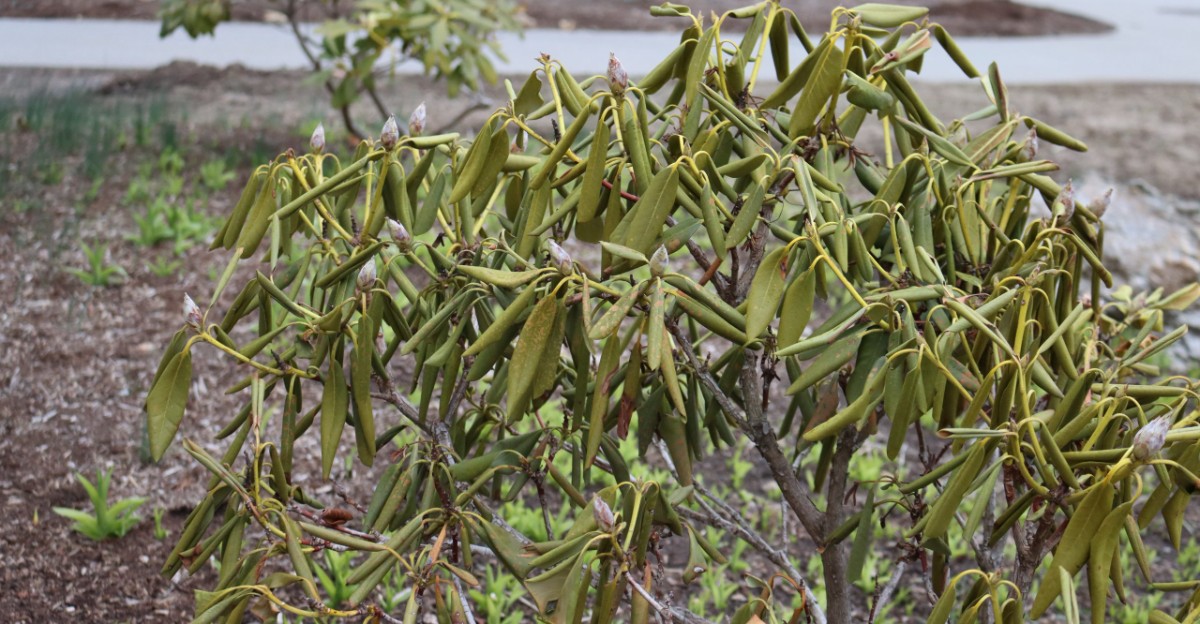
A shrub that looked perfectly fine yesterday can look oddly rolled up after one frosty night. The glossy leaves have curled into tight little tubes, like tiny scrolls drooping toward the cold ground.
It is easy to panic and assume something went wrong overnight while you were sleeping. Your neighbor might even lean over the fence and offer a sad shake of the head.
Before you start worrying, take a breath and notice how the air bites at your nose. Plants feel that chill too, and some of them have clever ways of handling a frosty night.
That rolled-up look is often a sign of smart behavior rather than a cry for urgent help. With a simple explanation, those curly leaves start to look a lot less scary and strange.
A Built-In Shield Against Winter Water Loss
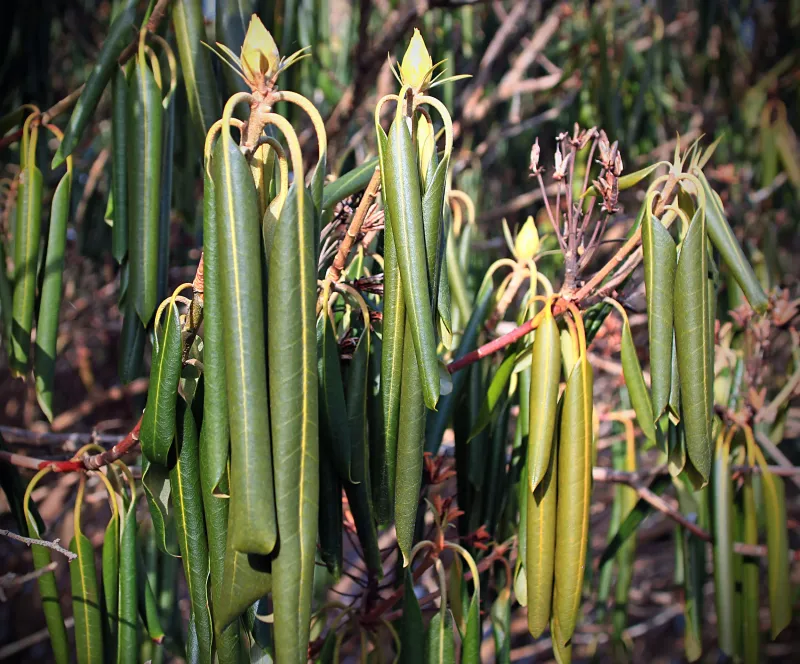
Picture a turtle pulling its head into its shell when trouble shows up, and you get the basic idea. Rhododendron leaves curl when the air turns cold, a response that helps the plant cope with harsh winter conditions.
A major threat during cold weather is not only frost but also water slowly escaping through the leaf surface. Leaves have tiny pores underneath, and those openings let moisture drift away into dry, windy air.
When the soil is frozen, roots struggle to pull up fresh water to replace what the leaves lose. Curling up is thought to shrink the exposed surface, which may help the plant hold onto its supply.
Scientists also think the rolled shape shields the leaf cells from sudden thawing when bright morning sunshine hits. Quick swings between frozen and warm can bruise tissue, so a tight curl acts like a cozy sleeping bag.
Leaves also droop downward at the same time, which may help snow slide off instead of piling up heavily. Branches stay safer from snapping, and the shrub avoids carrying a heavy white load all winter long.
Fun fact for curious gardeners: some people use rhododendron leaves as a rough outdoor thermometer during chilly months. Tighter curls usually mean colder air, and an old saying claims pencil-thin leaves signal deep freezing temperatures.
So when you spot those rolled leaves this season, try to see them as a sign of strength. Your shrub is simply doing its job, guarding its water like a hiker saving the last canteen sip.
The Temperature Point Behind The Curl
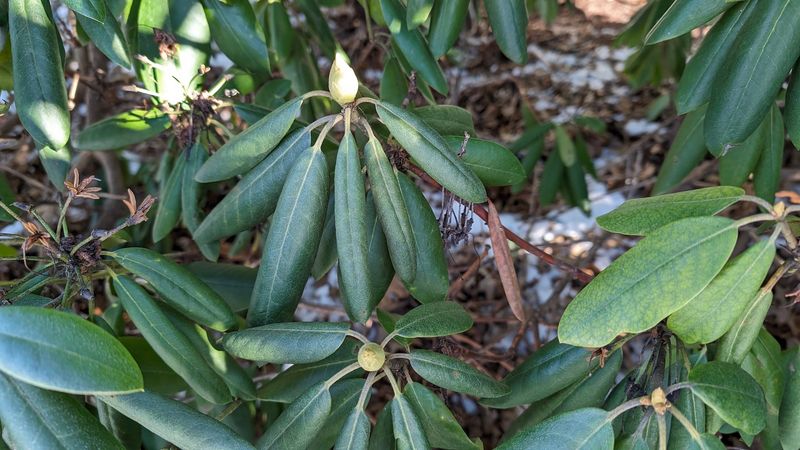
Grab a thermometer and watch your shrub on a few cold evenings, and you might notice a clear pattern. Many rhododendrons start to curl when the air dips close to freezing, often between 32 and 35 degrees Fahrenheit.
As temperatures keep falling toward 20 degrees, the leaves often roll tighter and hang lower on the stems. By the time it reaches single digits, many leaves look as skinny as drinking straws in the wind.
In early October, you may only see light curling on the coldest nights before sunrise warms things up. First frosts arrive gently in many areas, so the leaves often relax again by late morning or noon.
Wind plays a sneaky role too, because a breezy 30 degree day can feel much harsher than a calm one. Moving air pulls moisture away faster, so leaves on exposed corners usually curl sooner than sheltered ones.
Sunny spots can behave differently as well, since bright light warms leaves during the day and lets them relax sooner. Shrubs on the north side of a house may stay curled longer because shade keeps the leaves cold.
Different varieties also have their own comfort zones, so one bush might roll up before its neighbor does. Large-leaf types tend to react more dramatically, while small-leaf kinds may barely change their shape at all.
Keeping a simple notebook of nightly lows and leaf shapes can turn your yard into a fun science lab. After a few weeks, you will probably predict the curl before you even check the weather app.
The Common Mistake Of Panic Pruning
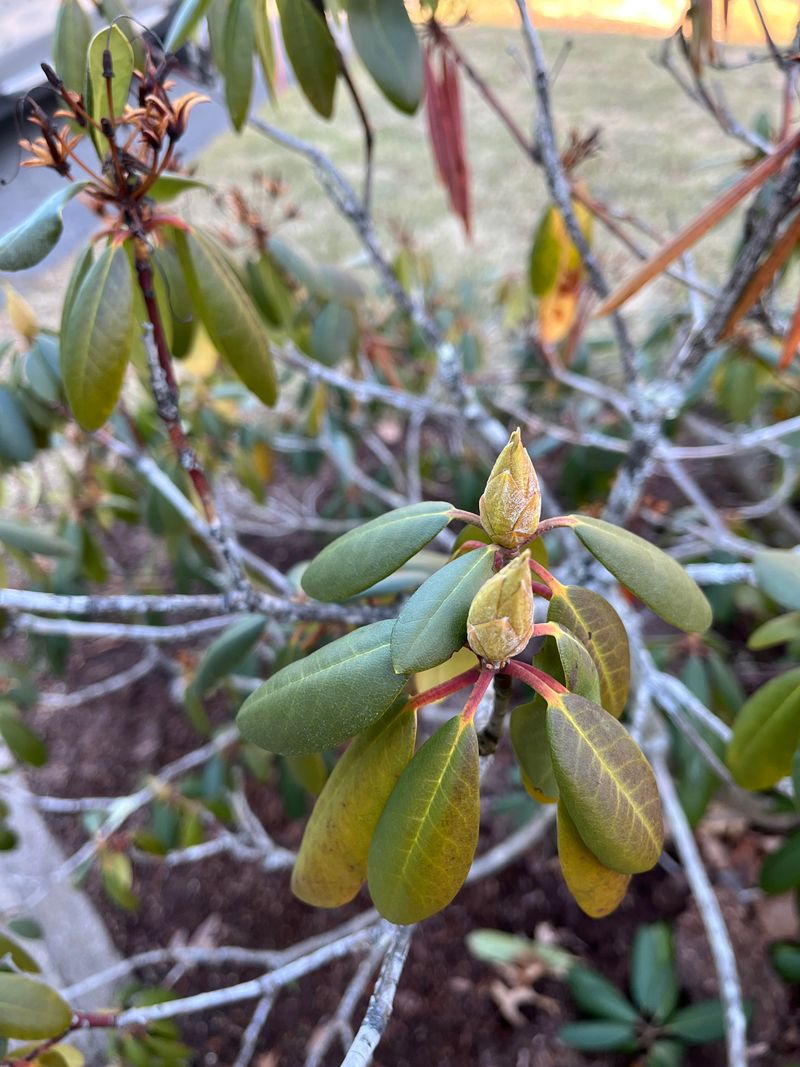
Every fall, some well-meaning gardener sees curled leaves, grabs the clippers, and starts snipping away in a hurry. It feels helpful in the moment, but cutting healthy branches now can cause real trouble for your shrub.
Rhododendrons set their flower buds in late summer, so those fat tips you see now hold next year’s blooms. Pruning in October removes those buds, and you may end up with a green bush and few or no flowers.
Fresh cuts can also wake up the plant and push out tender new growth right before hard frost. Soft shoots like that rarely survive the cold, and they leave ugly brown tips hanging around until warmer weather.
Another common slip is pulling off curled leaves because they look sickly or messy on the branches. Those leaves are still working hard, feeding the plant on mild days and helping it store energy for spring.
Some folks also spray leaves with water or wrap them tightly in plastic, hoping to uncurl them faster. Plastic traps heat during the day and then chills fast at night, which stresses the foliage even more.
A better plan is to keep your clippers in the shed until the flowers fade next year. Only remove branches now if they are broken, cracked, or clearly diseased, and make clean cuts close to healthy wood.
Patience might feel boring when your shrub looks gloomy, but it pays off with a cheerful burst of color. Think of the curled leaves as a closed umbrella, folded up and waiting for kinder weather ahead.
Deep Fall Watering For Thirsty Roots
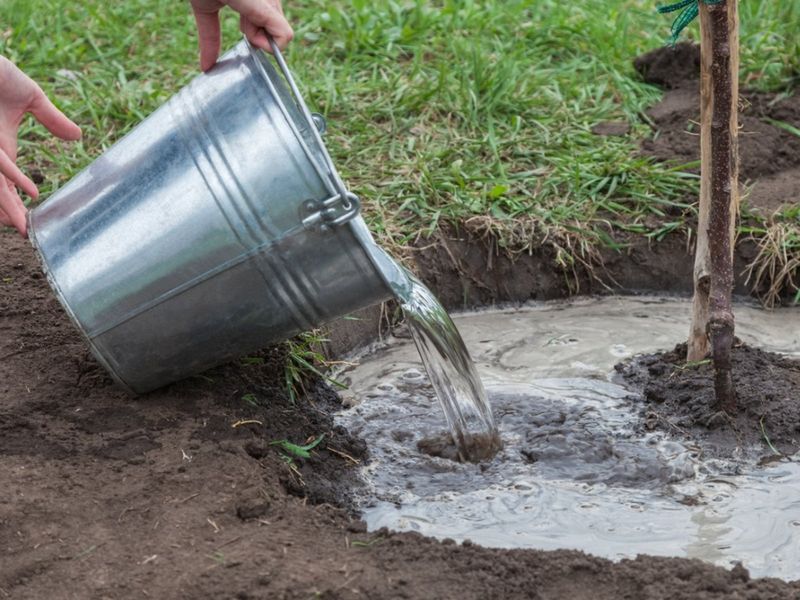
Right now in early October, the kindest gift you can give your rhododendron is a long, slow drink. Well-watered plants head into winter with full tanks, and they handle the cold better when it arrives.
Aim to give about an inch of water per week if rain is scarce, letting it soak the whole root zone. A soaker hose or a slow trickle from a garden hose works better than a quick spray from above.
Rhododendron roots are shallow and spread out near the surface, so they dry out faster than many shrubs. Poke a finger two inches into the soil, and if it feels dry, it is time to water.
Mulch is your next best friend, acting like a fluffy blanket that keeps moisture in and frost out. Spread two to three inches of pine needles, shredded bark, or chopped oak leaves around the base.
Keep the mulch a few inches away from the trunk, since piled material can invite rot and hungry critters. Pine needles may also add a touch of acidity as they break down, which these acid-loving shrubs happily enjoy.
Skip the fertilizer this time of year, because feeding now encourages soft growth that cannot handle freezing nights. Your shrub needs to slow down and toughen up, much like a bear getting sleepy before its long nap.
Keep watering until the ground freezes solid, which might be late November or December depending on your area. A final deep soak right before the freeze sets the stage for a healthier shrub all winter.
The Usual Outcome Once Warmth Returns
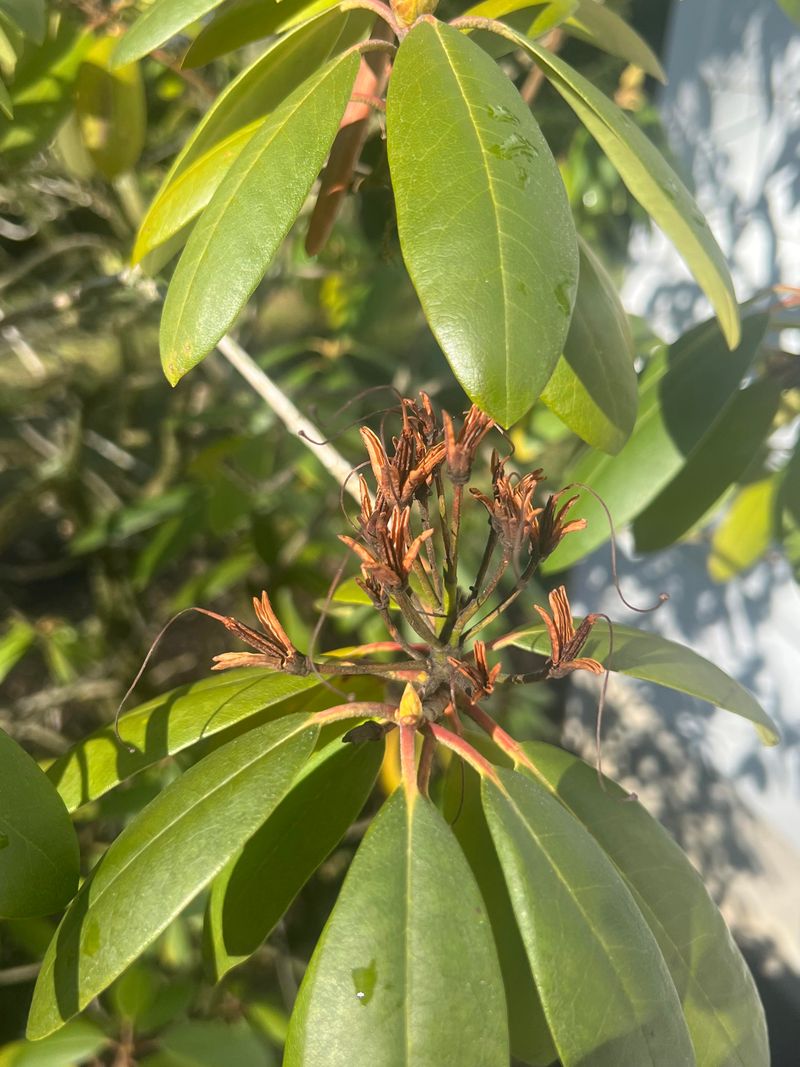
Mild afternoons work like magic on rolled leaves, and you can watch them slowly open up again. Once the air climbs back above freezing, most leaves flatten out within a few hours of gentle sunshine.
That bounce-back shows the leaves are healthy and simply took a break from the cold for a while. Some gardeners compare it to a pill bug unrolling after it decides the coast is finally clear.
After a long, harsh winter, however, you might notice a few leaves with brown edges or dry patches. Gardeners call this winter burn, and it happens when leaves lose more water than the roots can replace.
A bit of browning is normal and usually does not harm the overall health of a sturdy shrub. Damaged leaves often drop on their own later, and fresh green growth quickly fills in the empty spaces.
Worry a little more if leaves stay curled on warm days, because that can point to a different problem. Dry soil, root rot, or hungry pests like weevils can all make leaves droop and roll for weeks.
Check the soil moisture first, then look under the leaves for notches, spots, or tiny crawling insects. Stems that feel mushy near the soil line could signal root trouble, which may need help from a local nursery.
For most healthy plants, though, the curl-and-uncurl routine continues quietly through winter with little lasting harm. Watching that daily rhythm can become a cozy fall ritual, best enjoyed with a warm mug of cocoa in hand.
Smart Site Choices For Calmer Winter Leaves
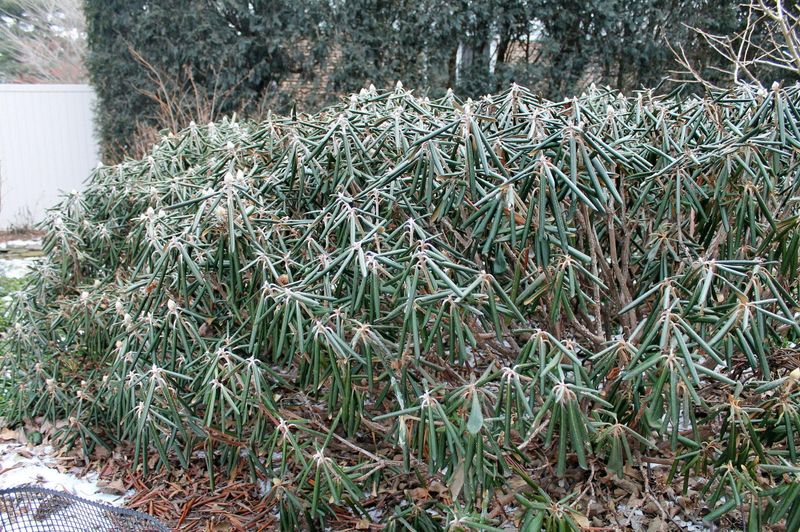
Location matters more than most people realize, and a well-placed rhododendron often handles cold with far less fuss. These shrubs love spots with morning sun, afternoon shade, and some shelter from sharp winter winds.
East-facing beds near a fence or wall usually work well, since they block cold gusts from the direction winter winds usually come from. Spots with strong winter sun can heat frozen leaves too fast, causing scorched edges by the time winter ends.
If your shrub sits in a windy, open area, a simple burlap screen can make a big difference. Set up a few wooden stakes on the windy side and staple burlap between them before the hard freeze.
Leave a gap between the fabric and the leaves so air can move and branches do not rub. Wrapping the plant tightly can trap moisture and cause mold, so think fence, not burrito, for this job.
Some gardeners spray anti-desiccant products on leaves in late fall, which forms a thin, waxy coating. Results are mixed, but the spray may slow moisture loss when applied on a dry day above 40 degrees.
Choosing hardy varieties suited to your growing zone is another smart move if you plan to add more shrubs. Early fall is a great planting window, since cool air and warm soil help roots settle in nicely.
Even with perfect planning, your rhododendron will probably still curl a bit on the coldest January mornings. A little curl is simply the plant being clever, and a sheltered shrub bounces back with fewer brown scars.