Why Squirrels Are Eating Your Pumpkins And How To Stop Them
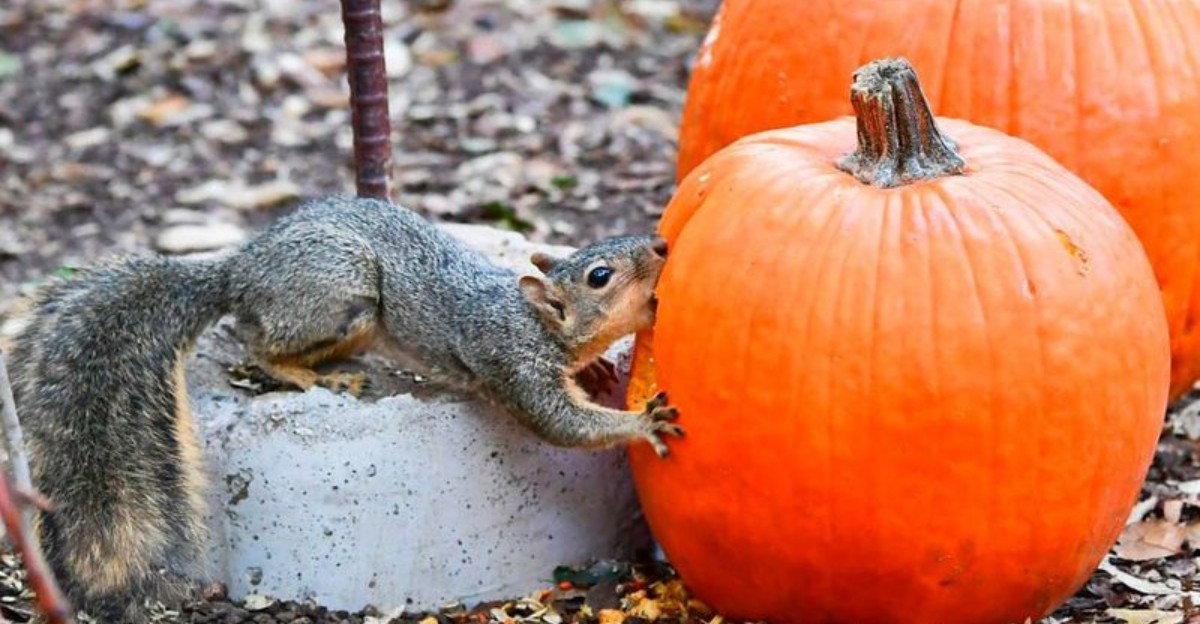
You set a plump orange beauty on the porch and went inside feeling proud of it. By morning, a jagged hole appeared, and shreds of rind were scattered across the welcome mat.
Seeds lay sprinkled down the steps like confetti, and the crisp air smelled sweet and earthy. Somebody clearly enjoyed a free meal while you weren’t looking, and they did not bother leaving a polite thank-you note.
You might blame the neighbor kids, the wind, or a raccoon with fancy taste in decor. A very common culprit is smaller, fluffier, and much bolder than most people expect from a visitor.
Fall turns this thief into a busy snacker, darting across fences with cheeks full of loot. Your porch decorations happen to sit on its daily route, glowing like a free buffet sign.
Fall Fattening Season Drives The Snacking
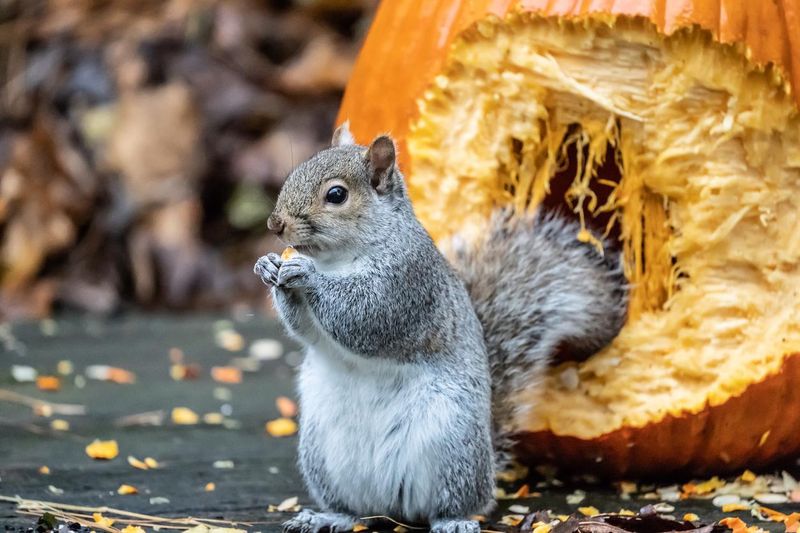
Picture a tiny athlete bulking up for a long winter, and you understand the squirrel visiting your porch. Gray squirrels spend autumn eating as much as possible, building fat that helps them survive cold months.
Pumpkin seeds are packed with protein and healthy oils, which makes them a perfect fall energy snack. The soft orange flesh also holds plenty of water, which matters when autumn weather turns dry and windy.
Squirrels also need to gnaw because their front teeth grow throughout their lives, much like human fingernails. A firm pumpkin rind gives those teeth a satisfying workout, a bit like chewing on a crunchy carrot.
Natural food sources such as acorns and hickory nuts can run short in some years, pushing squirrels elsewhere. When the oak trees have a slow season, your front steps suddenly look like the best restaurant in town.
Pumpkins also sit low to the ground, out in the open, with no thorns or spines to protect them. For a squirrel, that combination of easy access and rich food is simply too tempting to ignore.
Fun fact: a single gray squirrel can bury thousands of nuts each fall and forget where some of them are. Those forgotten snacks sometimes sprout into new trees, so these busy chewers help spread trees by accident.
Knowing their reasons makes the damage feel less personal, even when your favorite pumpkin has a new hole. Once you see the hunger behind the habit, choosing the right fix gets much easier and far less frustrating.
Early October Peak Of Porch Snacking
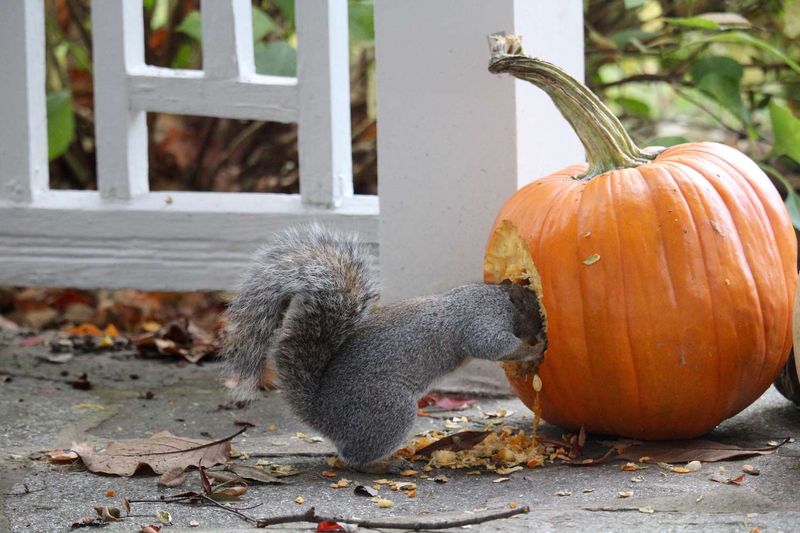
Each October, garden centers fill with pumpkins just as squirrels enter one of their hungriest stretches of the year. That timing is pure bad luck for decorators, but it explains why porch damage seems to spike suddenly.
Early fall is when squirrels shift into heavy storing mode, grabbing food to eat now and stash for later. You may spot them racing across lawns at dawn, tails flicking, with seeds or rind in their mouths.
Most chewing happens in the early morning and late afternoon, when the air is cool and people are busy. Keep an eye on your porch during breakfast, and you might catch the furry snacker in the act.
Pumpkins left in the garden patch face the same pressure, especially once the vines start to wither and brown. Without leafy cover, the bright fruit stands out like a traffic cone, and squirrels notice it right away.
Harvesting ripe pumpkins in early October helps reduce losses, as long as the rinds feel hard to your thumbnail. Leave a few inches of stem attached, since a broken stem lets moisture escape and invites softer, tastier spots.
Warm spells in early fall can speed up softening, which makes the flesh easier for small teeth to reach. A shaded porch spot often keeps decorations firmer longer than a sunny step that bakes all afternoon.
Damage often slows down by late November, when squirrels have filled many of their hiding spots and fewer pumpkins remain on porches. Until then, think of early October as the busy season and plan your protection before the rush begins.
The Carving Mistake That Rings The Dinner Bell
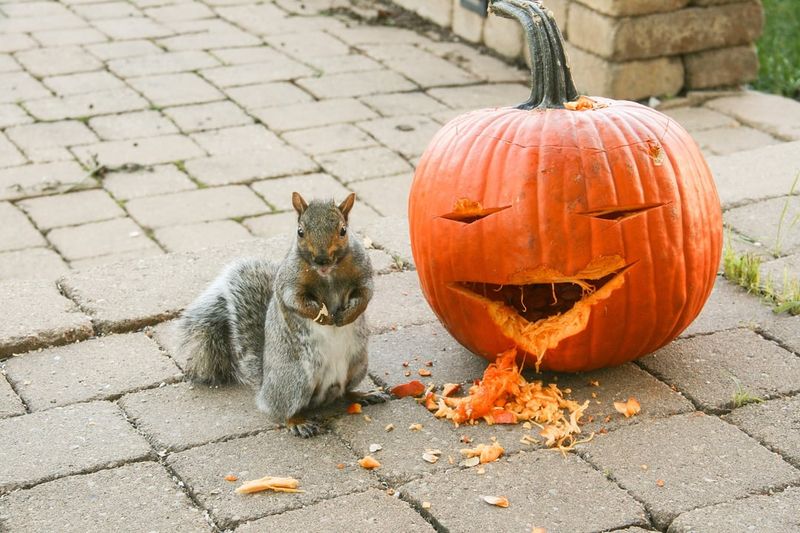
Carving a spooky face feels like a classic fall tradition, but it also opens the snack bar for squirrels. Once the rind is cut, sweet smells drift out, and the soft inner flesh is suddenly easy to reach.
Many people carve their pumpkins in early October, then wonder why the grin looks gnawed by the next weekend. Cut pumpkins also soften and rot faster, which makes them even more appealing to hungry backyard visitors.
Another common slip is leaving the scooped seeds and stringy guts in a bowl or compost pile nearby. That slimy heap works like a welcome sign, teaching squirrels that your yard is a reliable place to eat.
Bird feeders create a similar problem, since spilled seed draws squirrels close enough to notice your decorations. A feeder hanging beside the porch can turn a quick visit into a daily tour of every pumpkin.
Some folks try to chase squirrels off by hand, waving brooms and yelling, which rarely works for long. These clever animals learn your schedule fast and simply return the moment you head back inside the house.
Using harsh chemicals or baits is risky, since they can harm pets, birds, and other wildlife in the area. Many states and towns also have rules about trapping squirrels, so check local regulations before trying anything like that.
Try saving the carving for the final few days before Halloween, when the display only needs to last briefly. Until then, whole pumpkins with uncut rinds stay firmer, smell less sweet, and attract far fewer fuzzy critics.
Pepper Sprays With Simple Barriers
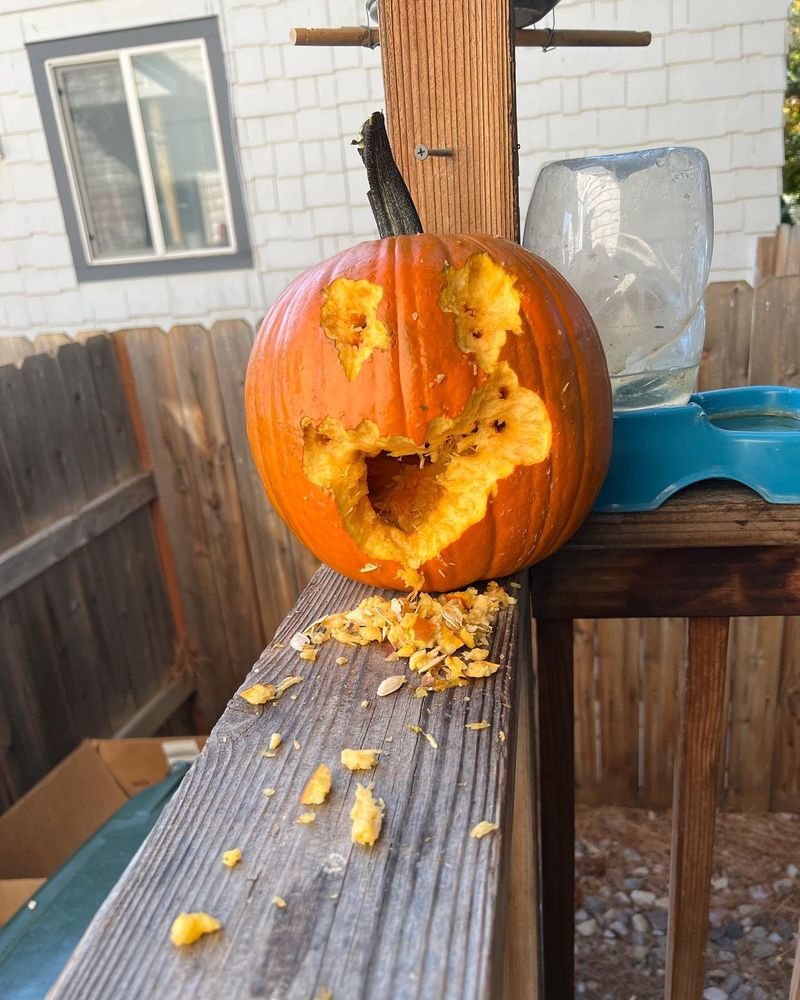
Squirrels have sensitive mouths, and a hot pepper on the menu can send them looking for blander snacks. Birds barely notice capsaicin, the spicy compound in peppers, so this trick bothers furry visitors far more than feathered ones.
Mix two tablespoons of cayenne powder with a quart of water and a few drops of dish soap. Shake the bottle well, then mist the whole pumpkin, paying extra attention to the stem and any soft spots.
Reapply the spray after rain or every few days, since October showers wash the spicy coating away fairly quickly. Wear gloves while spraying, and keep the mix away from your eyes, kids, and curious pets with sniffing noses.
Some gardeners prefer a clear coat of spray-on acrylic sealer, which gives the rind a slick finish that is harder to grip and gnaw. Store-bought squirrel repellents made with pepper or garlic work too, and they often last longer than homemade versions.
For garden pumpkins still on the vine, lightweight netting or chicken wire draped over each fruit helps a great deal. Tuck the edges under a few rocks so squirrels cannot squeeze beneath and sneak a quick nibble from below.
Motion-activated sprinklers offer a surprising splash that startles squirrels without harming them. Shiny pinwheels or wind chimes can help for a short while, though clever squirrels often get used to them.
Combining a spicy coating with a physical barrier usually works better than relying on one method alone. Think of it as a locked door plus a bad smell, which makes your pumpkin far less worth the trouble.
A Porch Display That Lasts Until Halloween
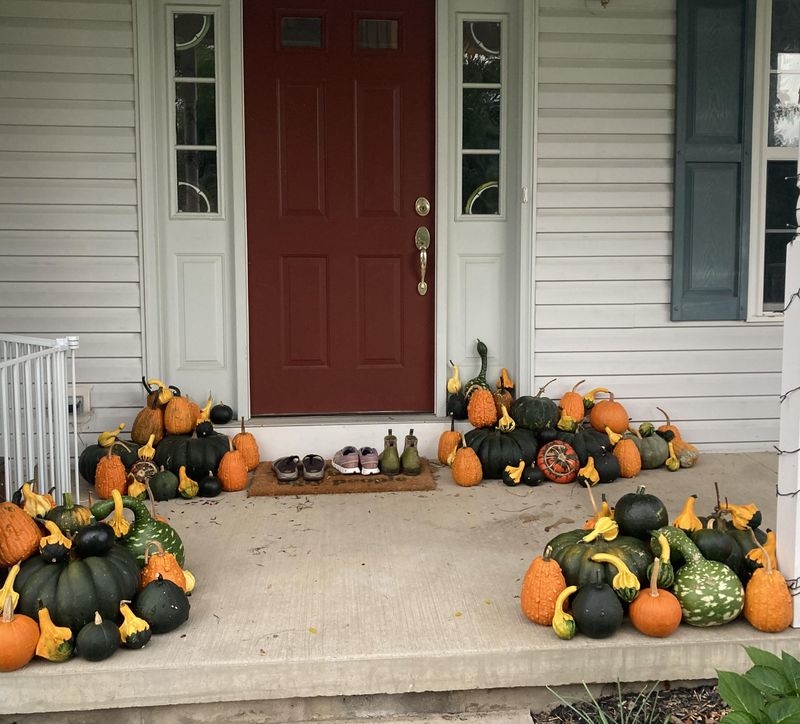
Imagine stepping outside on Halloween night and finding your pumpkins as round and bright as the day you bought them. With a few steady habits, that cozy picture is within reach for most homes, even in busy squirrel neighborhoods.
Many people notice less chewing within a week of spraying, netting, and cleaning up spilled food. Squirrels are practical creatures, so they move on quickly once your porch stops offering an easy, tasty reward.
Do not expect perfection, though, because a hungry squirrel might still test your setup now and then. A small scratch or a shallow nibble usually means the deterrent is working, since the visitor gave up fast.
Check your display each morning while you grab the newspaper or walk the dog, looking for fresh tooth marks. If you spot damage, reapply spray right away and turn the chewed side toward the wall to hide it.
A pumpkin with only a tiny nibble mark can still look charming for weeks if you keep that spot dry. Dabbing petroleum jelly over small scrapes helps seal moisture inside and makes the area less tempting.
Protected pumpkins can also have a second life after the holiday, as long as no chemical sealers were used. Unsealed ones can go into the compost bin, adding rich nutrients to your soil for next spring’s garden beds.
There is something satisfying about outsmarting a fluffy little bandit with nothing more than pepper and patience. Your neighbors may even ask for your secret when their own porch pumpkins start showing mysterious bite marks.
Smart Habits For Next Year’s Patch
Seasoned gardeners like to say the best pumpkin protection starts long before the first orange fruit appears. Planning ahead this fall can save you plenty of frustration when next autumn’s hungry visitors come calling again.
Start by cleaning up fallen acorns, birdseed, and old vegetable scraps around the yard before winter sets in. A tidy yard gives squirrels fewer reasons to linger, which means fewer furry scouts checking your garden later.
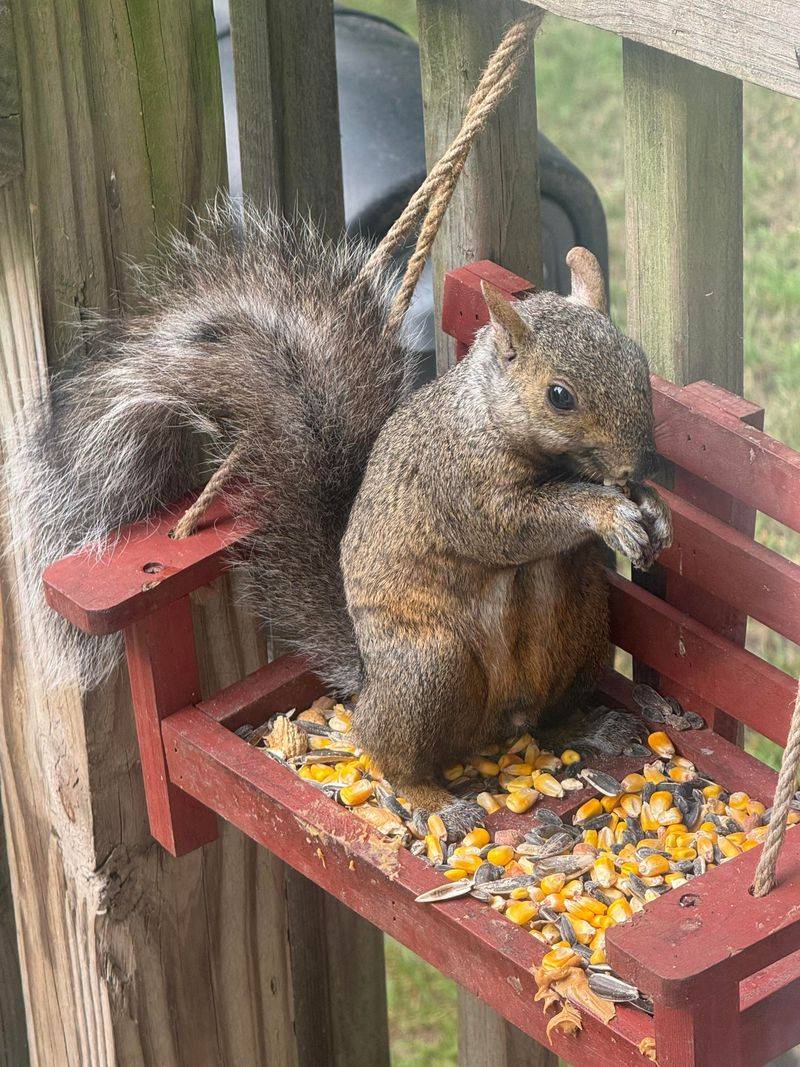
Moving bird feeders to the far side of the yard draws squirrels away from your porch and planting beds. Some families even set out a separate corn feeder as a peace offering, keeping squirrels busy somewhere else.
Trimming tree branches that hang over your garden removes the leafy highways squirrels use to drop in unannounced. Keep limbs at least eight feet away from roofs and fences, since these acrobats can leap surprisingly long distances.
When planning next year’s patch, consider growing a few extra pumpkins as a buffer for the likely snacking. Planting near the house, where people and pets move around often, also makes timid squirrels think twice.
Building a simple wire cage or raised frame for the patch is a fun winter project for the whole family. Having it ready ahead of time means you can cover young pumpkins the moment they start turning orange.
Keep a small notebook of what worked this October, including spray recipes, dates, and which spots suffered most. Next fall, those notes will help you stay one step ahead of the fluffiest snack thieves on the block.