Why Florida Homeowners See More Snakes As October Rains Keep Coming
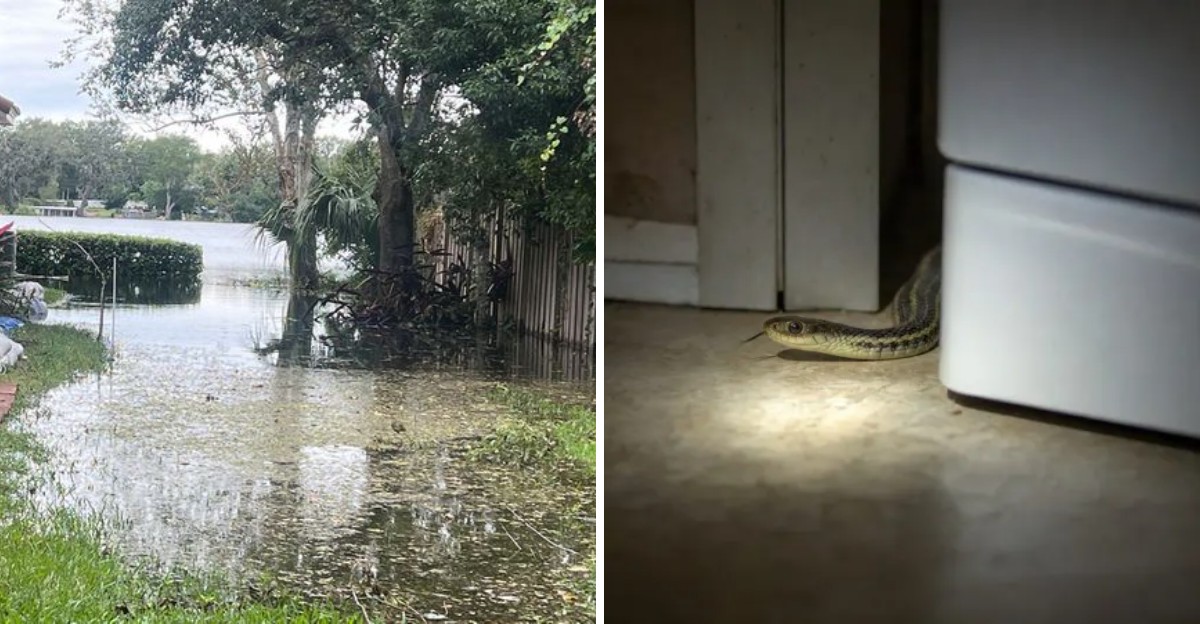
October rain in Florida is not exactly subtle.
The sky opens up, the yard turns into a soggy sponge within hours, and somewhere between your second cup of coffee and checking the weather app for the fourth time, you spot something near the back steps that was definitely not there yesterday.
Long, quiet, and moving at its own pace. That little jolt of surprise is something homeowners know well, and it tends to happen a lot more once the fall rains really get going.
The good news is that there is nothing mysterious about it.
Water, food, timing, and a few other factors combine to push snakes closer to homes during wet October weather, and once you understand what is actually driving that behavior, the whole thing starts making a lot more sense than it might feel in the moment.
1. Flooded Burrows Push Snakes Uphill
Think about how you would feel if your bedroom filled with water overnight. You would grab what you could and head for the highest spot in the house, right?
Snakes deal with that exact problem every time October storms soak the ground. Many species in Florida spend their days tucked inside old rodent holes, gopher tortoise burrows, or gaps under tree roots.
Once heavy rain fills those spaces, staying put is not an option.
Your house often sits on the highest, driest ground around. Slabs, raised flower beds, and porch steps all stay above the waterline longer than the surrounding lawn.
To a soggy snake, that looks like a safe island in a muddy sea.
The flat, low landscape of the state makes the problem bigger. Water has fewer places to drain, so it can sit in yards for days.
Snakes that might normally stay hidden in a field get nudged closer and closer to people.
Here is a helpful move after a big storm. Walk your property and look for low spots where water pools near your foundation.
Filling those dips with soil or adding a simple drain can reduce the soggy zones that send animals scrambling toward your walls.
Fun fact: some snakes can hold their breath for a surprisingly long time, but none of them enjoy a flooded home. They want dry ground just as much as you do.
2. Frogs And Toads Bring Snakes To Dinner
Listen closely on a rainy October night, and you will hear a full frog choir singing from every ditch and puddle. That noise is music to a hungry snake.
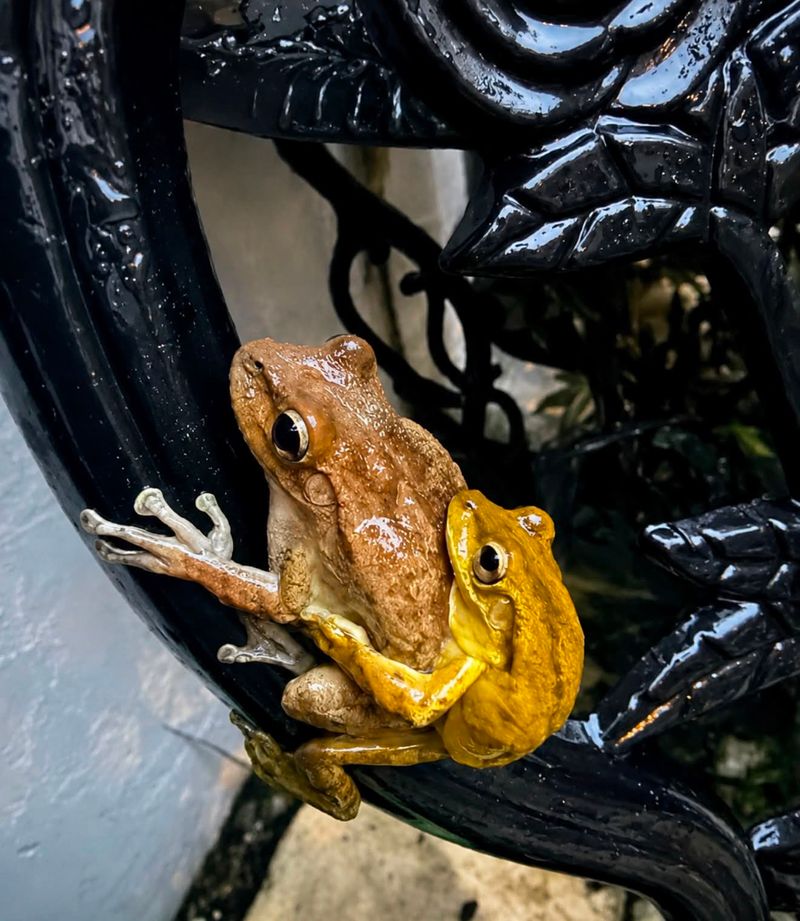
Wet weather triggers a big boom in frogs and toads across Florida. They come out to breed, hunt bugs, and soak up moisture.
Many snakes, like garter snakes, ribbon snakes, and southern black racers, see that crowd as an all-you-can-eat buffet.
Here is where your house enters the story. Porch lights attract moths and beetles, and those bugs pull in tree frogs and Cuban treefrogs.
Before long, your front door becomes the busiest restaurant on the block, and snakes are happy to show up as customers.
Your Florida Garden Changes Every Week. Your Plan Should Too.
Gardening in Florida changes quickly throughout the season. Every Friday you’ll receive a simple weekly plan showing exactly what to plant, prune, fertilize, harvest, and protect so you never miss the right timing.
So what can you actually do about it? Try switching outdoor bulbs to yellow or warm LED lights, which draw fewer insects.
Turning off lights you are not using also helps cut down on the whole food chain gathering by your steps.
Standing water matters too. Empty buckets, flower pot saucers, and kiddie pools after each storm so frogs have fewer places to lay eggs near your home.
A quick bit of trivia: a single southern toad can lay thousands of eggs at once. Multiply that by a rainy month, and you can see why snakes follow the frogs right up to your doorstep.
3. Rodents Seeking Shelter Lead Snakes Indoors
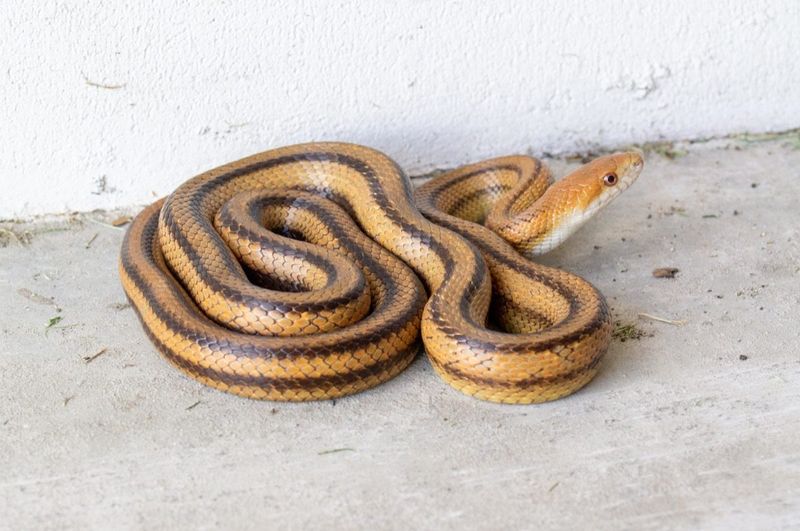
Rats and mice are not fans of soggy fields either. When their nests flood, they go looking for a dry hiding place, and garages and attics fit the bill nicely.
Snakes such as rat snakes and corn snakes track rodents mostly by smell. Once mice move into your shed or crawl space, those scent trails act like road signs.
A snake does not need an invitation when the food has already moved in.
Many people in Florida first notice a snake in the garage and never realize the real issue is a rodent problem. Fix the mouse situation, and the snake visits usually drop off on their own.
Start with the easy stuff. Store birdseed, pet food, and grass seed in sealed metal or thick plastic bins.
Clean up fallen fruit from citrus or mango trees, since rodents love a sweet snack.
Next, look for gaps. Mice can squeeze through a hole about the size of a dime, so check around pipes, vents, and garage door seals.
Steel wool and weatherstripping are cheap fixes that work well.
Remember that rat snakes are actually helpful neighbors outdoors. They do free pest control around farms and yards.
You just want them doing that job outside, not under your water heater or behind the dryer.
4. Fall Baby Snakes Hatch Across Florida Yards
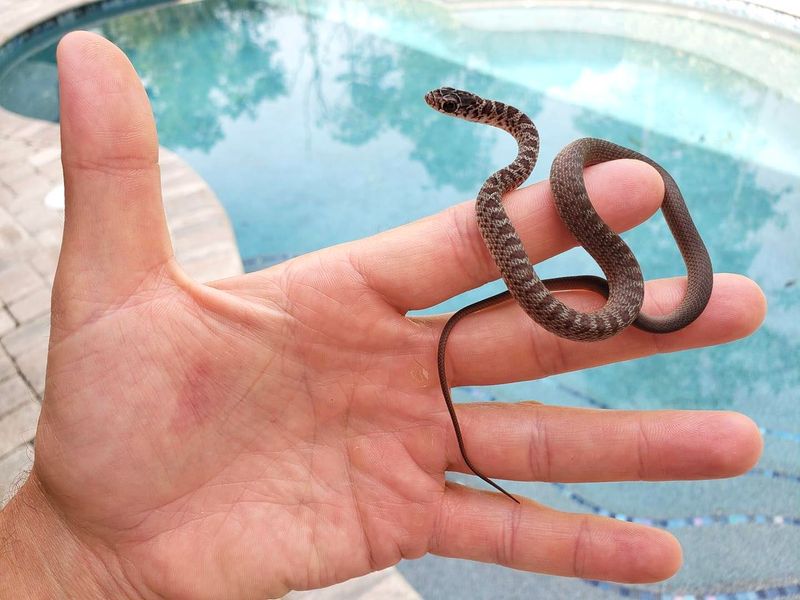
Late summer and early fall is hatching season for a lot of snake species. By October, the young ones are out exploring, and they are not shy about it.
Baby snakes in Florida often look nothing like their parents. Young black racers, for example, have gray bodies with reddish spots, which confuses plenty of homeowners.
People sometimes think they found a rare or dangerous snake when it is just a youngster.
These little ones are on their own from the start. They need food, cover, and a place to settle, so they wander a lot.
Rain makes the ground soft and full of bugs, slugs, and tiny frogs, which is exactly what they eat.
Because they are small, they slip through cracks adults cannot fit through. That is why you might spot one in a pool skimmer, a laundry room, or even a sliding door track.
If you find a baby snake, stay calm and give it space. Most are harmless, but baby venomous snakes can still bite, so avoid picking one up with bare hands.
A broom and a bucket can gently guide it back outside.
Snapping a photo helps too. Local wildlife groups and online ID pages can tell you what you are looking at within minutes, which takes a lot of the worry away.
5. Snakes Bulk Up Before Cooler Weather
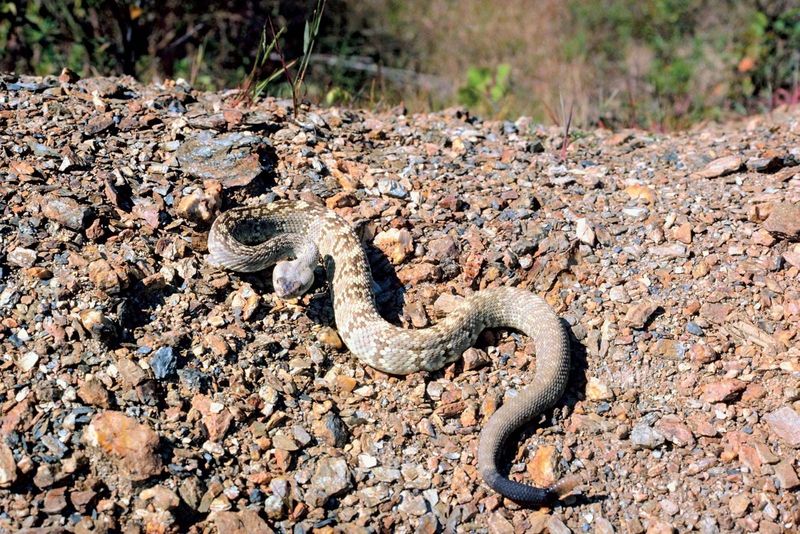
Snakes cannot head to the store when winter arrives, so autumn turns into a serious eating season. The goal is simple: store up energy for the cooler months ahead.
Even though winters in Florida are mild, temperatures still dip enough to slow snakes down. Many species go through a period of reduced activity called brumation.
Unlike true hibernation, brumation is not a deep sleep. Snakes may still move around on warmer days, drink water, and occasionally bask in the sun, but their metabolism slows significantly and they become far less active overall.
They need fat reserves to make it through.
That hunger makes snakes more active and more willing to travel. Combine it with rain bringing out frogs, lizards, and rodents, and you get snakes moving through yards at all hours.
They are basically stocking the pantry.
You might also see snakes sunbathing on driveways, sidewalks, or warm rocks between storms. Cool, wet mornings leave them sluggish, so they look for heat to get their bodies running again.
A smart habit is to scan the ground when you step outside after a rain. Look at the edges of the driveway, the bottom step, and any sunny concrete.
Wearing closed shoes instead of flip-flops also adds a nice layer of safety.
Keep pets on a leash during these weeks too. Curious dogs love to sniff anything that moves, and a startled snake may defend itself.
A little extra attention goes a long way in this busy season.
6. Overgrown Landscaping Becomes A Snake Hotel
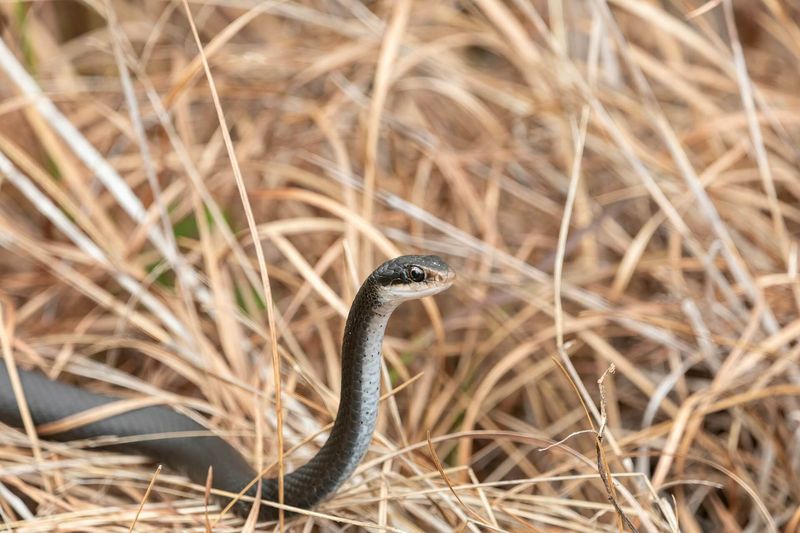
Rain makes everything grow like crazy. One week your lawn looks neat, and the next it looks like a jungle movie set.
Tall grass, thick shrubs, and piles of leaves give snakes perfect cover. They can move around unseen, stay cool, and hunt without hawks spotting them.
In Florida, palmettos and ground cover plants like Asiatic jasmine are especially popular hideouts.
Wet weather also makes yard work easy to skip. Nobody wants to mow in the mud, so grass gets taller and clutter piles up.
Snakes notice those changes fast and move right in.
Try these simple steps to make your yard less cozy:
Keep grass trimmed short, especially near the house. Pull shrubs back a foot or two from walls so you can see underneath.
Store firewood, lumber, and bricks on racks off the ground and away from doors.
Rock walls and decorative boulders deserve a second look as well. Gaps between stones are dream homes for snakes and the lizards they eat.
Here is a neat trick some landscapers use. A strip of gravel or bare mulch between your lawn and foundation creates an open zone snakes do not like crossing.
They feel exposed out in the open, so a clear border nudges them to stay farther away.
7. Retention Ponds Overflow Into Florida Neighborhoods
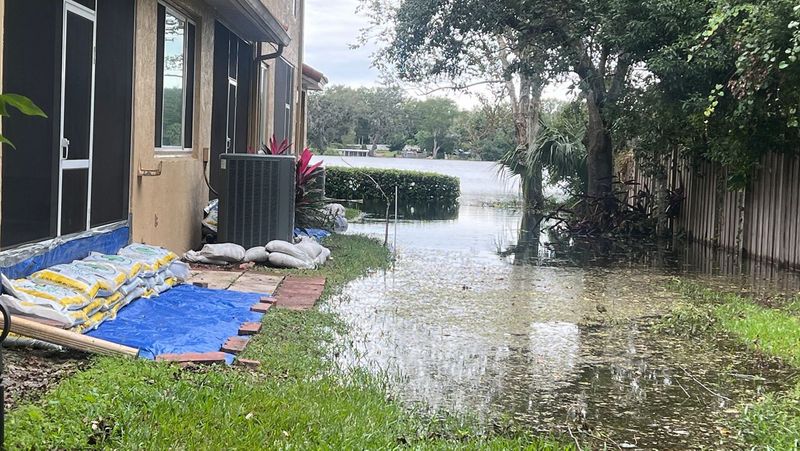
Plenty of newer subdivisions are built right around stormwater ponds. They look peaceful most of the year, but heavy fall rain changes the picture.
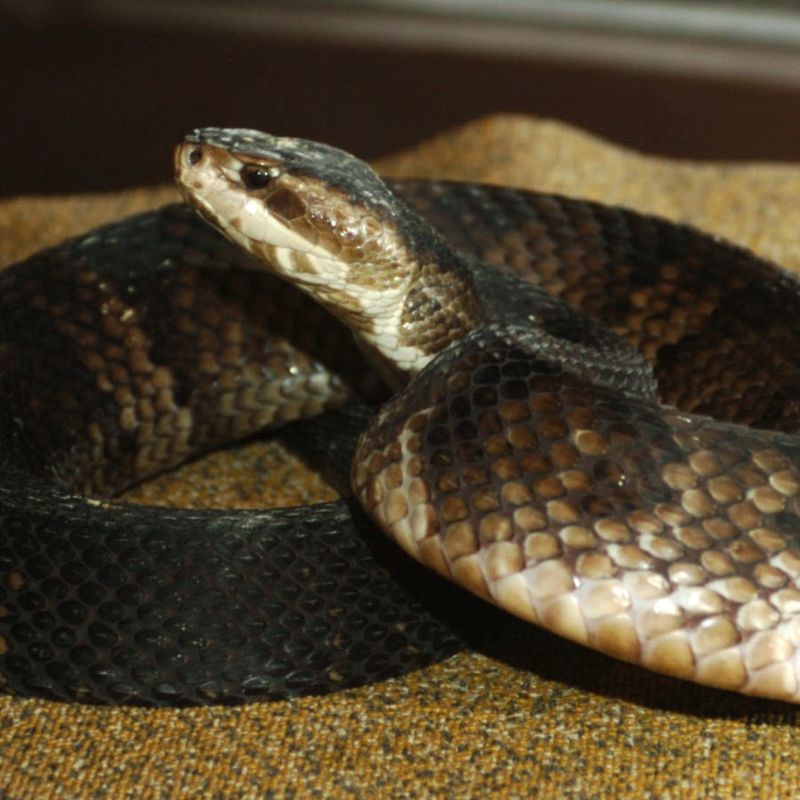
When those ponds rise, the animals living along the banks lose their space. Water snakes, cottonmouths, and garter snakes get pushed outward, often straight into backyards that border the water.
Across Florida, homes near canals and ponds tend to report the most sightings during wet spells.
Most snakes you see near water are harmless banded or brown water snakes. They can look scary and may flatten their heads when nervous, so people often mistake them for cottonmouths.
Learning the difference helps you stay calm and safe.
If you live near a pond, set a few ground rules for your family. Kids should not play along the bank right after storms.
Pets should stay leashed, and nobody should reach into thick plants at the edge.
Fencing can help, too. A snake-resistant mesh along the bottom of a fence, buried a few inches and angled outward, discourages visitors from crossing into play areas.
Here is a cool fact: water snakes give birth to live babies instead of laying eggs. Sometimes dozens show up at once, which explains why some families suddenly see several small snakes near the shoreline.
8. Tiny Gaps Let Snakes Slip Inside
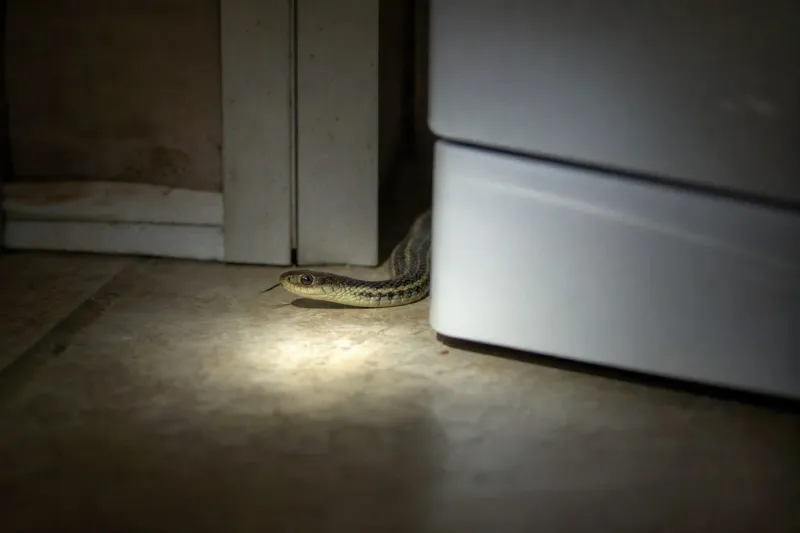
A friend once found a corn snake curled up behind her washing machine. The culprit was a gap around the dryer vent about the width of a pencil.
Snakes are skilled at squeezing through small openings. If their head fits, their body usually follows.
Rain makes them more likely to test those openings, since they want warmth and a dry spot to rest.
Homes in Florida often have features that create entry points. Sliding doors with worn tracks, AC line holes, garage doors that do not seal tightly, and weep holes in block walls are common trouble spots.
Spend an afternoon doing a slow walk around your house. Look low, right at ground level, since that is where snakes travel.
Pay attention to anything you could slip a finger into.
Fix what you find with the right tools. Use expanding foam or caulk around pipes, door sweeps for gaps under doors, and fine mesh screen over vents.
Check screen porches for tears, since snakes can push through small rips.
A garage door seal kit costs very little and can make a big difference. Many homeowners say snake sightings in the garage dropped once they replaced that worn rubber strip.
Small repairs like these pay off for years and keep bugs and rodents out too.
9. Knowing Which Snakes Deserve Extra Caution
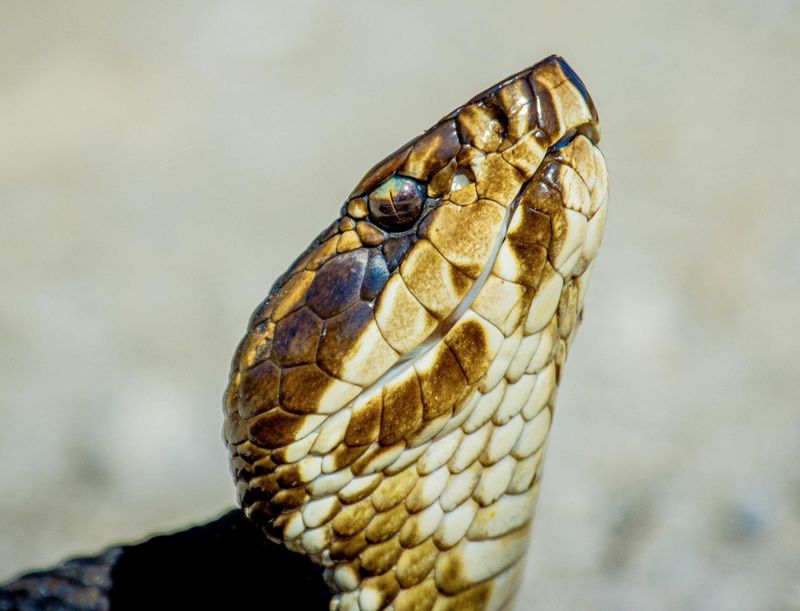
Good news first. Out of roughly 50 snake species in Florida, only six are venomous, and most of the snakes you meet are friendly to your garden.
The ones to respect are the eastern diamondback rattlesnake, timber rattlesnake, pygmy rattlesnake, cottonmouth, copperhead, and eastern coral snake. Pygmy rattlers and cottonmouths are the most likely to turn up after heavy rain, as both prefer damp areas and can show up near patios and ponds.
It is worth noting that the copperhead has a very limited presence in Florida, found only in a small area of the extreme northern part of the state near the Georgia border. Homeowners in Central and South Florida are very unlikely to encounter one.
If you live in the Panhandle or far northern Florida, it is worth being aware of, but for most residents it is not a practical concern.
Coral snakes have a famous rhyme: red touches yellow, watch out fellow. Scarlet kingsnakes look similar but have red touching black.
Still, rhymes are not foolproof, so a photo and a quick ID check are always smarter than relying on memory alone.
When in doubt, follow a few easy rules. Keep a distance of at least six feet.
Do not try to catch or move the snake yourself. Bring kids and pets inside and keep an eye on where it goes.
For removal, call a licensed wildlife professional or your local animal services. Many will relocate the snake safely, which protects both you and the animal.
It also helps to save the number for poison control, 1-800-222-1222, in your phone. If a bite ever happens, stay calm, keep the area still, and head to the hospital right away.
Quick action makes a real difference.