Why Pruning California Hydrangeas Now Quietly Erases Next Spring’s Blooms
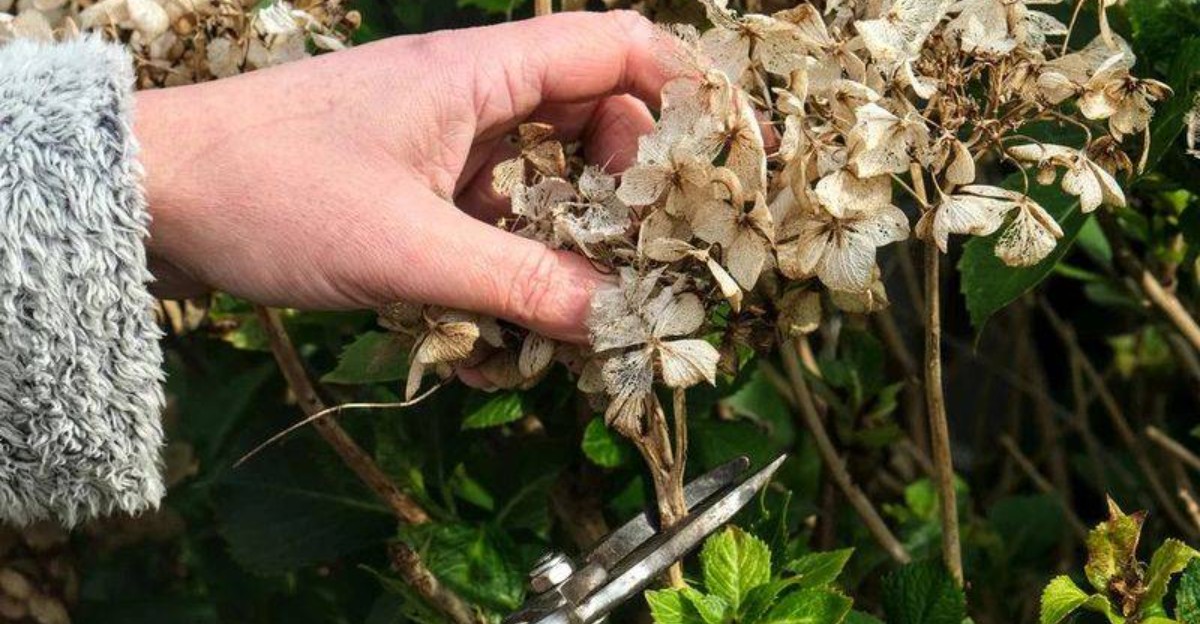
October tends to inspire tidying in California gardens. Summer flowers have faded, shrubs look a little shaggy, and the urge to grab the shears grows stronger.
One beloved flowering shrub responds to that urge in an unexpected way. A few quick snips can leave it looking neat for winter, only to produce plenty of leaves and very few blooms the following summer.
The reason hides in plain sight, tucked along stems that seem to be doing nothing at all.
Not every variety follows the same rules, and California’s mix of coastal, valley, and foothill climates adds another layer.
A little patience this fall, paired with knowing exactly what grows in the yard, can mean a summer packed with color.
Old Wood Types Set Next Year’s Buds Early
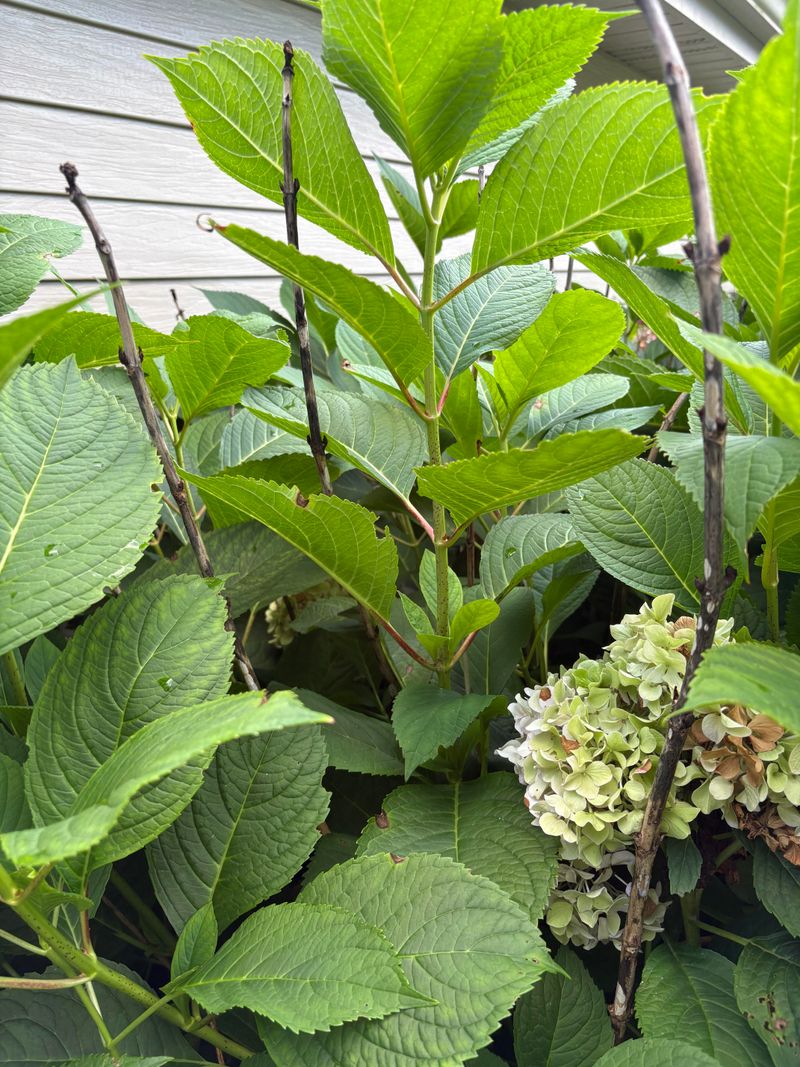
Late August looks like a slow season in most California gardens. Heat lingers, flowers fade, and shrubs seem to rest, yet inside a bigleaf or oakleaf hydrangea, a busy project is underway.
These plants bloom on old wood. That term refers to stems that grow this year and carry through winter to flower the following season.
As summer winds down and days grow shorter, the plant starts forming next year’s flower buds near the tips of those stems. The buds stay small, tucked inside tight, scaly coverings.
They’re easy to walk past without a second glance. Once formed, they sit quietly through fall and winter.
Spring warmth then wakes them up, and they grow into the big flower heads that make these shrubs so popular. The plant finishes most of its planning before the first cool night arrives.
The process resembles packing a suitcase months before a trip. Everything needed for next year’s blooms is folded and ready, and unpacking too early cancels the journey.
Timing shifts a bit by region in California. Coastal gardens with cool summers may see buds form at a slightly different pace than hot inland valleys.
Still, the general pattern holds across the state. By early fall, an old-wood hydrangea already carries its future flowers.
That single fact changes how the shrub looks in autumn. Those plain stems aren’t empty, since they hold next season’s color.
Pruning Now Removes Those Buds
A small pile of stem tips on the ground after a fall trim often hides a sad surprise.
A close look may reveal tiny rounded buds at the ends of those pieces, next year’s flowers now headed for the green waste bin.
A fall cut on an old-wood hydrangea works like an eraser. Each snip at the top of a stem removes the bud that formed there.
The plant can’t simply grow a new flower bud in time for spring. It already used its window for that job back in late summer.
What follows can be frustrating. In spring, the shrub pushes out fresh leaves and looks perfectly healthy, sometimes even taller and fuller than before.
Flower heads, however, may never show up. Only a few might appear on stems that escaped the shears.
Your California Garden Changes Every Week. Your Plan Should Too.
Gardening in California changes quickly throughout the season. Every Friday you’ll receive a simple weekly plan showing exactly what to plant, prune, fertilize, harvest, and protect so you never miss the right timing.
Many gardeners blame poor soil, too much shade, or the wrong fertilizer. Those can play a role, yet a fall trim ranks among the most common reasons for a bloom-free year.
The damage happens months before anyone notices. Heavy cuts make the problem worse.
Shearing the whole shrub into a neat ball removes nearly every bud at once. A few random snips do less harm, though they still cost some flowers.
The lesson stays short and simple. On old-wood types, every tip cut in fall equals a bloom given up, so the shears work best resting in the shed for now.
Bigleaf And Oakleaf Are The Main Risk
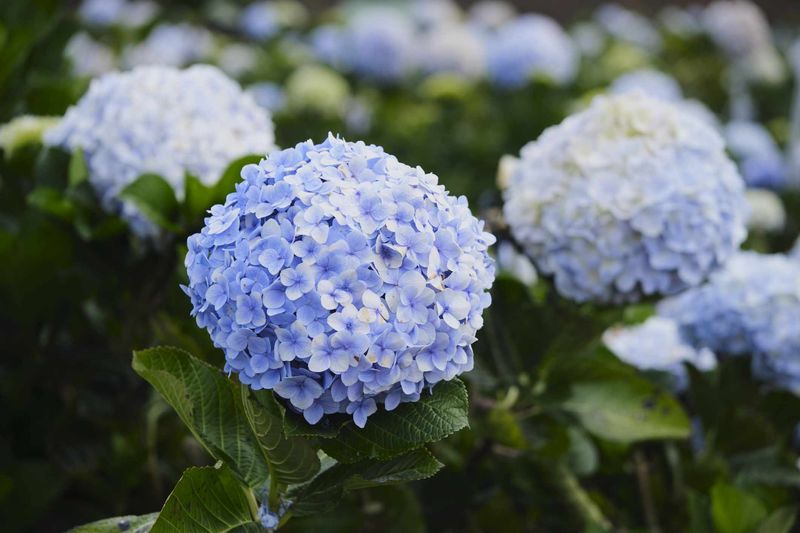
Those giant blue and pink pom-poms in California front yards usually belong to bigleaf hydrangea. This classic mophead and lacecap shrub is the type most likely to lose its flowers to fall pruning.
Bigleaf hydrangeas carry their flower buds on old wood. Their leaves are wide, glossy, and coarsely toothed.
Flower color can shift between pink and blue depending on soil chemistry, a fun quirk that adds to their appeal. That popularity also means they get pruned at the wrong time more than any other kind.
Oakleaf hydrangea presents the other big risk. Its leaves look a lot like oversized oak leaves with deep lobes.
Long, cone-shaped white flower clusters appear in early summer. In fall, the foliage often turns rich red, burgundy, or bronze, giving the plant a second season of beauty.
Like bigleaf types, oakleaf hydrangeas bloom on old wood. Their buds form on the current year’s stems and wait through winter.
A fall trim removes those buds just as easily. The loss shows up the following summer as a shrub full of leaves and short on flowers.
Oakleaf hydrangea is native to the southeastern United States. It still adapts well to many shady California gardens with regular water.
Shrubs matching either description deserve extra care this time of year. Fall color and dried flower heads offer plenty to admire, while serious pruning can wait for a better moment.
Panicle And Smooth Types Are Safer To Prune Later
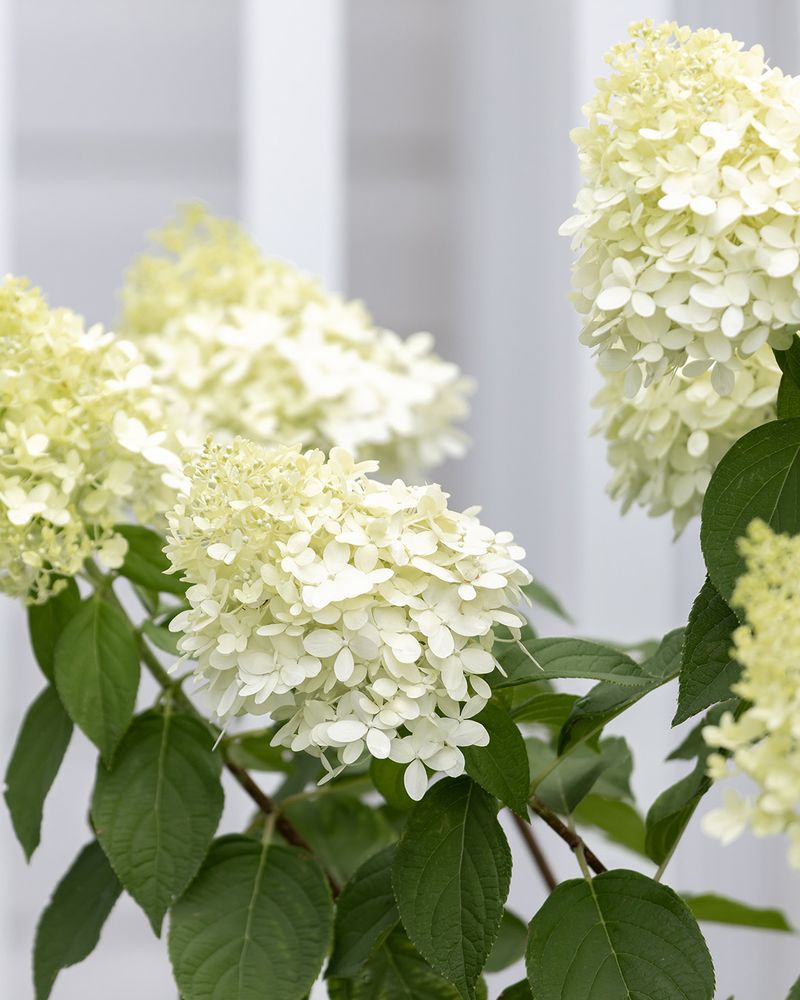
Good news arrives in cone shapes and snowballs. Panicle and smooth hydrangeas play by a different set of rules, and they forgive gardeners with itchy fingers far more readily.
Panicle hydrangea grows cone-shaped flower clusters that often start white and blush pink as they age. Popular selections include Limelight and Quick Fire.
Smooth hydrangea produces round white heads, with Annabelle ranking as the best-known variety. Both types share an important trait.
They bloom on new wood, forming flower buds on stems that grow in spring, the same year the flowers open. A cut made during dormancy removes no flower buds, because those buds don’t exist yet.
Late in the dormant season, before new growth begins, makes the best pruning window. In much of California, that means late winter or very early spring.
The plant itself offers a better guide than the calendar. Warm areas may wake up sooner, so swelling buds signal that time has arrived.
Panicle types can be cut back to shape them or to remove weak stems. Smooth hydrangeas handle a harder cut and still bloom the same summer.
Some gardeners trim smooth types low each year. Very short cuts, though, can lead to floppy stems under heavy flowers.
October still offers no reason to rush. Waiting until late winter lets the plant settle into rest, and the dried flower heads add charm to a fall garden in the meantime.
Know Your Type Before You Cut
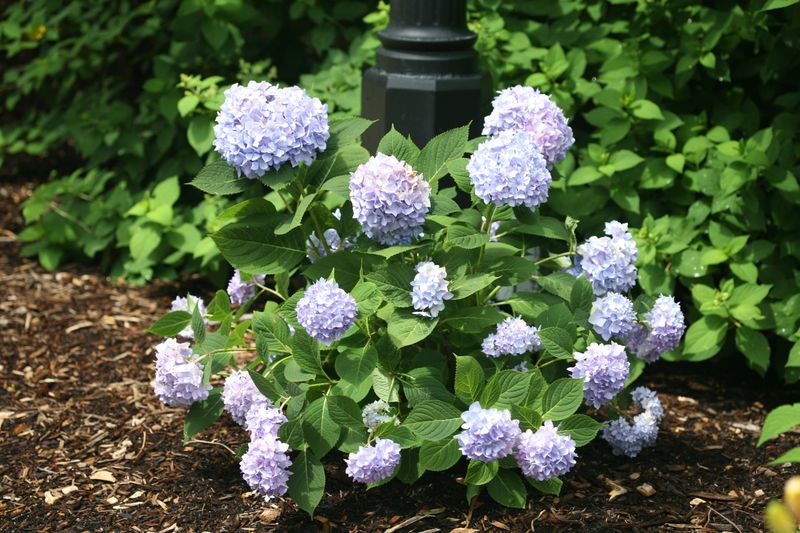
A quick detective session can save a whole season of flowers. Five minutes spent identifying the hydrangea in the yard pays off long before the shears come out.
Leaves offer the first clue. Big, glossy, toothed leaves usually point to bigleaf hydrangea, while deeply lobed leaves shaped like an oak point to oakleaf.
Smaller, pointed leaves on a plant with cone-shaped flowers suggest a panicle type. Thin, rounded, soft leaves paired with white snowball flowers often mean smooth hydrangea.
Flowers, or what remains of them, add more evidence. Mopheads and lacecaps in pink, blue, or purple are classic bigleaf.
White cones that turn pink belong to panicle types. Round white domes usually signal smooth hydrangea.
Old plant tags and receipts help, too. Many nurseries list the full plant name, and a quick search reveals its bloom habit.
Neighbors or past owners who planted the shrub may also remember useful details. Their memory can settle the question quickly.
Reblooming bigleaf varieties deserve special mention. Series like Endless Summer bloom on both old and new wood.
A fall cut still removes early-season buds, though the plant can produce some flowers on new growth later. That second chance lowers the risk without removing it entirely.
Any shrub that remains a mystery works best treated as an old-wood type. A photo shown to a local nursery can help, since a careful guess beats a costly mistake.
Brown Stems May Still Hold Buds
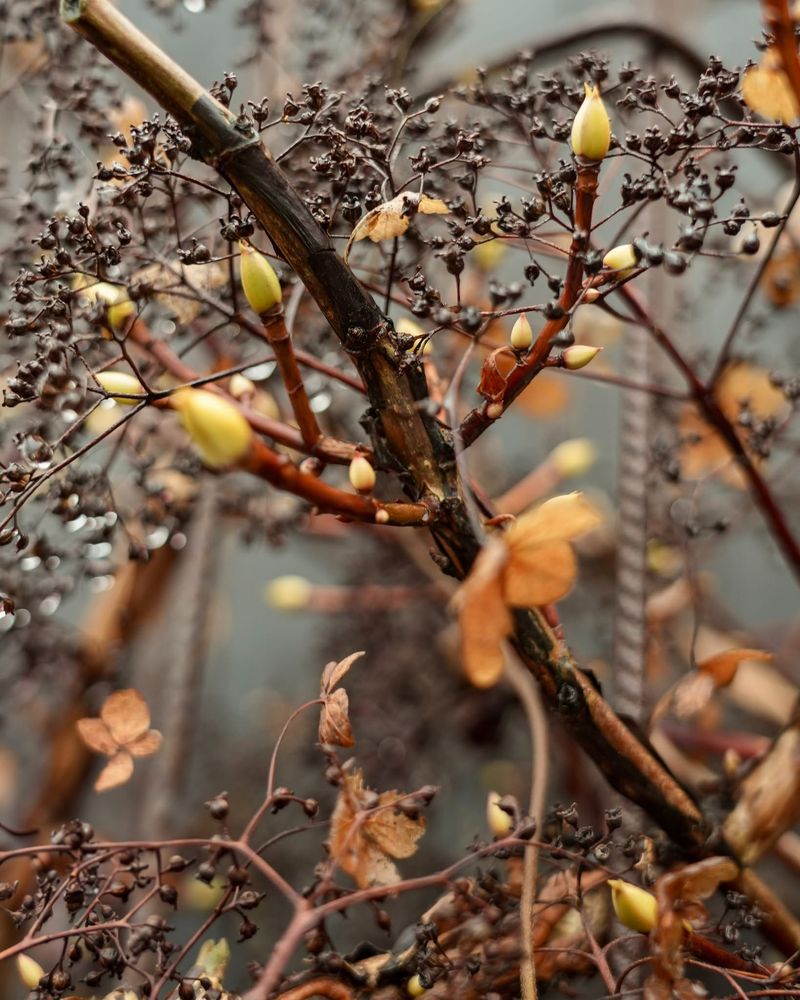
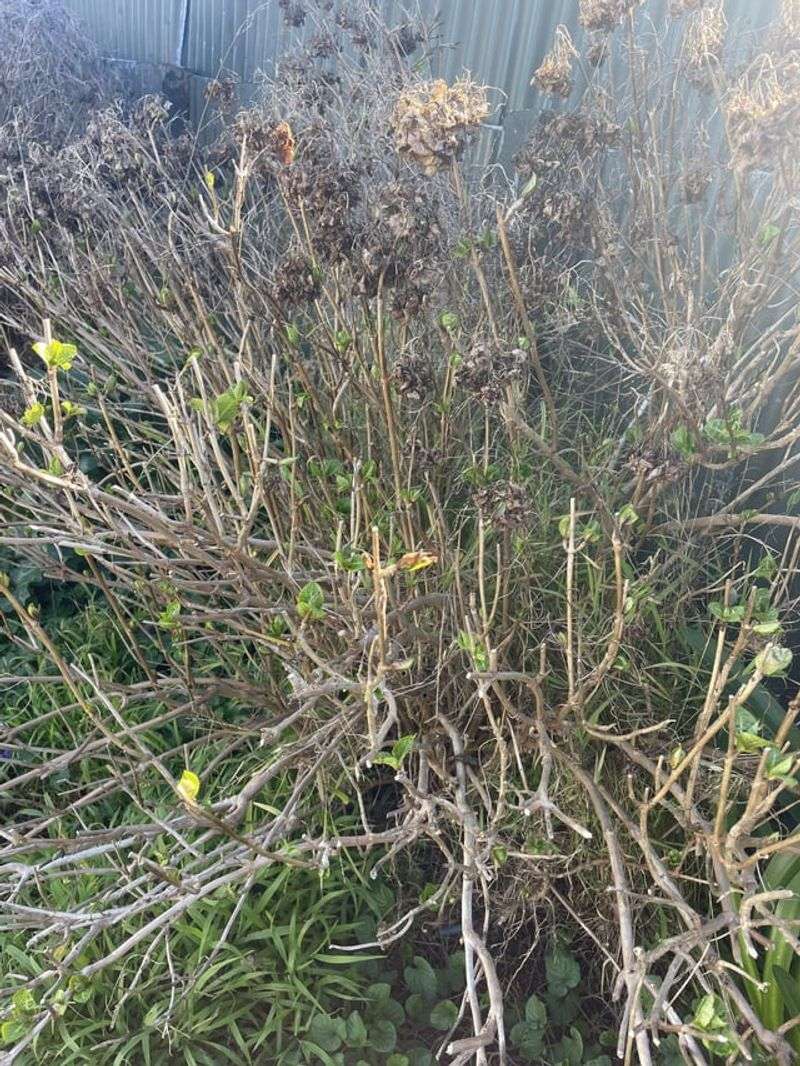
By midwinter, a bigleaf hydrangea can look like a bundle of bare sticks. Leaves are gone, flower heads turn papery, and stems look brown and finished.
Plenty of gardeners decide the whole thing needs to go. A closer look tells a different story.
Brown or leafless stems often still hold healthy flower buds. Bigleaf and oakleaf hydrangeas drop their leaves for winter, while the stems stay alive under the bark.
Buds sit tucked along the stems and at the tips, waiting for spring. Plump, paired buds, often greenish, reddish, or tan, are the ones to notice.
The fattest buds near the top of the stem usually become flowers. Slimmer buds lower down tend to produce leaves instead.
A gentle stem test offers more reassurance. A tiny fingernail scratch on the bark revealing green tissue underneath means the stem is alive.
Dry, brittle wood that snaps easily may truly be spent, especially on very old stems near the base. Those deserve a closer look later.
Patience pays off here. Spring, when leaves begin to unfold, makes the best time to judge each stem.
Stems that stay bare after the rest of the plant greens up can come out then, cut back to a healthy bud or to the base.
A brown stem in December works like a winter coat hiding next year’s outfit underneath, so a little time lets it show what it can do.
Light Tidying Beats A Hard Cut
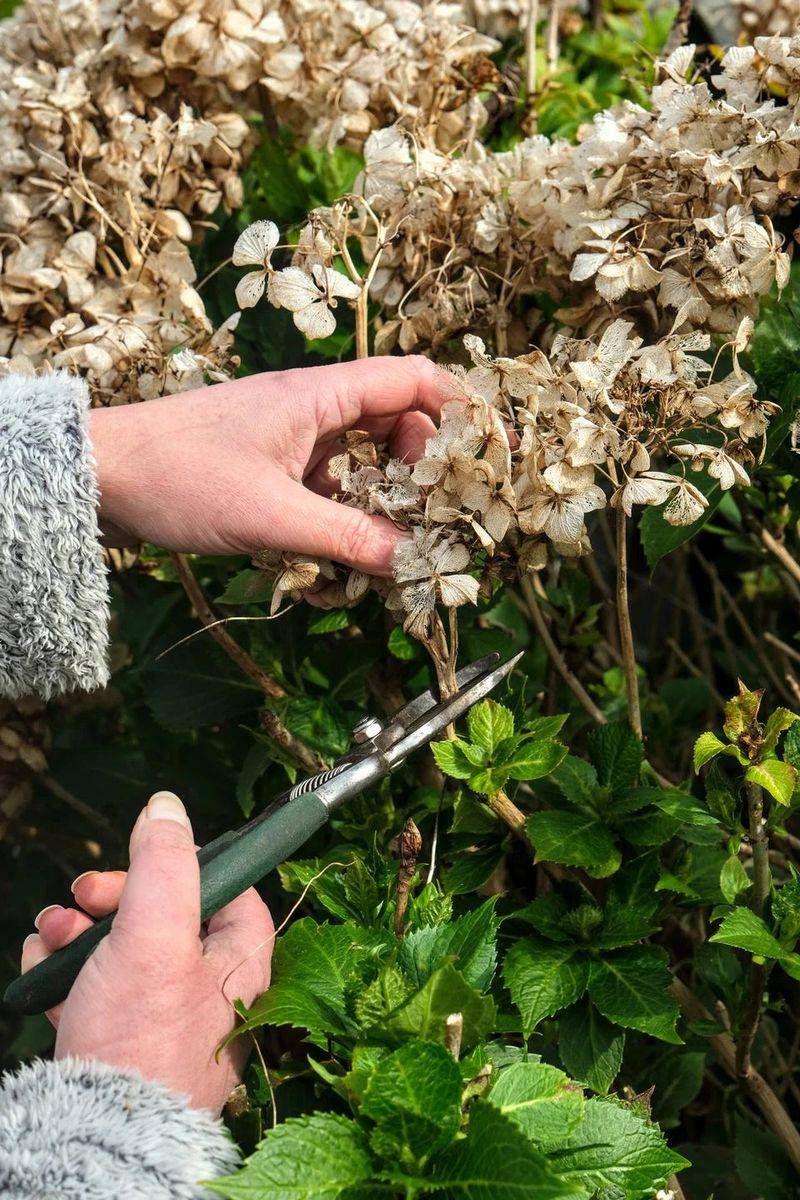
Some tidying works fine, even in fall. The trick lies in knowing where small fixes end and real pruning begins.
Trimming ranks as the safest chore. On old-wood types, a faded flower head snipped just below the bloom, above the first set of healthy buds, leaves the rest of the stem untouched.
Some gardeners skip this step entirely. Dried flower heads look lovely through winter.
Broken, damaged, or clearly spent stems can also come out. Cutting them back to healthy wood or to the base keeps the shrub tidy.
Removing a few weak or crossing stems improves airflow without costing many flowers. Those small cuts make a real difference.
Shearing the shrub into a neat shape, cutting every stem down by half, or chopping the plant to the ground are best avoided. Those hard cuts remove most of next year’s buds on bigleaf and oakleaf hydrangeas.
A simple guideline helps. Cuts that would change the size or shape of the plant can wait, while cuts that only remove something brittle, broken, or faded can proceed carefully.
Leaving some old flower heads in place can be a smart move. In cooler parts of California, they may offer a little shelter for the buds below during chilly nights.
They also add texture for birds and the winter garden.
Fall works best as a light dusting rather than a deep clean, and next summer’s flowers make that slightly shaggy look well worth it.