Your Christmas Cactus Is Wilting In Georgia – Here’s What Could Be Wrong
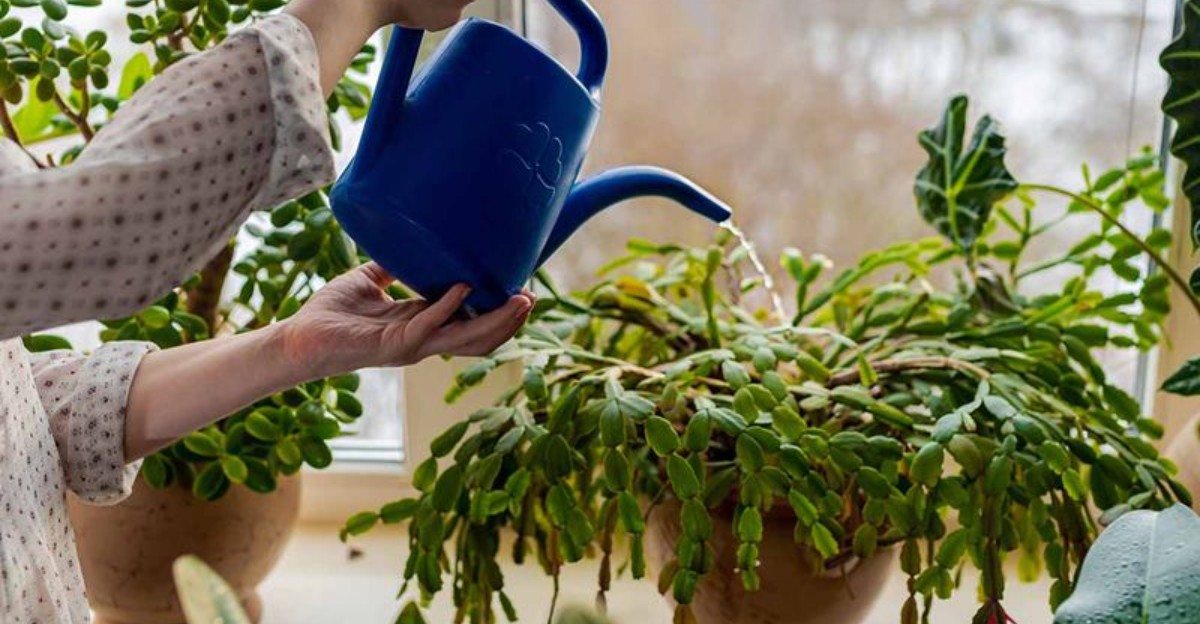
Limp, wrinkled segments drooping over the pot can make a Christmas cactus look like it is giving up. Many owners water more, which may be the opposite of what it needs.
Wilting can come from too much water as easily as too little, and in Georgia homes the two often look alike.
Soggy soil can rot the roots, leaving them unable to move water to the stems.
Other times, heat, bright sun, or a sudden move to a new spot is to blame. Plants brought indoors for the season are prone to that kind of stress.
Figuring out the cause first matters, since the wrong fix can make things worse.
Slide the plant out of its pot and check whether the roots look firm and white or soft and brown.
1. Wilting Stems Do Not Always Mean Your Plant Needs More Water
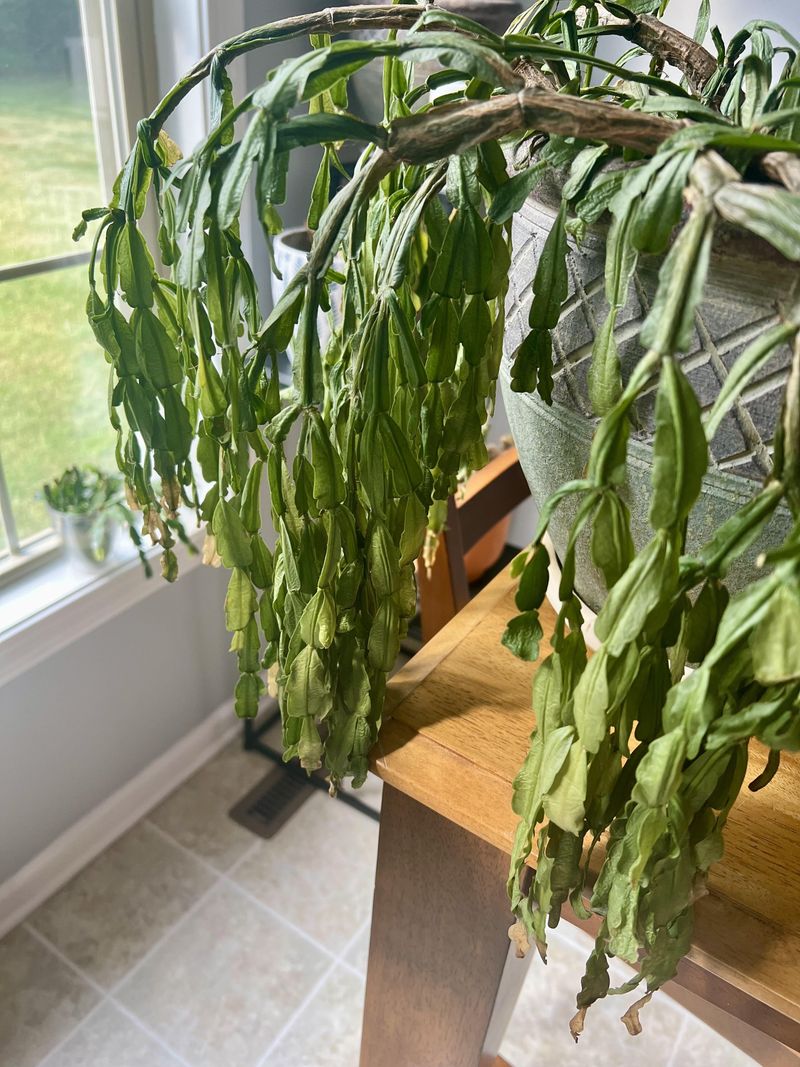
Reaching for the watering can feels like the natural fix for a droopy plant. With a Christmas cactus, that first instinct can sometimes make things worse.
Both overly wet and overly dry potting mix can leave a Christmas cactus looking wilted.
That surprises a lot of people, but it makes sense once you think about the roots. When soil stays soggy, roots can be damaged and stop moving water up into the stems.
On the other hand, a plant left dry too long simply runs short on moisture.
In both cases, the segments may go soft, floppy, or a little wrinkled. From across the room, a thirsty plant and a waterlogged plant can look almost identical.
Humidity in Georgia can make this trickier during summer, since potting mix may dry more slowly than you expect indoors and on shaded porches.
So before adding more water, pause and look closer at the soil, the base of the stems, and how heavy the pot feels when you lift it.
A soggy, sour-smelling pot calls for a very different response than a light, bone-dry one. Taking a minute to tell them apart can save your plant from a mistake that is harder to undo.
2. Soggy Potting Mix Can Leave Roots Struggling To Function
Wet feet are a real problem for this plant. In the wild, Christmas cacti cling to tree branches where water drains away quickly after rain.
Indoors, a pot that stays wet for days can starve roots of the air they need.
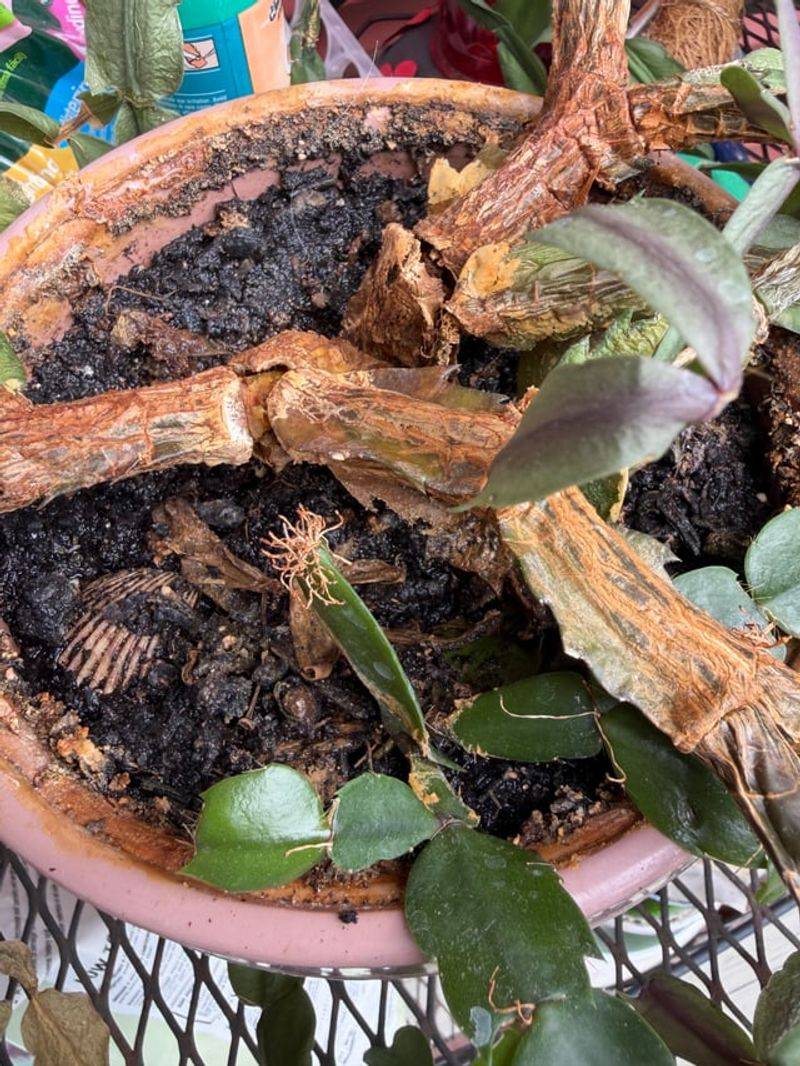
Roots sitting in heavy, soaked mix may start to rot. Once that happens, they cannot take up water well, so the stems above can wilt even though the soil feels damp.
Watch for segments dropping, a soft or darkened stem base, or a musty smell from the pot.
If you suspect rot, gently slide the plant out and look at the roots. Healthy ones are usually firm and light colored, while rotted ones tend to be brown, mushy, and easy to pull apart.
Trimming away the damaged roots with clean scissors and repotting into fresh, fast-draining mix may help a plant bounce back.
Recovery is not certain, though, and it depends on how much healthy root is left. Severely rotted plants sometimes do better if you root a few healthy stem cuttings as a backup.
Your Georgia Garden Changes Every Week. Your Plan Should Too.
Gardening in Georgia changes quickly throughout the season. Every Friday you’ll receive a simple weekly plan showing exactly what to plant, prune, fertilize, harvest, and protect so you never miss the right timing.
Gardeners around Georgia often see this issue in fall, when cooler weather slows drying but watering habits stay the same as summer.
3. Dry Mix Can Make The Segments Look Limp And Wrinkled
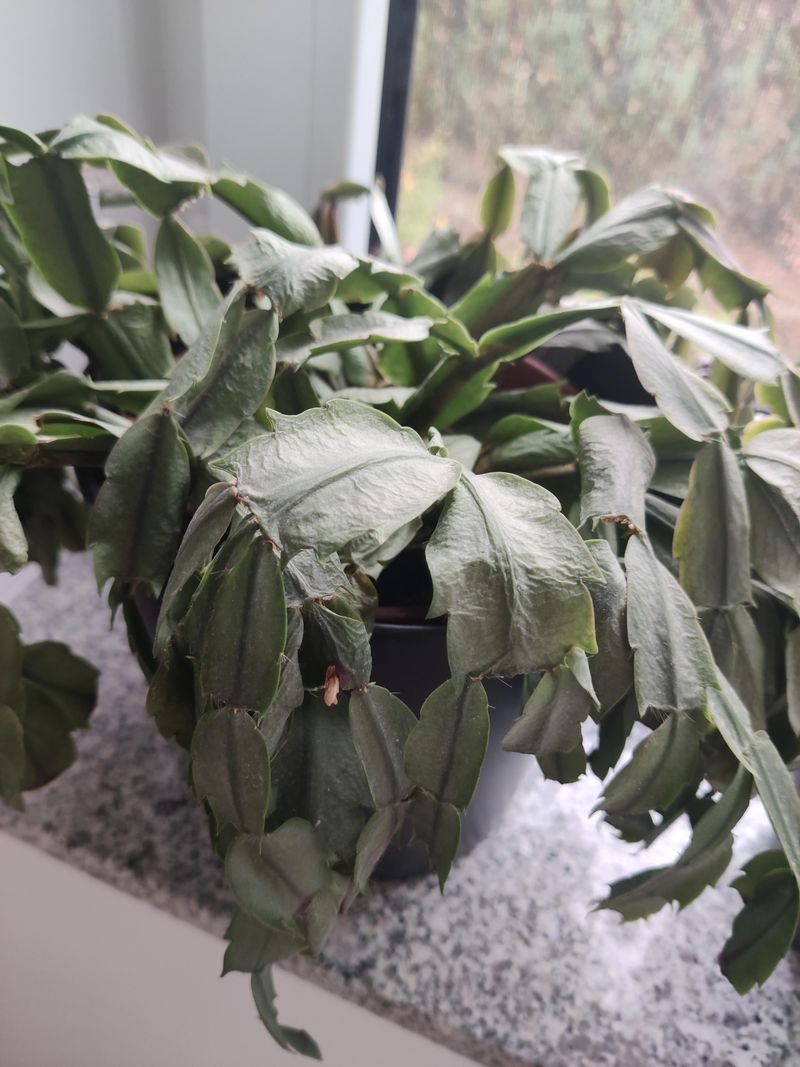
Picture a grape slowly turning into a raisin. Thirsty Christmas cactus segments can take on a similar puckered, shriveled look when moisture runs low.
Unlike desert cacti, these plants prefer potting mix that stays lightly moist during active growth.
When the soil pulls away from the pot edges or feels dry well below the surface, underwatering is a likely suspect. Pots that feel unusually light are another helpful sign.
Small pots, terracotta containers, and warm rooms can all speed up drying.
In Georgia homes, running the heat through winter can dry indoor air and soil faster than many people realize. Air conditioning in summer can have a similar drying effect in some rooms.
If the mix is very dry, water slowly and thoroughly until some drains out the bottom.
Very dry mix sometimes repels water at first, so it may run straight through. Watering in a couple of gentle rounds, or soaking the pot from below for a short time, can help it absorb moisture again.
Give the plant several days to perk up. Mildly wrinkled segments often plump back up, but badly shriveled ones may stay damaged, and new growth will show whether the plant is truly recovering.
4. Poor Drainage Keeps Too Much Water Around The Roots
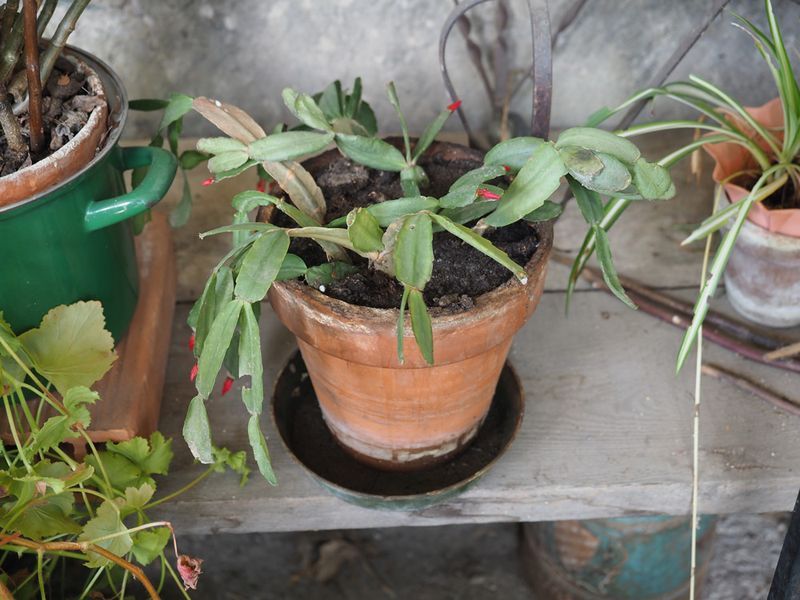
Pretty pots can hide an ugly problem. A decorative container without a hole lets water collect at the bottom, where roots slowly sit in it.
Drainage holes matter more than the pot’s style or color.
Even a pot with a hole can cause trouble if it rests in a saucer full of water. Emptying the saucer after watering keeps the bottom of the root ball from staying soaked.
Potting mix plays a big role too.
Dense garden soil or heavy, peat-rich mix can hold water for a long time. Christmas cacti usually do better in a light blend, such as potting soil mixed with perlite or a cactus mix with a bit of added organic matter.
Pot size is worth a look as well. A container much bigger than the root ball holds extra soil that stays wet, and these plants generally like being a little snug.
If you love a decorative pot, use it as an outer cover. Keep the plant in a plastic nursery pot inside, then lift it out to water and drain.
Plenty of Georgia gardeners use this trick for holiday plants received as gifts, since many arrive in foil wraps that trap water.
5. Direct Afternoon Sun Can Stress A Plant Near The Window
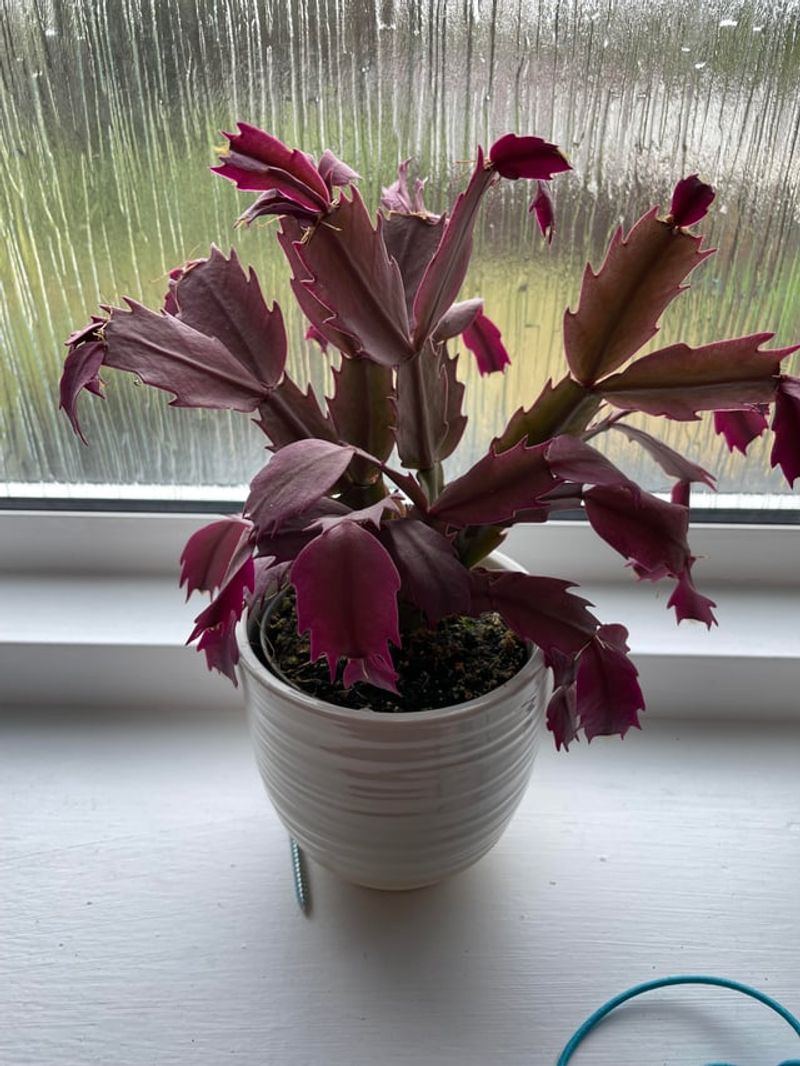
Sunny windows are not always friendly spots. Christmas cacti grow in the filtered light of forest canopies, so harsh rays can be too much for them.
Bright, indirect light tends to suit them best.
Strong afternoon sun through a south or west window can heat the leaves and dry the soil quickly. Plants under that stress may look limp, pale, or tinged with red or purple.
Reddish segments can have other causes, such as cold or root issues, so sun is only one possibility.
Georgia summers bring intense sunlight, and plants moved outdoors to a patio may get scorched if placed in open sun. A covered porch or shady spot under a tree is usually safer for summer.
Moving the plant a few feet back from a hot window can make a real difference.
Sheer curtains also soften the light without leaving the plant in deep shade. East-facing windows often work nicely, since morning sun is gentler.
Give the plant time after a move, because it may need a few weeks to settle. Fresh, healthy green growth is a good sign the new spot is working well.
6. Sudden Changes In Temperature Can Add More Stress Indoors
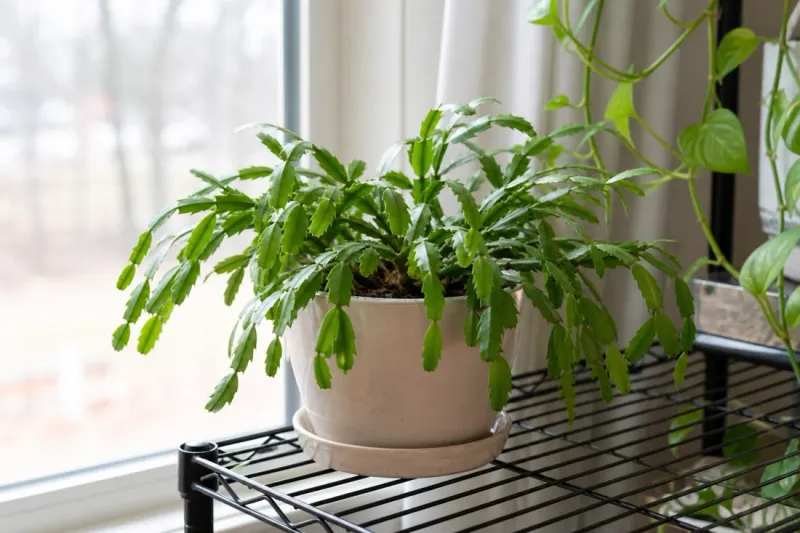
Heat vents and drafty doors cause more trouble than people expect. A plant parked right beside one can go through quick swings that leave it droopy.
Christmas cacti generally like steady, moderate room temperatures.
Blasts of hot, dry air from a heater can pull moisture from the soil and stems faster than the roots replace it. Cold drafts from an opening door can shock the plant in a different way.
Bud drop often shows up alongside this kind of stress.
Moving a plant from a shaded porch to a warm living room can also be a jolt. Weather in Georgia can shift fast in fall and early spring, so bring outdoor plants inside before frost and do it gradually if you can.
Freezing temperatures can seriously damage these tropical plants, so they should not stay outside on frosty nights.
Indoors, try to keep your plant away from vents, fireplaces, space heaters, and doors that open often. A spot with steady conditions and good light usually works better than a spot that looks festive.
Once the plant is in a calmer location, avoid moving it again right away. Frequent shifts can add stress, especially while it is setting buds.
7. Checking The Potting Mix Before Watering Helps Narrow Down The Cause
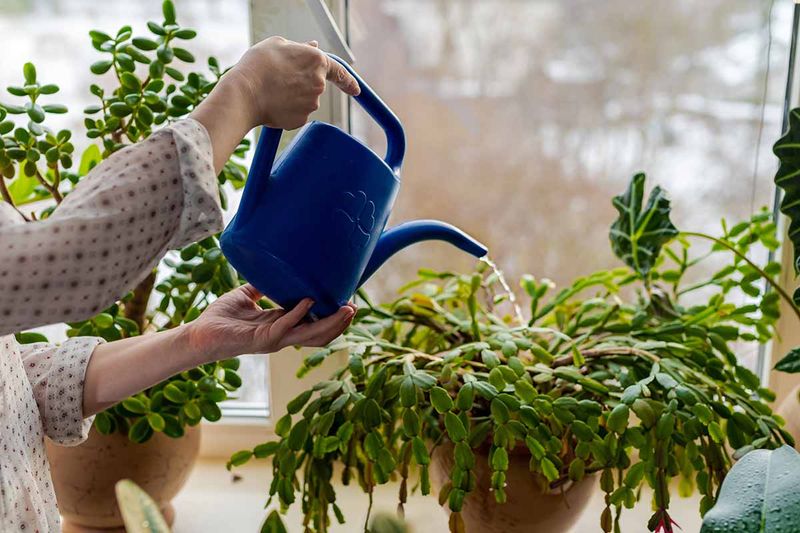
Your finger may be the best tool you own for this job. Pushing it an inch or so into the soil tells you far more than a guess based on how the stems look.
If the top inch feels dry, it is usually time to water.
Soil that still feels damp or cool means waiting is the safer choice. Lifting the pot helps too, since a freshly watered pot feels noticeably heavier than a dry one.
Inexpensive moisture meters can help, though readings are not always precise in every mix.
Seasons matter here. Plants often use less water during cooler, darker months and after blooming, while spring and summer growth usually calls for more frequent watering.
No set schedule fits every home, because light, pot size, and room temperature all change how fast soil dries.
A Georgia home with the heat running may dry pots faster in winter than a cooler sunroom does. Checking each plant on its own is more reliable than watering everything on the same day.
Keep notes for a few weeks if you are unsure. Patterns in soil moisture and plant appearance can point you toward the real cause of wilting.