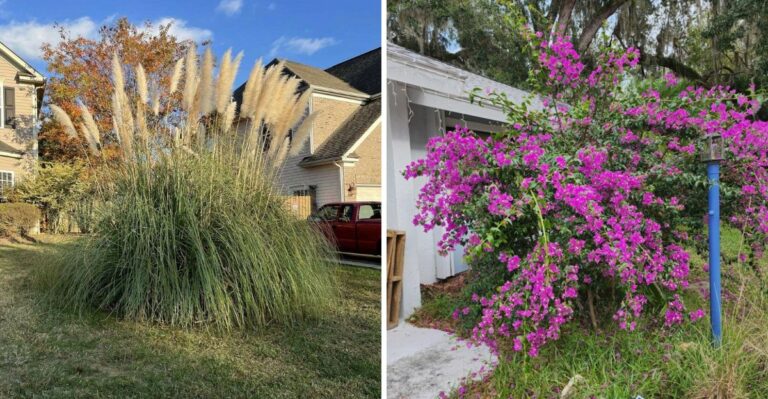
Why California HOA Plant Lists Could Get An Update This Year (And What To Plant Now)
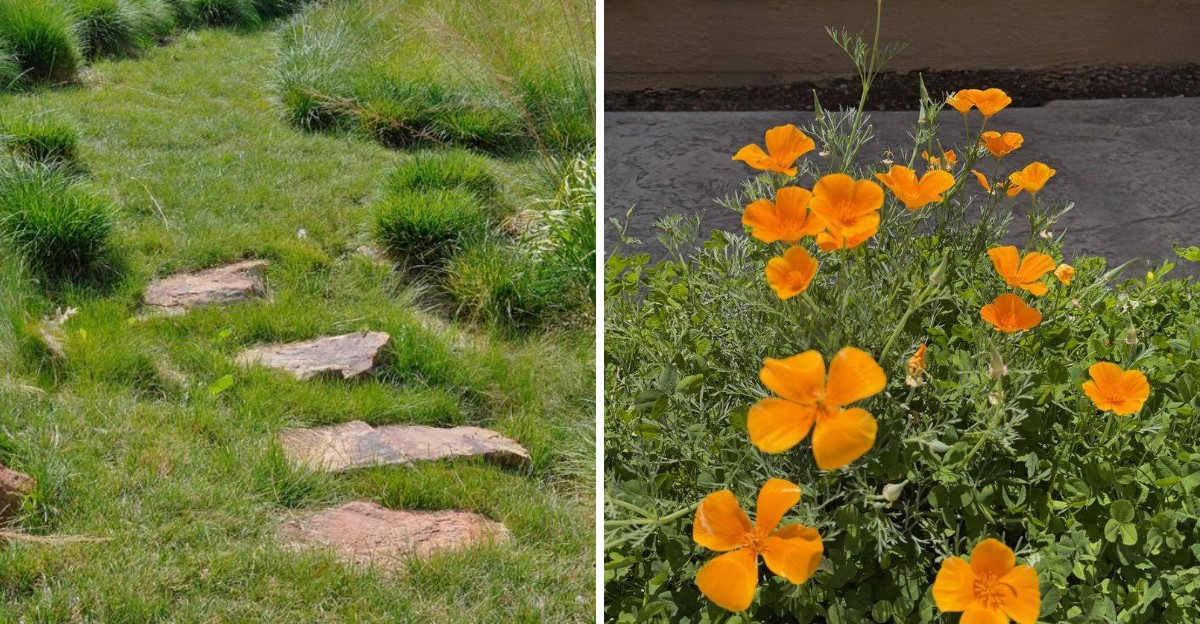
Neighborhood plant lists rarely make headlines. Many were written years ago, tucked into handbooks that few residents read twice.
This year, though, a quiet shift in California could make some of those pages look out of date. The change centers on a narrow strip of ground most homeowners walk past every day.
Favorite shrubs that once seemed like smart, tidy choices may suddenly raise new questions.
Associations move at their own pace, and few face any instant deadline to rewrite anything. Still, curious homeowners can get ahead of the conversation.
A little reading, a quick map check, and a few well-chosen plants can smooth the path.
Sometimes the most important garden decisions happen within arm’s reach of the front door.
Zone 0 Rules Now Reach The First Five Feet

Embers make the sneakiest part of a wildfire. Wind can carry glowing bits a mile or more ahead of the flames, and they love to land in dry material beside a wall.
A home can ignite even when the main blaze stays blocks away.
California’s answer is Zone 0, the ember-resistant strip within five feet of a home.
On August 19, 2026, the Board of Forestry and Fire Protection approved final draft regulations for this zone, though the package still needed review by the Office of Administrative Law before taking effect.
The approved approach splits the strip in two. A plant-free safety zone sits right against the house, and its width matches the eave, so one-foot eaves mean a one-foot safety zone.
Farther out, limited and well-maintained vegetation may stay. Drafts described lawns and groundcovers kept under about three inches, plus small plants up to 18 inches grouped in patches about a foot square and spaced apart.
Combustible mulch such as wood chips and bark gets ruled out entirely. Existing trees can remain with proper upkeep.
The rule covers State Responsibility Areas and very high fire hazard severity zones in local areas. New construction must comply once the rules take effect, while existing homes phase in over roughly three to five years.
Exact dates depend on when the regulation becomes effective. CAL FIRE and local fire agencies can confirm the timeline for a specific property.
Older Plant Lists May Conflict With Zone 0
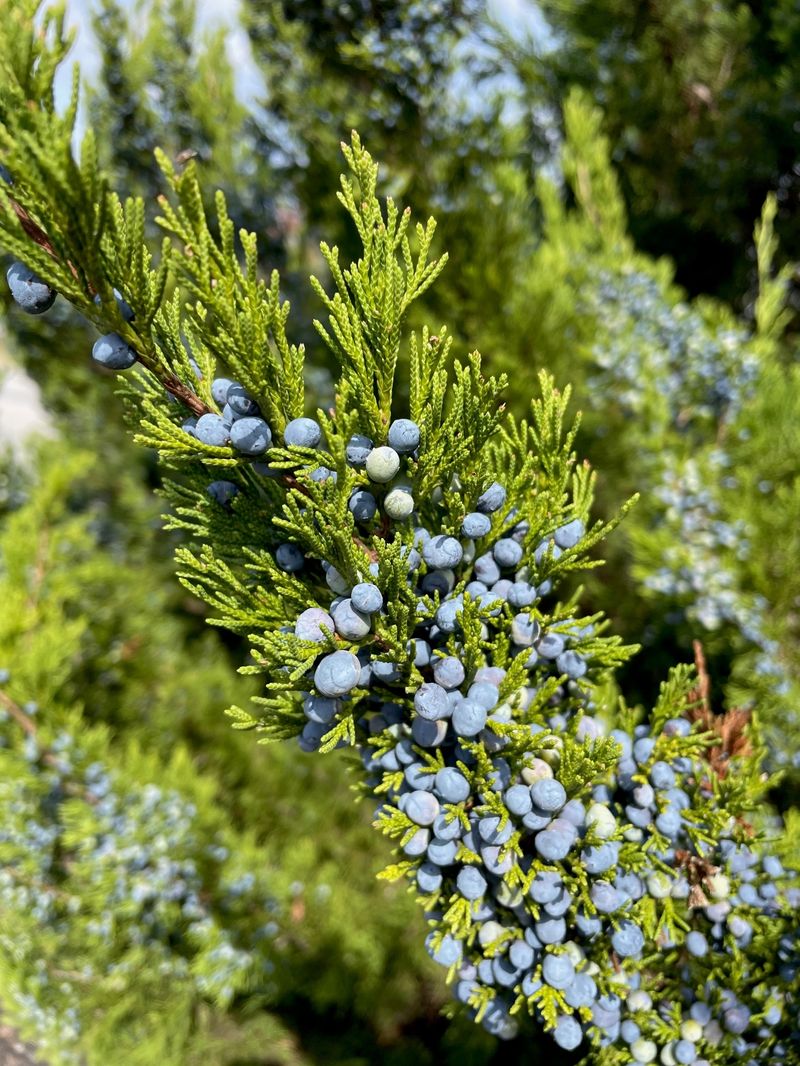
Older HOA handbooks often share a familiar pattern. Foundation shrubs appear everywhere, with juniper, boxwood, Indian hawthorn, and tidy hedges suggested to soften the base of a house.
Those choices made sense when written. Designers wanted green walls that hid concrete and looked neat, and few people were thinking about embers drifting onto a front porch.
The picture has shifted since then. Woody shrubs planted right against walls fall squarely within the material Zone 0 aims to clear in covered areas.
Juniper in particular carries a reputation among fire experts for holding dry, oily material that burns hot. It often tops lists of plants to move away from homes.
Homeowners can get caught in the middle. An approved list might recommend a hedge that the state rule would later ask them to remove.
Your California Garden Changes Every Week. Your Plan Should Too.
Gardening in California changes quickly throughout the season. Every Friday you’ll receive a simple weekly plan showing exactly what to plant, prune, fertilize, harvest, and protect so you never miss the right timing.
Few people enjoy following two sets of instructions pointing in opposite directions. Associations may want to fix that mismatch before it causes confusion.
A board could add low, nonwoody plants to its list, move shrubs to areas farther from walls, or note which rules apply in fire zones. Each community decides its own process, usually through the board and an architectural committee.
Homeowners can spot trouble early with a tape measure. A five-foot line marked with string or chalk shows exactly which woody plants sit inside the zone.
Comparing that inventory with fire zone status and the handbook reveals any conflicts. A little homework now beats a hedge headache later.
State Law Already Protects Water-Wise Landscapes
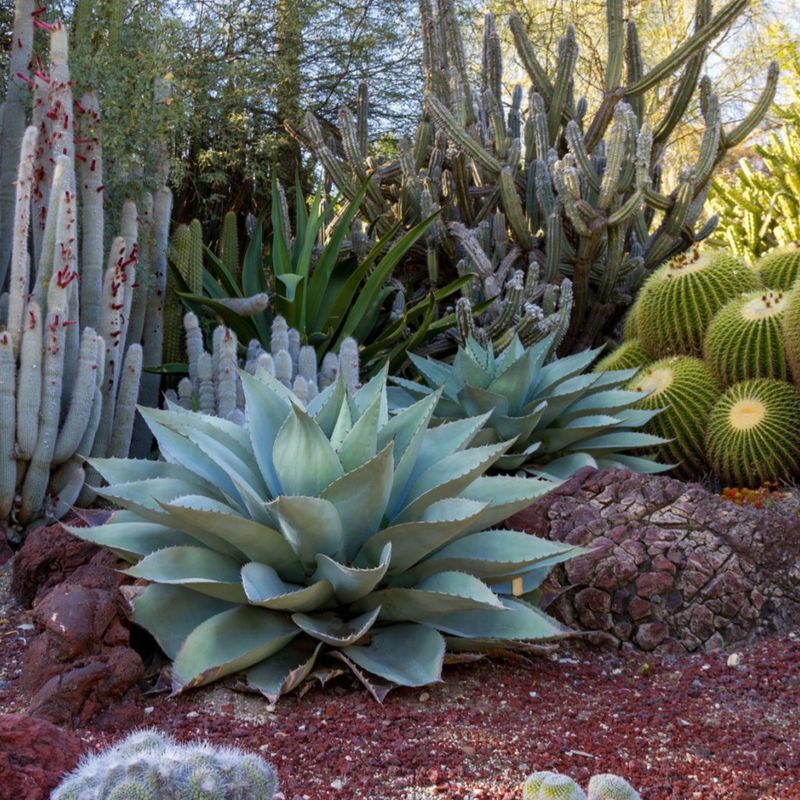
During past drought years, some California homeowners received letters scolding them for brown lawns. Others heard that native plants clashed with the neighborhood look.
Lawmakers stepped in, and the result lives in Civil Code Section 4735, part of the Davis-Stirling Act. The law voids HOA rules that ban low-water-using plants as a group or block them as a replacement for turf.
In plain terms, an association can’t outlaw water-wise landscaping across the board.
Another part shields people during dry spells. When the governor or a local government declares a drought emergency, an HOA can’t fine a homeowner for cutting back on watering plants or lawns.
The law still leaves room for reasonable rules. Associations can review designs, set style guidelines, and require approval before changes, since Section 4735 protects the category of plants rather than every possible layout.
This statute matters for Zone 0 because many low, nonwoody plants that suit the outer part of the five-foot strip also sip water. Native sedges and wildflowers fit that description well.
Homeowners swapping thirsty shrubs for drought-tolerant groundcovers may find state law already on their side. That overlap can ease conversations with a board.
A printed copy of the statute makes a helpful reference during discussions. A polite, calm tone usually goes further than a fiery email, since most boards want to follow the law.
This information is general in nature rather than legal advice. An attorney familiar with HOA law can address specific situations.
Check Your Fire Hazard Zone Before You Plant

Two houses on the same street can face different rules. One might sit inside a very high fire hazard severity zone while the home across the road does not.
Maps, rather than guesses, settle the question.
CAL FIRE publishes fire hazard severity zone maps online. An address search shows the rating, which ranges from moderate to high to very high.
The map also shows whether a property sits in a State Responsibility Area or a Local Responsibility Area. Both details matter for Zone 0.
The rule covers State Responsibility Areas and very high zones in local responsibility areas. A home in a moderate local zone may fall outside it, at least for now.
A screenshot of the result, with the date noted, makes a useful record. Maps get updated, and CAL FIRE released new versions in recent years after fresh modeling.
A property outside a zone today could land inside one after a future revision. Periodic checks keep information current.
Cities and counties may add their own requirements on top of the state rule. Local fire departments and fire marshal pages often explain defensible space guidance.
Some agencies offer free home inspections that point out risky plants.
Even where Zone 0 doesn’t apply, the ideas still help. Low plants near walls stay easier to maintain and give embers less to grab.
Neighbors in covered areas may also appreciate a yard matching the safer style. Knowing the zone takes five minutes and saves guesswork.
Yarrow Stays Low And Nonwoody
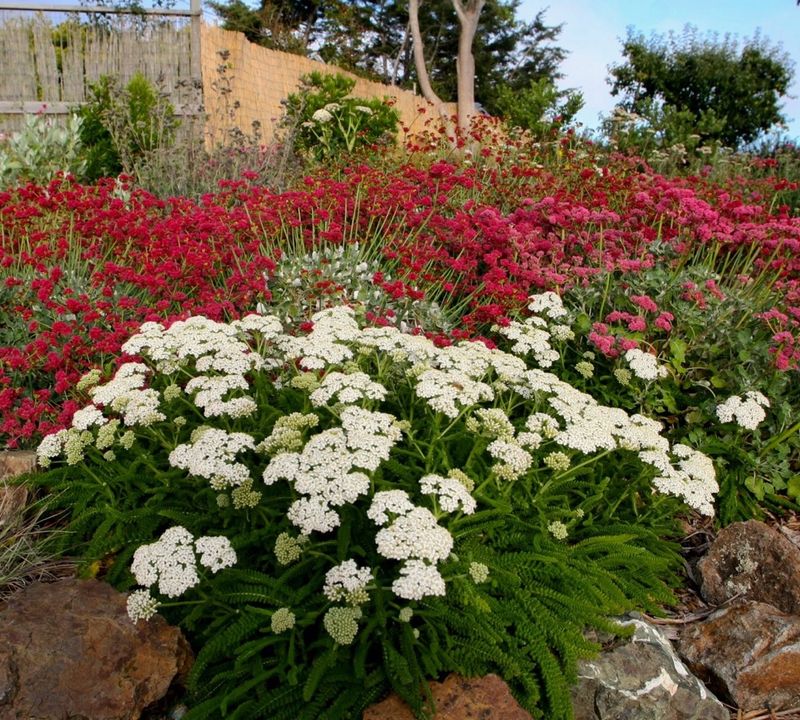
Feathery leaves, flat flower clusters, and a toughness that shrugs off heat have made this native a garden favorite. Yarrow grows wild across much of California, from coastal bluffs to mountain meadows.
Nurseries often list it as Achillea millefolium. As a soft, nonwoody perennial, it fits the Zone 0 idea nicely.
The fern-like foliage forms a low mat just a few inches tall. Flower stalks rise much higher, often one to three feet, so trimming them keeps plants within the 18-inch range described for small plants.
Two approaches work in the outer part of Zone 0. Some gardeners mow yarrow low as a groundcover, while others grow it in small, spaced clumps with flowers trimmed.
Either way, the plant-free safety zone right beside the wall stays clear. Yarrow belongs beyond that line.
Water needs stay modest once roots settle in. Fall planting, regular water the first season, then occasional deep soaks suit it well.
Too much water and rich soil can make stems flop.
Nursery selections come in pink, rose, yellow, and pale gold, though native white types tend to handle drought best. Native bees and small butterflies visit the blooms all summer.
The name honors Achilles, the Greek hero said to have used the plant on wounded soldiers. Today it does quieter work, covering bare soil near the house.
Well-watered, green leaves resist embers far better than dry ones. Removing spent stems and brown foliage keeps the planting safer and tidier.
Meadow Sedge Gives A Lawn Look Near Walls
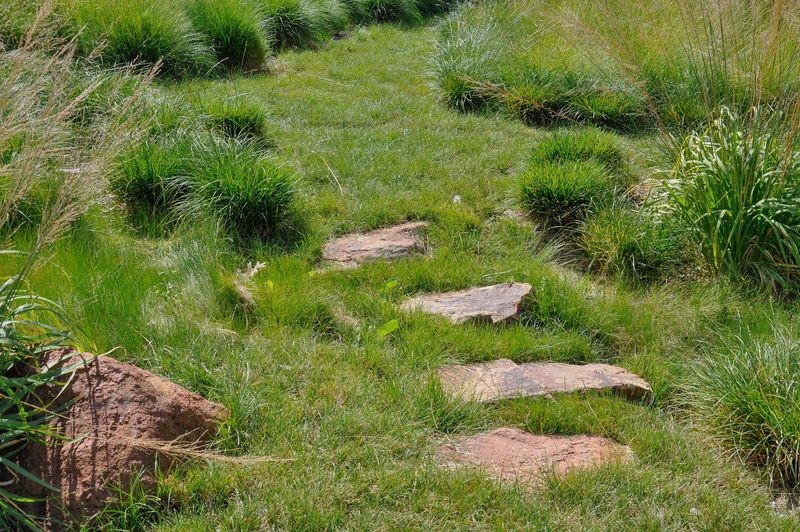
A lawn that rarely needs fertilizer sounds too good to be true. Meadow sedge comes close, forming a soft, grassy carpet that looks like turf from a few steps away.
Nurseries sell this California native as Carex pansa. Left alone, most plants stay around six to eight inches tall.
That unmowed height runs taller than the roughly three-inch limit drafts described for lawns and groundcovers in Zone 0. Regular low mowing can keep it near that height for the outer part of the strip.
Farther than five feet from the house, a shaggy, unmowed meadow look works beautifully.
Meadow sedge spreads by underground runners called rhizomes. Plugs set about a foot apart usually knit together within a season or two, and weeds struggle once the mat fills in.
Watering runs lighter than for typical turf. Many gardeners give it a deep soak every week or two in summer, with coastal yards needing less and hot inland yards needing more.
Sun or part shade both work, making it handy along north walls. It also tolerates some foot traffic, so kids and dogs can cross it.
A path of flat stones through the sedge adds style and keeps heavy traffic off the plants. The plant-free safety zone against the wall still stays clear.
Local nurseries often stock plugs or flats, and buying in bulk lowers the cost per plant. The result is a lawn look without the thirst, plus a neat green strip a board can appreciate.
California Poppies Add Color Under Eighteen Inches
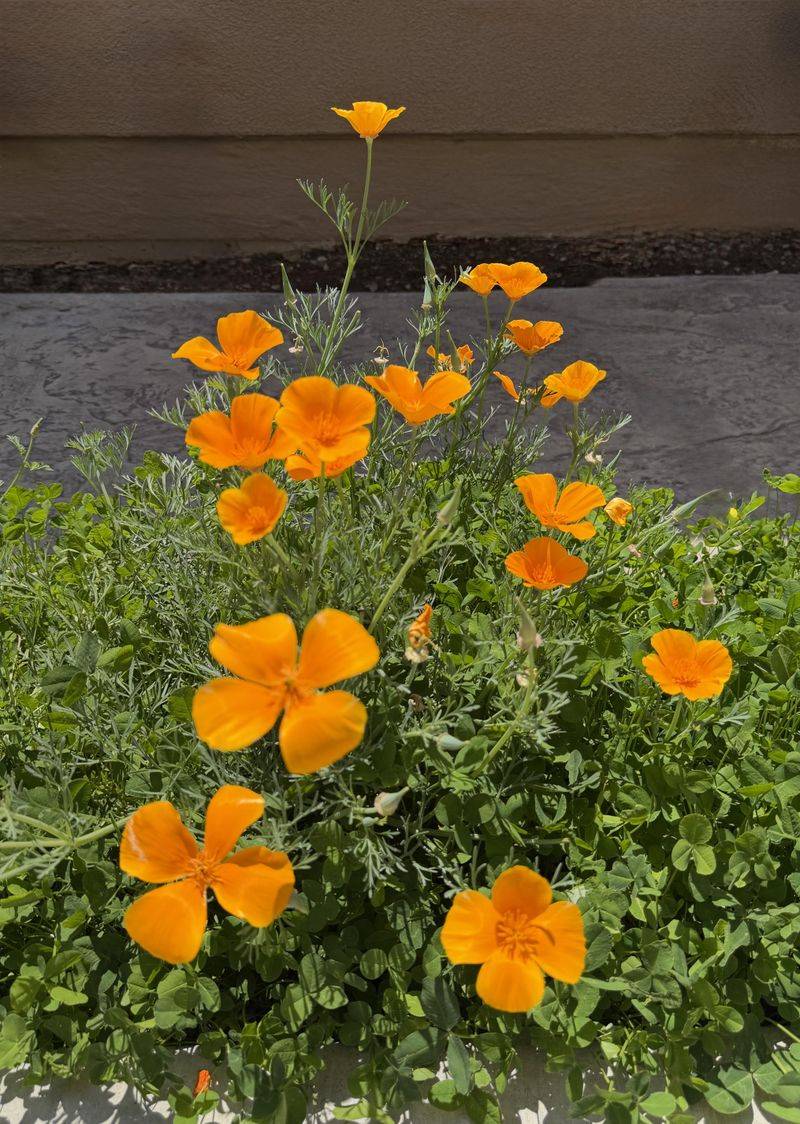
Every spring, hills in the Antelope Valley glow orange. That color comes from the California poppy, the official state flower since 1903.
A few of those blooms can brighten the strip near a front door, too.
Nurseries sell seed as Eschscholzia californica. These soft, nonwoody plants usually grow about 6 to 18 inches tall.
Blue-green, lacy leaves sit low to the ground. Silky cups open in sun and close at night or on cloudy days.
In the outer part of Zone 0, drafts described small plants grouped in patches about a foot square and spaced apart. Poppies suit that pattern nicely, sown in small clusters rather than a solid sweep, and kept out of the safety zone beside the wall.
Seed offers the easiest start. Scattered in fall or late winter and pressed lightly into the soil, it lets rain handle most of the work.
October makes an ideal sowing month.
Summer heat sends many plants into dormancy, turning them brown. Dry stems near a wall are exactly what Zone 0 aims to avoid.
Spent plants are best pulled or cut as they fade, after a few seeds drop for next year.
Pairing poppies with meadow sedge or yarrow keeps green foliage present when flowers rest. Light summer water can extend blooms in mild areas.
Seed mixes include cream, pink, and red types, though boards may prefer the classic orange. Checking the approved list before buying keeps the peace.