That Toad in Your Arizona Yard After the Rain Could Be Dangerous to Your Dog
After a monsoon storm, the backyard can suddenly come alive with hopping, croaking toads. Most dog owners just see a funny visitor, but one particular toad can cause real trouble if a dog gets it in its mouth.
Knowing which situations matter, and what to do in the first few minutes, can help you stay calm and protect your pet. Here is how to tell a harmless sighting from a true emergency.
Rain brings toads out, but it does not identify them
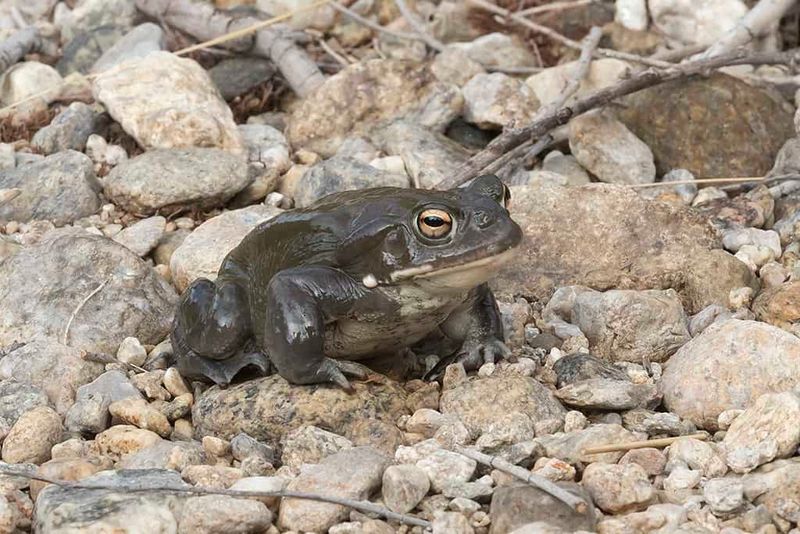
Summer monsoon storms turn dry washes and backyard low spots into temporary pools. Toads that spent weeks buried and quiet may come up to breed, and suddenly they are hopping across patios and gravel at dusk.
Rain can also bring a chorus of calls after dark, which is often the first hint that toads are out.
That timing explains why sightings jump after a storm. It does not tell you which kind of toad you are looking at.
The National Park Service describes several amphibians that become active in the Sonoran Desert during the rainy season, including red-spotted toads and Great Plains toads, along with the Sonoran Desert toad.
So a toad in the yard after rain is a seasonal sighting, not a verdict. Many of the animals hopping around your property may be species that cause far less trouble for a dog than one particular large toad.
Keep your dog away from any toad you spot, and save the real worry for situations where a dog actually gets one in its mouth.
The Sonoran Desert toad poses a specific mouth-contact risk
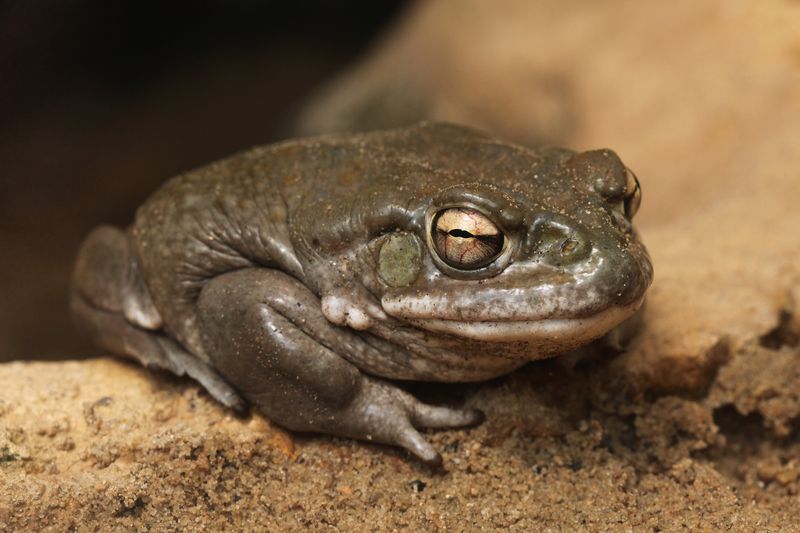
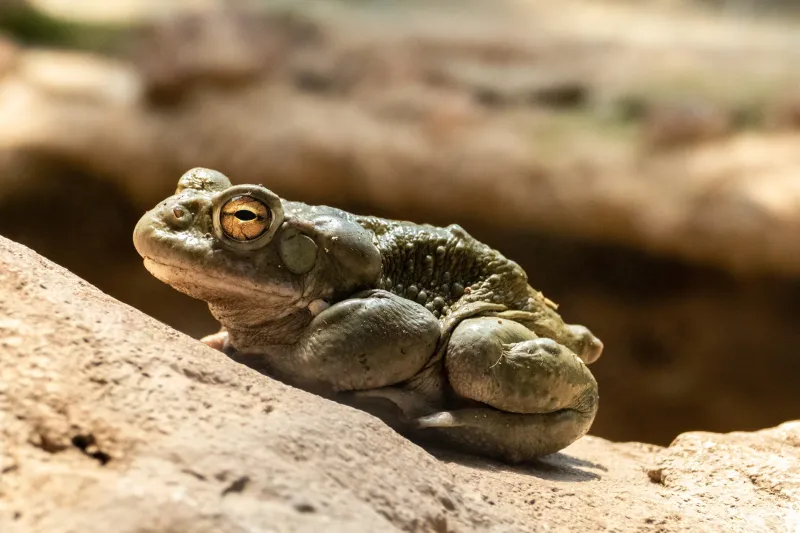
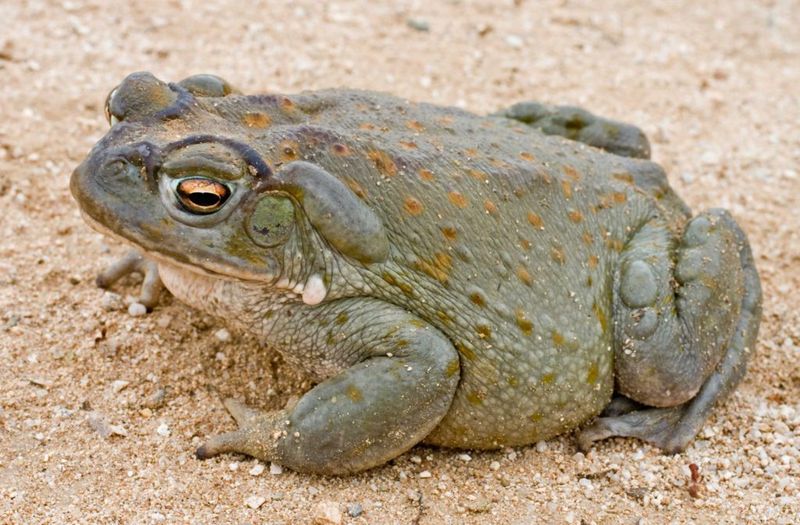
The species that worries veterinarians most in Arizona is the Sonoran Desert toad, also known as the Colorado River toad. It is relatively large, with smooth olive-green skin and prominent glands behind each eye.
Those glands release a defensive toxin.
Those features are clues, not a dependable test. Juveniles can be hard to tell apart from other toads, and poor light at night makes it harder still.
If you can do it safely, snap a photo from a distance instead of handling the animal.
The concern is a dog mouthing the toad. The Arizona-Sonora Desert Museum notes that the main risk to mammals comes from getting the toad into the mouth, so a toad sitting in the yard is not poisoning anyone.
Sniffing alone is not the established problem.
A 2026 review looked at 208 suspected cases at four Arizona emergency veterinary hospitals between 2007 and 2010. About 75% happened during monsoon conditions, and 99% of the dogs survived to discharge.
Those numbers describe a past group of dogs, not current rates or any single dog’s odds, and the authors still call the poisoning potentially fatal.
What signs should you watch for?
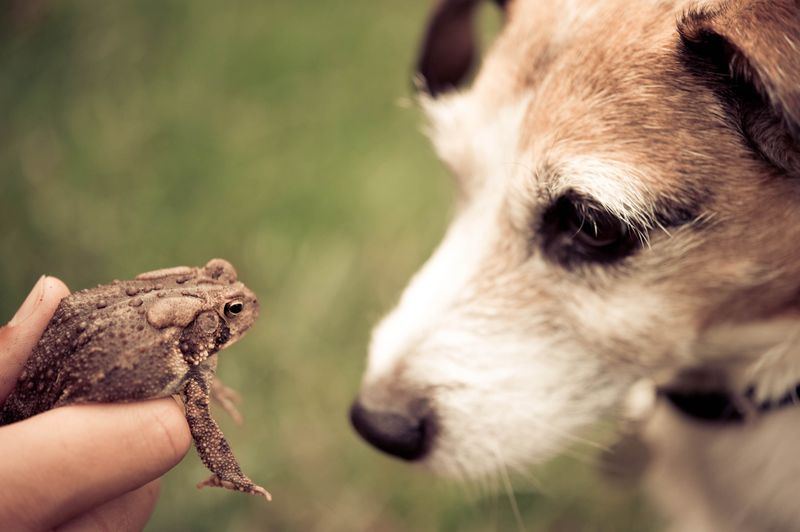
Signs often show up fast once a dog has mouthed a toad. Drooling, frothing at the mouth, gagging, and retching are the usual first clues.
You may notice them within moments of the encounter.
More serious signs call for urgent care. Weakness, trouble breathing, an abnormal heart rhythm, and seizures all point to a dangerous reaction, according to the Merck Veterinary Manual.
Your Arizona Garden Changes Every Week. Your Plan Should Too.
Gardening in Arizona changes quickly throughout the season. Every Friday you’ll receive a simple weekly plan showing exactly what to plant, prune, fertilize, harvest, and protect so you never miss the right timing.
A heart rhythm problem is hard to spot at home, which is one reason a veterinary exam matters.
Do not wait for those worse signs before reaching out. If you saw your dog grab a suspected toad, or you find it foaming near one, call a veterinarian or animal poison-control service right away.
Early guidance costs little, and a mild-looking start does not guarantee how things will go.
Plenty of drooling dogs have never met a toad, of course. Still, mouth signs plus a toad nearby is a combination worth acting on.
Rinse a conscious dog’s mouth and call for help
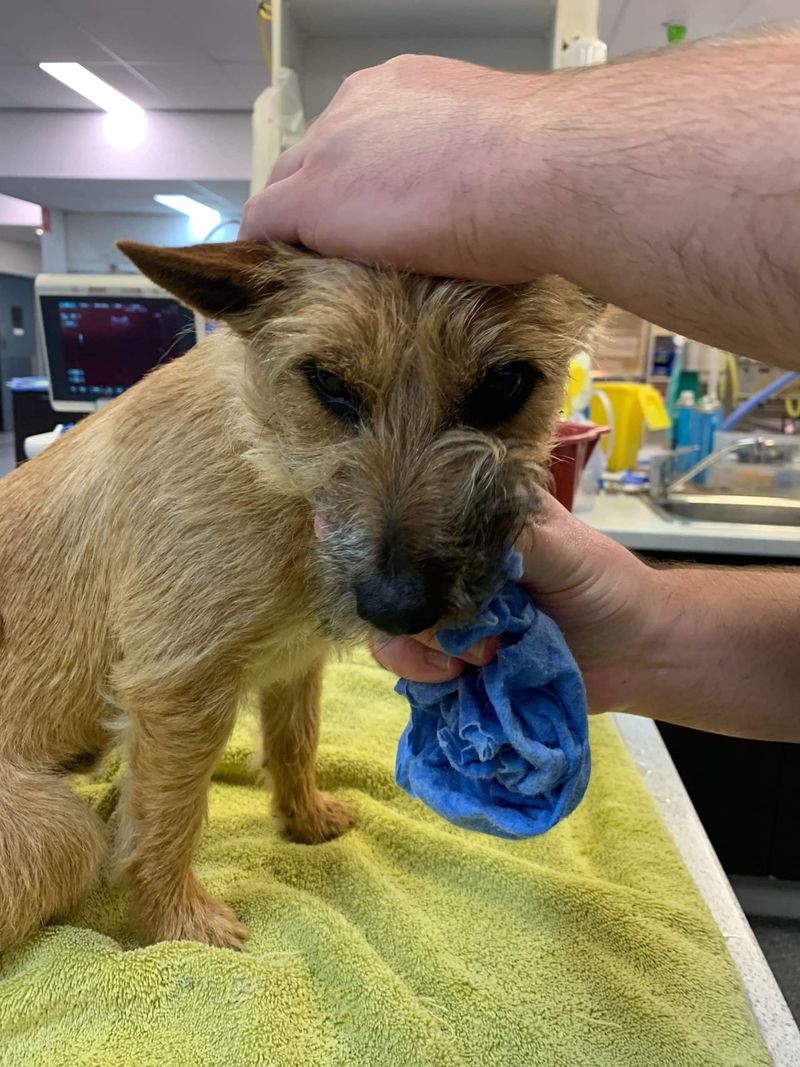
Picture it: your dog just grabbed a toad. First, check that it is conscious and able to hold its head up.
If it is, get to a hose or faucet and rinse the mouth with running water for 5 to 10 minutes, as ASPCA guidance advises.
Point the muzzle down so water flows out the front of the mouth instead of toward the throat. Use a gentle stream, not a blast.
The goal is to wash the toxin off the gums and tongue without your dog swallowing it.
While you rinse, or as soon as someone else can help, contact a veterinarian or animal poison-control service. Tell them what happened, roughly when, and how big your dog is.
A photo of the toad, taken safely, can help.
Do not induce vomiting unless a veterinarian or poison-control professional tells you to. Rinsing is a first step, not a replacement for professional advice, so keep the call going and follow the instructions you get.
If your dog is not conscious, skip the rinse and get emergency help immediately.
Reduce the chance of a toad encounter at home
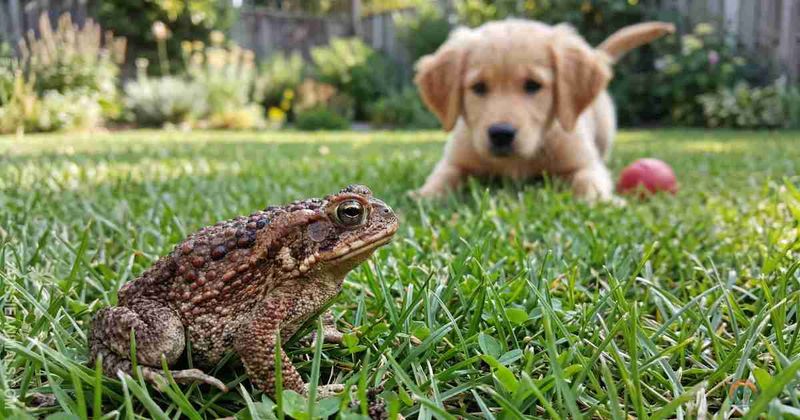
Supervision is your best tool. Toads tend to be out at night and after summer storms, so go outside with your dog on a leash, or at least keep it in sight, during those times.
A quick flashlight sweep of the patio and grass before you open the door can help.
Teach a firm leave it cue, and use it whenever your dog starts nosing toward a hopping shape. Steer curious dogs away from puddles and low spots where toads gather after rain.
If you want to move a toad, resist the urge to handle it, and take a photo from a distance instead.
Pet food left outside is another habit worth dropping, so bring bowls indoors after meals. If water must stay outdoors, ASPCA suggests fresh water in a raised bowl.
These steps can lower the odds of a run-in, though no routine will clear toads from a yard completely.
Take a mouth encounter seriously, not every toad as a threat
A toad hopping across a wet yard is a sighting. A dog with a toad in its mouth is a situation that needs action.
Seeing one after rain does not prove it is a Sonoran Desert toad, and not every toad is a threat.
If your dog mouths a suspected Sonoran Desert toad, move quickly and ask a veterinarian or poison-control service for guidance. Calm attention in those first minutes counts for far more than worry over every puddle visitor.