What To Prune First When Your California Yard Is A Mess After Heavy Wind
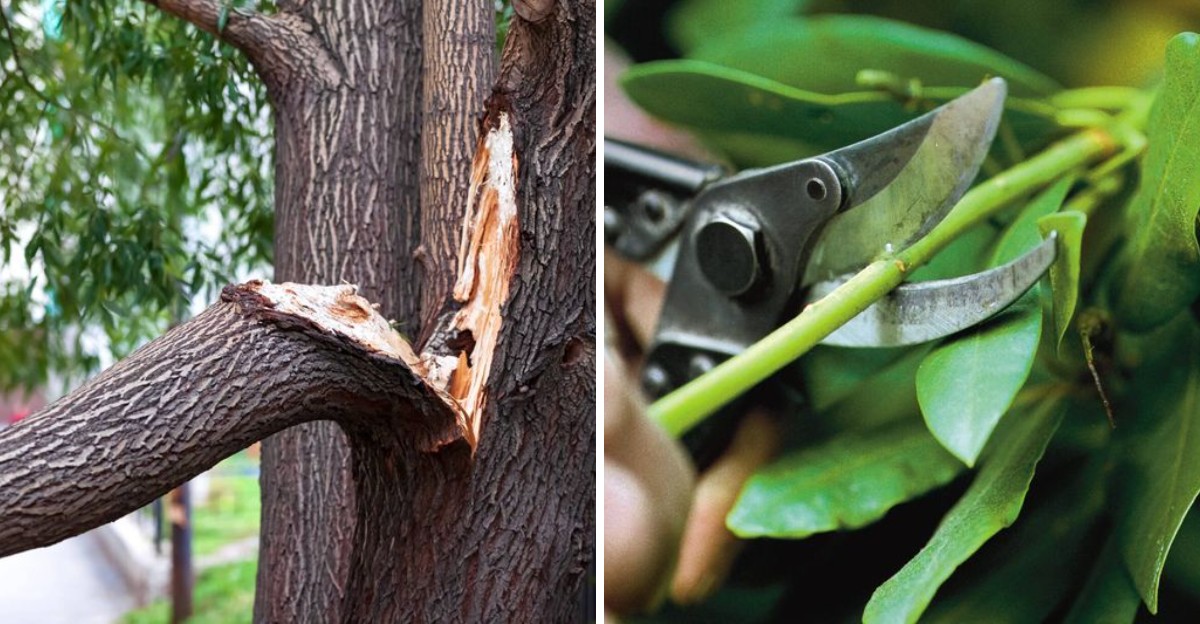
A yard after heavy wind can look as though a giant gave it a hard shake. Twigs cover the lawn, leaves pile against fences, and the occasional limb sways overhead at an unsettling angle.
The pull to tackle everything at once runs strong, yet the order of the work matters more than the speed.
Some tasks carry real danger, a few belong strictly to professionals, and others improve with a little patience.
Trees that look ruined sometimes recover well, while others hide trouble that only a trained eye can spot.
A clear sequence, from the most urgent hazards to the jobs best saved for later, protects the home, the household, and the plants themselves.
The first step involves no tools at all.
1. Start With Hanging And Broken Limbs
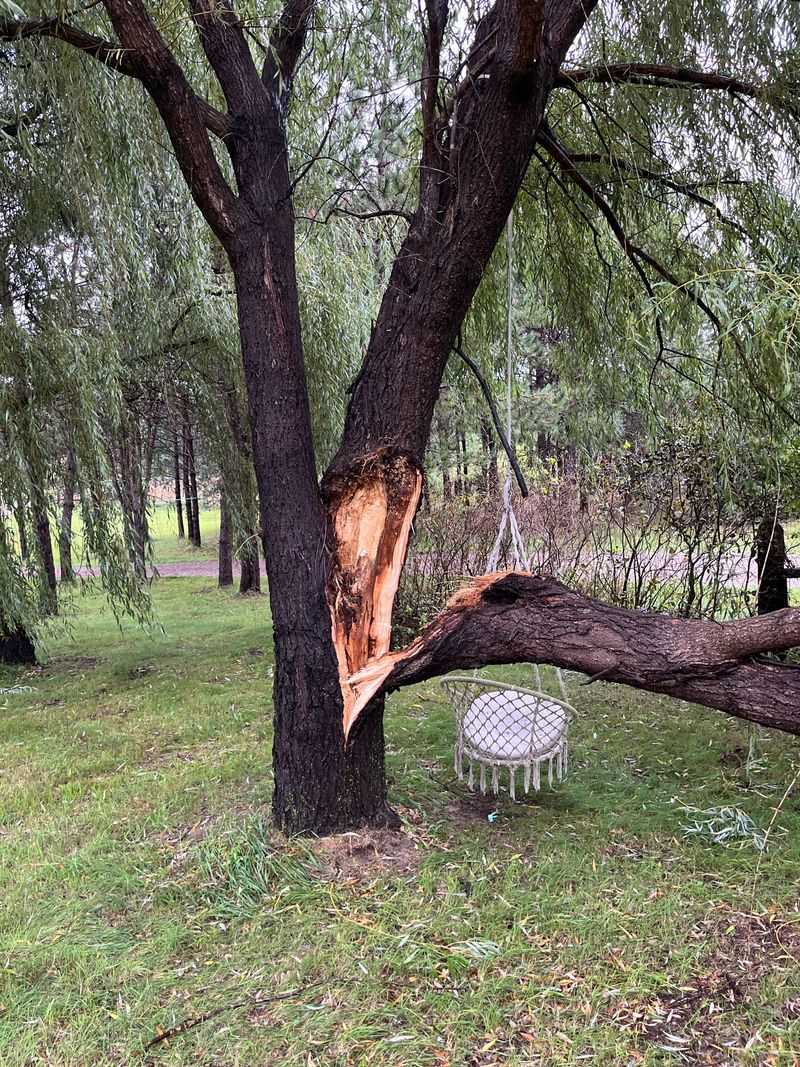
A slow look upward comes before anything else. Arborists call a broken limb dangling in a canopy a hanger, and it can drop without warning, since wind can shift it hours or even days after a storm passes.
Hazards capable of falling belong at the very top of the list. A careful walk around the yard identifies every limb that’s snapped, partly attached, or caught in other branches.
Roping off the areas beneath keeps children, pets, and guests clear, and cars parked under a hanger deserve moving. Photos of each hazard help when describing the job to an arborist or insurer.
Ground-based work keeps things safer. A pole pruner or pole saw reaches small hangers while feet stay planted, and standing to the side of the falling piece, rather than beneath it, with a hard hat, gloves, and eye protection, reduces risk.
An escape path planned before each cut allows a quick step away.
The ladder-and-chainsaw combination is best avoided entirely. UC ANR and ISA both warn that climbing a storm-damaged tree with a saw ranks among the riskiest jobs in yard care, since branches under tension can spring back with surprising force.
Size matters too. A thick, high, or tangled hanger calls for a certified arborist with proper gear, since a few dollars saved rarely justifies the risk of injury.
Small, reachable pieces suit a homeowner, while the heavyweights belong with professionals who carry ropes, rigging, and insurance.
2. Leave Anything Touching Power Lines To Professionals
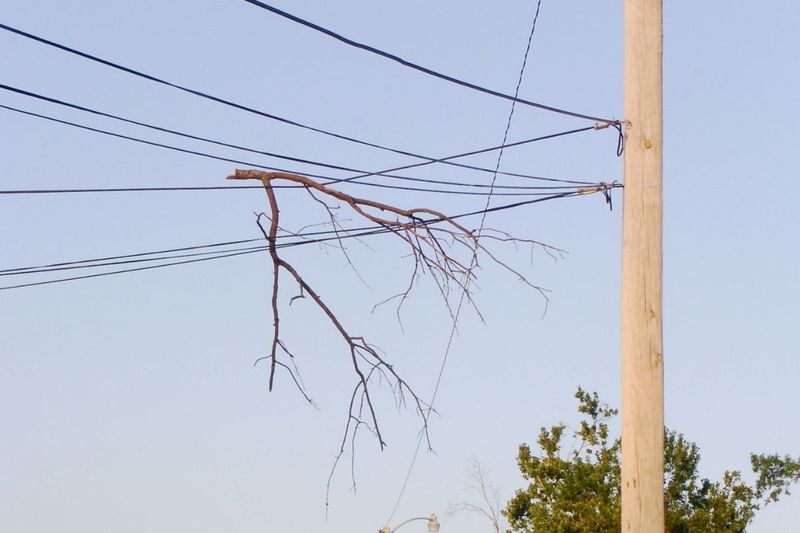
Electricity doesn’t need direct contact to cause harm. A branch resting on a power line can carry current into the wood, the ground, and even the wet grass around it, so every line deserves treatment as live, even during an outage.
Staying at least 10 feet from any downed line or branch tangled in wires protects everyone, and many utilities recommend about 30 feet from lines on the ground.
Children and pets belong indoors until help arrives, and warning anyone nearby who might wander over for a look also helps.
A prompt call to the utility comes next. Across much of California, that means Pacific Gas and Electric, Southern California Edison, San Diego Gas and Electric, or a municipal provider.
Lines that spark, burn, or block a road call for 911 first. A downed line touching a car means staying inside the vehicle unless fire forces an exit.
Your California Garden Changes Every Week. Your Plan Should Too.
Gardening in California changes quickly throughout the season. Every Friday you’ll receive a simple weekly plan showing exactly what to plant, prune, fertilize, harvest, and protect so you never miss the right timing.
Knocking a branch loose with a pole pruner, rake, or rope is best avoided entirely. Fiberglass poles may sound safe, yet storm debris, moisture, and dirt can still conduct electricity, and only qualified line-clearance arborists should handle these jobs.
Branches near the service drop, the line running from the pole to the house, deserve the same caution. Some utilities clear those, while others ask homeowners to hire qualified help.
A quick question during the call clarifies responsibility. That short conversation beats any risky shortcut, and it often leads to free clearing for branches tangled in utility-owned lines.
3. Remove Cracked Branches Next
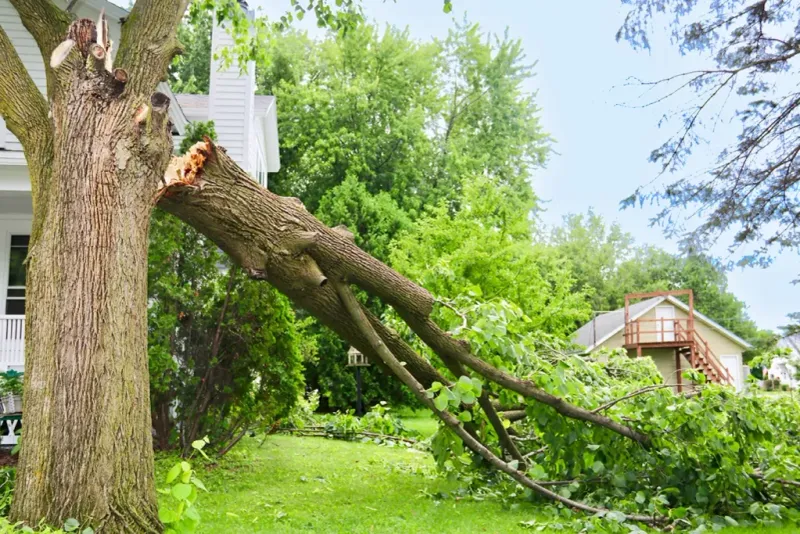
A crack that looks minor today can become a fallen limb tomorrow. Once dangling hazards are handled, attention shifts to branches that are split, cracked, or bent at odd angles yet still attached.
Spotting them takes a sharp eye. Pale, fresh wood showing through bark, long splits running along a limb, or a branch drooping lower than its neighbors all signal trouble.
Narrow V-shaped unions are common trouble spots, since wind can pry them apart, and fruit trees loaded with growth often split this way.
Cracked branches come off back to a healthy side branch or to the branch collar where they meet the trunk.
Removing them before the next wind finishes the job prevents a larger, ragged wound, and a side branch at least one third the diameter of the removed limb makes the best stopping point.
Limbs thicker than a few inches call for the three-cut method: an undercut about a foot out, a top cut slightly farther out to drop the weight, and a final clean cut near the collar.
Some cracks exceed what a home gardener can handle. A split running down into the main trunk, or a major fork pulling apart, signals a structural problem.
A certified arborist can judge whether cabling might save the tree or removal makes more sense.
Taping, nailing, or gluing split limbs back together is best avoided. Those home fixes rarely hold and can trap decay inside, while a clean removal heals far better.
4. Cut Torn Edges Cleanly At The Collar
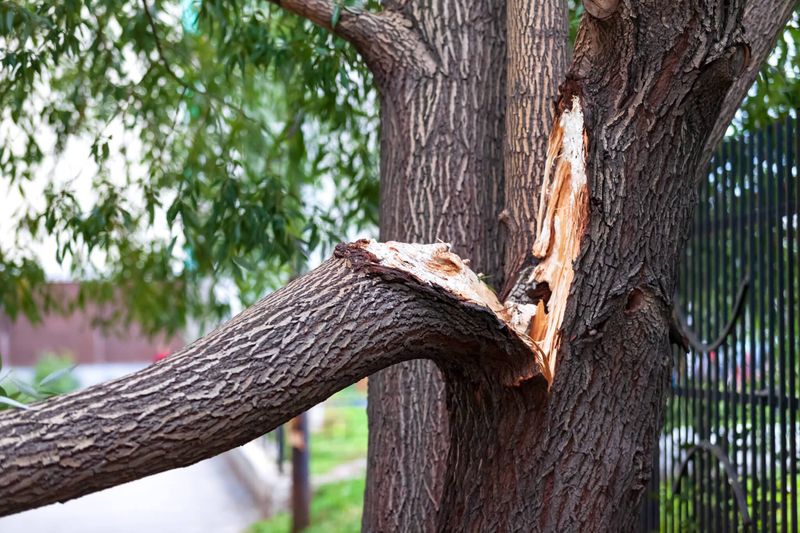
Ragged stubs work like open doors for trouble. When wind rips a branch away, it often leaves jagged bark and splintered wood, and those messy wounds heal slowly while giving decay fungi and insects an easy entry.
A neat cut at the branch collar offers the fix. The collar is the slightly swollen ring of bark where a branch joins the trunk or a larger limb, and cells there help the tree seal off the wound through a process arborists call compartmentalization.
The cut belongs just outside the collar rather than flush against the trunk. A flush cut removes the very tissue that helps the tree heal.
Leaving a long stub causes trouble too, since the tree can’t close over it properly. The goal is a smooth surface with no torn bark hanging from the edges, and a doughnut-shaped roll of new wood forming over the following seasons signals success.
Sharp tools make all the difference. A clean hand saw or bypass pruner slices neatly, while dull blades crush and tear tissue.
Wiping blades with household disinfectant between trees, especially when disease is suspected, keeps problems from traveling from one plant to the next.
Wound paint and pruning sealer are best skipped. UC ANR notes that these products generally fail to prevent decay and may slow healing in some cases.
Trees have spent millions of years learning to patch themselves, so a tidy cut offers the best help a gardener can provide.
5. Trim Snapped Shrub Stems Back To Healthy Wood
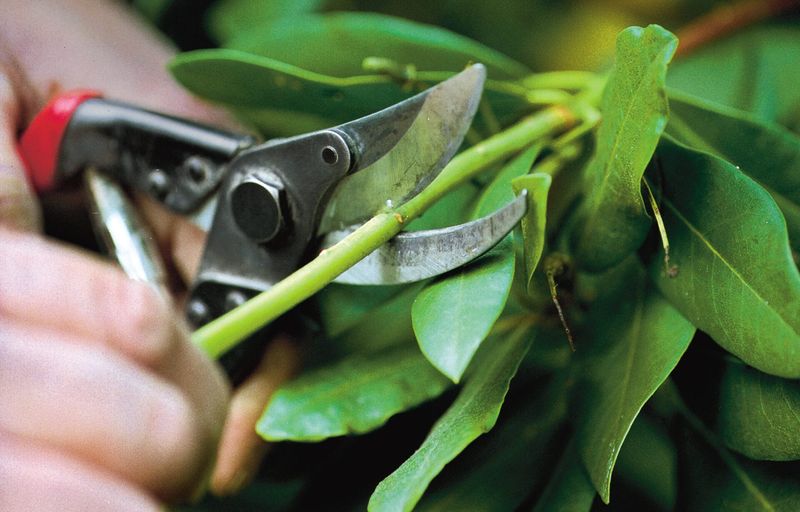
Wind rarely spares the shrub border. After a windstorm, rosemary, oleander, ceanothus, and roses often carry stems that are bent, split, or snapped clean through.
Finding where the damage ends comes first. Each broken stem can be followed down to firm, unbroken wood, and healthy tissue usually shows green or creamy color beneath the bark when scratched lightly with a thumbnail.
Brown, dry, or mushy wood deserves removal.
Cuts belong just above a healthy bud, leaf, or side shoot, angled slightly so water runs off. New growth sprouts from that point, helping the shrub fill in naturally over time.
Bypass hand pruners handle thin stems well, while loppers manage thicker ones.
Drought-tolerant natives call for a gentle approach. Many California natives, including most manzanitas, dislike heavy pruning and may not regrow from bare old wood, so removing only what’s broken works best for now.
Hedges deserve the same care. Shearing an entire hedge to even out a gap is best avoided, since clipping the broken pieces and letting fresh shoots fill the hole produces a better result as the season progresses.
A shrub with a small dent today often looks perfectly fine by summer. Diseased or badly broken stems belong in the green waste bin rather than the compost pile, while clean clippings from healthy plants can become mulch later.
Oleander deserves gloves and careful handling, since all parts are toxic, and its clippings are best kept out of compost and away from burning.
6. Clear Debris Off Roofs And Gutters
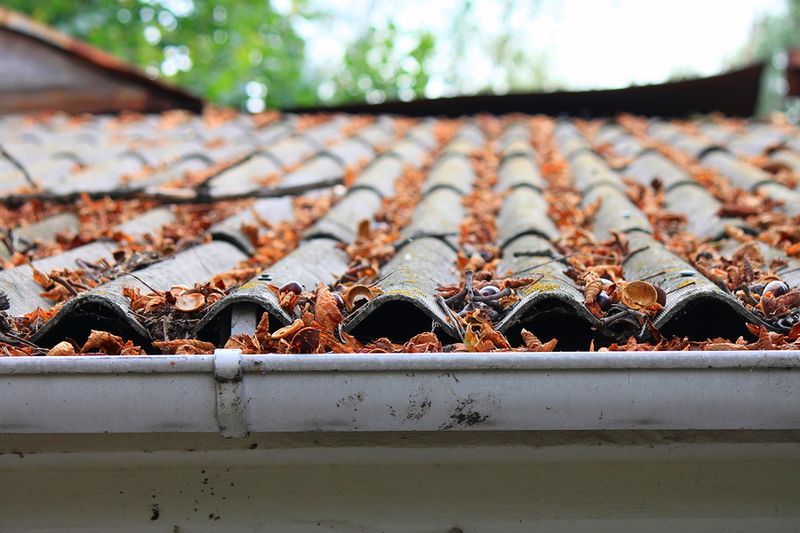
Gutters packed with leaves turn into tiny dams during the next rain. Water spills over the edges, soaks fascia boards, and can pool near the foundation, while in fire country, dry leaves on a roof also pose a real ember hazard.
A scan of the roof from the ground with binoculars makes a safe first step. Large branches resting on shingles, damaged tiles, or limbs hanging over the roofline all deserve attention.
Big branches on a roof belong with a professional tree crew, since moving them can damage roofing or cause a fall.
Small twigs and leaves make a reasonable do-it-yourself task for anyone comfortable on a ladder. Firm, level ground, a helper holding the base, and three points of contact at all times keep the work safer, and leaning far to one side is best avoided.
Gloves and a small scoop make gutter cleaning faster and less grimy.
After clearing, running a hose through the gutters confirms that downspouts flow freely, since a clog can hide a wad of leaves halfway down.
CAL FIRE recommends keeping roofs and gutters clear of dry leaves and needles year round, and storm cleanup offers a perfect chance to get ahead.
Zone 0 rules approved this year also call for live branches trimmed at least five feet above the roof in designated fire hazard areas, with larger limbs over the house left to an arborist.
7. Leave Minor Scrapes For Later
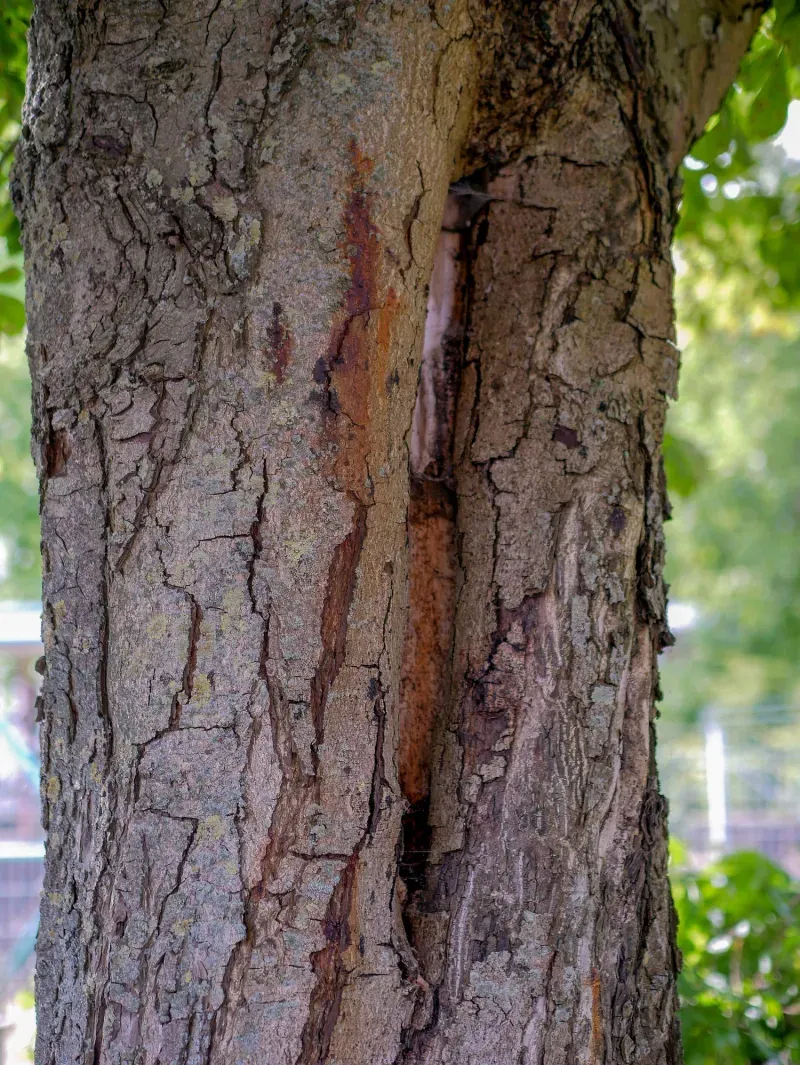
Not every scuffed branch counts as an emergency. Once the big hazards are handled, bark scrapes, rubbed spots, and twigs with a few torn leaves usually remain, and most of these small wounds can simply wait.
Trees handle minor injuries surprisingly well. Small scrapes usually close over on their own as new bark grows around the edges.
Cutting healthy branches just because they look a little battered removes leaves the tree needs to make food and recover from storm stress.
A light touch helps when bark hangs in loose flaps. A sharp knife can trim away only the loose, torn bark, leaving a smooth edge on attached tissue, while carving deep into healthy wood or reshaping the wound is best avoided.
Paint, tar, and tape are unnecessary as well.
General care offers the bigger payoff. Deep watering during dry spells matters, since California winters can swing from soggy to bone dry quickly, and a mulch layer over the root zone, kept a few inches off the trunk, holds moisture and keeps roots cool.
Bark mulch belongs beyond the first five feet of the house in fire-prone areas.
A simple note listing which trees got scraped makes follow-up easy. A check in a few months for oozing sap, fungus, or cracked bark around the wound can reveal bigger trouble worth showing an arborist.
Patience pays off here, since the tree does most of the healing work on its own when given time and steady care.