The Lawn Problems That Thrive When California Grass Stays Wet Too Long After Fall Rain
After months of thirst, a California lawn can seem grateful for the first soaking storms of fall.
That gratitude has limits. Grass that stays wet, shaded, and crowded for days on end becomes an inviting home for a surprising cast of opportunists.
Some leave colorful clues behind, from odd tints to dusty residue. Others creep in quietly and settle for the long haul.
Most share a single root cause, which makes the solution simpler than many homeowners expect.
A few changes in routine often outperform any spray bottle on the garage shelf.
Some of these visitors are serious, some mostly cosmetic, and one is far more helpful than it looks. Knowing which is which saves time, money, and worry.
1. Red Thread Turns Patches Pink And Tan
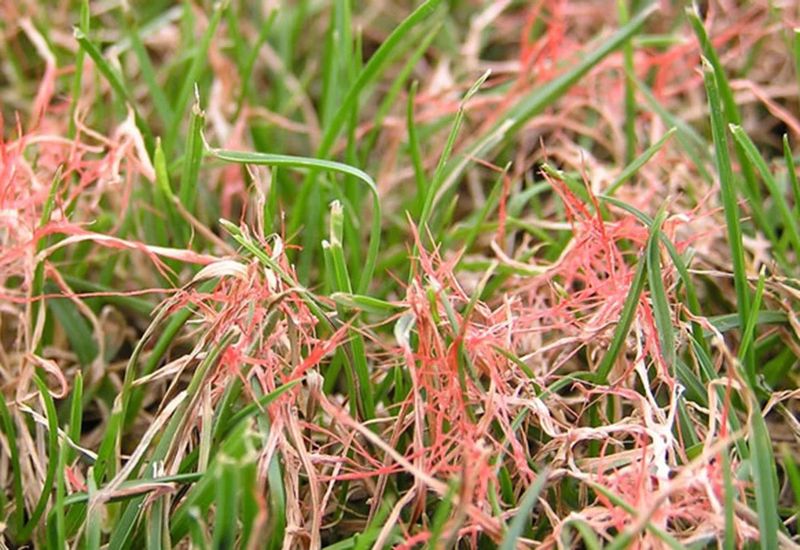
A close look at a tan patch on a damp morning often reveals tiny pink or reddish threads poking from the blade tips, the signature of red thread.
From a distance, patches look pink, tan, or bleached, ranging from a few inches to a couple of feet across.
According to UC IPM, red thread mostly affects cool-season grasses such as perennial ryegrass, fine fescue, and Kentucky bluegrass.
Cool temperatures, long wet periods, and drizzly fall weather help it spread, and mowers, shoes, and wheelbarrows carry the fungus around the yard.
Hunger plays a big role. Red thread is known for striking lawns short on nitrogen, so pale, slow-growing turf makes a prime target.
The fungus damages blades but rarely harms crowns or roots, so the grass usually bounces back.
A modest fall feeding of nitrogen at the label rate supports healthy, steady growth that outgrows the patches and mows off infected tips. Heavy feeding is best skipped.
Moisture deserves attention next. Deep, less frequent watering in the early morning lets blades dry by afternoon, and sprinklers can pause when rain appears in the forecast.
Trimming shrubs or low branches that block airflow and sunlight helps too, and bagging clippings from infected areas for a few mowings limits spread.
With better feeding and drier blades, red thread usually fades on its own within a few weeks.
2. Dollar Spot Leaves Bleached Coins
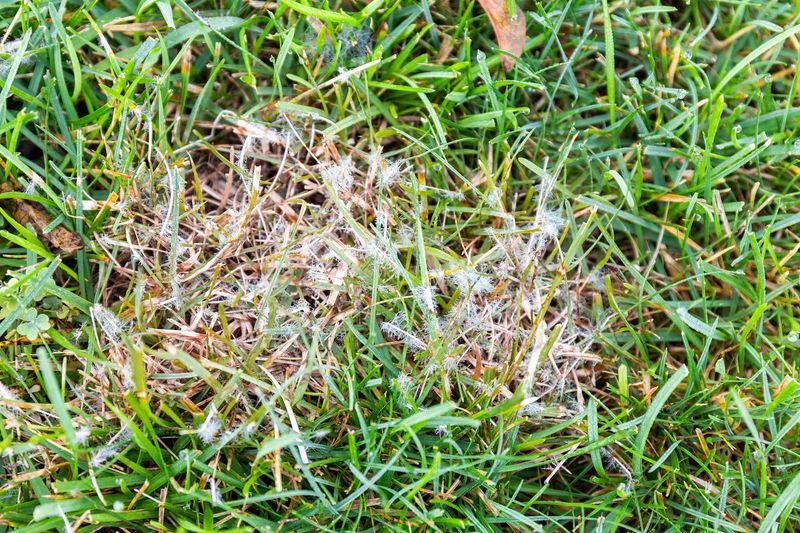
Pocket change scattered across the grass would look a lot like dollar spot. Small, round, straw-colored spots about the size of a silver dollar appear first.
Over time, they can merge into larger, uneven areas that look scorched.
Up close, individual blades often show tan lesions with reddish brown borders, and dewy mornings may reveal fine white cobwebby growth over the spots.
UC IPM notes that dollar spot affects many grasses, including bermudagrass, Kentucky bluegrass, ryegrass, and fescue, especially during long periods of leaf wetness.
A detail many homeowners miss deserves attention. Dollar spot often pairs wet leaves with dry, underfed soil, a pattern common in lawns that get light, frequent sprinkles.
The surface stays damp while roots go thirsty, an ideal setup for the fungus.
Fixing the watering pattern comes first. Deep, infrequent watering early in the morning keeps soil moist below while blades dry quickly.
Your California Garden Changes Every Week. Your Plan Should Too.
Gardening in California changes quickly throughout the season. Every Friday you’ll receive a simple weekly plan showing exactly what to plant, prune, fertilize, harvest, and protect so you never miss the right timing.
Knocking dew off the grass by mowing or dragging a hose across it in the morning shortens wet periods and limits new spots.
Nitrogen applied at the right time for the grass type helps, since low nitrogen worsens dollar spot, though moderate amounts work better than heavy doses.
Aerating compacted soil lets water soak in rather than sit on the surface, and removing heavy thatch eliminates a moisture trap.
Most lawns recover once conditions improve and steady growth fills in those little coins.
3. Rust Dusts Blades Orange
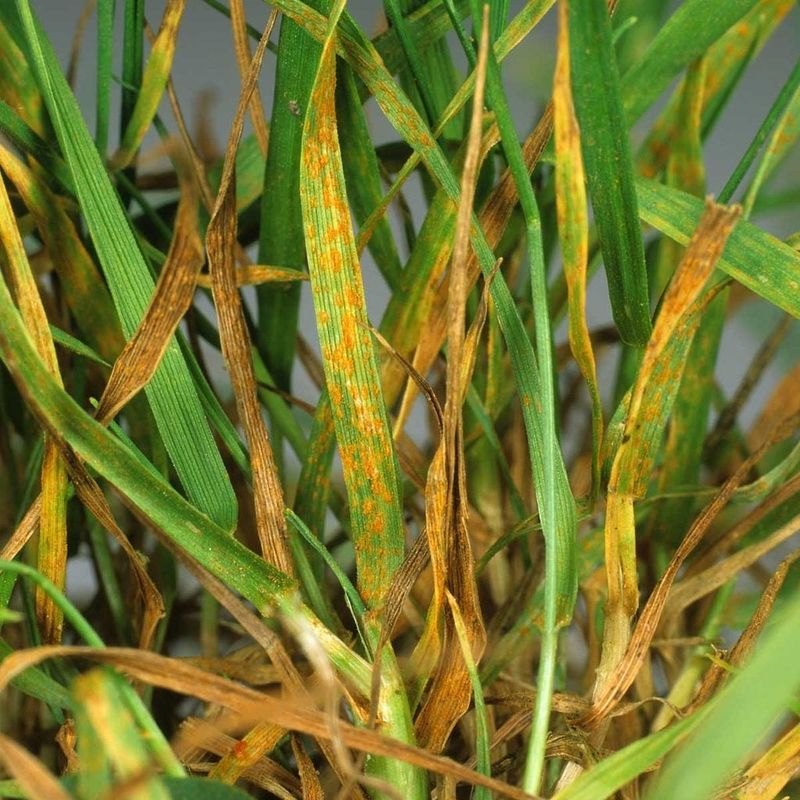
White sneakers tell the story. A walk across an infected lawn leaves shoes coated in orange or yellow dust, the powdery spores that spread rust.
Those spores rub off easily on pant legs and mower decks too, carrying the fungus to new areas. Spores can also travel on the wind.
Tiny orange, red, or brown bumps line up along the blades, and heavy infections make an entire lawn look yellowish or thin from across the yard.
UC IPM lists rust mainly on perennial ryegrass and Kentucky bluegrass, though other grasses can pick it up too.
Rust favors slow-growing grass. Stressed, underfed, or shaded lawns get hit hardest, especially when leaves stay wet for hours, and mild fall weather after rain suits it perfectly.
Boosting growth offers the best defense. A balanced nitrogen feeding helps grass outgrow the fungus, while each mowing removes infected tips.
Regular mowing at the recommended height, with clippings bagged while rust stays active, keeps spores from spreading.
Reducing leaf wetness helps as well. Early-morning watering works best, evening watering is best avoided, and irrigation can be scaled back after rain.
Thinning trees or shrubs that keep the lawn shaded and damp improves airflow and speeds drying.
Rust-resistant ryegrass or bluegrass varieties make smart choices for future seeding. With sun, steady feeding, and drier blades, orange-dusted shoes usually become a thing of the past.
4. Pink Patch Spreads In Cool Wet Weather
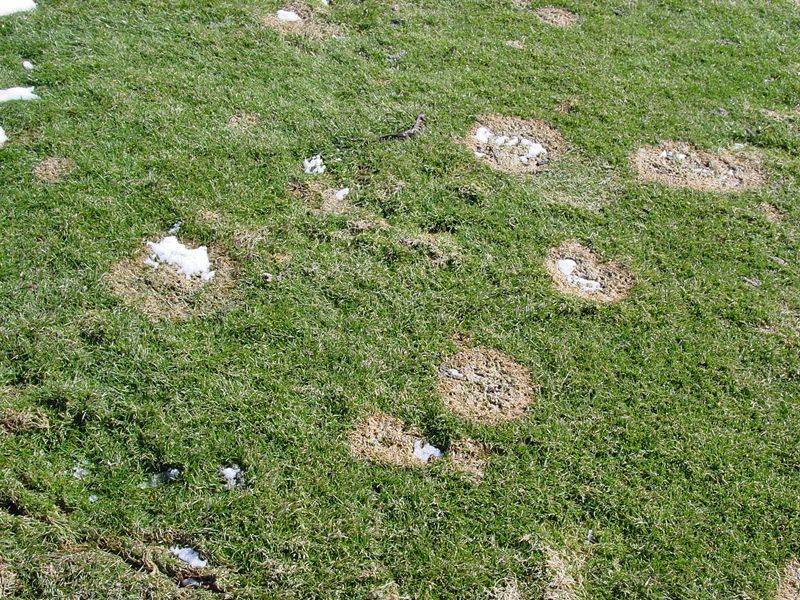
Foggy coastal mornings and drizzly weeks set the stage for pink patch, a close cousin of red thread that often appears alongside it.
Patches turn pinkish to tan, and infected blades may look coated in pale pink, gelatin-like growth rather than distinct threads.
Telling the two apart can be tricky, though the fix is nearly identical. Both favor cool-season grasses and target lawns low in nitrogen.
Long stretches of cool, wet, cloudy weather give pink patch its opening.
Another cool-weather troublemaker is Microdochium patch, also called pink snow mold or Fusarium patch. UC IPM notes it can appear in coastal California even without snow.
Its round patches, tan to reddish brown, sometimes show a pinkish edge in damp weather, and heavy quick-release nitrogen in fall can worsen it.
Balance matters most. Moderate, steady nutrition serves the lawn far better than a big burst of fertilizer before winter.
Keeping thatch under about half an inch, by dethatching while grass actively grows, helps, along with aeration that lets water drain from the surface.
Sparing irrigation during the rainy season, with timers shut off after storms, keeps turf drier. Fallen leaves deserve quick raking, since a wet leaf blanket keeps grass soggy underneath.
Proper mowing height and reduced shade help blades dry faster, and most patches recover as spring warms up. Clippings from infected areas are best bagged until symptoms fade.
5. Moss Moves In On Soggy Soil
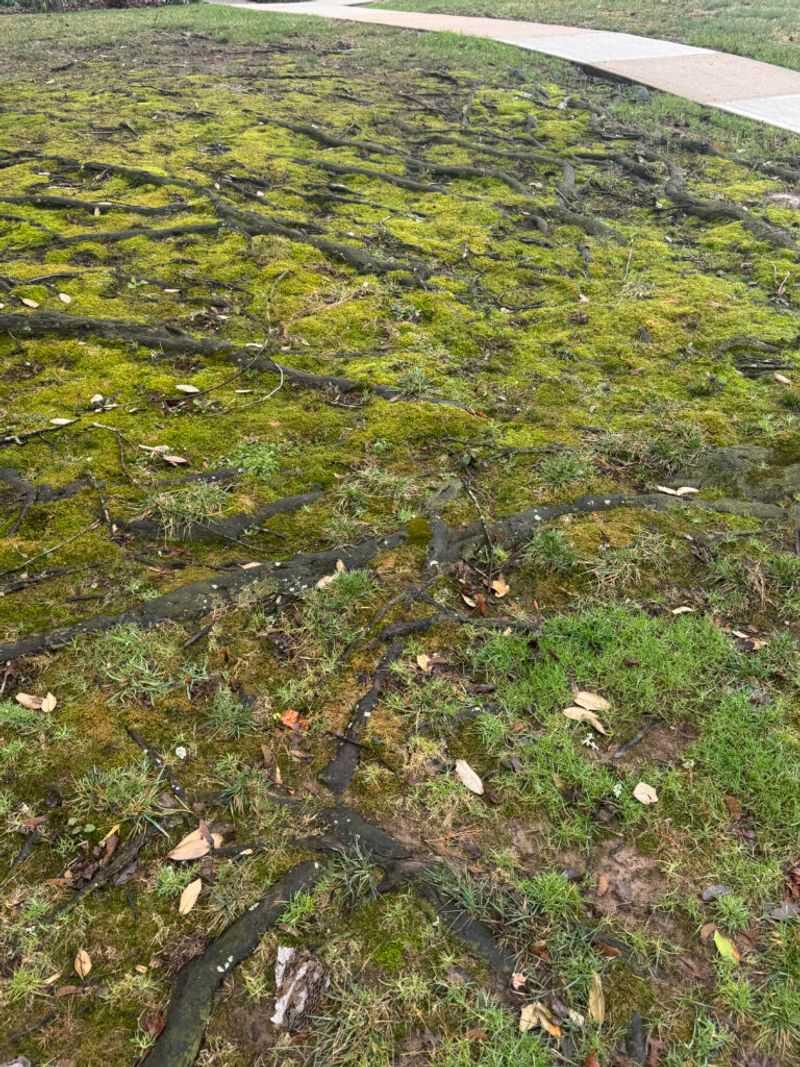
Squish, squish. That spongy feeling under the oak tree may have nothing to do with grass, since moss forms a soft, velvety carpet wherever turf struggles.
It spreads quickly during wet months, especially in north-facing yards and beneath dense trees.
Moss rarely pushes grass out. Instead, it moves into space grass has already abandoned, acting as a messenger about the conditions below.
UC IPM links moss to shade, poor drainage, compacted soil, low fertility, and overwatering, all signs the soil underneath is wet, tight, and unfriendly to roots.
Raking out moss without fixing those conditions works like mopping beneath a leaky faucet, since it returns quickly.
The soil comes first. Core aeration opens compacted areas to air and water, while filling low spots or adding drainage helps where puddles linger for days.
Shade is often the next culprit. Pruning lower tree branches lets more light reach the ground.
In deep shade, a shade-tolerant grass such as fine fescue, or a ground cover suited to those conditions, often works better than fighting the site.
Watering matters too, since many California lawns stay on a summer schedule long after rain returns. Turning sprinklers down or off in fall and winter makes a big difference.
Proper feeding helps grass grow thick enough to compete. Once conditions improve, raking out the moss and overseeding bare spots leaves it nowhere to settle.
6. Algae Forms Slimy Green Crusts
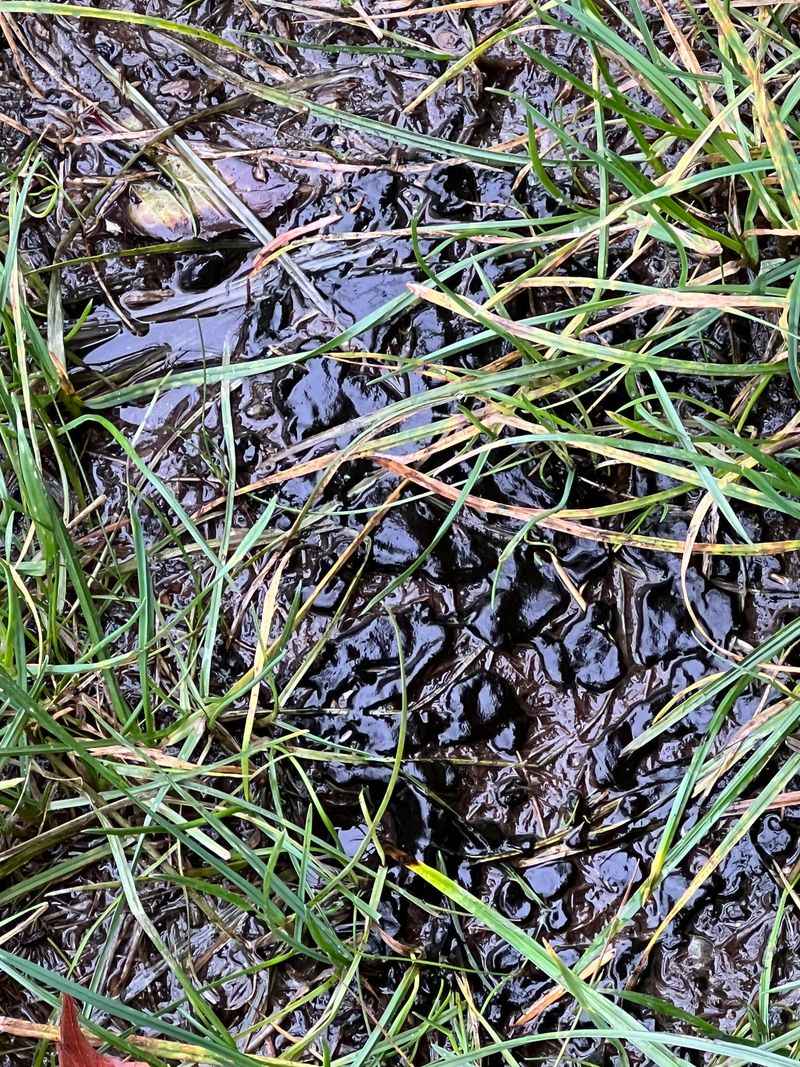
A slick, dark green film near a sprinkler head often turns out to be lawn algae. It grows as a slimy green or blackish layer on bare soil and thin turf.
As it dries, it hardens into a black crust that can crack like old paint.
Algae isn’t a grass disease. It grows on the soil surface wherever sunlight reaches through gaps in the lawn.
UC IPM connects it to constantly wet soil, poor drainage, shade, compaction, and thin turf, with leaky heads and low runoff spots among the usual hot spots.
The crust causes real trouble. It seals the soil surface, making it harder for water and air to reach roots, and grass seed struggles to sprout through it.
Left alone, algae can turn a thin spot into a permanently bare one.
Drying things out comes first. Sprinkler heads deserve a check for leaks, overspray, or puddling, and watering can scale back during the rainy season.
Aerating compacted soil, fixing low spots that hold water, and trimming back shade all reduce the conditions algae needs.
Once the area dries, a rake can break up the crust and loosen the soil. Overseeding with a grass suited to the site comes next.
Light feeding helps new grass fill in quickly and shade the soil. A dense lawn blocks the sunlight algae depends on, keeping it from returning.
7. Mushrooms Pop Up From Buried Wood
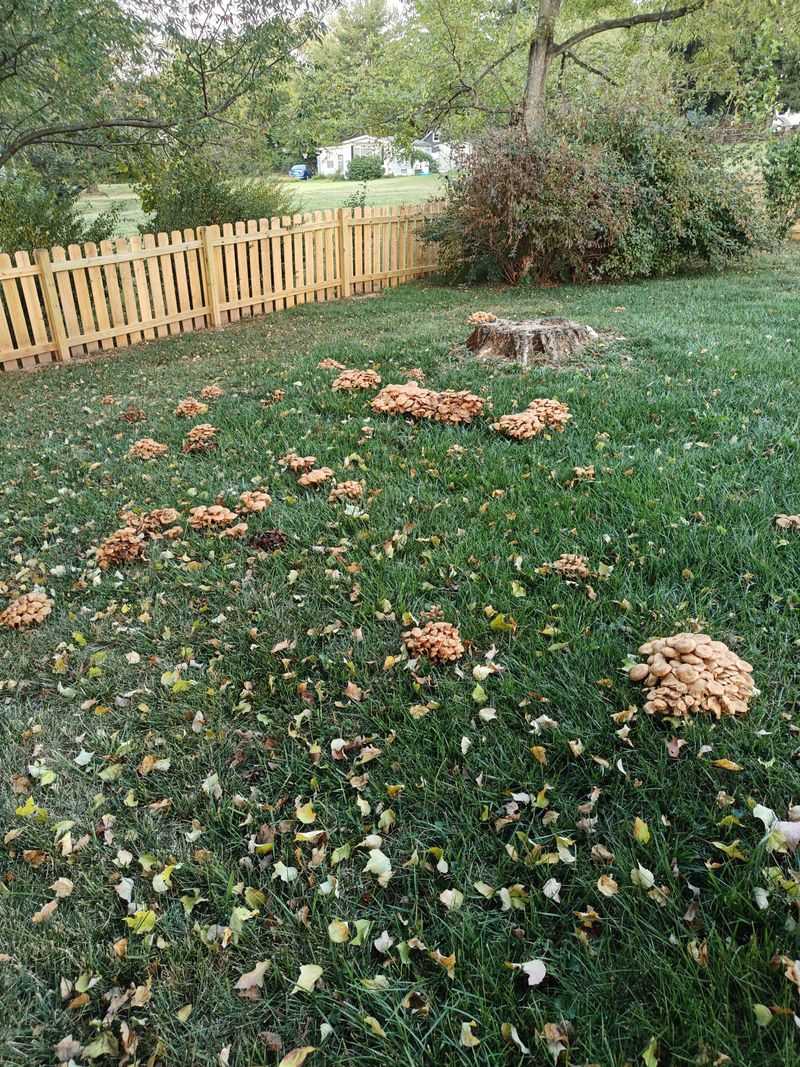
A dozen tan caps can appear overnight where an old maple once stood. Mushrooms after fall rain surprise plenty of homeowners, yet they’re usually the most harmless guests on this list.
Mushrooms are the fruiting parts of fungi living underground. Most feed on buried organic matter such as old roots, stumps, construction lumber, or thick thatch.
They help break down that material and return nutrients to the soil, and UC IPM notes that most lawn mushrooms don’t damage grass.
Rain wakes them up. After a soaking, the fungi send up mushrooms to spread spores, and the caps fade once the soil dries.
Some form arcs or rings called fairy rings. A few cause dark green or brown circles, usually because the fungus makes the soil repel water.
Patience offers the easiest fix. Mushrooms can be knocked over with a rake or mowed off and bagged, sooner rather than later where children or pets play.
Some lawn mushrooms are poisonous, so wild mushrooms from the yard are best left uneaten.
Poison Control and the ASPCA Animal Poison Control Center can help after a suspected nibble.
Fewer mushrooms over time come from lighter watering, better drainage, dethatching, and aeration.
A large stump or buried wood feeding them will eventually stop the show once removed, though the fungus may take years to finish. Meanwhile, they work as tiny, free recyclers.
8. Annual Bluegrass Takes Over Wet Turf
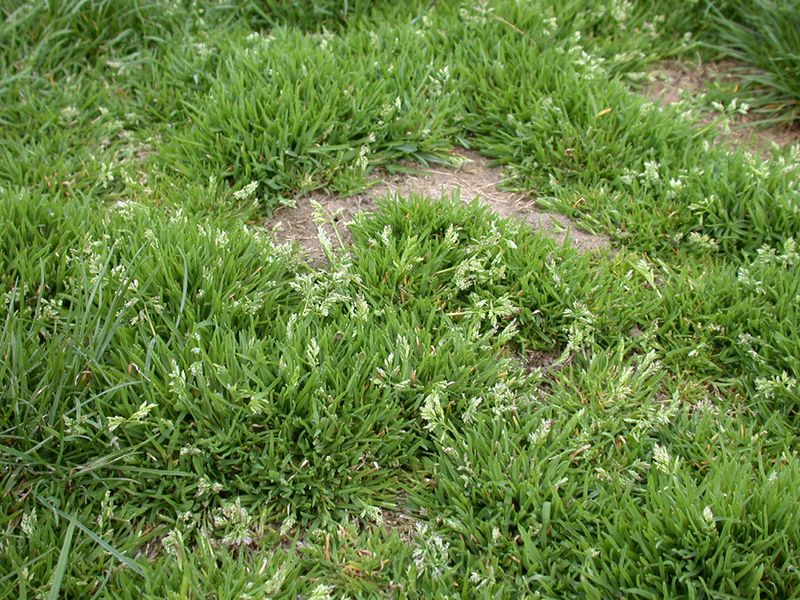
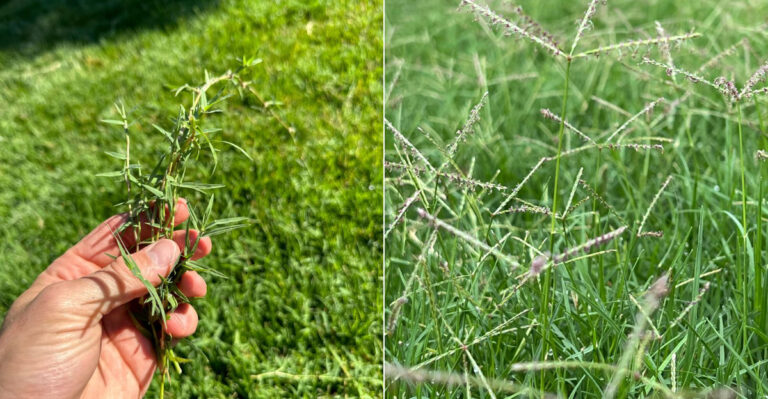
Light green clumps with fuzzy white seed heads signal a sneaky grass invader. Annual bluegrass, or Poa annua, looks much like regular turf from a distance.
Up close, its paler color and constant seed heads give it away.
Fall rain serves as its starting signal. UC IPM explains that annual bluegrass sprouts in fall and winter as soil cools and stays moist.
It thrives in wet, compacted, frequently watered soil and loves thin spots, and many plants fade in summer heat, leaving brown, patchy gaps behind.
A single plant can produce hundreds of seeds even when mowed short, and those seeds can wait in the soil for years.
Pulling clumps helps in small areas, though changing conditions works far better over time.
Drying the lawn out makes a strong first step. Watering less often and more deeply, with sharp cutbacks during the rainy season, gives deeper-rooted turf an edge.
Annual bluegrass has shallow roots, so drier surface soil works against it. Aerating compacted areas and fixing drainage problems help further.
A thick lawn offers the best defense. Mowing at the higher end of the recommended range shades out seedlings.
Feeding at the right time for the grass type, rather than heavily through fall and winter, avoids helping Poa more than the lawn.
Bare spots overseeded quickly leave weeds no room. A dense, well-managed lawn remains the best long-term defense against wet-weather problems of every kind.