The Orange Mushroom Under California Oaks That Looks Made For Halloween (And Why You Should Never Eat It)
Late fall rains bring some of California’s most striking woodland sights, and a few of them look almost too festive to be real.
Bright clusters glowing against dark leaf litter beneath old oaks can seem like decorations left over from a holiday party.
That cheerful appearance hides a less friendly truth, one that surprises plenty of people every season.
A close look-alike adds to the confusion, since the two share similar colors, timing, and favorite trees.
Telling them apart matters, especially for households with curious children or dogs.
The same woodland surprise also offers one of winter’s most fascinating shows, visible only after dark.
Admiring it safely means keeping eyes curious and hands at a respectful distance.
1. Meet The Western Jack-O’-Lantern
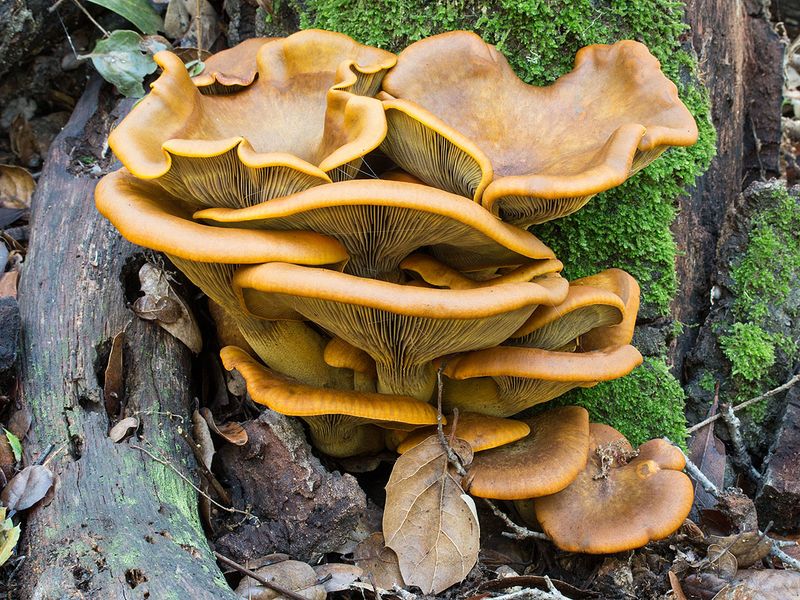
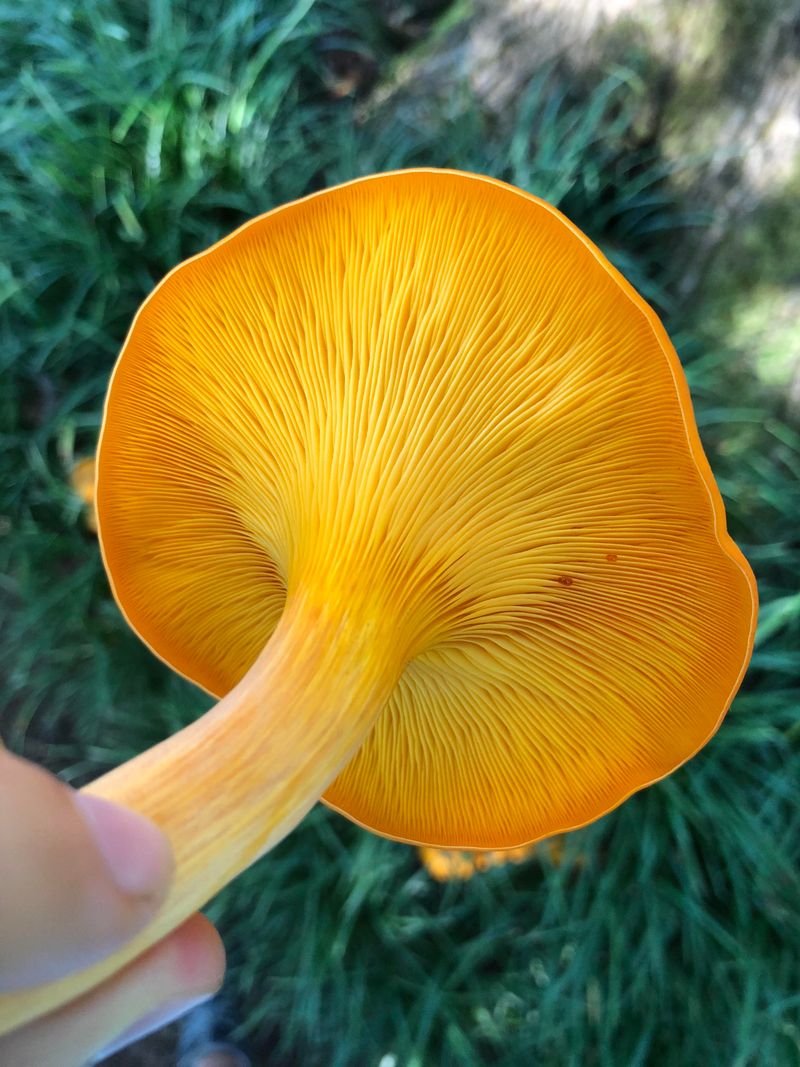
Pumpkin orange with hints of olive, the caps practically demand attention on a gray winter day. Few mushrooms in California oak country stand out so boldly.
Scientists call it Omphalotus olivascens, while most people simply know it as the western jack-o’-lantern.
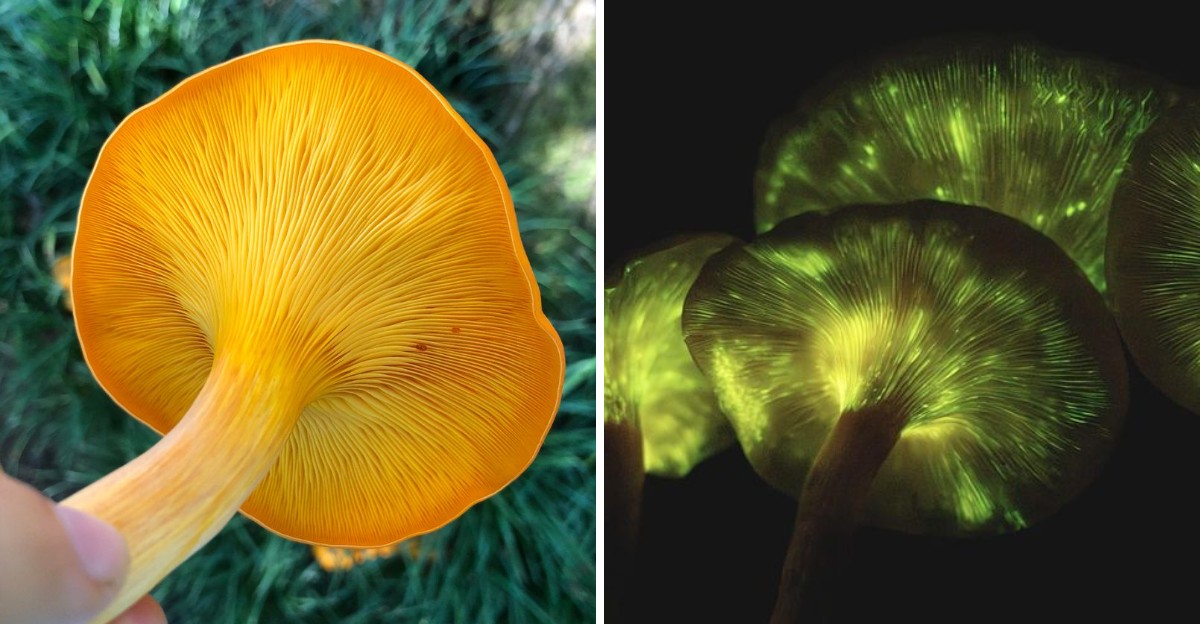
The name fits in two ways. Its color matches a carved Halloween pumpkin, and its gills can glow faintly in the dark, like a candle inside one.
The species name olivascens points to the olive tones that often appear on older caps and gills.
It turns up across much of California, from the Bay Area to Southern California foothills, favoring oak woodlands where coast live oaks and other natives have stood for decades.
Parks, open space preserves, and even shady backyards with old oak stumps can host a crop.
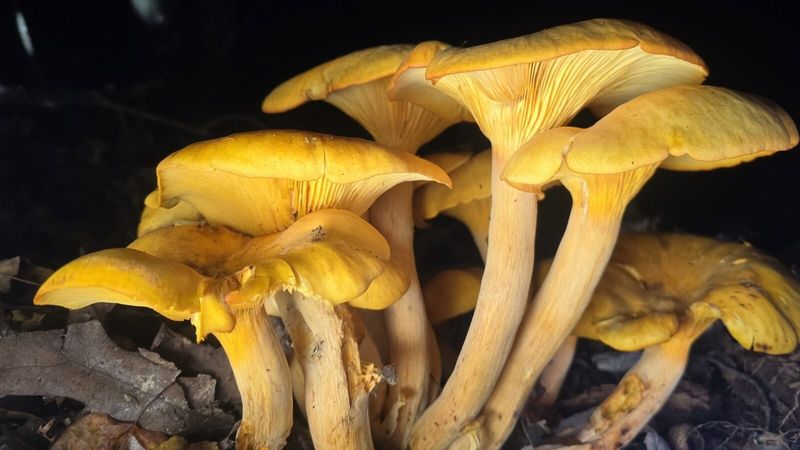
Caps usually range from a few inches to nearly a foot wide on large clusters. Young caps are rounded, then flatten and often dip in the center with age.
Curled or wavy edges give a cluster a lively, ruffled look.
Spotting one makes a real treat for nature lovers, and photos or sketches capture the moment beautifully. Hands, though, are best kept well away.
Many parks prohibit picking plants or fungi, so admiring from the trail is often the rule anyway. Late fall through midwinter offers the best chance of a sighting.
2. It Grows In Clusters On Oak Wood
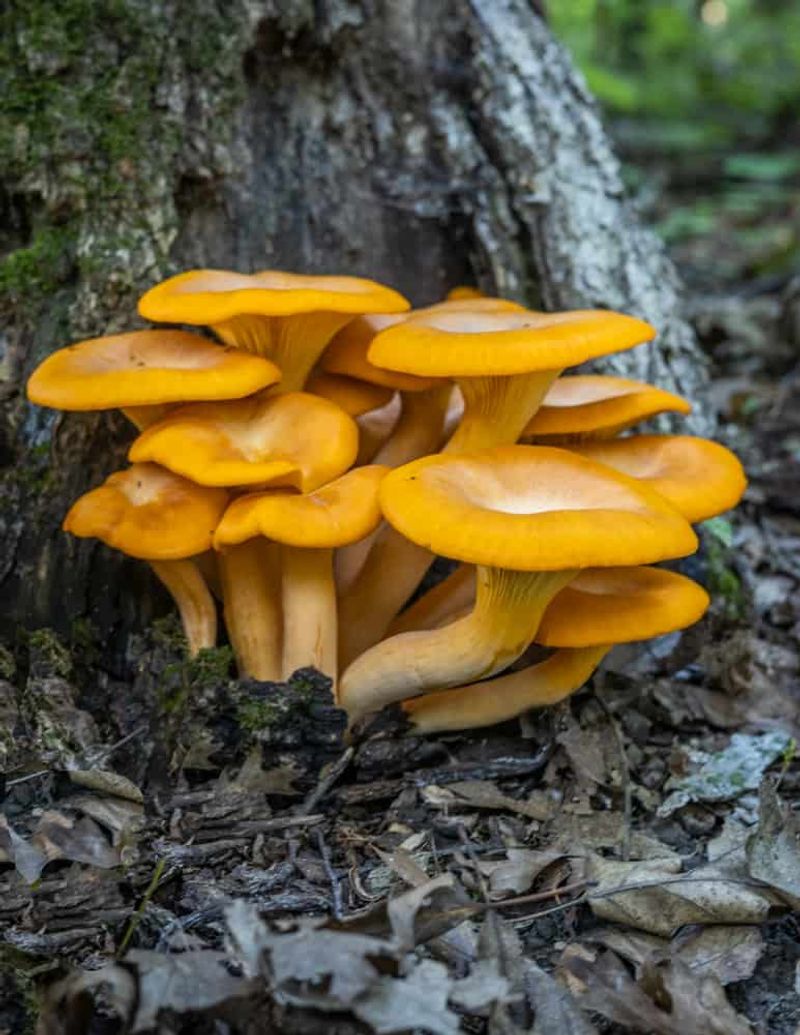
An old oak stump after the first heavy rains may host an entire crowd. The western jack-o’-lantern rarely appears alone, growing in tight, overlapping clusters of sometimes dozens of caps.
Wood serves as its home base. The fungus feeds on oak and also grows on eucalyptus, common in many California parks and neighborhoods.
It lives inside stumps, fallen logs, and tree bases, slowly breaking down the wood over many years.
A sneaky detail catches many people off guard. Sometimes a cluster seems to rise straight from the soil, far from any visible stump.
In those cases, the fungus usually feeds on buried roots underground, so a mushroom that looks soil-grown may actually be anchored to hidden wood.
Timing matters too. The season runs from late fall to midwinter, when cool temperatures and rain soak the woodland.
A single stump may produce fruiting bodies year after year, so a spot noticed in November could light up again the following season.
Your California Garden Changes Every Week. Your Plan Should Too.
Gardening in California changes quickly throughout the season. Every Friday you’ll receive a simple weekly plan showing exactly what to plant, prune, fertilize, harvest, and protect so you never miss the right timing.
For homeowners, a cluster near the yard signals decaying wood below. It’s no cause for panic, though it does call for some attention.
Young children and curious dogs are drawn to bright objects at ground level. Removing the mushrooms with gloves and bagging them lowers the risk while they’re fruiting.
Clusters often return after each heavy rain, so repeat checks through winter help. Bagged mushrooms belong in the trash rather than the compost pile.
3. Glowing Gills Light Up The Dark
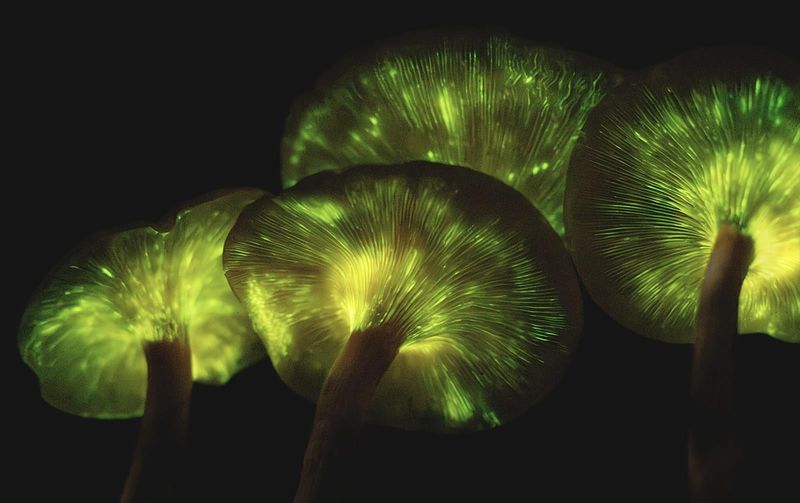
With flashlights off and a few minutes of patience, something remarkable can happen. Gills of a fresh western jack-o’-lantern may give off a soft, eerie green light.
Scientists call this bioluminescence, the same kind of natural glow fireflies use.
The light comes from a chemical reaction inside the fungus, as oxygen reacts with special compounds and releases energy as light rather than heat.
The glow shows most strongly on the gill edges of freshly grown mushrooms.
Expectations deserve adjusting, though. The light is faint, more ghostly whisper than beam, and eyes often need five to ten minutes in true darkness to adjust.
A cloudy night far from streetlights gives the best view.
Why a mushroom glows remains a subject of study. Some researchers suggest the light may attract insects that help spread spores, while others consider it a byproduct of fungal metabolism.
Either way, it adds real spooky charm to a winter woodland. The phenomenon has fascinated naturalists for centuries, appearing in folklore as foxfire on glowing wood.
Photographers sometimes capture the glow with long camera exposures, and the show can be enjoyed without touching anything. Pets on a leash keep the cluster undisturbed.
Glowing gills offer a fun identification clue, yet they’re no sign of safety. Pretty and poisonous can easily share the same cap.
Fresh specimens on a still, moonless evening usually produce the most visible glow.
4. It Looks Like A Golden Chanterelle
Plenty of people have spotted a cluster of orange caps beneath an oak and assumed it was something else entirely.
The mix-up happens because this toxic fungus closely resembles the California golden chanterelle.
That chanterelle, Cantharellus californicus, was named California’s official state mushroom in 2024, celebrated for its size and rich golden color.
Some specimens grow remarkably large, and chanterelles partner with living oak roots rather than feeding on old, spent wood, a difference explored further below.
Both mushrooms share warm orange tones, appear during the rainy season, and show up near oaks. From a few feet away, a beginner may see them as twins.
Shapes overlap too. Older jack-o’-lantern caps often curve upward with wavy edges, giving them the funnel look chanterelles are known for.
Shady light under an oak canopy can blur colors further, making orange and gold harder to separate. Rain-darkened caps and fading light late in the day add to the challenge.
Bay Nature and local mycological groups regularly warn about this exact confusion, and poison control centers see cases each year involving jack-o’-lanterns swallowed by mistake.
A single quick look simply can’t be trusted. Any orange mushroom deserves treatment as a mystery, best admired rather than handled.
The differences experts check make fascinating learning for woodland walks. Reading about a mushroom, though, differs greatly from recognizing it with certainty in the field, even for experienced naturalists.
5. Chanterelles Have Forked Ridges, Not True Gills
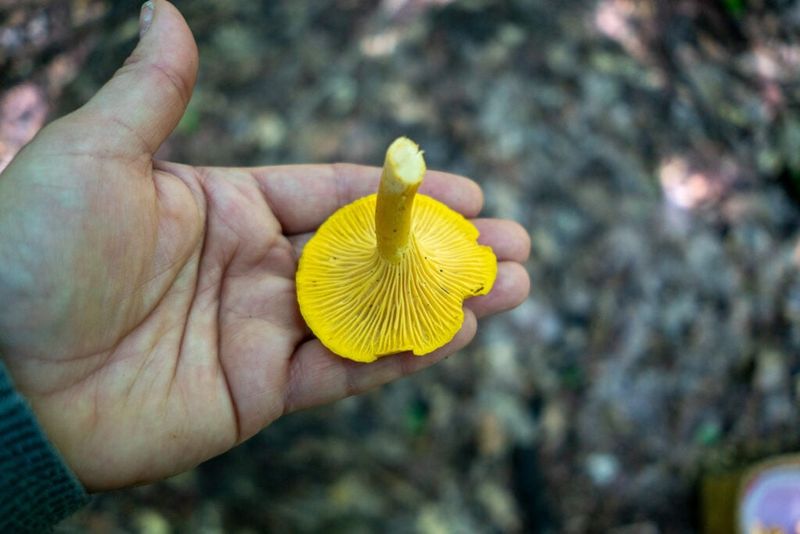
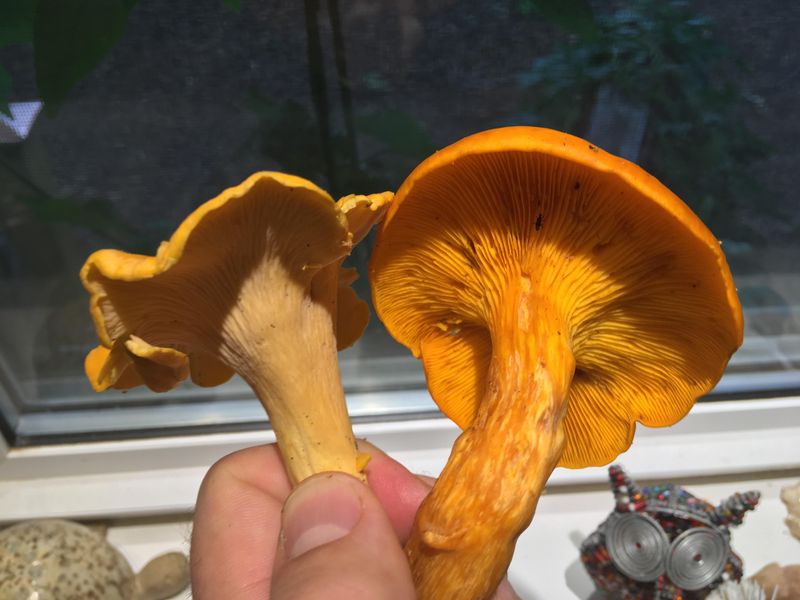
The underside tells the real story. A jack-o’-lantern carries true gills, while a golden chanterelle has blunt, forked ridges that only resemble gills at a glance.
True gills are thin, sharp-edged plates set close together, almost like pages in a book. On a jack-o’-lantern, they run down the stem and usually show bright orange.
Chanterelle ridges are thicker and rounded, more like wrinkles or veins. They often split into forks and connect with small cross-veins.
Many people describe them as melted or smeared rather than crisp and separate.
Growth habit offers another major difference. Jack-o’-lanterns grow in clusters on wood, including stumps and buried roots.
Golden chanterelles grow from the ground in partnership with living oak roots, often standing alone or scattered rather than packed together.
Nature loves exceptions, though. A chanterelle can sprout close to another, and a jack-o’-lantern on buried roots can seem to rise from soil.
Worn, rain-battered, or very young mushrooms can hide their features, which is why experienced mycologists check many traits together rather than trusting one.
Learning these differences makes woodland walks more interesting. Field guide photos and mushroom fairs hosted by groups such as the Mycological Society of San Francisco offer great practice.
The final call still belongs to experts, since even a well-studied set of clues can mislead in the field, especially with weathered specimens.
6. Orange Inner Flesh Gives It Away
A mushroom sliced in half can tell a different tale than its outside. Experts often check inner flesh as one more clue, and with the western jack-o’-lantern, color runs deep.
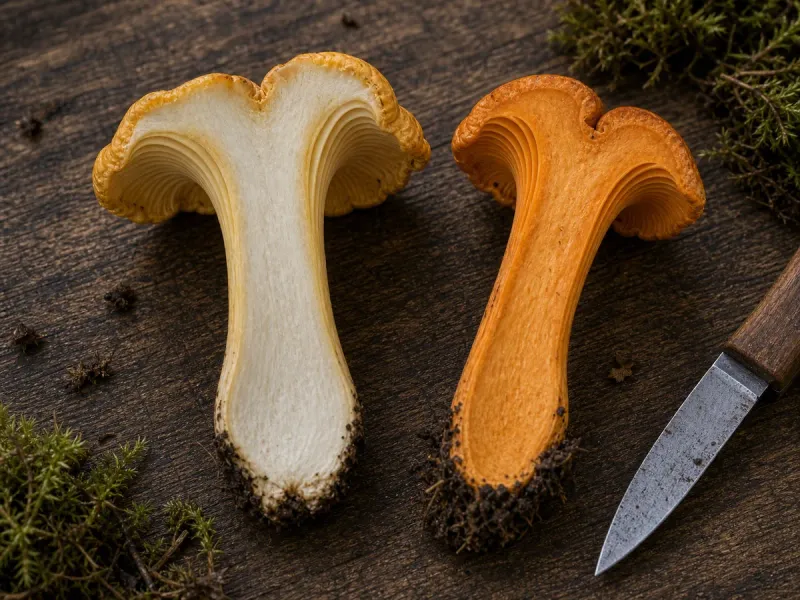
Its inner flesh is orange, matching the cap and gills, with color carrying all the way through like a carrot.
Golden chanterelles, by contrast, usually show paler flesh inside, often whitish or light cream beneath that golden skin.
The contrast resembles an orange versus a peach with orange skin. Both look bright outside, yet cutting them open instantly reveals two very different fruits.
Mycologists and educators often teach this as a helpful extra trait. Combined with true gills, clustered growth on wood, and the green glow, it builds a stronger picture.
One trait can mislead, while several together paint a clearer portrait.
Even so, flesh color makes an unreliable test on its own. It can change as mushrooms age, dry out, or become waterlogged, and indoor lighting can play tricks.
Small differences in shade are easy to misjudge, especially for beginners.
Cut samples deserve careful handling, with hands washed afterward and specimens kept away from food preparation surfaces. Gloves add an extra layer of caution for anyone handling unknown fungi.
Comparing specimens works best at an identification table during a local mycological society event, where experts welcome questions and demonstrate these clues safely and accurately.
Many fungus fairs take place in late fall and winter, right when these mushrooms appear.
7. Illudin Toxins Cause Severe Stomach Illness
Trouble usually begins a few hours after someone swallows a jack-o’-lantern. The culprit is a group of toxins called illudins, found throughout the mushroom.
Even a small amount can cause significant illness.
Symptoms hit the stomach and gut hard. Nausea often comes first, followed by repeated vomiting, painful cramps, and diarrhea that can last for hours.
The illness can leave someone weak and dehydrated, with recovery sometimes stretching into the following day.
For most healthy adults, jack-o’-lantern poisoning isn’t generally considered life-threatening, yet it remains truly miserable and deserves serious attention.
Fluid loss can become dangerous, especially for young children, older adults, and small pets.
Dogs often gulp down mushrooms in yards and parks, and a small dog has far less body weight to handle a toxin, so even a little can cause serious illness.
A pet that swallows any wild mushroom needs prompt veterinary attention. The ASPCA Animal Poison Control Center can also help.
For people, Poison Help offers guidance as soon as possible after any wild mushroom is swallowed, without waiting for symptoms.
The line is free, confidential, and open 24 hours a day, connecting Californians to the California Poison Control System.
A sample saved in a paper bag, along with clear photos and notes on timing and amount, helps responders. Trouble breathing, fainting, or severe illness calls for 911.
8. Never Eat Wild Mushrooms Without Expert ID
Curiosity makes a wonderful companion on a winter walk, while tasting any wild mushroom invites real risk. The safest approach treats every woodland mushroom as something to admire rather than pick.
No app, photo, or quick checklist offers enough certainty to change that.
Identification apps help with learning, yet they make mistakes. Photos miss key details such as smell, flesh color, and growth habit, and even seasoned naturalists sometimes slip.
Some toxic species, including members of the genus Amanita, pose far greater danger than jack-o’-lanterns.
Children benefit from clear, friendly rules. Mushrooms are for looking rather than touching or tasting, and a simple phrase, eyes not mouths, can stick in young minds.
Pets need protection too. Leashed walks in wooded areas during the rainy season, plus yard checks after storms, help, with mushrooms near stumps removed using gloves and a bag.
Many parks prohibit picking plants, fungi, and other natural material, so posted signs deserve a read before collecting anything, even for study.
Leaving mushrooms in place also lets them release spores and support the forest.
Mushroom walks and fungus fairs with the Mycological Society of San Francisco or other local clubs offer the best path to learning. Expert guides share stories and safe comparisons.
The glowing orange show deserves enjoyment this winter, with the Poison Help number saved in every household phone.
Pet owners may want the ASPCA line saved alongside it.