A Strange Black Film Is Coating Louisiana Crape Myrtles This Fall, And A Hidden Insect Is Behind It
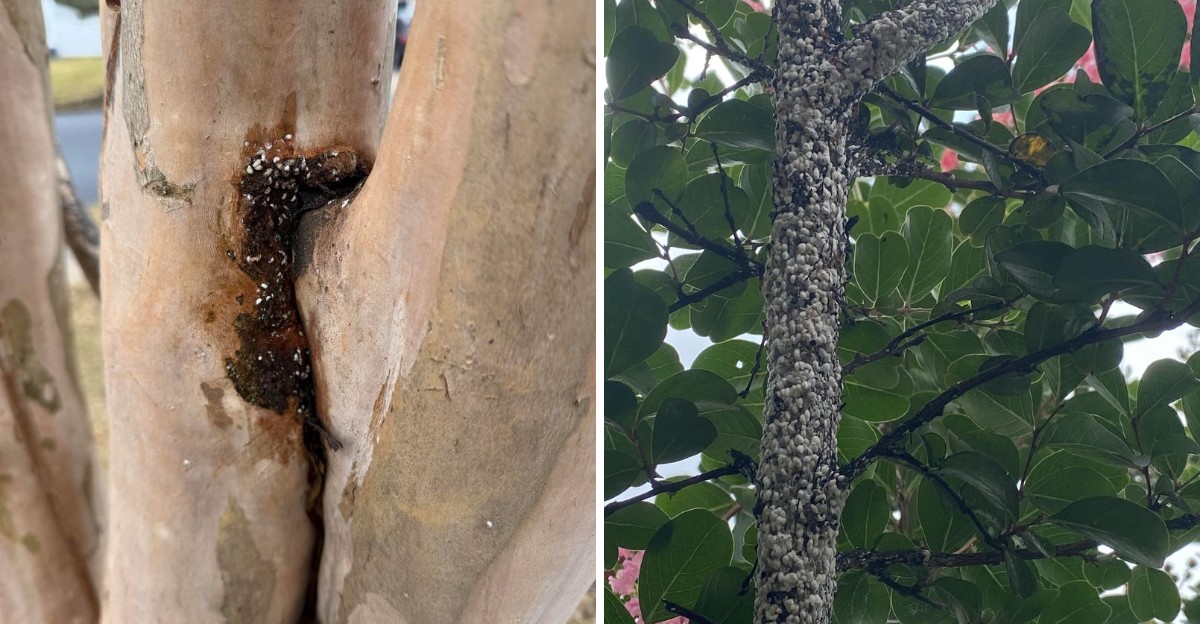
A tiny sap feeder is weakening your favorite summer bloomer right now. Black film coats your leaves, and a hose only smears it.
Rain slides right over that grime, so the stain stays put. Across Louisiana this October, you may spot the same coating on neighbors’ trees.
Ants march up your trunk because the insects drip sugary waste onto the bark. Fungus then feasts on that sticky honeydew, and you watch the blackness spread.
Sunlight struggles to reach the leaves you depend on for strong blooms. Warm, humid Louisiana autumns may let those insects keep feeding into November.
Scrubbing the bark with soap fixes the symptom but leaves the source untouched. Spraying the wrong product can trigger a larger infestation on your tree. You can limit this pest by targeting its known weak spot. Check the bark, find the culprit.
Bark Scale Insects Behind The Sooty Mold
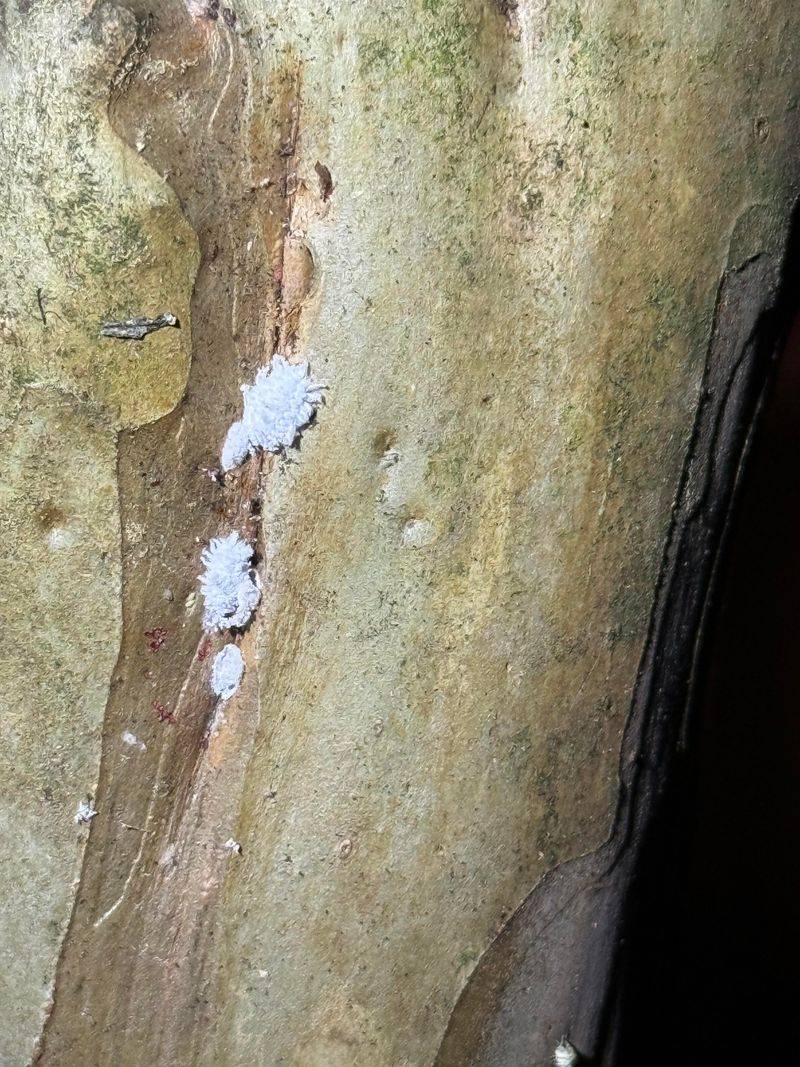
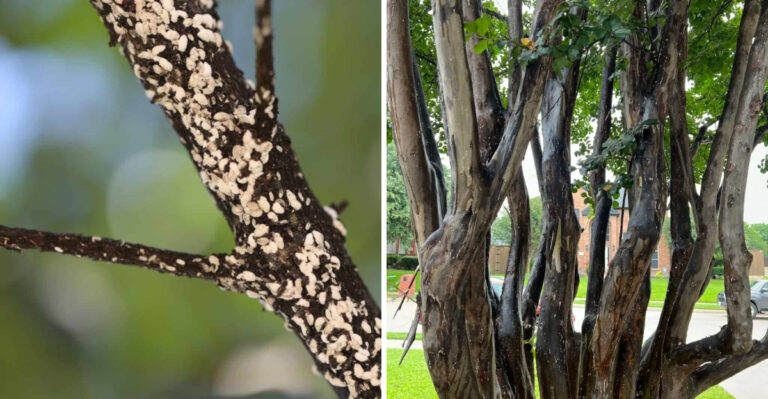
Picture a bug smaller than a sesame seed covered in fuzzy white wax. That is crape myrtle bark scale, and it was first noticed in Louisiana around 2013.
Originally from Asia, the insect first appeared in Texas in 2004 before spreading east. It has since spread across the southern United States.
It clings to bark and pokes a tiny mouthpart into the tree to drink sap. Sap is loaded with sugar, more than the scale can use. The extra gets pushed out as a sticky liquid called honeydew.
Honeydew drips onto branches, leaves, and anything parked below, like your car or patio chairs. A fungus called sooty mold loves that sugary layer and grows right on top.
So the black film is not the bug itself. It is mold feeding on bug leftovers, which sounds unpleasant but explains a lot.
Sooty mold does not feed on the tree directly. Still, it blocks sunlight from reaching leaves, which means less energy for growth and flowers.
Think of the mold as a symptom and the scale as the cause. Treat the cause, and the soot slowly fades.
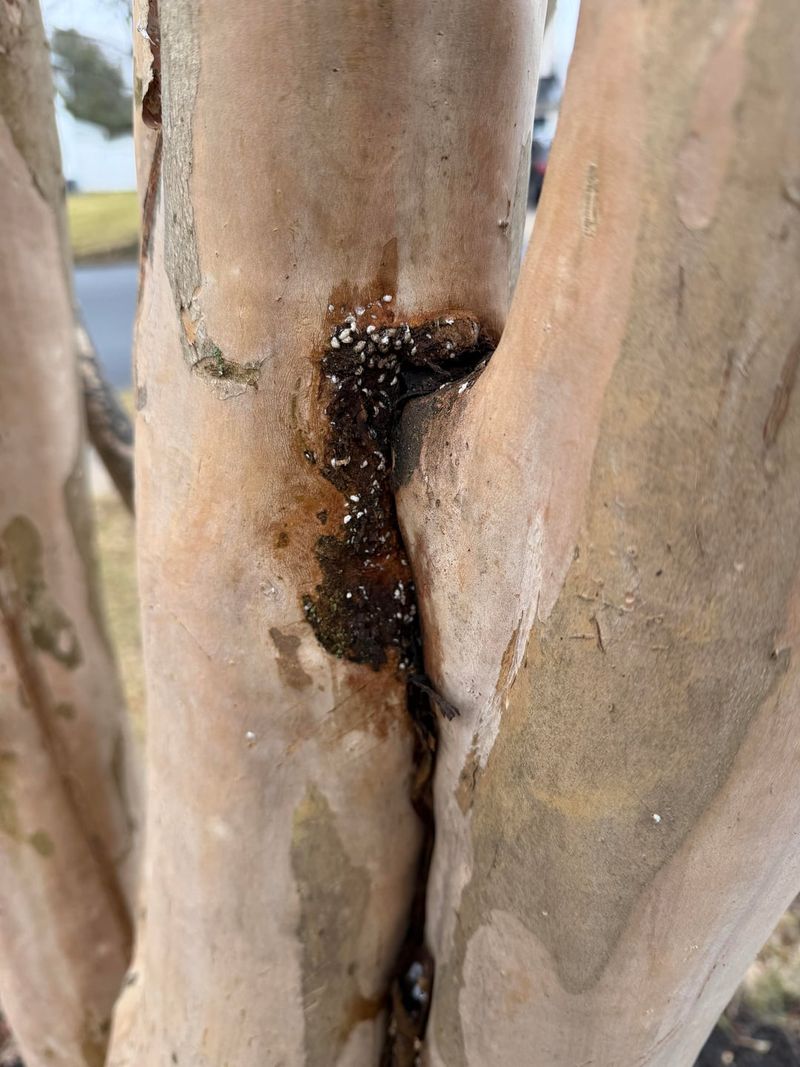
Wipe a smudge with your finger and look underneath. If you see crusty white or gray bumps on the bark, you have found the real culprit.
Females settle in once they find a good feeding spot. They tuck eggs under that wax, so one small patch grows quickly.
Tiny crawlers hatch and wander briefly. Wind, birds, and your gloves can carry them to neighboring trees.
October Clues Hiding On The Trunk
October in Louisiana brings cooler mornings, football crowds, and a perfect view of crape myrtle trouble. Leaves start thinning, so the bark shows off each crusty patch.
Bark scale has been busy all summer long. In Texas, researchers observed up to four generations each year, so numbers can build by fall.
Check the crotches where branches meet the trunk first. Scales love those protected nooks, along with pruning scars and the rough spots near the base.
Grab a soft toothbrush and gently scrub one white bump. A pink or reddish smear means you pressed a female full of eggs.
Your Louisiana Garden Changes Every Week. Your Plan Should Too.
Gardening in Louisiana changes quickly throughout the season. Every Friday you’ll receive a simple weekly plan showing exactly what to plant, prune, fertilize, harvest, and protect so you never miss the right timing.
That pink ooze is the signature clue that separates bark scale from harmless lichen. Lichen looks crusty too, but it stays dry and pale when rubbed.
Watch for black streaks running down the trunk like someone spilled a cup of coffee. Busy ants and wasps buzzing around the branches are another giveaway.
Spotting the problem now gives a head start. Fall is the time to plan, while winter and spring are when treatments work best.
Snap a few phone photos of the worst spots today, including close-ups of the bark. Comparing them next spring shows whether your efforts are paying off.
Morning light shows bark texture clearly. Bring a flashlight on cloudy days and check the undersides of branches.
Compare a suspicious bump with bare bark nearby. Healthy trunks look smooth and mottled, so crust stands out.
Why Broad Sprays Can Make Scale Worse
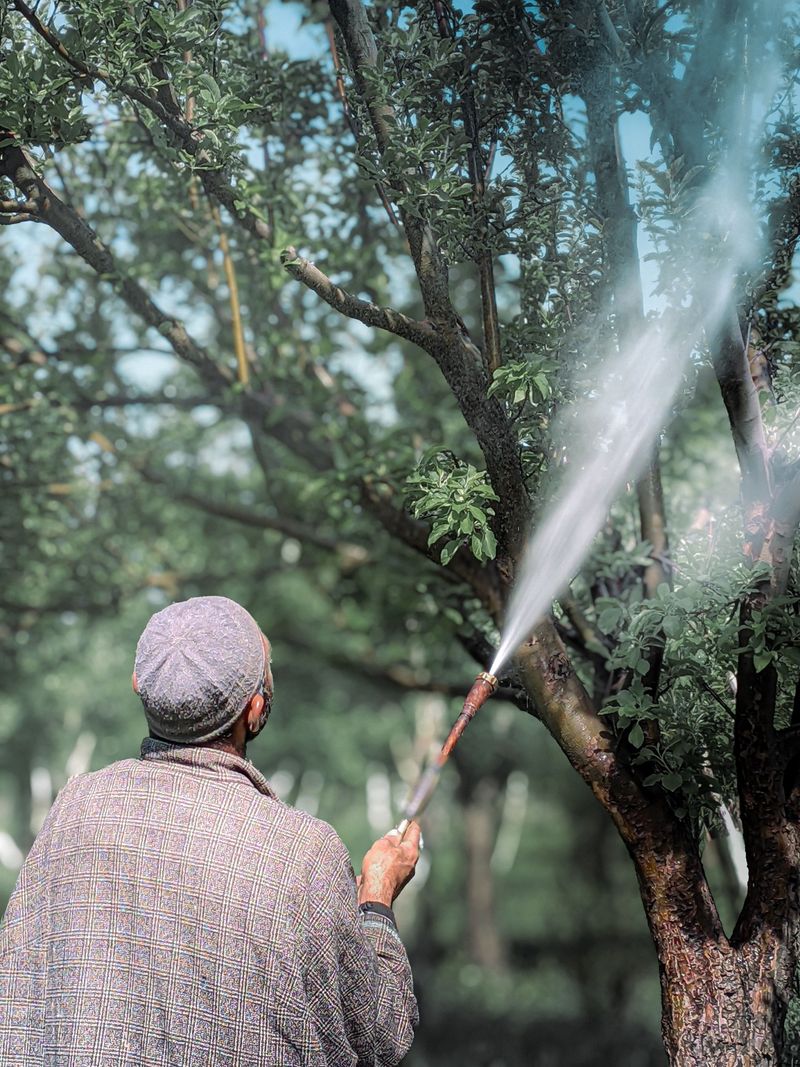
Some gardeners grab a broad-spectrum bug spray and soak the whole tree. It feels productive, but it often makes the problem worse.
Adult bark scales hide under a waxy shell that shields them like a raincoat. Many contact sprays slide right off without reaching the insect underneath.
Meanwhile, that spray removes ladybugs, lacewings, and other helpful hunters. Lady beetles, especially the twice-stabbed lady beetle, munch on scales for free.
Without those predators, scale numbers can bounce back even faster. You end up with more crust, more honeydew, and a thicker black coat.
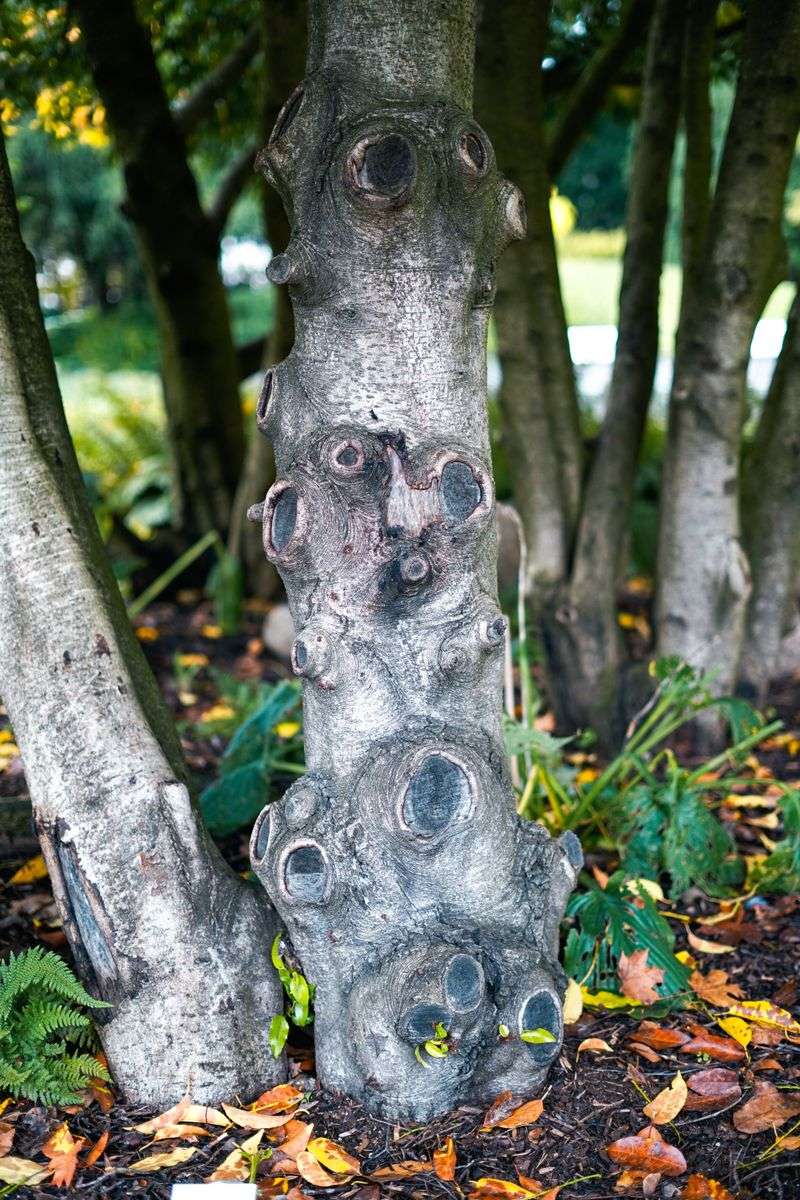
Another common slip is hard topping, the habit of cutting trees into knobby stumps. It stresses the tree and creates rough knuckles where scales love to settle.
Pressure washing the bark too forcefully may be risky as well. A strong blast can scuff tender bark and leave marks.
Before buying anything, read the label and confirm it lists scale insects or crape myrtles. Your local LSU AgCenter office can point you toward smart choices.
Patience beats panic when dealing with this persistent pest. A targeted plan protects the good bugs while still limiting the bad ones.
Timing matters too. Spraying during bloom can reach visiting bees and butterflies, so check the calendar first.
Vinegar sprays can burn leaves and still miss scales hiding under wax. Choose products that name scale insects.
Winter Scrubbing And Spring Soil Treatment
Think of this fix as a seasonal cleaning for your tree, and it starts with soap. Wait until the tree drops its leaves in late fall or winter.
Mix a mild dish soap with water in a bucket. Scrub the trunk and lower branches with a soft brush to wash away mold and help loosen some scales.
Bare branches make the job easier because you can see each crusty spot. Your arms might be sore afterward, but the bark will look brighter.
Horticultural oil, sometimes called dormant oil, is an optional extra during winter. Coat the bark well, though LSU AgCenter has noted it can be less effective on this scale.
For heavy infestations, a systemic insecticide applied as a soil drench can help. Products with imidacloprid or dinotefuran travel up through the roots into the sap.
Mid-spring is the window LSU AgCenter recommends for drenching. Water the soil afterward so the product reaches the roots evenly.
Follow each label direction carefully, including the amount based on trunk size. More is not better, and systemic products can reach pollinators, so check the label for restrictions during bloom.
Combining these steps may improve results. Gardeners who stay consistent often see cleaner bark over time.
Choose a mild, dry day above freezing for scrubbing. Suds dry quickly, and you can work comfortably.
Rinse the trunk with clear water afterward. Clean bark makes remaining scales easier to spot.
The Outlook For Blooms Next Summer
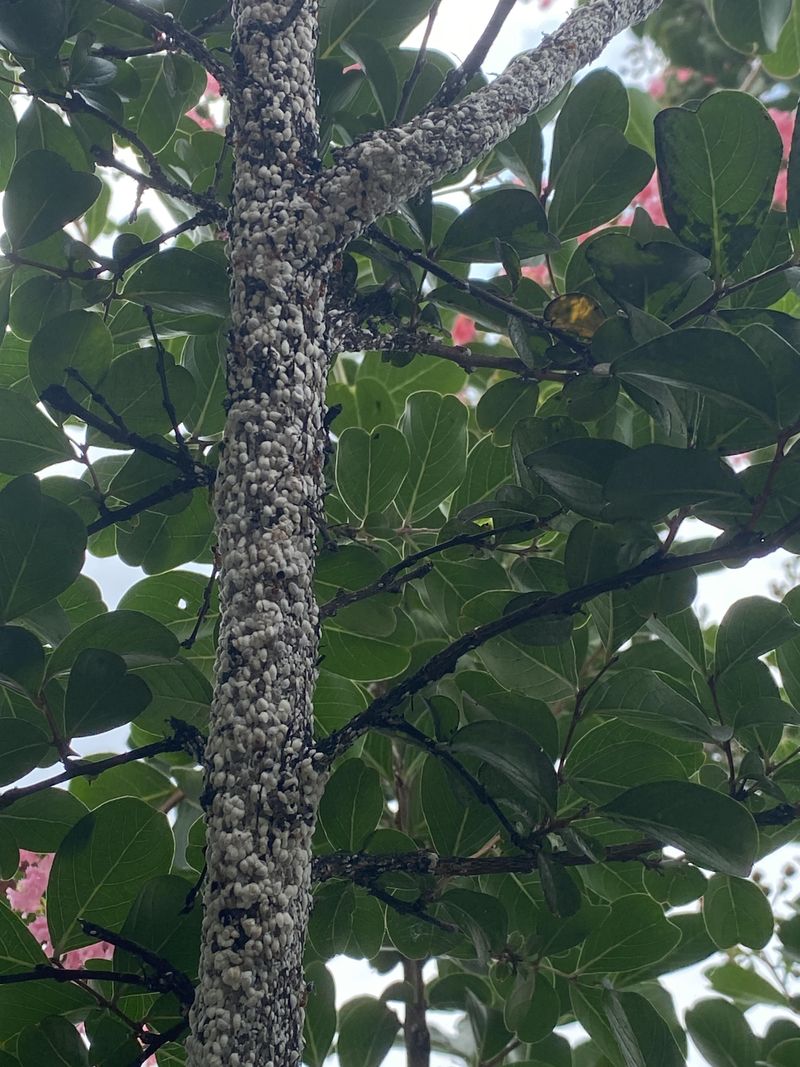
Take a deep breath, because many crape myrtles recover from a bark scale infestation. These are hardy Southern trees that often improve with a little help.
Left alone, though, heavy infestations can weaken a tree over time. Expect fewer blooms, smaller flower clusters, and slower growth when the scale keeps feeding on sap.
Branch tips may thin out, and some twigs can dry up. The famous smooth, peeling bark is covered by a layer of soot.
Once treatment starts working, new honeydew stops forming on the branches. The sooty mold then dries, flakes, and weathers away over several months.
Rain and sunshine do much of the cleanup for you over time. A gentle scrub with soapy water can speed things along if you are impatient.
By the following summer, many treated trees push out healthy green leaves and bright blooms. Pink, purple, red, and white flowers can return in greater numbers.
Keep your expectations realistic, since full recovery may take one or two growing seasons. Slow progress is still progress, especially with a pest this stubborn.
Your parked car will thank you too. Fewer sticky drips mean fewer black spots on the windshield each morning.
Keep a simple notebook of dates and products. Notes help you repeat what worked. Neighbors may notice your tree improving first. Fresh green leaves and glossy bark show the scale losing ground.
Smart Habits For Healthier Trees Next Year
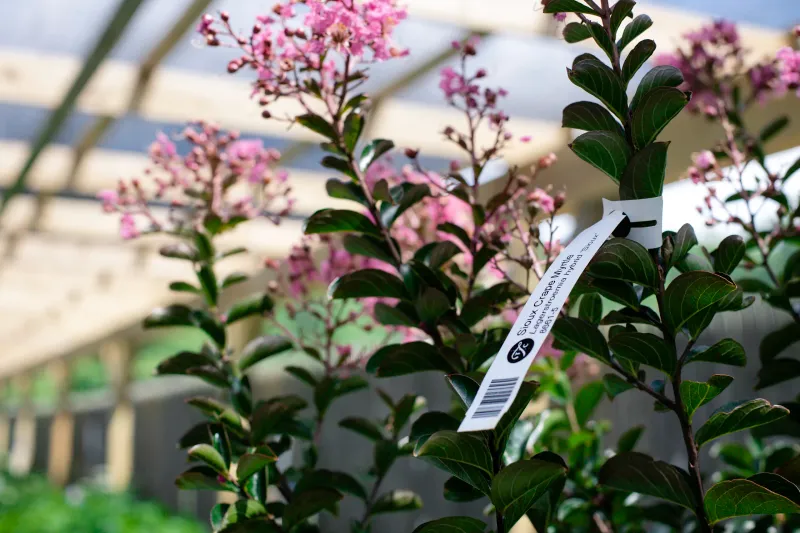
A bargain tree from the garden center can come with hitchhiking pests. Inspect the trunk and branch joints for white crust before you head to checkout.
Skip heavy topping each winter and prune lightly instead. Remove only crossing, weak, or crowded branches to keep air flowing through the canopy.
Clean your pruners with rubbing alcohol between trees. Crawlers are tiny enough to ride along on tools, gloves, and even sleeves.
Healthy trees fight back better, so water deeply during long dry spells. A thin layer of mulch helps hold moisture without piling against the trunk.
Go easy on fertilizer, especially high-nitrogen blends. Lush new growth may produce sugary sap that attracts scale insects.
Invite natural helpers by planting flowers that attract ladybugs and lacewings. Dill, yarrow, and sweet alyssum make cheerful neighbors for crape myrtles.
Make a habit of checking the bark often from spring through fall. Catching a small patch early is far easier than scrubbing a whole trunk.
Planting something new? Mixing in different tree species keeps one pest from taking over your whole landscape.
Share what you learn with neighbors, since scale spreads easily between yards. A whole street working together makes October a lot less sooty.
Ask your nursery whether new crape myrtles were inspected before delivery. Reputable growers gladly answer.
Ask about varieties reported to show less scale activity when replacing an older tree. Your extension office can suggest good options.