A New Invasive Bug Is Spreading Through Okra And Hibiscus Across Louisiana Yards
Something has crept into your Louisiana garden while you slept. Yellow edges curl on leaves that looked fine last week. Sticky residue coats your fingers when you brush against foliage.
Underneath, tiny pale insects scatter the instant light hits them. Louisiana humidity hides pests that thrive in secret, unnoticed until damage spreads. Gardeners across the region swap photos, baffled by identical symptoms.
Nobody expected this particular invader to settle here so fast. Curling leaves, sticky residue, and darting specks form a pattern worth decoding. Your plants are sending signals you cannot ignore.
Ignoring them only lets the problem grow bolder. Ants marching along stems often signal a hidden partnership. They protect these pests in exchange for sweet secretions.
That relationship explains why infestations can grow faster than expected. Answers exist, and they start with identifying the culprit correctly. You need to know exactly what has invaded before it spreads further.
The Insect Behind The Speck With Two Spots
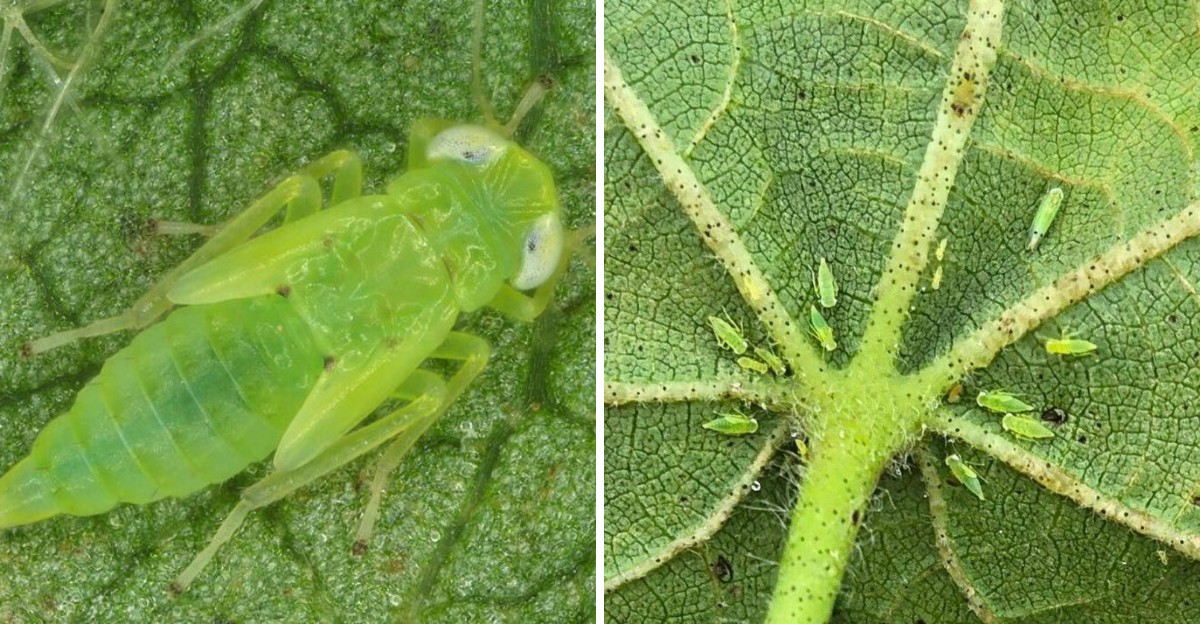
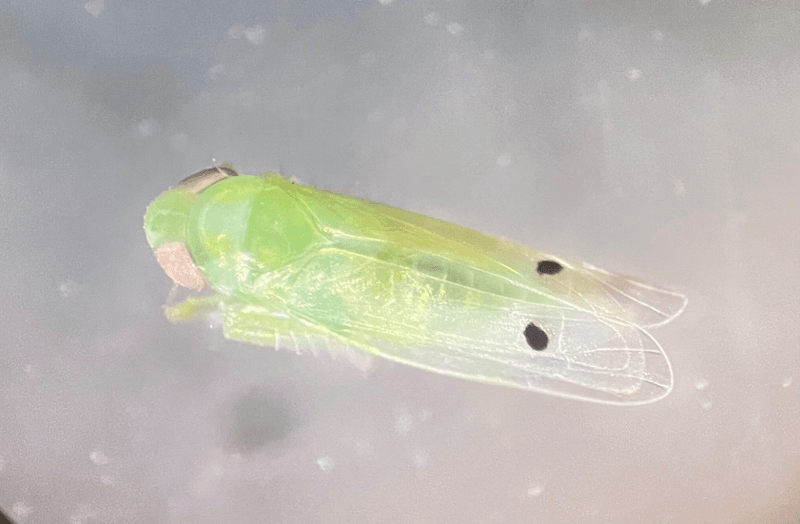
Hold a hand lens over an okra leaf and you may spot a wedge-shaped insect no longer than a grain of rice. Cotton jassid adults measure roughly two to three millimeters, wear a soft lime-green coat, and carry a pair of dark dots near the tips of their wings.
Scientists call it Amrasca biguttula, and gardeners in South Asia have known it for generations. IIts arrival in the Gulf South appears to be recent, based on [naziv konkretnog izvora, npr.
LSU AgCenter pest alert iz mjeseca/godine], which is part of why so few yard owners recognize it on sight.
One habit gives the insect away. Jassids scuttle sideways, crab-style, when you disturb a leaf, then leap off before your finger lands.
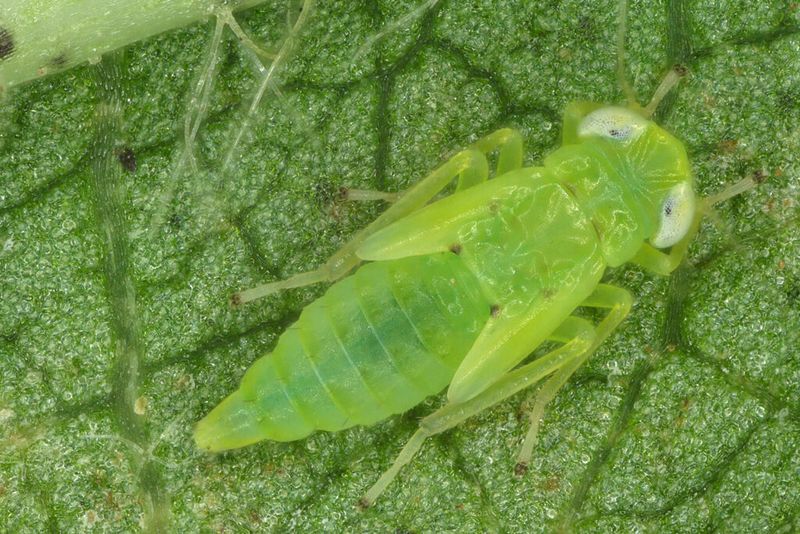
Nymphs look like miniature, wingless versions of their parents, pale and translucent, clustered along leaf veins on the shaded underside. They shuffle in the same slanted way, which makes the family resemblance easy to confirm.
Because the adults are pale green, they blend into leaf tissue the way a chameleon blends into bark. Bright sunlight helps: tilt the leaf so light passes through and the specks stand out as moving shadows.
Populations tend to build quickly in warm, humid weather, conditions common across Louisiana in late summer and early fall. A single leaf can host a dozen or more feeders before symptoms become obvious from across the yard.
Learning the look now saves guesswork later, especially if your okra rows sit near hibiscus beds. An inexpensive loupe from a hardware store turns a frustrating mystery into a five-minute answer.
Why Okra Rows Draw The Crowd
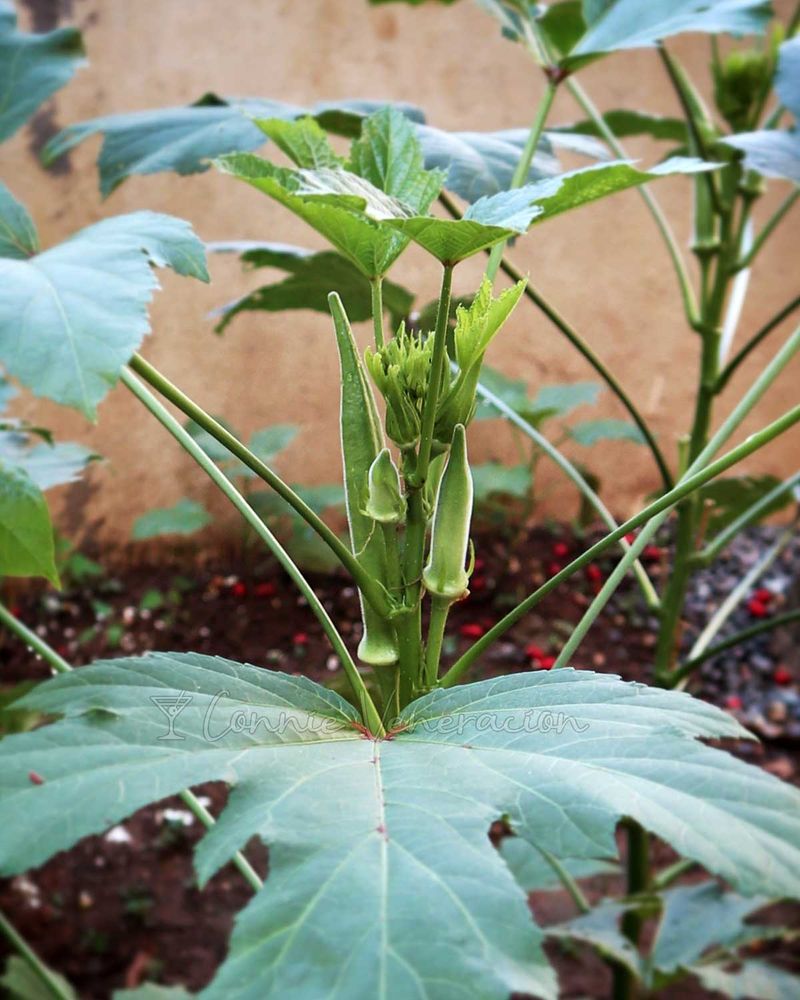
Okra belongs to the mallow family, the same clan that gave us cotton, and cotton jassids have followed that lineage for centuries. Soft, hairy leaves and steady sap flow make the plant an easy stop for a sap-sipping insect.
Louisiana gardeners plant okra in spring and keep harvesting into October, so the plants remain a steady food source during peak jassid season. Late-summer plants are already tired from heat and heavy picking, which lowers their tolerance for extra stress.
Your Louisiana Garden Changes Every Week. Your Plan Should Too.
Gardening in Louisiana changes quickly throughout the season. Every Friday you’ll receive a simple weekly plan showing exactly what to plant, prune, fertilize, harvest, and protect so you never miss the right timing.
Feeding happens on the underside of leaves, where the insects tap into veins and draw out liquid. Their saliva carries compounds that disrupt the plant’s plumbing, so damage spreads farther than the puncture itself.
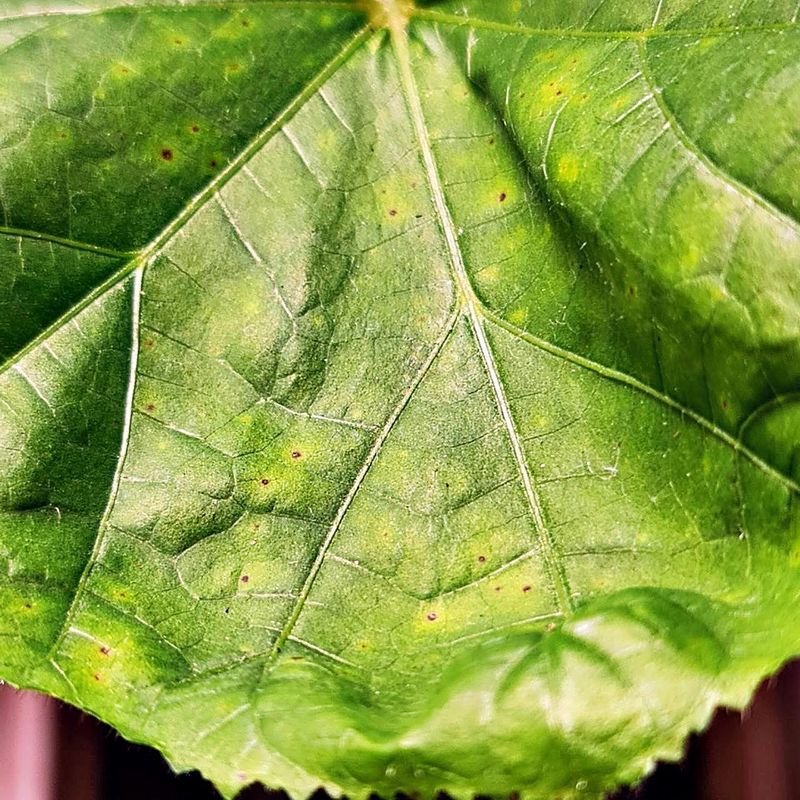
Symptoms usually creep in from the leaf margins: a yellow rim, then a bronzed or rusty tone, then edges curling downward like a taco shell.
Pods keep forming for a while, though they may come in smaller and slower as the plant redirects energy toward damaged foliage. Growth at the top of the stalk can stall, which is a clue worth taking seriously in September when you want a strong fall run.
A steady watering schedule and modest feeding help okra shrug off light pressure. Overloading beds with high-nitrogen fertilizer produces lush, tender growth that these insects find especially appealing.
Check three or four leaves per plant twice a week, focusing on mid-canopy foliage rather than the oldest bottom leaves. Two minutes of looking beats two weeks of wondering why the harvest slowed.
Hibiscus Blooms Feel The Squeeze
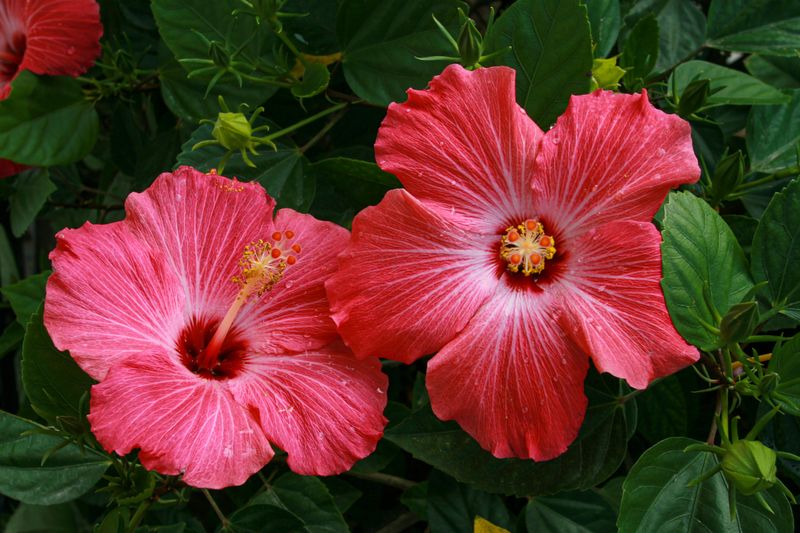
Ask any Louisiana gardener about hibiscus and you will hear pride in their voice. Those dinner-plate blooms are a Gulf Coast signature, and they happen to sit on the jassid menu right beside okra.
Tropical hibiscus in patio pots, hardy rose mallow along ditches, and even Confederate rose can host feeding populations. Related ornamentals such as althea, better known as rose of Sharon, belong to the same family and deserve a look too.
Damage on ornamentals shows up first as a stippled, faded look across the upper leaf surface, since the insects work from below. Leaf edges then take on a yellow halo that slowly deepens toward bronze.
Buds may drop before opening when feeding gets heavy, which is disappointing for anyone growing hibiscus for its blooms.
Container plants deserve extra attention because they dry out fast in September heat, and thirsty roots make foliage more sensitive. Move pots into morning sun with afternoon shade if leaves look stressed, then check undersides while you water.
A gentle spray from the hose knocks nymphs off foliage and gives natural predators a head start. Repeat it a few times a week rather than counting on one blast.
Pruning out a few of the worst leaves also lowers numbers without touching the rest of the plant. Bag the trimmings instead of tossing them on the compost pile near your beds.
Healthy hibiscus bounces back quickly once pressure eases, often pushing fresh growth within a couple of weeks.
Reading The Leaf Edges
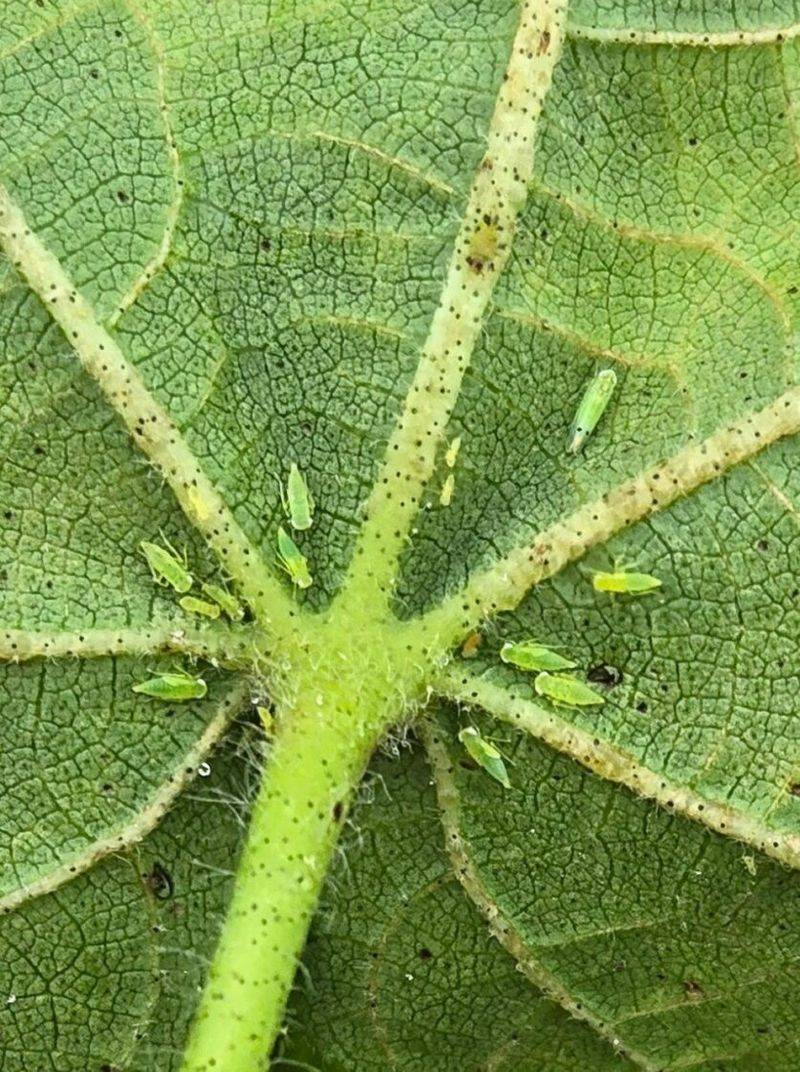
Longtime cotton growers in South Asia coined a nickname for this damage: hopperburn. The name fits, because affected leaves look scorched at the rim even when the sprinkler ran that morning.
Stage one is subtle, a pale yellow band along the outer edge of the leaf, easy to blame on heat or a missed feeding. Stage two brings a reddish-bronze cast that creeps inward between the veins.
Stage three curls the margins downward and gives leaves a brittle, papery feel. By then the insects have been at work for a couple of weeks.
Telling hopperburn apart from other issues saves money on the wrong treatment. Spider mite injury shows fine speckling with webbing, nutrient shortages usually begin on older leaves in a uniform pattern, and drought stress brings midday wilting that eases by evening.
Hopperburn plays favorites with the leaf edge and shows up alongside those sideways-scooting specks underneath. Finding the insects on the underside confirms the diagnosis.
Snap a photo with your phone next to a coin for scale, then compare it week to week. Progress becomes obvious when you have a record instead of a memory.
Plants can push new foliage once feeding slows, so an early catch usually means a decent recovery. Waiting until half the canopy is bronzed makes the comeback slower and the harvest thinner.
Share clear photos with your parish extension office if the pattern matches. Extension specialists may rely on gardener reports to help track where the insect has spread.
A Five-Minute Scouting Routine
Coffee in one hand, hand lens in the other: that is the whole setup. Scouting works best in early morning while temperatures are mild and the insects move slowly.
Pick five plants scattered across the bed rather than five in a row, since pressure tends to start on edges nearest other host plants. Turn over three leaves per plant, one low, one mid, one near the growing tip.
Count what you see and jot it on a garden calendar or a phone note. Numbers climbing from two per leaf to eight per leaf over ten days tell you far more than a single glance.
Yellow sticky cards clipped just above the canopy catch flying adults and give an early warning before leaves show symptoms. Two or three cards handle a backyard plot fine.
Tap-testing works too: hold a white paper plate under a branch, give the stem a firm shake, and watch for pale specks landing and scooting.
Fall gardens in Louisiana get busy in September, so tie scouting to something you already do, like watering containers on Saturday morning. Habits stick better when they piggyback on routines.
Neighbors matter here as well. A quick conversation over the fence about okra and hibiscus can reveal whether the insect is spread across the block or parked in one yard.
Keep records simple: one line per visit with the date and a rough count. Ten weeks of notes become a map of the season and help you plan next spring’s planting dates.
Low-Impact Ways To Turn The Tide
Reaching for the strongest bottle on the shelf tends to backfire with leafhoppers. Broad sprays reduce lady beetles, lacewings, minute pirate bugs, and spiders, and those helpers do steady work for free.
Insecticidal soap and horticultural oil handle soft-bodied nymphs well when the spray reaches leaf undersides. Apply in the cool part of the day and repeat at five to seven day intervals while numbers stay high.
Neem-based products add another option, slowing feeding and molting without harming beneficial insects on contact. Check the label for okra and hibiscus, and follow the harvest interval listed for edibles.
Reflective silver mulch under okra confuses arriving adults and cuts landings noticeably. A strip of aluminum-faced landscape fabric does the job on a small plot.
Flowering borders of dill, cilantro, sweet alyssum, and cosmos attract predatory insects that patrol nearby rows and help keep pest numbers down.
Clean up volunteer mallows and weedy hosts along fence lines, since they act as bridges between seasons. Cut them low and bag the clippings.
Rotate products with different modes of action if you spray more than twice, because leafhoppers adapt quickly. Alternating also keeps your garden’s helper insects in better shape through fall.
Report suspected finds to the LSU AgCenter or your parish agent, especially with photos and a location. Tracking helps researchers understand how far the insect has traveled, and it gets you advice tuned to Louisiana conditions rather than generic tips.