How To Tell When A California Fuyu Persimmon Is Ready To Pick
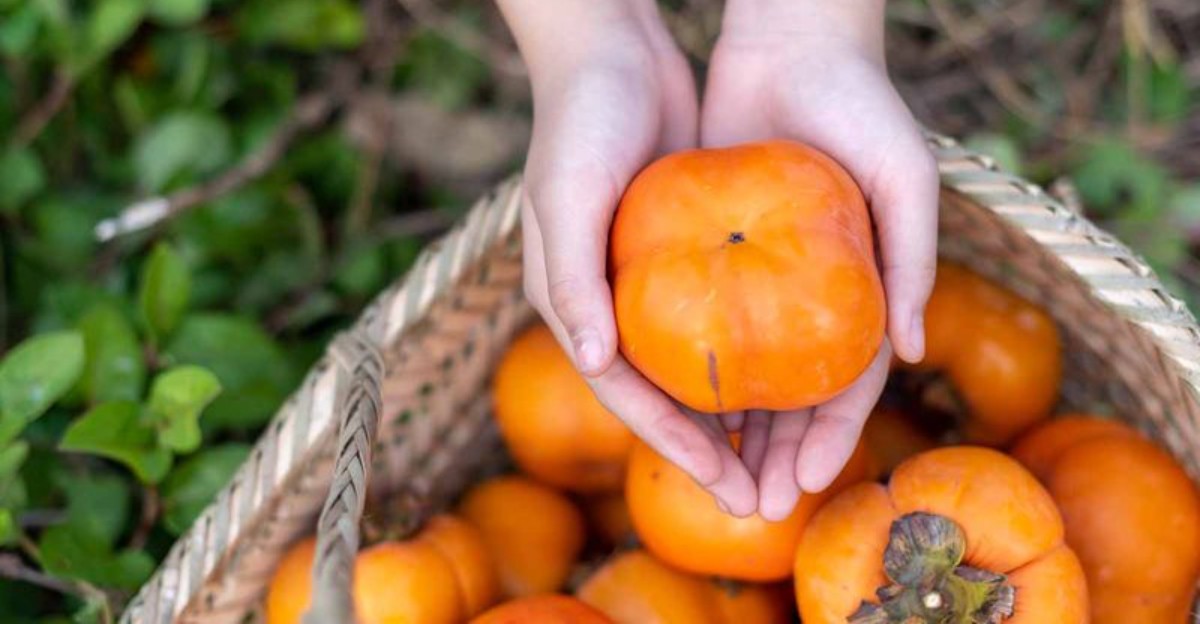
This orange fall fruit can be eaten crisp and crunchy, straight off the tree, much like a fresh apple. Its cousin needs to turn soft as jelly first, or the bitter tannins will make your whole mouth pucker.
Most of the commercial crop in the United States grows in California, mainly around Fresno and Tulare counties. Backyard trees across the state often produce more fruit than one family can comfortably eat each fall.
I like how the leaves turn red and orange, then drop while the fruit keeps hanging on bare branches. By late fall, the tree can look like someone decorated it with round orange lanterns for a party.
You need a good eye to catch the fruit at its best, because color tells you more than size. Have you ever bitten into one too early and wondered why the flavor tasted so flat and grassy?
Deep Orange Skin Is Your Best Clue
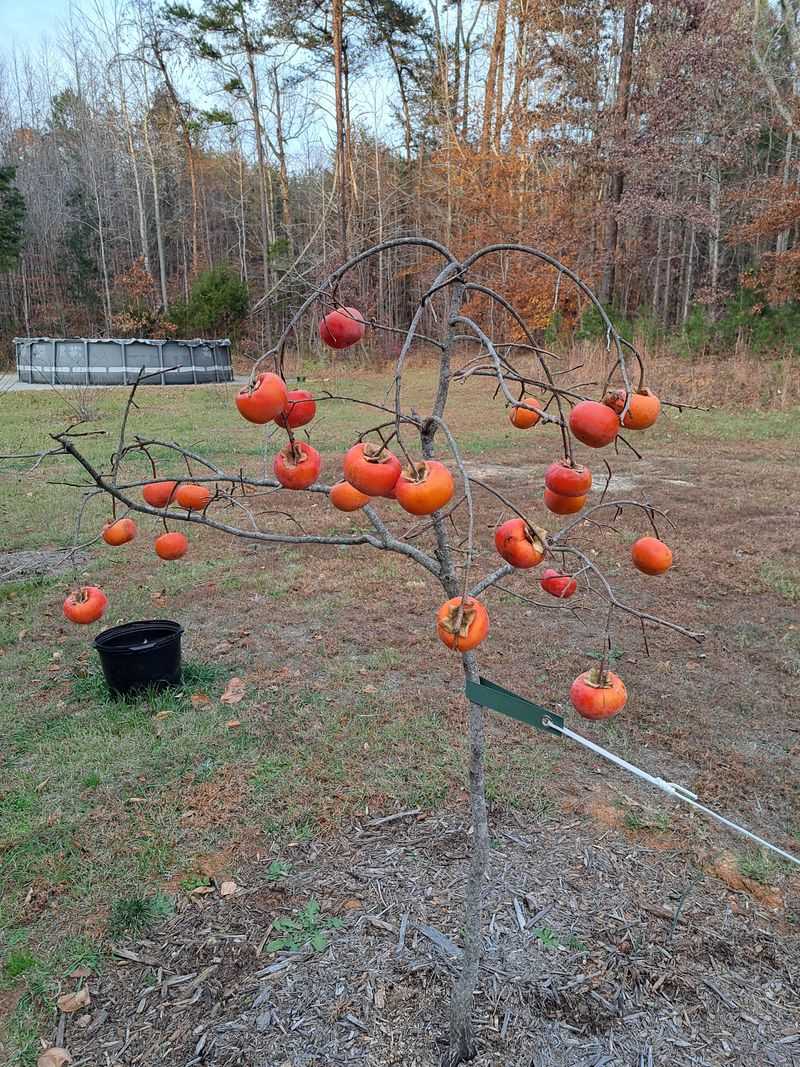
A ripe Fuyu persimmon shows a deep, even orange color across the whole fruit, including the shoulders near the cap. Skin color is the most common sign growers use to tell that this fruit is ready.
Any green or pale yellow patches mean the sugars are still building inside, so the flavor will taste weak. Wait a week or two, and check again, since color often deepens quickly during warm, sunny fall afternoons.
Unlike many fruits, the Fuyu type is non-astringent, which means it has little bitter tannin even while firm. That trait lets you eat it crisp like an apple, as soon as the skin reaches full orange color.
Some gardeners wait for a slight reddish blush on top, which often signals the sweetest stage for crunchy eating. Size is a poor guide, because small and large fruit on the same tree can ripen at similar times.
Fruit on the sunny south side of the tree mostly colors first, while shaded fruit inside lags behind. You can harvest in several rounds, picking only the orange ones and leaving the rest a little longer.
Check the skin near the green cap, called the calyx, because that area is often the last to change. If the shoulders still look yellow, the fruit can taste flat even when the rest looks perfectly ready.
Good light helps here, so do your checks during the day instead of judging color at dusk. With practice, you will spot the ripe ones from across the yard, glowing among the falling leaves.
October Into November Brings Your Main Harvest Window
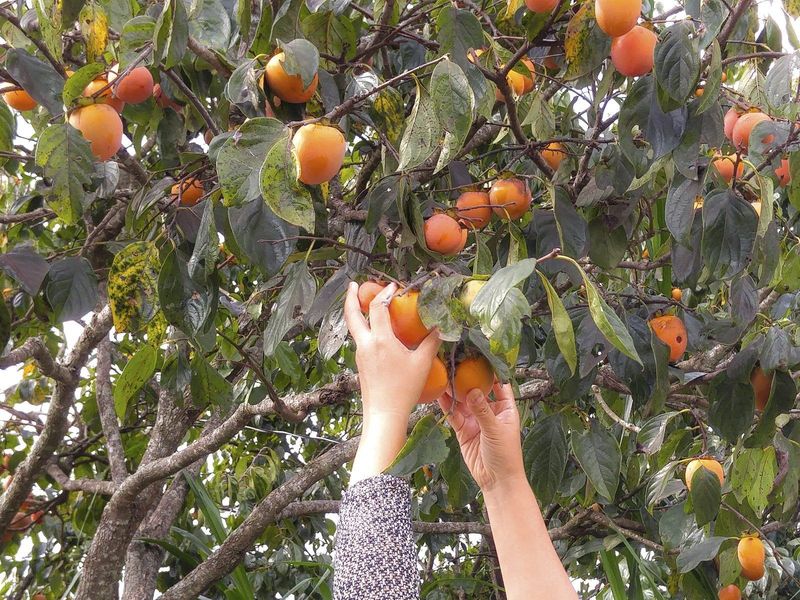
California growers usually begin picking Fuyu fruit in October, with the main harvest running through November. Exact timing depends on your area, since warm inland valleys often ripen fruit earlier than cooler coastal gardens.
In the San Joaquin Valley, many backyard trees have ready fruit by late October. Coastal gardens near San Francisco or Monterey may see fruit color more slowly, sometimes lasting into early December.
The fruit does not ripen all at once, which gives you several weeks to enjoy the harvest. Many home gardeners walk past the tree every few days and pick whatever has reached full orange color.
Your California Garden Changes Every Week. Your Plan Should Too.
Gardening in California changes quickly throughout the season. Every Friday you’ll receive a simple weekly plan showing exactly what to plant, prune, fertilize, harvest, and protect so you never miss the right timing.
Leaves often turn bright red and yellow during this same stretch, then drop to the ground in November. Bare branches make the ripe fruit easier to see, but they also make it easier for birds to find.
Birds such as crows and scrub jays often peck at the softest fruit near the top of the tree. Picking fruit as soon as it colors can reduce those losses and keep more of your crop in good shape.
Keep a simple note of your first picking date each year, since trees often follow a similar pattern. After a few seasons, you will know which week to start watching closely in your own yard.
Young trees may bear only a handful of fruit, while mature trees can produce hundreds in one season. Either way, the weeks from October into November are when your patience finally pays off with sweet, crunchy fruit.
Give Each Fruit A Gentle Squeeze Test
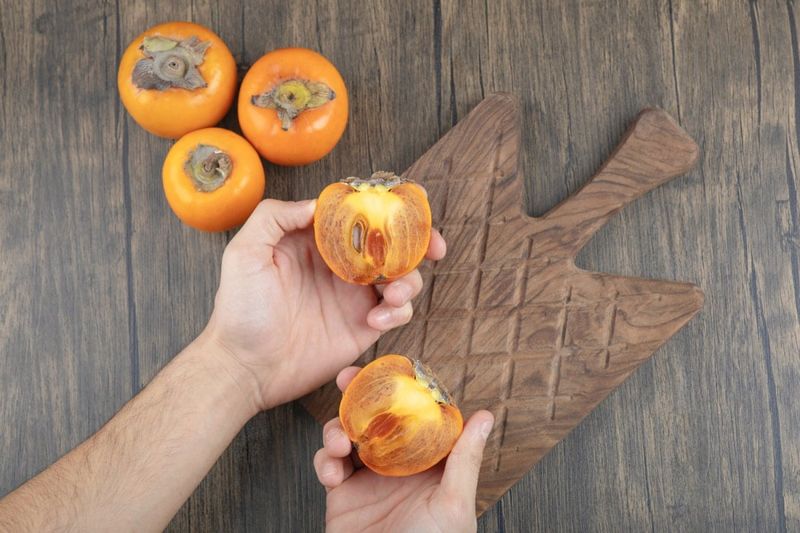
Your fingers can confirm what your eyes already suspect, as long as you remember that firm is fine here. A ripe Fuyu should feel solid, much like a ripe tomato or apple, with just a tiny bit of give.
Rock-hard fruit with greenish skin needs more time on the branch to develop its full sweetness and flavor. Press gently with your thumb near the shoulder, because hard pressure can bruise the skin and leave dark marks.
Fruit that feels slightly soft is still good to eat, and many people enjoy that sweeter, jammy texture. Very mushy fruit on the tree often means it is past its prime or has been damaged by birds.
Taste testing is the most honest check, so pick one colored fruit and slice it open at the kitchen counter. The flesh should look golden orange, taste sweet, and feel crisp without any sharp, dry, chalky sensation in your mouth.
A puckery feeling can mean you have an astringent type, such as Hachiya, mislabeled as Fuyu at the nursery. Hachiya fruit has an acorn shape, while Fuyu fruit looks flatter and rounder, almost like a small tomato.
Knowing the shape of your fruit helps you decide whether to eat it firm or wait for softness. If one test fruit tastes great, others with the same color on that tree are likely ready too.
Small brown specks inside the flesh are harmless and do not mean the fruit has spoiled. Some gardeners say those darker flecks show up in especially sweet fruit.
Clip Your Fruit With A Short Stem Attached
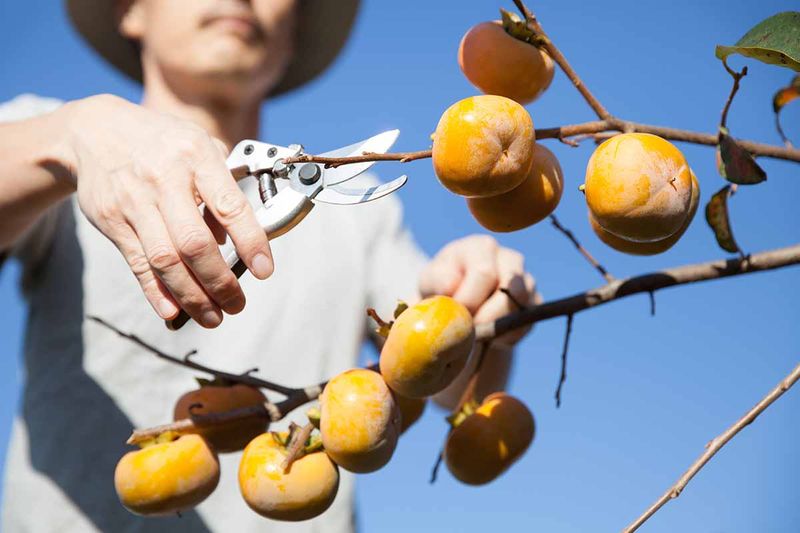
Pulling or twisting the fruit off the branch can tear the skin and leave an opening for rot. Instead, use clean hand pruners and cut the stem just above the green cap, called the calyx.
Leaving the calyx attached helps the fruit store longer, since a torn top often lets moisture escape quickly. Trim the remaining stem short so it will not poke holes in other fruit inside your basket.
Place each persimmon gently into a shallow box or bucket, because the skin bruises more easily than it looks. A single layer works best, since stacking heavy fruit often leaves dents and soft spots on the bottom ones.
For high branches, a fruit picker pole with a cutting blade and catch basket can save you a ladder climb. If you do use a ladder, set it on level ground and ask someone to hold it steady.
Persimmon wood is somewhat brittle, so avoid climbing into the tree or pulling hard on heavily loaded limbs. Branches carrying lots of fruit sometimes crack in fall, and props or lighter picking can reduce that strain.
Wear gloves if you like, because the calyx edges can feel stiff and scratchy after a long session. Wipe your pruners clean before you start, which helps reduce the spread of fungal problems between different trees.
Picking during the dry part of the day also helps, since wet fruit is more likely to develop mold. With careful cuts, your harvest will look as good in the bowl as it did hanging on the branch.
Hard Freezes Can Damage Your Hanging Crop
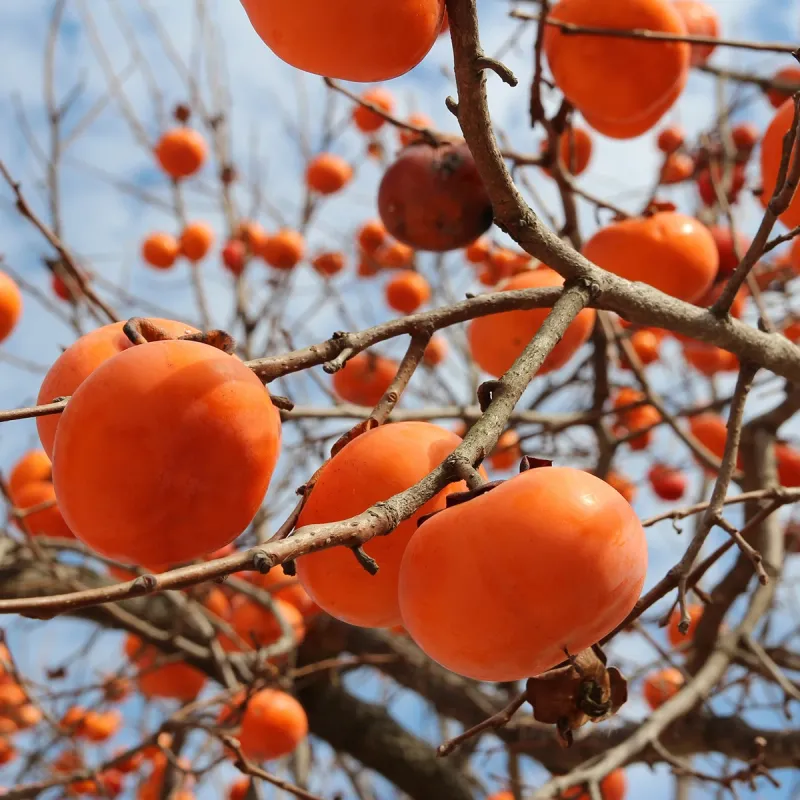
A light autumn frost rarely harms Fuyu fruit, but a hard freeze can leave it soft, watery, and discolored. Growers often try to harvest before temperatures drop to the upper 20s Fahrenheit for several hours.
Most low-elevation gardens in California see few freezes in October, so this concern mostly applies later in the season. Foothill and high desert gardens can turn cold sooner, so growers there often pick earlier to be safe.
Watch the local weather forecast in November, especially if your area sits in a low spot where cold air settles. If a hard freeze is expected, pick any fruit that shows good orange color the day before it arrives.
Slightly underripe fruit will continue softening indoors, though it may not reach the same full sweetness as tree-ripened fruit. Fruit left on the tree too long can also crack after heavy rain, which invites mold and fruit flies.
Overripe fruit becomes a favorite target for birds, raccoons, and opossums looking for an easy fall snack. Picking promptly helps you keep the crop clean and reduces messy fruit piles under the tree to rake.
Some gardeners leave a few fruit hanging for decoration, which is fine if you accept some losses to wildlife. Others drape bird netting over smaller trees in early fall to protect the ripening crop for a few weeks.
Netting works best on young trees, since large trees are hard to cover fully without help from friends. Planning ahead lets you choose when to harvest, instead of letting cold weather make that choice for you.
Store Your Fall Harvest With A Little Care
Freshly picked Fuyu fruit keeps well at room temperature for about a week, giving you time to share it. For longer storage, many extension guides suggest refrigerating firm fruit, where it can often last several weeks.
Keep persimmons away from apples and bananas, because those fruits release ethylene gas that speeds up softening. Store them in a single layer, cap side down, to reduce bruising and help them hold their shape.
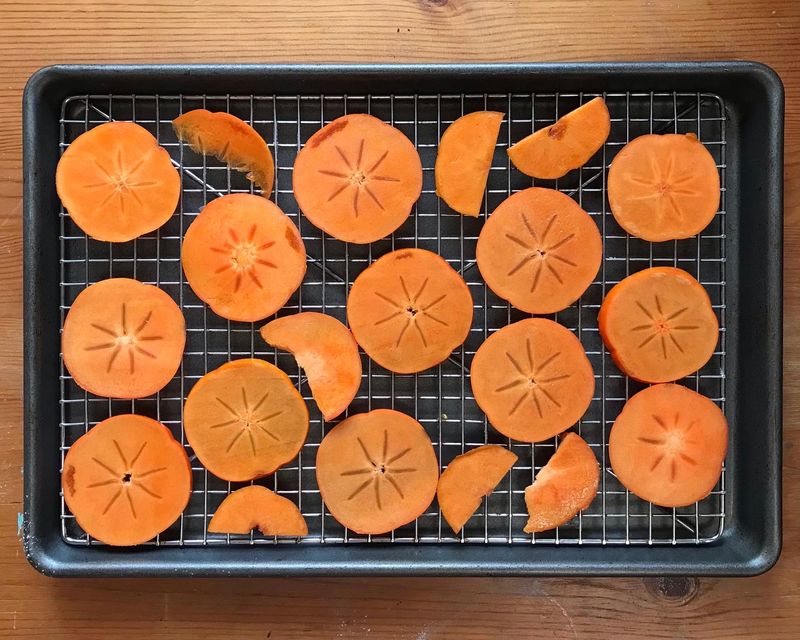
Soft fruit is not wasted, since you can scoop the flesh into smoothies, muffins, or warm fall oatmeal. Firm slices also dry nicely in a dehydrator or low oven, making a chewy snack that keeps for months.
Some people freeze whole persimmons, then thaw them slightly and eat the icy flesh with a spoon like sorbet. Freezing changes the texture, so frozen fruit works better for baking or snacking than for crisp salads.
Once the harvest ends, rake fallen leaves and spoiled fruit, which can reduce pests and disease next year. Late fall is also a good time to note which branches gave the best fruit before winter pruning begins.
Fuyu trees usually need only light pruning in winter dormancy to shape the tree and remove crowded branches. Thinning extra fruit next summer can lead to larger persimmons and less strain on heavily loaded limbs.
With a little planning, your tree can keep rewarding you with crunchy orange fruit for many autumns ahead. Few homegrown treats taste better than a crisp persimmon picked at the right moment in your own backyard.