How To Bring A Struggling California Christmas Cactus Back To Life
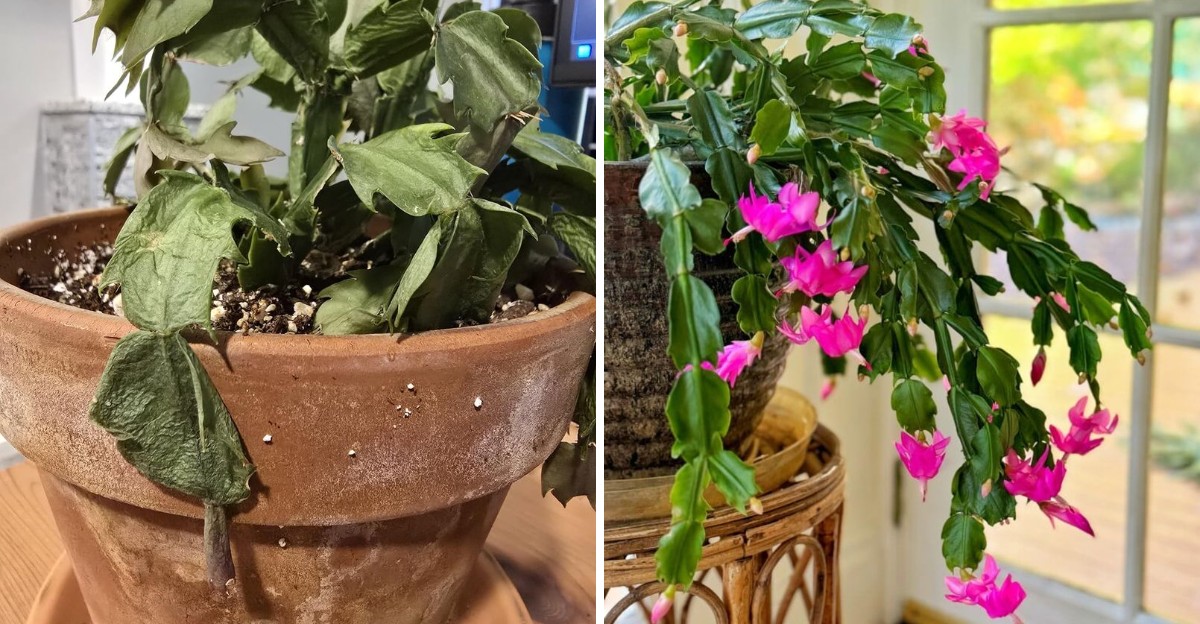
Last December, a windowsill holiday cactus may have burst into a fountain of hot pink blooms. By autumn, those flat green segments can hang limp and wrinkled, with a few scattered across the sill like fallen puzzle pieces.
The green bin starts looking tempting.
That impulse deserves a pause, since these plants often prove far tougher than they appear.
Their story begins in misty Brazilian forests, a world away from California kitchens, dry winds, sunny windows, and winter heaters.
That contrast explains much about what goes wrong and how recovery unfolds.
Healing takes weeks rather than days, and patience matters as much as any tool. With steady attention, a sad plant can find its footing again, perhaps even in time for the holidays.
1. Check The Roots And Soil First
Limp leaves can mislead. A droopy holiday cactus might be overwatered or parched, and from the top, the two problems look surprisingly alike.
The real story hides below the soil line.
A finger pressed into the potting mix offers the first clue, since soggy soil that smells sour or musty signals trouble.
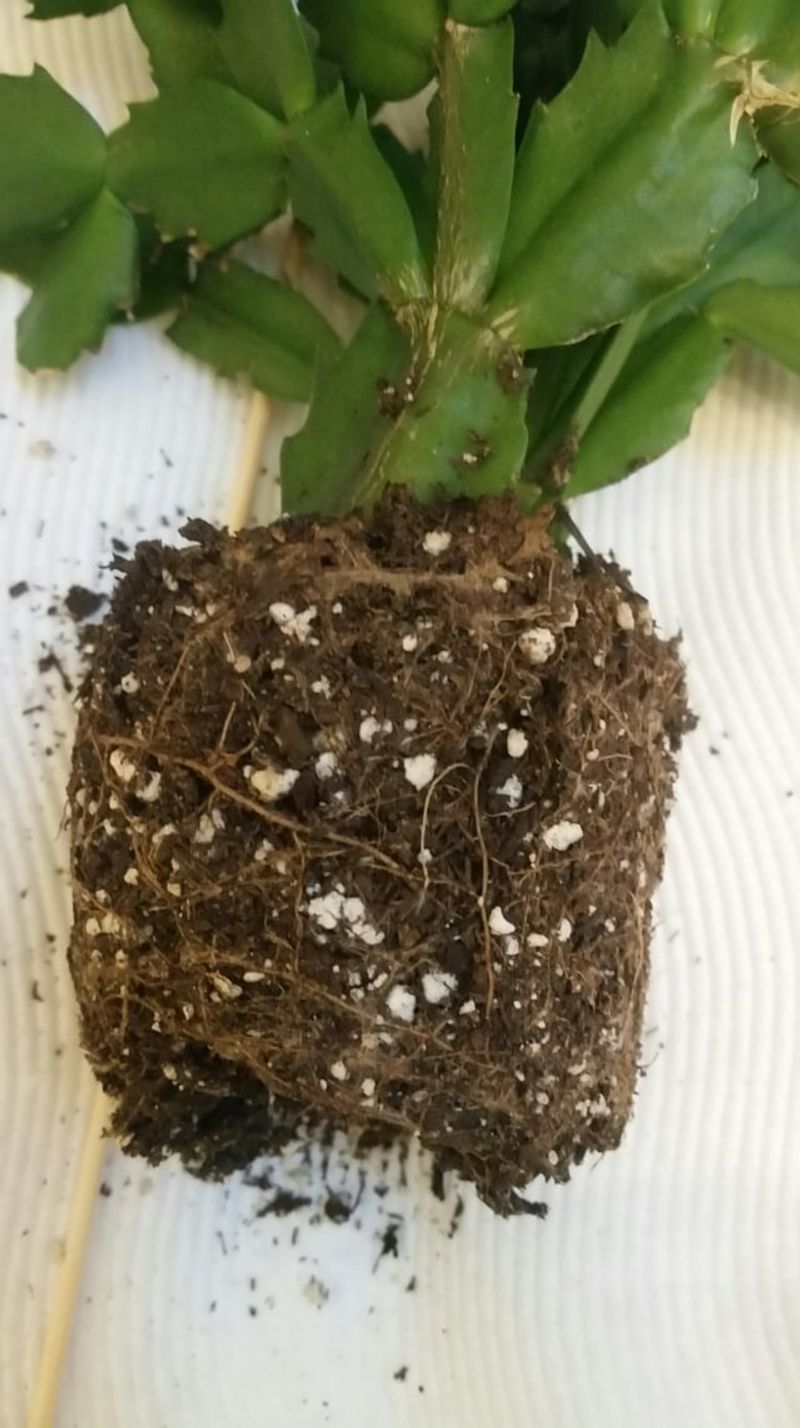
Tipping the pot sideways and gently sliding the plant out reveals the root ball. Healthy roots look white or light tan and feel firm, like cooked spaghetti with some bite.
Rotting roots tell a different tale. They turn black or brown, feel mushy, and may slip apart when touched.
Soft, squishy segments near the stem bases usually accompany them, pointing to rot from overwatering, the most common holiday cactus trouble.
Thirst looks different. Segments appear wrinkled, thin, and floppy yet stay firm rather than mushy, and the soil feels bone dry, sometimes pulling from the pot’s edges.
Roots in that case look dry but still light colored and intact.
The diagnosis shapes every step that follows. A thirsty plant mostly needs a good drink and steady care, while a rotting plant needs trimming and a fresh start.
A quick note of root color and smell prevents worsening the problem through a wrong guess.
Many plants sold as Christmas cactus are actually Thanksgiving cactus, a close relative with pointed segment edges, and both recover the same way.
2. Cut Away Mushy Rotten Segments
Clean tools come before any cutting. Dirty blades can spread fungus and bacteria from rotting tissue into healthy parts, so pruners or snips deserve a wipe with household disinfectant.
Another wipe between cuts helps when damage runs extensive.
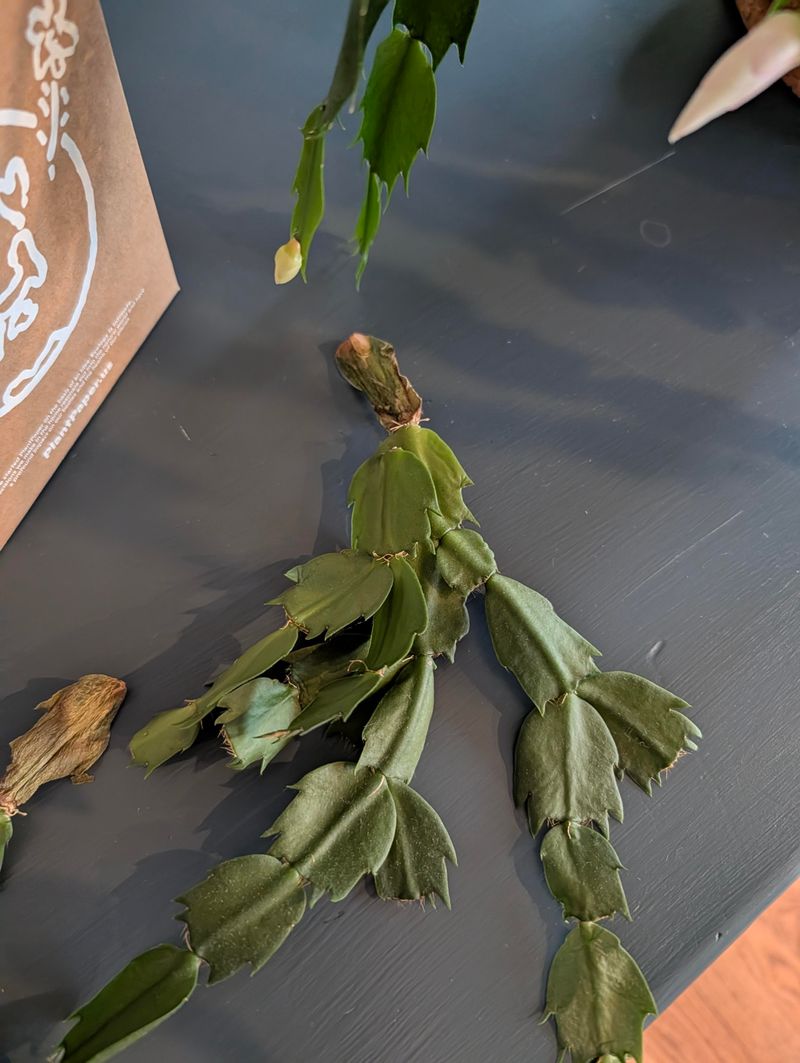
Each stem deserves a close look. Mushy, brown, or translucent segments rarely recover, so they come off at the joint just above firm, healthy green tissue.
Holiday cactus stems resemble a chain of flat links, so a cut at the joint leaves a neat finish.
Roots deserve the same attention. Black, slimy, or stringy roots come off with a clean tool, while firm, pale ones stay.
Even when only a few healthy roots remain, a small root system can carry a plant through recovery.
Sometimes rot spreads through the base and softens the crown. In that case, the main plant may be beyond rescue, yet hope remains.
Your California Garden Changes Every Week. Your Plan Should Too.
Gardening in California changes quickly throughout the season. Every Friday you’ll receive a simple weekly plan showing exactly what to plant, prune, fertilize, harvest, and protect so you never miss the right timing.
Any firm, healthy segments up top can still become brand new plants, a process covered in the final step.
Trimmed material belongs in the trash rather than the compost pile, since rot organisms can linger there.
After trimming, the plant can sit out of its pot for a few hours so cut surfaces dry and seal.
A little patience here offers cheap insurance against fresh infection. A shaded spot away from drafts keeps exposed roots from drying too far during that short rest.
3. Repot In Fresh Fast Draining Mix
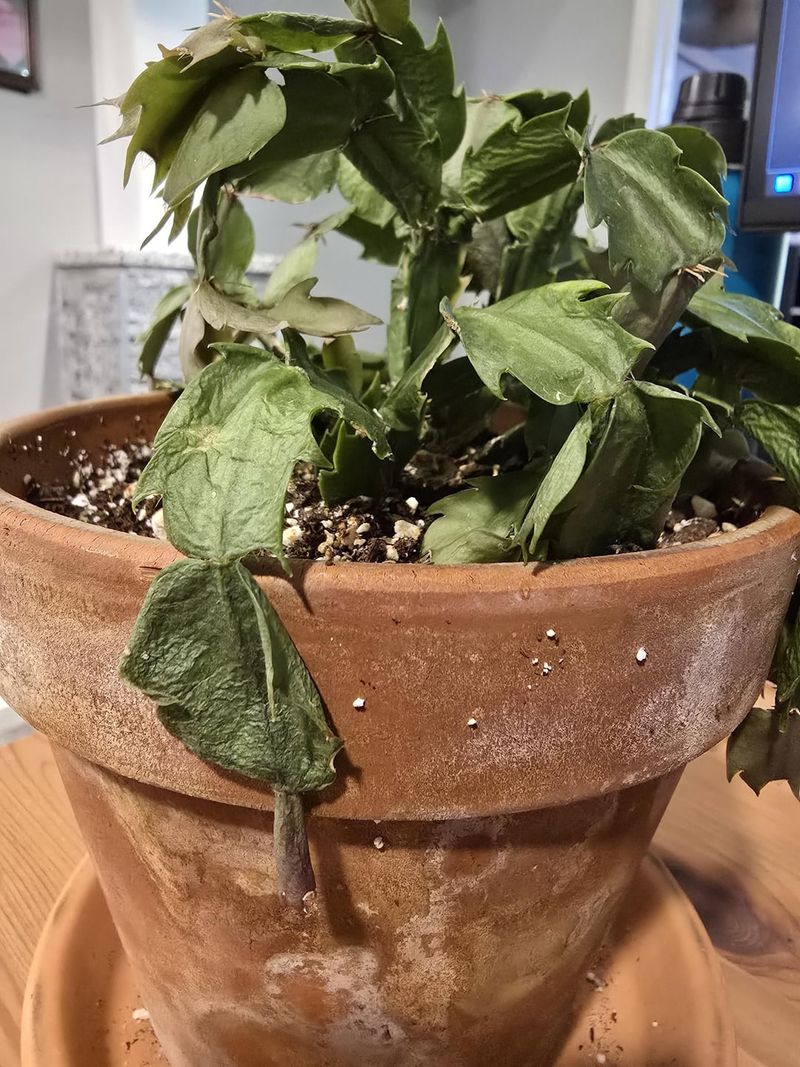
Old soil forms part of the problem. After rot, the mix in that pot is often packed down, waterlogged, and full of fungus, so fresh soil makes a cleaner start.
In the wild, holiday cacti grow on tree branches, tucked into leaf litter and moss. Their roots crave air as much as moisture.
A commercial cactus or succulent mix blended with regular potting soil, or standard potting mix with plenty of perlite, creates a loose blend that drains in seconds.
Pot choice matters. Drainage holes are essential, since water sitting at the bottom invites the same rot just removed.
A pot only slightly larger than the root ball, or the same size, works best.
These plants like being a bit snug, and extra soil holds water that recovering roots can’t use.
Terracotta breathes and dries faster than plastic. Decorative pots without holes can still serve as covers, with a draining pot inside.
The plant settles at the same depth it grew before, with mix firmed lightly around it.
A big drink right away is best skipped. Many growers wait a few days before watering a freshly repotted, trimmed plant so roots can heal.
Timing deserves a note. Fall is bud-setting season, so healthy plants usually wait until after bloom for repotting, while rot rescue takes priority over flowers.
A clean pot, fresh mix, and dry start give damaged roots their best chance.
4. Water Only When The Top Inch Is Dry
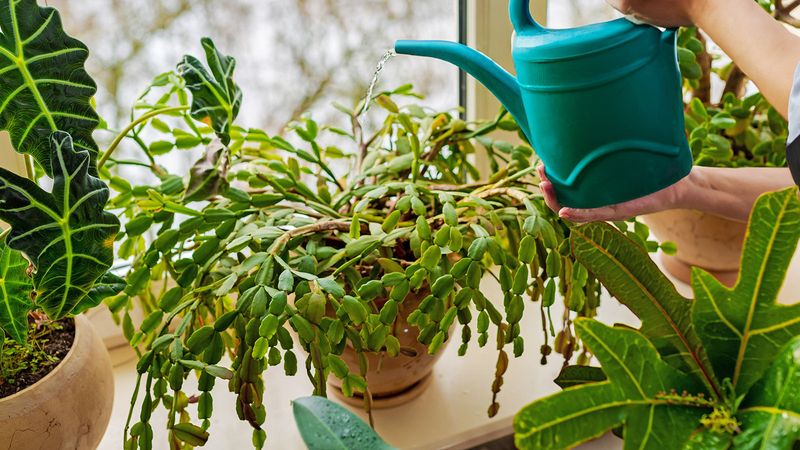
A finger makes the best moisture meter. Pushed into the mix up to the first knuckle, about one inch deep, it shows whether watering time has arrived.
Dry at that depth means water, while damp soil means checking again in a few days.
Many plants suffer from too much kindness, watered every Sunday regardless of need. A recovering cactus has fewer roots and drinks less than a healthy one.
Checking the soil beats any calendar schedule for a plant in recovery.
Watering works best done deeply. A slow pour until water runs from the drainage holes, followed by complete draining, soaks the whole root zone.
Emptying the saucer within about 15 minutes keeps roots from sitting in a puddle and rotting again.
Thirsty plants with wrinkled segments plump up gradually after a few good soakings, rarely overnight. Firming up can take a week or two as roots resume work.
California weather adds its own variables. Dry Santa Ana winds and indoor heaters can dry pots quickly, while cool, cloudy coastal stretches slow drying.
Season matters too, since plants use less water in cooler months.
Ongoing soil checks, rather than assumptions, keep the routine matched to what the plant actually needs.
During October and November, when buds may be forming, steady moisture without soggy soil helps prevent bud drop.
Room-temperature water also avoids chilling tender roots during cooler months.
5. Give Bright Indirect Light
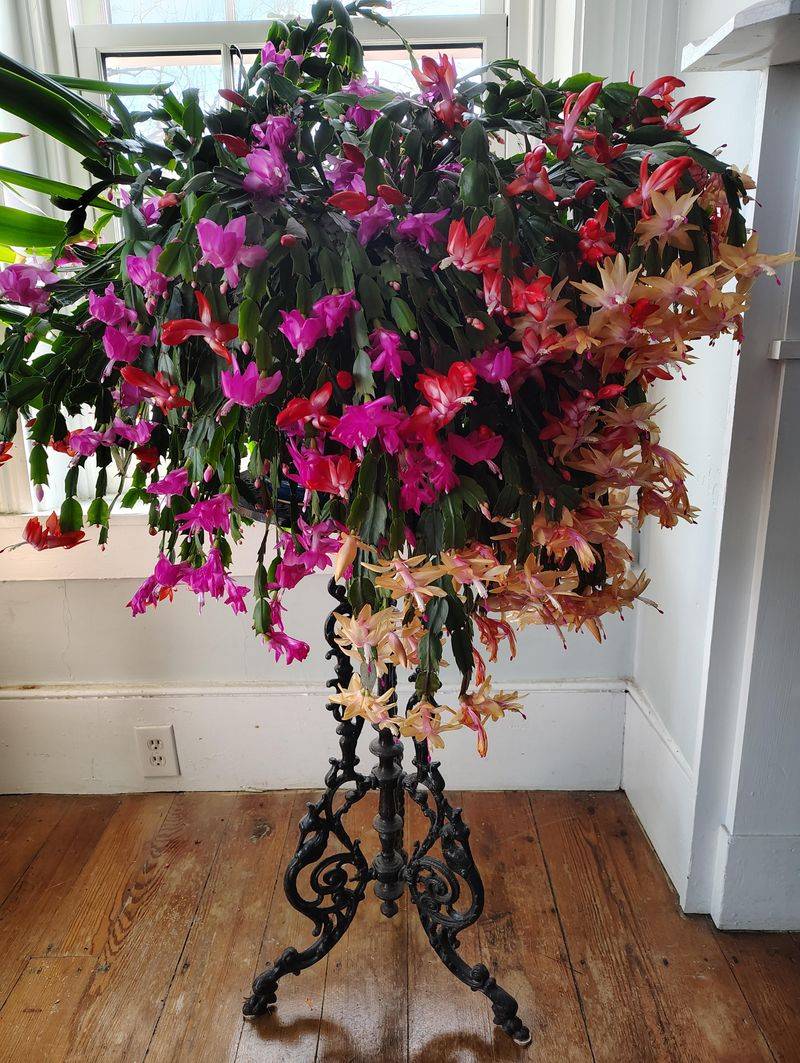
Reddish or purple-tinged segments suggest sunburn. Holiday cacti blush like a tourist on a Malibu beach when light runs too harsh, and yellow, faded stems can signal the same problem.
In nature, these plants live under a forest canopy where light is bright but filtered through leaves. Home conditions work best copying that.
An east-facing window with gentle morning sun makes a sweet spot, and a bright north window also works well.
South or west windows can suit them when a sheer curtain softens the rays.
Too little light causes its own trouble. Stems grow thin and stretched, new segments emerge pale, and blooming rarely happens.
A dim corner across the room works less like a hospital bed and more like a waiting room where nothing happens.
Recovering plants need enough light to make energy and grow new roots. Bright, indirect light supplies that fuel without stress.
A quarter turn of the pot every week or so keeps growth even on all sides.
Some Californians move their cacti outdoors in summer, which works beautifully in a shady patio spot or under a tree.
Full afternoon sun is best avoided for a weakened plant, especially during inland heat waves. Any move into new light works best gradually over several days.
Fall brings one more light consideration. Long, uninterrupted nights help trigger blooms, so a spot away from evening lamps supports bud formation.
6. Keep Temperatures Steady
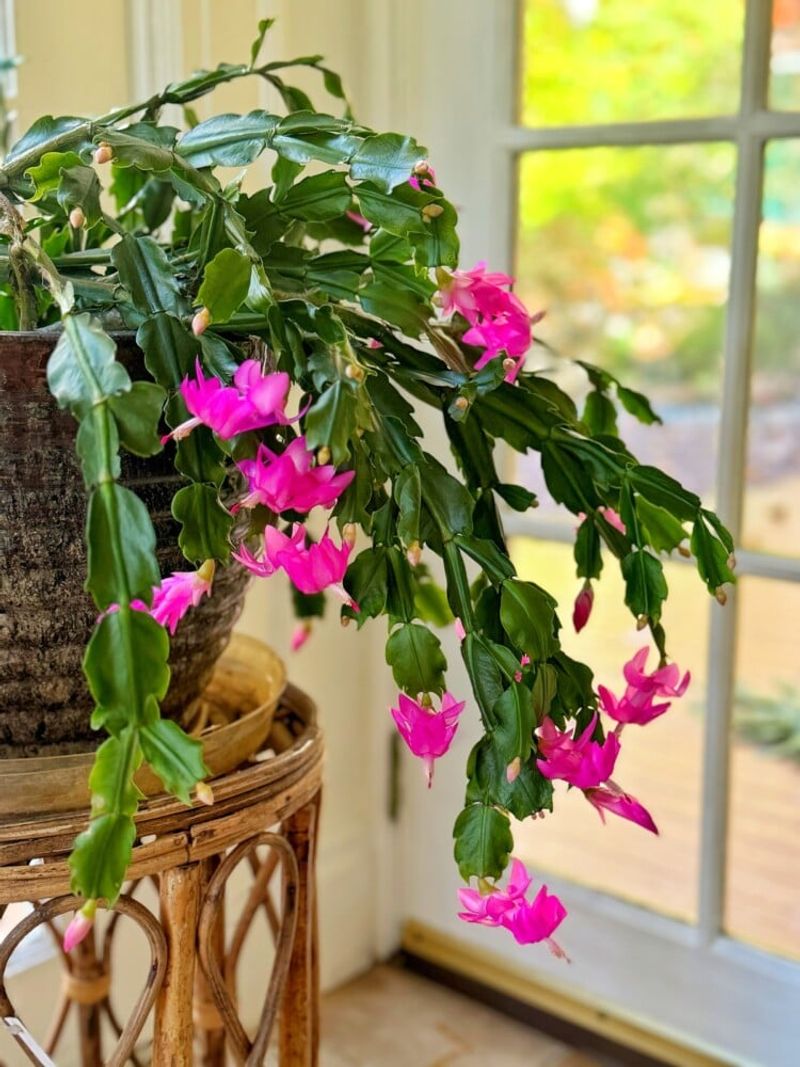
Dropped flower buds and falling segments often trace back to a blast of air. A plant near a front door, heater vent, or air conditioner gets jolted with every shift.
Recovering plants handle those shocks poorly.
Holiday cacti do best in ordinary home temperatures, roughly 60 to 70 degrees during the day and a bit cooler at night.
Most California homes stay in that range easily. The real trouble comes from hot and cold spots inside the house.
A walk around the home reveals problem zones. Wall heaters, floor vents, fireplaces, and the top of the refrigerator all pump out warm, dry air.
Single-pane windows can turn chilly on winter nights in mountain or inland valley towns, and drafty sliding doors bring sudden cold gusts.
A spot away from all of them, ideally with bright indirect light, works best. Once settled, the plant benefits from staying put.
Holiday cacti behave a bit like cats, preferring a favorite spot and reacting poorly to relocation, especially once buds appear.
Outdoor plants need watching too. Bringing them inside before nights approach freezing matters, since frost can turn segments to mush overnight.
Heat waves above the 90s call for extra shade.
Cool fall nights around 50 to 55 degrees actually encourage bud set in healthy plants, though recovering ones benefit more from steady comfort first.
Steady conditions let the cactus spend energy on healing rather than coping.
7. Hold Fertilizer Until New Growth Appears
Feeding a sick plant feels like the caring choice, yet restraint helps more. A struggling holiday cactus with damaged roots can’t use fertilizer well.
Extra salts can burn tender new roots trying to form.
Someone recovering from the flu rarely wants a giant steak dinner on day one, and plants work much the same way.
Water, light, and stable temperatures come first, with food arriving later.
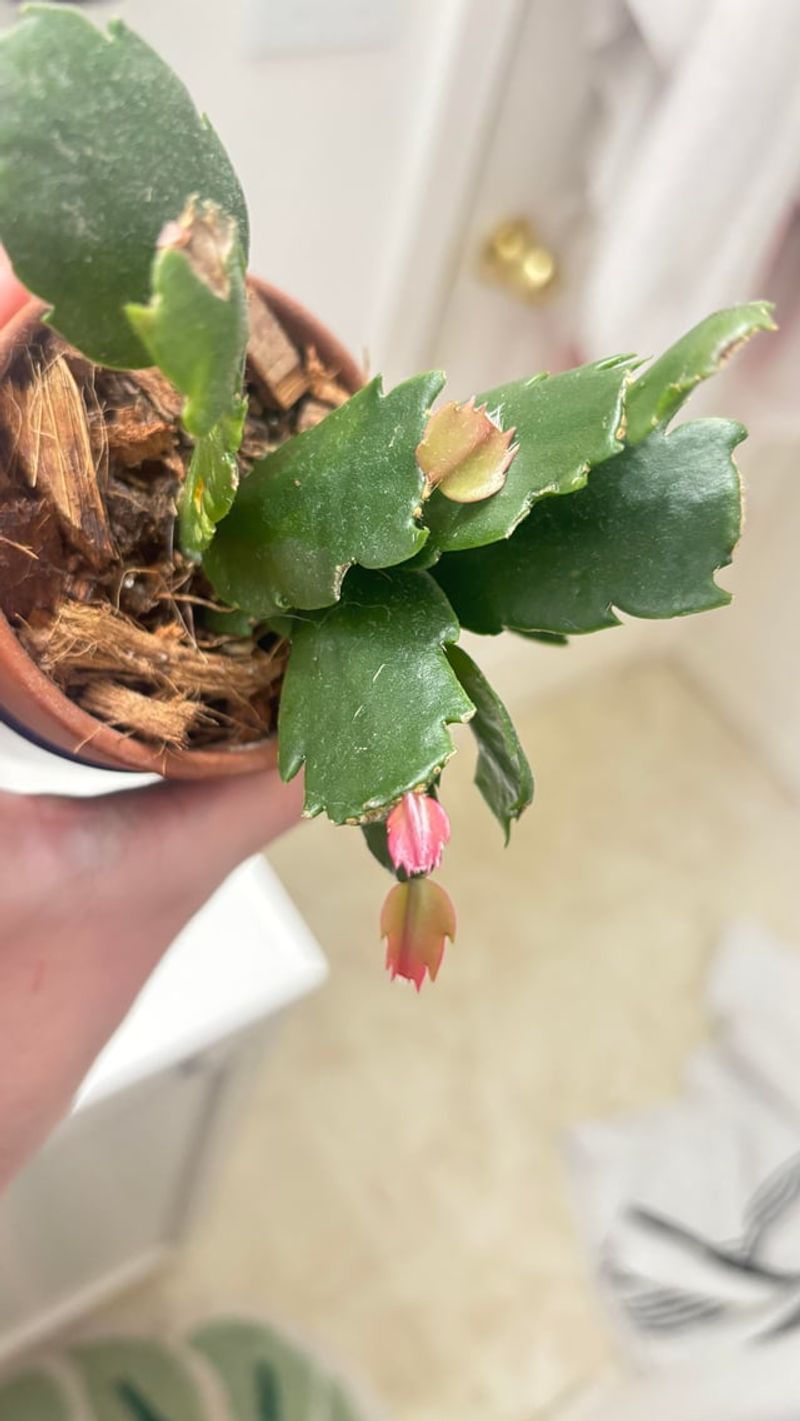
The stem tips offer the signal. Small, bright green baby segments at the ends of stems mean roots are working again and growth has resumed.
That fresh growth may take several weeks, sometimes longer, to appear after a rescue, especially in cool weather.
Feeding can then start gently. A balanced houseplant fertilizer at half strength, applied about once a month during spring and summer, supports steady growth.
Watering the soil first keeps fertilizer from hitting dry roots.
Feeding eases off in fall. Many growers stop in late summer or early autumn so the plant can focus on setting flower buds.
Cool nights and longer dark periods trigger blooming, not extra nitrogen.
Flushing the pot with plain water every few months, letting it run through for a minute, washes out built-up salts.
That step helps especially with California’s often mineral-heavy tap water. The ASPCA lists holiday cacti as nontoxic to cats and dogs, though nibbled segments can still upset stomachs.
8. Root Healthy Cuttings As A Backup
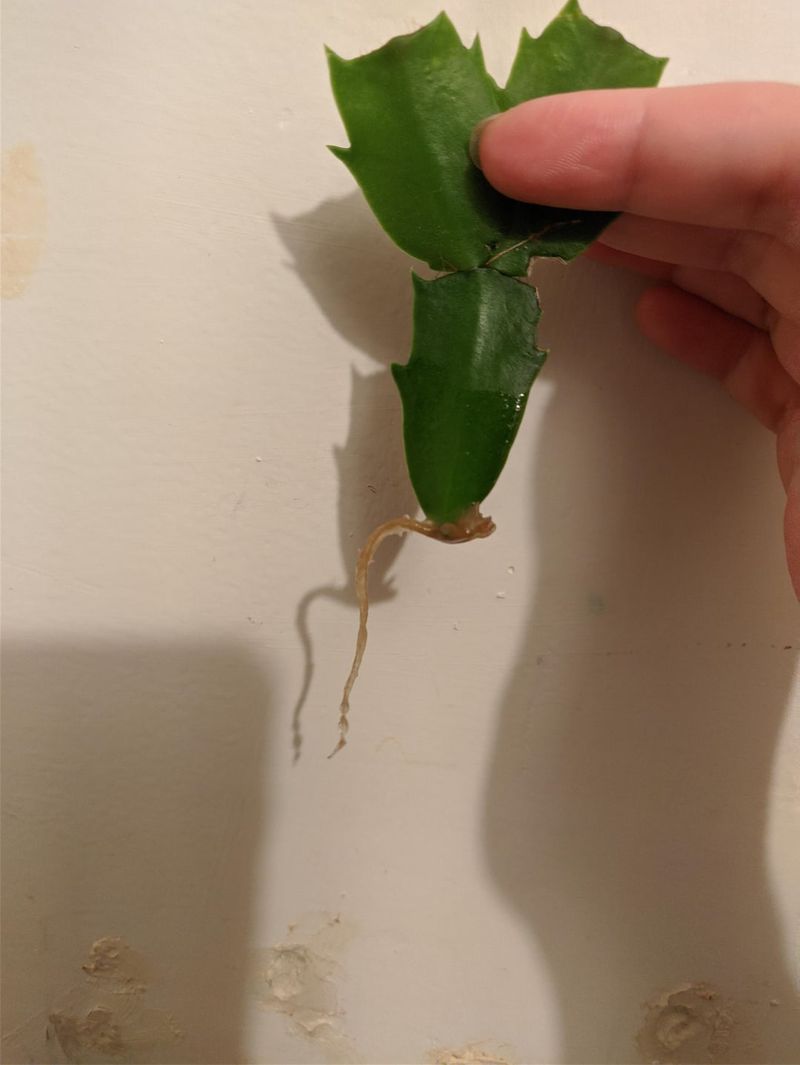
Smart gardeners keep a spare. While the main plant recovers, a few rooted cuttings offer protection if things go sideways.
Holiday cacti are famously easy to propagate, which explains why so many families pass them down for generations.
Firm, plump, green stems without mushy spots make the best choices. A gentle twist removes a piece two to four segments long, breaking it at a natural joint.
No scissors required. The cuttings then rest for a day or two so broken ends dry and form a callus.
A small pot filled with light, fast-draining mix, like the repotting blend, comes next. Each cutting goes about one segment deep, standing upright.
Several cuttings can share a pot, creating a fuller plant later.
Light watering follows, with the mix kept barely moist rather than soggy. Bright, indirect light at room temperature suits them best.
Roots usually form within a few weeks, and a gentle tug that meets resistance means they’re holding on.
Once new segments appear at the tips, the young plants receive the same care as any healthy holiday cactus.
Some rescues end with the original plant thriving and extra pots to share with friends. Others end with the cuttings carrying on the family line.
Either way, the holiday cactus keeps its place on the windowsill, ready to bloom again when December arrives.
Rooted cuttings started now may bloom lightly by next year, making thoughtful gifts.