Should You Trim Spent Hydrangea Blooms In Fall? Here’s What To Know
Next summer’s flowers on many of these shrubs are already tucked inside the stems by early October. I still remember learning that fact, because it changed the way I approach my pruners each fall.
Those papery flower heads also turn shades of tan, rose, and soft green as the weather cools down. Many gardeners leave them standing because they catch frost and snow, which adds shape to a bare yard.
The shrub type matters too, since some kinds bloom on old stems while others bloom on new growth. You need to know which kind you have before you make a single cut this month or next.
I like walking past my own shrubs on chilly mornings and checking which blooms still hold their color. Have you ever noticed how the oldest flower heads often look the prettiest once the first frost arrives?
Your Pruners Can Mostly Rest Until Spring
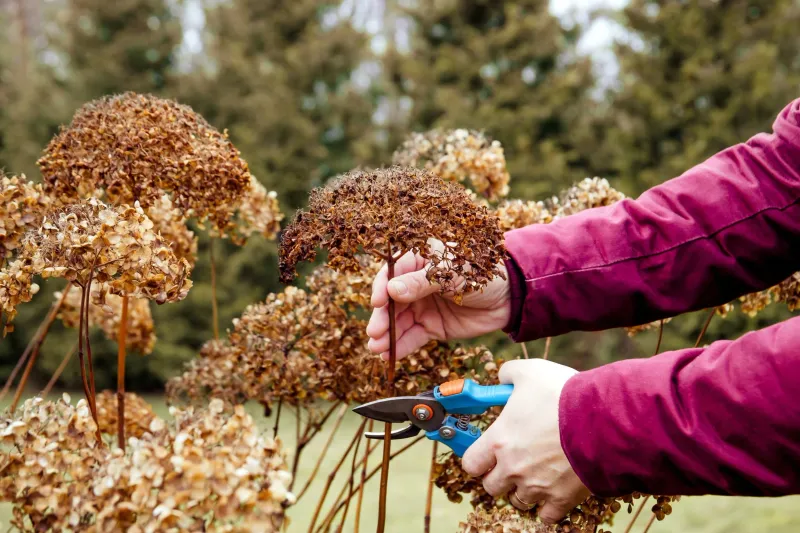
Short answer, you can remove spent hydrangea blooms in fall, but most stems should stay at full length. Taking off the flower head is mostly a looks choice, while cutting deep into stems can cost you flowers.
Many university extension services suggest waiting until late winter or early spring for any real structural pruning work. By then, you can see which branches made it through the cold and which ones need to go.
Experts do not fully agree on whether old flower heads protect the buds below them during freezing weather. Some sources say they offer a little shelter, but solid research on that idea is still fairly limited.
I treat that uncertainty as a reason to relax, since leaving the blooms in place rarely causes harm. You can trim a few for a neater look and leave the rest for winter texture if you like.
The main risk comes from heavy fall pruning, which often removes the swollen buds that hold next year’s flowers. Gardeners who chop shrubs down in October sometimes get plenty of green leaves next summer but very few blooms.
Your shrub type also shapes the answer, so take a moment to check the plant tag or your records. Bigleaf, mountain, and oakleaf kinds need the most care, while panicle and smooth kinds are far more forgiving.
A calm approach works well here, because a shrub left alone in October usually rewards you next summer. Save your bigger pruning plans for a mild day in late winter, once the worst cold has passed.
Old Wood Holds Next Summer’s Flower Buds
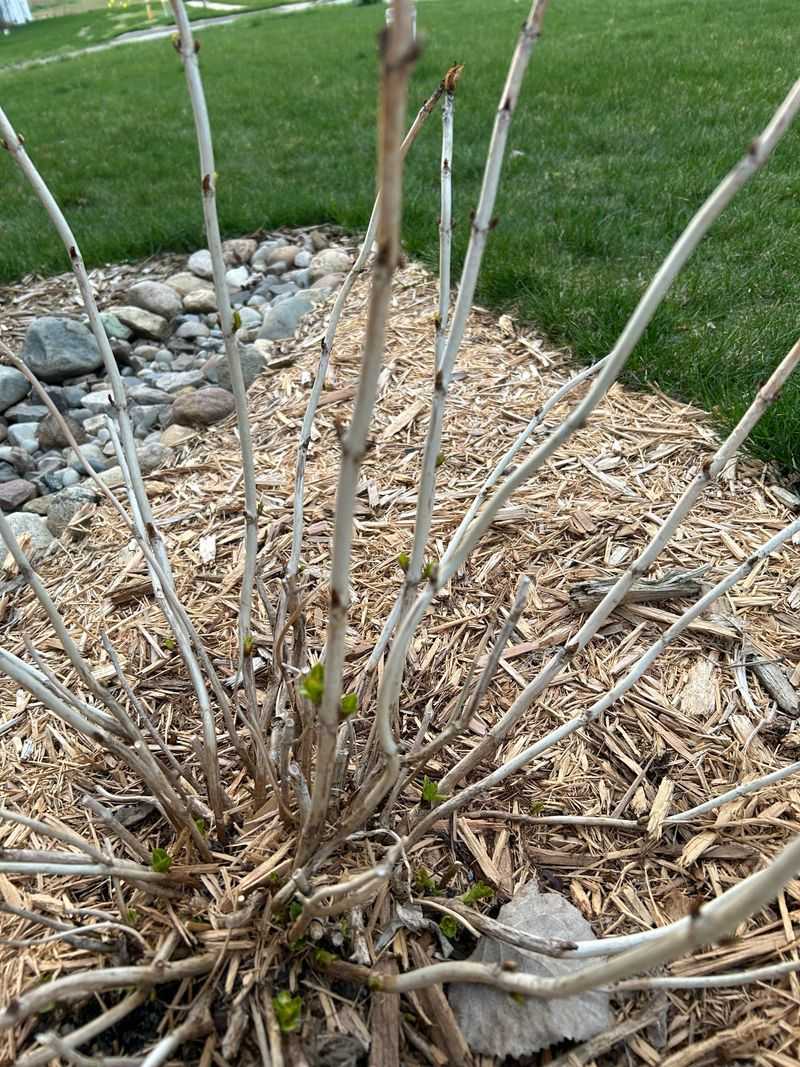
Bigleaf hydrangeas, known to scientists as Hydrangea macrophylla, set their flower buds on stems that grew this past year. Gardeners call that old wood, and it is a main reason fall cutting causes so many flowerless summers.
Those buds usually form in late summer and early fall, then rest quietly through the cold months ahead. When spring arrives, they swell and open into the big round or flat flower clusters many people love.
Mountain hydrangeas and oakleaf hydrangeas follow the same pattern, so the same careful approach applies to them too. Oakleaf types also offer red or purple fall leaves, which gives you another reason to leave stems alone.
You can often spot the buds yourself by looking closely at the stem just below an old bloom. They look like plump, paired swellings, and they are usually larger than the small buds lower on the stem.
Some newer reblooming kinds, such as the Endless Summer series, can also flower on new growth each year. Even so, extension experts still suggest light pruning for them, since the earliest flowers come from old wood.
I learned this lesson after trimming a shrub hard one October and getting only a handful of blooms. The plant looked healthy and full of leaves, but most of its flower buds had ended up in my compost.
Cold winters can also harm those exposed buds, especially in northern areas where temperatures drop well below zero. Protecting the stems you already have gives your shrub the best chance at a strong flower show next summer.
A Light Snip Below The Flower Head Works Best
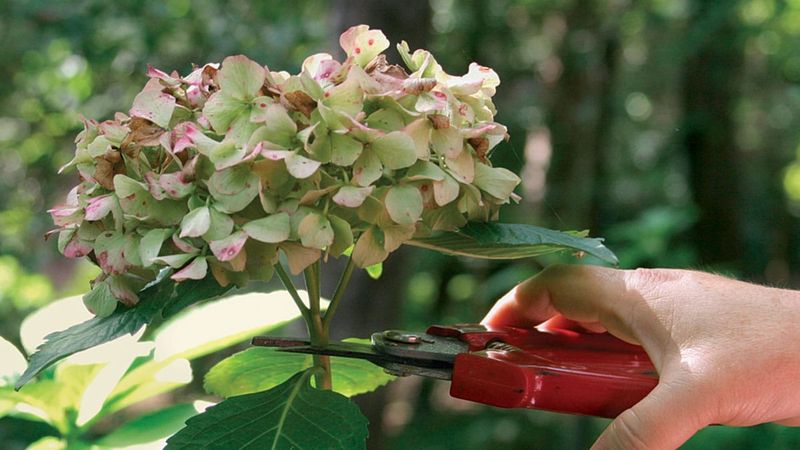
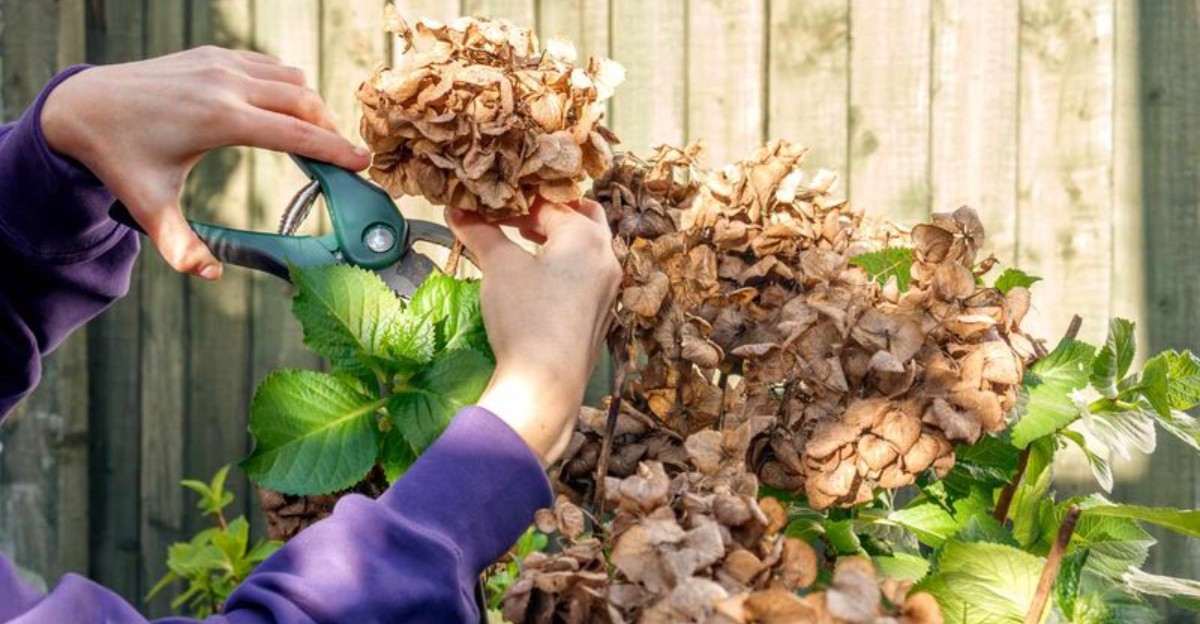
Think of fall trimming as a haircut for the flower heads, not a reshaping of the whole shrub. Follow the stem down from the old bloom until you reach the first pair of healthy, plump buds.
Make your cut just above those buds, leaving a short stub of about a quarter inch on the stem. That small spacing keeps the buds safe, while still removing the brown flower head you wanted gone.
Sharp bypass pruners work better than dull ones, because they slice cleanly instead of crushing the soft stem tissue. Wiping the blades with a household disinfectant between shrubs can help reduce the spread of plant diseases.
I like to work on a dry afternoon, since wet leaves and stems can carry fungal spores more easily. A small bucket at my feet catches the clippings, which keeps the bed tidy and saves cleanup time later.
You can also remove any stems that are clearly broken, diseased, or rubbing against each other this month. Those small fixes help airflow without cutting away the healthy wood that holds next season’s flower buds.
Avoid shearing the shrub into a ball shape, because even cuts across the top remove many buds at once. Hand pruning each stem takes longer, but it lets you see the buds and choose each cut with care.
Old flower heads make fine material for the compost pile, as long as they show no signs of disease. Bag up any spotted or moldy pieces instead, so fungal problems do not return to your garden next spring.
Some Shrubs Bloom On Fresh Growth Instead
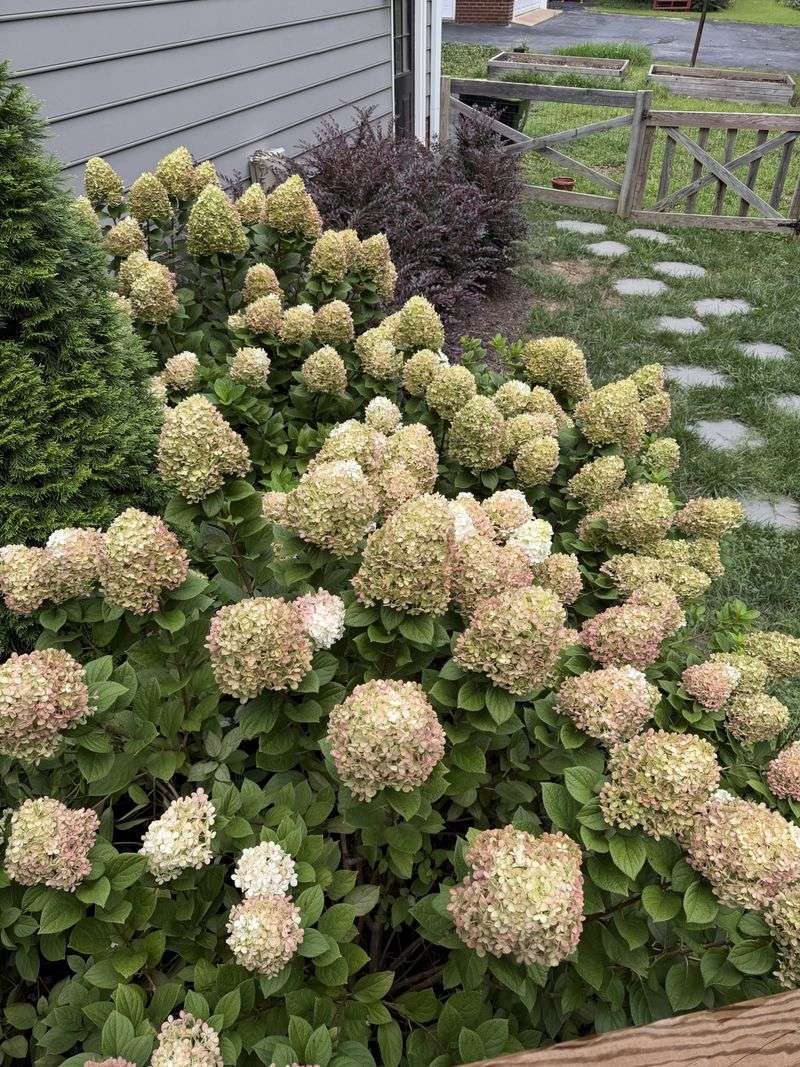
Panicle hydrangeas, like the popular Limelight and Quick Fire, play by a different set of rules than bigleaf types. They form flower buds on new stems that grow in spring, so fall trimming rarely affects next summer’s show.
Smooth hydrangeas, including the classic Annabelle, also bloom on new wood and handle pruning with very little fuss. Many extension services suggest cutting smooth types back to about one or two feet tall in late winter.
That timing still beats fall for most gardeners, even though these shrubs will not lose next year’s flowers. Waiting lets you see winter damage first, so you can remove broken or weak stems in a single visit.
Panicle blooms also hold their shape well into winter, often fading from white to pink and then tan. Smooth hydrangea stems are thinner, so heavy snow can bend them, which is one reason some people choose to trim earlier.
You can snip spent panicle or smooth blooms anytime this fall if floppy stems or brown heads bother you. I usually leave mine standing, though, because they look lovely against the gray skies of a November afternoon.
Not sure which kind you own because the plant tag went missing years ago when you bought the house? Look at the flower shape, since panicle types grow cone-shaped clusters while smooth types usually grow round, white balls.
Leaves help too, because oakleaf types have lobed leaves and bigleaf types have thick, shiny, toothed leaves. A local extension office or garden center can also help you identify the plant from a few clear photos.
Dried Blooms Give Your Garden Winter Charm
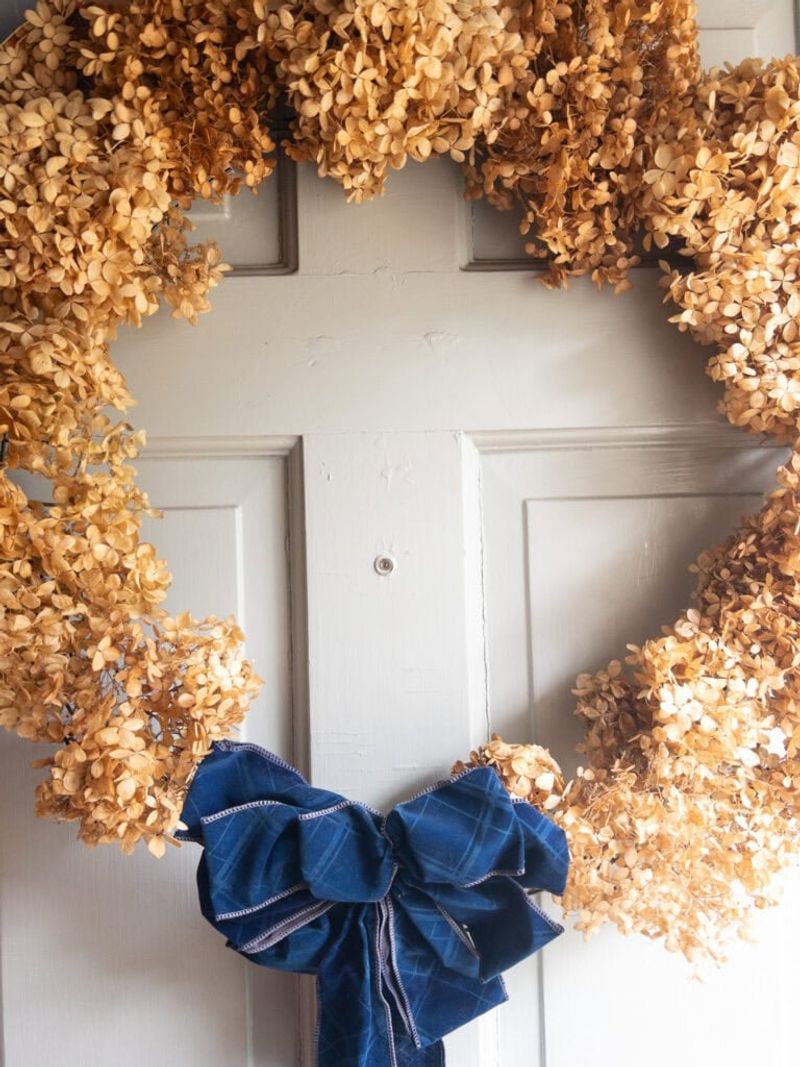
Dried hydrangea heads give a bare winter yard some structure, especially after leafy perennials fade back to the ground. Landscape designers often call this winter interest, and many botanical gardens leave their shrubs untrimmed for that reason.
Some birds may perch on the sturdy stems, and small insects sometimes shelter inside the dried flower clusters. Leaving garden plants standing through winter is a habit many extension services now encourage to support local wildlife.
You can also bring a few blooms indoors, since hydrangea heads dry well and keep their color for months. Cut them when they feel papery, then stand the stems in a vase with a little water to finish drying.
I love making a simple wreath from my trimmed blooms, and it often lasts until spring on the front door. Fun fact, bigleaf blooms change color based on soil pH, with acidic soil often producing blue and alkaline soil pink.
Those dried heads keep hints of that color, which is why one shrub can fill a vase with several shades. Taking blooms for crafts counts as fall trimming, so the same rule applies about cutting just below the head.
Snow can weigh down large flower heads, and a heavy storm may bend or snap weaker stems on occasion. If your area gets wet, heavy snow often, removing the biggest heads in late fall can reduce that risk.
Most of the time, the choice comes down to your own taste rather than the health of the shrub. A tidy look and a wild winter look both work, as long as the flower buds stay safe.
Fallen Leaves Deserve Attention Before Winter
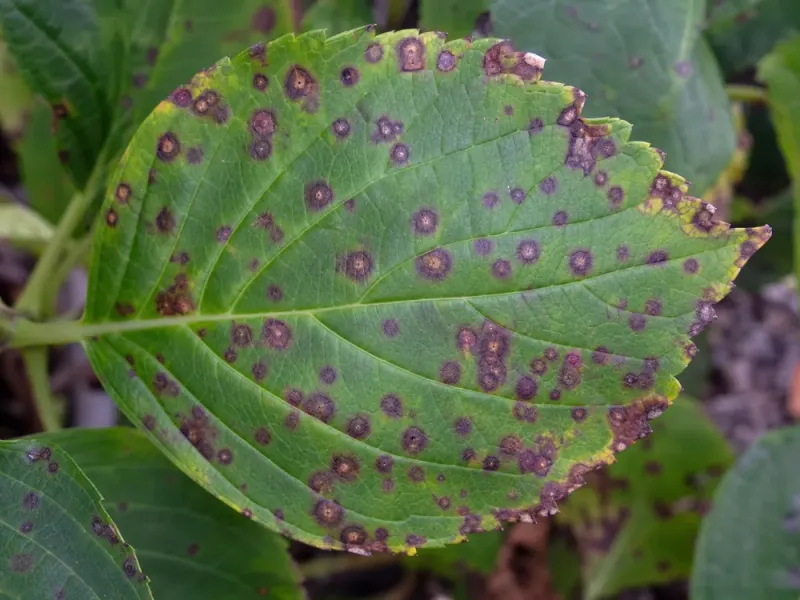
Leaf spot is a common problem on bigleaf hydrangeas, showing up as purple or brown spots on summer leaves. The fungi that cause it can survive the winter on fallen leaves, then splash back onto new growth in spring.
Raking up spotted leaves under your shrubs this fall is one of the simplest ways to reduce that cycle. Healthy leaves can stay put or go into the compost, but infected ones belong in the trash bag.
Once the ground cools, spread two to three inches of shredded bark or chopped leaves around the base. Keep the mulch a few inches away from the stems, since piling it against the bark can invite rot.
Skip fertilizer this time of year, because late feeding can push soft new growth that struggles in cold weather. Most extension services suggest feeding hydrangeas in spring instead, once you see fresh leaves starting to unfold.
Water your shrubs deeply before the ground freezes, especially after a dry fall with little rain in your area. Moist soil holds warmth better than dry soil, and it helps roots handle the long stretch of winter cold.
Gardeners in colder zones sometimes wrap bigleaf shrubs in burlap or build a loose cage filled with dry leaves. That extra layer can help protect flower buds on old wood, which often struggle when temperatures dip below zero.
I like jotting a quick note about each shrub type in a notebook, so next fall feels much easier. A few simple habits now often lead to fuller shrubs and more flowers when next summer finally arrives.