That “Dog Vomit” Slime on Your Florida Mulch After Rain Looks Awful but Is Harmless
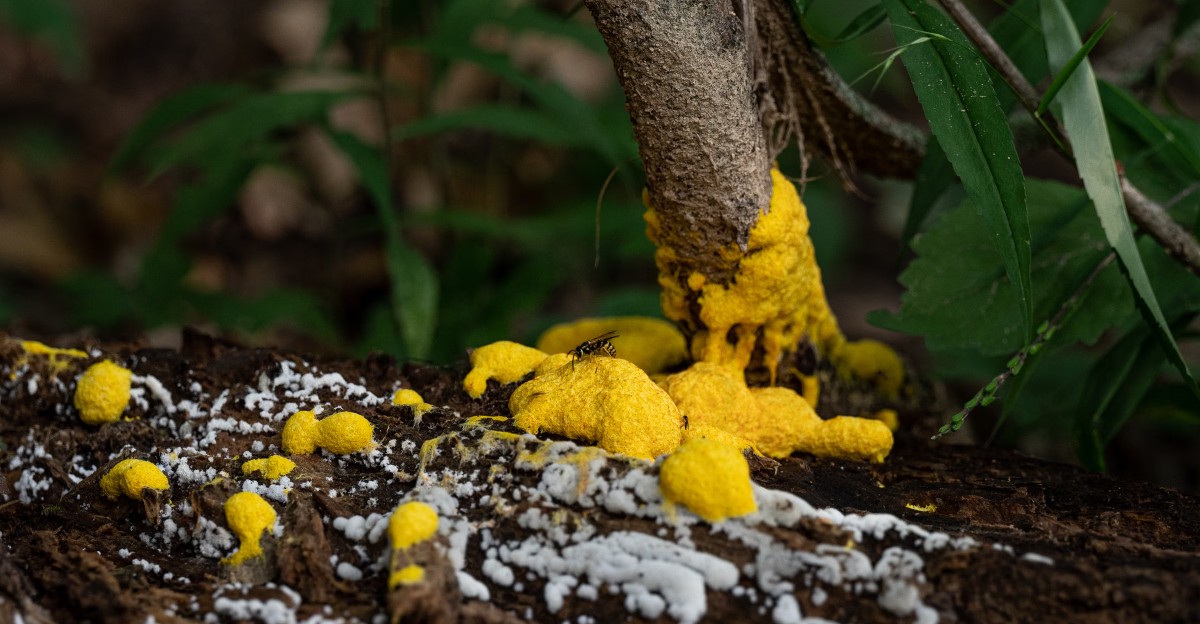
A single living cell can grow big enough to cover a dinner plate, and it might be sitting in your flower bed right now.
It has no brain, yet it crawls toward food. Scientists have even watched its relatives solve mazes. I still laugh at how something so clever can look so gross.
After a summer storm in Florida, you might walk outside and find a bright yellow, foamy splat on your mulch.
Your first guess is probably that the dog got sick. My first guess was much worse, and I nearly reached for a bottle of something harsh.
You deserve better than panic on a damp morning. That strange blob has a surprising backstory, a tidy job to do, and a short visit planned.
Here’s what’s really crawling through your mulch, and why you can probably put the shovel down.
That Yellow Foam on Your Wet Mulch Has a Strange Origin
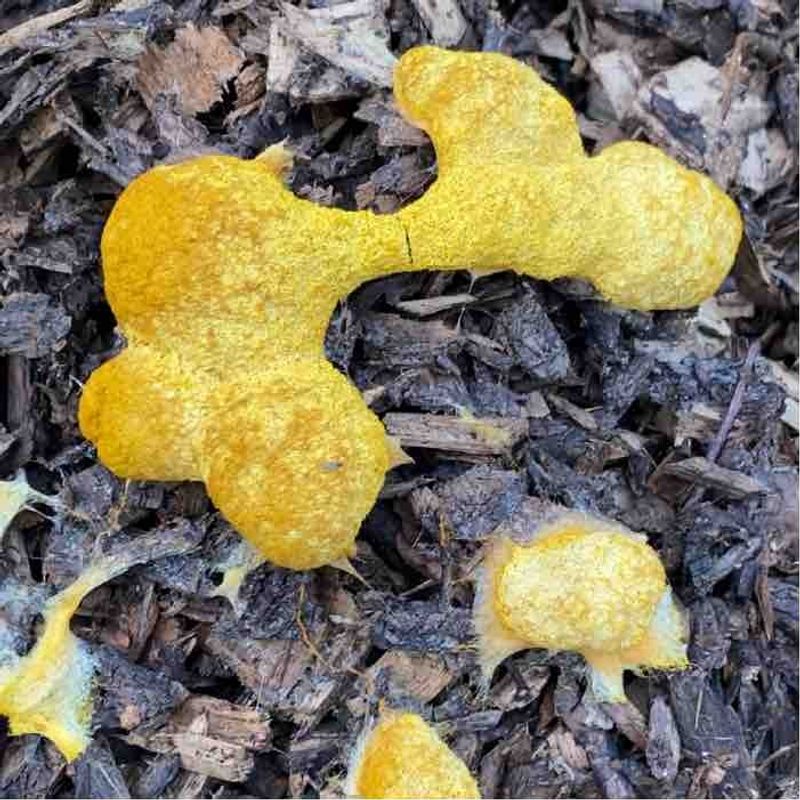
Fresh rain, warm air, and a pile of shredded bark set the stage for one of the oddest sights in any yard. The bright yellow foam you spotted is not a sick pet or a chemical spill.
It grew there, right in the mulch, often in a single night.
Gardeners call it dog vomit slime mold, and the nickname fits a little too well. It can look like scrambled eggs, pale custard, or a blob of shaving cream dyed yellow.
Patches range from a few inches to more than a foot across.
I remember my first one sitting beside a row of crotons after a June downpour. I honestly thought a raccoon had eaten something it regretted.
A neighbor walking by took one look and said it would be gone in a week, and she was right.
The surprise is how quickly it shows up. Hidden in the mulch, a thin network was already there, feeding quietly where you could not see it.
Once moisture and warmth line up, it moves to the surface and puffs into that foamy mass.
So the blob did not arrive from somewhere else. It simply stepped into the spotlight after the rain.
Fuligo septica Is No Fungus and No Real Mold
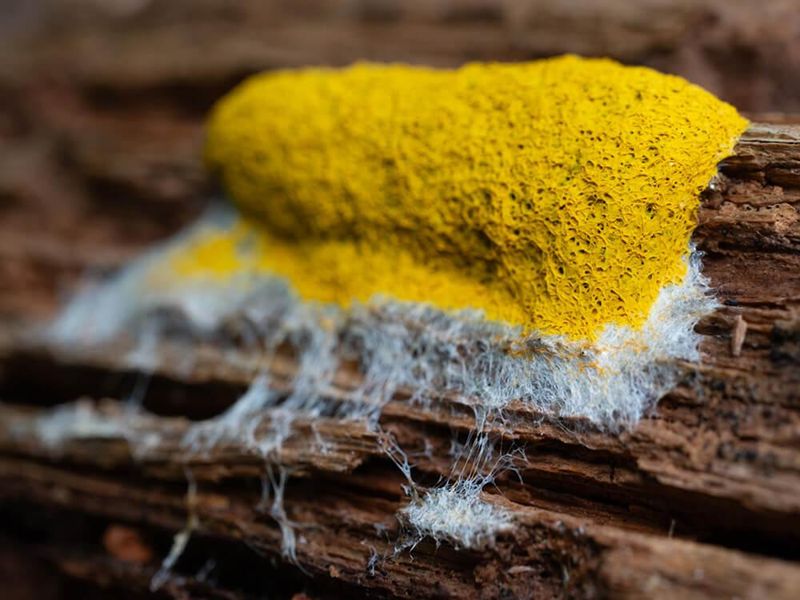
Meet the scientific name, Fuligo septica, and forget everything the word mold suggests. Despite the label, this organism is not a fungus.
Biologists place slime molds in a group of amoeba-like organisms, far away from mushrooms on the tree of life.
Its life starts small, as microscopic single cells living in moist leaf litter and wood. When conditions are right, two compatible cells fuse, and the resulting cell grows into a large structure called a plasmodium.
Inside, thousands of nuclei share one giant cell with no walls between them.
That is the yellow foam you see. It is basically one enormous, gooey cell going about its business.
Fun fact for your next backyard chat: slime molds have been studied by scientists interested in how simple living things find efficient paths. A relative called Physarum famously traced routes that looked like a rail network map in a lab test.
Not bad for something without a single nerve.
Personally, I find this the best part of the whole story. The ugliest thing in my garden turned out to be one of the most interesting.
Knowing its true identity also explains why fungicides make little sense here, since it is not a fungus at all.
Your Plants, Pets, and Kids Can Relax Around This Mulch Blob
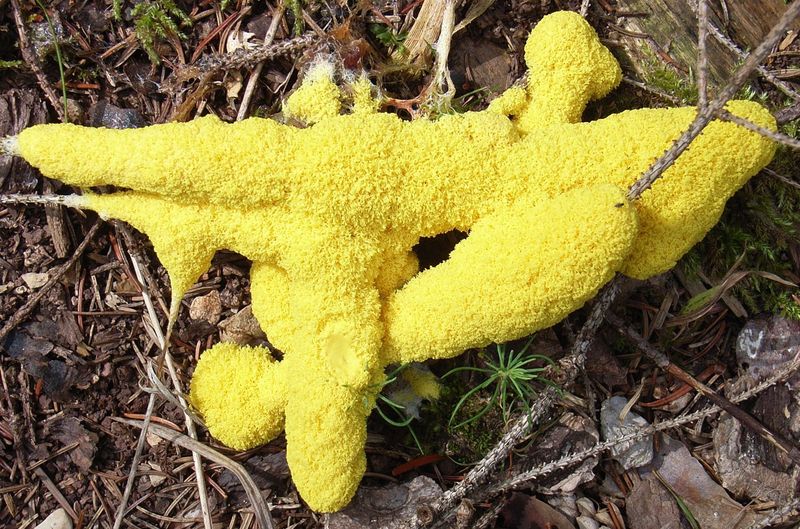
Breathe easy, because this visitor is not a plant disease. University extension services, including Penn State and UC, describe dog vomit slime mold as harmless to garden plants.
It does not attack roots, leaves, or stems.
Its menu is tiny. The slime mold eats bacteria, yeasts, fungal bits, and other microbes living in decaying organic matter.
Your mulch is basically a buffet, and your hibiscus is not on it.
Pets and people are not at risk from casual contact either. Still, I would not let a dog snack on it, simply because eating random garden goo is a bad habit.
Wash your hands after touching it, as you would after any gardening chore.
There is one minor exception. A thick patch can occasionally smother very small seedlings or a short stretch of lawn by blocking light for a few days.
Once it dries and breaks apart, the grass or seedlings usually recover.
People with strong allergies or asthma may want to avoid stirring up the dusty spore stage later on. Wearing a simple mask while cleaning it up handles that worry nicely.
Otherwise, this is mostly a looks issue, not a health one.
Scoop It, Rake It, or Simply Let the Slime Mold Be
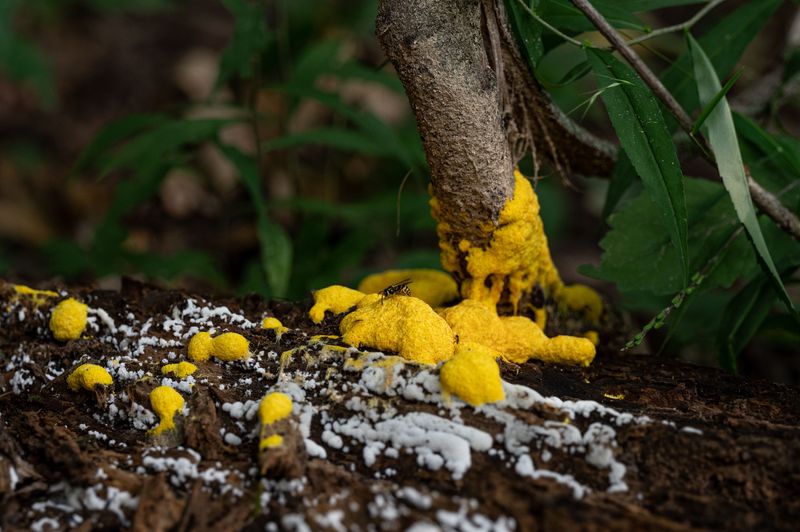
Nobody wants a splotch of fake scrambled eggs by the front walk when company is coming. Removing it is easy, and you will not need any sprays.
A shovel, trowel, or rake does the job in a minute.
Scoop the mass up and toss it in the trash or a compost pile far from the house. Another quick fix is breaking it apart with a rake and letting the sun dry it out.
A gentle sprinkle from the hose can also loosen it, but skip strong blasts that scatter material around.
Chemicals are a waste of money here. Extension experts point out that fungicides are not recommended for slime molds, and they could harm helpful soil life.
Bleach and vinegar mostly create a new mess.
Honestly, my favorite method is doing nothing. The yellow stage often lasts only a few days before the blob shrinks and turns crusty on its own.
If it sits in a back bed where nobody looks, I let nature handle it.
Keep expectations realistic, though. More may appear after the next big storm, since the organism already lives in the mulch.
Florida Summer Storms Hand This Mulch Organism a Perfect Party
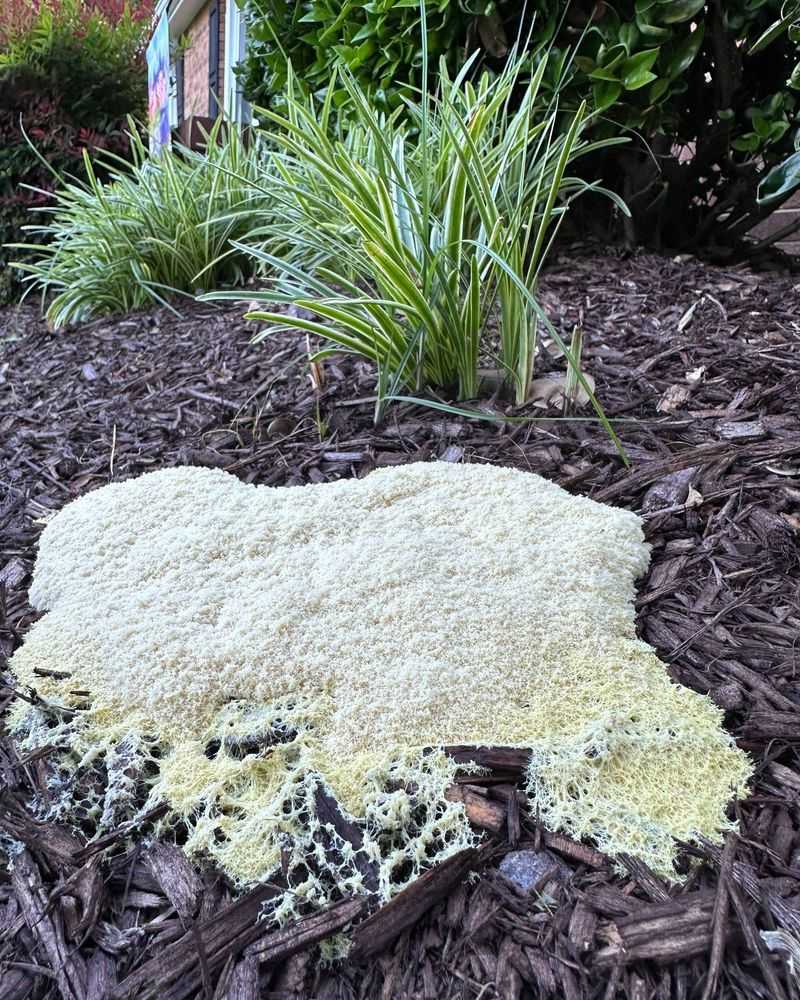
Afternoon thunderstorms roll through Florida almost daily from late spring into early fall. For a slime mold, that rhythm is pure gold.
Warm temperatures plus soggy organic material create the ideal spot to grow and surface.
Mulch does most of the heavy lifting. Shredded hardwood, pine bark, and wood chips hold moisture and host lots of bacteria.
That means plenty of food sitting just under the surface.
Shady beds and spots near downspouts or sprinkler heads tend to get the most action. I see it more along the north side of my house, where the mulch stays damp longest.
Sunny, quick-draining areas show it far less often.
Seasonal patterns vary across the state. North Florida gardeners mostly spot it during the warm, wet months.
In South Florida, where winters stay mild, a humid stretch can trigger it outside the usual summer window.
None of this signals an outbreak or a problem with your yard. It is a normal response to steady rain and heat.
When dry weather returns, sightings usually drop off, and many gardeners notice them fading by late fall.
Yes, That Gooey Plasmodium Actually Crawls Across the Bed
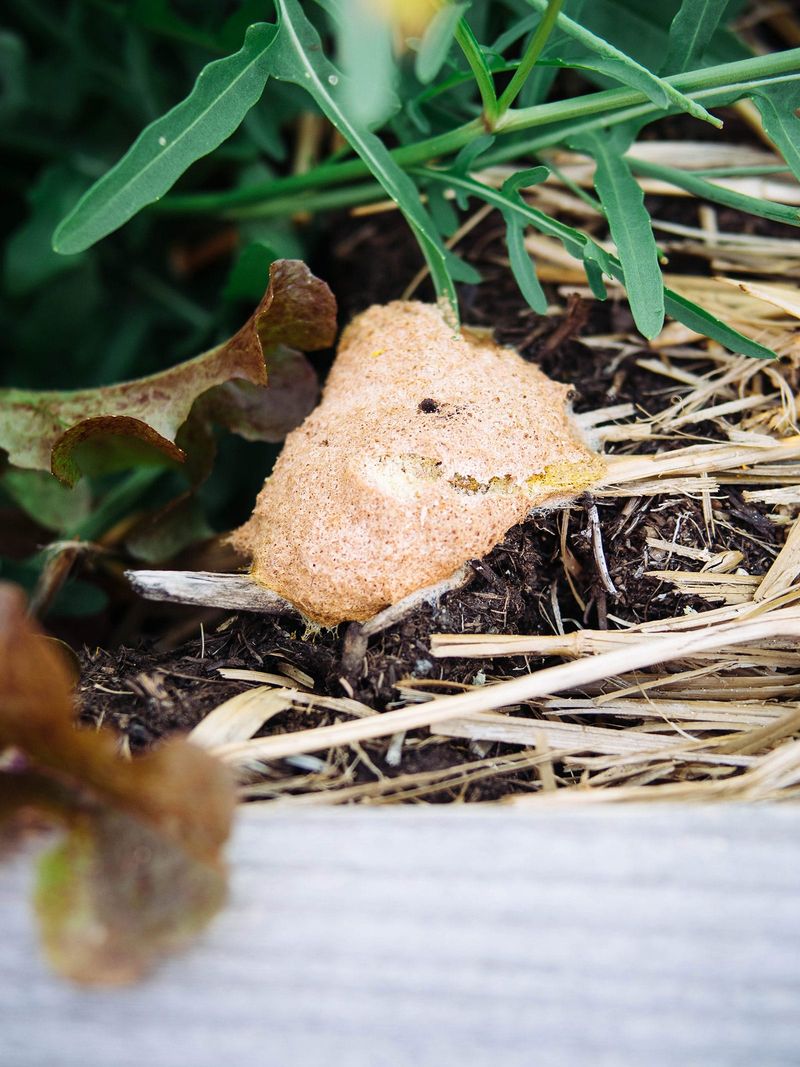
Leave the yard for a day, come back, and the yellow patch may sit a few inches from where you saw it. That is not your memory playing tricks.
The plasmodium moves.
Movement happens through a process called cytoplasmic streaming. Inside the giant cell, fluid flows back and forth in rhythmic pulses, pushing the edge forward bit by bit.
The pace is slow, often measured in fractions of an inch per hour.
Sometimes it creeps onto plant stems, rocks, garden edging, or even the side of a pot. It can look alarming, as if it plans to climb your shrubs.
In reality, the plant is just a convenient surface on the route.
Food and light steer its path. Slime molds tend to move toward moisture and nutrients and away from strong light while feeding.
When it is ready to reproduce, it often heads to a higher, drier spot.
I once watched a patch slide up the base of an azalea and settle there. The plant stayed perfectly healthy once the blob dried and flaked off.
Gently brushing away residue from leaves is all the cleanup needed.
A Crusty Brown Spore Cake Marks the Final Stage
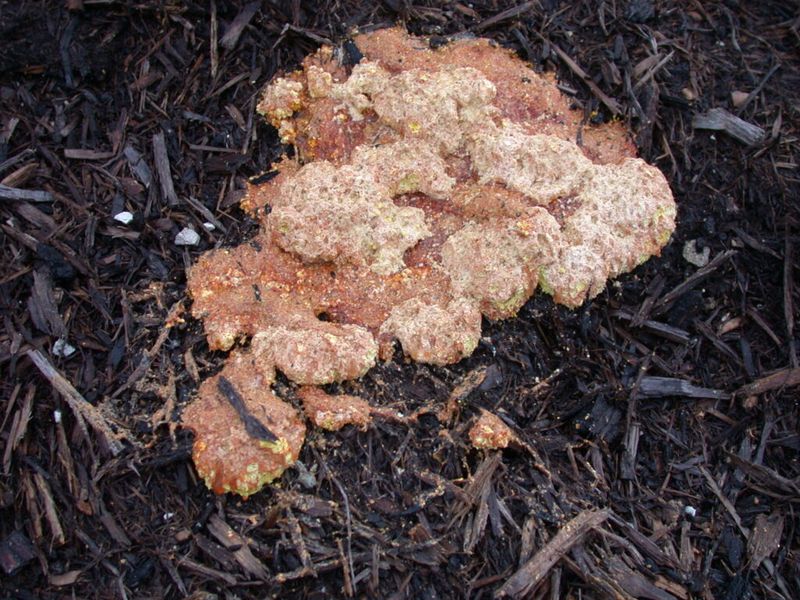
Give the yellow foam a few days and it transforms. The bright color fades to tan, then brown, and the surface hardens into a crusty cake.
Scientists call this reproductive structure an aethalium.
Crack one open and you will find a mass of dark, powdery spores. These spores drift away on wind, splash with rain, or ride along on shoes and tools.
Each one can start the cycle again when moisture returns.
Spores are remarkably tough. They can wait out dry weather for long periods, which explains why the slime mold reappears in the same beds year after year.
That persistence is normal and nothing to stress about.
This is the stage where a light touch matters. Kicking or raking a dry crust sends up a puff of dust, and some people find it irritating to breathe.
If you remove it now, mist it lightly first, then bag it.
Leaving the crust alone works too. Weather breaks it down in time, and it blends back into the mulch.
I like to point it out to visiting kids, since watching the color change feels like a tiny science lesson.
Healthy Mulch Beds Welcome This Little Recycler
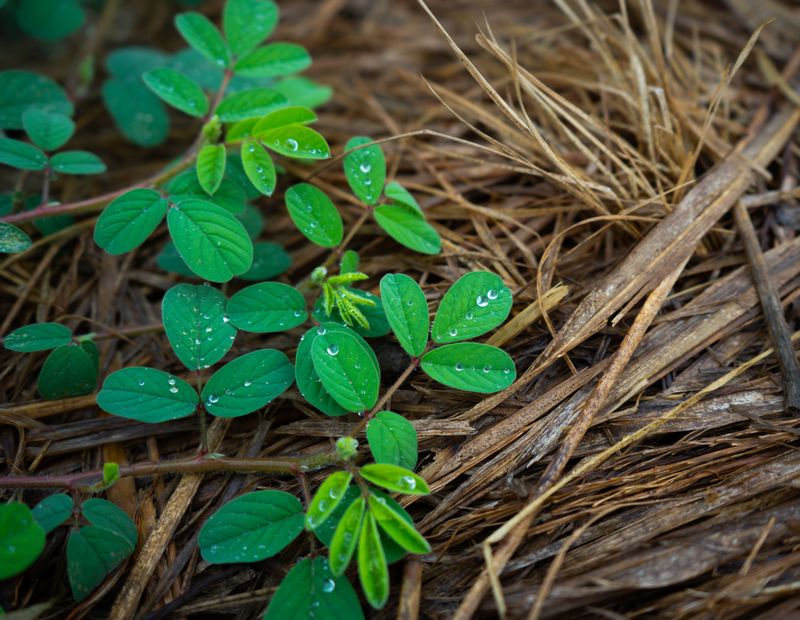
Spotting slime mold is a sign that your mulch is alive. Microbes are busy breaking down wood and leaves, and the slime mold is feeding on those microbes.
That activity is part of how organic matter turns into richer soil.
Want fewer appearances near the patio or front door? A few easy habits help.
Rake the mulch now and then so it dries faster, and keep the layer around 2 to 3 inches rather than piling it deep.
Fix sprinkler heads that soak the same spot daily, especially during the rainy season when extra watering is rarely needed. Pine straw or coarse bark can dry quicker than fine shredded mulch.
Moving mulch beds slightly away from downspouts helps too.
Do not expect zero sightings. No mulch type is fully slime proof in a humid climate.
The goal is managing where it shows up, not winning a war against it.
My takeaway after years of these yellow surprises is simple. Grab a trowel if it bugs you, ignore it if it does not, and skip the chemicals either way.
Your garden is doing exactly what healthy gardens do.