What It Means For Next Year When Your Hydrangea Turns Green In Fall
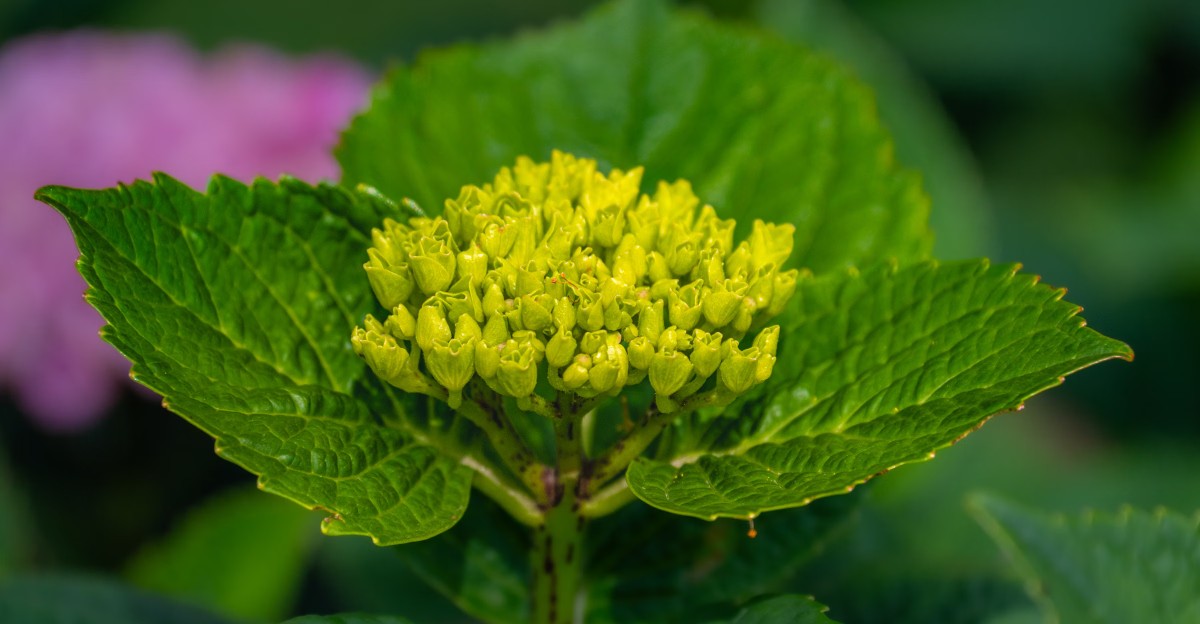
Those big, showy flower heads in my backyard are not really made of petals. Most of that color comes from sepals, leafy parts that can make their own food once the season winds down.
I’ll be honest, the first time my blue blooms faded to a dusty green, I assumed I had messed something up. I checked the soil, the water, and even the mulch. Nothing was wrong.
Here’s what gets me. Gardeners panic every autumn over this shift, yet it happens on healthy shrubs across much of the country. Cool nights and shorter days nudge the change along, and some blooms even blush red or burgundy before winter.
You have probably wondered if a green flower head means fewer blooms next summer. The answer depends less on that color and more on what you do with your pruners this fall. So what should you actually watch for?
Those Green Hydrangea Flower Heads Are Sending A Quiet Message
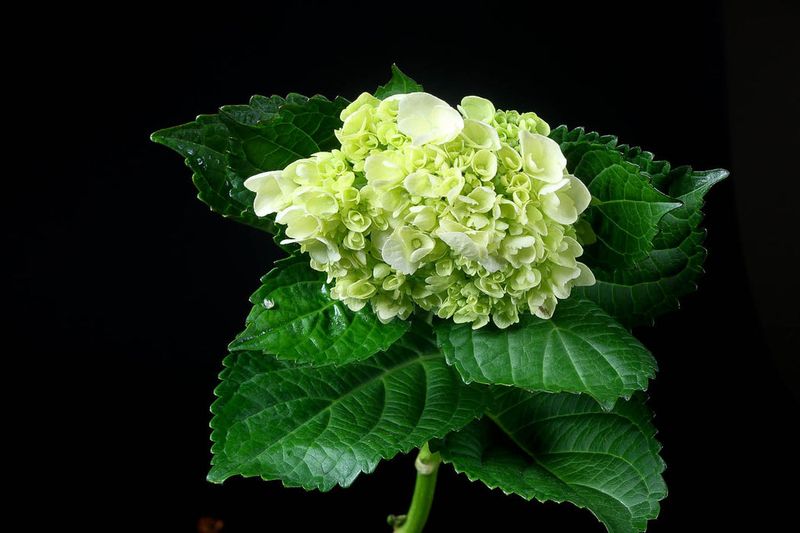
Call me relieved, but the first time I learned what was happening, I laughed at my own worry. A hydrangea bloom that turns green in fall is mostly just getting older. It is a normal step in the flower’s life, not a warning sign.
The colorful parts we admire are sepals, which are closely related to leaves. Early in the season, pigments like anthocyanins give them their pink, blue, or red shades. As the bloom ages, those pigments fade, and green chlorophyll becomes easier to see.
Many university extension services describe this aging process as typical for bigleaf, smooth, panicle, and oakleaf types. The flower has already done its job for the year. Now it is simply settling into its autumn look.
So what does it mean for next year? On its own, very little. A greening bloom does not predict fewer flowers, weaker stems, or a sick plant.
Your shrub’s future show depends on other things, like healthy buds, winter weather, and smart pruning. Think of the green color as a calendar page turning rather than a report card. Enjoy it, snap a few photos, and save your worry for things that actually matter.
Next Summer’s Hydrangea Buds Are Already Hiding On Those Stems
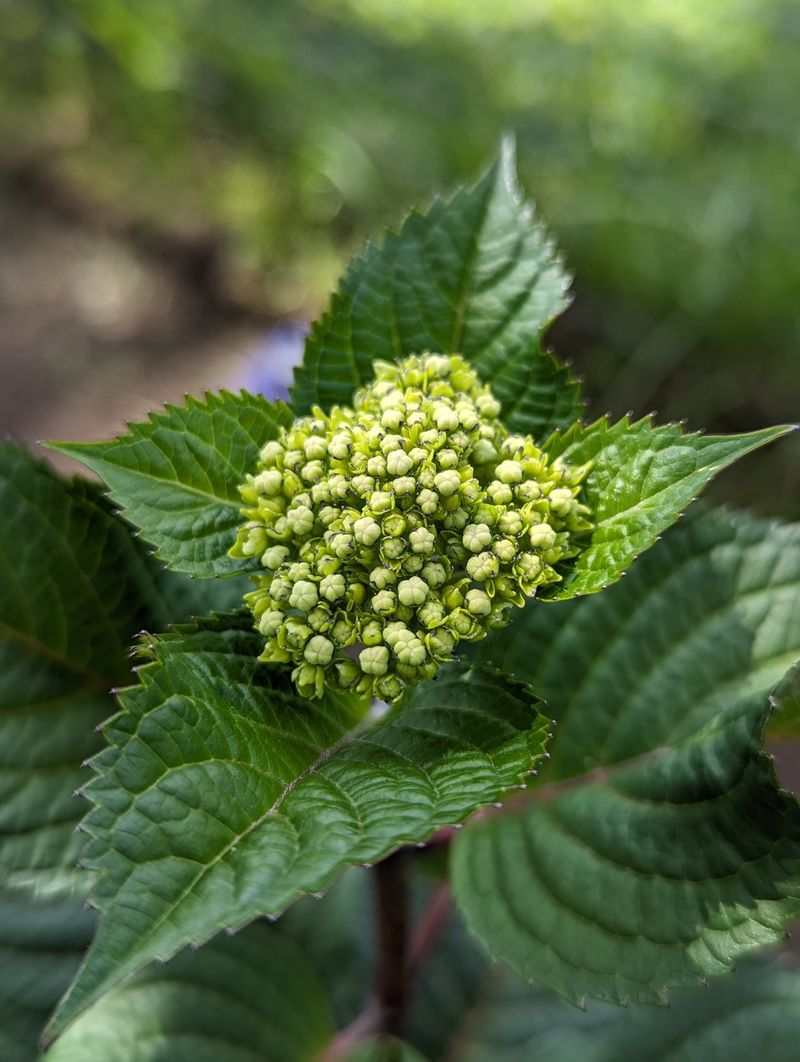
Guilty as charged, I once spent a whole fall staring at faded blooms while ignoring the real treasure. On many hydrangeas, next year’s flower buds form in late summer and early fall. They sit quietly near the tips of this year’s stems.
Bigleaf hydrangeas, oakleaf hydrangeas, and climbing hydrangeas bloom on old wood. That means the buds made this season become next summer’s flowers. If those buds survive winter, you get blooms, whether the old flower heads looked green, brown, or rosy.
Panicle hydrangeas like ‘Limelight’ and smooth hydrangeas like ‘Annabelle’ work differently. They bloom on new wood, so they build flower buds on growth that appears in spring. For these shrubs, fall color has even less connection to next year’s show.
Reblooming bigleaf types, such as the Endless Summer series, can flower on both old and new wood. They offer a bit of insurance if winter is rough.
Not sure which type you have? Look at the leaves and flower shape, or check the plant tag if you saved it. Knowing your variety is the single best clue to protecting next summer’s flowers.
Put Down Those Pruning Shears Before You Snip Off Next Year’s Blooms
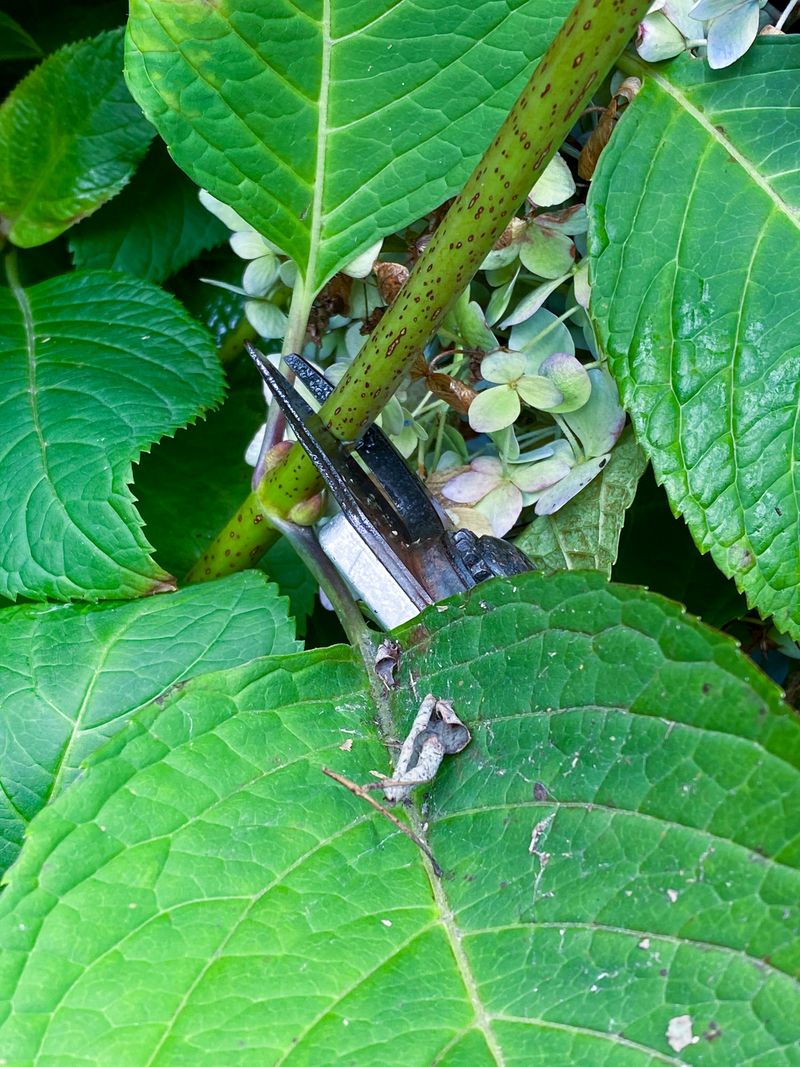
Trust me on this one, an eager fall haircut is the fastest way to lose a summer of blooms. Gardeners often see green or brown flower heads and grab the pruners. On old-wood hydrangeas, that cleanup can remove the buds hiding just below.
Extension experts generally recommend pruning bigleaf and oakleaf hydrangeas right after they finish blooming in summer. By fall, the buds are set. Cutting stems back now can leave you with plenty of leaves and very few flowers next year.
Panicle and smooth hydrangeas are more forgiving. You can prune them in late winter or early spring before new growth starts. Their flowers form on fresh stems, so spring trimming does not cost you blooms.
If those faded flowers bug you on a bigleaf shrub, snip just the flower head. Cut right below it, above the first set of healthy leaves or buds. Leave the rest of the stem alone.
Many gardeners keep the old heads on all winter. They catch frost beautifully and may offer a little shelter to the buds underneath. Your shrub will not mind the messy look one bit.
Cool Autumn Nights Turn Panicle Hydrangeas Pink And Burgundy
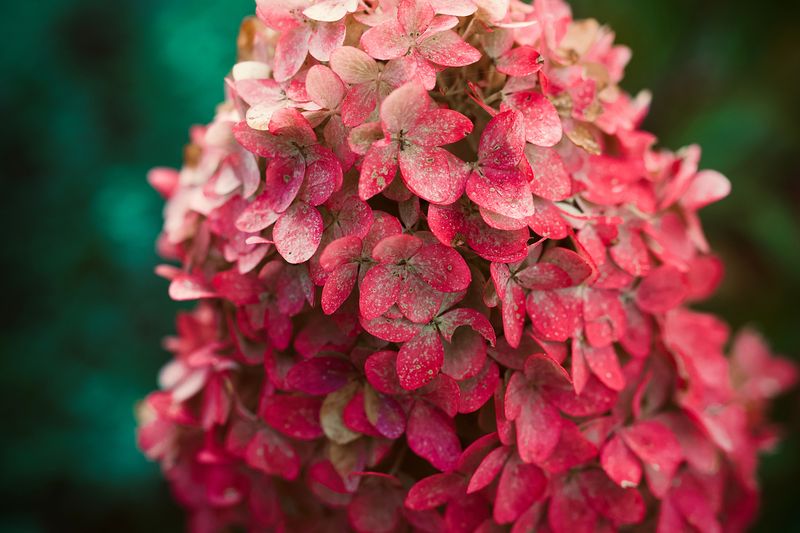
My knees grumble when the nights get chilly, but my hydrangeas seem to love it. Cooler temperatures and shorter days help drive their fall color changes. The results can be surprisingly pretty.
Panicle varieties put on the boldest show. Many start white or pale lime, then blush pink, rose, or deep red as the nights cool. ‘Limelight’, ‘Quick Fire’, and ‘Vanilla Strawberry’ are well known for this late-season shift.
Oakleaf hydrangeas join the party too. Their flower clusters often age to tan and rosy pink, while their big leaves turn burgundy and purple. That leaf color makes oakleaf one of the best native shrubs for fall interest.
Bigleaf blooms may pick up red or purple speckles as they age. Some gardeners call this the antique stage. Florists prize these mature heads for long-lasting arrangements.
How strong the color gets can vary from year to year. Sunlight, temperature swings, and the specific variety all play a part. A warm fall may bring softer shades, and that is perfectly normal. Either way, the color tells you about the season, not next summer’s flower count.
Green Leaves Behaving Oddly Deserve A Closer Look Than Green Flowers
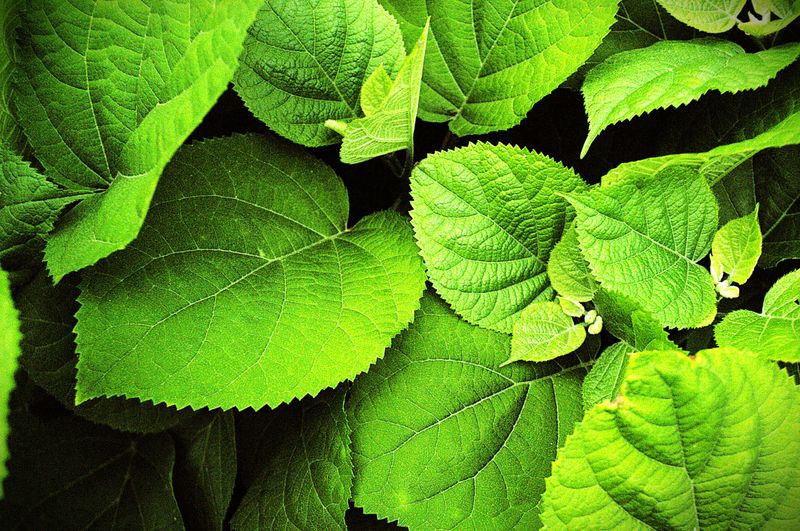
Here’s a twist I didn’t see coming. The flowers turning green rarely signal trouble, but the leaves can. If you want clues about plant health, look down at the foliage.
Yellow leaves with green veins can point to a nutrient issue, often iron, which may be linked to high soil pH. Brown, crispy edges often mean drought stress or too much sun. Dark spots ringed in purple may be cercospora leaf spot, a common fungal problem.
Leaf spot looks alarming, but it is mostly cosmetic late in the season. Rake up fallen leaves to reduce fungal spores next year. Water at the base of the plant rather than over the top.
Powdery mildew can also show up as white dusty patches in late summer. Better air flow and morning watering usually help manage it.
Leaves dropping in fall is expected on these deciduous shrubs. Do not mistake normal leaf drop for a problem. If your plant looked healthy and leafy most of the summer, it likely stored plenty of energy. That stored energy, not bloom color, supports a strong start next spring.
A Deep Fall Watering Helps Hydrangea Roots Head Into Winter Strong
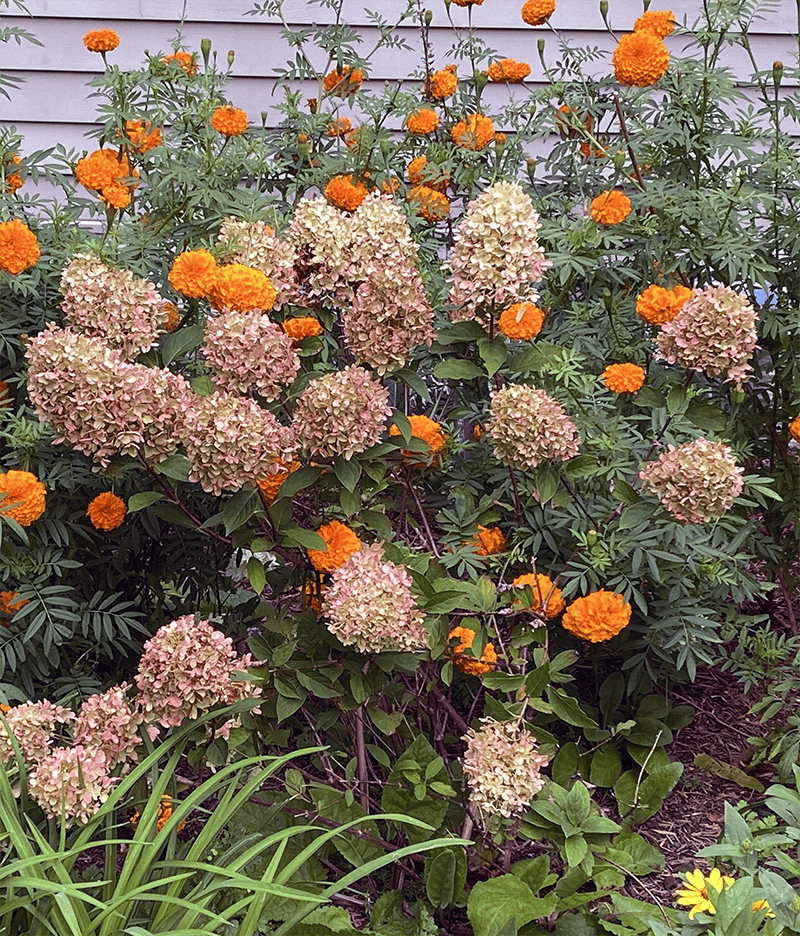
Hydrangea literally means water vessel, and the name fits. These shrubs are thirsty, and that need does not vanish when summer ends. Fall roots keep growing until the soil gets cold.
I learned the hard way that a dry autumn can leave shrubs stressed before winter. If rain has been scarce, give your hydrangeas a slow, deep soaking. Aim to moisten the soil several inches down, not just the surface.
A soaker hose or a gently trickling garden hose works well. Water in the morning so the leaves and soil surface can dry before night. Check the soil with your finger first, since soggy ground can cause root rot.
Keep watering every week or so during dry spells until the ground freezes. Many extension services suggest this for shrubs and evergreens alike. Moist soil holds heat a little better than dry soil, too.
Skip the fertilizer now. Feeding in late fall can push tender new growth that winter cold may damage. Save nutrients for spring, when your shrub is ready to use them. A well-watered plant simply has a better shot at protecting next year’s buds.
Mulch And Winter Wraps Can Save Fragile Bigleaf Hydrangea Buds
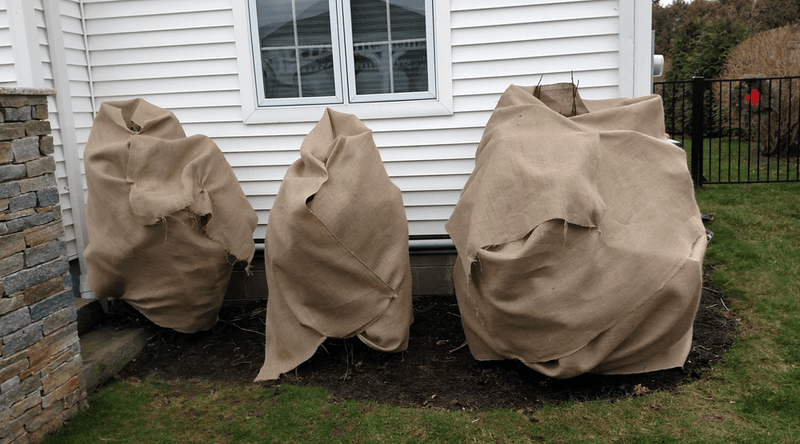
I’m not proud of this, but I once skipped mulching and paid for it with a bloomless summer. Bigleaf hydrangea buds are the most cold-sensitive part of the plant. In USDA zones 5 and 6, harsh winters or late spring freezes can damage them.
Start with a 2 to 4 inch layer of shredded bark, pine needles, or chopped leaves. Spread it over the root zone after the ground cools. Keep it a few inches away from the stems to discourage rot and rodents.
In colder areas, some gardeners build a simple cage of chicken wire around the shrub. They fill it loosely with dry leaves to insulate the stems and buds. A burlap wrap can also block drying winter winds.
Wait until after a few hard frosts to add this protection. Remove it gradually in spring once severe cold has passed. Uncovering too early can expose buds to a surprise freeze.
Panicle and smooth hydrangeas are tough and rarely need wrapping. Their buds form in spring, safely past winter’s worst. Mulch still helps their roots stay comfortable, though.
Cut Those Green Hydrangea Blooms For Dried Bouquets And Enjoy The Wait
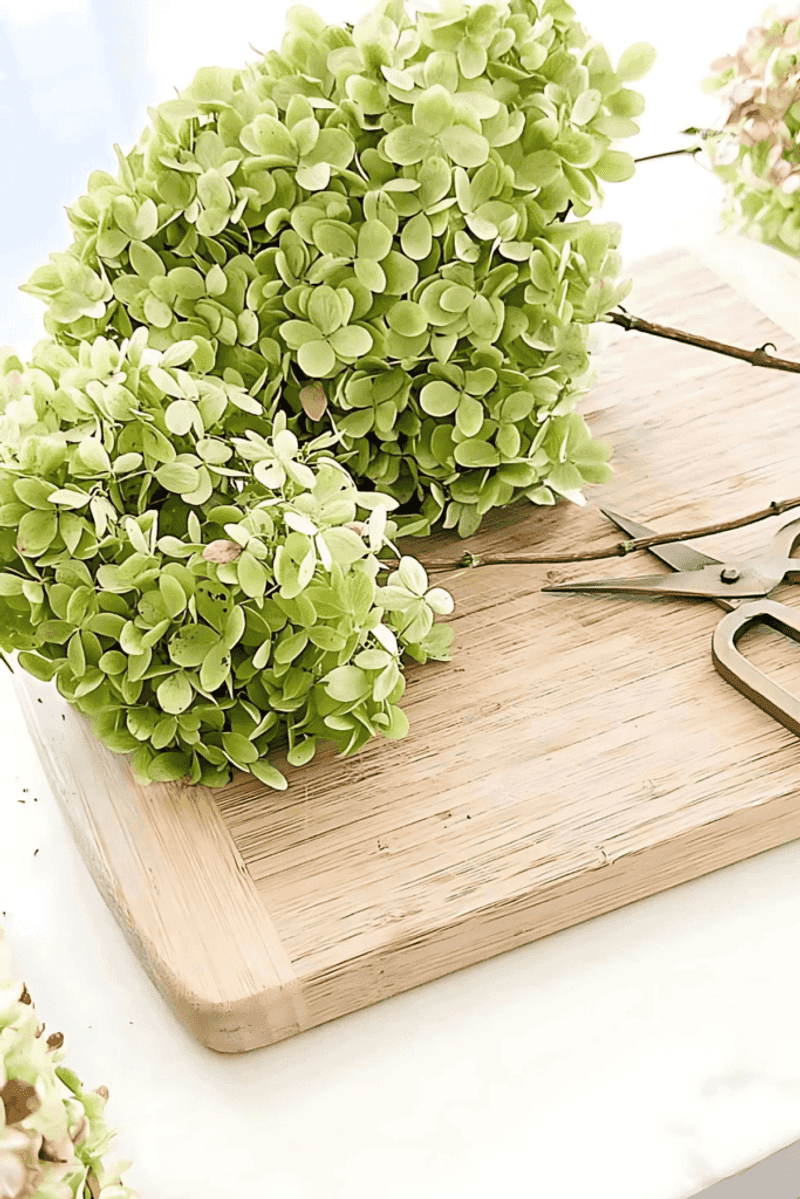
Don’t laugh, but my favorite hydrangea moment of the year is not in July. It happens in fall, when the blooms turn papery and green. That is the best time to cut them for drying.
Flowers picked at the antique stage dry far better than fresh summer blooms. The sepals feel slightly leathery and hold their shape. Cut stems in the morning on a dry day.
Strip off the leaves and place stems in a vase with a few inches of water. Let the water slowly evaporate as the blooms dry upright. You can also hang them upside down in a cool, dark spot.
On bigleaf and oakleaf shrubs, take short stems and snip just below the flower head. That way you leave next year’s buds alone. Panicle types allow longer cuts without much risk.
Here is the real takeaway. A green hydrangea in fall is usually just a normal sign of the season.
Know your variety, prune at the right time, water during dry spells, and protect tender buds. Do that, and next summer’s blooms will likely reward your patience.