The Venomous Creatures Every North Carolina Resident Should Know About
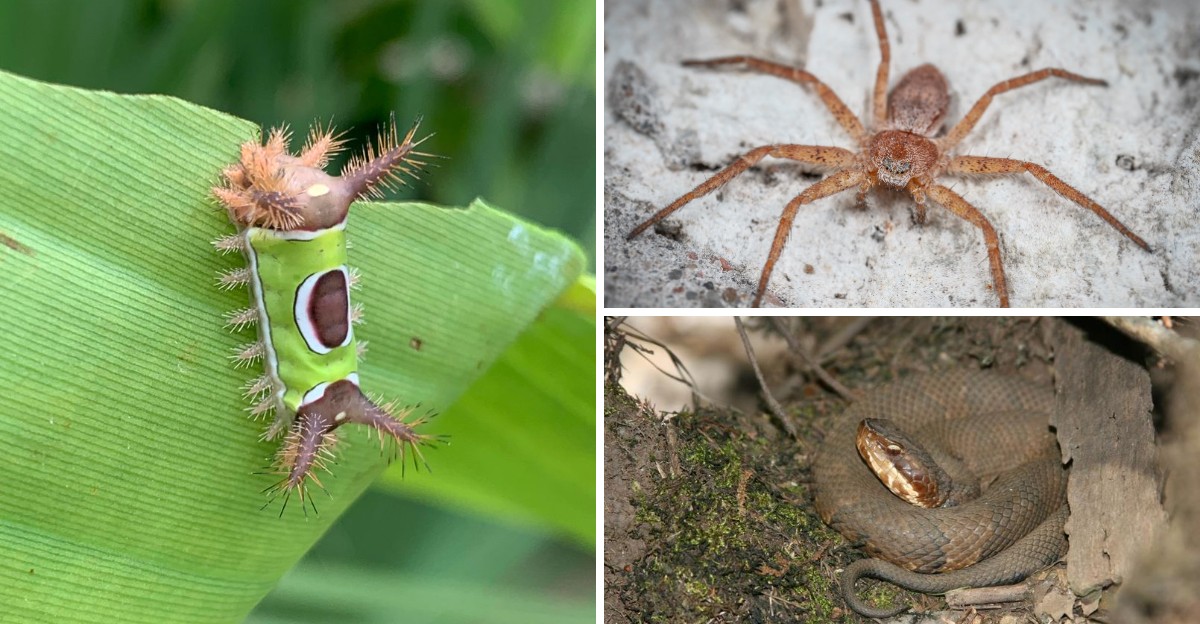
Some baby snakes wiggle bright yellow tail tips like tiny worms, luring curious frogs close enough for a quick strike. I learned that trick while weeding my tomato bed, and I have watched leaf piles differently ever since.
North Carolina shelters six venomous snake species, plus a surprising crew of spiders, wasps, ants, and fuzzy caterpillars. Most of them would rather hide than fight, which surprises plenty of gardeners who meet them by accident.
The way I see it, knowing who shares your yard beats panicking every time something rustles under the hostas. You can garden in peace across North Carolina once you recognize the few critters worth a wide berth.
A few lurk in woodpiles, and one tiny troublemaker hides its sting beneath what looks like soft fur.
1. Copperheads Blend Into Autumn Leaf Piles
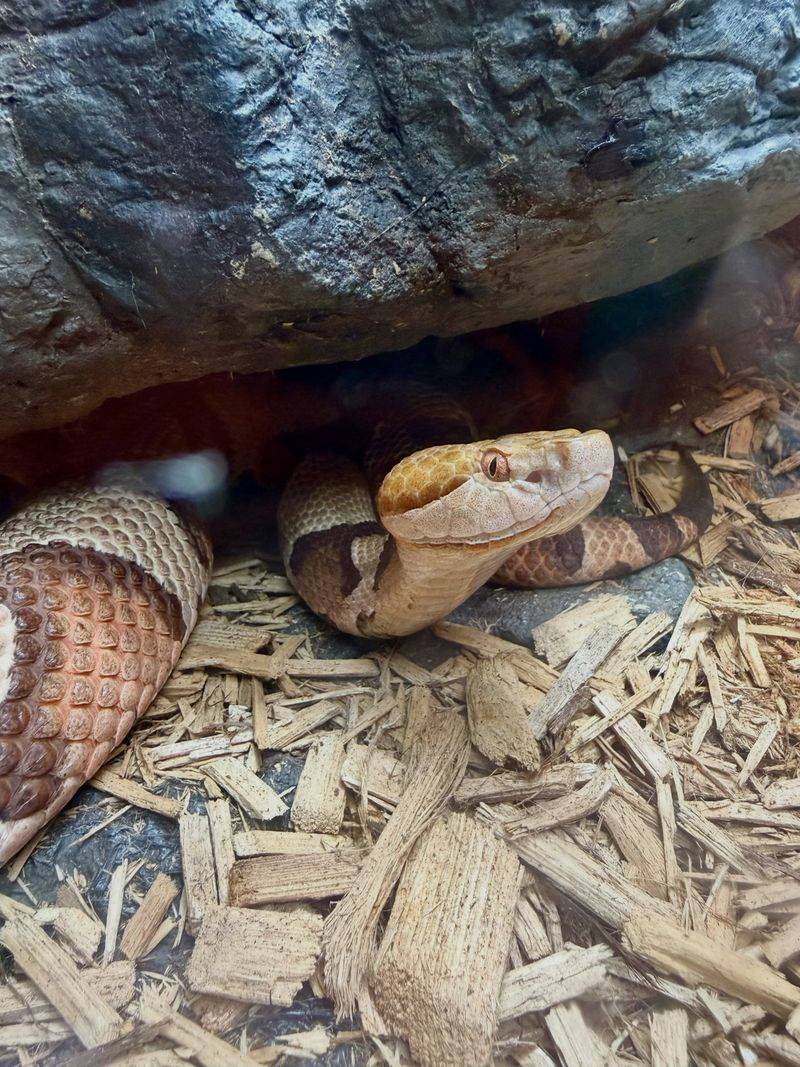
Copper-colored bands shaped like hourglasses let this snake vanish into oak leaves better than any camouflage jacket I own. Copperheads are the most widespread venomous snake across the state, found nearly everywhere except the Outer Banks.
Adults stretch two to three feet, with bands that look narrow on the back and wide on the sides. Youngsters sport bright yellow or greenish tail tips, which they twitch to fool hungry frogs and lizards.
In my experience, they love suburban yards where woodpiles or thick shrubs offer cool, shady shelter. Summer evenings bring the most activity, since copperheads often hunt at night when the air turns warm.
Rather than chasing people, these snakes freeze and trust their disguise, which is why most bites happen underfoot. When startled, a copperhead may vibrate its tail or release a musky smell before it decides to strike.
Bites rarely threaten life, yet they cause serious pain and swelling that can linger for days or weeks. Any suspected bite deserves a trip to the emergency room, so skip the old tourniquet and cutting myths.
My garden rule is simple, and I wear closed-toe shoes plus sturdy gloves whenever I rake leaf litter. A flashlight helps too, especially on warm nights when you step outside to water thirsty containers.
Cutting down on rodents around bird feeders and compost bins gives copperheads fewer reasons to visit your beds. If you spot one, back away slowly and let it slide off, since it wants distance as much as you.
2. Cottonmouths Flash White Mouths Near Swampy Water
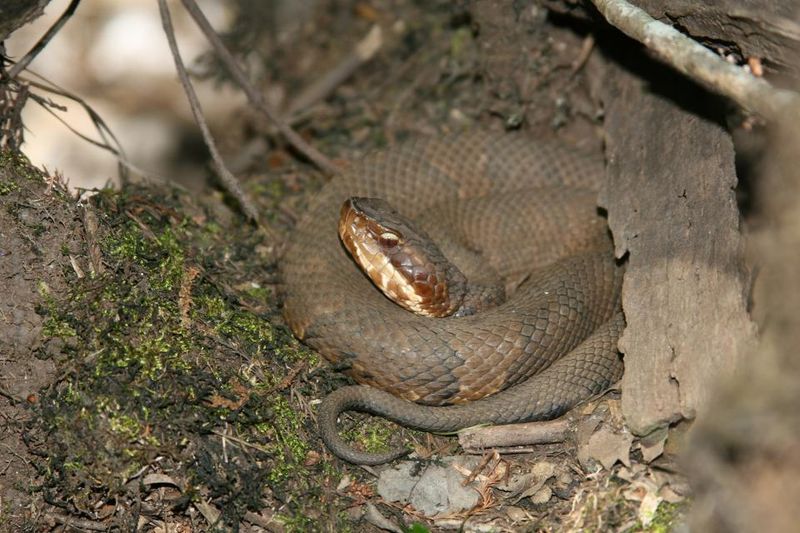
Few snakes greet trouble quite like this one, opening its mouth wide to show a lining as white as cotton. That startling display gives the cottonmouth its name, and it sends a clear message to back off.
Also called water moccasins, these heavy-bodied pit vipers wear dark crossbands on an olive or brown background. Older adults can look almost plain and dark, while young ones show reddish patterns and yellow tail tips.
You will mostly find them in the eastern Coastal Plain, where swamps and slow rivers create perfect hunting grounds. They often bask on logs or low branches beside the water, soaking up sunshine between meals of fish.
I have to admit something, because I once mistook a harmless water snake for a cottonmouth at my pond. Nonvenomous water snakes are far more common in many areas, and they get blamed for plenty of scares.
Cottonmouths sometimes stand their ground instead of fleeing, vibrating their tails or flattening their bodies to look bigger. They are most active at night, and they can bite underwater, so murky water deserves extra caution.
A bite can cause real tissue damage and needs prompt medical care, even if the pain seems manageable. Call for help quickly and remove rings or watches from the bitten limb before swelling sets in.
Near ponds and ditches, skip bare feet after dark and look before reaching into tangled plants by the bank. Giving this snake a few steps of space usually ends the standoff peacefully for everyone involved.
3. Timber Rattlesnakes Rest On Sunny Mountain Rocks
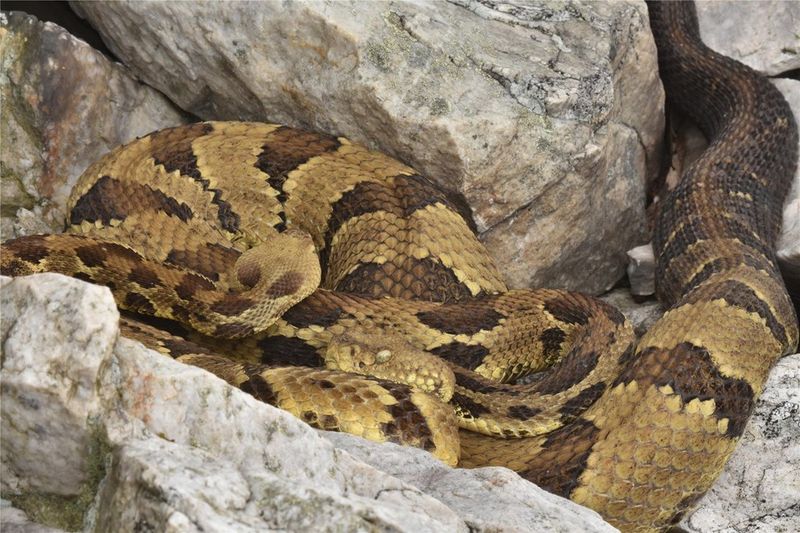
Mountain hikers sometimes hear a dry buzzing from a sunny ledge long before they ever notice the snake making it. Timber rattlesnakes use that rattle as a polite warning, and I think they deserve credit for the courtesy.
Adults are hefty snakes, usually measuring between two and a half and five feet, with dark chevrons across the body. Mountain snakes may look yellow or nearly black, which surprises people expecting one standard rattlesnake color.
Down east, folks often call them canebrake rattlers, and those snakes wear a pinkish base with an orange back stripe. Populations hold on mainly in the mountains and Coastal Plain, since development has pushed them from most of the Piedmont.
Many of them spend winter together in rocky dens, then spread through the forest to ambush mice and squirrels. That rodent appetite makes them helpful neighbors for anyone growing corn or storing seed in a barn.
Their venom is potent, and any bite counts as a medical emergency that needs a hospital right away. Serious outcomes are rare today, largely because modern antivenom works well when people get treatment quickly.
Timber rattlesnakes are protected as a species of special concern by the state, so harming one is a bad idea. Wildlife officers encourage people to leave them alone, which also happens to be the safest choice.
On trails, watch where you place your hands when scrambling over rocks or stepping across fallen logs. If you hear that buzz, pause to locate the snake before calmly walking the other way.
4. Pygmy Rattlesnakes Hide In Sandhills Pine Woods
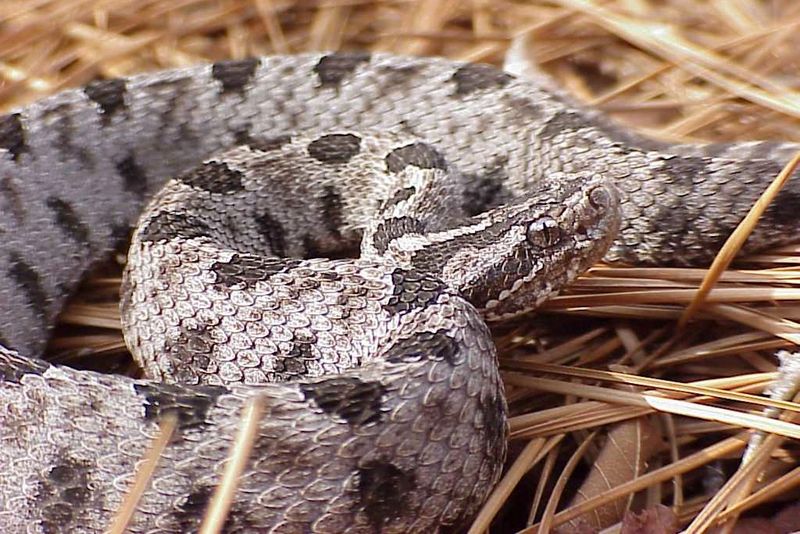
Hearing a pygmy rattlesnake rattle is tricky, because its tiny tail makes a faint buzz that sounds like an insect. I find that both charming and a little unnerving, since the snake relies more on hiding than warning.
As the smallest rattlesnakes in the country, adults rarely grow much longer than a ruler and a half. Most are dull gray with dark spots down the back, though some eastern snakes show reddish or pinkish tones.
Sightings are rare in our state, and the snakes stick mostly to the southeastern Coastal Plain and Sandhills. They favor pine flatwoods and scrubby oak habitat, where their speckled pattern melts into sandy ground.
Lizards and frogs make up much of the menu, along with small mice and even other little snakes. Young pygmies wiggle yellow tail tips to lure prey, a trick they share with baby copperheads.
When disturbed, these snakes usually stay still and hope you pass by without ever noticing them at all. Cornered snakes will bite in self-defense, so stepping close to one by accident is the real risk.
Their bites are generally less severe than larger rattlesnake bites, yet they still cause painful swelling and tissue damage. Treat any bite seriously and head straight for medical care rather than waiting to see what happens.
If you garden near longleaf pines in the Sandhills, wear boots and scan the ground before kneeling down. Pulling weeds by hand is safer with gloves on, especially where pine straw piles up thick and deep.
5. Black Widows Lurk In Quiet Woodpiles
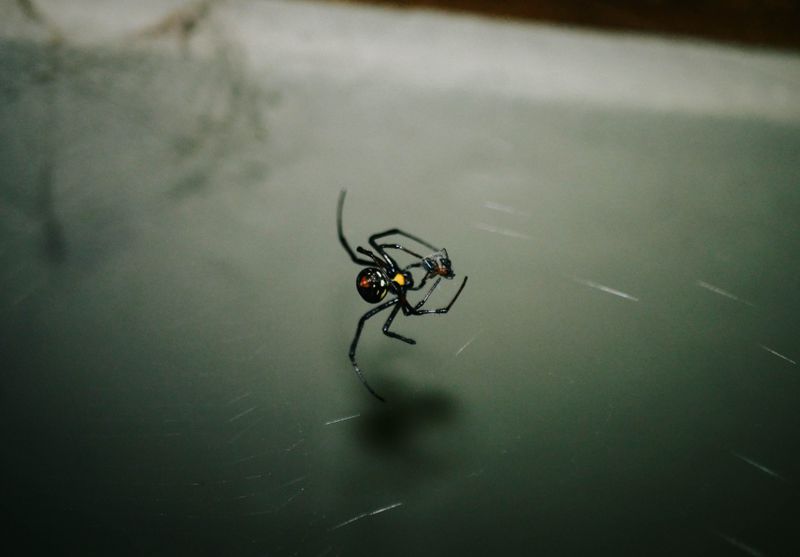
A shiny black spider with a red hourglass on its belly is one garden visitor most of us recognize instantly. Even so, I have reached for firewood without looking more times than I care to admit.
Female black widows measure about half an inch, while males are smaller and paler, often showing red and white streaks. Southern and northern black widows both live here, and the females are the ones that cause concern.
Dark, cluttered corners suit them best, including woodpiles, rubble, garden sheds, and the crawl spaces beneath porches. Their webs look messy and irregular, which helps you tell them apart from neat, wheel-shaped orb webs.
Black widows are shy and usually bite only when pressed against skin or when someone disturbs their web. Mothers guarding egg sacs tend to be more defensive, so give any round, papery sac plenty of room.
The venom affects nerves, and a bite may feel like a pinprick before muscle cramps and pain spread. Nausea and rising blood pressure can follow, but most people recover well with proper medical treatment.
Poison Control can guide you after a suspected bite, and the national hotline is worth saving in your phone. Kids and older adults may react more strongly, so call quickly if someone in those groups is bitten.
Wear gloves when hauling firewood or flipping old flowerpots, and shake out boots stored in the garage. Keeping clutter low and sealing cracks near doors gives these spiders fewer cozy places to settle.
6. Brown Recluse Spiders Show A Violin Mark
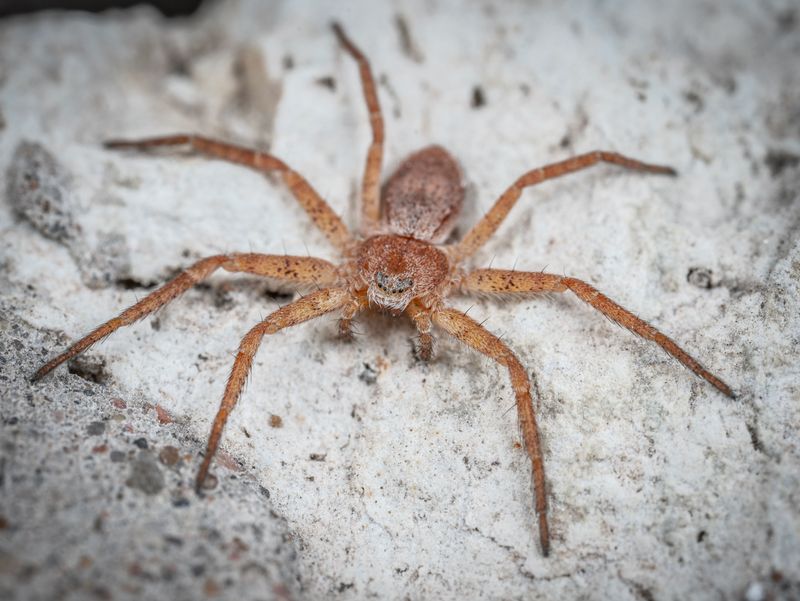
Six eyes set in three pairs give the brown recluse away, though you would need a magnifier to see them. Most spiders carry eight eyes, so that odd arrangement is one of the best clues for identification.
A darker violin shape sits on the back, with the neck of the violin pointing toward the spider’s rear. Bodies run about a quarter to half an inch, and the slender legs span roughly an inch.
I think this spider wins the award for most misidentified critter, since plenty of harmless brown spiders get blamed. Recluses do turn up in the state, yet confirmed finds are far less common than most people assume.
Dry, quiet places suit them best, like seldom-used closets or cardboard boxes stacked high in a hot attic. Instead of big webs, they spin small, flat silk mats and wander at night looking for insects.
Bites usually happen when someone rolls onto a hidden spider in bed or pulls on a shirt left folded. The venom can damage tissue, and pain often builds slowly over several hours rather than right away.
Within a day, the area may turn sore and discolored, and some bites develop into slow-healing open wounds. Fever or chills can appear too, so wash the spot with soap and water before calling a doctor.
Storing garden gloves and clothes in sealed plastic bins keeps wandering spiders from moving into them. Sticky traps placed along shed walls also help you learn whether any recluses are actually living nearby.
7. Yellowjackets Guard Hidden Underground Nests
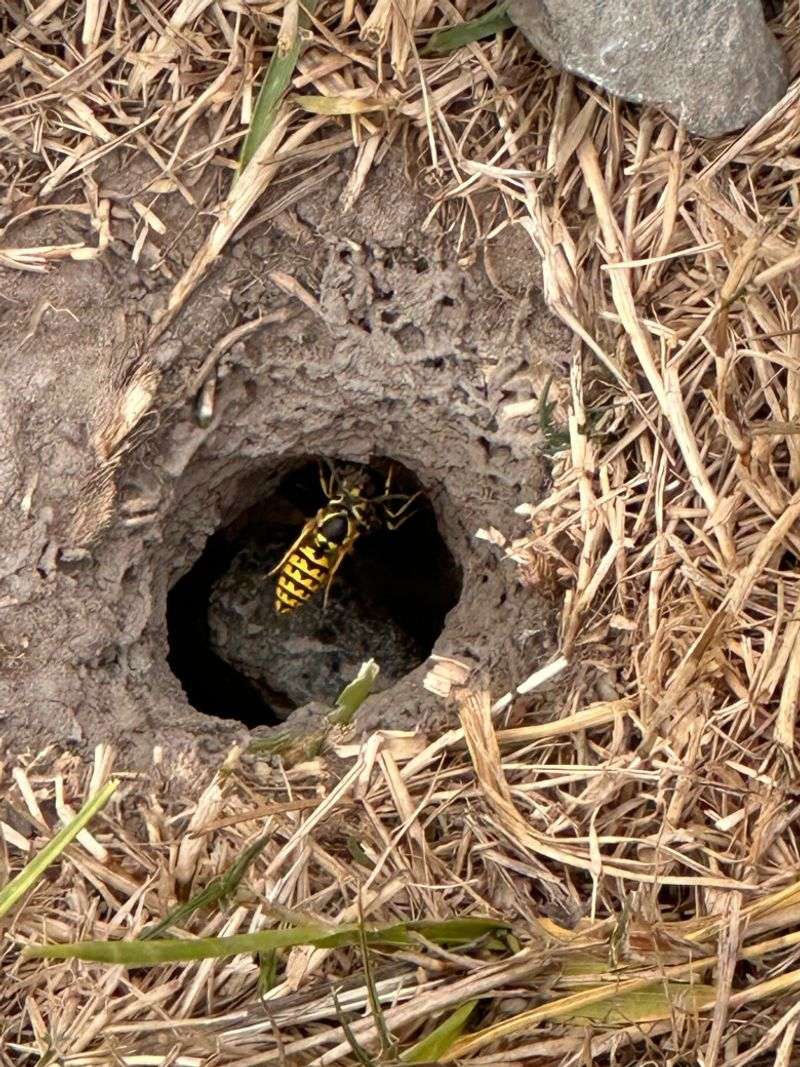
Nothing ends a lawn mowing session faster than rolling over a yellowjacket nest tucked inside an old rodent burrow. I learned that lesson one August, and my sprint across the yard was not graceful in the slightest.
Yellowjackets are sleek wasps about the size of a honey bee, with bold yellow and black bands. Unlike fuzzy bees, they look smooth and shiny, and they have a pinched waist that makes them slender.
Their paper nests hide in cavities, often underground but sometimes inside wall voids or rotting stumps nearby. Colonies grow all summer and hit peak size in late summer and early fall, when tempers run short.
Each worker can sting again and again because its stinger stays put, unlike a honey bee’s barbed version. Disturb the nest, and dozens may pour out at once to chase whatever shook their home.
Stings hurt immediately, and the swelling and itching can hang around for several uncomfortable days afterward. People with allergies face a bigger risk, so trouble breathing or facial swelling calls for emergency care.
Late in the season, they crave sugar and protein, which is why they crash picnics and sniff around soda cans. Keep trash cans sealed and pour drinks into clear cups, so you can spot a stowaway before sipping.
Walk your lawn before mowing and watch for a steady stream of wasps flying in and out of one spot. Flag that hole and mow around it, then call a pest professional if the nest sits near play areas.
8. Bald-Faced Hornets Build Basketball-Sized Paper Nests
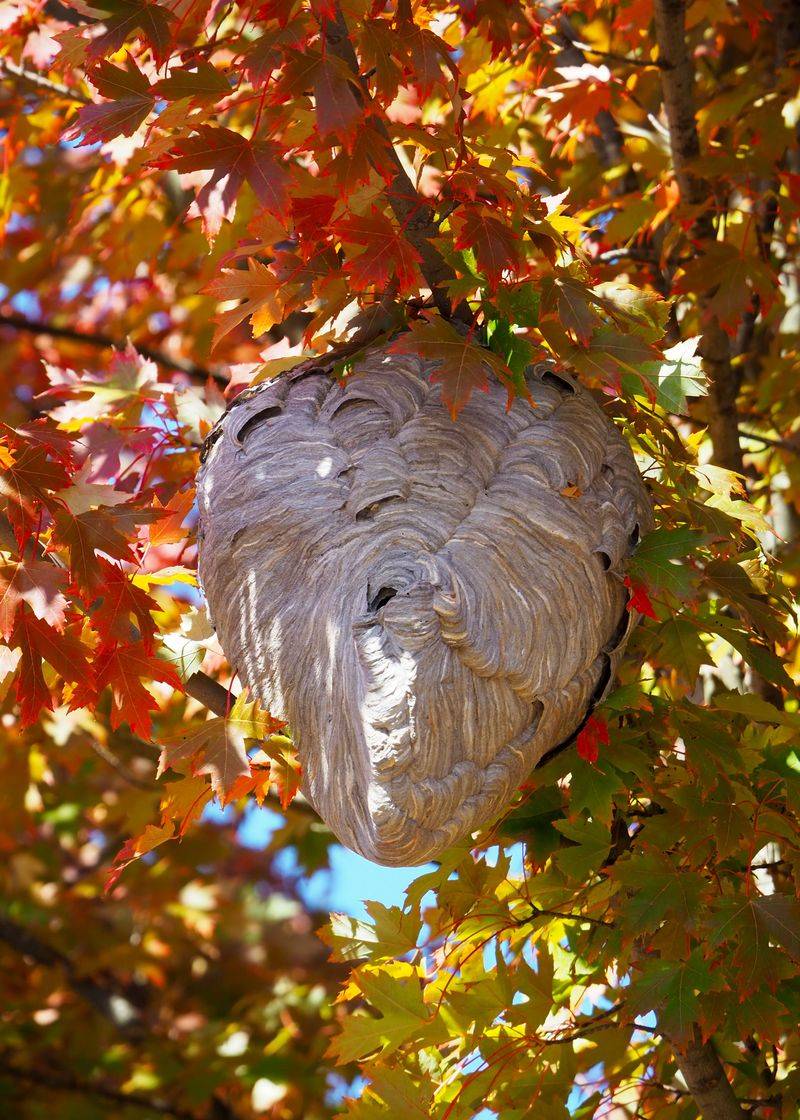
Gray paper globes dangling from tree limbs look almost like holiday decorations, until you notice the traffic at the entrance. Bald-faced hornets build those nests, and they defend them with more passion than any wasp I know.
Despite the name, these insects are not true hornets, since scientists group them with the yellowjackets. Their bodies are mostly black with creamy white markings on the face, which explains the bald-faced label.
Workers measure a little over half an inch, and they look noticeably larger than a typical yellowjacket. Nests start small in spring and can swell to basketball size or bigger by the end of summer.
You might spot one hanging high in a maple or stuck beneath the eaves of a backyard shed. Low nests inside thick shrubs are the sneaky ones, because hedge trimmers find them before you do.
When threatened, workers release alarm scents that rally nestmates, and they can sting repeatedly without losing their stingers. Some reports note they may squirt venom toward the eyes, so wearing safety glasses near shrubs makes sense.
Stings cause sharp pain and local swelling, and allergic folks can face a serious, life-threatening reaction. Anyone with a known allergy should carry prescribed epinephrine whenever yard work involves trimming or pruning trees.
A nest high in a tree away from paths can often be left alone, since colonies fade after hard frost. Nests near doors or play sets deserve professional removal, because do-it-yourself attempts often stir up a furious swarm.
9. Fire Ant Mounds Pop Up In Sunny Lawns
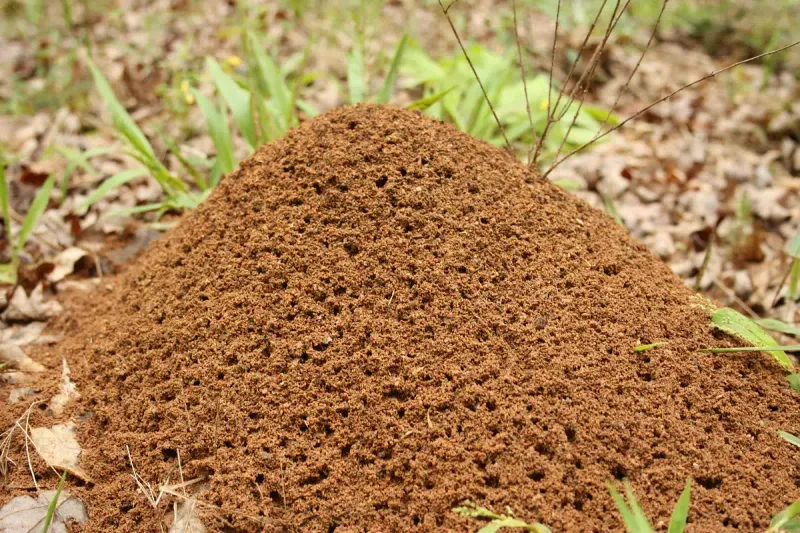
Step on the wrong dirt pile, and within seconds your ankle feels like it brushed a hot stove burner. Fire ants earned their name honestly, and anyone who has gardened in the southern counties knows the feeling.
Red imported fire ants are an invasive species from South America, now established in most of the state’s counties. They are thickest in southern and eastern areas, although they keep turning up in new spots over time.
The small reddish-brown workers build fluffy soil mounds that can reach eighteen inches tall in open, sunny ground. Oddly, the mounds lack an obvious hole on top, since the ants travel through tunnels underground instead.
Disturb a mound, and workers swarm out, grabbing skin with their jaws before stinging several times in a circle. The burning fades, but itchy white pustules usually form within a day at each sting site.
Resist scratching those pustules, because broken skin can lead to infection and leave little scars behind. A small number of people have allergic reactions, and dizziness or swelling far from the stings needs urgent care.
In my vegetable beds, I tuck pant legs into socks and glance down before kneeling to harvest anything. Fire ants often nest at the bases of trees or under landscape timbers, so check those spots carefully.
Extension experts often suggest a two-step approach, using a broadcast bait first and then treating problem mounds directly. Baits work best on dry, warm days when ants are actively foraging, so read the label before spreading.
10. Stinging Caterpillars Hide On Garden Leaves
One of the most painful stings in our yards comes from a caterpillar that looks like a tiny toupee. The puss caterpillar hides venomous spines beneath its soft fur, and touching it can cause intense, throbbing pain.
Many experts call it the most venomous caterpillar in North America, which feels wild for something so cuddly. Look for it in the Piedmont and Coastal Plain, where sightings often peak around October each year.
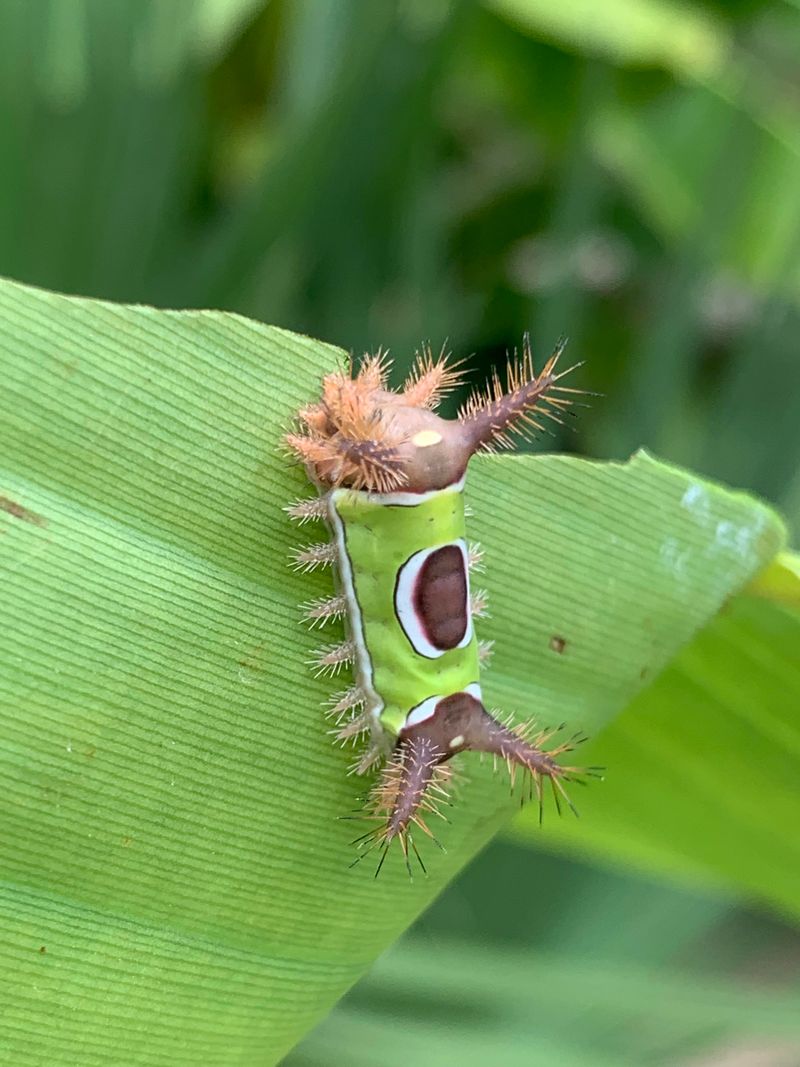
Saddleback caterpillars are easier to spot, with a brown saddle-shaped patch sitting on a bright green back. Fleshy horns at both ends carry stinging spines, and brushing one delivers a sharp, burning jolt.
Hickory tussock moth caterpillars wear white fluff with black tufts, and their hairs can trigger itchy rashes. Reports usually climb from August through October, right when many of us are cleaning up summer beds.
The io moth caterpillar is lime green and covered in branching spines that sting a bit like a bee. I love how dramatic the adult moth looks, with big eyespots, but I admire its baby from a distance.
If you get stung, press clear tape on the spot and peel it away to lift out loose spines. An ice pack can ease swelling, while severe pain or breathing trouble means calling Poison Control or a doctor.
Gloves are your best friend when weeding or pruning shrubs, since caterpillars often rest under leaves out of sight. Teach kids to admire fuzzy crawlers with their eyes, because the cutest ones sometimes pack the biggest surprise.