The Native North Carolina Shrub That Cuts Mosquitoes Around Your Patio While Screening The Yard
You drag your patio chair into the shade on a July evening in the Piedmont, the air still thick from an afternoon storm, and within five minutes the mosquitoes find you. Every North Carolina homeowner knows that feeling. American beautyberry, Callicarpa americana, is a native shrub that can soften your patio edge, hide the neighbors, and bring songbirds to your yard through fall. Its leaves have genuinely caught scientists’ attention for mosquito-related reasons, but the full story is more useful than the headline suggests.
Meet North Carolina’s American Beautyberry
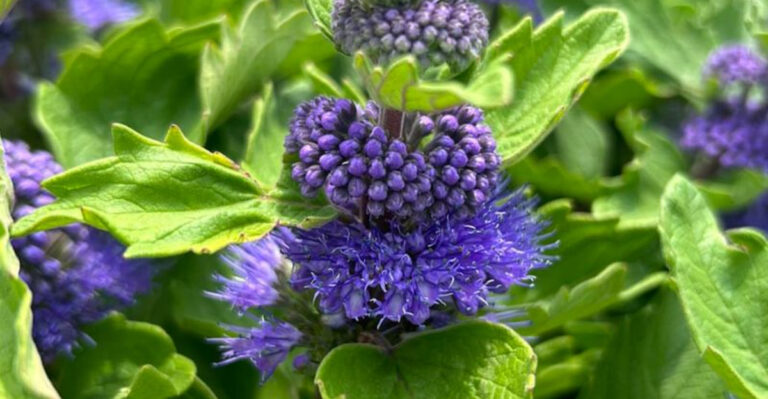
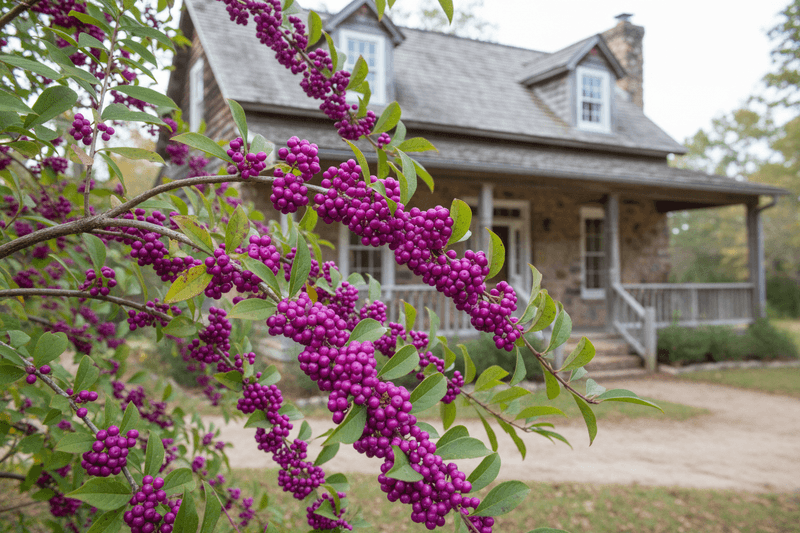
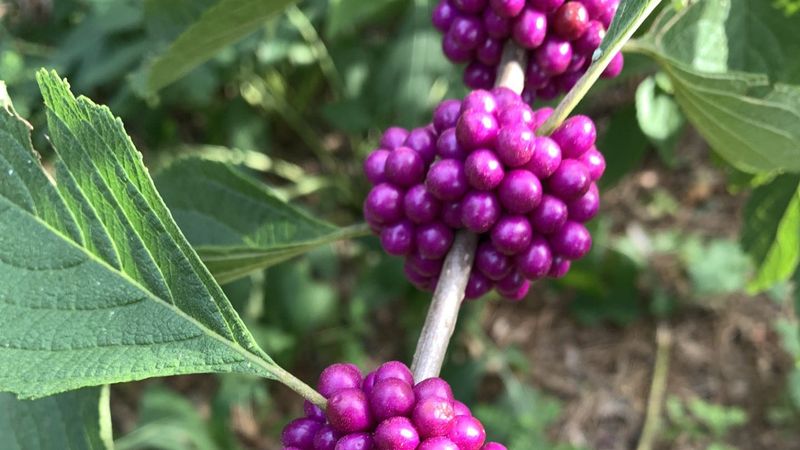
American beautyberry, Callicarpa americana, grows across North Carolina from the sandy Coastal Plain to the Piedmont’s red clay and up into the mountain foothills. You have probably spotted it at the edge of a woodland or along a creek bank without knowing its name. The giveaway is the electric-purple berry clusters that appear in late summer and hang on through early winter, arranged in tight rings directly around each stem.
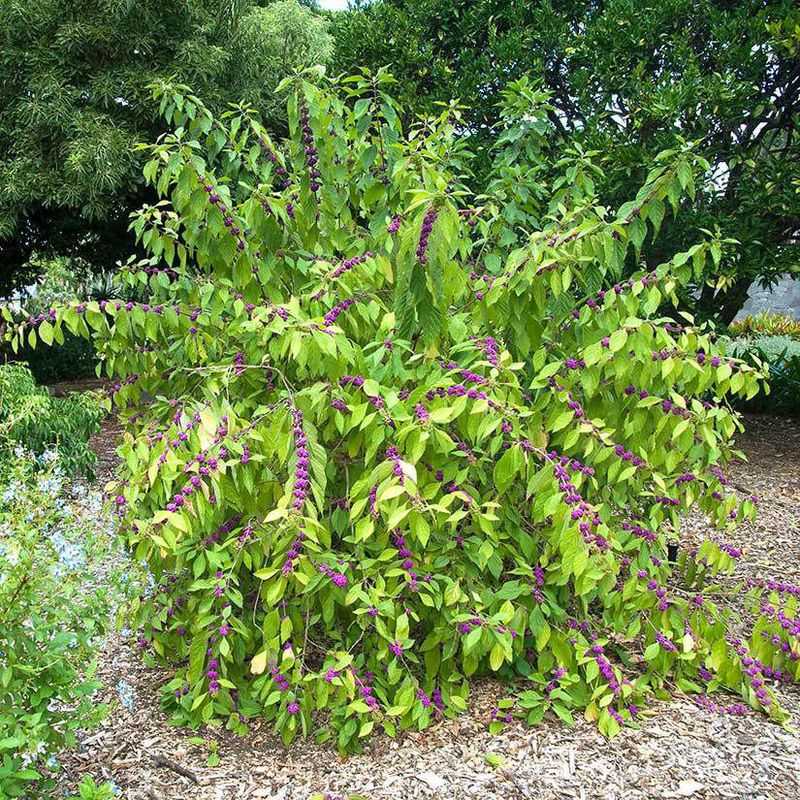
As a landscape shrub, NC State Extension’s plant profile describes it as a deciduous, arching plant that commonly reaches 3 to 8 feet tall and spreads 3 to 6 feet wide. That open, long-limbed form is part of its character. This is not a boxwood hedge. The branches arc outward like a fountain, which gives it a relaxed, natural look that works well at a patio edge or along a fence line.
Because it is deciduous, beautyberry leafs out in spring, fills in through summer, and drops its foliage in fall and winter. The berries may cling into December, giving you a wildlife show even after the leaves fall. Songbirds, mockingbirds, and small mammals feed on the fruit, so a well-placed planting pulls life into your yard during the months when other native plants have gone quiet.
Here is where the headline needs an honest correction. Beautyberry can genuinely screen a yard during the growing season and bring real habitat value year-round. What it cannot do, based on available research, is cut mosquito numbers around your patio simply by growing there. That distinction matters, and the next section explains exactly what the science does and does not say.
The Mosquito Finding Comes From Laboratory Work
The mosquito story around beautyberry started with a folk remedy. People in rural parts of the South would reportedly crush the leaves and rub them on their skin or their horses to deter biting insects. That tradition caught the attention of USDA researchers, and what they found in the lab was genuinely interesting.
Scientists identified two compounds in beautyberry leaves, callicarpenal and intermedeol, that showed mosquito bite-deterrent activity in controlled tests. A 2005 study published in the Journal of Agricultural and Food Chemistry reported significant activity against Aedes aegypti, the yellow fever mosquito, and Anopheles stephensi, a malaria vector, under laboratory conditions. The USDA Agricultural Research Service confirmed callicarpenal and intermedeol as the compounds responsible for that deterrent effect.
Here is where the science stops short of your patio. Those tests used isolated compounds or crushed leaf material applied in controlled assay conditions. An undisturbed shrub growing beside your chair is a completely different situation. The plant is not actively releasing a steady stream of volatile repellent into the surrounding air.
Your North Carolina Garden Changes Every Week. Your Plan Should Too.
Gardening in North Carolina changes quickly throughout the season. Every Friday you’ll receive a simple weekly plan showing exactly what to plant, prune, fertilize, harvest, and protect so you never miss the right timing.
Extension weed and pest specialists are clear on this point. Iowa State University Extension guidance notes that mosquito-repellent plants have little or no measurable effect when simply planted nearby. Penn State Extension echoes that framing, explaining that intact plants do not emit enough active compound to change what mosquitoes do in an outdoor space.
The upshot is practical. Beautyberry contains real compounds that researchers found interesting. Planting the shrub in your yard does not translate that laboratory result into fewer mosquito bites on a muggy Coastal Plain evening. The shrub earns its place for other reasons entirely.
Use Its Real Strength: Seasonal Screening
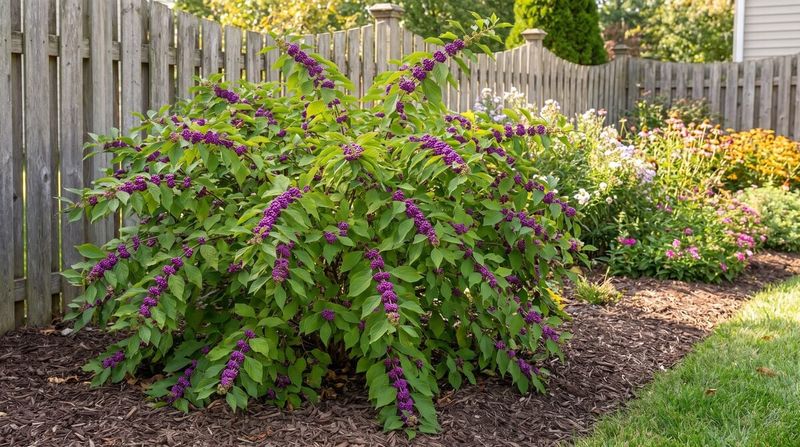
Shift your expectations away from mosquito control and beautyberry becomes one of the most rewarding native shrubs you can put along a patio edge in North Carolina. During the growing season, from roughly April through October, a mature plant at 6 to 8 feet tall and 5 to 6 feet wide can genuinely soften a sightline and give you a sense of enclosure without a fence.
The screening is real but it comes with honest limits. Beautyberry’s branches are long and arching rather than dense and upright. Think of it as a living curtain with some gaps rather than a solid wall. A single plant placed 5 to 6 feet from your seating area can block a neighbor’s window or a road view during summer, but it will not create the solid privacy of a clipped arborvitae row.
Several plants spaced thoughtfully along a property line or patio edge can improve that coverage without turning your yard into a formal hedge garden. The open structure actually works in your favor for a casual patio setting. You get filtered privacy, moving foliage, and those stunning purple berry clusters from August through October, all of which make the space feel more like a garden and less like a yard with a fence problem.
Winter is the honest gap in the plan. Beautyberry is deciduous, so the leaves drop and the screening goes with them. The berries may hold into December and give you some visual interest, but the bare arching stems will not hide much. If year-round screening matters for your space, consider pairing beautyberry with a native evergreen like inkberry holly or wax myrtle to carry the screen through the cold months.
Used as a warm-season layer, though, beautyberry genuinely earns its spot.
Plan Spacing Around Mature Spread and Sightlines

Placement decisions made before you dig will save you a lot of frustration later. Beautyberry can reach 8 feet in favorable conditions, and a plant that seemed perfectly placed at 3 feet tall can crowd a walkway or block an HVAC unit two seasons down the road. Walk your patio edge before you buy anything and note what you actually need to screen, where the sun hits, and what is already in the way.
NC State Extension’s beautyberry profile lists an available planting space of 3 to 6 feet per shrub. That figure describes approximate space the plant needs, not a guaranteed hedge-spacing formula. Adjust it based on the cultivar you choose, the moisture and light in your specific spot, how much you plan to prune each year, and the sightline you actually need to block. A compact cultivar in partial shade with regular pruning will behave very differently from a full-sun specimen left to its natural spread.
For sun, beautyberry is flexible. It grows well in partial shade, meaning 2 to 6 hours of direct light, and thrives in full sun with 6 or more hours. In the Piedmont’s heavier clay soils, good drainage matters more than in the sandy soils of the Sandhills or Coastal Plain. The plant tolerates occasional dryness once established, but the first summer after planting it will need regular water to get its roots settled before North Carolina’s heat peaks.
Timing your planting in fall, winter, or early spring gives roots several months to establish before the next hot season arrives. Keep each shrub at least 3 feet from walkways, patio furniture paths, doors, walls, and any HVAC equipment. That clearance protects both the plant and the people using the space. If you are planting a row for screening, stand at your patio chair before you dig and look through the proposed line from the angle that actually matters to you.
Prune for Fresh Growth or Keep the Natural Arch
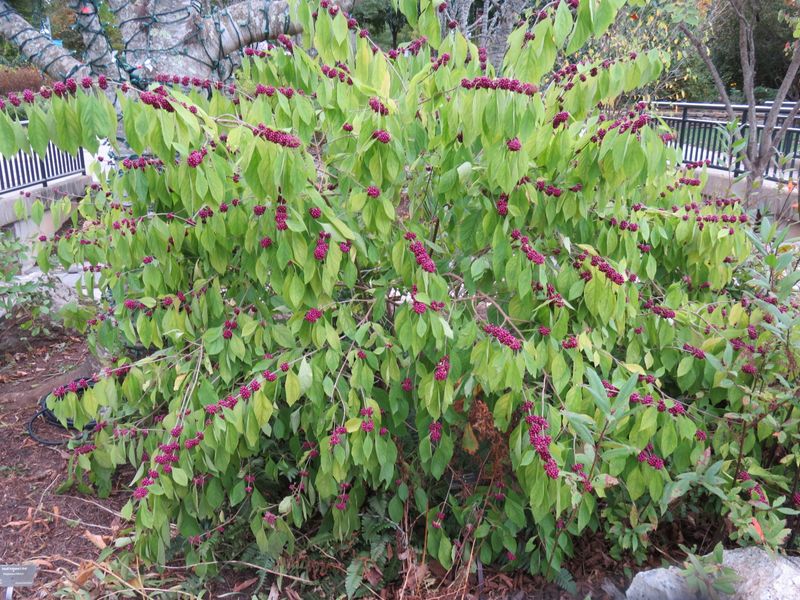
Beautyberry flowers on new growth, which means the current season’s fresh shoots produce the berry clusters you see in late summer. That single fact shapes the whole pruning conversation. Cut the old stems back hard in late winter and the plant responds with vigorous new shoots that carry more flowers and more of those purple berries by August.
NC State Extension says you can prune beautyberry to about 1 foot above the ground in late winter, typically February in the Piedmont and Coastal Plain, a few weeks later in the mountains. The plant rebounds quickly and often reaches 5 to 6 feet again within a single growing season. Annual hard pruning keeps the shrub more compact and tidy, which can be useful if your patio space is tight or if you want the berry display closer to eye level rather than overhead.
Severe annual pruning is optional, not mandatory. Many Piedmont gardeners leave their beautyberry alone for several years and let it develop that full arching fountain shape, which works beautifully in a naturalistic planting or along a woodland edge. The berries still appear, the wildlife still comes, and the informal silhouette suits an unfussy patio garden better than a clipped look would.
One thing pruning does not do is reduce mosquito bites. Shaping the shrub changes its size and structure, but it does not activate any mosquito-deterrent effect in the leaves. Manage your expectations there and let pruning be about the form and berry display you want, nothing more. A well-timed late-winter cut is genuinely satisfying work, and watching a foot-high stub push out 6 feet of new growth by July is one of those small garden moments worth paying attention to.
Make Standing-Water Control a Core Mosquito Step
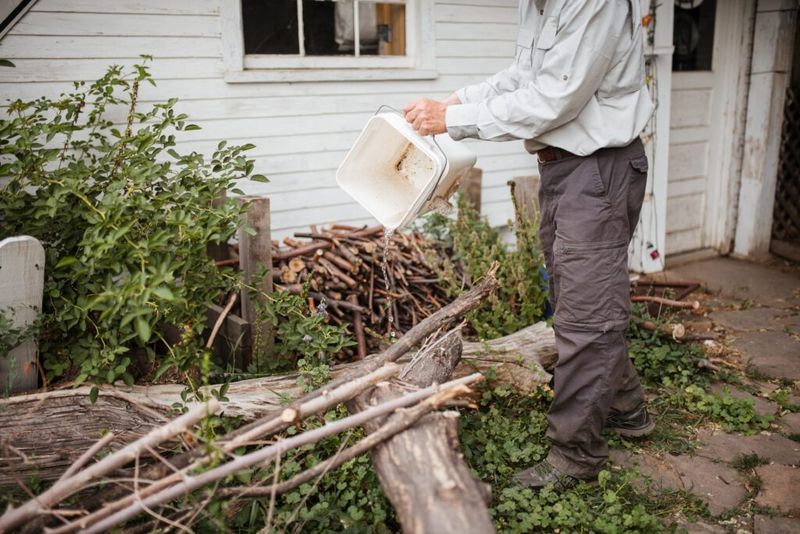
The most practical thing you can do about mosquitoes around your patio has nothing to do with what you plant. Female mosquitoes need standing water to lay eggs, and even a small amount of water sitting undisturbed for a week is enough to produce a new generation. Removing those breeding sites is a core, evidence-based step that CDC guidance on mosquito control at home puts at the center of any residential strategy.
Walk your yard once a week during warm months with a specific list in mind. Flowerpot saucers, buckets, children’s toys, birdbaths, old tires, trash containers, and neglected wading pools all hold enough water to matter. For anything you can empty, tip it out and scrub the sides with a brush before refilling, because mosquito eggs can stick to surfaces even after the water drains. Small items that collect rain but serve no purpose should be removed or turned upside down so they cannot fill again.
Rain barrels and other permanent water-storage containers need a different approach because you are not going to empty them weekly. Fit those with tight-sealing lids or fine-mesh screens so mosquitoes cannot reach the water surface to lay eggs. A barrel with a loose lid or an uncovered opening can produce hundreds of mosquitoes per week during a wet North Carolina summer.
Mosquitoes also rest during the day in cool, dark, humid spots close to where they feed at night. Under patio furniture, beneath decks, inside carports and sheds, and in patches of dense vegetation are all common daytime refuges. CDC outdoor mosquito guidance notes that trimming vegetation near the house can reduce those resting spots. Go carefully with your beautyberry, though.
Over-clearing a native planting removes the wildlife habitat that makes the shrub worth growing. Selective trimming of grass and weedy ground cover around the patio perimeter accomplishes the goal without sacrificing the native planting you put in.
Pair the Shrub With Labeled Personal Protection

Beautyberry gives you a better-looking patio edge, a seasonal privacy screen, and a wildlife magnet through fall. What it does not give you is personal mosquito protection when you sit outside. For that, you need a repellent that has actually been evaluated for safety and effectiveness on human skin.
EPA’s guidance on skin-applied repellents explains that registration means the product has been reviewed for human safety and effectiveness when used as directed. Products containing DEET, picaridin, IR3535, or oil of lemon eucalyptus are among the EPA-registered options. Apply any of them according to the label, which will tell you how much to use, how often to reapply, and how to handle application around children.
Skip the idea of making a homemade spray from crushed beautyberry leaves. The folk remedy angle is historically interesting, but the leaf-based material has not been established as a consumer skin product with a standardized concentration, a known duration of effect, or testing for irritation, allergy, or toxicity. EPA notes that unregistered pest-control products have not necessarily been evaluated for effectiveness, and applying an untested plant material to skin, children, or pets carries real unknowns. The laboratory research on callicarpenal and intermedeol is not the same as a tested, labeled product you can use with confidence.
One more thing to cross off the list is a residential mosquito-misting system. CDC does not recommend automated misting systems for home use because routine insecticide application can harm pollinators, increase human exposure, and affect the broader environment around your yard. That concern matters especially if you are planting beautyberry to support native wildlife in the first place.
Put the whole picture together and the strategy is straightforward. Plant beautyberry for the screen, the berries, and the birds. Remove standing water every week. Use a labeled repellent when you sit outside.
Beautyberry makes your patio more native and more alive, and that is genuinely worth having, even if it does not chase a single mosquito away.