How to Keep Fall Mums Alive Through an Ohio Winter and Bloom Again Next Year

That fat dome of fall color on your porch figures out when to bloom by measuring the length of the night. Long, dark autumn nights flip a switch inside the plant, and the buds start forming. I find that wildly clever for something sold next to pumpkins.
Sadly, plenty of these cheerful pots end up on the curb by Thanksgiving. Many folks treat them as one-season decorations, like a carved jack-o’-lantern. A lot of them are actually tough perennials that simply got a shallow-rooted start in life.
I’d much rather watch a plant I already paid for bloom again than see it ride away in a garbage truck.
Winters in Ohio can be rough, with freeze-thaw swings and soggy clay soil. That bright dome by your front door might be quietly gearing up for a second act.
That Garden Center Mum Might Be Hiding a Tiny Root Ball

Slide a blooming mum out of its pot sometime and take a peek. You will often find a small, crowded root ball under a huge mound of flowers.
Growers raise these plants to look stunning on a store shelf, so most of their energy goes into blossoms instead of deep roots.
That setup works fine for a few weeks of porch color. It becomes a problem once the ground starts freezing and thawing.
A plant with shallow roots can get pushed right out of the soil, a process called frost heave, and then its crown sits exposed to icy wind.
Variety matters too. Hardy garden mums, often labeled Chrysanthemum x morifolium, are bred to return in USDA zones 5 through 9.
Florist mums, the kind sold as gift plants wrapped in foil, are much less cold tolerant and usually behave like houseplants.
Soggy winter soil causes as much trouble as cold. Roots sitting in wet clay for weeks can rot long before spring arrives.
Once you know these weak spots, the fix gets easier. Better roots, good drainage, and steady winter protection are the three things that give your plant a real shot at blooming again next fall.
Get Fall Mums Into the Ground Before September Slips Away

Timing is the biggest favor you can do for a mum. Plants that go into the ground in late August or early September get several weeks of warm soil to grow new roots before the cold sets in.
Northern Ohio, especially near Lake Erie and in the snowbelt, tends to cool off earlier than the southern counties along the Ohio River. Gardeners up north should aim for the early end of that window.
Down south, you may have a little more breathing room into late September.
Pick a spot with at least six hours of direct sun. Mums sulk in shade, and they stretch out and flop when they cannot find enough light.
Drainage deserves just as much attention. Much of the state sits on heavy clay, which holds water like a sponge.
Mix a few shovelfuls of compost into the planting area, or choose a gently raised bed or slope where water runs off.
Gently loosen circling roots with your fingers before planting. Set the plant at the same depth it grew in the pot, then water deeply.
Keep the soil evenly moist through fall, since young roots dry out fast on breezy autumn days.
Leave Those Brown Mum Stems Standing All Winter

Lazy gardeners, rejoice. One of the smartest winter moves for mums is to leave them alone after the flowers fade.
Those brown, crispy stems may look a little messy, but they do real work. They catch falling leaves and drifting snow, which build a natural insulating layer over the crown of the plant.
Research and extension advice from places like Penn State and other northern universities has found that mums left unpruned over winter tend to survive better than ones cut to the ground in fall.
I used to tidy every bed in November, and I lost more plants than I care to admit. Now I wait, and my spring garden thanks me.
Standing stems also help you remember where each plant sits. That small detail saves you from stepping on emerging shoots or digging into a crown by accident in April.
If the look bothers you, trim only the spent flower heads and keep most of the stem height. Snow on the stems can even add a bit of winter charm.
Hold your pruners until spring, when fresh green shoots start pushing up from the base. Patience pays off here.
A Thick Blanket of Straw Mulch Protects Mum Roots
Cold alone is rarely the main villain. The real troublemaker in an Ohio winter is the constant swing between freezing nights and mild, sunny afternoons.
Each thaw and refreeze makes the soil swell and shrink. That movement can lift a young mum right out of the ground and leave its roots exposed to drying winds.
A thick layer of mulch keeps soil temperatures steadier, which calms all that heaving.
Wait until after a few hard frosts, usually in late November or early December. Mulching too early can keep the soil warm and invite rodents to move in for the season.
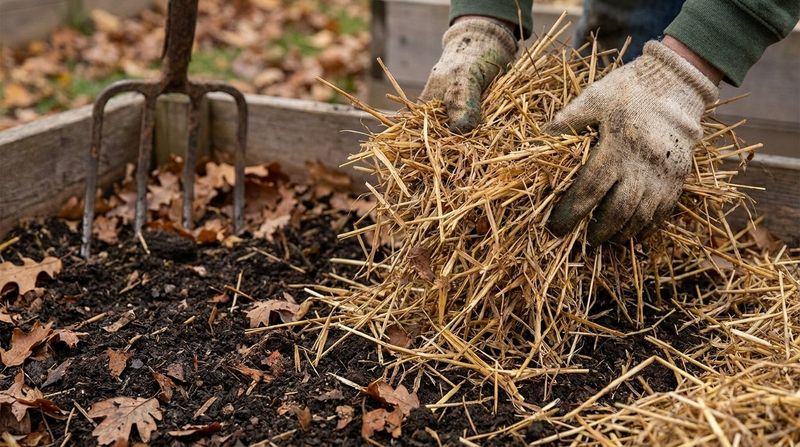
Spread about 4 to 6 inches of loose material around and over the base of the plant.
Good choices include clean straw, shredded leaves, or evergreen boughs left over from holiday trimming. Whole leaves can mat down into a soggy layer, so run them through the mower first.
Skip heavy, wet materials like thick grass clippings. They trap moisture right against the crown, and that invites rot.
One more tip: if fall turns dry, give the bed a deep drink before the ground freezes. Well-watered roots handle the cold far better than thirsty ones.
Potted Mums Can Ride Out Winter in an Unheated Garage

Ran out of time to plant? Your potted mums still have a chance, though they need a different game plan.
Roots in a container sit above ground with only a thin plastic wall between them and the frigid air. Soil in the yard stays far warmer than soil in a pot.
That is why potted mums left on a porch often fail by January.
After the first hard frost, cut the stems back to about 3 to 4 inches. Move the pots to a cool, dark spot that stays roughly between 32 and 50 degrees Fahrenheit.
An unheated garage, shed, or chilly basement corner works well.
A heated living room is the wrong choice. Warmth confuses the plant and encourages weak, pale growth that struggles later.
Check the soil about once a month. Give a small splash of water only when it feels dry an inch down.
Too much water during dormancy leads straight to root rot, which is a far bigger risk than slight dryness.
Another option is burying the whole pot in a protected garden spot and mulching over it. Either way, bring the plants back into sunlight gradually once spring settles in.
Snip Away Old Stems When Spring Mum Shoots Appear
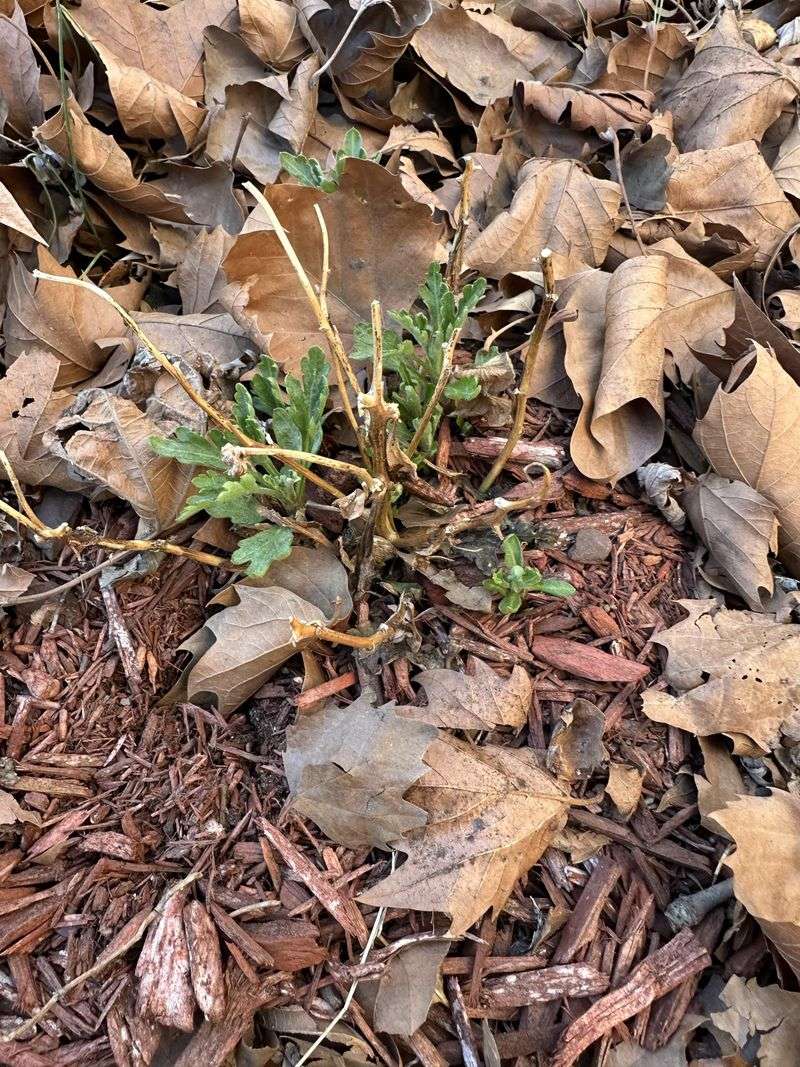
Few garden moments feel as rewarding as spotting tiny green rosettes at the base of last year’s brown stems. That little cluster of leaves means your mum made it.
In most of Ohio, fresh shoots show up from late March through April, depending on where you live and how stubborn winter feels. Once the risk of hard freezes eases, pull the mulch back gradually over a week or two.
Removing it all at once can shock tender growth if a cold snap returns.
Now grab your pruners. Cut the old stems down close to the new growth, taking care not to nick the fresh shoots.
Toss the old material in the compost unless you noticed leaf spots or powdery mildew last year.
Potted mums coming out of storage need a slow transition. Set them in a shady spot outdoors for a few days, then move them into more sun little by little.
Afterward, plant them in the ground or repot into fresh potting mix.
If no green appears by mid-May, scratch gently at the crown. Firm, pale tissue may still sprout, while mushy brown tissue means it is time to replace the plant.
Pinching Mum Tips Until Early July Means More Fall Flowers

Here is a fun bit of plant trivia. Mums are short-day plants, which means they set flower buds once nights grow long in late summer.
Everything you do before then shapes how many buds they can make.
Left alone, a returning mum tends to grow tall, leggy, and floppy, with a handful of blooms at the top. Pinching fixes that.
When new shoots reach about 4 to 6 inches tall, pinch off the top inch with your fingers or snips.
Each pinch causes the stem to branch into two or more new shoots. More branches mean more spots for flowers, and you end up with that tidy cushion shape everyone loves.
Repeat every two to three weeks as the plant grows. Many gardeners use the Fourth of July as an easy reminder to stop.
In northern Ohio, wrapping up a little earlier helps, because buds that start late can get caught by an early frost.
Pinching past mid-July removes the buds forming for autumn. You might end up with lush green foliage and very few flowers.
Feed with a balanced fertilizer during this growth stretch, and water deeply in dry spells.
Dig and Divide Crowded Mum Clumps Every Few Years

Success brings its own little puzzle. After a few years, a happy mum clump often spreads wide, while the center turns woody and sparse with fewer flowers.
Dividing solves this and gives you free plants. Every two to three years in spring, once new shoots are a few inches tall, dig up the whole clump.
Slice it into sections with a sharp spade, and keep the healthy outer pieces with plenty of roots and shoots.
Discard the tired center. Replant the divisions about 18 to 24 inches apart so air can move freely, which helps reduce leaf diseases.
Spring is the right season for this job in Ohio. Divisions made in fall have little time to root before winter.
A few habits keep the cycle going. Fertilize regularly from spring until early August, then stop so the plant can toughen up for cold weather.
Water during summer droughts, especially once buds form.
My favorite next step costs nothing at all. Jot down which varieties came back strongest, and buy more of those next September.
Over time, you will build a fall display that returns on its own, year after cheerful year.