What To Do With Green Tomatoes Before Ohio’s First Frost Hits
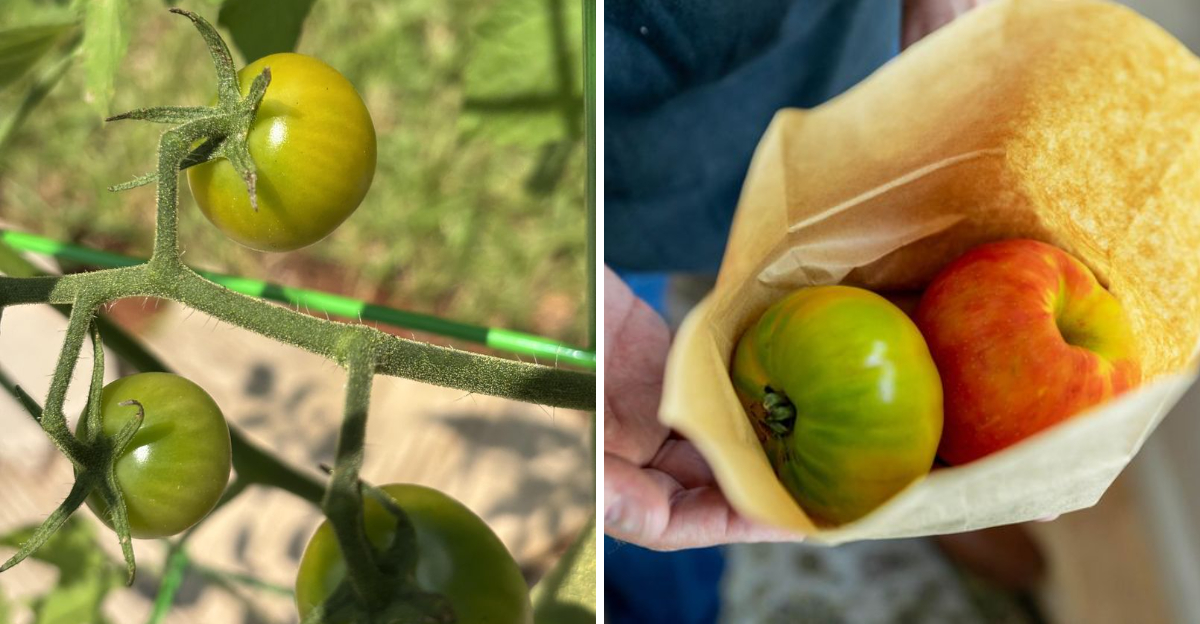
An Ohio tomato patch can look surprisingly unfinished when the first cold nights begin closing in.
The vines may still be holding fruit in every shade of green, from hard little marbles hidden under leaves to full-sized tomatoes that look only one warm afternoon away from changing color.
Then the forecast shifts overnight, and the whole garden suddenly feels like it is running out of time.
That is where the last harvest gets complicated.
Some fruit can still finish beautifully after leaving the vine. Some belongs in the kitchen while it is green. Some is simply too immature to justify weeks of careful storage.
The difference is not obvious from color alone, especially when frost is only a night or two away.
So which tomatoes deserve saving first?
The answer comes from maturity, temperature, condition, and what happens immediately after harvest.
Read those clues correctly, and an Ohio frost warning can become less of an ending and more of a final sorting day outside before the season changes for good.
1. Watch The Forecast Before Frost Arrives
A frost warning should trigger a harvest plan, not a sprint through the garden after dark.
Tomatoes are warm-season plants, and cold exposure can damage foliage and fruit before a gardener has time to sort the crop properly.
Ohio’s first frost does not arrive on one statewide date. Northern, central, and southern parts of the state can differ, and individual yards create their own warmer or colder pockets.
Watch the local overnight forecast closely once lows begin dropping through the 30s.
A predicted low a few degrees above freezing can still produce frost in sheltered low spots under clear, calm conditions.
Covers may buy a little time during a borderline night, especially over healthy vines carrying nearly mature fruit. Use frost cloth, sheets, or another breathable cover and keep the material supported where practical.
Do not stretch that rescue strategy indefinitely.
Once repeated cold nights arrive, harvesting sound mature fruit becomes more reliable than rebuilding a blanket fort every evening.
Tomatoes already beginning to blush deserve priority, followed by full-sized green fruit that appears close to maturity.
Pick before the cold event rather than waiting to inspect damage afterward.
A day of extra vine time rarely outweighs the risk of leaving a valuable crop through a freezing night. Ohio fall weather has a talent for turning “one more evening” into a very expensive gardening experiment.
2. Pick Mature-Green Tomatoes First
The best indoor ripeners are not simply the biggest green tomatoes on the vine.
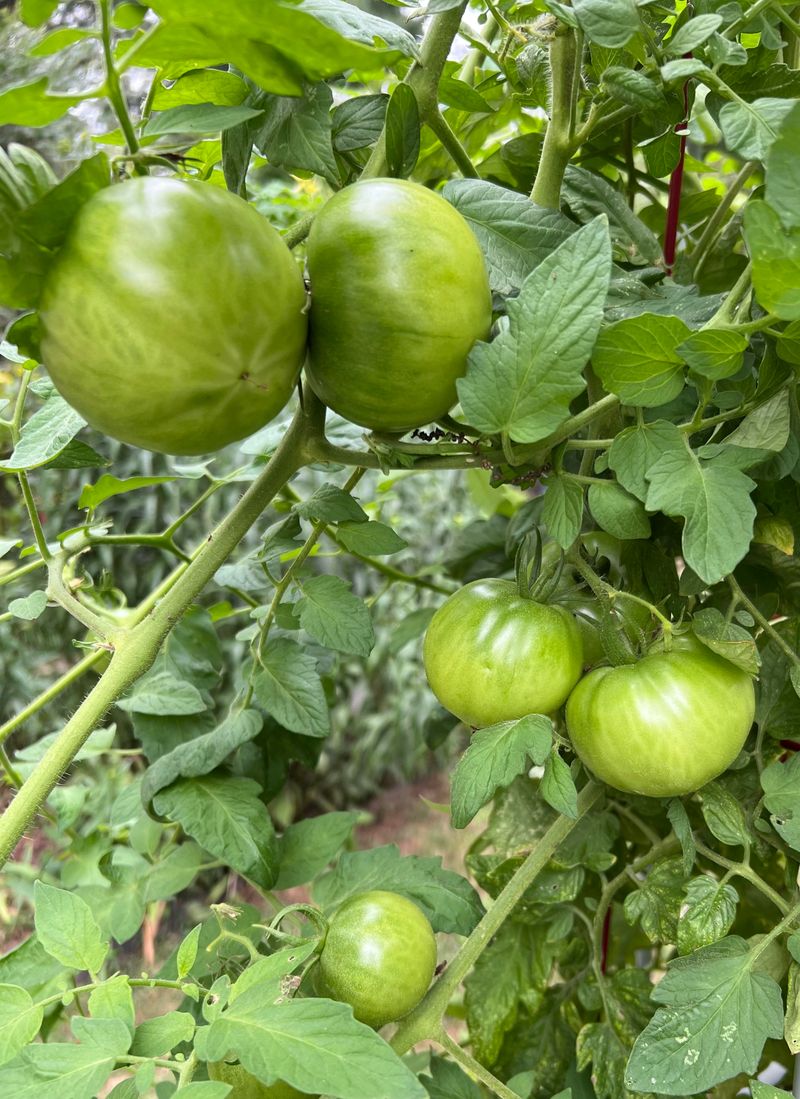
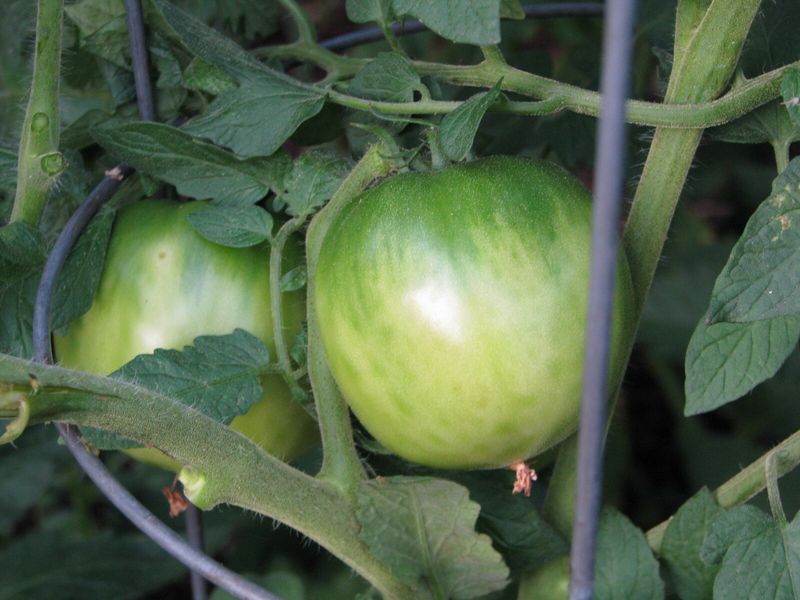
Look for fruit that has reached mature-green stage. These tomatoes have completed enough internal development to continue ripening after harvest even though the skin is still green.
Full size for the variety is one useful clue, along with a lighter, less intensely green appearance and a surface that looks more finished than very young fruit.
Fruit showing the first trace of pink, yellow, orange, or cream belongs at the front of the line.
That early color change means ripening has already started. Those tomatoes usually need less indoor time and should be checked more often after harvest.
Your Ohio Garden Changes Every Week. Your Plan Should Too.
Gardening in Ohio changes quickly throughout the season. Every Friday you’ll receive a simple weekly plan showing exactly what to plant, prune, fertilize, harvest, and protect so you never miss the right timing.
Handle every promising fruit carefully.
Twist or clip it from the vine without crushing the shoulder, and avoid piling heavy tomatoes on top of one another.
Stems left attached can puncture neighboring fruit, so trim sharp stem pieces or arrange the harvest so they cannot press into another tomato.
Sort immediately rather than dumping everything into one basket.
Put blushing fruit together, mature-green fruit in another group, and clearly immature fruit in a third. That simple separation keeps one overripe tomato from hiding beneath a pile of slower fruit.
The green color can fool you. Two tomatoes may look equally unfinished while only one has actually reached the stage needed to finish the job indoors.
3. Separate Tiny Fruit From The Best Ripeners
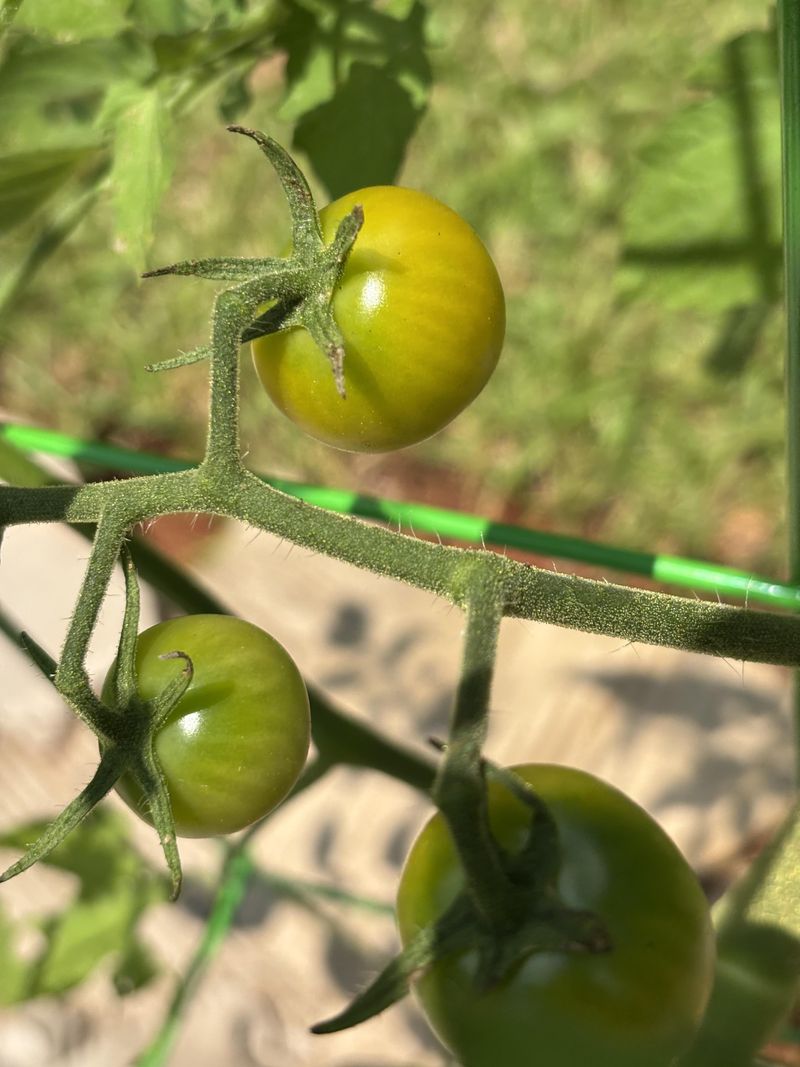
Tiny, hard fruit can be the hardest part of the final harvest because leaving it behind feels wasteful.
Not every green tomato has the physiological maturity needed to ripen into a good red fruit indoors. Very small tomatoes that are far below normal mature size, intensely dark green, and extremely firm are poor candidates for weeks of storage.
Some may soften or change slightly, but quality often remains disappointing.
Give your best storage space to fruit that is nearly full-sized.
A mature-green tomato has a much stronger chance of developing normal color and usable texture. Breaker-stage fruit with the first blush of color should move ahead of that group because the ripening process is already underway.
Use separate boxes or trays.
One container can hold tomatoes that need longer storage, while another holds fruit expected to ripen soon.
The smallest immature tomatoes can move directly toward recipes that use green fruit rather than occupying prime shelf space for a result that may never arrive.
Size must be judged by variety.
A mature cherry tomato is naturally much smaller than an immature beefsteak, so compare each fruit with what that plant normally produces. Shape, firmness, surface appearance, and slight color change all help.
This is less about rejecting part of the harvest and more about assigning every tomato the job it can still do well. The windowsill does not need a waiting list full of hopeless applicants.
4. Bring Sound Tomatoes Indoors Before Frost
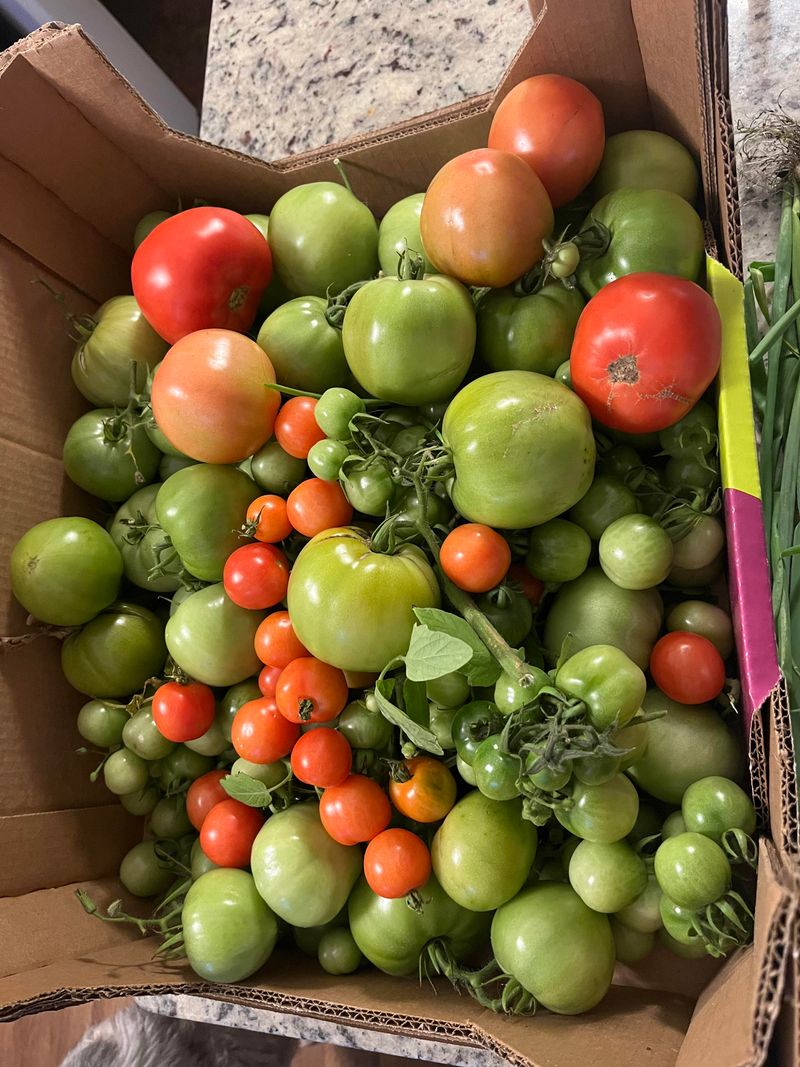
Only sound fruit deserves a long stay in an indoor ripening box.
Inspect every tomato before storage. Cracks, punctures, soft areas, leaking tissue, extensive insect injury, and obvious decay can shorten storage life and create trouble for neighboring fruit.
Separate questionable tomatoes immediately and use sound portions promptly when appropriate rather than storing them with the best keepers.
Keep harvested fruit dry.
Tomatoes headed for storage do not need a soaking at the sink. Brush away loose soil gently and let surface moisture dry before packing.
Added moisture around stored fruit can encourage deterioration, especially where tomatoes touch or air movement is limited.
Use a single layer when practical.
Shallow cardboard boxes, trays, or flats make inspection easy and reduce bruising. A layer of paper underneath can catch small leaks and make cleanup simpler. Leave a little room between fruit rather than wedging everything tightly together.
Check the harvest every few days.
Remove tomatoes as they ripen and pull any fruit that begins developing soft spots or decay. One forgotten tomato can make a closed box smell like the season ended much earlier than planned.
Fruit exposed to damaging frost deserves extra caution, especially for preservation.
For shelf-stable canning, use firm, sound tomatoes and a tested recipe with the required acidification and processing method. A frost warning is a reason to harvest early, not a reason to lower food-safety standards later.
5. Ripen Them Around 60 To 65 Degrees
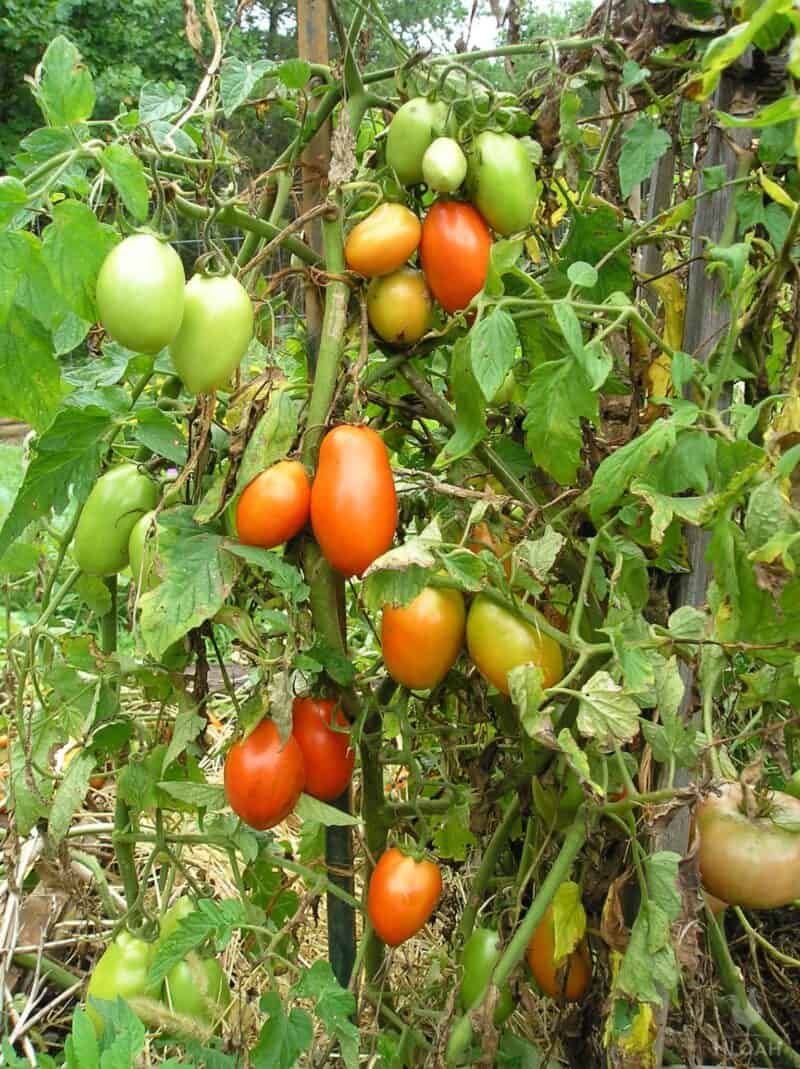
A cool indoor room can stretch the final tomato harvest beyond the last outdoor vine.
Mature-green tomatoes ripen best under moderate indoor conditions rather than beside a furnace vent or in a freezing garage.
A range around 60 to 65 degrees Fahrenheit works well when the goal is gradual ripening and extended storage. Warmer rooms usually move the process faster, while cooler safe temperatures slow it.
Use that difference to stagger the crop.
Keep greener mature fruit in the cooler location and bring a few tomatoes into a warmer room when the kitchen supply starts running low. Blushing fruit can stay where it is easy to watch because it may finish much sooner than the hard green batch.
Avoid places with dramatic overnight swings.
An unheated porch or garage may seem perfect on a mild afternoon, then drop too close to freezing after midnight. Stable indoor temperatures are more valuable than squeezing out another degree of cool storage.
Arrange fruit so you can inspect it easily.
Single layers in shallow boxes work especially well. Newspaper or clean paper can separate fruit without creating a complicated storage system. Check every few days and move ripe tomatoes out promptly.
Do not expect every tomato to finish on the same schedule.
Maturity at harvest, cultivar, temperature, and fruit condition all affect the pace. Some may color in several days, while greener mature fruit can take much longer.
The final Ohio tomato harvest is less a single event than a slow indoor relay race.
6. Keep Direct Sun Off Stored Tomatoes
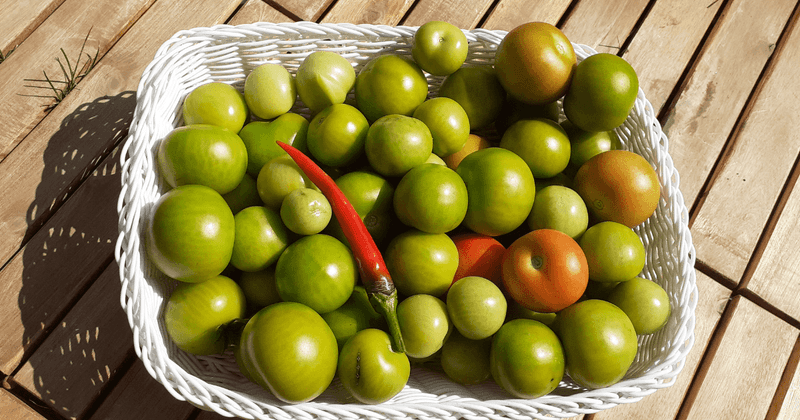
A sunny windowsill looks like the natural place to finish green tomatoes, but direct light is unnecessary.
Tomatoes that reached sufficient maturity on the vine can continue the internal ripening process after harvest without sitting in sunshine.
A hot window can create uneven temperatures around the fruit, especially on bright afternoons, and that warmth may speed softening more than it improves quality.
Choose a shaded indoor location instead.
A pantry shelf, basement room within a suitable temperature range, spare-room table, or cardboard box can all work. The important conditions are moderate temperature, dry fruit, and enough access for regular inspection.
Darkness is not a special requirement either.
A covered box is convenient because it protects fruit and keeps the batch organized, not because tomatoes need total darkness. Leaving the lid loosely closed or using an open tray in a shaded room can both work.
Keep air movement reasonable.
Fruit packed tightly against damp paper or pressed in deep layers becomes harder to inspect and more likely to develop problems unnoticed.
A shallow single layer makes it easy to remove ripe or deteriorating tomatoes before they affect the rest.
Some gardeners wrap individual mature-green tomatoes in paper for longer storage.
That can reduce direct contact between fruit, but it also makes inspection slower. Unwrapped fruit is perfectly practical when checked regularly.
The classic windowsill may look picturesque. Your tomatoes are not asking for scenery. They are asking for stable conditions and a gardener willing to check the box.
7. Use Ethylene Carefully To Speed Ripening
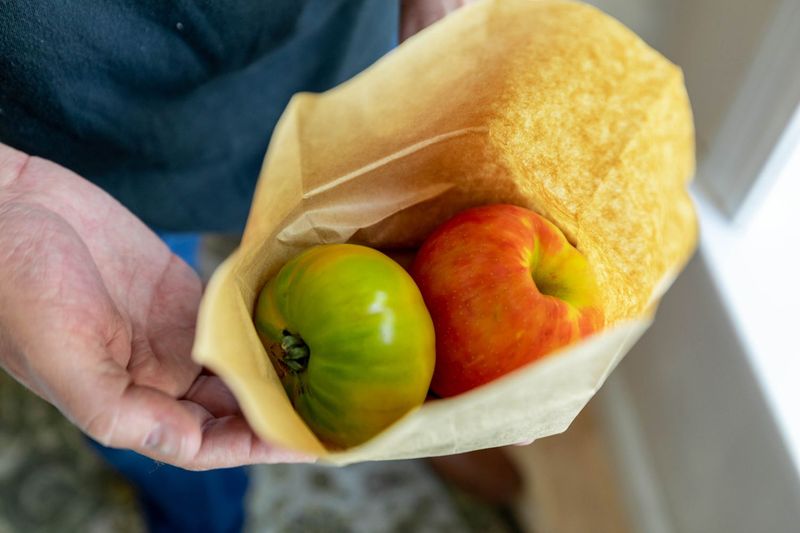
A ripe apple or banana can speed the process when mature-green tomatoes seem determined to take their time.
Ripening fruit releases ethylene, a natural plant hormone involved in tomato ripening. Placing a ripe apple or banana near mature-green tomatoes can increase ethylene exposure and encourage the batch to begin coloring sooner.
Use the method on fruit already capable of ripening.
Ethylene does not turn a tiny, undeveloped tomato into a mature one. The best candidates are full-sized mature-green tomatoes and fruit already showing an early blush.
A paper bag or loosely closed box can help concentrate the gas around a small batch.
Do not seal wet fruit tightly in plastic. Trapped moisture and poor airflow can create storage problems far faster than ethylene creates perfect tomatoes.
Check the batch frequently.
Once a tomato starts coloring, move it out for normal counter ripening or use it as it reaches the preferred stage.
Remove the apple or banana when it becomes overripe, since decomposing fruit has no business supervising the rest of the harvest.
There is no need for sprays, powders, or improvised chemical shortcuts.
The fruit already has the biological machinery to ripen once maturity has been reached. Ethylene simply nudges that machinery along.
Use the technique when speed matters, not automatically on the entire crop. Slower ripening can be useful too. An Ohio gardener with thirty mature-green tomatoes does not necessarily want all thirty ready for sandwiches on Tuesday.
8. Turn The Rest Into A Green Tomato Harvest
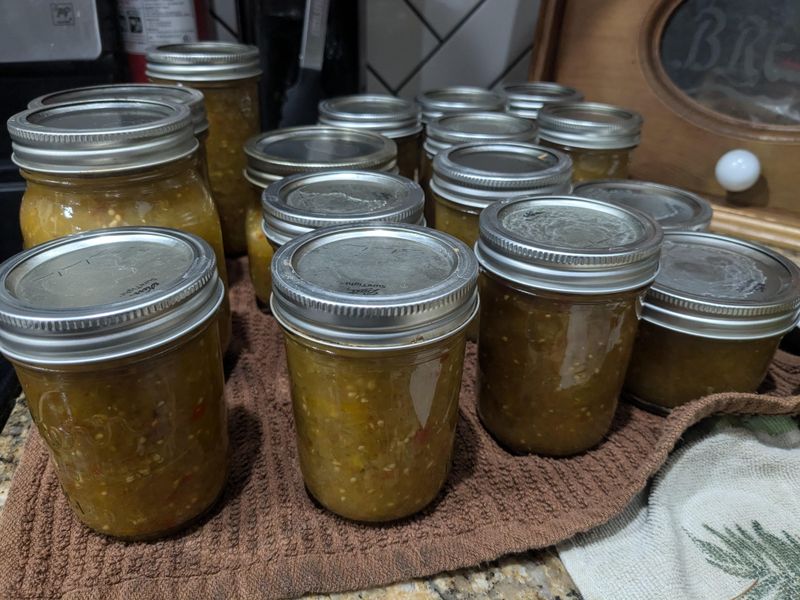
The smallest green tomatoes do not need to become red to earn a place in the kitchen.
Firm green fruit brings a tart flavor and sturdy texture that works well in cooked dishes. Slice larger tomatoes for frying, chop them for fresh relishes, roast them with onions and peppers, or simmer them into chutney.
Quick refrigerator pickles are another practical option when long-term shelf storage is not the goal.
Use the least mature fruit first for green-tomato recipes.
That frees cooler storage space for full-sized tomatoes with a stronger chance of ripening indoors. It also turns the final harvest into two crops rather than one pile divided into successes and disappointments.
Keep preservation rules separate from ordinary cooking.
Fresh salsa, fried green tomatoes, roasted vegetables, and refrigerator pickles can be prepared for prompt use without creating a shelf-stable product.
Canning requires a tested recipe, exact ingredient proportions, the required acidification, and the stated processing method.
Do not improvise a canning formula simply because the tomatoes taste tart.
Acidity varies, and safe processing depends on more than flavor. Use a tested green-tomato relish, pickle, salsa, or other approved recipe and follow it exactly.
Sound fruit matters here too.
Set aside tomatoes with extensive decay or questionable frost injury rather than trying to rescue them through preservation.
A hard little green tomato may never become the slicer that was planned in June. That does not make it useless. Fall simply changed the menu before the gardener did.