Why a Poinsettia Drops Leaves in Ohio’s Cold Weather and How to Stop It
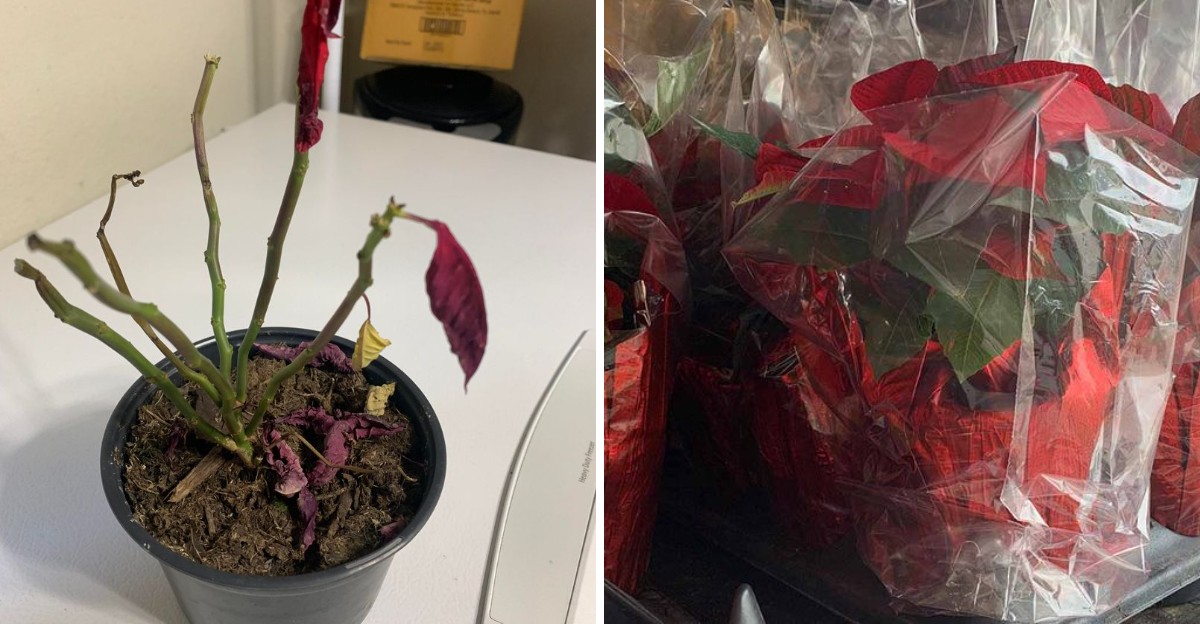
A short walk across a frosty parking lot can make a healthy holiday plant shed its leaves days later. The damage hides at first, then shows up after you have already forgotten the chilly trip home.
This colorful shrub grows wild on hillsides in Mexico and Central America, where some reach 10 feet tall. Those famous red petals are not flowers at all. They are colored leaves called bracts, and the real blooms are the tiny yellow buttons in the center.
I love bringing one home every December, but Ohio winters test its patience. I’ll admit I judged mine as a total drama queen when its green leaves started piling up on the windowsill.
You need to know that this sudden shedding is rarely a mystery disease. The plant is reacting to something specific in your home, and most of the fixes are surprisingly simple.
Bear with me here, because those falling leaves are trying to tell you something.
Those Falling Green Poinsettia Leaves Are Sending You a Message
Green leaves on the floor feel like a betrayal, especially when the plant looked perfect yesterday. Yet that sudden drop is one of the clearest signals a poinsettia can send.
When healthy green leaves fall all at once, cold stress is often the main suspect. University extension experts note that poinsettias are tropical plants that dislike temperatures below about 50 degrees.
Even a short chill can trigger damage that shows up several days later.
Leaves that turn yellow first and then fall usually point to a different problem. Watering mistakes, low light, or root trouble are more likely culprits in that case.
Knowing the difference helps you fix the right thing instead of guessing.
I like to play detective before changing anything. Ask yourself a few quick questions about the past week.
Did the plant ride home in a cold car? Is it sitting near a door that opens to the winter air?
Are the leaves pressed against icy window glass at night?
Any yes answer gives you a strong clue. Cold damage cannot be undone on leaves that already dropped, but the rest of the plant can recover.
Fixing the cause quickly keeps the colorful bracts in place for weeks.
Keep Your Poinsettia Between 60 and 70 Degrees for Happy Leaves
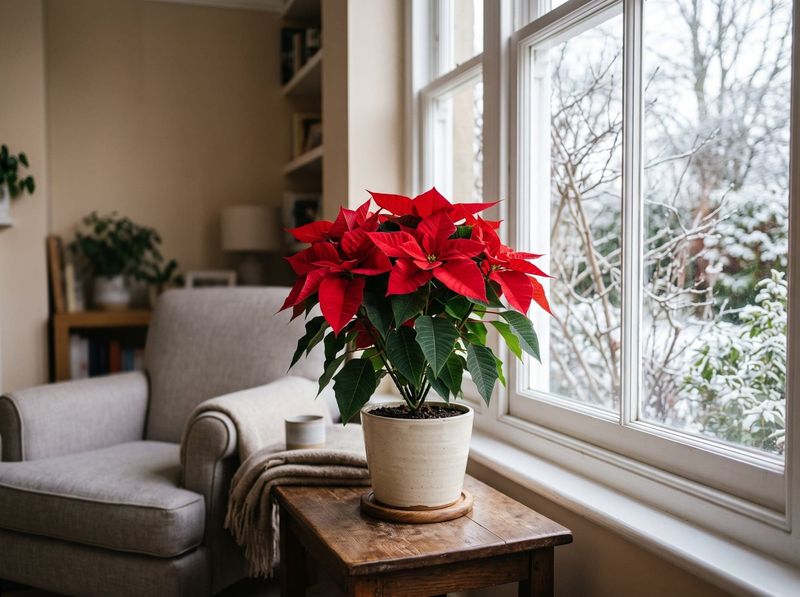
Here is the heart of the fix, and it is easier than most people expect. Poinsettias stay happiest when daytime temperatures sit around 65 to 70 degrees.
Nights can dip a little, but try to keep them above 60 degrees. Many extension guides say slightly cooler nights in that range can actually help the bracts hold their color longer.
Below 50 degrees, though, the risk of leaf drop climbs fast.
Most Ohio homes already fall in this comfort zone. The trouble comes from cold pockets you might not notice.
A sunroom, an enclosed porch, or an entryway can run 10 to 15 degrees cooler than the rest of the house.
Personally, I keep a cheap digital thermometer near my holiday plants. It costs a few dollars and settles any guessing in seconds.
Steady warmth matters as much as the number itself. Big swings between day and night stress the plant, even when neither temperature seems extreme.
If you turn the heat down while sleeping, check the room your poinsettia lives in. A middle spot in a main living area usually stays more even than an outer room.
Find that cozy middle ground, and your plant will reward you with steady color.
Cold Drafts and Icy Window Glass Sneak Up on Poinsettias
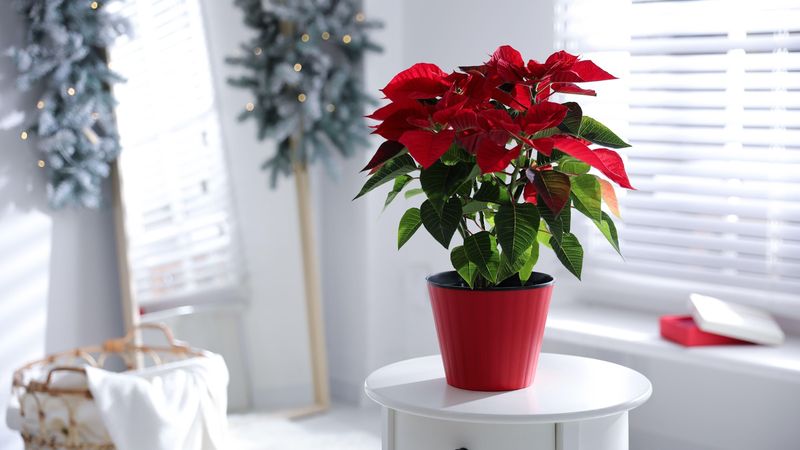
Ever pressed your hand against a window on a January morning? That icy shock is exactly what a poinsettia leaf feels when it touches the glass.
Leaves resting against a cold windowpane can get chilled even when the room feels warm. The damage often shows up as wilted, darkened, or dropping leaves on the window side of the plant.
Pull the pot back a few inches, and the problem usually stops.
Drafts are the other sneaky trouble spot. Front doors, back doors, and garage entrances send blasts of cold air across the floor every time someone walks through.
During a snowy week in Ohio, that door might open dozens of times a day. Each gust adds up.
Heat sources cause trouble too, just in the opposite direction. Hot air from floor vents, radiators, fireplaces, and space heaters dries the plant and creates uneven temperatures.
A quick walk around your home helps. Hold your hand near the spot you picked and feel for moving air.
Good places include a table near a bright window but not touching it, or a shelf away from doors. A little repositioning often solves the whole leaf drop mystery.
Wrap That Poinsettia Before the Trip Home From the Store
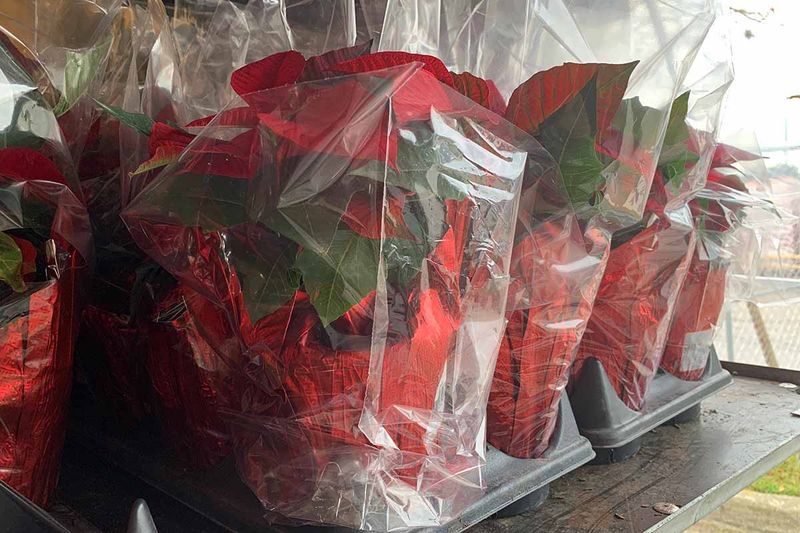
The short trip from store to house may be the riskiest moment in a poinsettia’s life. Cold winter wind can damage tender leaves in just minutes.
Extension specialists recommend buying your poinsettia as one of your last stops. Ask the store to wrap it in a paper or plastic sleeve before you head outside.
That sleeve acts like a winter coat for the plant.
Warm up the car before you load it, if you can. Never leave a poinsettia in a parked car while you run other errands, since the interior cools quickly on an Ohio winter day.
I always place mine on the floor of the passenger side, where heat flows best. The trunk is usually too cold.
Once home, carry it inside right away. Remove the sleeve carefully by pulling it down from the bottom or tearing it open, rather than yanking it up over the bracts.
Also check the plant before you buy it. Avoid any that were displayed near store entrances, where cold air rushes in all day.
Look for plenty of green leaves down to the soil line. A little care during this trip saves a lot of disappointment later.
Soggy Soil in That Shiny Foil Wrapper Causes Trouble Too
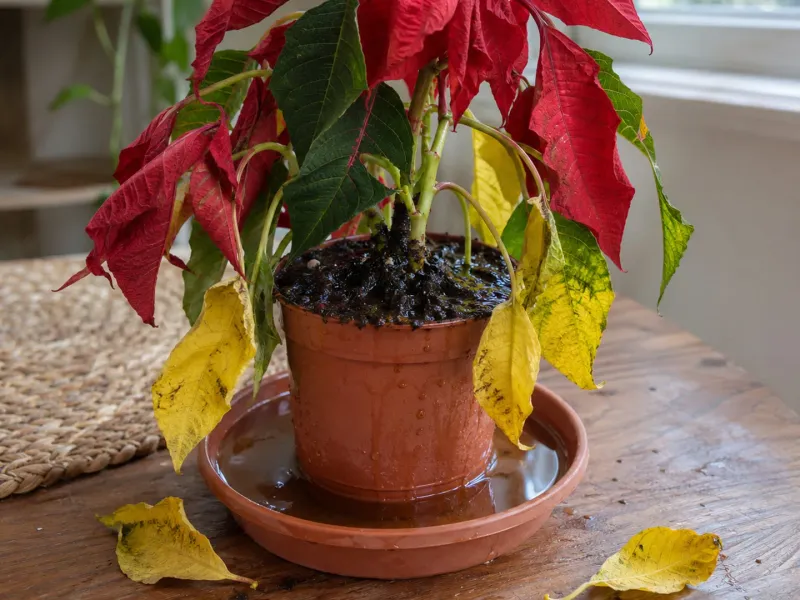
That festive foil wrapper looks great, but it can hide a soggy secret. Water collects at the bottom, and the roots sit in a puddle.
Roots that stay wet too long struggle to breathe. They can develop root rot, and the plant responds by yellowing and dropping leaves.
This often gets confused with cold damage, so it is worth checking.
The fix is simple. Poke holes in the bottom of the foil, or lift the pot out and water it in the sink.
Let the extra water drain completely before putting the plant back. Empty any saucer that holds standing water.
Water when the soil surface feels dry to your fingertip. Then soak it thoroughly until water runs out the bottom.
Underwatering can cause wilting and leaf loss as well. Small pots in warm homes may dry out every few days, so check often.
Personally, I lift the pot to judge its weight. A light pot usually means it needs a drink, while a heavy pot can wait.
Cold, wet roots are an especially bad mix in winter. Room temperature water is kinder than an icy splash straight from the tap.
A Bright Window Helps Poinsettia Bracts Stay Colorful
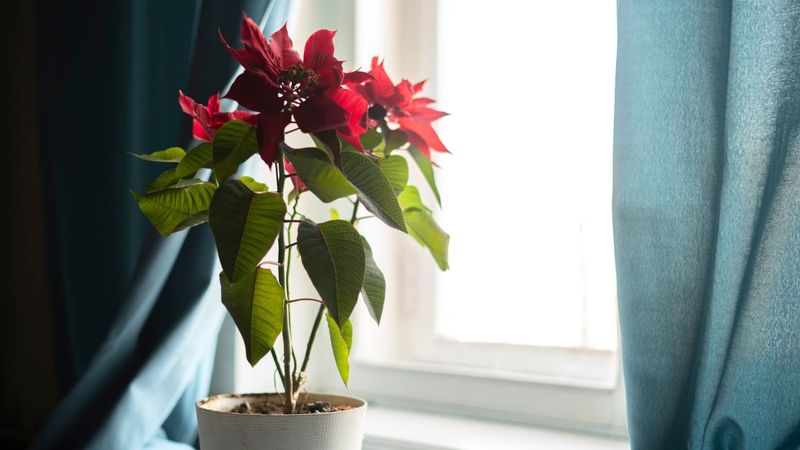
Short winter days in Ohio bring plenty of gray skies. Your poinsettia notices that gloom, even if the holiday lights make the room feel cheerful.
Poinsettias like at least six hours of bright, indirect light each day. A spot near a south, east, or west window often works well.
A sheer curtain can soften strong afternoon sun.
Too little light can cause lower leaves to yellow and fall. Dim corners also keep soil wet longer, which raises the chance of root problems.
Fun fact: those colorful bracts change color because of long nights in fall. Growers keep the plants in total darkness for about 14 hours every night for several weeks to trigger the color.
Once the color has developed, your goal shifts. You want to keep the plant healthy with good daytime light.
I sometimes move mine to a bright window during the day and back to a display spot for evening parties. That small shuffle keeps it happy.
If natural light is limited, a simple LED grow light can help. Just avoid placing the plant where window glass gets icy at night.
Bright and warm is the winning combination.
Dry Furnace Air Can Leave Poinsettia Leaves Thirsty
Winter furnaces are wonderful for people, but they often leave indoor air very dry. Humidity in heated homes can drop far below what tropical plants enjoy.
Poinsettias handle moderate humidity fine, yet extremely dry air can speed up wilting and leaf loss. Leaves may curl or crisp at the edges first.
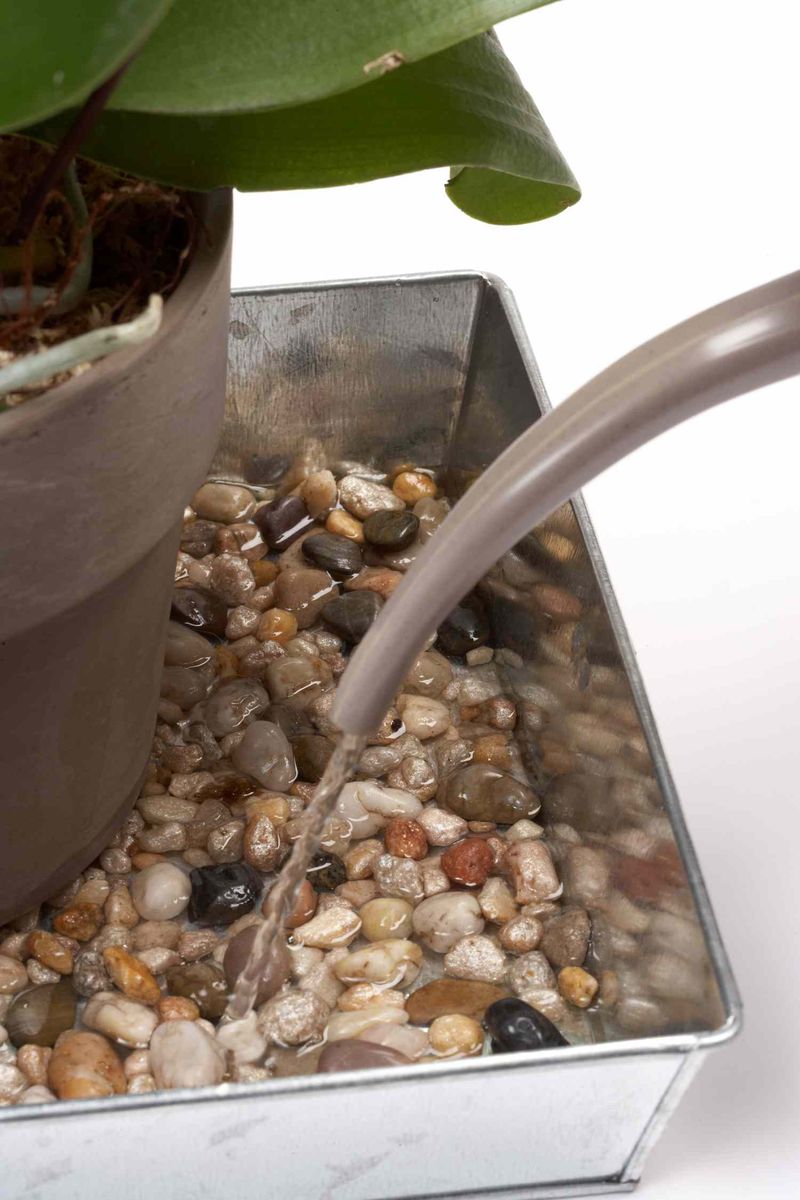
A pebble tray is an easy helper. Fill a shallow tray with pebbles and water, then set the pot on top so it sits above the water line.
Grouping plants together also helps. Each plant releases a little moisture, creating a slightly damper pocket of air.
A room humidifier works well, too, and your skin may thank you. I run one in the living room during January, and both my plants and I seem more comfortable.
Misting gives only a brief boost and can encourage leaf problems if overdone. A tray or humidifier usually works better.
Most of all, keep the plant out of hot, blowing air. A furnace vent aimed at the leaves dries them quickly.
Shifting the pot just a few feet can make a noticeable difference.
Bare Poinsettia Stems Can Still Bounce Back With Patience
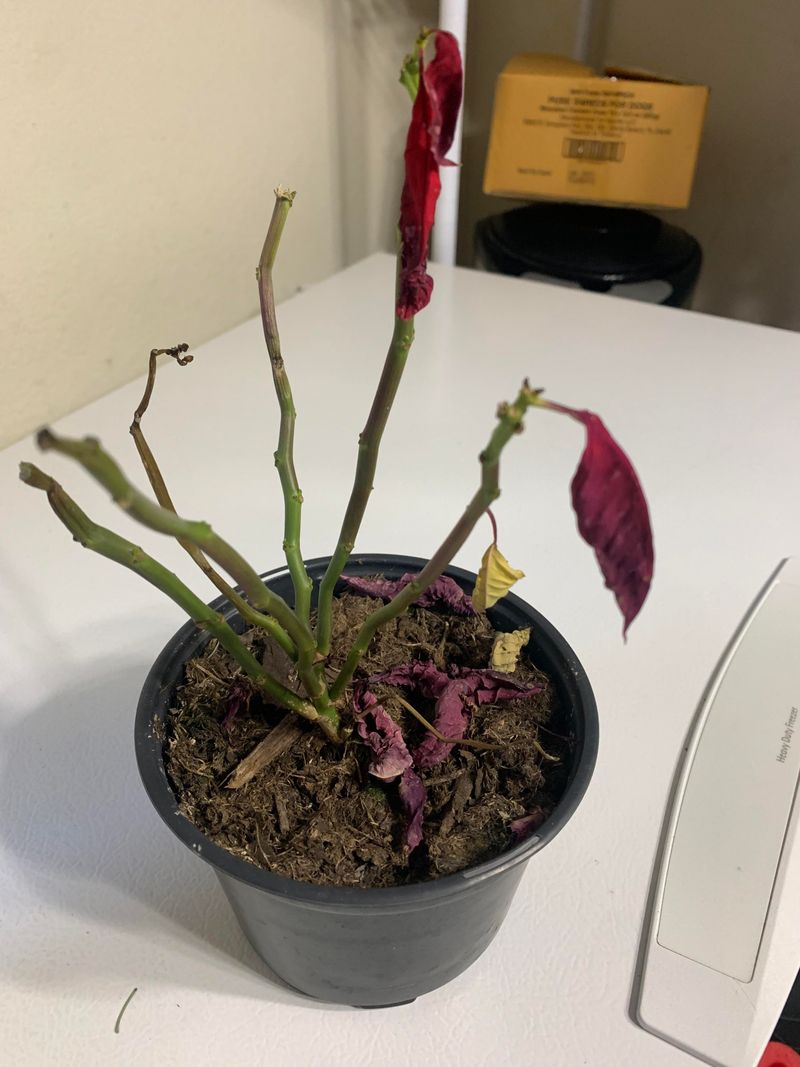
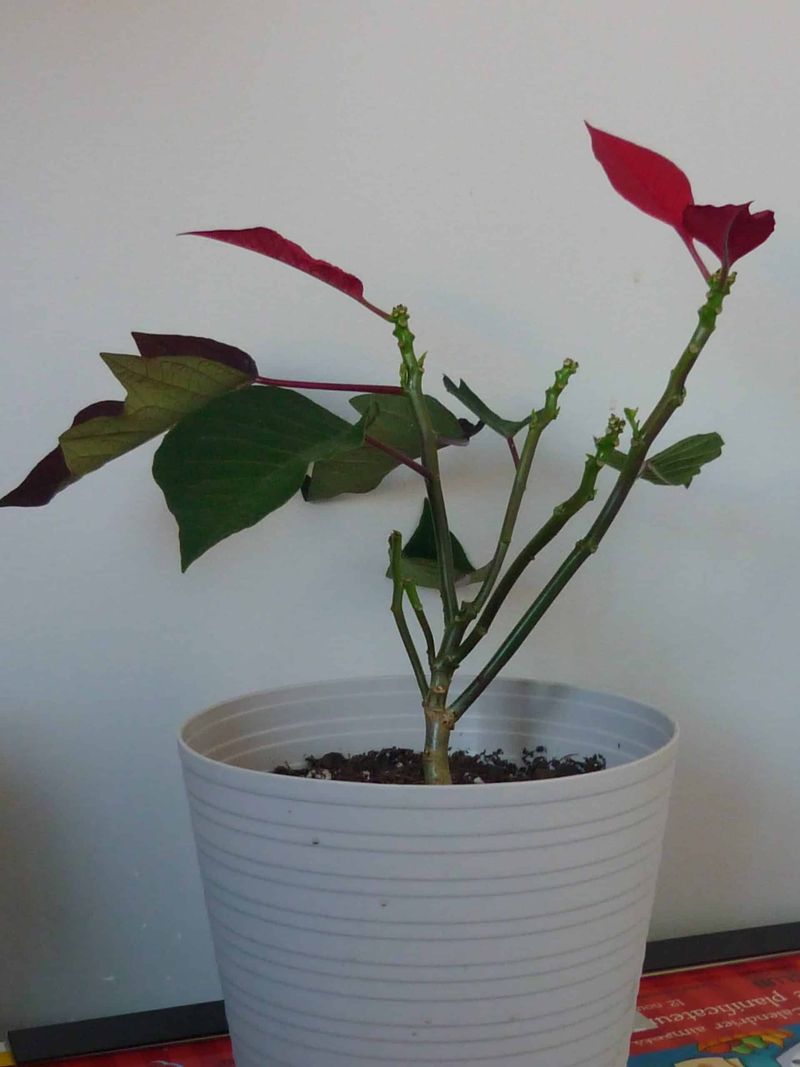
So your poinsettia already lost a bunch of leaves. Take heart, because the plant itself is often still alive and able to recover.
Start by moving it to a warm, bright, draft-free spot. Check the soil moisture and fix any drainage problems right away.
Gently scratch a stem with your fingernail. Green tissue underneath means the stem is still healthy, while brown and brittle stems can be trimmed back.
Do not expect fallen leaves to grow back overnight. New growth may take a few weeks once the conditions improve.
Skip fertilizer while the plant is blooming and stressed. Extension guides suggest waiting until spring, when active growth begins again.
Many people enjoy their poinsettia for the season and then compost it. That is perfectly fine.
Others keep it as a houseplant and move it outdoors after Ohio’s last spring frost, usually in May. Getting it to color up again takes careful long-night treatment in fall.
Pets are another consideration. Poinsettias are only mildly irritating if nibbled, much less harmful than the old myth suggests, but keeping them out of reach is still wise.
Steady warmth, gentle care, and a little patience will carry your plant through winter.