Wasp Nest Locations In Florida Yards Worth Leaving Alone
A single mud dauber nest can hold a stash of paralyzed spiders, and some species pack in black widows. I found that out after scraping a crusty tube off my shed and cracking it open out of pure nosiness. Inside sat a neat row of spiders, lined up like groceries in a pantry.
For years I treated every papery lump or muddy smear as an emergency. Florida yards stay warm enough for wasps to work most of the year, so I saw plenty of them.
It took me a while to notice a pattern. Certain nest spots showed up right where my garden pests were disappearing. The tomato leaves had fewer chew marks, and the caterpillars that used to hide under them became hard to find.
These days I greet nests I used to blast with the hose. The wasps do not greet me back, but my tomato plants look far happier. The hose has taken the change well, since it now spends most afternoons coiled in the shed.
Mud Tubes Tucked Under Shed Eaves
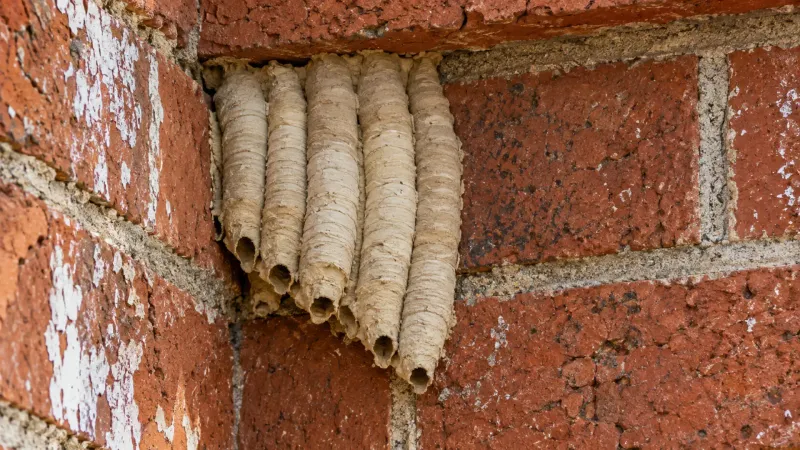
Mud tubes under shed eaves, on garage walls, or inside a quiet carport are some of the friendliest nests you can find. They belong to mud daubers, solitary wasps that build with wet clay instead of paper. The nests look crusty and a little ugly, which is exactly why most people scrape them off too soon.
Florida has a few common types. The black and yellow mud dauber builds lumpy clusters, the organ-pipe mud dauber makes long parallel tubes, and the shiny blue mud dauber often reuses old nests left behind by others. Each type looks different, but all of them work the same way.
Each cell gets packed with paralyzed spiders for the young to eat. The blue mud dauber is famous for hunting black widows, according to University of Florida entomologists. That makes a mud tube near a woodpile or shed a quiet form of spider control.
Mud daubers live alone, so there is no colony rushing out to defend a nest. They rarely sting people unless grabbed or pinched, which makes a tube on a back wall pretty low risk. Kids and pets can walk past without any trouble.
My rule is simple. If the nest sits away from doors and play areas, I leave it alone and let it do spider duty. Old tubes with small round holes are already empty, so you can scrape those off with a putty knife any time if the mess bugs you.
Paper Umbrellas Hidden Deep In Back Hedges
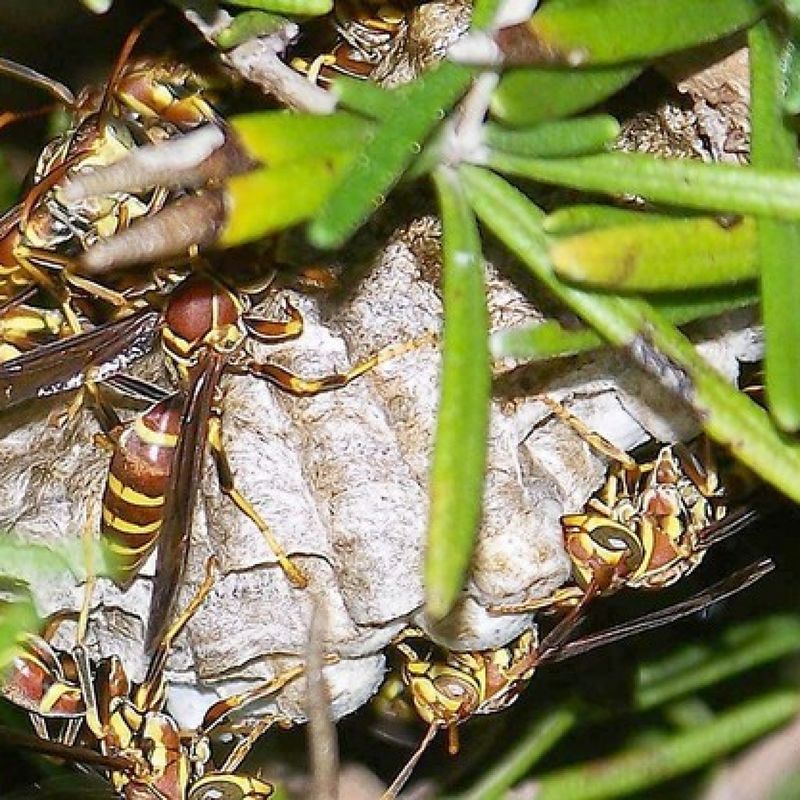
Picking hornworms off my tomatoes by hand got old fast. Then a small paper wasp nest showed up in the firebush nearby, and the hornworm count dropped noticeably. I did not change anything else that season.
Paper wasps build open, umbrella-shaped combs with the cells facing down. You can see every hexagon, unlike the closed football shape of hornet nests. That open comb is the easiest way to tell them apart from the more defensive kinds.
The adults hunt caterpillars, chew them up, and feed the paste to their larvae. UF/IFAS lists them as helpful predators of armyworms, loopers, and hornworms in home gardens. One small nest can cover a surprising amount of vegetable bed.
Location makes all the difference here. A nest deep in a hedge at the back of the yard is a gift. A nest beside your front step or on the mailbox is a different story, since paper wasps will sting to protect the comb and some people are allergic.
For nests in high-traffic areas, wait until evening when the wasps settle down. Knock a small early nest down with a long stick or call a pro for larger ones. Out of the way spots get a pass from me, though I trim near them carefully because hedge clippers and paper wasps do not mix well.
Small Sandy Holes In Sunny Bare Soil
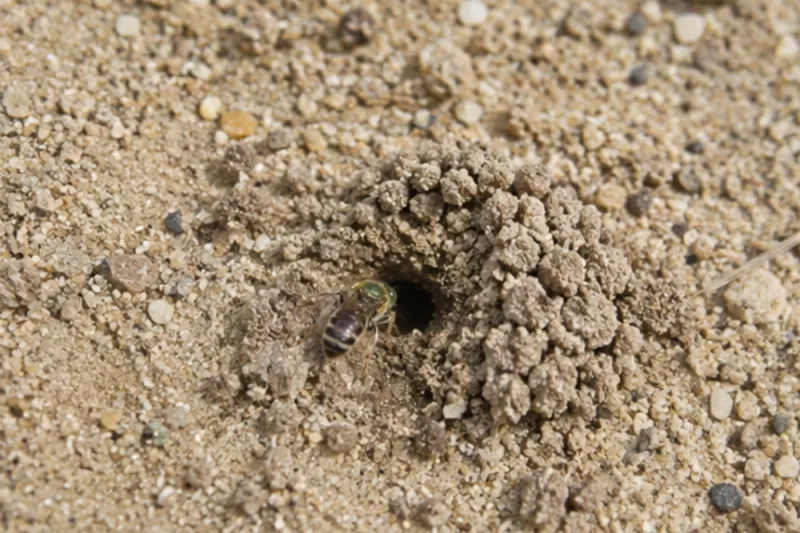
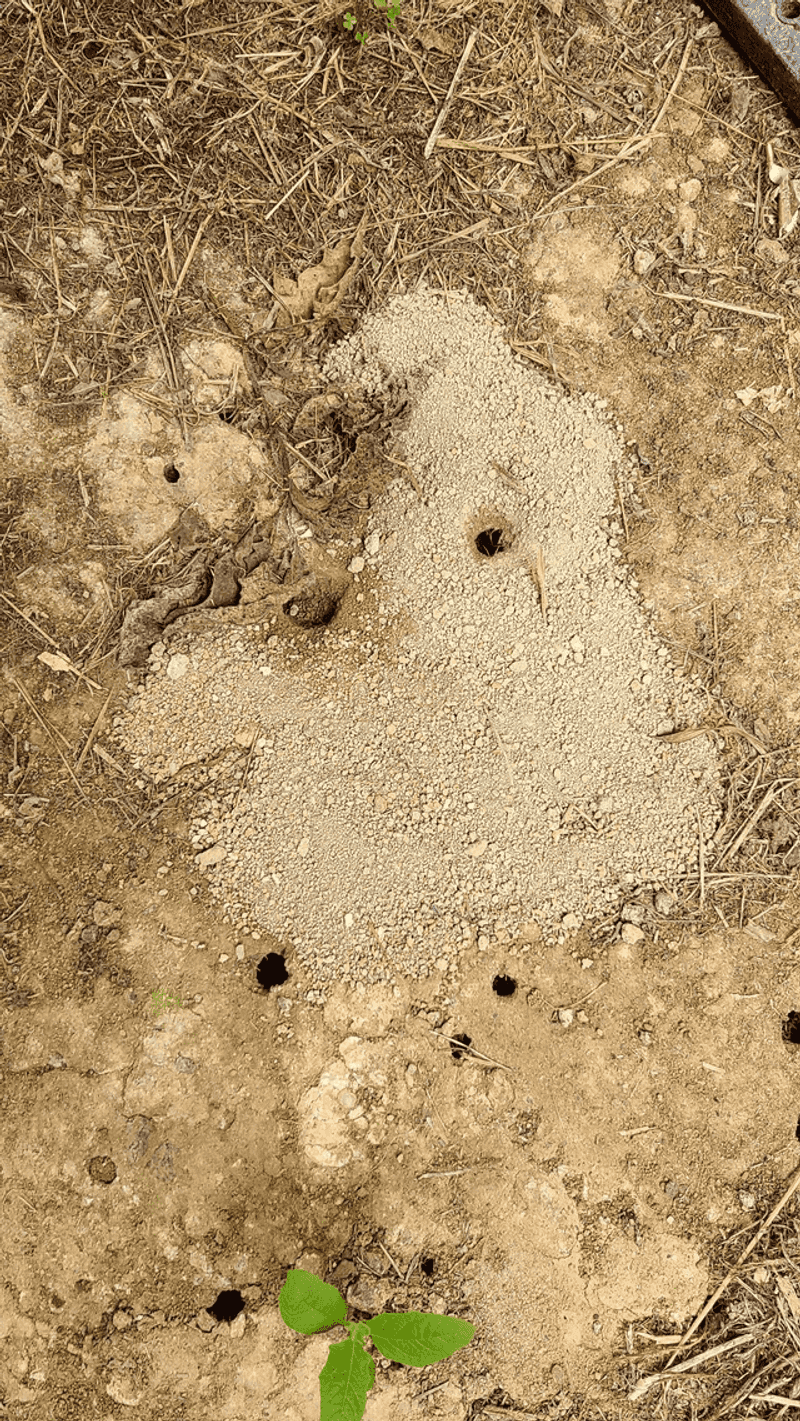
Small holes with tidy sand piles in a sunny, bare patch of yard used to make me nervous. Many of them turned out to be dug by solitary digger wasps. A bare patch is not a lawn failure, it is a nursery.
The great golden digger wasp is a showstopper, with a black body, orange legs, and golden hair. Females drag paralyzed katydids and grasshoppers into their burrows as baby food. Each burrow gets stocked with several insects before the female seals it.
Large cicada-hunting wasps show up in summer too. They look huge and scary, but Florida extension specialists describe them as mild-tempered toward people. Males may zip around your head to guard their turf, yet they lack a stinger, so that bluffing is all show.
Each female digs her own burrow, though many may nest close together in good sandy soil. A cluster of holes does not mean one giant colony. Each hole belongs to a separate mother working alone.
Burrows usually appear in thin, dry, sunny turf. If they bother you, watering that area and thickening the grass makes the spot less inviting. Otherwise, enjoy the free grasshopper control. The activity fades by late summer when the adults finish their short season.
Hollow Stems Left Standing In Garden Beds
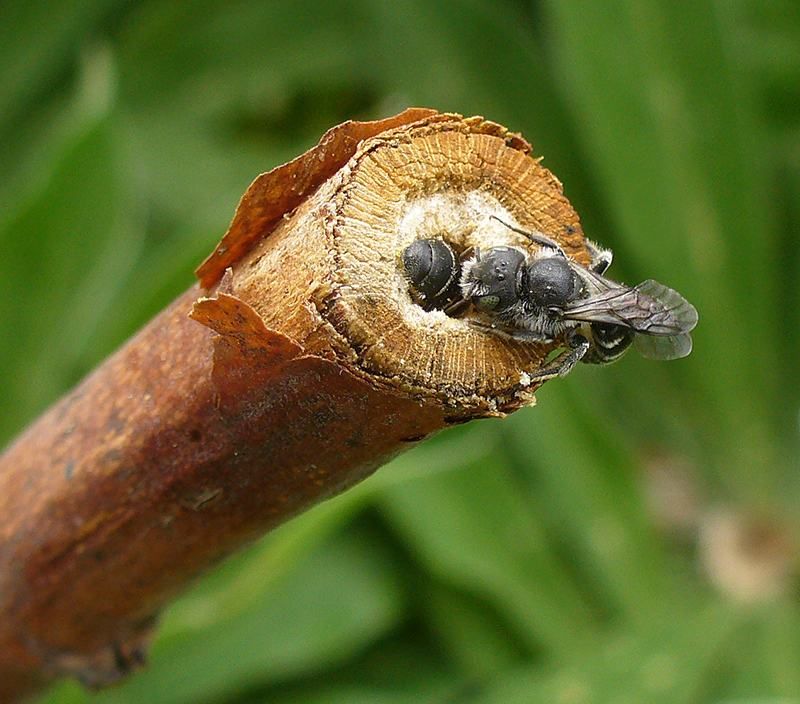
Cleaning up every old stem used to be my idea of a tidy garden. I learned the hard way that I was tossing out nurseries. A cut stem with a clean hollow center is a ready-made nest tube for the right wasp.
Many small solitary wasps, including some potter and mason wasps, nest inside hollow or pithy stems. They stock each cell with caterpillars or aphids, then seal the end with mud or chewed plant bits. Each stem can hold several cells lined up in a row.
A mud plug at the top of a cut stem is a clue someone is home. Those wasps are tiny, calm, and rarely bother gardeners. You could weed right beside them and not notice a thing.
Native plants with hollow or soft centers work well. Elderberry, sunflowers, and native grasses give them great options. When you cut back perennials, try leaving stems about 8 to 15 inches tall. New growth hides them quickly, and the open tops become perfect nesting tubes.
In Florida, nesting can happen across much of the year, so a cleanup schedule matters less than leaving a few stems around at all times. Bee hotels with drilled wood blocks attract these wasps too. Swap out or clean the tubes every year or two to keep mites and mold down.
Tiny Clay Pots Stuck To Twigs
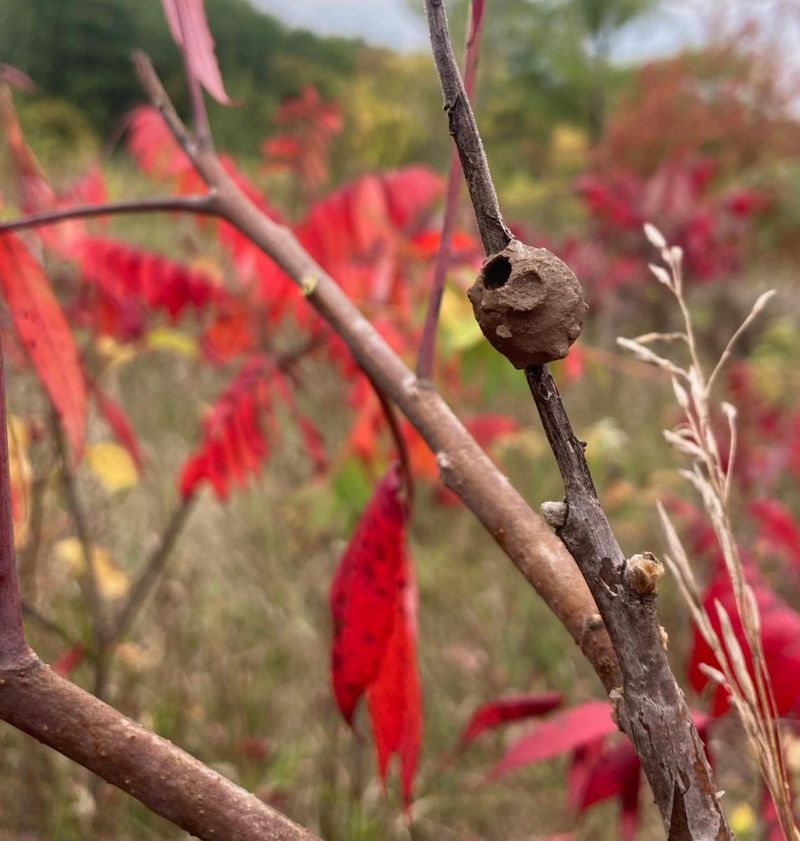
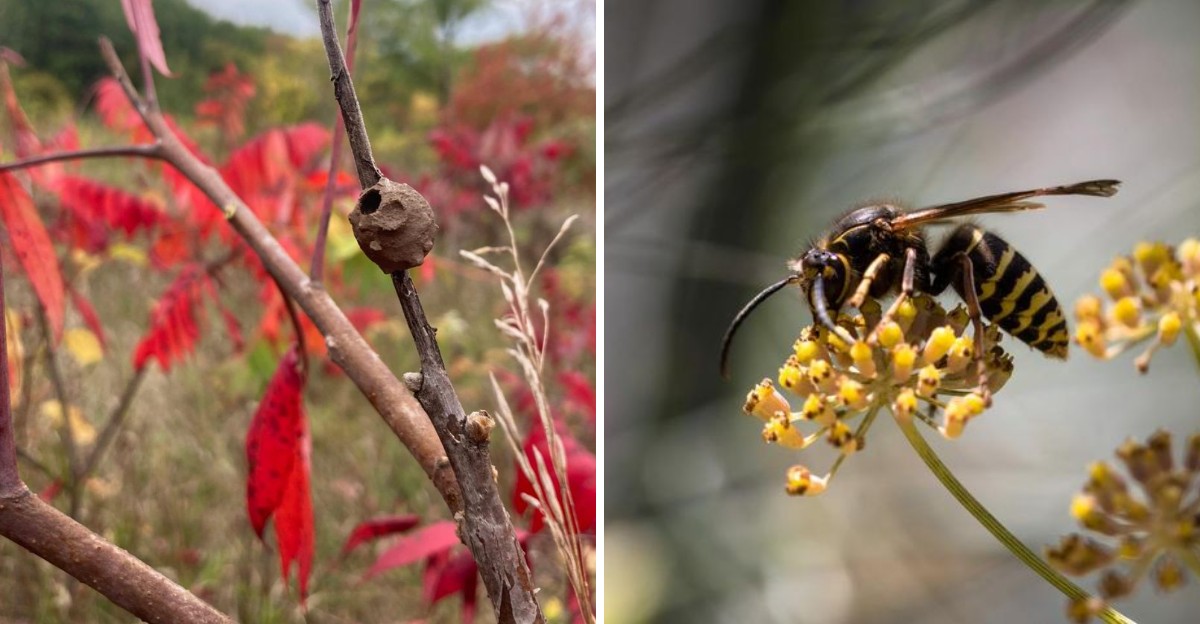
Spotting a clay pot the size of a pea on a twig feels like finding fairy pottery. It is actually the work of a potter wasp, and it is a great sign. Few garden finds are this small and this tidy.
Female potter wasps shape mud into a little round jug with a flared neck. She tucks in a few paralyzed caterpillars, lays one egg, and seals it shut. The young wasp then has a full meal waiting when it hatches.
Look on twigs, porch rails, and leaf stems near gardens where caterpillars are plentiful. These wasps are slim, black with yellow markings, and quite shy. They are easy to miss unless you slow down and look closely.
Since each pot holds a single young wasp, there is nothing to defend aggressively. You can admire the craftsmanship from a few inches away. The adults are busy hunting and rarely pay attention to people.
Pruning season is one of the biggest threats to these tiny pots. If you spot one on a branch you plan to trim, cut a little above or below it and leave the twig in place. A pot that gets knocked loose rarely produces a wasp, so a small change in where you cut makes all the difference.
I leave every one I find. Seeing a pot means caterpillars like cabbage loopers are being pulled out of your yard one by one. A magnifying glass makes this even more fun for kids, who can spot the tiny exit hole after the new wasp chews its way out.
Drilled Holes In Weathered Fence Posts
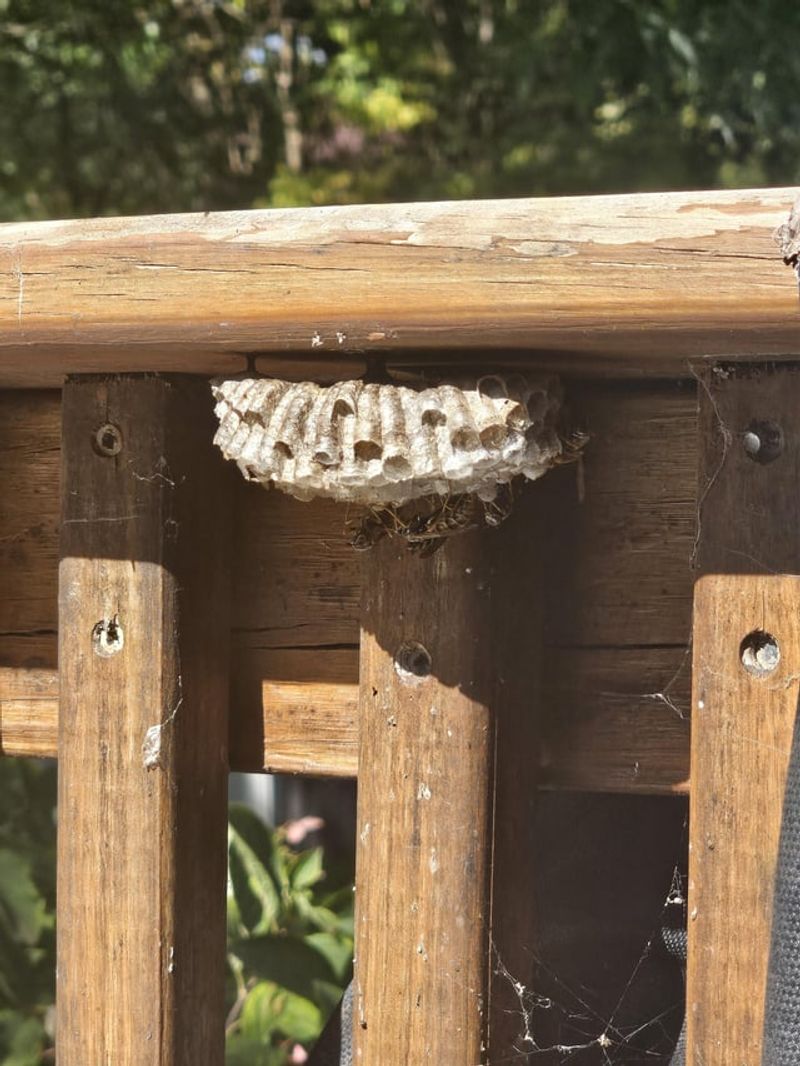
Old fence posts, weathered porch beams, and drilled wood blocks often have small round holes that look like damage. Many of them are not. Plenty of solitary wasps move into tunnels left behind by beetles or by a drill bit.
Mason wasps and some small potter relatives favor holes between about one eighth and three eighths of an inch wide. The female lines up caterpillars or small spiders inside, adds an egg, and closes the entrance with a plug of mud. A neat mud cap on a hole is the sign that a nursery is sealed.
These wasps do not chew new tunnels, so they do not harm the wood. They simply borrow what is already there. That is the big difference from carpenter bees, which bore a perfect half-inch hole and leave a pile of sawdust beneath it.
Sunny wood facing south or east is the most popular. Fence posts at the edge of a vegetable bed work especially well because the caterpillars are close. Shorter flights mean more pest control for your plants.
Skip the caulk and wood filler until you check for plugs, since sealing a nursery locks the young inside. If you want to add more habitat, drill a few holes in an untreated wood block and hang it in a sunny spot about 4 to 6 feet off the ground.
Cracks In Sunny Garden Walls
Old garden walls, stone steps, and brick borders are full of small gaps that most people never look at twice. Solitary wasps look at them very closely. A narrow crack that stays dry and warm makes a perfect nursery.
Mud daubers and mason wasps often tuck their nests into crevices, under ledges, or into the hollow gaps between stones. The entrance is usually a small round opening, sometimes sealed with a neat plug of mud. A few dried mud lumps stuck to the wall are often the only clue that someone has moved in.
Each cell is stocked with paralyzed spiders or caterpillars for the young to eat. Walls near a vegetable bed or shrub border put that pest control right where it is needed. The hunting trips stay short, and the results show up fast.
These wasps live alone, so there is no colony to guard and no reason to be afraid. They rarely sting unless squeezed or pinched. You can sit on a wall step with your morning drink and barely notice the neighbors.
If a crack needs repair, pick a moment when no wasps are flying in and out of it. Look for plugs or fresh mud first, since sealing an active nest traps the young inside.
Leaving one sunny stretch of wall untouched costs nothing and gives the helpers a safe place to raise their young.
Flower Beds Planted With Native Blooms
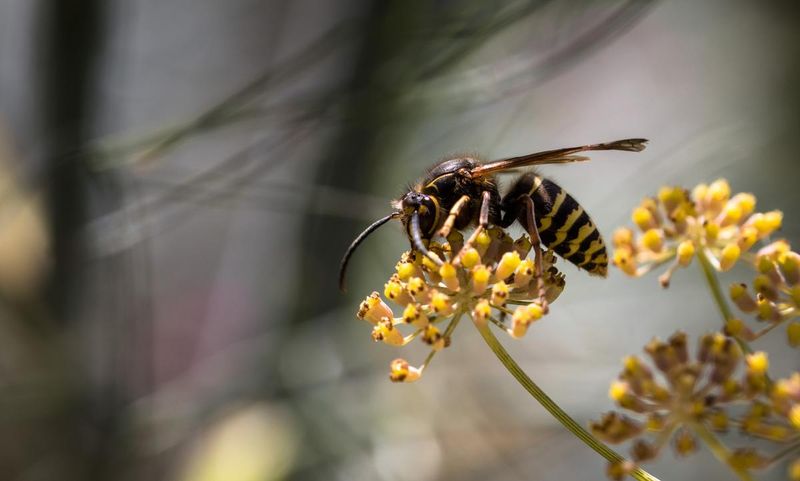
Wasps get thirsty for sugar too. Adults sip nectar, and many tiny parasitic wasps need flowers to live long enough to find pests. A flower bed works like a nest location because it keeps the helpers living close by.
Shallow, small flowers suit their short mouthparts. Native goldenrod, Spanish needles, dotted horsemint, and wild coffee all draw them in many Florida gardens. Plant a few of each so something is blooming across the seasons.
Bloom timing matters as much as the flowers themselves. Tickseed and blanket flower start early in the season, while goldenrod carries the bed into fall.
Dill, cilantro, and fennel left to bloom are easy additions to a vegetable bed. Their flat flower clusters act like little wasp snack bars. Broad-spectrum insecticides hit beneficial wasps just as hard as pests, so spot treating with soap sprays only when needed protects the helpers.
A shallow dish of water with pebbles gives mud daubers and potter wasps the moisture they need for building. Bare patches of sunny soil help diggers too. Watch before you swat, since solitary wasps working quietly on flowers or stems are rarely a problem, while busy colony entrances near the house need a plan.
My yard changed once I started reading nests instead of fearing them. Leave the mud tubes, pots, and stem plugs, and you will likely see fewer caterpillars and spiders next season.