When to Mow Newly Seeded Fescue for the First Time in North Carolina
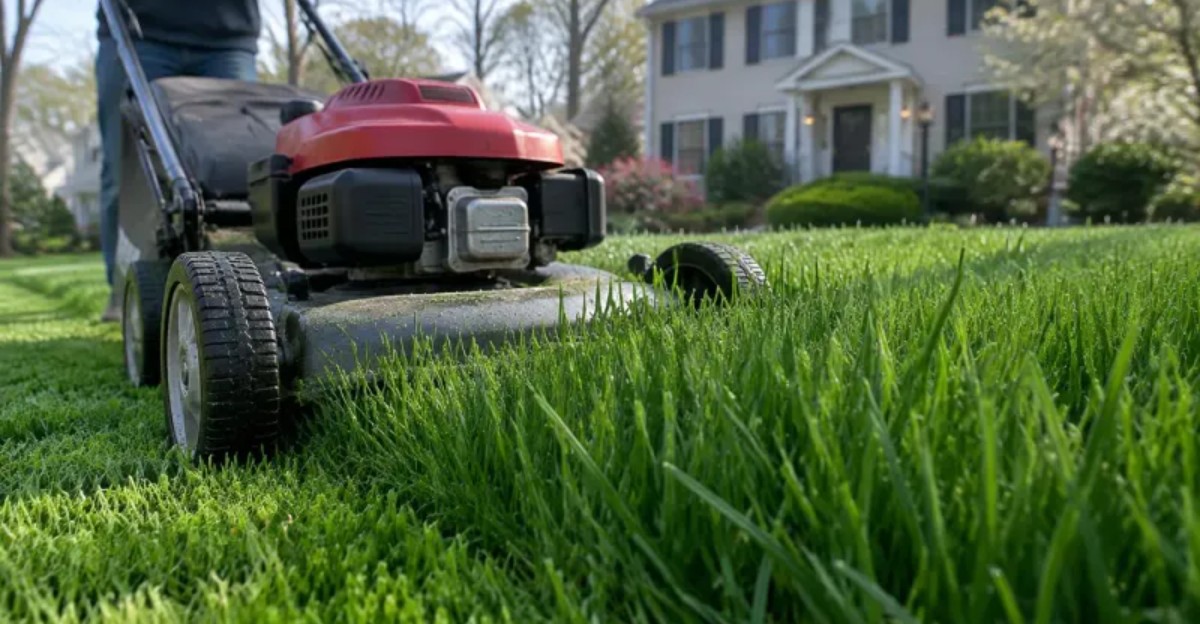
A brand new lawn can lose its grip on the soil to a single sharp turn of a mower wheel. That tiny seedling looks sturdy from your porch, but its roots are often shorter than your fingernail.
I learned the hard way that a fresh green fuzz fools you. I rolled the mower out way too early one October and tore up a strip I had babied for weeks.
Here in North Carolina, most of us seed in early fall, so the first cut lands right as the leaves start dropping. That timing adds a few extra wrinkles. Wet mornings, leaf piles, and cooling nights all change how fast the grass grows.
Truth is, the calendar tells you less than you would hope. The grass itself gives the real signal, and it is simpler to read than most folks expect. So what exactly should you be watching for?
Those Young Fescue Blades Drop A Big Hint When They Are Ready
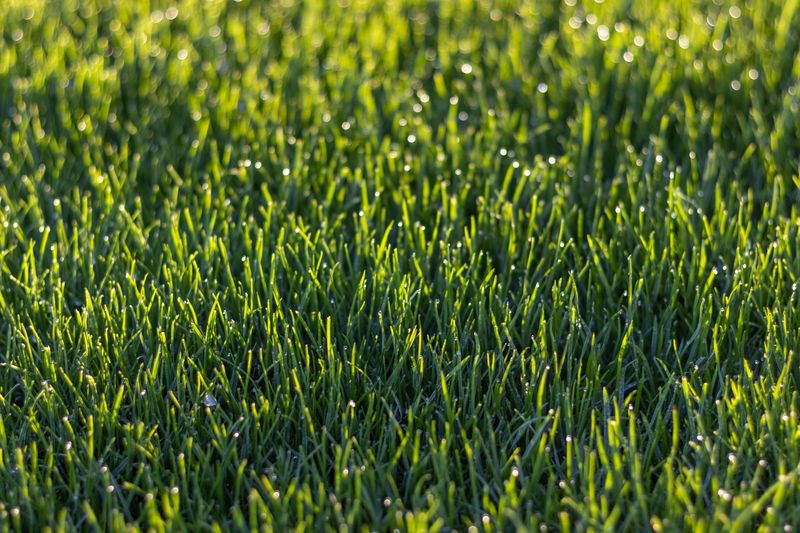
Grab a ruler instead of a calendar. That one swap changed how I handle every new lawn, and it is the simplest trick I know.
NC State Extension guidance points to height as the main signal. Most new tall fescue is ready for its first mow when the blades reach about 4 to 4.5 inches tall. In warm fall soil, that often happens around three to four weeks after the seed sprouts.
Cooler weather, shade, or a dry spell can stretch that to five or six weeks. Do not stress if your neighbor mows first. Every yard has its own pace.
Height is only half the story, though. Give a few seedlings a gentle tug between two fingers. If they stay put, the roots are grabbing the soil well. If they slide out easily, give them another week.
Check several spots before you decide. Sunny areas near the driveway often race ahead, while shady corners under oaks lag behind. Base your choice on the bulk of the lawn, not the fastest patch.
A quick walk with that ruler takes two minutes. It can save you a whole season of reseeding thin spots, which is a pretty good trade.
Set The Mower Deck To Three Inches For That First Fescue Cut
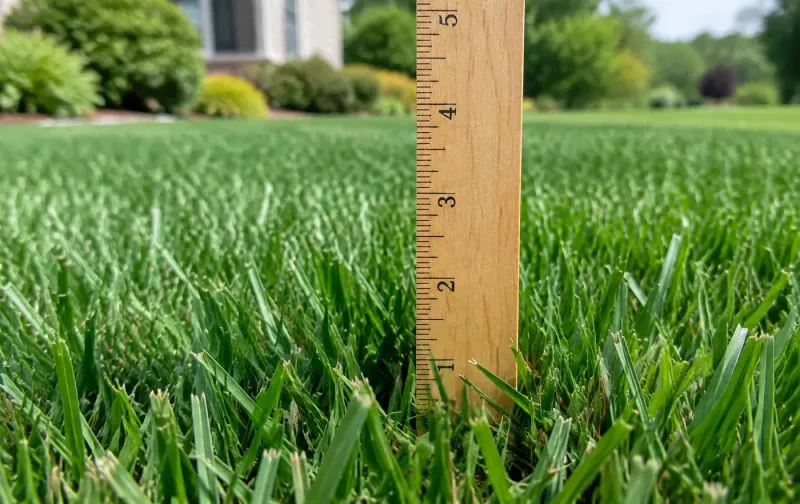
Three inches is the sweet spot for that first trim. Raise your mower deck before you even pull the cord, because most mowers sit lower than you think.
The reason comes down to the one-third rule. Lawn experts recommend removing no more than one-third of the blade in a single mowing. So grass at 4.5 inches comes down to about 3 inches, and the plant keeps plenty of leaf for making food.
Those leaves matter more than people realize. A seedling uses its blades to power new root growth. Cut off too much, and the plant spends its energy healing instead of digging deeper.
NC State recommends keeping established tall fescue around 3 to 4 inches, with the taller end helpful during summer heat. Starting at 3 inches sets a healthy habit right away.
Not sure where your deck sits? Park the mower on the driveway and measure from the pavement to the blade edge with a tape measure. Deck labels are often off by half an inch or more.
I keep a little note taped inside my garage with the right setting. It sounds silly, but it stops me from guessing every time.
A Freshly Sharpened Mower Blade Protects Tender Grass Seedlings
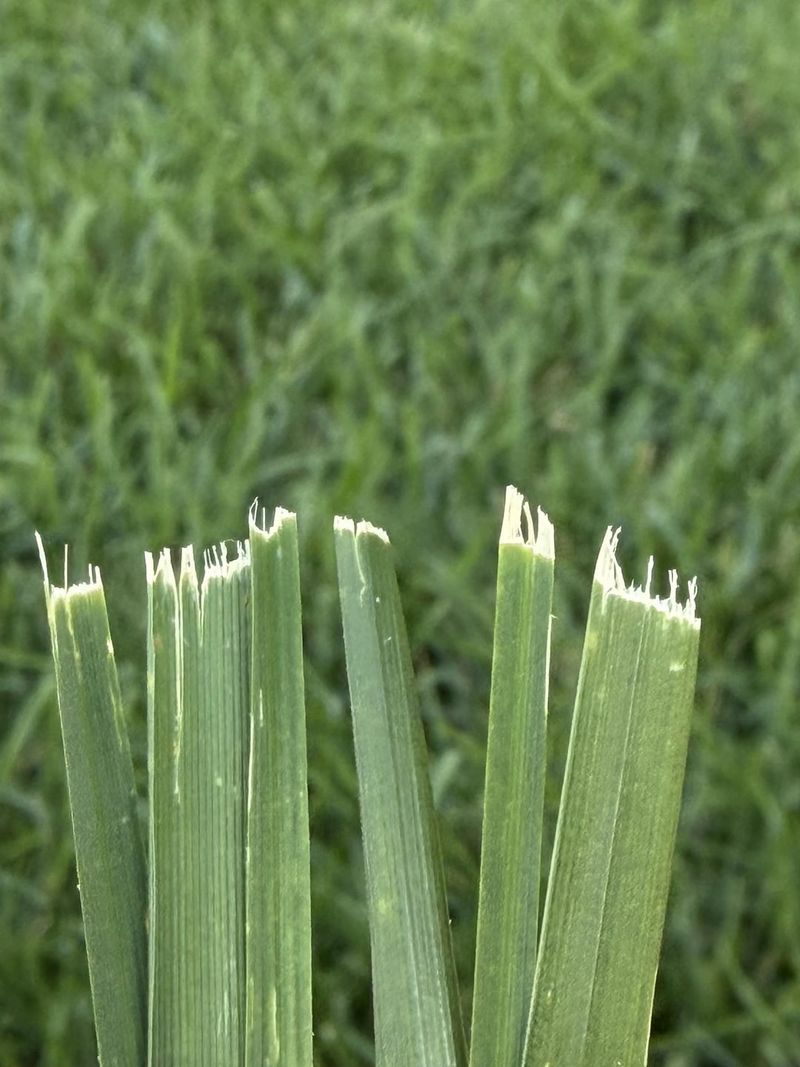
Guilty as charged, I once mowed a new lawn with a blade that had not seen a file in two years. The tips turned tan within days, and the whole yard looked frosted.
A dull blade does not slice grass. It rips and shreds it. On young fescue, that tearing can even yank whole seedlings from loose soil.
Torn tips also lose more moisture and give fungal diseases an easy entry point. A clean cut seals faster, so the plant bounces back quickly and keeps growing.
Sharpen the blade before your first mow of the season, then again every 20 to 25 hours of use. Many hardware stores in North Carolina sharpen blades for a small fee if you prefer not to do it yourself.
Safety first if you tackle it at home. Disconnect the spark plug wire or remove the battery before touching the blade. Balance it on a nail after sharpening so it spins evenly.
A quick test helps afterward. Look at the grass tips a day after mowing. Clean, flat edges mean you nailed it, while frayed white tips mean it is time for another pass with the file.
Wait For Dry Turf Before Rolling The Mower Over New Fescue
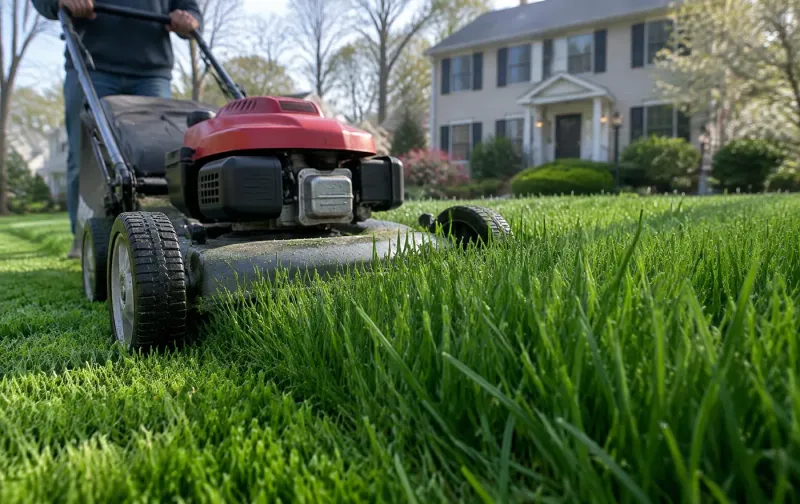
Soggy soil and fresh seedlings are a messy combination. Mower wheels sink, slip, and pull young plants right out of the ground.
Wet grass also clumps under the deck. Those heavy clumps drop back onto the lawn in mats that smother the little blades underneath.
Plan your first mow for an afternoon when the dew has burned off. A good rule is to skip mowing for at least a day after heavy rain or a deep watering.
Fall seeding means you are likely watering often, so adjust your schedule a bit. Water in the early morning on mowing days only if needed, or hold off watering the night before.
Here is my simple test. Walk across the lawn in sneakers. If your shoes come back wet or leave deep footprints, the ground is not ready for a mower.
Fall in the Piedmont and mountains brings heavy morning dew and cool nights. That can mean waiting until early afternoon for the turf to dry out properly.
Patience on timing pays off. A dry lawn cuts cleaner, keeps more seedlings rooted, and leaves you with less cleanup afterward.
Gentle Mowing Paths Keep Wheels From Twisting Young Grass
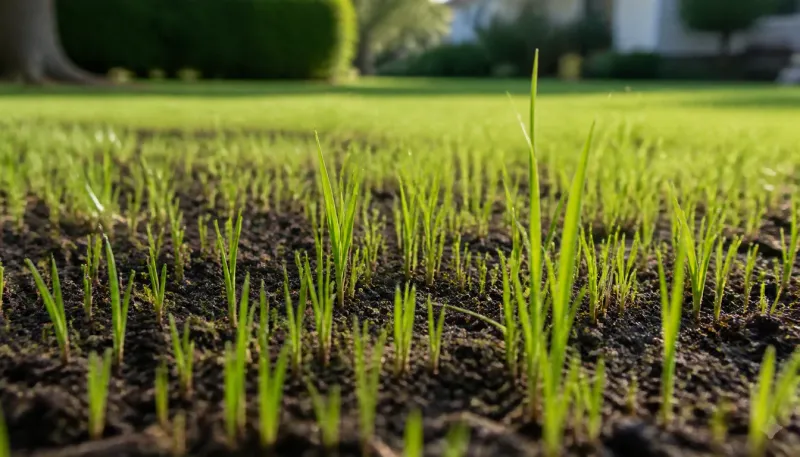
Sharp turns are sneaky troublemakers. A pivoting mower wheel can scrape a little crescent of bare dirt into soft new turf in seconds.
For that first mow, plan wide, sweeping turns. Some folks like making turns on the driveway or a sidewalk edge instead of on the grass itself.
Weight matters too. A light push mower is kinder to new seedlings than a heavy riding mower or zero-turn. If you only own a big machine, consider borrowing a smaller one for the first few cuts.
Foot traffic counts as well. University of Maryland Extension suggests keeping people and pets off new lawns for about a month after germination, or until the grass has been mowed a couple of times.
That can be a tough sell with kids and dogs. A few stakes and some string around the seeded area send a clear message without much fuss.
Bagging clippings is optional. Light clippings can stay to feed the soil, but bag them if they form thick piles.
Fall leaves add another wrinkle. Rake them gently or mow on a high setting to shred them, so they do not shade out the seedlings.
Overgrown Fescue Seedlings Need A Two Step Trim

Life gets busy. Maybe a rainy week or a family trip let your new fescue shoot up to 6 or 7 inches before you noticed.
Resist the urge to chop it down to 3 inches in one go. That breaks the one-third rule and can shock young plants, leaving the lawn thin and yellow.
Instead, mow in stages. Set the deck at its highest setting for the first pass and remove only the top portion.
Wait three or four days. Then lower the deck a notch and mow again, repeating until you reach that 3 inch goal.
Taller grass also hides more moisture at the base, so double check that the turf is dry first. Overgrown blades bend over and get matted, which leads to uneven cuts.
Clippings will be heavier than usual here. Bag them or rake them up so they do not form thick mats over the seedlings.
Not going to lie, this happened to me after a hurricane season remnant soaked my yard for a week. The staged approach saved the lawn, and nobody could tell a month later.
Fall Fescue Seeding In North Carolina Shapes Every Mow That Follows

Every fall, I watch neighbors fire up their spreaders. That timing is no accident, because tall fescue is a cool-season grass that loves mild weather.
NC State Extension recommends seeding tall fescue in fall, with the mountains starting earlier than the Piedmont and Coastal Plain, where the window runs from about September 1 to October 1.
Warm soil sprouts seed quickly, and cooler air eases stress on the seedlings. That combination means your first mow usually lands in late September through early November.
Spring seeding is a tougher road. Young grass has little time to root before summer heat and diseases like brown patch arrive in North Carolina.
After that first cut, keep the momentum going. Mow whenever the grass reaches about 4 to 4.5 inches, and keep watering lightly until roots settle in.
Hold off on weed killers for now. Most labels say to wait until the new lawn has been mowed several times.
Follow NC State fertilizer timing for fescue, which favors fall feeding. Pair that with patient first mows, and your lawn should look thick and lively by spring.