7 North Carolina Trees That Still Deliver Brilliant Fall Color In A Drought Year
Drive through the Piedmont during a dry October, and you will see a lot of sad, brown leaves crunching down early, weeks before anyone expected a show worth watching.
Drought stress makes many trees quit on autumn entirely, shedding crisped foliage instead of glowing red and gold the way they should.
Yet right beside those tired trees, a handful of North Carolina natives still light up, holding their color when conditions turn genuinely tough.
Most homeowners assume a dry summer means a washed-out fall no matter what, giving up on color before the season even starts.
That assumption misses a real lineup of trees built for exactly this kind of stress, still putting on a show while their neighbors go bare.
Here are seven of them, along with an honest reminder that drought tolerant never means drought proof.
1. Blackgum Colors Early And Reliably
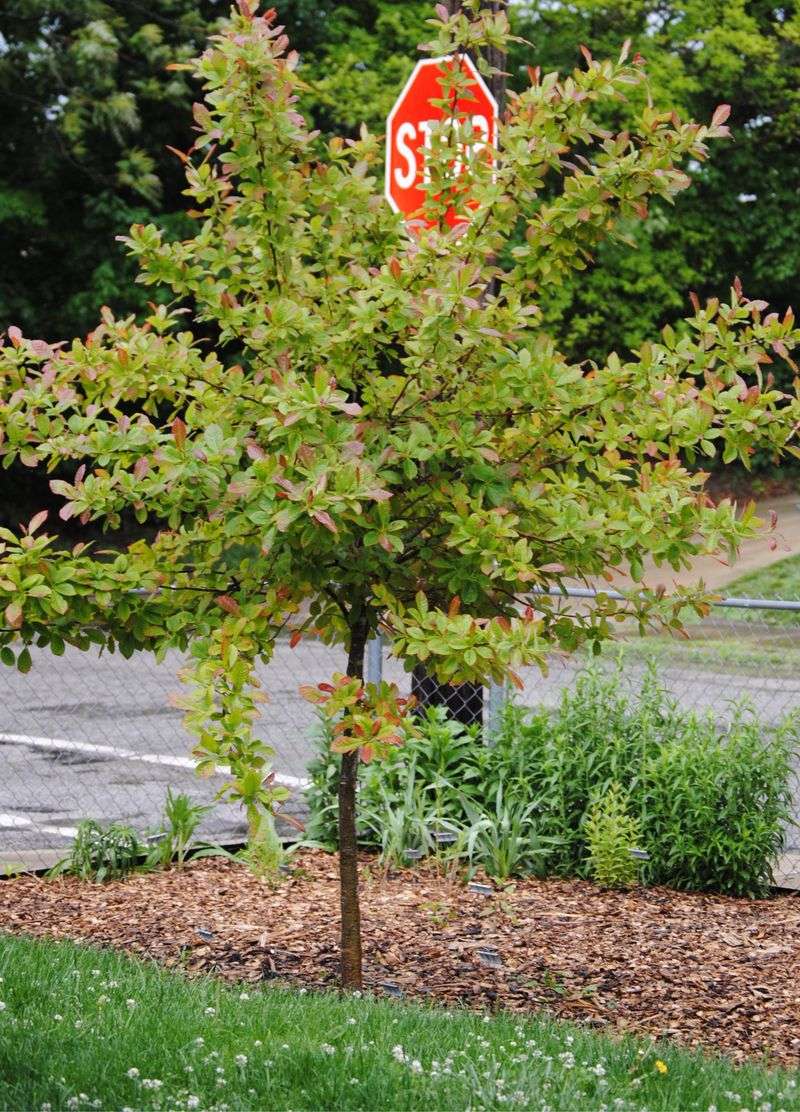
Long before the maples make up their minds, blackgum is already glowing brightly across the landscape. Nyssa sylvatica often starts turning in late September, flashing scarlet, purple, and orange while its neighbors are still dull green.
Foresters in North Carolina like this tree because it grows across the state, from coastal swamps to dry Piedmont ridges. That wide comfort range is exactly why it handles a rough summer without dropping everything early.
The leaves are thick and glossy, which helps them hold moisture longer than thinner foliage found on other species. NC State Extension lists blackgum among native trees with dependable autumn color and good adaptability.
Wildlife gets a bonus too. Small blue-black fruits ripen in fall and feed birds, foxes, and even black bears in the mountains, so the tree earns its keep beyond just looks.
Planting tips matter here. Blackgum has a deep taproot, so young trees can sulk if moved poorly or planted too late in the season.
Give it full sun for the strongest color. In heavy shade the reds soften into a muddier mix, which is still pretty but not the fireworks you planted it for.
One honest note worth remembering. During a severe, monthslong drought, even established blackgum may shed leaves sooner than usual. A deep soak every couple of weeks keeps the show going longer.
2. Sourwood Turns Red Even Under Stress
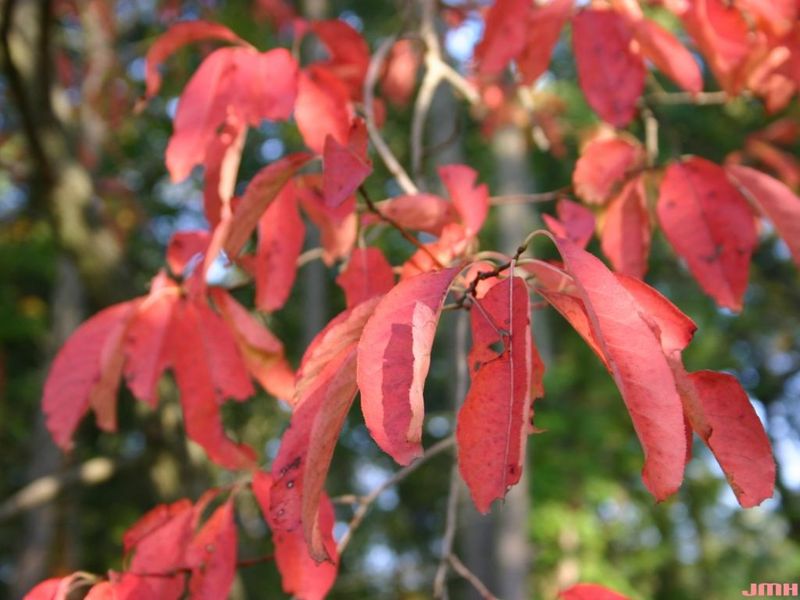
Ask a beekeeper in Asheville about sourwood, and you will hear about honey first. Ask a gardener instead, and the answer is October, when Oxydendrum arboreum turns a crimson so deep it looks almost wine-stained.
The species is native to the mountains and upper Piedmont of North Carolina, where it grows naturally on rocky, acidic, well-drained slopes. Those are not lush conditions, which is part of why sourwood copes when rainfall goes missing.
Size works in its favor for smaller yards too. Most landscape specimens top out around 25 to 35 feet with a narrow, slightly leaning shape that adds character.
Summer brings dangling white flowers shaped like tiny bells, and those turn into silvery-tan seed capsules that hang on against the red leaves later.
Sourwood does have a stubborn streak worth knowing about. It hates compacted soil, road salt, and city pollution, and it grows slowly, so patience is required from whoever plants one.
Your North Carolina Garden Changes Every Week. Your Plan Should Too.
Gardening in North Carolina changes quickly throughout the season. Every Friday you’ll receive a simple weekly plan showing exactly what to plant, prune, fertilize, harvest, and protect so you never miss the right timing.
Full sun produces the boldest red. In part shade the color still arrives, just a shade calmer than the full display.
Drought years rarely erase sourwood’s display, though NC State Extension guidance is clear that newly planted trees of any species need consistent water while establishing.
3. Red Maple Adapts To Dry Summers
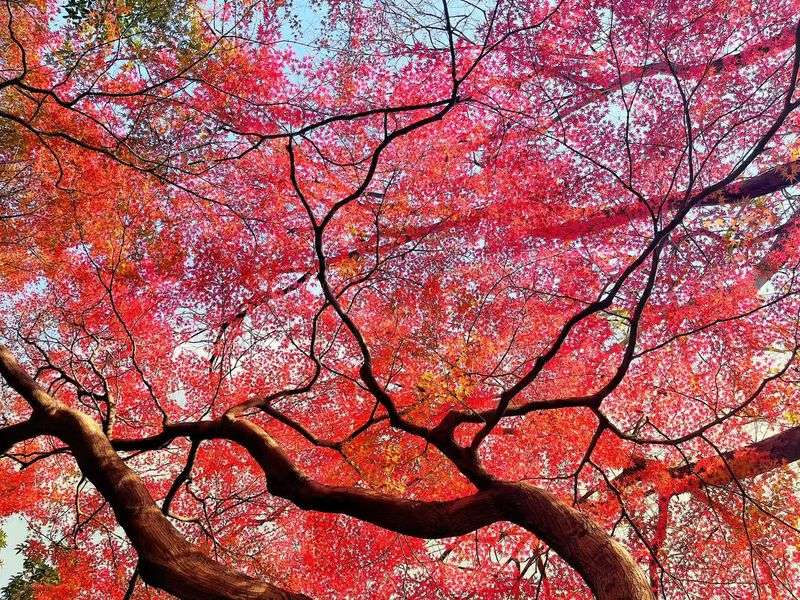
If one tree deserves the title of North Carolina’s most flexible native, red maple has a strong claim to that spot. Acer rubrum shows up in soggy bottomlands and on dry, gravelly hillsides alike.
That adaptability pays off in a stingy rainfall year. A red maple growing on an upland site has already adjusted to drier soil, and it still colors up in shades of red, orange, and occasionally yellow.
Not every red maple turns the same shade, which surprises people at first. Seedling trees vary a lot, so nurseries sell named selections like October Glory and Red Sunset for consistent color.
Growth is quick compared to oaks, often two feet or more per year when young. Shade arrives fast, which makes the tree popular for new neighborhoods across the Triangle and Charlotte.
A few cautions keep expectations realistic here. Red maple has shallow, spreading roots that can lift sidewalks and compete with lawn grass, so give it room away from pavement.
During a harsh drought, expect some early leaf drop and scorched edges on stressed trees. Deep watering once or twice a month, applied slowly at the drip line, helps a red maple hold its leaves long enough to actually perform.
4. Sweetgum Holds Color Longer Than Most
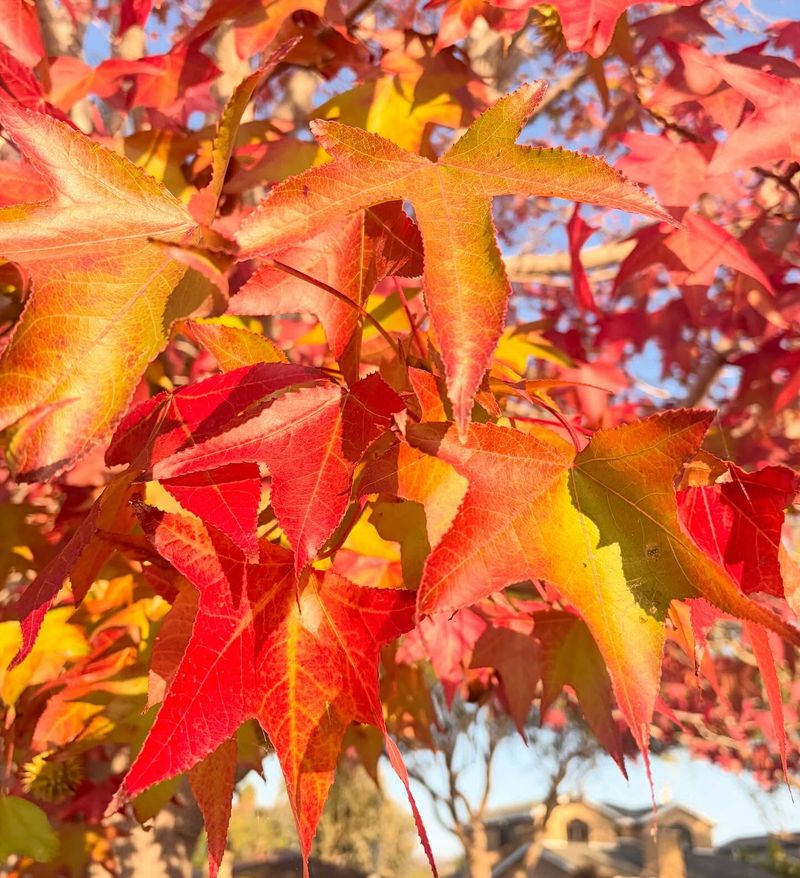
Some trees give you one week of color. Sweetgum gives you a month, sometimes more, because its star-shaped leaves change in waves rather than all at once.
A single Liquidambar styraciflua can carry yellow, orange, scarlet, and near-purple leaves at the same time. Photographers love it, and the display often stretches deep into November across the Piedmont.
Toughness is part of the deal here. Sweetgum grows naturally in wet bottomlands but also colonizes old fields and dry roadsides, and NC State Extension notes its tolerance of a wide range of sites once established.
Then there are the gumballs to consider. Those spiky seed capsules drop by the hundreds, roll underfoot, and jam up lawn mowers, which is why sweetgum gets cursed as often as praised.
Fruitless selections exist for people who want the color without the ankle hazard. Look for cultivars sold as sterile or low-fruiting at a local nursery.
Give the tree space too. Mature height often reaches 60 to 75 feet with a broad crown, so it belongs in a back corner rather than three feet from the driveway.
In a genuinely severe drought, sweetgum may drop leaves early or show brown margins, especially on compacted ground. Mulch a wide ring, skip the fertilizer, and water slowly and deeply instead.
5. Scarlet Oak Earns Its Name In Drought
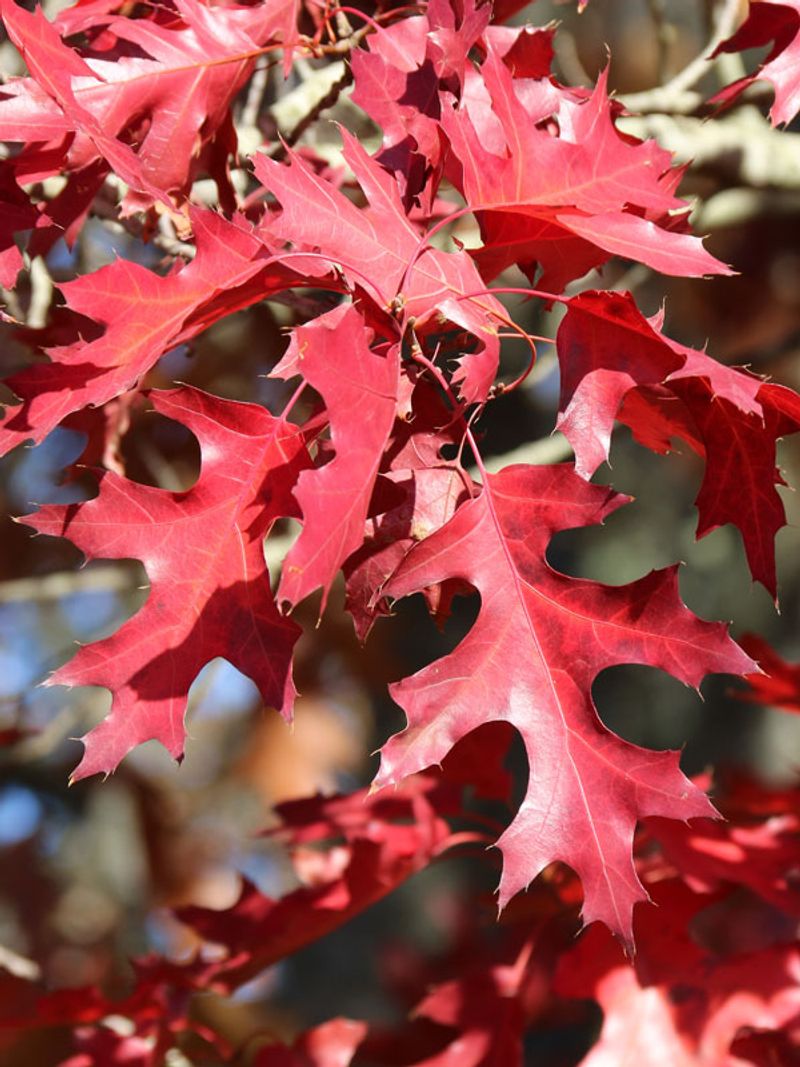
Dry ridges and sandy, poor soil would finish off a lot of shade trees. Scarlet oak treats those spots like home, which is exactly why it keeps its reputation in a rainless autumn.
Quercus coccinea colors late, usually well into November, and the shade is a genuine bright red rather than the rusty brown many oaks settle for. Deeply cut, bristle-tipped leaves catch light beautifully.
Native across much of North Carolina’s Piedmont and mountains, the tree grows on upland sites where water drains away fast. Its root system digs deep, pulling moisture from lower soil layers when the surface bakes.
Wildlife value is high too. Acorns feed deer, turkeys, squirrels, and jays, and oaks in general host more native caterpillar species than almost any other tree.
Growth is moderate, faster than white oak but not rushed at all. Expect a strong, open crown eventually reaching 60 to 70 feet, so plan for the long haul ahead.
Transplanting can be tricky because of that taproot. Start with a smaller container-grown tree rather than a big one, and resist the urge to prune heavily in the first years.
Even this rugged species benefits from supplemental water while young. One long soak every two weeks during extended dry spells protects both growth and color.
6. Flowering Dogwood Adds Understory Color
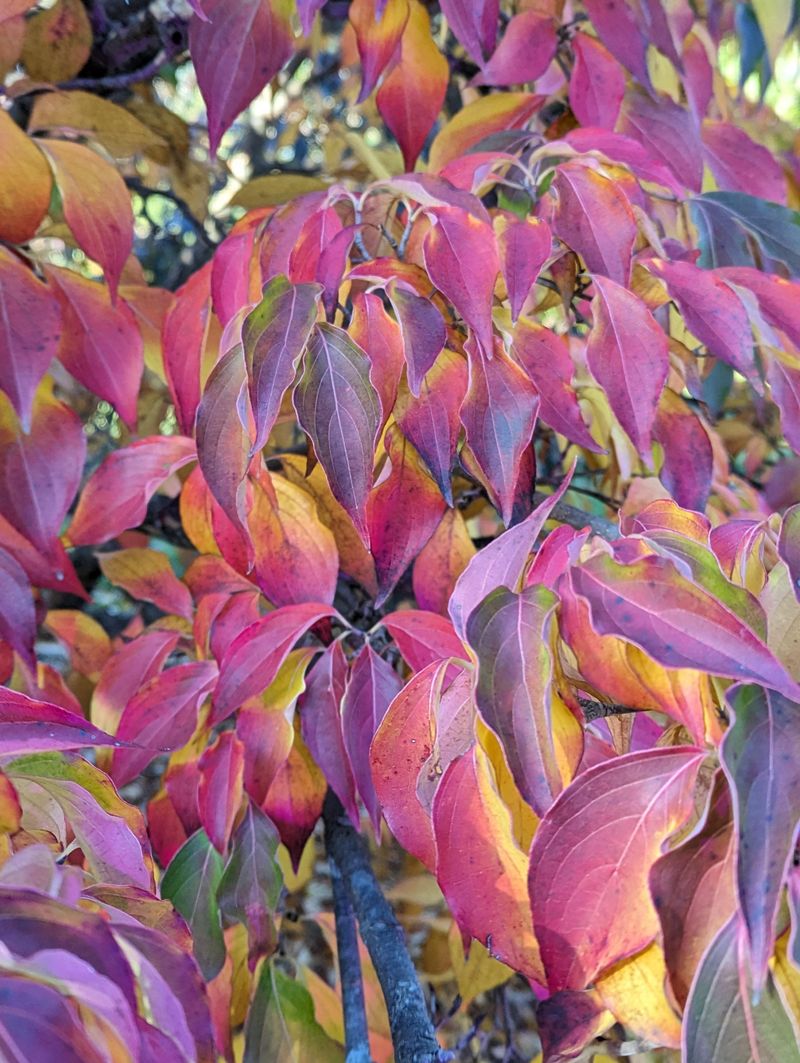
North Carolina’s state flower comes from this tree, and most people know it for spring. Autumn is the quieter payoff, when Cornus florida leaves shift to burgundy and deep wine red under a canopy of pines and oaks.
Height usually stays between 15 and 30 feet, making it a natural fit beneath bigger trees nearby. Glossy red berry clusters show up alongside the changing leaves and disappear fast once migrating birds find them.
Drought handling depends heavily on placement here. Dogwood evolved as a woodland edge tree, so it does best with morning sun, afternoon shade, and a layer of leaf litter or mulch keeping the roots cool.
Bake one in an open lawn with no mulch, and a dry August will scorch the leaves brown before fall even starts. Extension agents across the state hear that complaint every drought year without fail.
Disease pressure is worth knowing about too. Dogwood anthracnose and powdery mildew trouble stressed trees, and resistant selections or hybrid kousa crosses may be smarter choices in tough spots.
Watering is not optional for the first few seasons. A slow soak once a week during dry weather establishes deep roots, and after that a monthly drink during serious drought usually keeps the fall show intact.
7. Sassafras Rounds Out A Tough Lineup
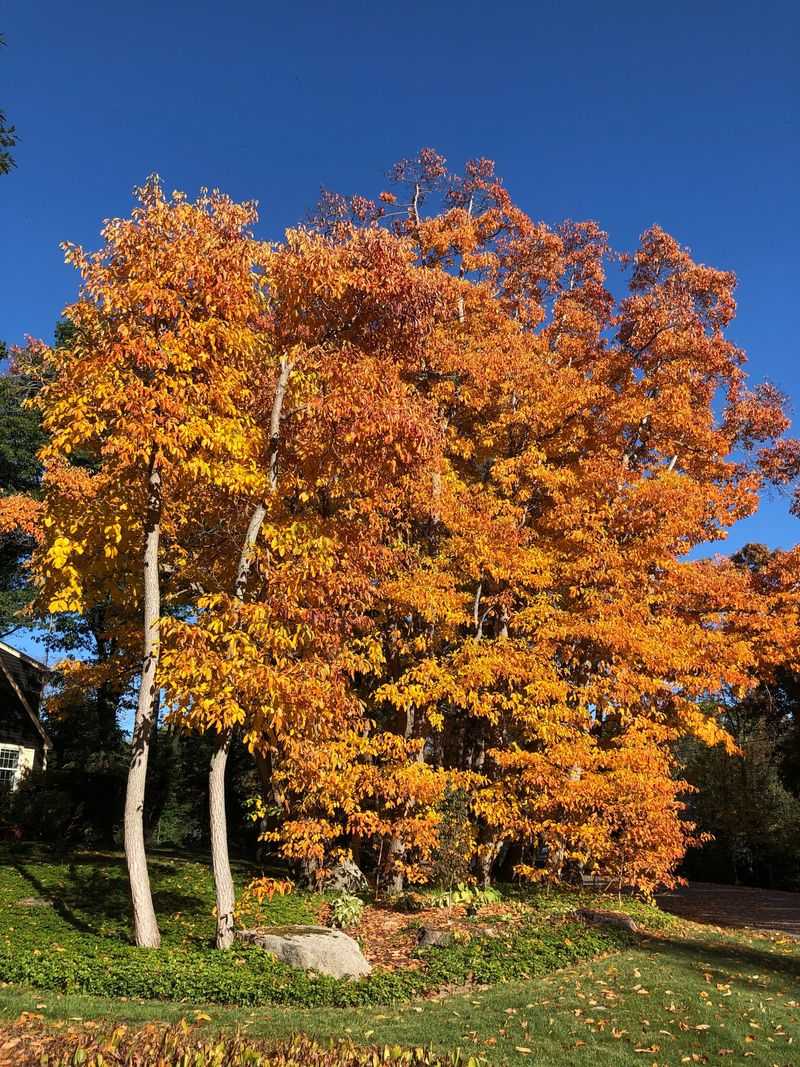
Mitten-shaped leaves make sassafras easy to identify, and kids usually spot them first on a fall walk. Come October, those odd leaves turn a wild mix of yellow, orange, pink, and red, sometimes all on one branch.
Sassafras albidum shows up along fencerows, old fields, and dry woodland edges all over North Carolina. Any tree that thrives in abandoned pasture soil has already proven it can handle a thirsty summer.
Aromatic roots and twigs gave the tree its history. Early settlers brewed sassafras tea and root beer flavoring from it, though safrole concerns ended commercial food use decades ago.
Spicebush swallowtail caterpillars feed on the leaves, so a small grove doubles as a butterfly nursery through the warmer months.
Spreading is the main quirk here. Sassafras sends up root suckers and forms thickets, which looks great along a natural border and less great in a manicured lawn.
Full sun brings out the strongest color, and well-drained soil keeps the roots happy throughout the season.
Here is the honest closing thought for all seven of these trees. Drought tolerant describes a survival ability, not a guarantee of gorgeous leaves, and newly planted specimens have small root systems that cannot reach deep moisture yet.
During severe or prolonged drought, give young trees a slow, deep soak every week or two, mulch generously, and hold off on pruning. That small effort is what keeps color brilliant instead of brown.