Is That Messy Garage Web a Black Widow? What Arizona Homeowners Should Know
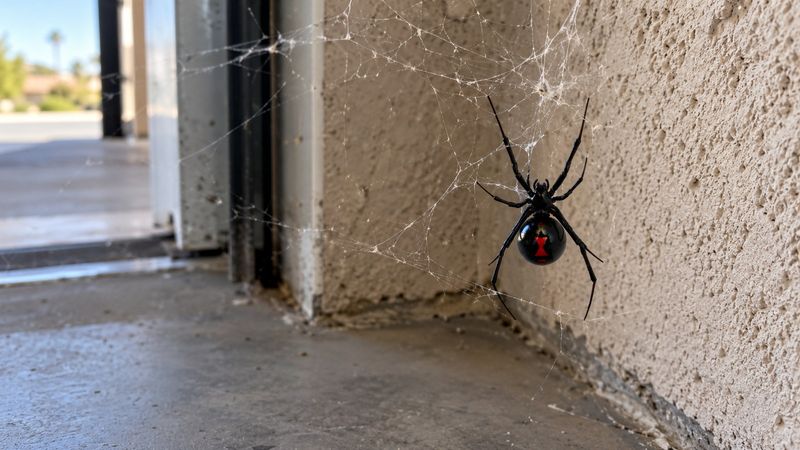
A tangled, sticky web in a dim garage corner can make anyone pause. In Arizona, western black widows live in sheltered spots like this.
But the web alone cannot tell you who made it. Here is how to read the clues, clean up safely, and keep your garage less inviting.
What a Tangled Web Can—and Cannot—Tell You
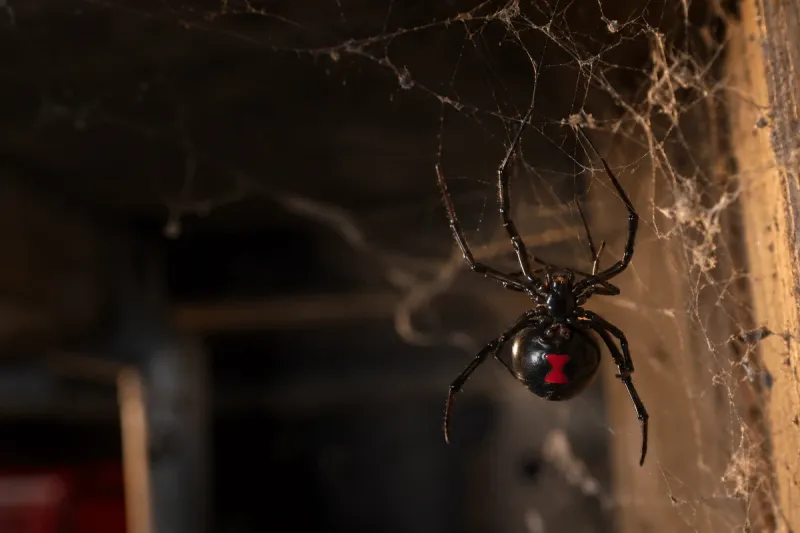
Low in a shadowy corner, a web with no tidy pattern can look like a tiny disaster. Widow spiders build exactly that kind of irregular, sticky web with tough strands, and the spider often hides in a retreat or debris nearby instead of sitting in plain view, according to UC Pest Notes on widow spiders.
Still, the web is only a clue. Many other spiders also make tangled webs, and the web you found may be old, abandoned, or empty.
Its shape and location cannot prove that a black widow lives there.
So treat it as a reason to be careful, not as an identification test. Keep your hands out of it, look from a distance, and plan to clean it up with the right tools and protection.
Look for the Spider, Not Just the Web
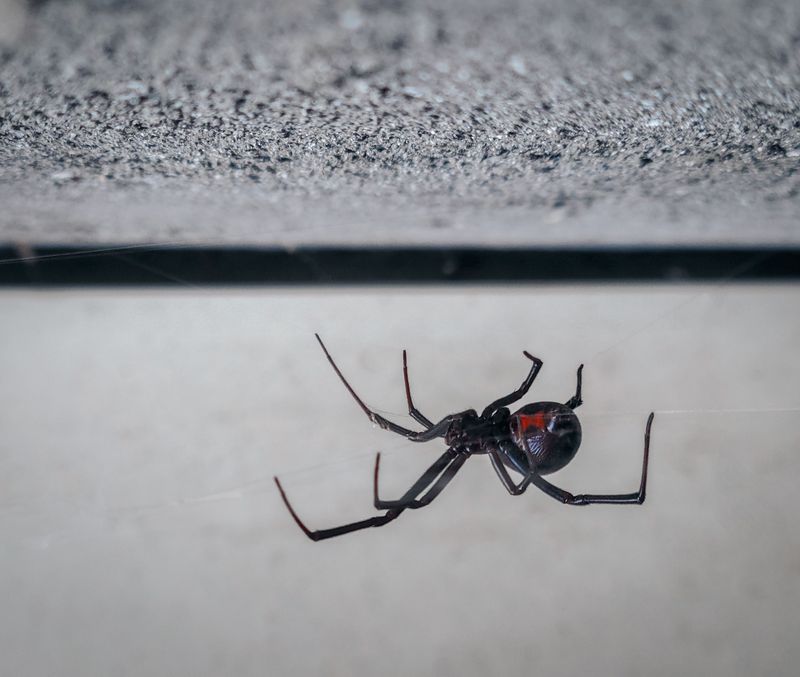
Arizona’s black widow is the western black widow, Latrodectus hesperus. A mature female gives you much better clues than any web does.
Look for a shiny, dark, rounded body with a red or orange marking on the underside, as described by University of Arizona Extension.
Not every widow fits that picture. Males and juveniles can look quite different from adult females, so a spider without the bold marking is not automatically harmless or a different species.
Use a flashlight and stay back. You do not need to get close, poke at the spider, or flip it over to check for a marking.
A photo taken from a safe distance can help an expert identify it.
Why Spiders Use Sheltered Garage Spaces
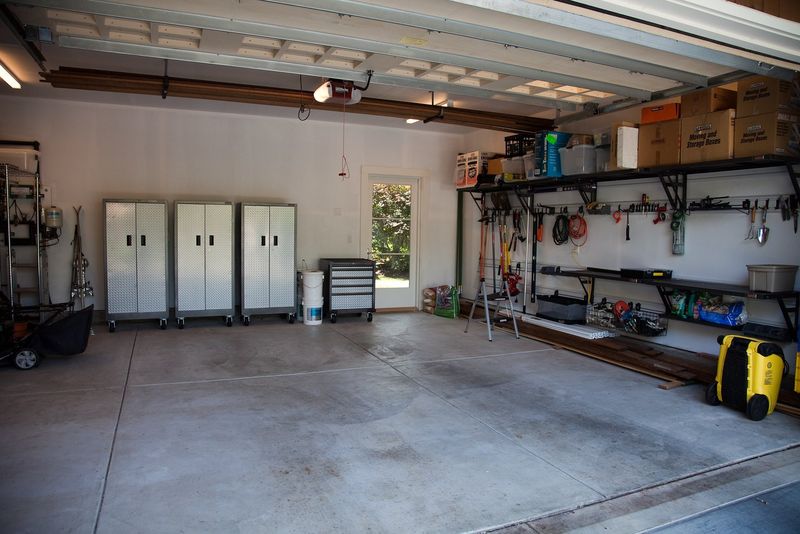
Garages are quiet, dim, and full of nooks, which suits a shy spider. University of Arizona Extension describes Arizona black widows as secretive, and clutter gives them plenty of places to tuck away.
Boxes, stacked pots, and the gaps behind shelves can all work as hiding spots.
You may have heard that cooler nights push black widows into garages. That claim is not backed up.
Black widows are active year-round in Arizona, and Arizona fall pest guidance mentions fall wandering for other spiders, such as wolf spiders, not a black widow migration.
Spiders in general can slip in through cracks or ride in on firewood, boxes, and stored materials. That is a normal route for many species.
It does not show that a widow moved in because of the season.
Inspect Without Reaching Into the Corner
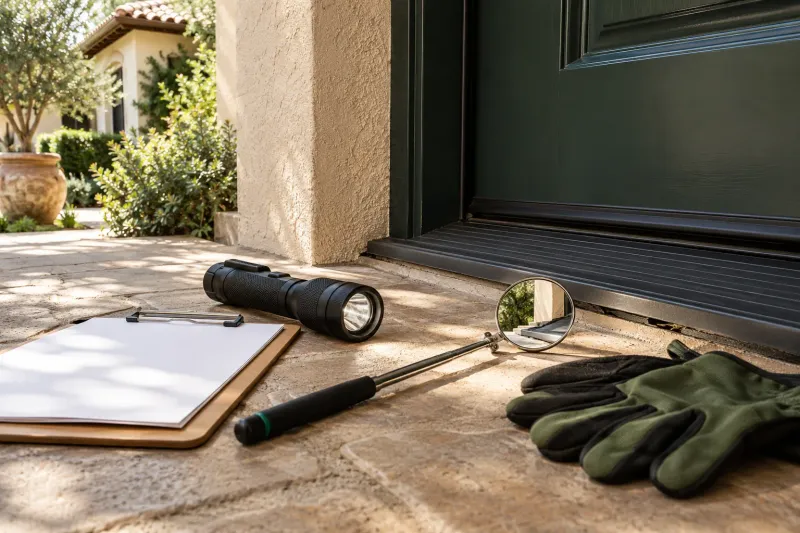
Most spider bites happen by accident, when a hand lands where a spider is hiding. Before you move boxes or tools, put on sturdy gloves and long sleeves.
CDC and NIOSH guidance also advises shaking out clothing and shoes before you put them on, which helps if you keep work boots in the garage.
Shine a flashlight into corners first and look before you touch. Lift items slowly from the outside edge instead of sliding a bare hand underneath.
Never brush at a suspicious web with your fingers.
Skip any urge to catch a spider to identify it. Handling one raises the chance of a bite.
Take a photo from a distance if you want a second opinion.
Remove Webs and Egg Sacs With a Vacuum
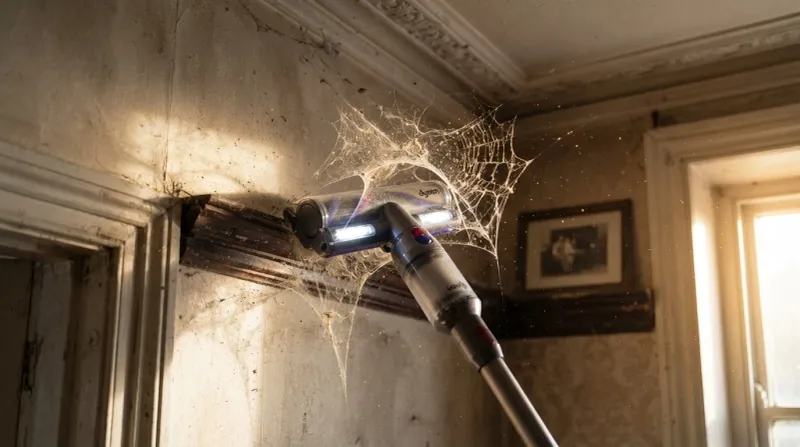
A vacuum is the safest everyday tool for this job. University of Arizona Extension recommends vacuuming webs, unwanted spiders, and egg sacs weekly.
Use a hose attachment so your hands stay well back from the corner.
When you finish, discard the bag or empty the canister outside right away. Otherwise, spiders or egg sacs could stay alive inside the machine.
A tied-off bag in an outdoor trash bin works well.
Gloves add a layer of protection, since UC IPM advises wearing them to avoid accidental bites. Skip barehanded brushing and skip broad pesticide spraying.
Regular vacuuming does the work without extra chemicals.
Reduce Hiding Places and Entry Opportunities
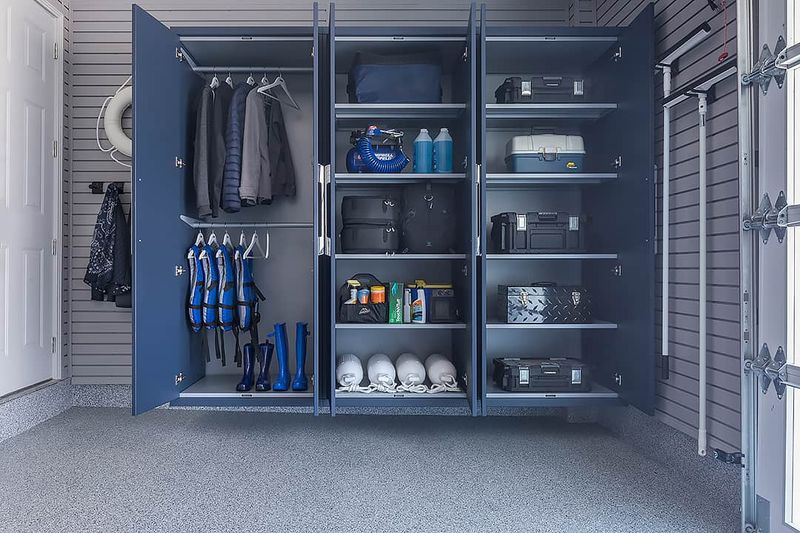
A tidier garage gives spiders fewer places to settle. Clear out stacks of cardboard, old pots, and piles of rags that sit untouched for months.
Plastic bins with tight lids on shelves leave fewer gaps than loose boxes on the floor.
Check for cracks around doors, vents, and the foundation, and seal what you can. Spiders may enter through small openings, as noted by University of Arizona Extension, and they can also arrive on firewood, boxes, or stored materials.
Inspect these items outside before bringing them in.
None of this guarantees a spider-free garage. It simply cuts down the hiding spots and entry points.
Pair it with weekly vacuuming rather than routine pesticide spraying.
What to Do About a Suspected Bite

If you think a spider bit you, stay calm and wash the area with soap and water. Then call the Arizona Poison and Drug Information Center at 1-800-222-1222 for guidance.
The Arizona Poison Center can talk you through what to watch for.
Seek medical advice, especially if symptoms develop. Black widow bites can cause significant symptoms in some people, but severity varies, and not every bite becomes a serious problem.
Appearance alone cannot tell you what bit you.
If you can do so safely, a photo of the spider can help. Never try to catch it with bare hands.
A quiet garage is easy to share when you keep a little caution close at hand.