6 Ways to Keep Michigan Arborvitae and Junipers From Splitting Under Heavy Snow
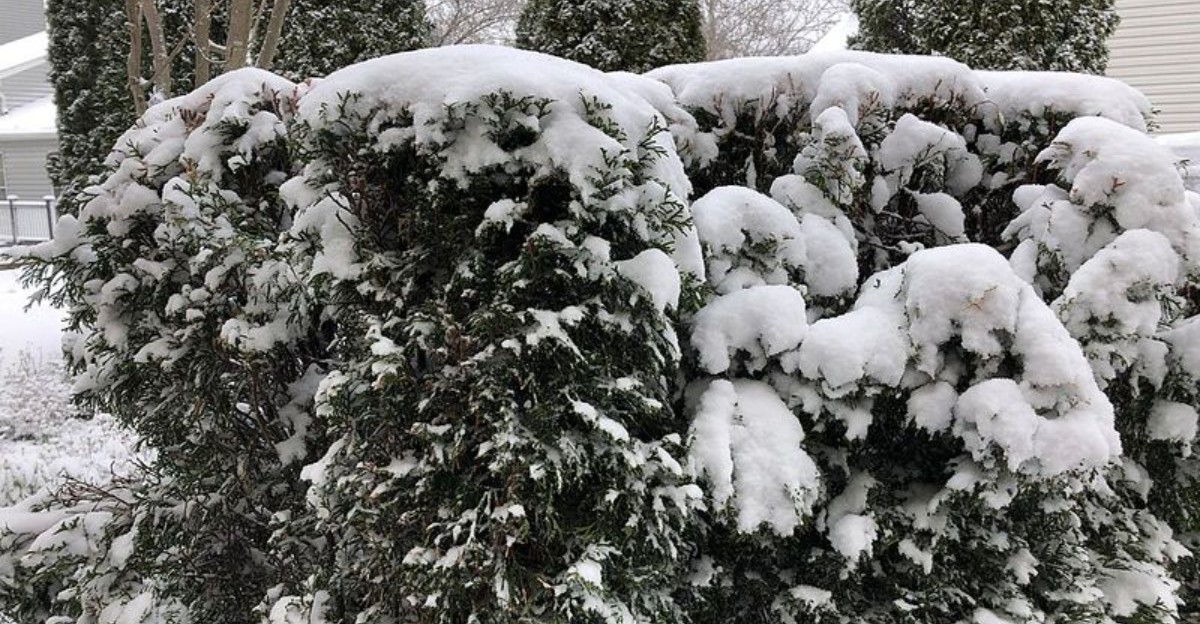
Heavy wet snow can weigh three or four times more than the fluffy powder that kids love for sledding. That soggy load piles into upright evergreens and quietly pries their tidy shapes apart overnight like a slow crowbar.
In many northern yards the worst damage often shows up on narrow multi-stemmed shrubs planted beside driveways and front walks. Those slim stems bend outward under the weight, and some rarely spring back to their old shape.
I learned this lesson the hard way after one March storm left my favorite hedge looking like a dropped bouquet. You may be surprised how much of that heartache can be prevented with a few minutes of fall work.
Michigan gardeners deal with lake-effect storms that can bury a yard, so our shrubs deserve a smarter plan. So which simple tricks actually keep those tall green columns standing proud and straight until spring?
1. Tie Upright Arborvitae Branches Together Before Snow Season
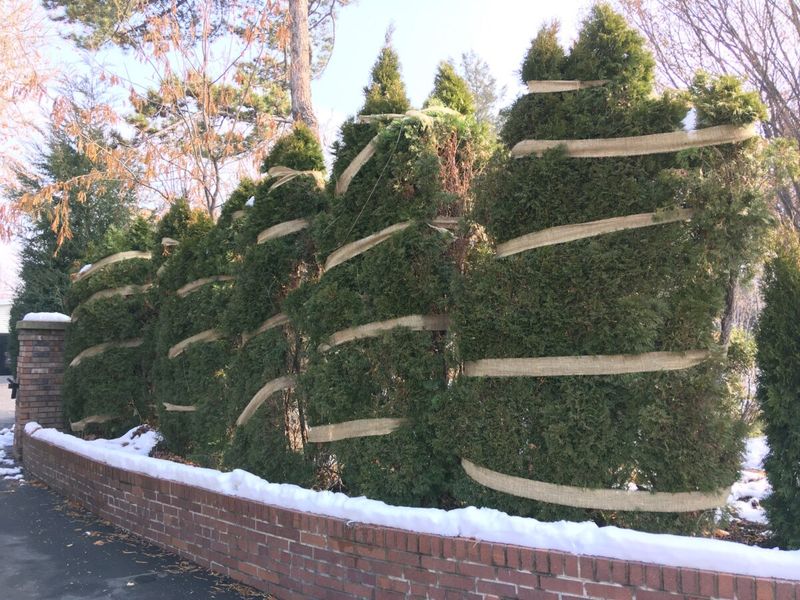
A loose spiral of soft twine might be the cheapest insurance policy your tall evergreens will ever get. I wrap mine every November, and the neighbors usually ask if I am gift-wrapping my shrubs.
Michigan State University Extension suggests tying upright arborvitae and junipers before heavy snow arrives to keep stems from splaying. Bundled branches act like one sturdy column instead of a dozen thin stems that each catch snow.
Pick a soft, wide material such as strips of old cotton sheet, jute twine, or stretchy arbor tie. Thin wire or fishing line can cut into bark, so leave those materials in the garage.
Start near the base, tie a secure knot to the main trunk, and spiral upward around the plant. Keep each loop snug enough to hold branches together but loose enough that foliage does not get crushed.
Finish near the top and tuck the loose end inside the foliage so wind cannot whip it around. Your shrub will look a bit like a wrapped candy, but the shape stays tidy all winter.
Mark your calendar to remove every tie in early spring once the heavy storms have passed. Forgotten twine can girdle growing stems over time and leave ugly scars that take years to fade.
In my garden, this one chore has saved more hedges than any fancy product I have tried. Ten minutes per shrub feels like a small price for straight handsome evergreens when April arrives.
2. Sweep Snow Off Arborvitae Branches With a Soft Broom
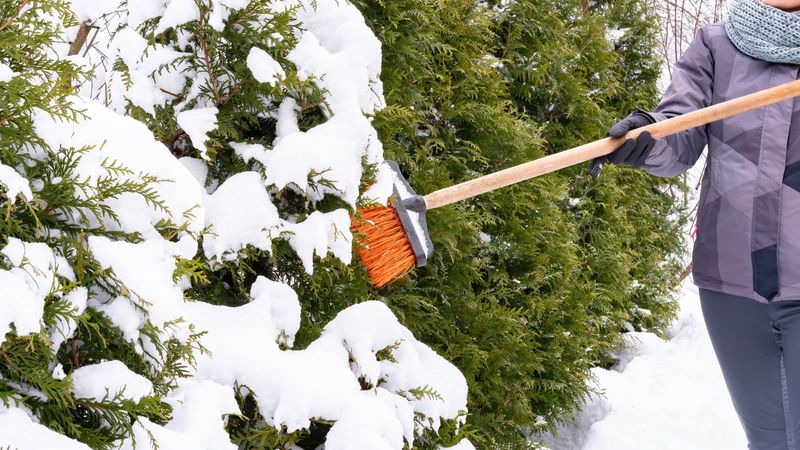
Nothing beats the sound of a broom swishing through fresh snow while your evergreens slowly lift their heads again. Light, fluffy snow rarely causes trouble, but heavy wet snow can bend branches far past their comfort zone.
Head outside soon after the snow stops, before the load freezes into a crusty layer that clings tightly. Grab a soft household broom instead of a shovel or rake, since sharp edges can tear bark.
Use gentle upward sweeps that lift snow off the branches rather than pushing it down toward the ground. Downward strokes add extra pressure to stems that are already bent, which can turn a sag into a split.
Work from the bottom of the shrub toward the top so falling snow does not reload lower branches. Tall plants may need a long-handled broom, but please avoid climbing a ladder on icy ground.
Resist the urge to shake the trunk or whack branches hard, even when you feel rushed. Cold wood becomes stiff and less flexible, so rough handling can snap stems that would have recovered.
During long lake-effect storms, a quick sweep every few hours keeps the weight from building to a breaking point. I keep a broom right by the back door for this job, and it gets plenty of use.
Snow that has already slid off naturally can stay where it lands as a cozy blanket over the roots. That insulating layer actually helps shield shallow roots from harsh cold snaps later in the season.
3. Leave Ice Coated Junipers Alone Until They Thaw
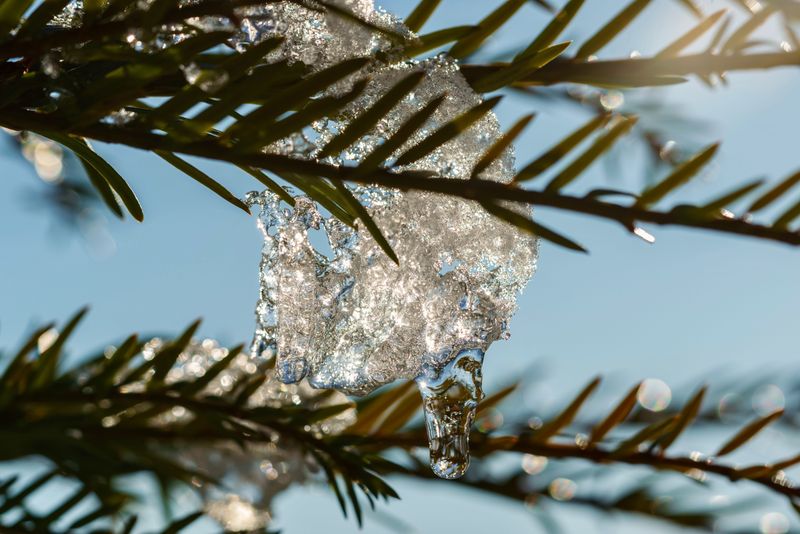
Ice-glazed junipers sparkle like glass sculptures in the morning sun, and honestly they are gorgeous to look at. Touching them, however, is one of the quickest ways to turn a pretty scene into a pile of snapped twigs.
University extension experts agree that branches covered in ice should be left alone until the coating melts on its own. Frozen stems are brittle, so even a gentle tap can crack wood that might otherwise bend and recover.
Avoid pouring warm water over the plant, because it can refreeze into an even heavier layer of ice. Salt and chemical deicers are also a poor choice, since they can burn foliage and harm roots.
Patience feels hard when a favorite shrub is bowing toward the ground, but most branches lift as temperatures rise. I usually grab a mug of hot cocoa and let the afternoon sun handle the heavy lifting instead.
Once the ice melts, check each stem closely for cracks or torn pieces that need attention right away. Clean cuts with sharp pruners heal far better than jagged breaks left flapping in the wind.
Bent branches that are still intact can often be tied loosely back into place for the rest of winter. Remove those supports in spring, and many junipers will fill the gap during the next growing season.
Some splits are simply too big to fix, and that is okay to admit after a rough winter. A local arborist can tell you whether bracing makes sense or whether the plant should be replaced.
4. Prune Young Arborvitae Down to One Central Leader
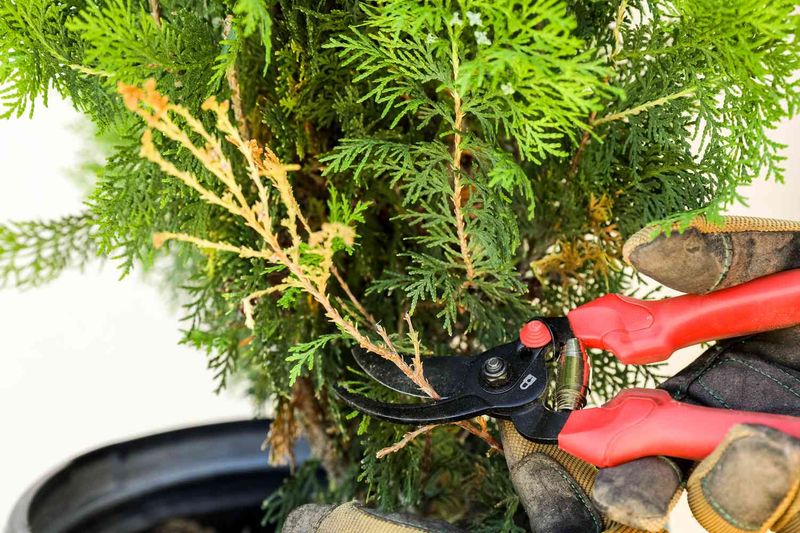
Peek inside a tall arborvitae and you might find several skinny trunks racing each other toward the sky. Those competing leaders form tight V-shaped crotches, and snow loves to wedge itself right into that weak spot.
Trees with one strong central leader tend to shed snow better and hold their shape through tough winters. Training young plants early is much easier than trying to correct a mature shrub with five tangled tops.
Late winter or early spring, before new growth starts, is a smart time for this kind of structural pruning. Avoid heavy cutting in late summer or fall, because tender new shoots may not harden off before cold arrives.
Choose the straightest, healthiest stem as your leader and remove the rival stems at their point of origin. On larger plants, take out one competitor per year so the shrub does not lose too much foliage at once.
Junipers need extra care, since they rarely sprout new growth from bare older wood deep inside the plant. Light tip pruning within the green foliage keeps them dense without leaving permanent brown holes in the canopy.
Arborvitae share that same trait, so keep your cuts within the green zone instead of shearing deep. A dense, well-shaped plant spreads snow weight more evenly than a lopsided one with thin spots.
I think of pruning as teaching a young tree good posture before winter tests its backbone. A few thoughtful cuts now can spare you from hauling a broken shrub to the curb later.
5. Choose Sturdy Arborvitae and Juniper Varieties for Snowy Yards
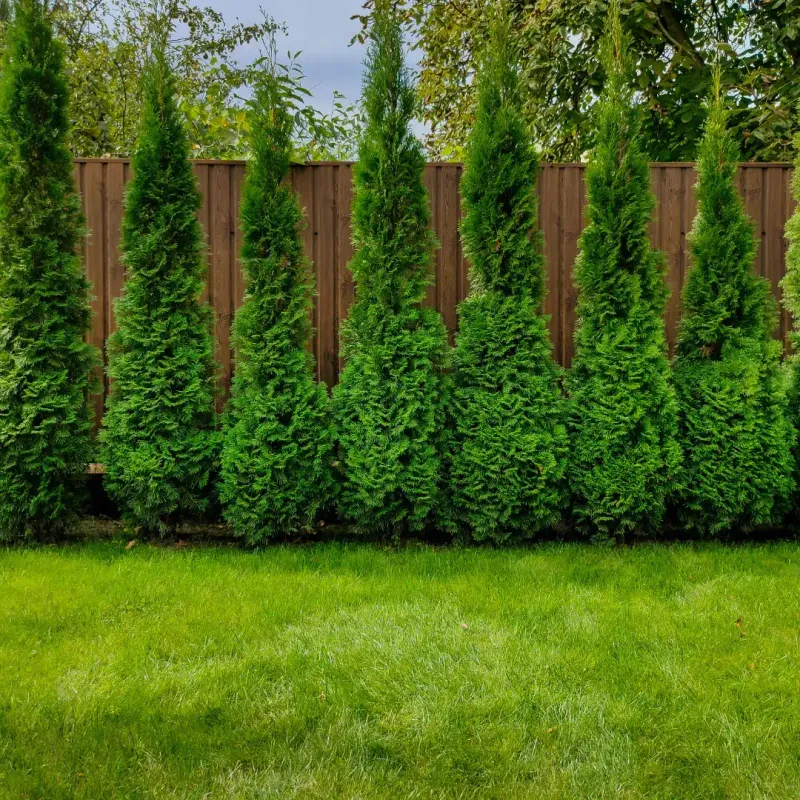
Plant breeders have spent decades selecting evergreens, and their choices make a real difference when the snow piles up. Not every narrow shrub at the garden center handles heavy winter loads equally well, so shopping wisely really pays off.
Most of Michigan falls between USDA zones 4 and 6, and both arborvitae and many junipers handle that cold easily. Cold tolerance is only part of the story, since plant shape strongly affects how much snow a shrub can carry.
Popular ‘Emerald Green’ arborvitae often grows several upright stems, which can splay apart under wet snow without support. ‘Techny’ arborvitae has a broader pyramid shape and a reputation for solid winter hardiness in northern gardens.
For junipers, low spreading types such as creeping juniper simply let snow rest on top without much fuss. Tall columnar forms look elegant along a fence, but they usually need tying in exposed spots.
When shopping, look for nursery plants with a single main trunk rather than a bundle of equal stems. Ask the staff to show you the base, because hidden multiple leaders are easy to miss in a pot.
Native choices shine here too, since eastern red cedar and northern white cedar both grow wild across the region. Both species have deep roots in local landscapes and support birds that shelter in their dense branches all winter.
I love wandering nursery rows in autumn and gently squeezing each shrub to feel how firm its branches are. A little homework before buying can save you years of propping up floppy evergreens every winter.
6. Plant Evergreens Away From Roof Edges and Snowplow Piles
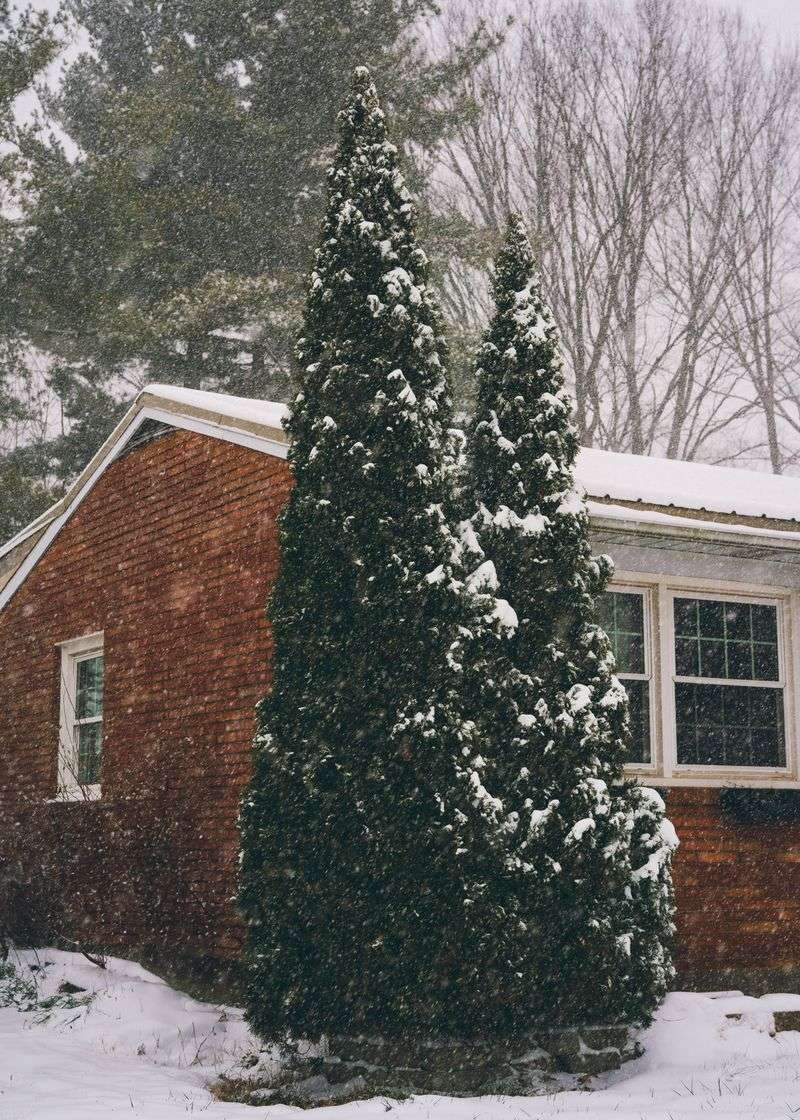
A roof can dump a whole avalanche of sliding snow onto a shrub in one loud, startling whoosh. Arborvitae tucked right under the eaves take that hit again and again, and their branches pay the price.
When planting new evergreens, measure where snow slides off your roof and keep shrubs a few feet beyond that line. Mature width matters too, so check the plant tag and give each one plenty of elbow room.
Driveways and sidewalks create another problem, since shovels and snowblowers toss heavy, compacted snow right onto nearby plants. Road plows add even more weight, and that roadside snow often carries salt that can brown evergreen foliage.
Shrubs already growing in a tricky spot can be protected with a simple wooden A-frame shelter built over them. The slanted boards catch falling snow and send it sideways instead of letting it crush the branches below.
Burlap screens also help near roads, blocking salt spray and drying winds that cause winter burn on needles. Set the stakes so the fabric stands a few inches away from the foliage rather than pressing against it.
Proper fall watering supports all of this, because well-hydrated evergreens stay more flexible and resist winter drying better. Give them a deep soak before the ground freezes, then add two to four inches of mulch.
In my yard, relocating one battered shrub just six feet away ended years of springtime repair work. Sometimes the smartest snow protection plan is simply choosing a spot where the snow cannot reach.