Thanksgiving Cactus or Christmas Cactus? The Easy Way Arizona Homeowners Can Tell Them Apart
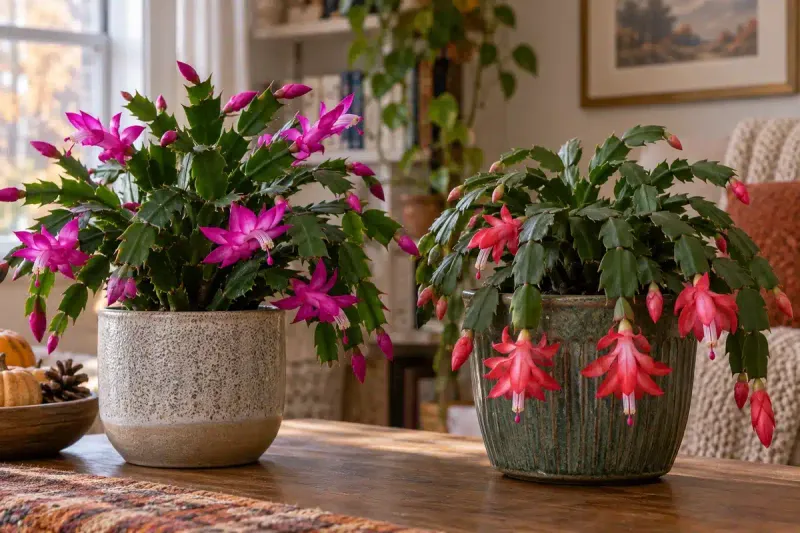
Those flat, leafy-looking pieces on a holiday cactus are not leaves at all. They are stems, and their edges hold the best clue to your plant’s identity.
Many Arizona homeowners bring one home in November and wonder which kind it is. A quick look at the stem edges can settle it in about a minute.
Check the Edges of Several Stem Segments
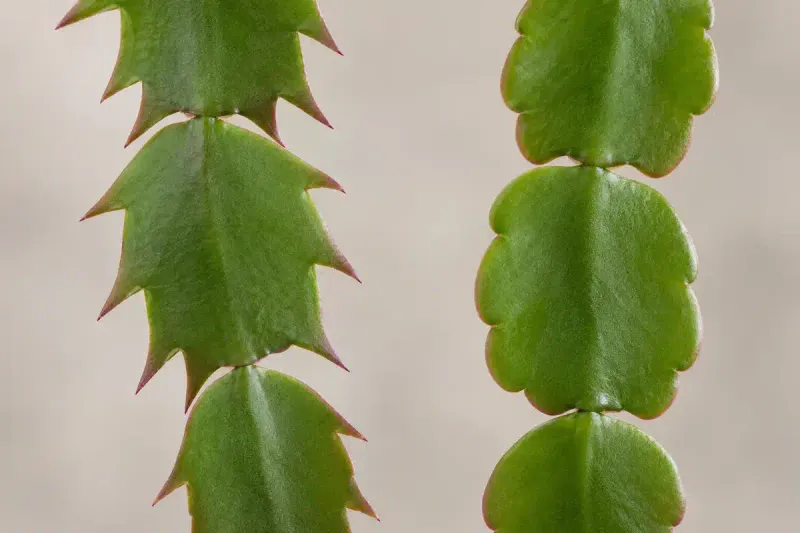
Grab a few of the flat green pieces and run your eyes along the margins. Pointed, claw-like projections suggest the Thanksgiving-cactus type.
Smoother, rounded scallops suggest the Christmas-cactus type.
Those flat pieces are stems, not true leaves, which is why botanists call them segments. UConn’s home garden guide and Illinois Extension describe this same basic split between pointed and rounded edges.
Check several segments rather than just one. A single edge can be irregular, damaged, or oddly shaped, and a handful of samples gives a far more reliable picture.
Treat this as the clearest quick check, not an infallible test, since hybrids can blur the lines.
Try it in good light, ideally near a window, and hold the plant at eye level. If most segments show sharp teeth, lean toward Thanksgiving.
If most look softly rounded, lean toward Christmas.
Use Flowers as Supporting Evidence
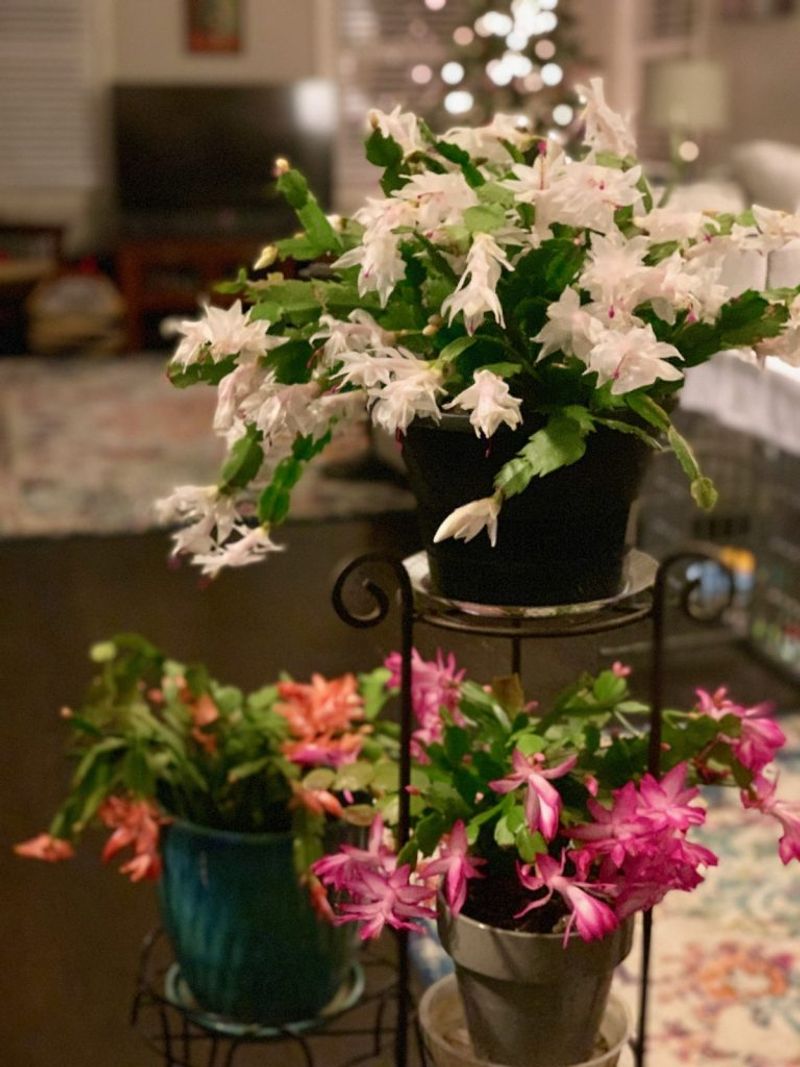
If your plant happens to be in bloom, the flowers can add a few more clues. University of Arizona Extension describes Thanksgiving-cactus flowers as more horizontal and asymmetrical, with yellow pollen.
Christmas-cactus flowers, by comparison, are described as more symmetrical and hanging, with pink pollen. A close look at the center of a bloom, ideally with a magnifier, helps you see the pollen color.
Treat these as backup evidence only. Hybrids are common, and their flowers can mix traits from both types, so a bloom that seems to say one thing may be telling a muddled story.
Flower color deserves extra caution. Pink, red, white, orange, and purple blooms show up across both types, so color alone will not name your plant.
Come back to the stem edges first, then use the flower shape and pollen as a tiebreaker.
Bloom Dates Do Not Prove Which Type You Have
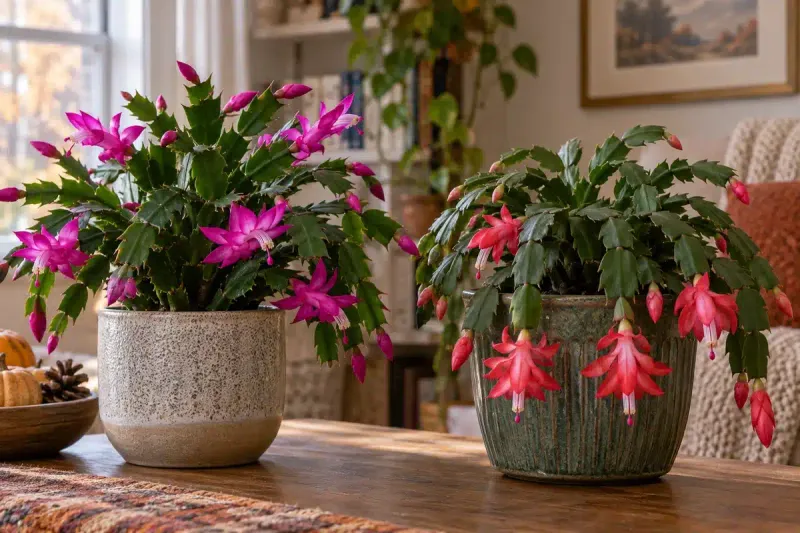
Plenty of people assume a cactus blooming near Thanksgiving must be a Thanksgiving cactus. It is a tempting shortcut, but it does not hold up well.
Short days and cool nights influence bud formation, and the customary holiday windows are only rough guides.
Growers can also manipulate light and temperature, so plants sold in stores may flower earlier or later than you would expect. UConn and Illinois Extension both explain how light and temperature steer flowering.
Published guides also cite different dark periods and nighttime temperatures for setting buds, so no single number works as a universal rule. Your home’s lighting and temperature can shift things, too.
A plant that blooms in December or even January tells you little about its type. Use the date as loose background and let the stem edges do the real work.
Plant Labels May Use Different Names
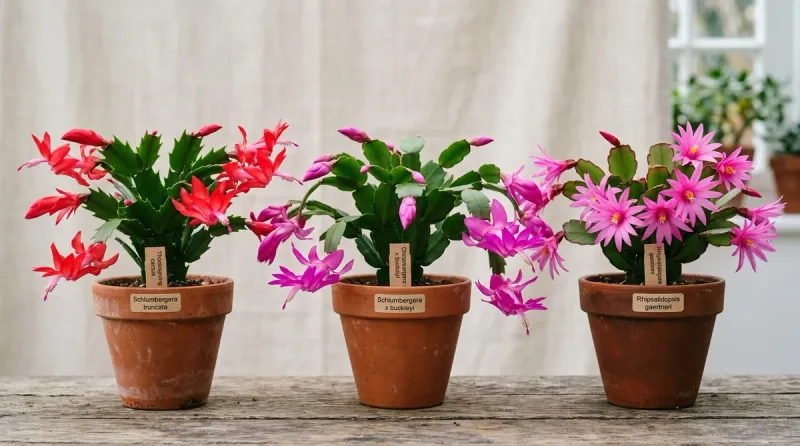
Garden center tags can be surprisingly inconsistent. The University of Arizona calls the Christmas-cactus type Schlumbergera × bridgesiiS. × buckleyiS. bridgesii, while other references use or .
You can see the Arizona naming in its holiday cacti guide.
Kew’s Plants of the World Online accepts S. × buckleyi as an artificial hybrid of S. russelliana and S. truncata. Sorting out every naming difference is a job for taxonomists, not homeowners.
Retail labels and scientific names are not always consistent or interchangeable. A tag reading Christmas cactus on a plant with sharp-toothed segments deserves a second look.
For practical purposes, UConn’s guide points back to what you can see. Trust the segment edges over the label.
Give These Rainforest Cacti Indoor Care
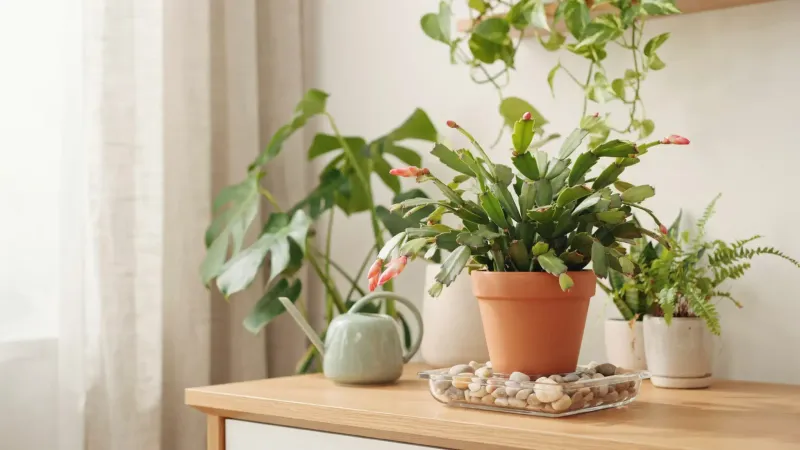
Despite the name, these are not desert plants. They come from Brazilian rainforests, where they commonly grow as epiphytes, perched on trees rather than rooted in sandy ground.
University of Minnesota Extension notes this background, and it explains why desert-cactus habits do not fit.
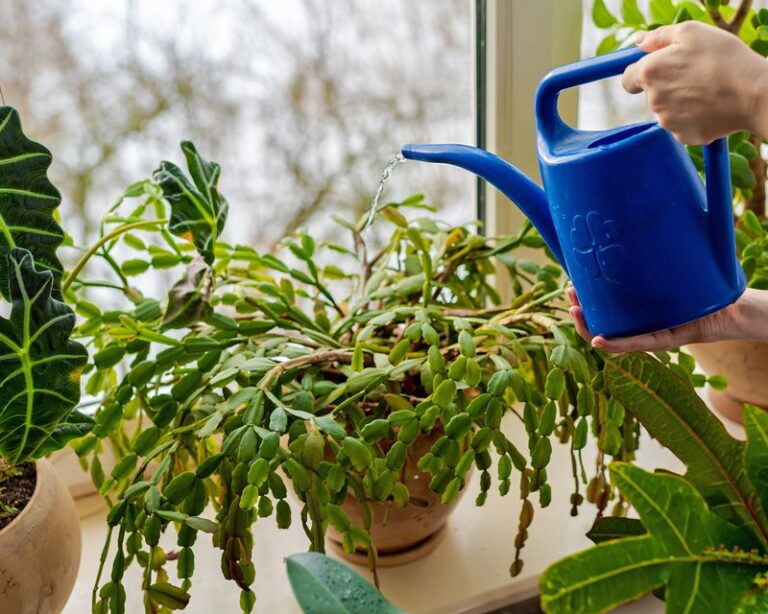
Aim for bright, indirect light, such as a spot near a window with a sheer curtain. Use a well-draining potting mix, since roots that sit wet tend to struggle.
When you water, let the excess drain out of the pot and never leave it standing in a saucer of water. University of Arizona Extension offers similar guidance for holiday cacti.
Skip any rigid watering schedule. Check the mix and let it guide you, as the Illinois Extension guide also suggests for keeping plants healthy.
Use Caution Before Moving One Outdoors in Arizona
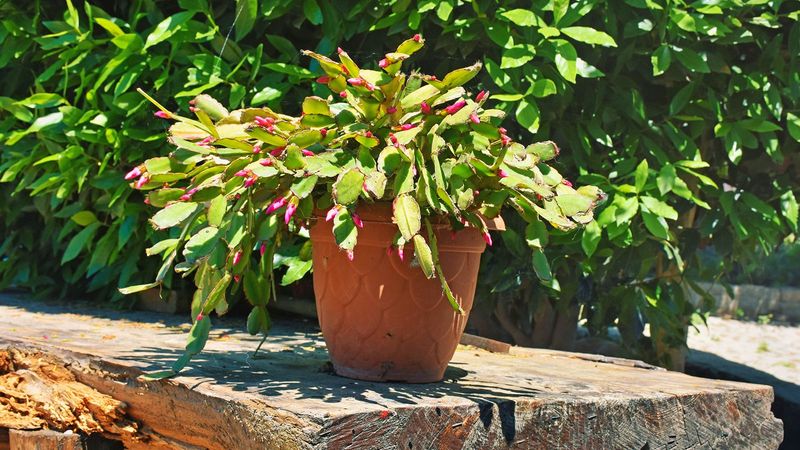
A summer vacation outdoors is possible, but Arizona’s conditions call for care. University of Arizona Extension allows for a shaded summer location and advises bringing plants indoors before temperatures fall below 45°F.
That number is not a full placement guide. Heat and direct sun also matter, and a spot that stays mild at night can still scorch rainforest stems by afternoon.
Since these plants come from forest canopies, NC State Extension is a handy reference for their light preferences.
If you try it, pick a protected, shaded area and watch the plant closely. Moving it back inside is always the safer choice when conditions look rough.
Whichever spot you choose, your best identification tool stays in your hands. Flip a few stems and study the edges, because teeth or scallops will tell you more than any tag.