Here’s Why Pothos Leaves Turn Yellow During Winter In Michigan
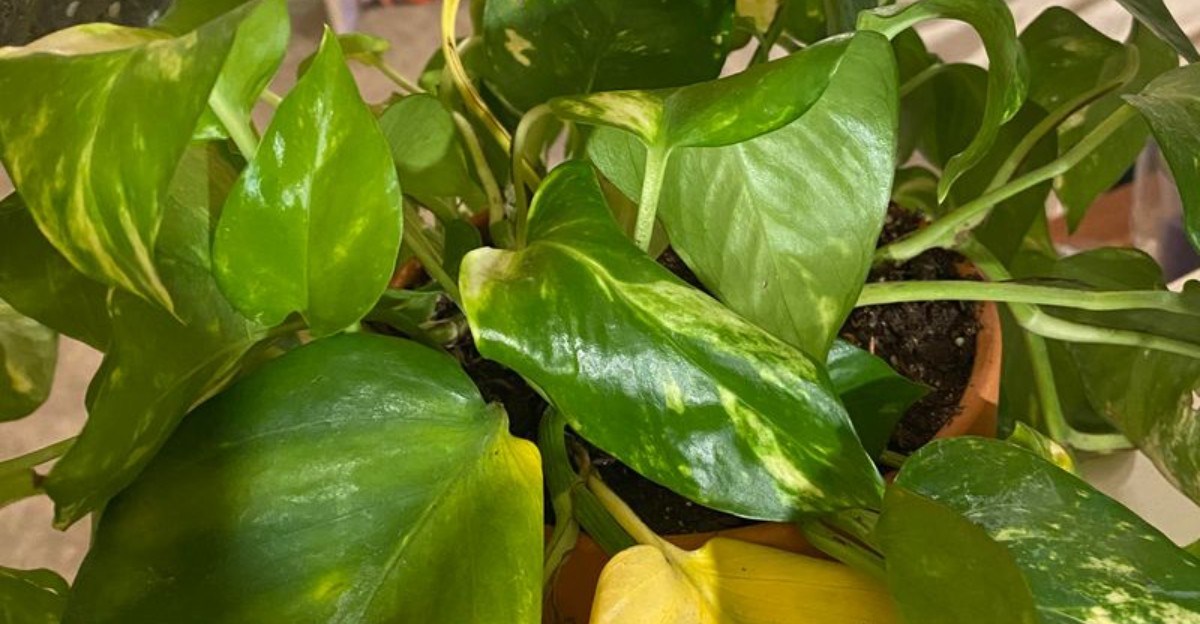
A houseplant can get into trouble in January without a single drop of water being skipped. In fact, too much care is often the bigger problem once the days get short.
One thing I love about gardening is how plants drop hints before they struggle. A pale leaf here, a soft stem there, and suddenly a tough tropical vine is asking for a change in routine.
Michigan winters bring gray skies, furnace-dried air, and chilly window glass all at the same time. That combo can confuse a plant that grew up in steamy forests on a Pacific island.
I know how frustrating it can be when a favorite trailing plant starts fading on the bookshelf. The real question is which winter habit is causing the trouble. The answer might surprise you, and the fix is usually easier than you expect.
1. Those Yellow Pothos Leaves Start With a Clue Hiding in the Pot
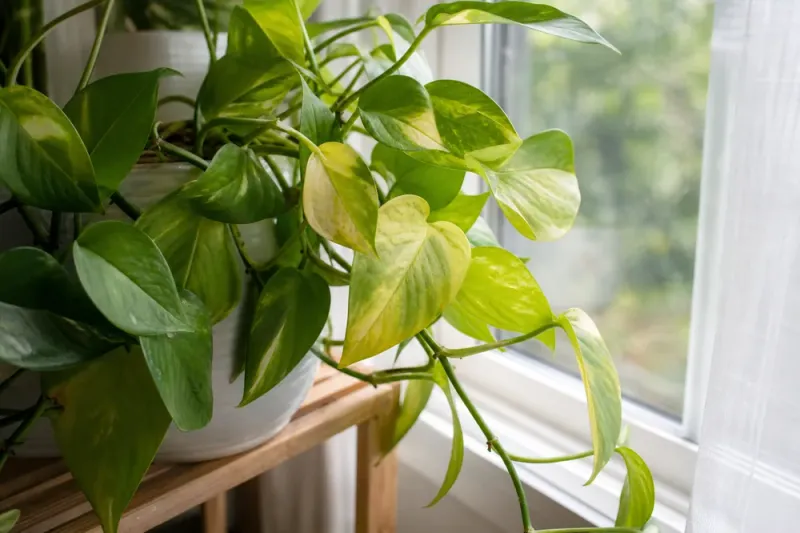
Most people stare at the leaves when trouble shows up. I get it, since yellow is hard to ignore against all that green. The better clue sits a few inches down, in the soil around the roots.
Soggy soil is the most common reason pothos leaves turn yellow in winter. Roots need air as much as water, and soil that stays wet pushes the air out. Without oxygen, roots weaken and can start to rot.
Try a quick test right now. Push a finger into the soil about two inches deep and notice how it feels. If it is cool and damp days after your last watering, you likely found the problem.
Other signs point the same way. Yellow leaves that feel soft or limp, a sour or musty smell, and black, mushy roots all suggest too much moisture. Healthy roots look firm and white or light tan.
Fungus gnats can also give it away. These tiny flies love damp potting mix, so a cloud of them around the pot hints that the soil stays wet too long.
Once you know what is going on, the fix becomes much clearer. Most yellowing plants recover nicely when the soil gets a chance to dry.
2. Your Watering Can Needs a Slower Winter Schedule
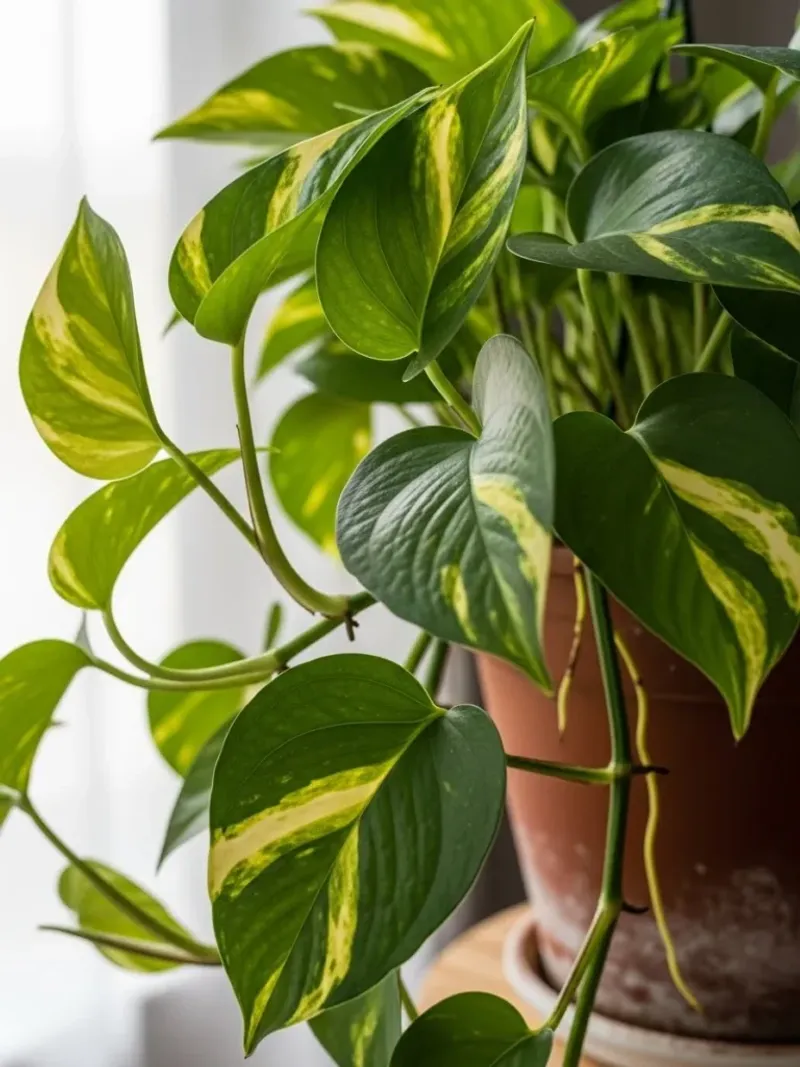
Summer pothos is a thirsty, fast-growing vine. Winter pothos is more like a houseguest napping on the couch. Growth slows way down when days get short, so the plant uses much less water.
Keeping your summer schedule is where many of us slip up. A pot that dried out in five days in July might stay damp for two weeks in January. Watering by the calendar makes that problem worse.
Let the soil guide you instead. Wait until the top inch or two feels dry before you water again. In many Michigan homes, that might mean every two to four weeks, though warm, bright rooms can need more.
When it is time, water thoroughly until some drains from the bottom. Then empty the saucer or cachepot within about 15 minutes. Standing water at the base keeps roots soggy.
Drainage matters a lot here. A pot without holes traps extra water, so slip a plastic nursery pot inside your decorative one.
Room-temperature water is kinder than icy tap water. Cold water can shock tropical roots. Filling the can the night before is an easy habit that solves it.
3. A Brighter Window Can Turn a Pale Pothos Around
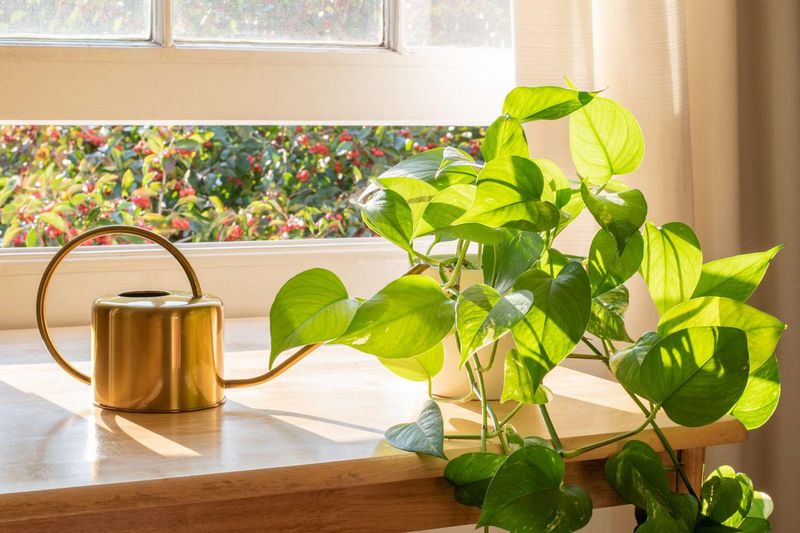
Michigan winters can feel like one long cloudy afternoon. Grand Rapids and much of West Michigan see heavy lake-effect clouds, so indoor light drops fast. Your pothos notices that more than you might think.
Pothos tolerates low light, which is part of its fame. Still, tolerating is different from thriving. In dim rooms, the plant may let its older leaves turn yellow because it cannot support them all.
Low light also slows how quickly soil dries. That links right back to the watering problem. Dim corners plus wet soil are a common winter combo behind yellow leaves.
Move your plant closer to an east, west, or south window for bright, indirect light. Winter sun is weaker, so a south window is often safe now. Just keep leaves from pressing on cold glass.
Variegated types like Marble Queen need extra light. Those white patches lack chlorophyll, so they make less food for the plant.
A simple LED grow light helps when windows fall short. Running it 10 to 12 hours a day can keep leaves greener until spring. Even a clip-on bulb over a bookshelf makes a real difference.
4. Cold Drafts From Frosty Windows Stress Tropical Pothos Vines
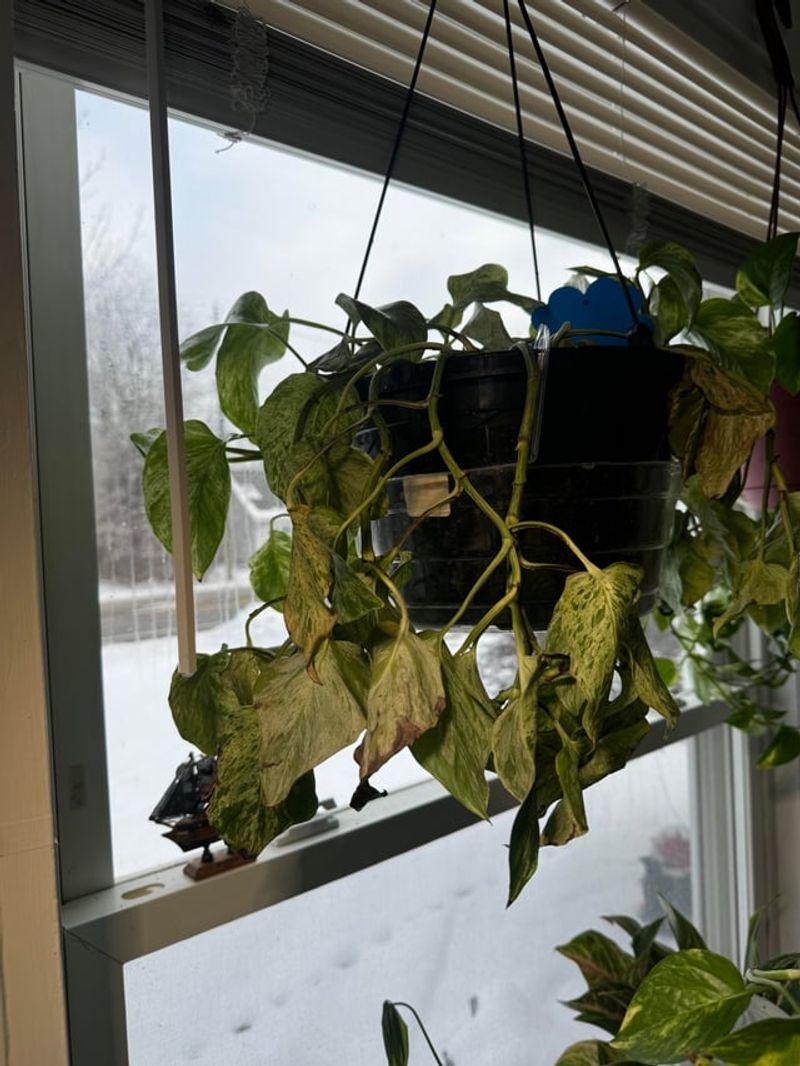
Pothos comes from Mo’orea in French Polynesia, a warm island in the South Pacific. Few places feel further from a January night in the Upper Peninsula.
These vines grow best between about 65 and 85 degrees. Below 50 degrees, they get stressed, and leaves may yellow, droop, or show dark, damaged patches. A plant against a window can feel much colder than the rest of the room.
Walk around your home on a frigid evening and feel for chilly spots. Drafty windows, entry doors, and unheated sunrooms are common trouble zones. A leaf touching frosty glass can get damaged overnight.
Hot spots cause problems too. Plants sitting right above a heating vent or beside a radiator get blasted with dry air. Leaves can turn yellow or crispy from those swings.
Steady temperature is the goal. Move your pothos a foot or two back from glass on the coldest nights. Pulling curtains closed after sunset adds a helpful buffer.
Also watch your thermostat. Turning it way down at night is fine for most homes, but rooms dipping into the 50s can bother tropical plants.
5. Furnace-Dry Air Leaves Pothos Edges Brown and Crispy
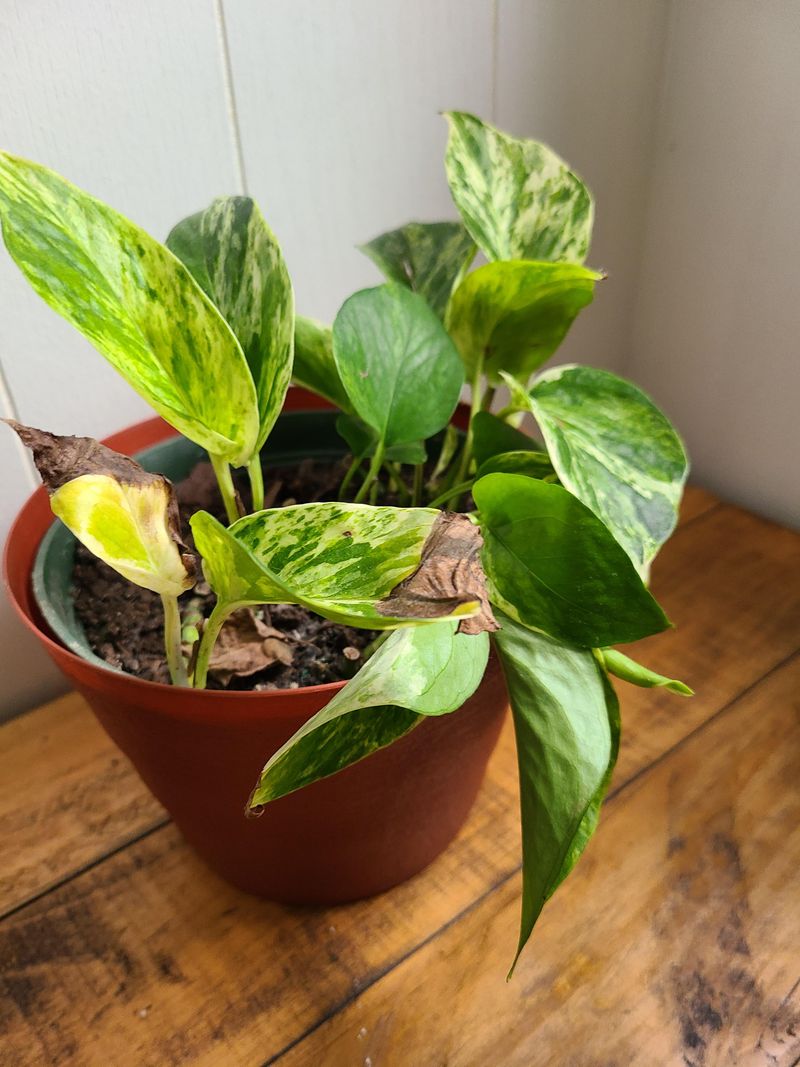
Ever notice static shocks every time you touch a doorknob in February? That same dry air affects your houseplants. Furnaces can push indoor humidity down to 20 or 30 percent.
Pothos prefers moderate humidity, roughly 40 to 60 percent. Luckily, it handles dry air better than fussy plants like calatheas. Dry air usually causes brown, crispy tips and edges rather than whole yellow leaves.
So, if your leaves are yellow and soft, look at watering first. If they are brown and papery at the margins, dry air is a likely suspect.
A small humidifier near your plants helps most. A cheap hygrometer shows your actual humidity, so you are not guessing. Many cost less than a bag of potting soil.
Grouping plants together creates a slightly moister pocket of air. A pebble tray filled with water can add a little humidity too. Keep the pot above the water line so roots don’t sit in water.
Misting feels nice but only helps for a few minutes. Skip it if you want lasting results. Your skin and sinuses will thank you for the humidifier anyway.
6. One Old Leaf Near the Base Is Often Just Normal Aging
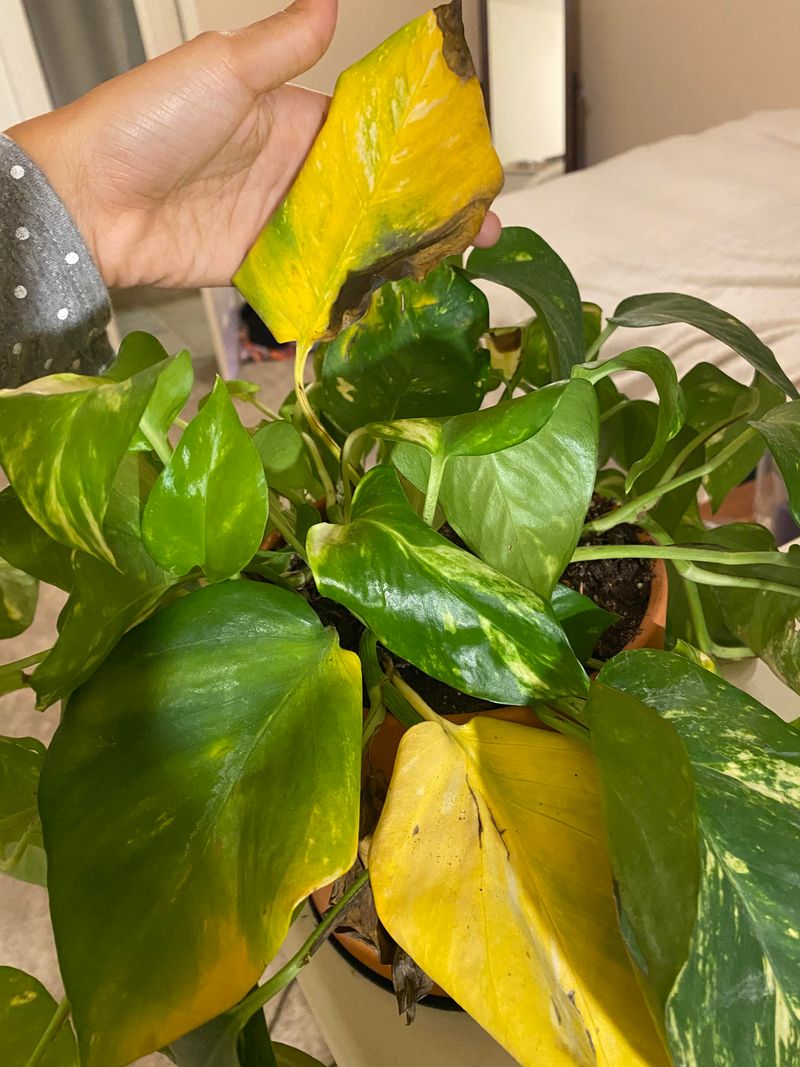
Relax for a second. Not every yellow leaf means something went wrong. Pothos leaves have a lifespan, and older ones eventually retire.
Natural aging usually looks pretty tidy. One or two of the oldest leaves, often near the soil or at the start of a vine, slowly turn yellow. The rest of the plant stays bright and firm.
The plant pulls useful nutrients from those old leaves before letting them go. It is a smart recycling system. New growth at the vine tips gets the benefit.
Worry more when yellowing spreads fast or hits new leaves. Lots of yellow at once points to watering, light, or temperature problems. Yellow on fresh growth deserves a closer look.
Removing an aging leaf is simple. Pinch or snip it off where the leaf stem meets the vine. A yellow leaf will not turn green again, so trimming it just keeps things neat.
Long, bare vines are also common in winter. If yours look stringy, trimming them back in spring encourages fuller growth. Those cuttings root easily in a glass of water, which makes a fun project for a gray March afternoon.
7. Check Under Pothos Leaves for Spider Mites and Mealybugs
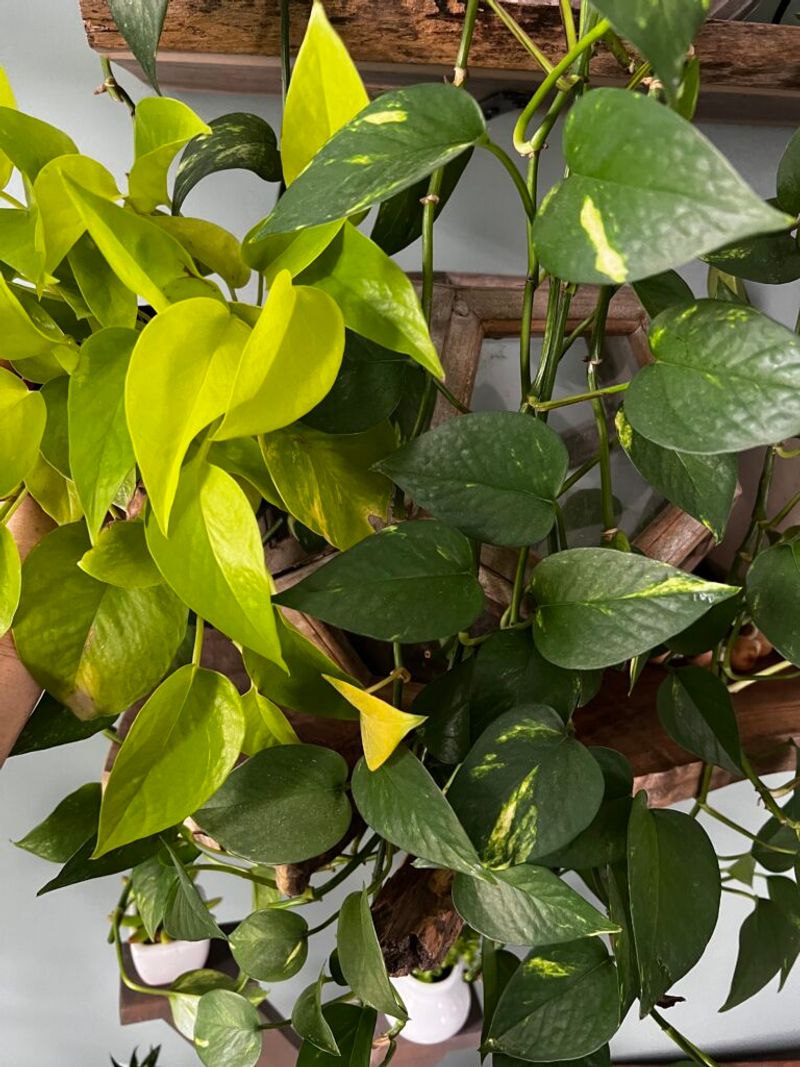
Warm, dry homes in winter happen to be a dream setup for spider mites. These tiny pests are smaller than a pencil dot. They suck sap from leaves and leave yellow speckles behind.
Flip a few leaves over and look closely. Fine webbing, tiny moving dots, or a dusty look on the undersides can point to mites. A magnifying glass or phone camera zoom helps a lot.
Mealybugs look like small bits of white cotton tucked into leaf joints. Scale appears as tan or brown bumps stuck to stems. Both can cause yellowing and sticky residue on leaves.
Catching them early makes control much easier. Isolate the plant from your other houseplants first. Then wipe leaves with a damp cloth or rinse them in the shower.
For mealybugs, a cotton swab dipped in rubbing alcohol removes them one by one. Insecticidal soap works on mites and soft-bodied pests. Follow the label and repeat treatments every week or so, since eggs hatch later.
Raising humidity also makes your home less friendly to spider mites. That humidifier is pulling double duty now, which feels like a nice bonus.
8. Hold the Fertilizer Until Your Pothos Wakes Up in Spring
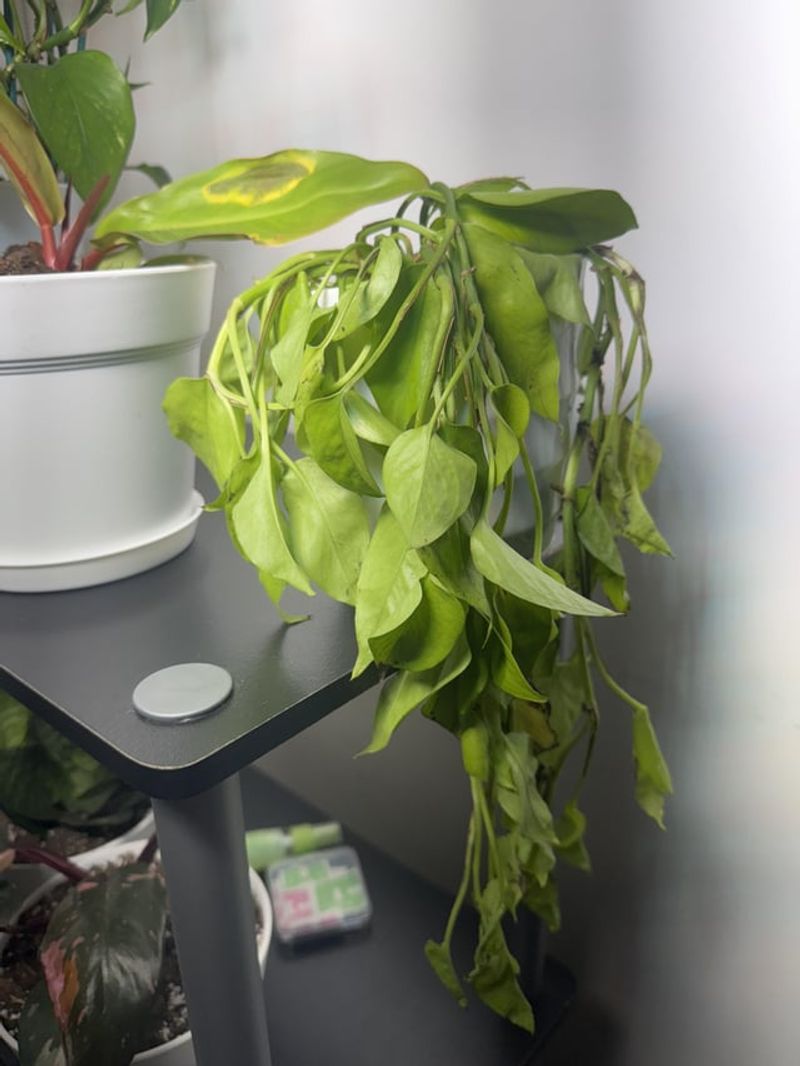
Feeding a struggling plant feels like the caring thing to do. In winter, though, fertilizer often makes yellowing worse. A resting pothos cannot use those extra nutrients.
Unused fertilizer leaves salts in the soil. Those salts can burn roots and cause yellow or brown leaves. A crusty white film on the soil or pot rim is a common warning sign.
If you spot that crust, flush the pot with plenty of water and let it drain well. Then wait until the soil dries before watering again.
Plan to start feeding again in spring, when new leaves appear. In much of Michigan, that is usually around April as daylight stretches out. A balanced houseplant fertilizer at half strength once a month works well.
Spring is also a good time to repot if roots circle the pot or poke out the bottom. Choose a container just one or two inches wider. Fresh, well-draining potting mix gives roots a cleaner start.
For now, keep things simple. Water less, give more light, avoid cold drafts, and watch for pests. Your pothos is tough, and those small changes usually bring it back to full green.