Can You Plant Your Holiday Amaryllis Outside in Arizona After It Blooms?
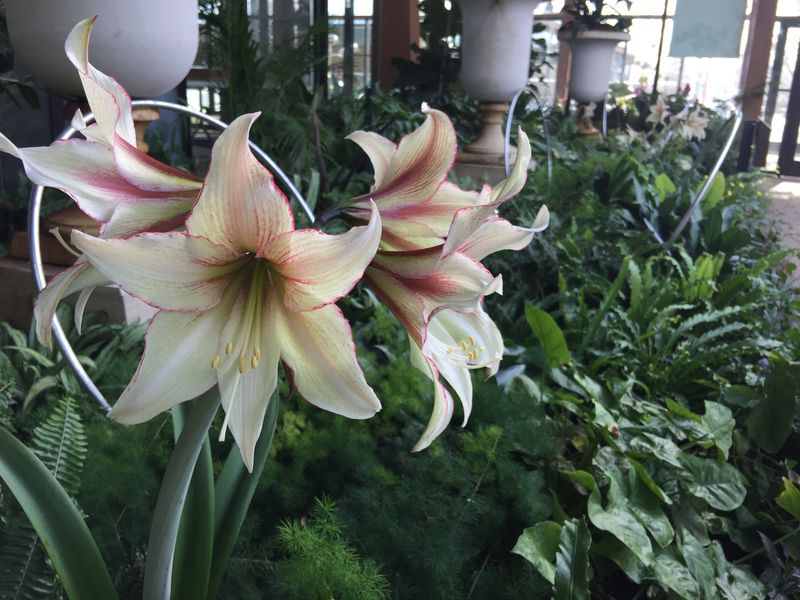
That red-flowered gift on your table has a big job ahead after the blooms fade. Many Arizona gardeners wonder if it can head outdoors and keep growing.
The answer depends on where you live and how you handle the move. Here is how to give your bulb its best shot.
Keep the Bulb in Its Pot
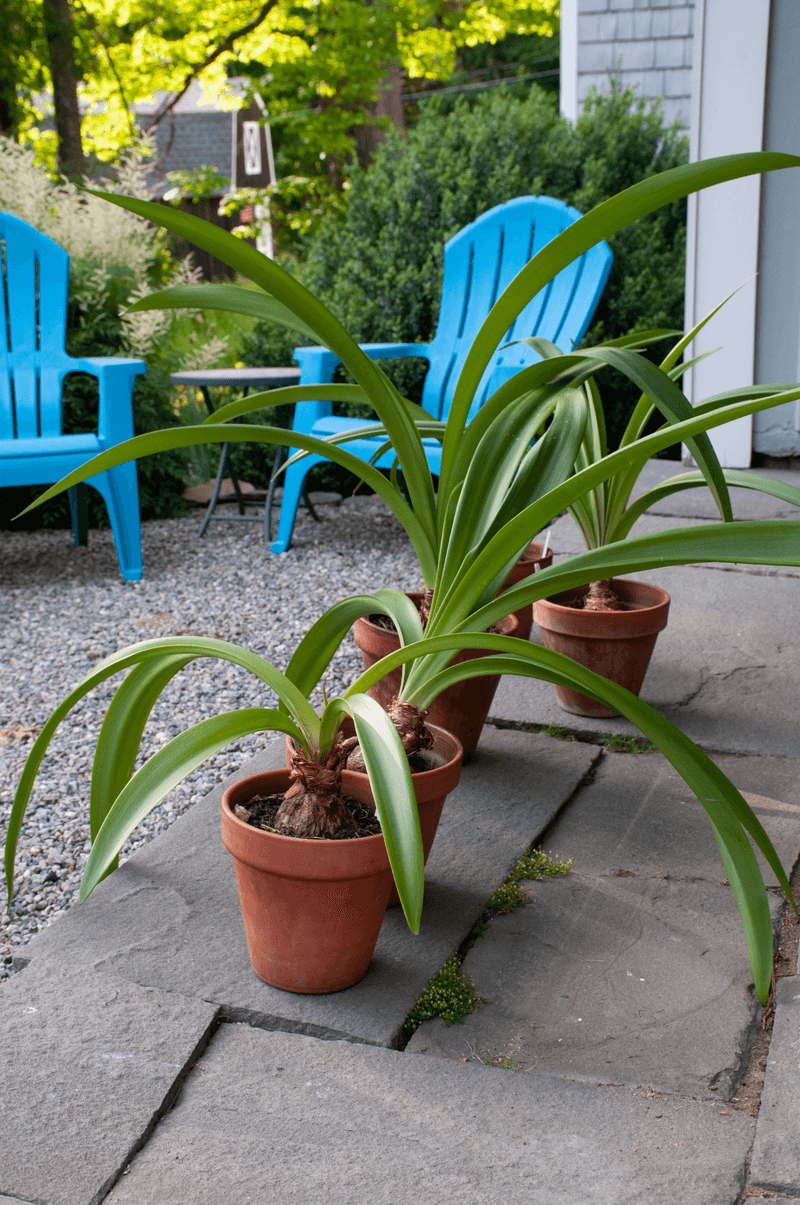
Yes, your amaryllis can spend time outdoors after it flowers, but the safest plan is to move the whole pot outside instead of planting the bulb in a garden bed. A pot lets you slide the plant into shade, move it away from heat, or carry it indoors when the weather turns.
Most holiday plants sold as amaryllis are really Hippeastrum, not the true Amaryllis genus that is grown far less often. Wisconsin Extension favors container growing or sinking the pot into the soil, because the roots are brittle and hard to dig up later.
If you want the look of a garden planting, bury the pot to its rim and lift it when needed.
Arizona does not offer safe outdoor conditions all year. Summer heat can scorch leaves, and cold nights can arrive in many parts of the state.
University of Arizona Extension notes how widely the climates vary, so a movable pot gives you room to adjust.
Save the Green Leaves After Bloom
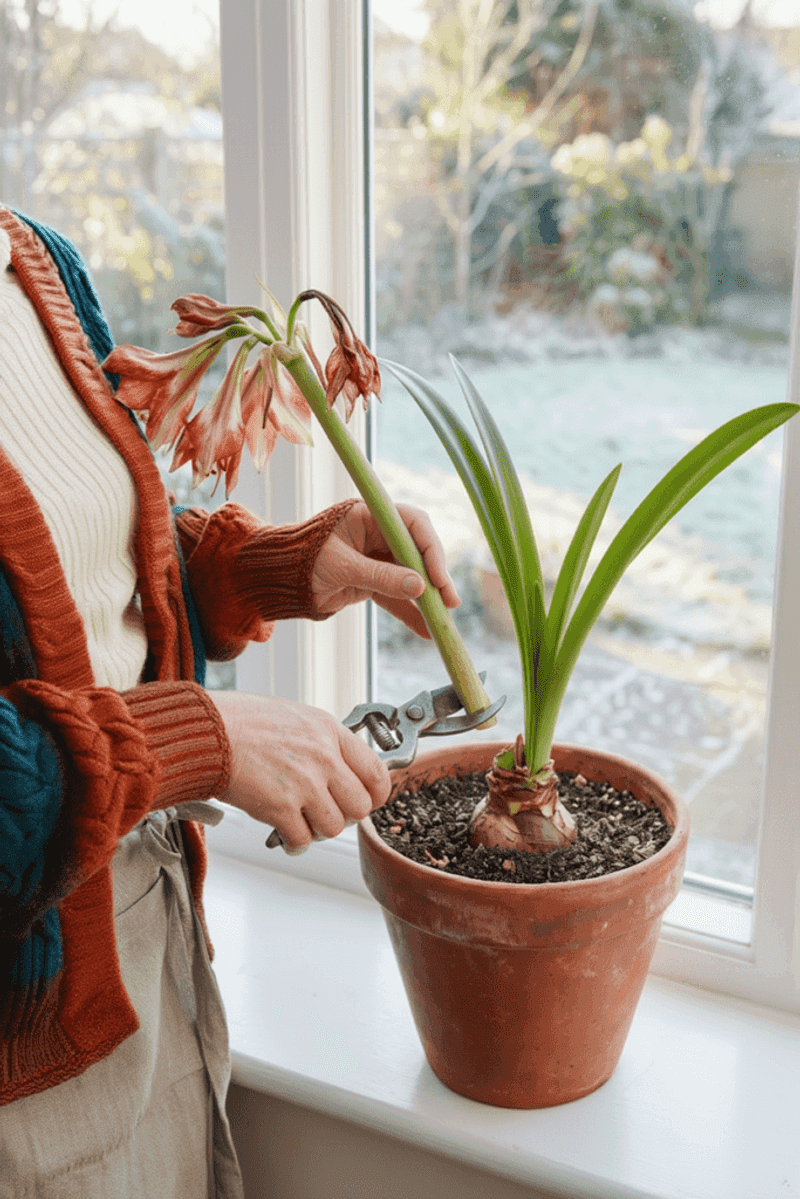
Once the flowers droop, snip them off, but leave the long green leaves alone. Those leaves work like solar panels, collecting energy that refills the bulb for a possible future bloom.
Cutting them early starves the bulb.
Advice about the flower stalk differs. University of New Hampshire Extension suggests leaving it until it yellows or withers, while Maryland Extension advises cutting it after flowering.
The cautious choice is to keep a green stalk in place until it yellows, if you can live with the look.
Give the plant bright light and water when the soil feels like it needs it. Do not leave the bulb sitting in soggy soil.
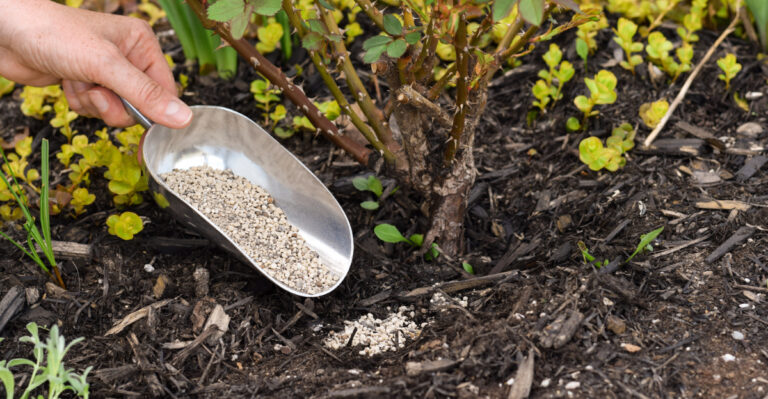
Feed it following the label on your houseplant fertilizer.
Arizona’s Elevation Changes the Answer
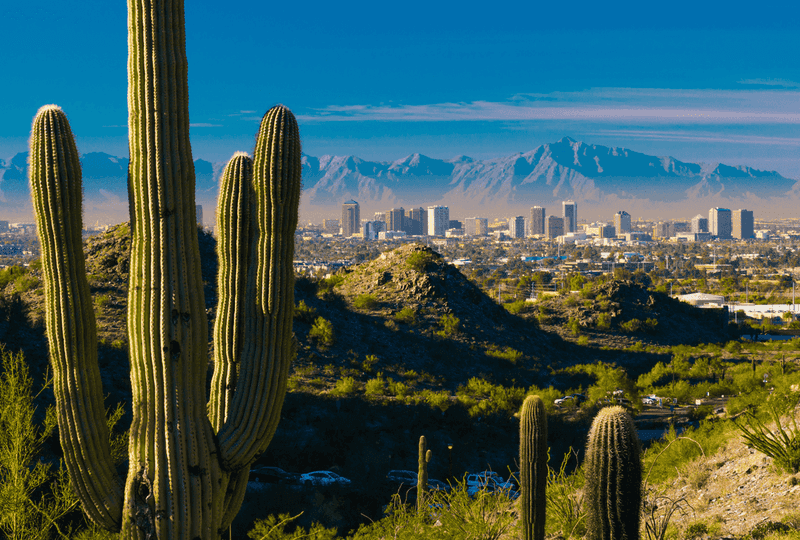
A gardener in Phoenix and a gardener in Flagstaff are living in very different worlds. The low desert has mild winters with occasional freezes, while high-desert and mountain areas see many freezing nights.
A schedule that works on a Phoenix patio could harm a plant in Prescott or Flagstaff.
University of Arizona Extension describes these zones and shows how they differ across the state. Phoenix Metro and Flagstaff even land in different USDA hardiness zones.
A hardiness zone only tells you about winter lows. It does not tell you how a plant handles blazing summers, dry air, and big temperature swings.
Look at your own yard, your neighborhood weather, and the forecast, and treat any statewide timeline with suspicion.
Acclimate the Plant Gradually
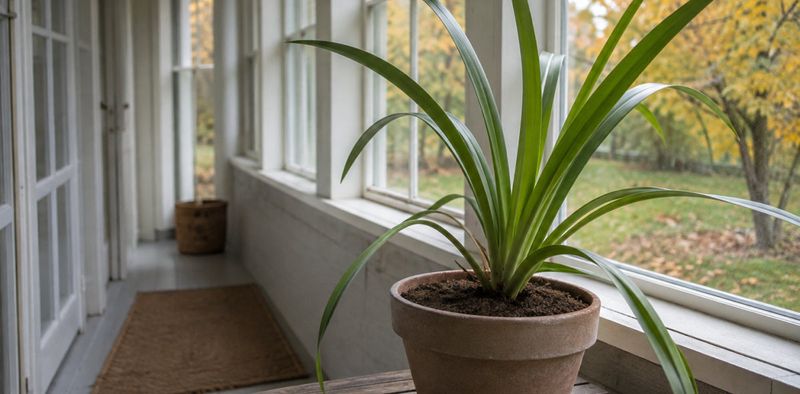
Plants raised indoors are not ready for the open sky. Move the pot outside in stages, starting with a bright but protected spot out of direct sun.
Sudden direct sun can scorch the leaves, as Wisconsin Extension cautions for outdoor plants.
Begin with an hour or two of gentle morning light, then add time over a week or two. Watch the leaves as you go.
Pale, bleached, or crispy patches tell you the plant needs more shade.
Choose a spot with bright light and shelter from harsh wind, like under a patio cover or beside an east-facing wall. No single exposure suits every Arizona yard, so adjust to what your own space offers and what the plant shows you.
Protect It From Scorching Summer Sun
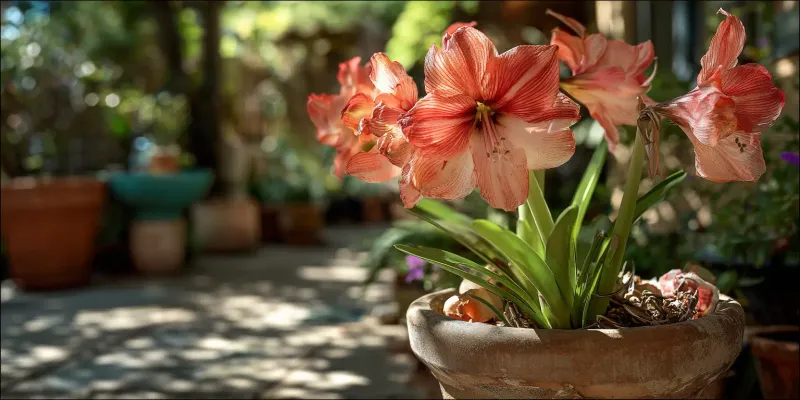
After the plant settles in, your job is to keep it growing steadily. Aim for bright light without harsh rays.
The Royal Horticultural Society advises shading outdoor pots from scorching sunshine, and that advice matters in hot Arizona locations.
Water when the soil needs it, and skip the soggy saucer. Fertilize according to the label directions.
Pots dry out quickly in hot weather, so check them often.
The portable pot is your best tool. Slide it under a tree, a patio cover, or shade cloth when afternoon heat builds.
Do not assume this plant tolerates every Arizona extreme, and bring it to cooler shelter if the leaves look stressed.
Bring the Pot Indoors Before Frost
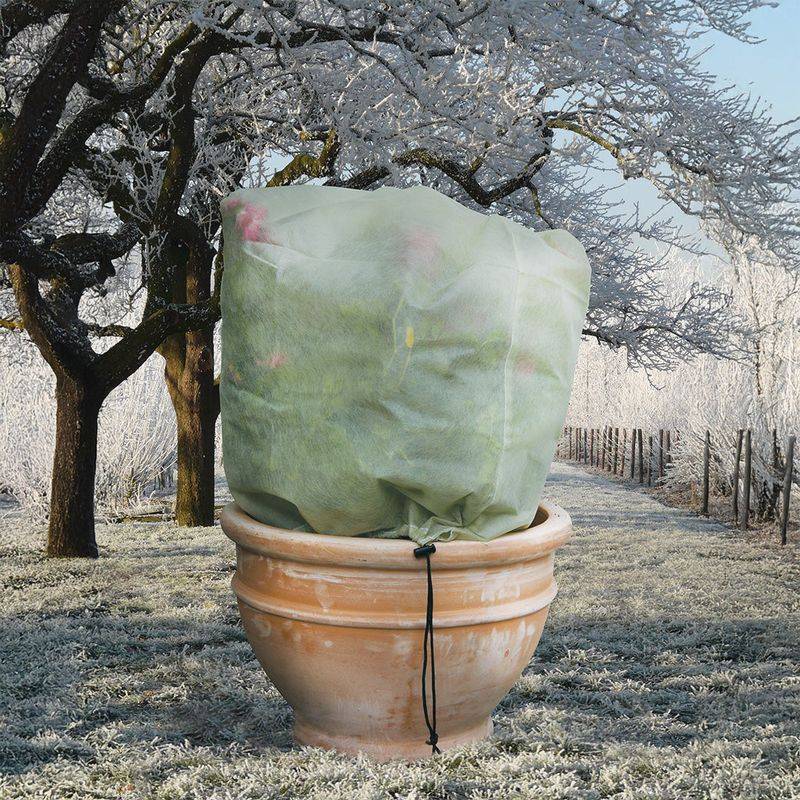
Cold is the big risk for outdoor amaryllis. NC State Extension says Hippeastrum can be injured below 35°F.
Treat that number as a warning sign, not an exact line. Damage can vary by variety, plant stage, and exposure.
The simple move is to bring the pot indoors ahead of frost. Do not wait for the first frost to arrive, because a cold night can sneak up on a sheltered patio.
Average frost dates are only a rough guide. A University of Arizona frost guide shows variation even within Maricopa County.
Check your local forecast through autumn, and have a bright indoor spot ready.
A Future Bloom Is Possible, Not Guaranteed
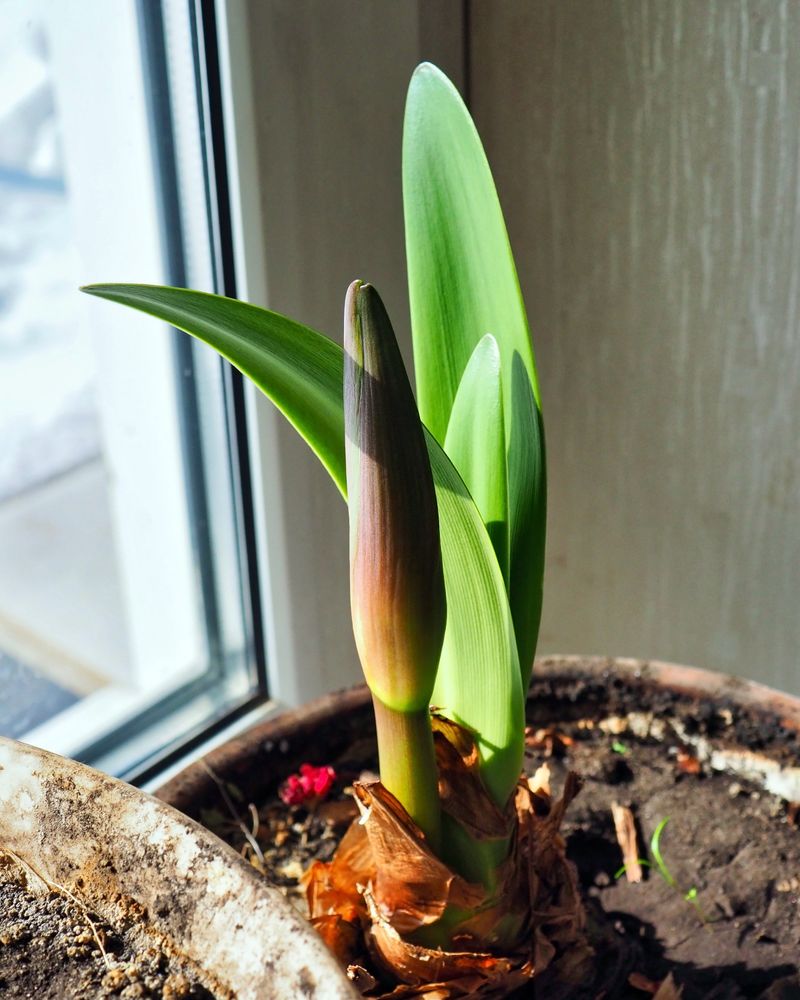
With steady care, a healthy bulb can bloom again. The leaves feed it, and good light, water, and feeding build its strength.
That is not the same as promising flowers by next December.
Dormancy is one way to schedule flowering. University of New Hampshire Extension says it is not required for flowering and is used to time blooms.
Other sources, including Maryland Extension, recommend a rest period.
Think of it as two goals. Keep the bulb healthy first, then worry about timing.
If your plant blooms in late winter or spring instead of the holidays, that is still a win.
Keep Pets Away From the Plant
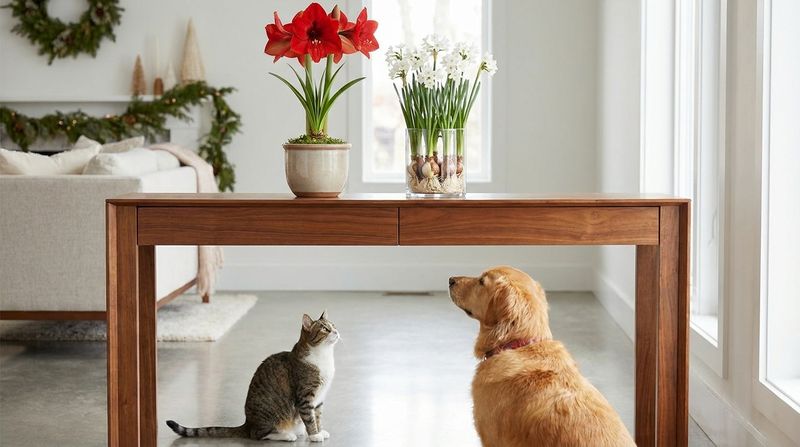
Place your amaryllis where cats and dogs cannot chew it. Pet Poison Helpline lists Hippeastrum as toxic to pets and notes that the bulb holds especially concentrated irritants.
No part of the plant is safe to nibble. Keep pots on high shelves indoors and out of reach on the patio.
A plant this pretty is best admired from a distance by curious paws.