The Florida Oak That Can Look Healthy Outside While Decay Develops Inside
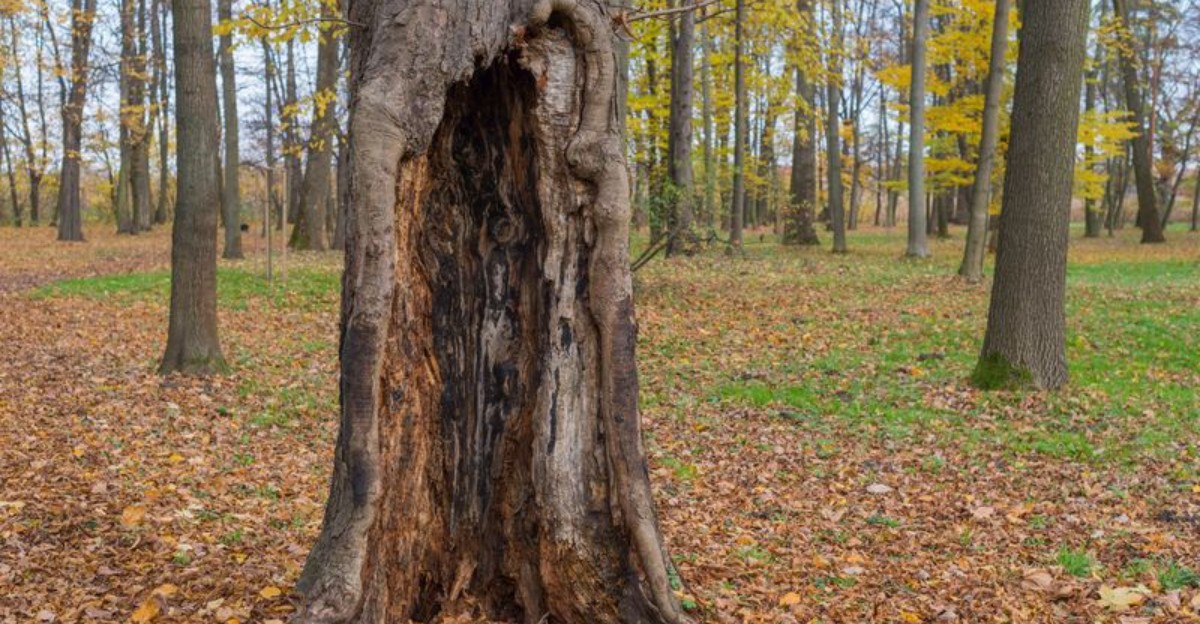
A tree can carry a full, glossy canopy while the wood at its base has been quietly turning soft for years. I didn’t see this coming the first time an arborist pointed it out to me.
Truth is, the living part of a trunk is a thin outer layer. The center is mostly older wood that holds the tree up, and certain fungi feed on it without starving the leaves.
Here in Florida, our warm, wet weather gives those fungi a long season to work. Hurricanes then test every weak spot, and a hollow trunk rarely gets a second chance.
I’ll say this much, I used to judge trees by their leaves alone. Now I look down at the roots first. So which common shade tree in your yard could be keeping a secret like that, and what clues does it leave behind?
That Leafy Laurel Oak Canopy Can Hide a Hollow Trunk
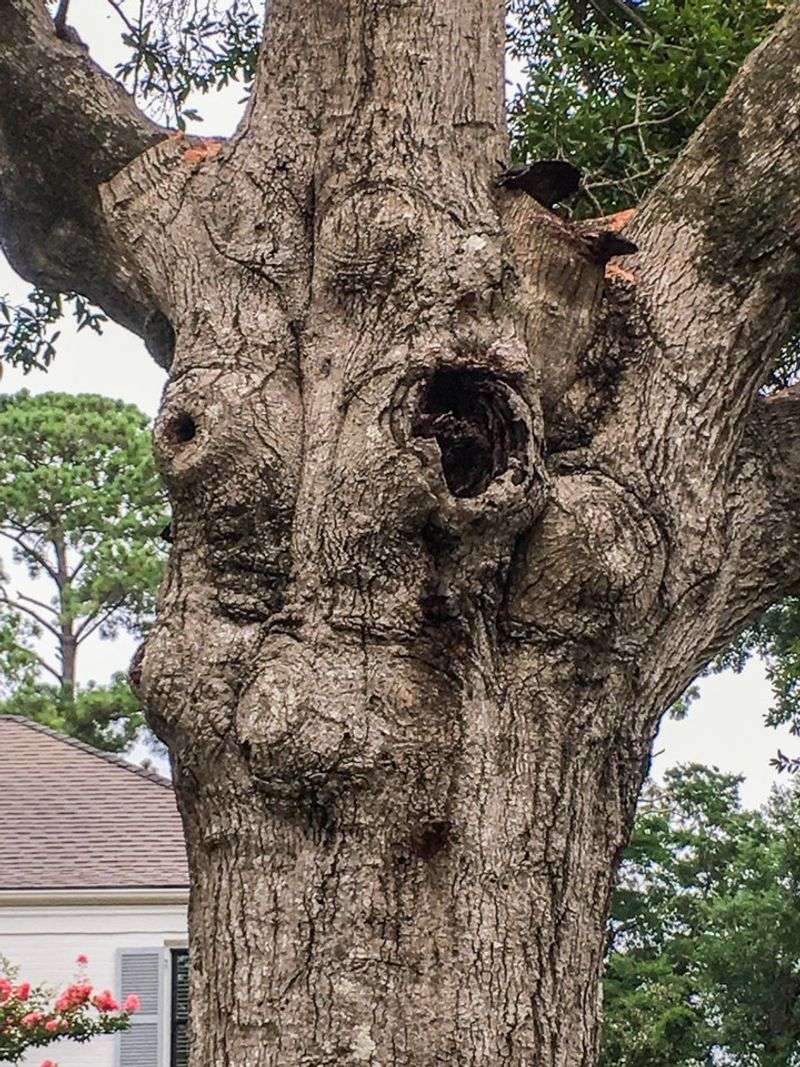
Laurel oak is the tree that fooled me first. Its canopy stays green and full almost year-round, so it looks like the picture of good health.
Underneath, though, laurel oaks are famous among University of Florida Extension experts for heart rot. They grow fast, and fast-grown wood tends to be weaker and more open to decay fungi.
Most laurel oaks in Florida yards are fairly short-lived, often reaching about 50 to 70 years. Many were planted during housing booms, so a lot of them are now at the age when trouble shows up.
Water oaks share the same habits. They are close cousins that also decline earlier than many people expect.
Live oaks are tougher and far more decay resistant. Even so, they can develop rot through big wounds, bad pruning, or root damage, so they aren’t off the hook.
The key idea is simple. Leaves depend on the thin outer sapwood, while the inner heartwood mainly gives strength.
A fungus can eat that inner wood for years while water still flows upward. That is how a tree looks lush on top yet carries a weakened, partly hollow core below.
Shelf Mushrooms at the Base of an Oak Are a Serious Warning
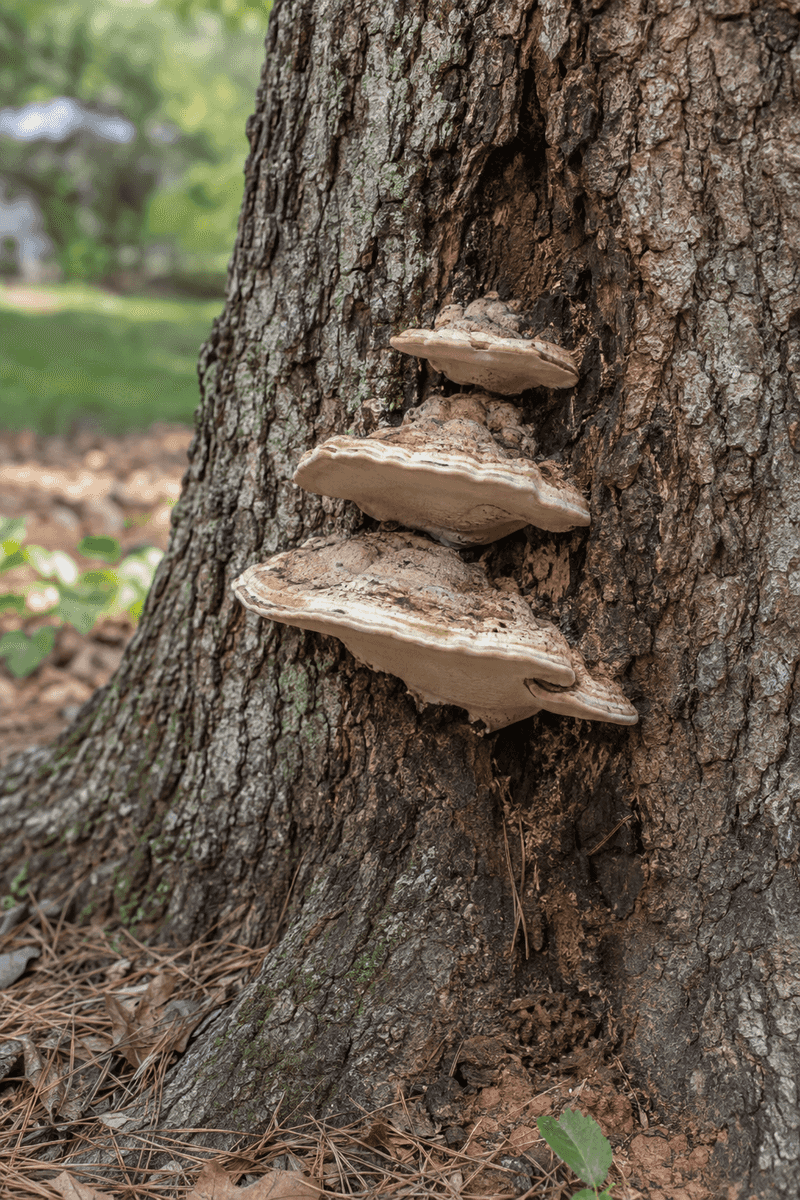
Guilty as charged, I once kicked a mushroom off a tree root and forgot about it. That was a mistake, because fungal growth on an oak tells you a lot.
Shelf-shaped growths called conks are the fruiting bodies of wood decay fungi. They usually appear only after the fungus has been feeding inside for a long time.
In Florida, one of the most important groups is Ganoderma, which causes butt rot in the lower trunk and roots of oaks. Its conks often have a shiny or dull reddish-brown top and a pale underside.
Another one to know is Inonotus, which forms soft, brownish brackets on laurel and water oaks. Sulphur shelf, the bright orange chicken of the woods, also rots oak heartwood.
Here is a practical tip. Snap a clear photo of the top and bottom of any conk before mowing removes it.
Knocking off the mushroom won’t stop anything inside. The fungus lives in the wood, and the conk is just the part you can see.
Share those photos with a certified arborist or your county Extension office. Identifying the exact fungus helps judge how fast the decay may move and how risky the tree is.
Old Pruning Cuts and Mower Scars Let Rot Into Oak Trunks
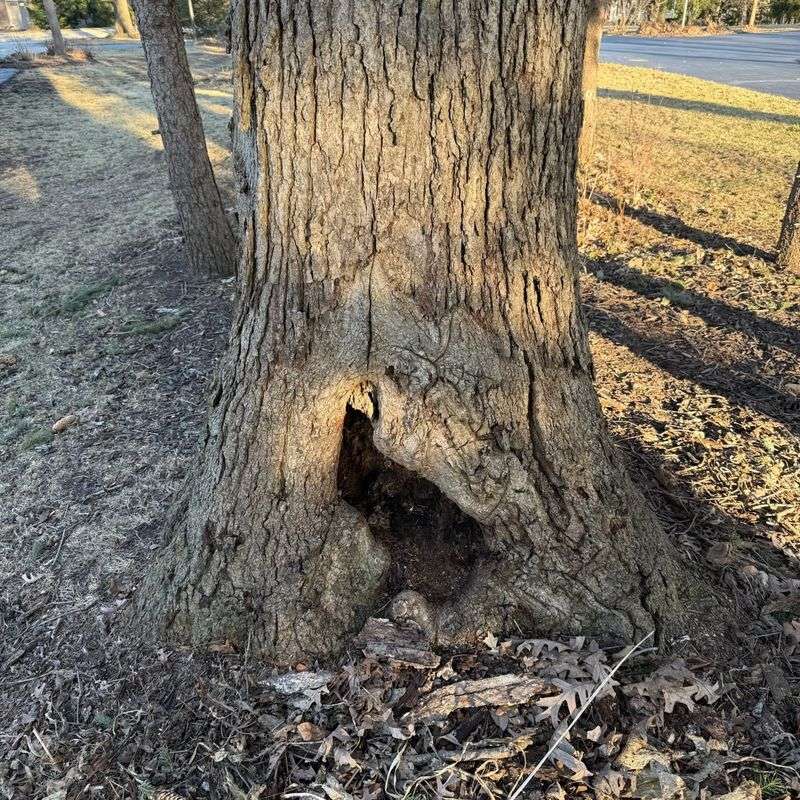
Most decay starts with a door left open. Fungal spores float everywhere, and they enter through wounds in bark, roots, and branches.
Lawn mowers and string trimmers are big offenders. Every bump at the trunk base peels living bark and exposes fresh wood.
Construction is another sneaky cause. Trenching for pipes, paving over roots, or piling soil near the trunk can injure roots that you never see.
Poor pruning matters too. Flush cuts that slice into the branch collar, long stubs, and heavy topping all leave large wounds that trees struggle to seal.
Trees don’t heal like skin. They wall off damage through a process scientists call compartmentalization, and some species do it better than others.
Live oaks are fairly good at walling off decay. Laurel and water oaks are weaker at it, which helps explain their reputation.
Trust me on this one, a ring of mulch around your oak is cheap insurance. Spread it two to three inches deep and keep it a few inches away from the bark.
That simple circle keeps mowers back and protects shallow roots. It also helps the soil hold moisture during dry spring weeks.
Thinning Oak Leaves and Bare Branch Tips Can Hint at Root Rot
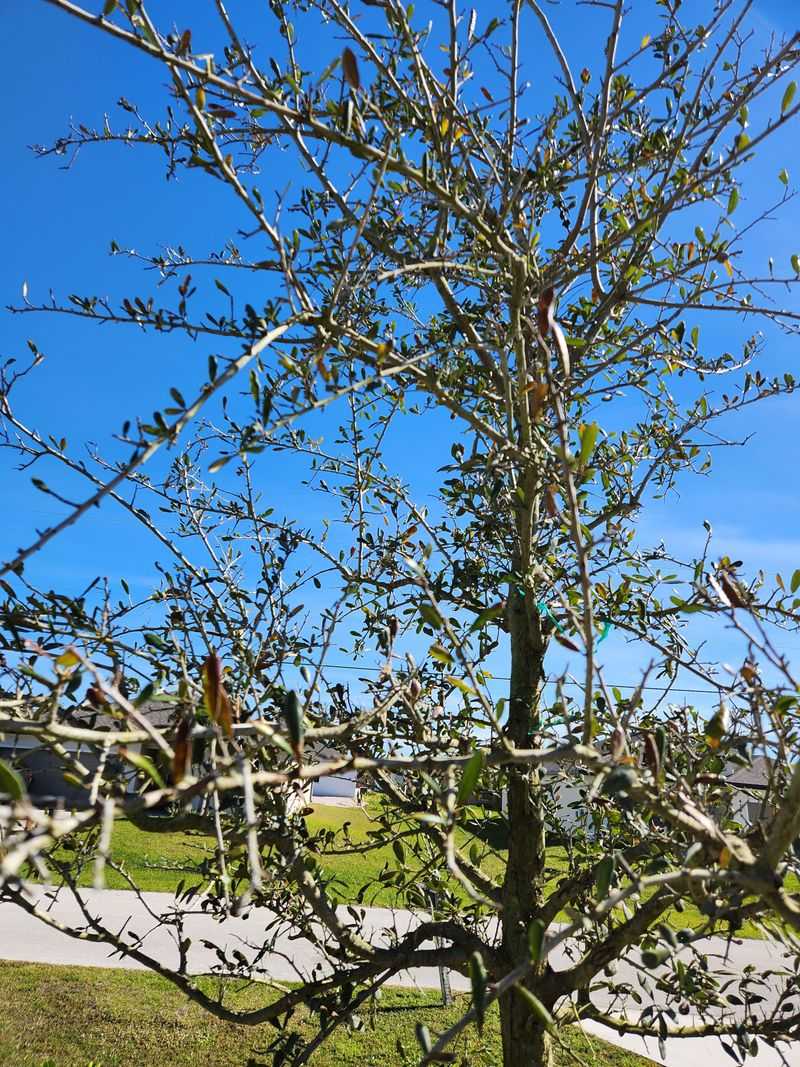
Not going to lie, crown symptoms are easy to miss. Change happens slowly, and we tend to get used to what we see every day.
When root rot advances, roots can no longer move enough water. The crown may start to look thinner, with more sky showing through the branches.
Watch for small leaves, early leaf drop, or twigs at the top and outer edges with no leaves at all. Arborists call this dieback.
Fair warning, these signs don’t prove decay. Drought, lightning, root damage from construction, and other diseases can create a similar look.
A good habit is to photograph your oak from the same spot each spring after the new leaves fill in. In Florida, oaks often refresh their foliage in late winter or early spring.
Comparing pictures over a few years makes slow changes easier to spot. Your memory alone can play tricks on you.
Remember that a healthy crown doesn’t clear a tree either. Many oaks with major butt rot keep a full canopy right up until they fail, so check the base and trunk as well as the treetop.
Cracks, Cavities, and Soft Wood Around the Oak Root Flare
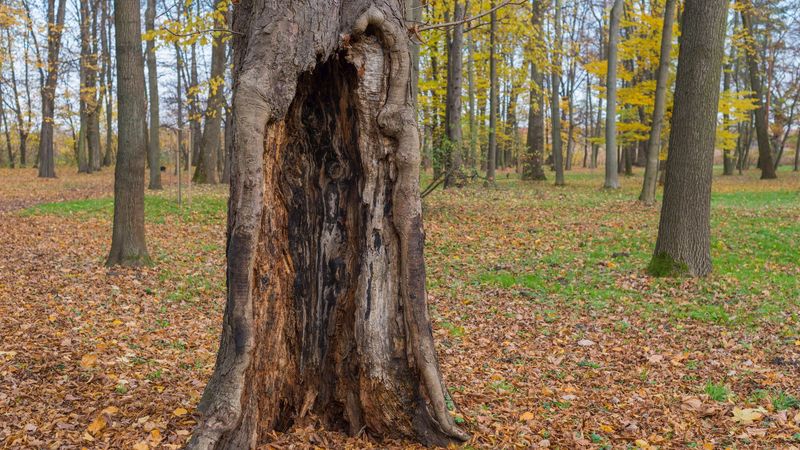
Every few months, I crouch down and walk a slow circle around my oaks. It takes five minutes and has taught me more than any book.
Start with the root flare, the spot where the trunk widens into the roots. If the trunk goes straight into the ground like a pole, soil or mulch may be piled too high.
Look for vertical cracks, open cavities, and oozing or stained bark. Wood that feels soft, spongy, or crumbly is a clear red flag.
Also check for carpenter ants or termites moving in and out of a hole. They often follow decay rather than cause it.
Some people tap the trunk with a rubber mallet. A dull, hollow sound can hint at decay, but it isn’t a reliable test on its own.
Notice the ground, too. Cracked or lifted soil on one side of a leaning tree can mean the roots are losing their grip.
Write down what you find and where. That simple record helps an arborist understand the history and decide what testing makes sense.
Arborists Use Sound and Drill Tools to Measure Oak Decay
I get it, calling a professional feels like a big step. But inside a trunk is the one place your eyes can’t reach.
A certified arborist starts with a visual check, often using a method from the International Society of Arboriculture. They look at the tree, its lean, its targets, and its site.
If decay is suspected, they have special tools. A resistance drill pushes a very thin needle into the wood and graphs how hard it is to drill.
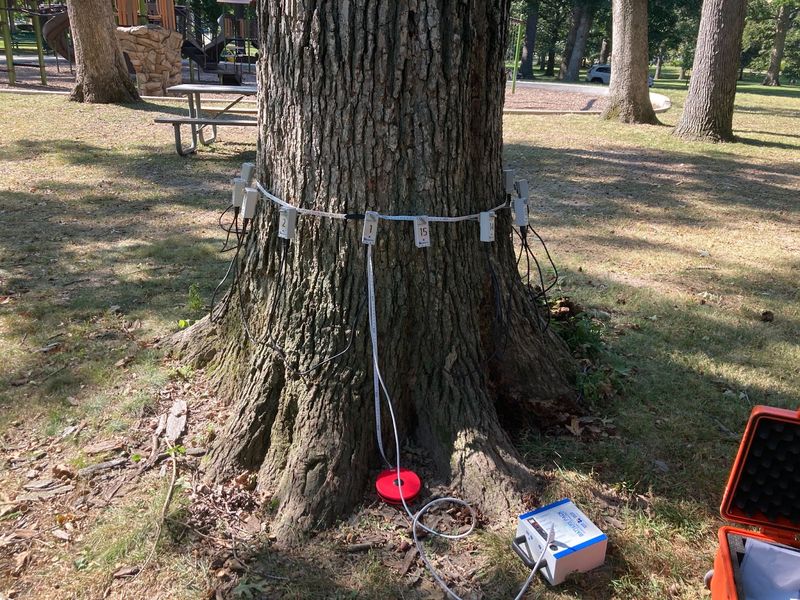
Sonic tomography is another option. Sensors placed around the trunk send sound waves through the wood and build a map of solid and weak areas.
Some arborists also dig gently around the root collar with an air tool. It blows soil away so roots can be inspected without damage.
Look for credentials such as ISA Certified Arborist or the Tree Risk Assessment Qualification. These show training in judging tree safety.
Ask for a written report with clear recommendations. It helps with decisions, insurance questions, and talks with neighbors when a big oak sits near a shared fence or the house.
Hurricane Season Puts Decayed Oak Limbs to the Test
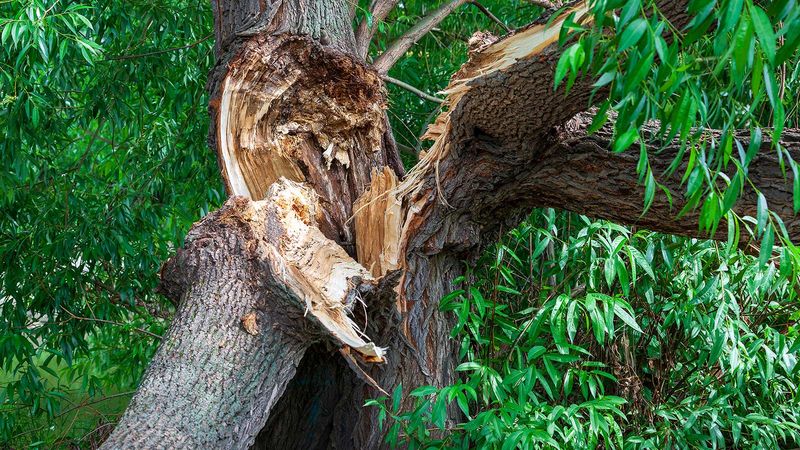
Storms are where hidden rot finally shows itself. A trunk with a hollow base may stand for years in calm weather, then snap in a strong gust.
Atlantic hurricane season runs from June 1 to November 30. That makes late winter through spring a smart window to schedule a tree inspection.
Research by University of Florida scientists after past hurricanes found that live oaks held up far better than laurel and water oaks. Decay and poor structure were major reasons trees failed.
Pruning can lower risk when done correctly. Removing weak or decayed limbs and reducing heavy ends can help, while topping or stripping out inner branches can make things worse.
Skip the rush right before a storm arrives. Tree crews get overbooked, and debris piles may not be picked up before the wind hits.
Keep a short checklist ready. Know your arborist’s number, take photos of your trees for insurance records, and keep cars away from questionable limbs during storms.
Fresh cracks or new leaning after a storm deserve a quick professional look. Stay well back from damaged trees until someone checks them.
Planting Live Oaks and Caring for Roots Pays Off for Decades
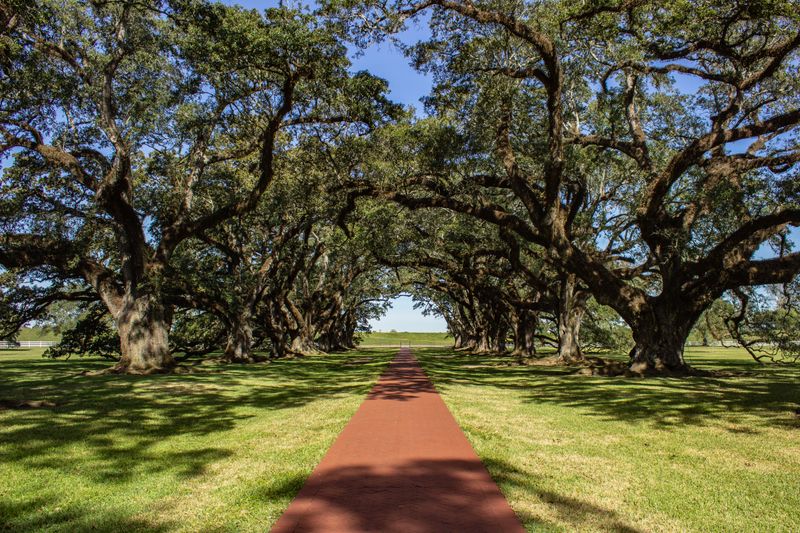
I’m a sucker for a long game, and oaks reward patience. The choices you make today shape how sturdy a tree will be fifty years from now.
When planting new shade trees, many Florida experts favor southern live oak for its strong wood and storm resistance. Sand live oak is a good pick for dry, sandy sites.
Give a new oak plenty of room from houses, driveways, and power lines. Roots spread far beyond the canopy edge, mostly in the top foot of soil.
Train young trees with light structural pruning every few years. One main trunk and well-spaced branches reduce future weak spots.
For older oaks with established decay, there is no spray or injection that cures heart rot. Management means monitoring, careful pruning, reducing targets below, or removal when the risk is too high.
Removal can feel heartbreaking, but replacing a weak tree protects people and property. Planting a sturdier native oak keeps shade and wildlife benefits going.
Check with your city or county before major work. Many Florida communities have tree protection rules, although state law allows removal of trees documented as dangerous by a certified arborist.