9 Things To Do With Your Rhubarb In The Fall Before Winter Sets In
In a corner of Yorkshire, England, farmers still harvest certain pink stalks by candlelight inside pitch-dark sheds. The plants grow so fast in there that some growers swear they can hear the buds creaking open.
Those famous early stalks depend on something that happens months earlier, during a long and chilly autumn rest. The roots need a real chill before they will wake up and push out those tender, tart spring stems.
I used to think my backyard patch could fend for itself once the summer pies were baked and eaten. It took me a few thin, stringy springs to notice that fall care was the missing piece of the puzzle.
Truth is, the jobs are simple and most of them take less than an hour on a cool afternoon. So which chores matter most before the ground freezes hard, and which ones can wait until spring?
Let The Rhubarb Leaves Soak Up Late Summer Sun
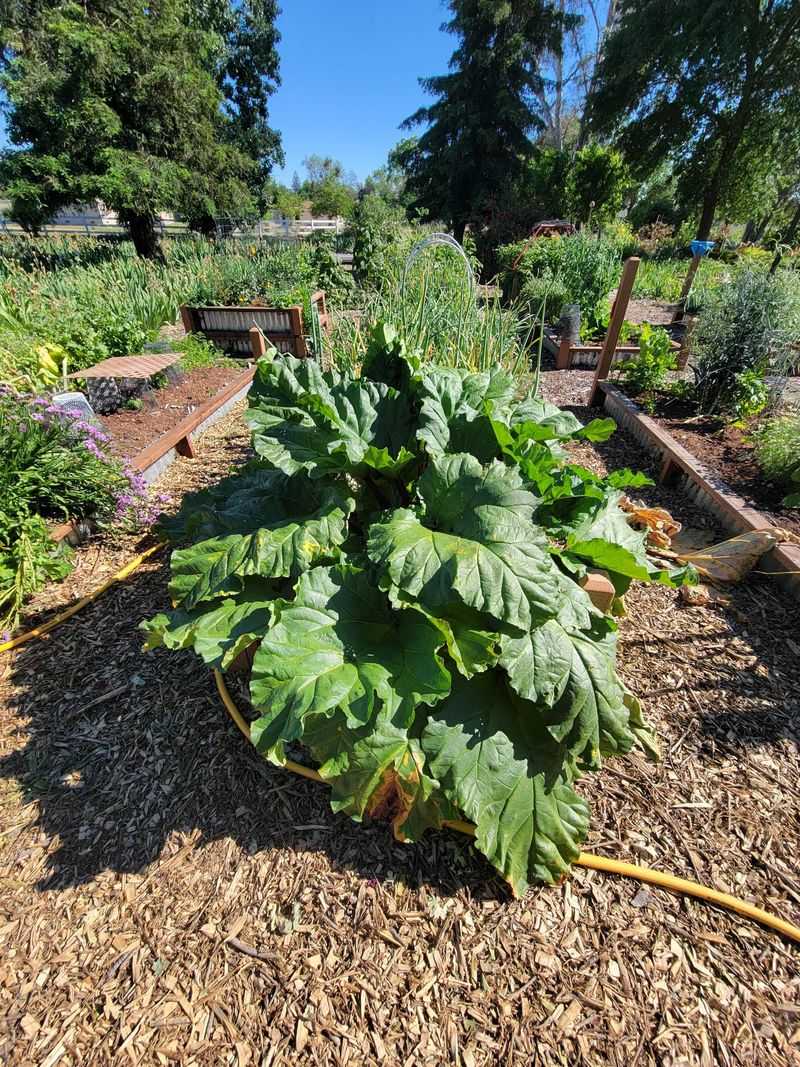
Those giant umbrella leaves are not for show, because they work like solar panels for next year’s crop. Every sunny fall day, they send sugars down into the thick roots that will fuel the spring stalks.
Most university extension guides suggest you stop pulling stalks by midsummer, usually around late June or early July. After that point, the plant needs every leaf it has to rebuild its reserves before the cold arrives.
I’m not proud of this, but I once kept snapping stalks into September for another crisp. The next spring, my patch sent up skinny stems that looked more like celery than proper rhubarb.
A few cooks still grab a light picking from large, well-established plants in late summer without trouble. If you do, take only a handful of stalks and leave plenty of healthy leaves standing tall.
Young plants in their first or second year deserve a full break from harvesting during the fall months. Their root systems are still growing, and every leaf helps them settle in for a long, productive life.
Keep an eye out for tall flower stalks, which steal energy that should be heading into the crown. Snap or cut them off near the base as soon as you spot those round, knobby buds forming.
Watering helps too during a dry autumn when the soil feels dusty a few inches below the surface. A deep soak once a week keeps the leaves working hard until frost finally shuts them down.
Toss Any Frost Damaged Rhubarb Stalks
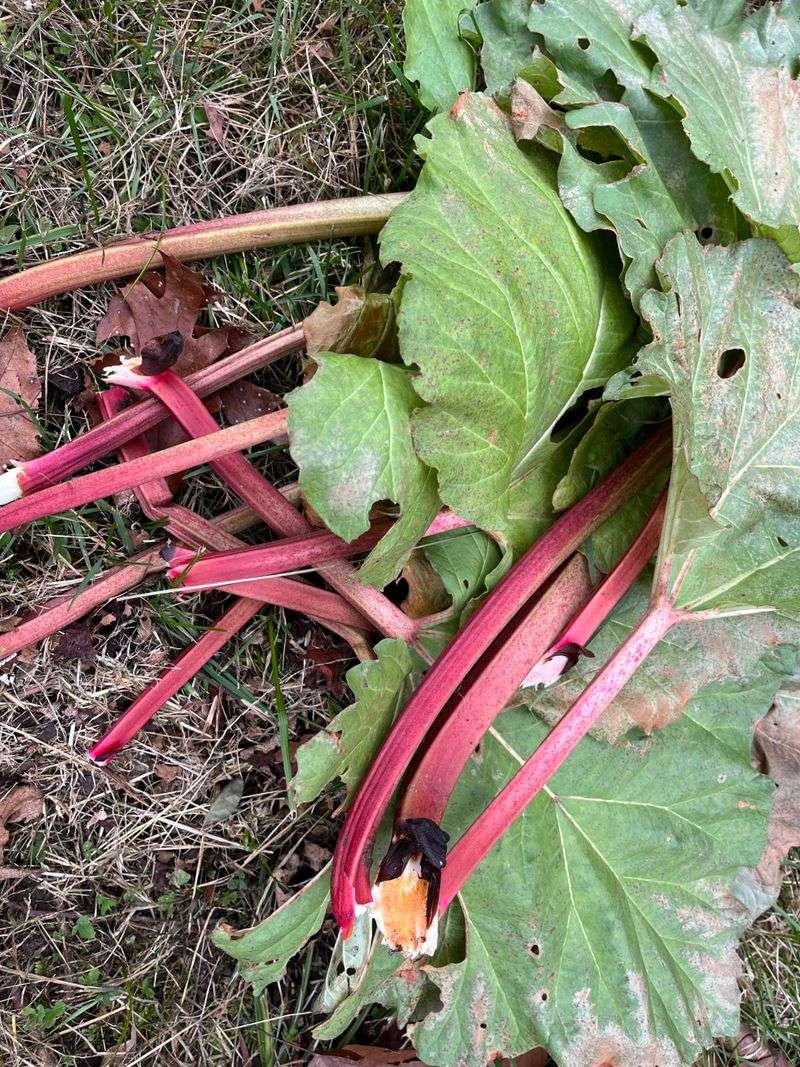
A hard freeze turns proud rhubarb stalks into soft, droopy noodles almost overnight, and it is quite a sight. Those limp stems may look tempting for one last pie, but they belong in the compost instead.
Rhubarb leaves contain high levels of oxalic acid, which makes them unsafe to eat at any time. Some gardeners believe freezing lets oxalic acid move from the leaves into the stalks, but extension experts generally consider this a myth.
Research has found little evidence of a meaningful shift, but frost-damaged stalks turn soft and mushy anyway, so skipping them makes the most sense here. Fair warning, a soft or mushy stalk after frost is a stalk you should skip in the kitchen.
Firm, upright stalks that went through only a light frost are generally considered fine by most guides. Even so, I prefer to finish any late picking before the forecast drops into the twenties.
Pull the frosted stalks gently at the base with a twist rather than slicing them with a knife. Cut stubs can leave open wounds near the crown, while a clean pull separates naturally from the plant.
Kids and pets sometimes find those big leaves fascinating, so keep the pile out of their reach. A covered compost bin works well, since the oxalic acid breaks down as the leaves decompose.
Honestly, losing those last few stalks stings a little, especially after such a generous summer season. Still, playing it safe in fall means you can enjoy every crisp spring stalk with real confidence.
Cut Back Collapsed Rhubarb Leaves After A Hard Frost
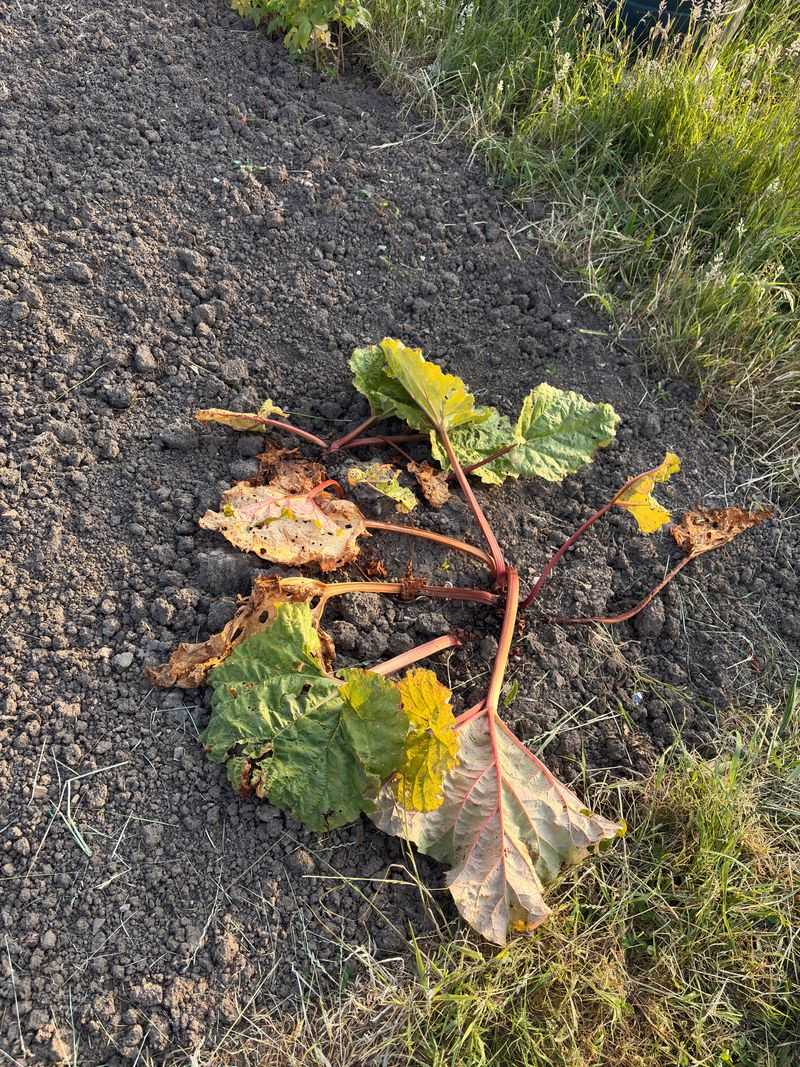
After a hard frost, rhubarb leaves slump to the ground like soggy paper bags left out in the rain. It is not pretty, but that floppy mess is a clear signal that the plant has gone dormant.
Old foliage left lying around can shelter fungal spores and hungry pests over the long winter months. Rhubarb curculio, a snout beetle that feeds on stalks, is one insect that likes untidy garden beds.
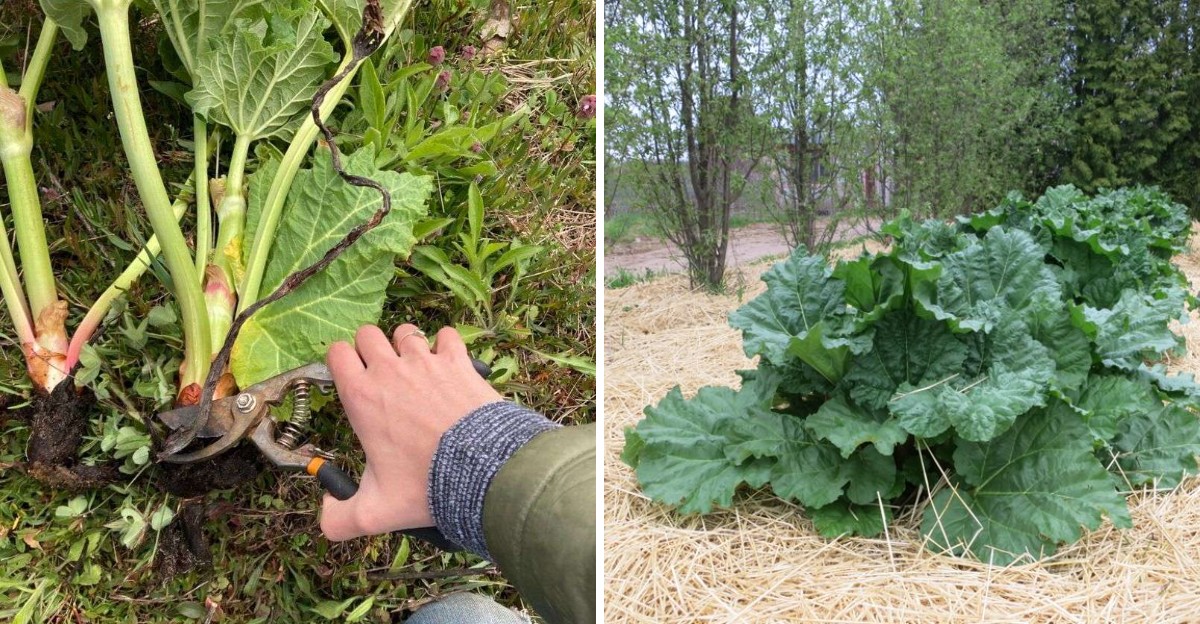
Grab a pair of clean pruners or a sharp knife and cut the stems near the soil line. Leaving an inch or two of stub helps you find the crown when spring cleanup comes around again.
I learned the hard way that waiting until spring turns this simple job into a slimy, smelly chore. Frozen leaves mush down into a gooey layer that sticks to everything, including your favorite gloves.
Healthy leaves can go straight onto the compost pile, where the oxalic acid breaks down over time. Any foliage with odd spots or fuzzy mold should go in the trash rather than the compost bin.
Take a quick look at the crown itself while you are down there on your knees. Soft, rotting spots near the base can point to crown rot, which thrives in soggy, poorly drained soil.
A tidy bed also makes the next few chores, like weeding and mulching, much easier to handle. Your rhubarb will look bare for a while, but that empty patch is quietly getting ready.
Pull Weeds Around The Rhubarb Crown
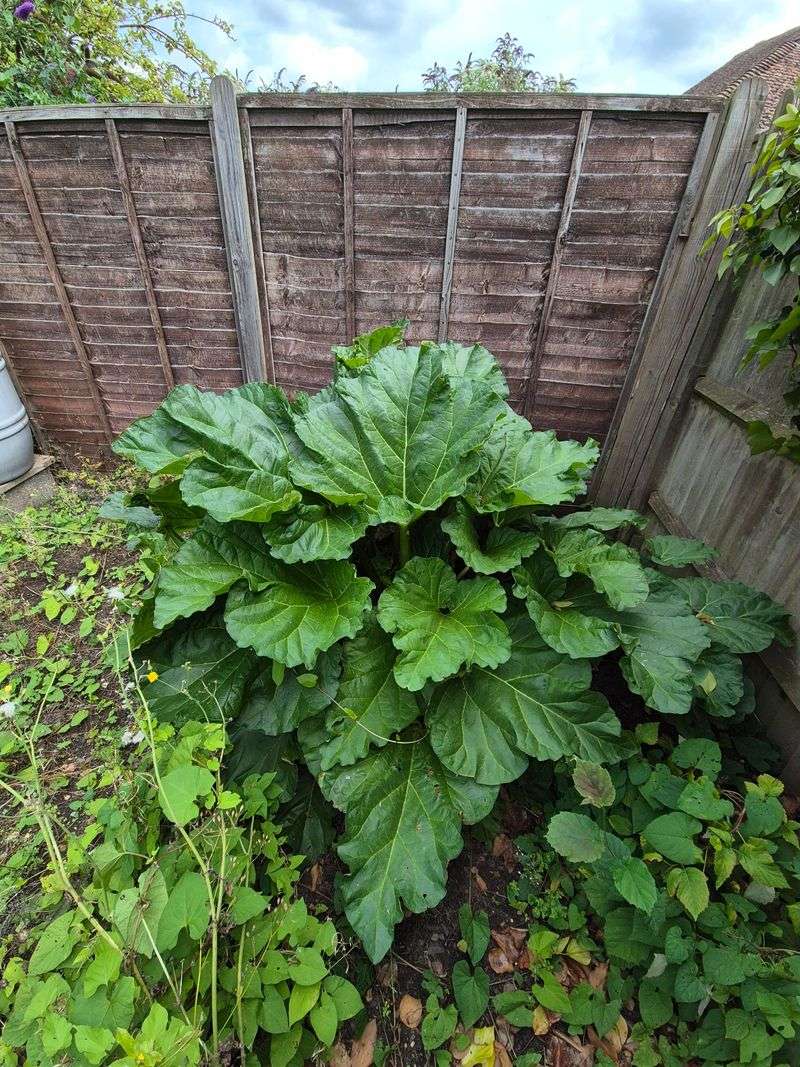
Weeds are sneaky in autumn, because they keep growing quietly while we are busy raking leaves and carving pumpkins. Perennial grasses can creep right up to a rhubarb crown and steal water meant for those thick roots.
Rhubarb is a heavy feeder, so it really dislikes sharing nutrients with a crowd of uninvited neighbors. Clearing the bed now gives the roots a calm, uncrowded space to rest through the cold months.
Curly dock deserves special attention, since rhubarb curculio beetles often use it as a breeding spot. Many garden experts recommend removing nearby dock plants to help keep this stalk-boring pest under control.
Trust me on this one, pulling weeds after a soaking rain is far easier than fighting dry ground. The roots slide out whole, which means fewer leftover bits sprouting back up come next spring.
Use your hands or a small hand fork near the crown, since next spring’s buds sit just below the surface. A big hoe swung too close can nick those buds and set your plant back for a season.
Toss weeds that have gone to seed in the trash rather than your backyard compost pile. Most home compost piles do not get hot enough to stop those seeds from sprouting later.
Guilty as charged, I used to skip fall weeding because the garden looked pretty much finished anyway. Now I spend twenty minutes on it each October, and my spring patch looks far happier for it.
Divide Crowded Rhubarb Crowns With A Sharp Spade
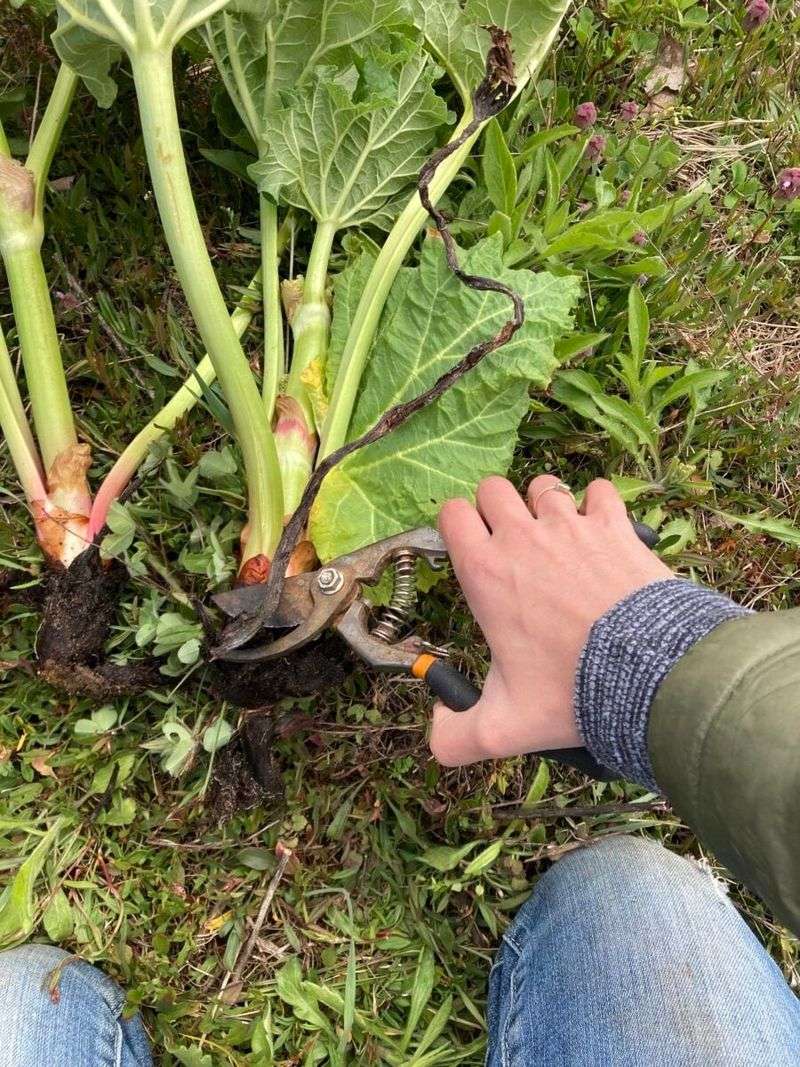
A single rhubarb crown can keep producing for well over a decade, which surprises plenty of new gardeners. Over time, though, the center gets crowded and the stalks start coming up thin and spindly.
Most experts suggest dividing rhubarb every five to ten years, either in early spring or in fall. Fall division works best after the leaves have collapsed but several weeks before the ground freezes solid.
Dig wide around the plant with a sharp spade, then lever the whole heavy clump out of the soil. Don’t laugh, but my first crown was so stubborn that I had to recruit my teenager to help.
Slice the crown into chunks with the spade, making sure each piece has at least one plump bud. Pieces with two or three buds and a good wad of roots usually settle in faster.
Replant the divisions about three feet apart, with the buds sitting one to two inches below the surface. Firm the soil gently around each piece so no big air pockets are left around the roots.
Pick a sunny spot with rich, well-drained soil, because rhubarb crowns tend to rot in soggy ground. Water the new divisions well after planting, then let the cooling weather do the rest of the work.
Extra pieces make wonderful gifts for friends, and I have handed out more than a few over the years. Just skip harvesting from new divisions next spring, so their roots can grow big and strong first.
Spread Rich Compost Around The Rhubarb Bed
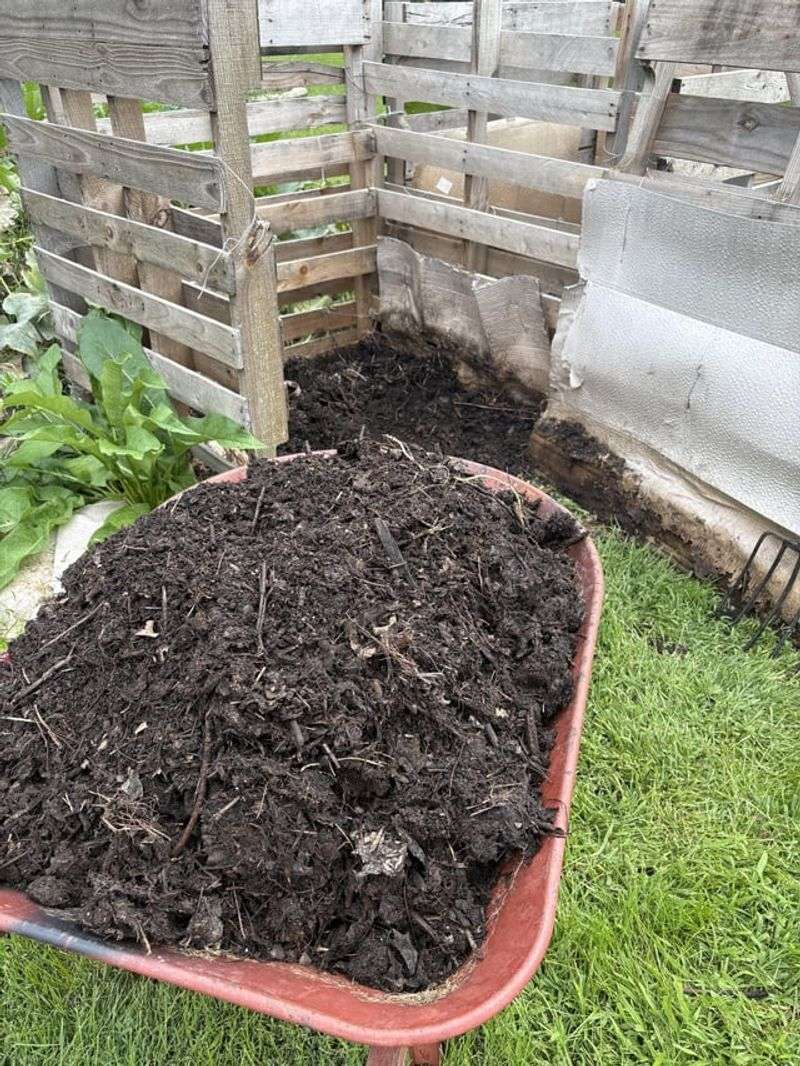
Rhubarb eats like a teenager after soccer practice, and a fall meal of compost keeps it well fed. Those massive leaves and thick stalks take a lot of nutrients out of the soil each year.
Many extension guides recommend spreading well-rotted manure or finished compost around rhubarb plants once fall arrives. Winter rain and snow slowly carry those nutrients down to the roots, ready for the spring growth spurt.
Wait until the leaves have collapsed and the plant is dormant before you start shoveling anything on. Feeding too early with fresh fertilizer might encourage tender new growth that struggles once the cold hits.
Spread a layer about two inches thick in a wide circle, reaching out past where the leaves stretched. Keep it a few inches back from the crown itself, since heavy piles there can invite rot.
Fresh manure is a different story, because it can be too strong and may carry harmful bacteria. Let it age for at least six months, or buy bagged composted manure from the garden center.
I’m a sucker for the earthy smell of a fresh compost delivery on a cool, gray morning. Something about tucking that dark, crumbly stuff around my rhubarb feels like paying the plant back.
A simple soil test every few years tells you whether your patch needs anything beyond organic matter. Rhubarb prefers slightly acidic to neutral soil, so a test can save you from guessing wrong.
Tuck Straw Mulch Over The Rhubarb Crowns
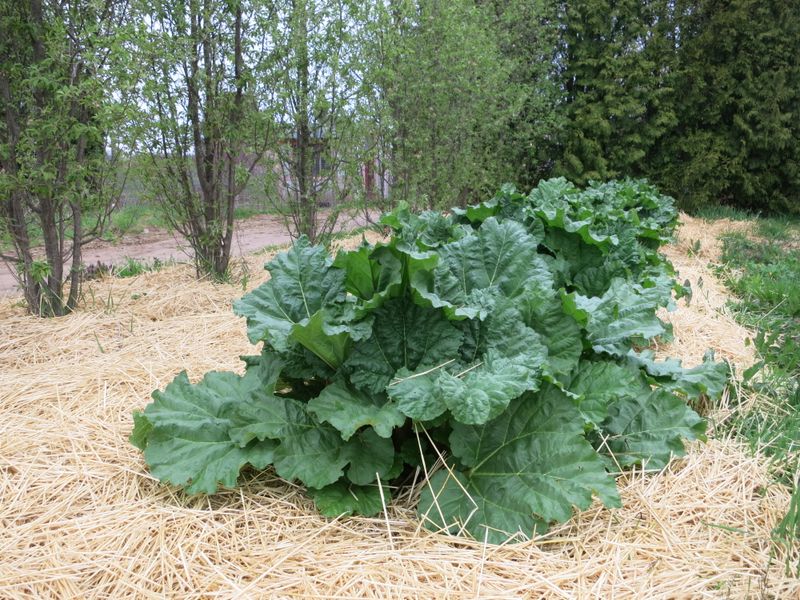
Rhubarb is tough enough to handle bitter winters in places as chilly as USDA zone 3. Even so, a fluffy blanket of mulch helps protect the crown when temperatures bounce up and down.
Repeated freezing and thawing can push crowns up out of the soil, a problem called frost heave. Mulch keeps the ground frozen more evenly, so the crown stays snug and settled right where it belongs.
Timing matters here, because mulching too early can give mice a cozy home before the cold sets in. Most guides suggest waiting until the top inch or two of soil has frozen hard in late fall.
Spread three to six inches of clean straw or shredded leaves over the whole rhubarb bed. Shredded leaves stay fluffy, while whole leaves can mat down into a soggy layer that blocks air.
Every fall, I run my lawn mower over a pile of maple leaves for free mulch. It takes ten minutes, and the rhubarb seems perfectly happy with my cheap and cheerful bedding.
Gardeners in milder zones, like parts of the Pacific Northwest, may need only a thin layer. Snow also works as natural insulation, so a deep snowpack does a lot of the job for you.
Pull the mulch back in early spring once the soil starts warming and red buds begin poking up. Leaving it too long can slow the first harvest, and nobody wants to wait longer for pie.
Lift A Rhubarb Crown For Winter Forcing
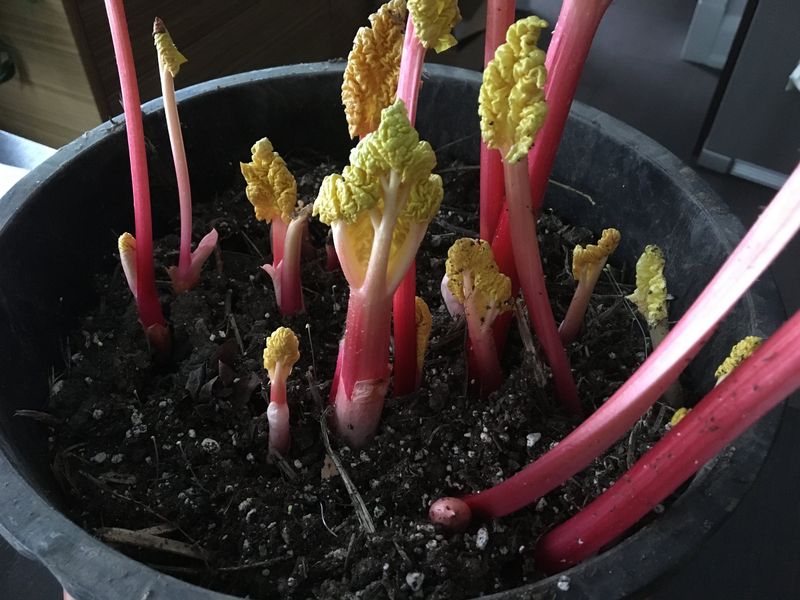
Forced rhubarb grows in near darkness, and the stalks come out a glowing pink with pale yellow leaves. They taste sweeter and more tender than garden stalks, and they show up weeks ahead of schedule.
Choose a healthy crown that is at least three years old, since younger plants lack enough stored energy. Dig it up in late fall, after the leaves have collapsed and a few frosts have passed.
Leave the lifted crown sitting outside on the soil for a week or two of chilly exposure. That cold spell convinces the plant that winter has passed, which is the trigger it needs to grow.
Next, pot the crown in a large container of compost and move it somewhere dark and cool. A basement or unheated shed between about 45 and 60 degrees Fahrenheit works nicely for most people.
Cover the pot with a large bucket or black bin to block every bit of light. Keep the compost lightly moist, and you could be snapping tender stalks in roughly five weeks.
I didn’t expect the first peek under the bucket to feel like opening a birthday present. Those curled, candy-pink shoots looked almost unreal against the dark soil in my chilly little basement corner.
Forcing drains a crown’s reserves, so most growers let it rest a full year or two afterward. Replant it outside in spring and skip harvesting from it until the plant has recovered its strength.
Freeze Chopped Rhubarb Stalks For Winter Baking
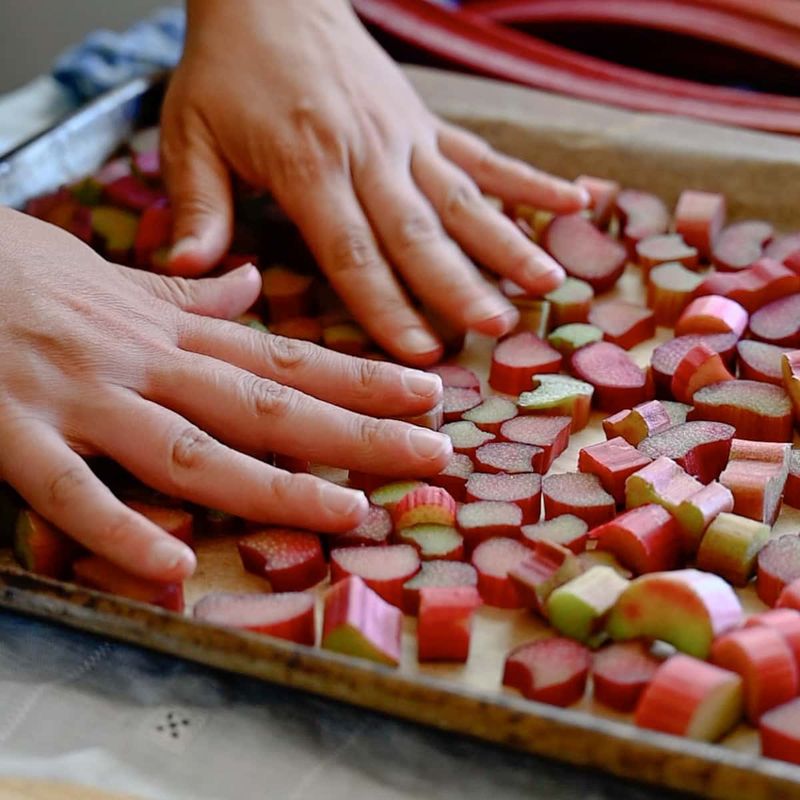
Chopped rhubarb is one of the rare garden crops that freezes beautifully raw, with no blanching required. That makes it easy to stash any firm stalks from a light late-season picking for winter treats.
Start by washing the stalks well and trimming off every scrap of leaf from the top end. Slice them into pieces about half an inch to one inch long, which suits most recipes nicely.
Spread the pieces in a single layer on a baking sheet and freeze them for an hour or two. That quick flash freeze stops the chunks from clumping into one giant pink brick in the bag.
Transfer the frozen pieces into freezer bags and press out as much air as you possibly can. Stored this way, rhubarb holds its quality for up to a year in a cold home freezer.
Not going to lie, I measure my bags in exact recipe amounts, usually four cups at a time. That trick saves me from guessing when a snowy weekend suddenly calls for a warm rhubarb crisp.
Frozen rhubarb releases extra liquid as it thaws, so many bakers add a spoonful more thickener. For pies and crumbles, you can often toss the pieces in while they are still frozen.
A stash of tart pink chunks also brightens winter oatmeal and makes a lovely sauce for pancakes. Opening that freezer bag in January feels a lot like borrowing a little sunshine from last summer.