The November Clematis Care Step That Helps Georgia Gardeners Get More Flowers Next Summer
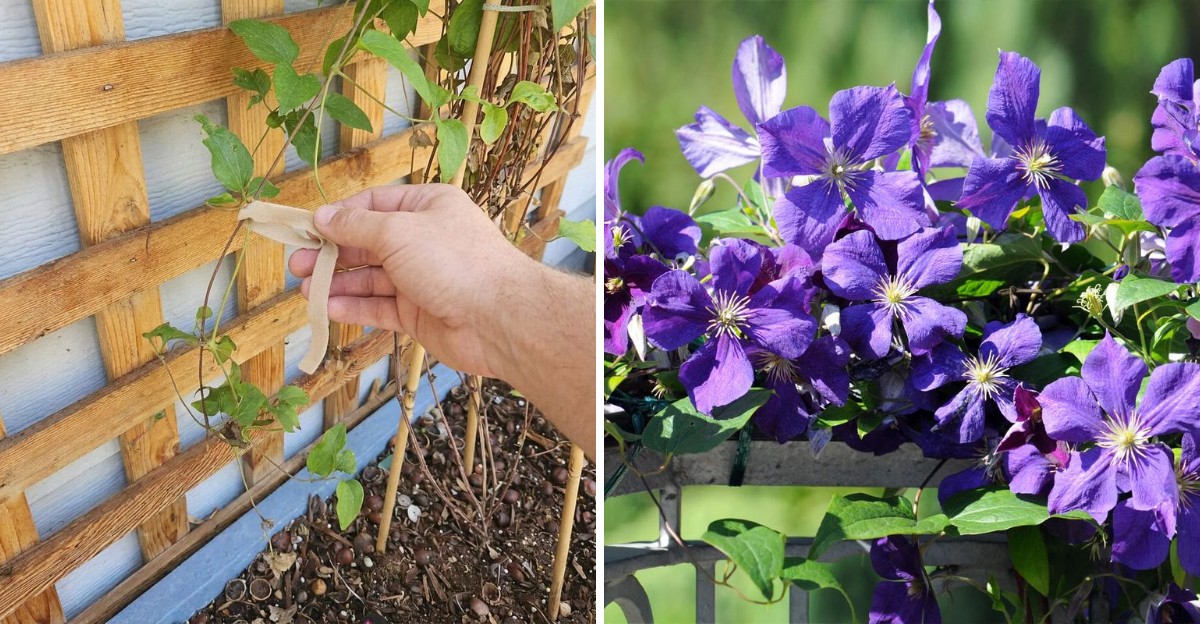
Some of the prettiest flowers of next summer are already sitting on bare, brown stems in your garden right now. Cut those stems in November, and you could snip off a whole season of blooms without realizing it.
That surprise caught me off guard years ago. I tidied a scraggly vine in late fall, felt proud of my neat work, and then waited all spring for flowers that showed up weeks late and in small numbers.
Georgia gardeners get a tricky mix of mild days, sudden cold snaps, and heavy clay soil. I think that mix makes fall timing even more important than it is up north.
You need a plan that matches your vine, not a calendar habit.
The fix is surprisingly simple, and it costs almost nothing. You might already have everything you need sitting in a bag in your garage.
1. Those Bare Clematis Stems Are Hiding More Than You Think
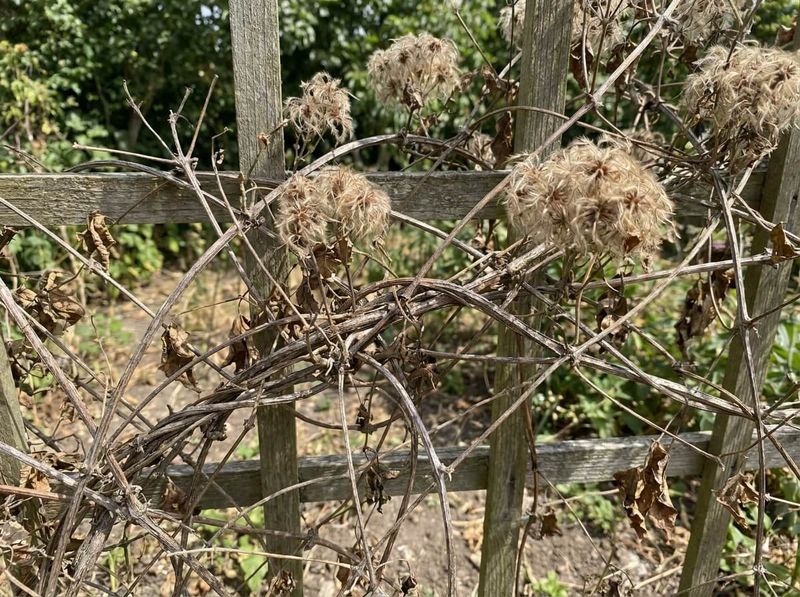
Run your fingers along a brown clematis vine this month and you may feel tiny bumps at the joints. Those swelling nodes are where next year’s growth, and for many types next year’s flowers, will appear.
Many clematis set their spring blooms on stems that grew this past year. Gardeners call this old wood.
Cut it back in November, and those future flowers go straight into the yard waste bin.
That is why the most helpful November step is mostly about restraint. Put the pruners down, figure out which clematis you own, and give the roots a thick blanket of mulch instead.
Hard pruning is generally reserved for Group 3 clematis in late winter or early spring, while Group 1 clematis should be pruned only as needed after flowering.
I learned this one the hard way. My first large-flowered clematis looked messy in fall, so I cut it to knee height.
The next May, my neighbors had saucer-sized blooms while mine pushed out leaves and a few late flowers.
Leaving stems in place also helps you later. In February, you can see clearly which stems are healthy because buds begin to swell.
Pruning with that information is far easier than guessing on a cold November afternoon with frost on the grass.
2. A Thick Mulch Blanket Around the Clematis Crown Does the Heavy Lifting
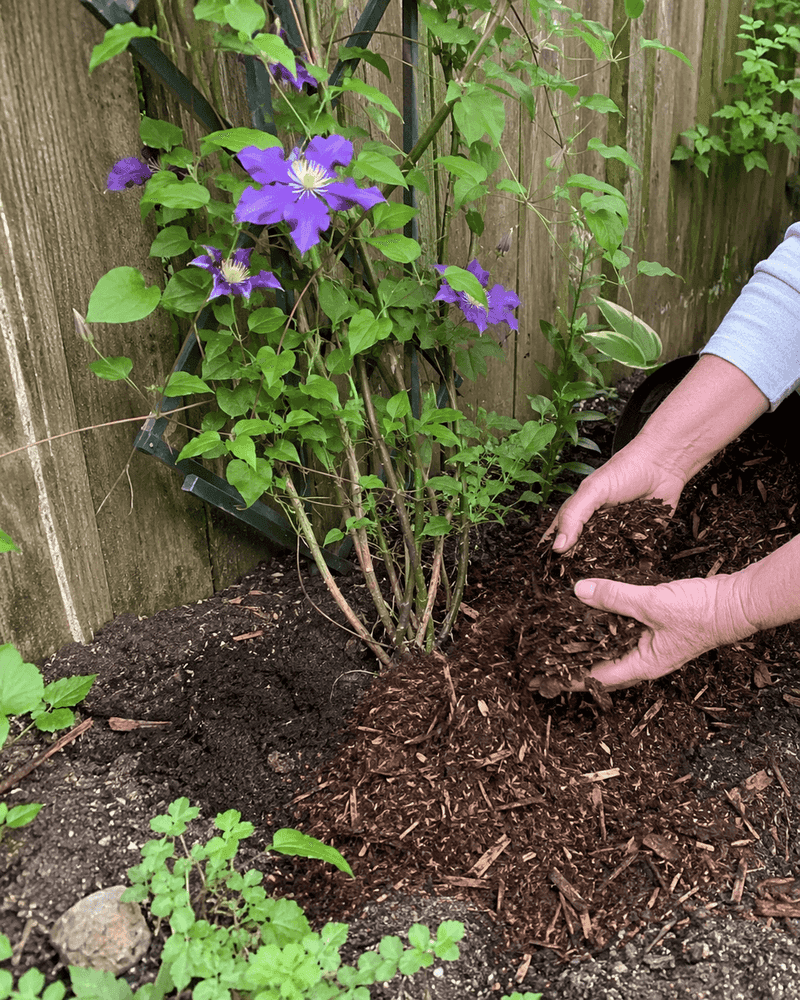
Cool roots and a sunny top make a clematis happy. Gardeners have repeated that rule for generations, and it explains why mulch matters so much this time of year.
In November, spread 2 to 3 inches of organic mulch over the root zone. Shredded bark, pine straw, or chopped leaves all work well.
Keep the mulch an inch or two away from the stems so moisture does not sit against the crown.
Georgia winters swing wildly. A 70-degree afternoon can follow a frosty night, and the soil may freeze and thaw again and again in north Georgia.
Mulch evens out those swings and helps protect the crown, which is where new shoots form.
Mulch also holds moisture through dry fall spells. That steady moisture keeps roots active and ready to support strong spring growth.
Here is a bonus. Clematis can sprout new shoots from buds below the soil line, especially when the crown was planted a few inches deep.
A protected crown means more stems in spring, and more stems often mean more flowers.
If you only do one thing this month, do this. It takes ten minutes and pays off for months.
3. Your Clematis Pruning Group Decides What Happens Next
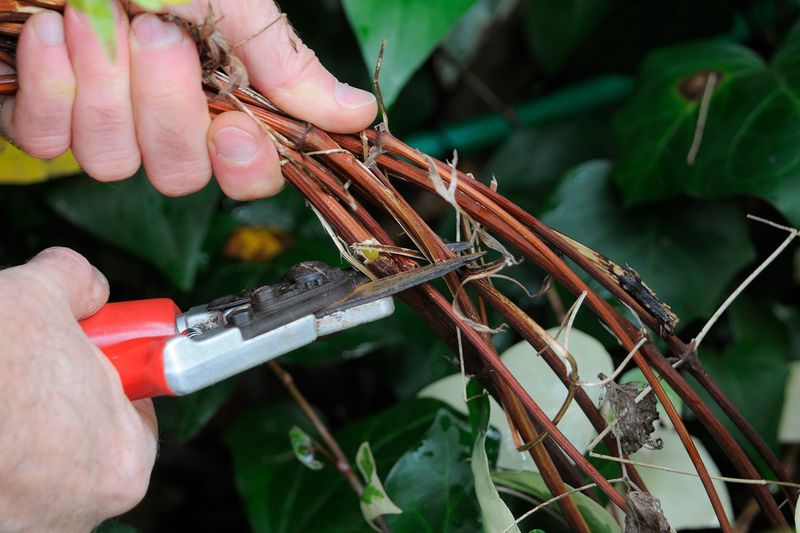
Clematis growers sort these vines into three pruning groups, and the system is easier than it sounds. Each group flowers at a different time and on different wood.
Group 1 flowers in early spring on old stems. Group 2 usually blooms in late spring on old wood, then often repeats in summer on new growth.
Group 3 flowers in summer and fall on stems that grow that same year.
So how do you tell which one you have? Start with the plant tag if you saved it.
Many nursery tags list the group as A, B, or C, which match groups 1, 2, and 3.
No tag? Think back to bloom time.
If flowers showed up in early spring, it is probably Group 1. Big blooms in May with a second round later point to Group 2.
Flowers starting in midsummer suggest Group 3.
Snap a photo of the blooms next season and write down the dates. A little garden notebook beats memory every time.
Once you know the group, every pruning decision gets simple. Guessing is how most gardeners lose a season of color, so this small bit of detective work matters a lot.
4. Early Spring Clematis Like Armandii Want You to Wait
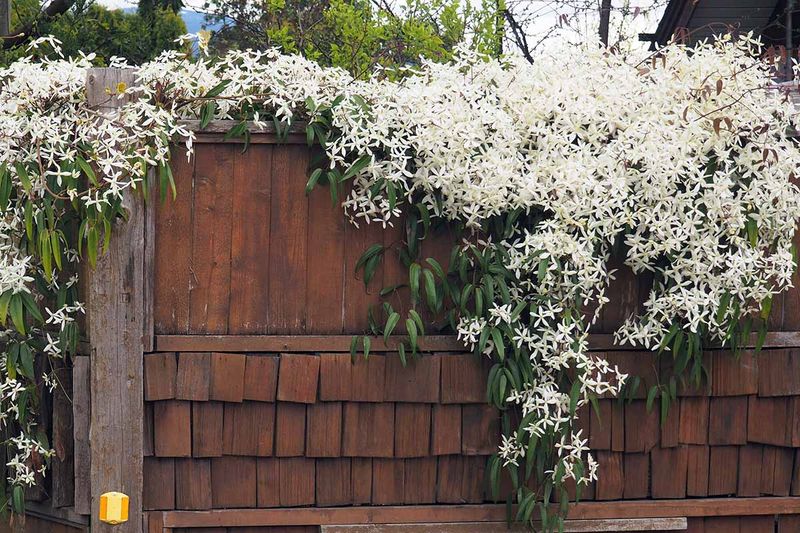
Evergreen clematis is a favorite across much of Georgia. Clematis armandii keeps its glossy leaves all winter and fills March air with a vanilla-like scent.
That vine, along with Clematis montana and Clematis alpina, belongs in Group 1. All of them form flower buds on last year’s stems.
Any heavy pruning now removes the early show you have been waiting for.
The right time to trim these vines is right after they finish blooming in spring. That gives them the whole growing season to build new stems for the following year.
For November, keep things light. Snip out broken stems or any clearly brown, brittle pieces.
Leave everything else alone.
One quick note on montana. It grows best in cooler areas, so in hot south Georgia gardens it may struggle.
Armandii handles warmer parts of the state better, though a hard freeze can brown its leaves in the mountains.
If a Group 1 vine has gotten huge and wild, be patient. You can reduce it after spring bloom, cutting back by a third or so.
A firm trim at the right moment keeps it tidy without costing you a single flower.
5. Big Saucer-Flowered Hybrids Like Nelly Moser Need Only a Light Tidy
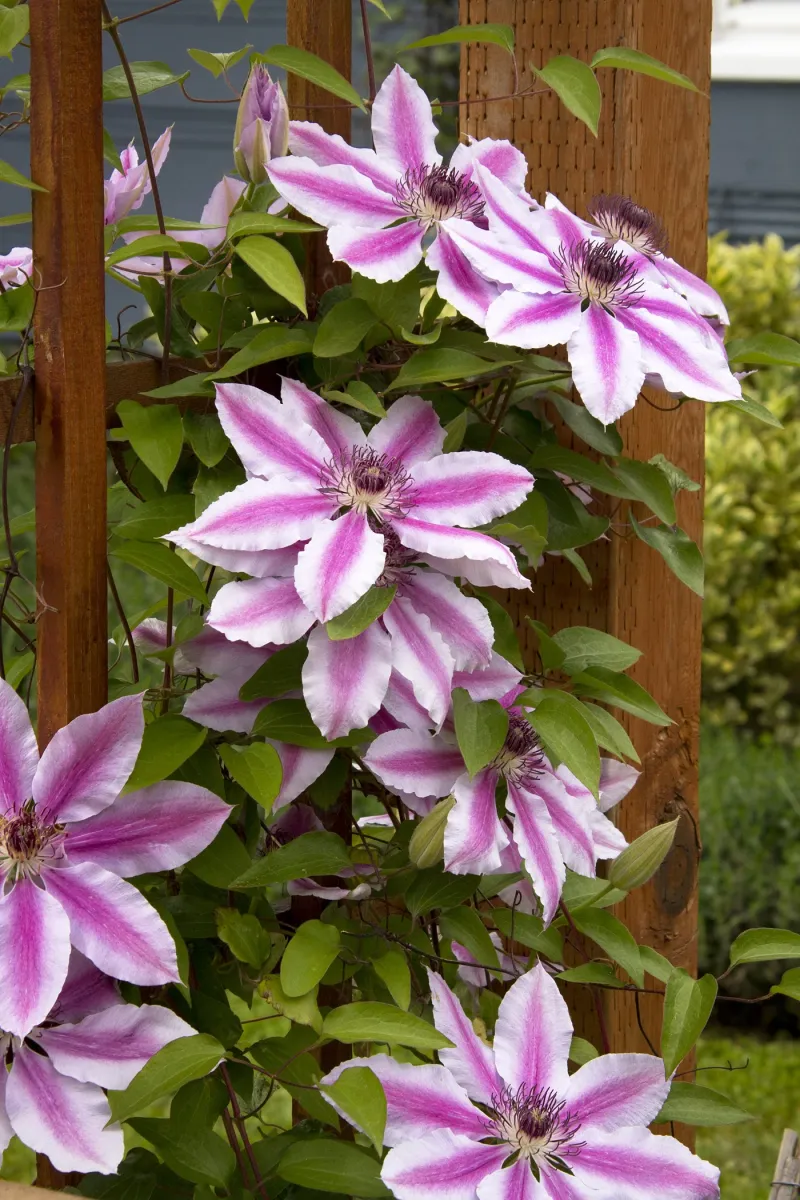
Nelly Moser, with its pink candy-striped petals, is the poster child for Group 2. So are many other large-flowered hybrids that bloom in May and often again later.
Those first spring flowers grow from buds on old wood. That makes November cutting a gamble you do not want to take.
Instead, do a gentle cleanup. Remove seed heads if they bother you, pull off any leaves that look spotted or diseased, and untangle stems that are flopping off the trellis.
The real trim comes in late winter, usually February or early March in Georgia. Work from the top of each stem down until you find a pair of fat, healthy buds.
Cut just above them. That simple approach keeps the woody framework while clearing out weak tips.
Some gardeners also deadhead after the first bloom flush. Trimming spent flowers back to a strong bud can encourage the second round in summer.
I love how forgiving these hybrids are once you get the rhythm. A light hand now and a careful snip in late winter often bring more flowers than any fancy product could.
Patience is the secret ingredient here.
6. Jackmanii and Other Summer Bloomers Get Their Haircut Later
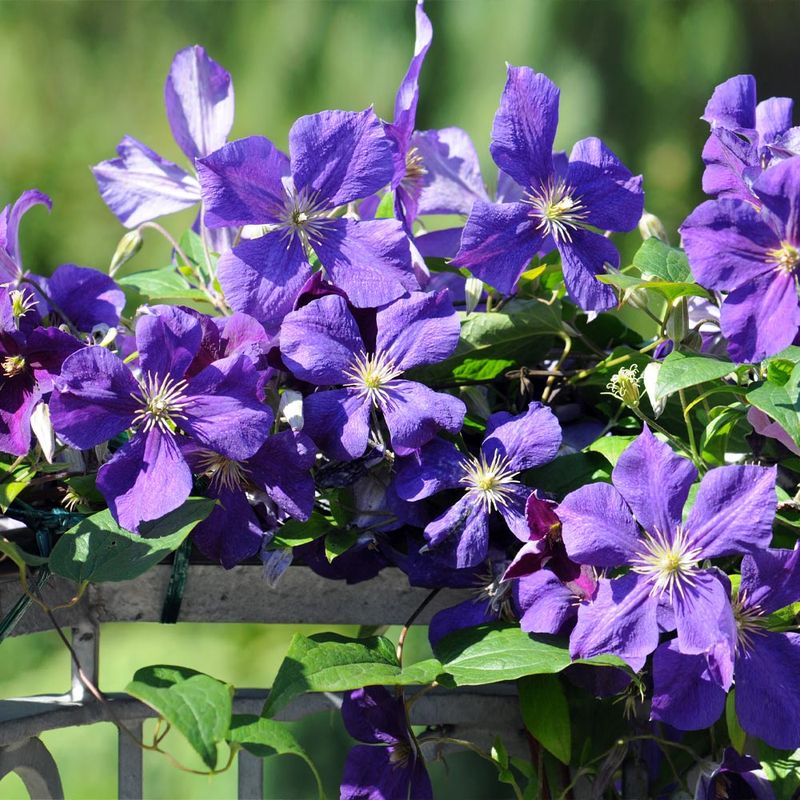
Purple Jackmanii climbing a mailbox is a classic Southern summer scene. It flowers on brand new stems, which puts it in Group 3.
These vines take hard pruning well. You can cut them down to about 12 to 18 inches, just above a pair of buds.
The best timing is late winter or very early spring, before new growth starts.
Why wait if they handle such a hard cut? Old stems give a little shelter to the crown during cold spells.
Leaving them through winter also helps you avoid any confusing early sprouting during a warm spell.
For now, mulch the roots well and let the vine rest.
A quick warning about Sweet Autumn clematis. Clematis terniflora is invasive in Georgia and much of the Southeast, spreading by seed into woods and fields.
Please skip planting it. If you already have one, cut off the fluffy seed heads before they blow around.
Want a native swap instead? Virgin’s bower, Clematis virginiana, gives you a similar cloud of small white flowers in late summer.
Pollinators love it, and it belongs in Georgia landscapes naturally.
7. Skip the Fertilizer Bag Around Your Clematis Until Spring
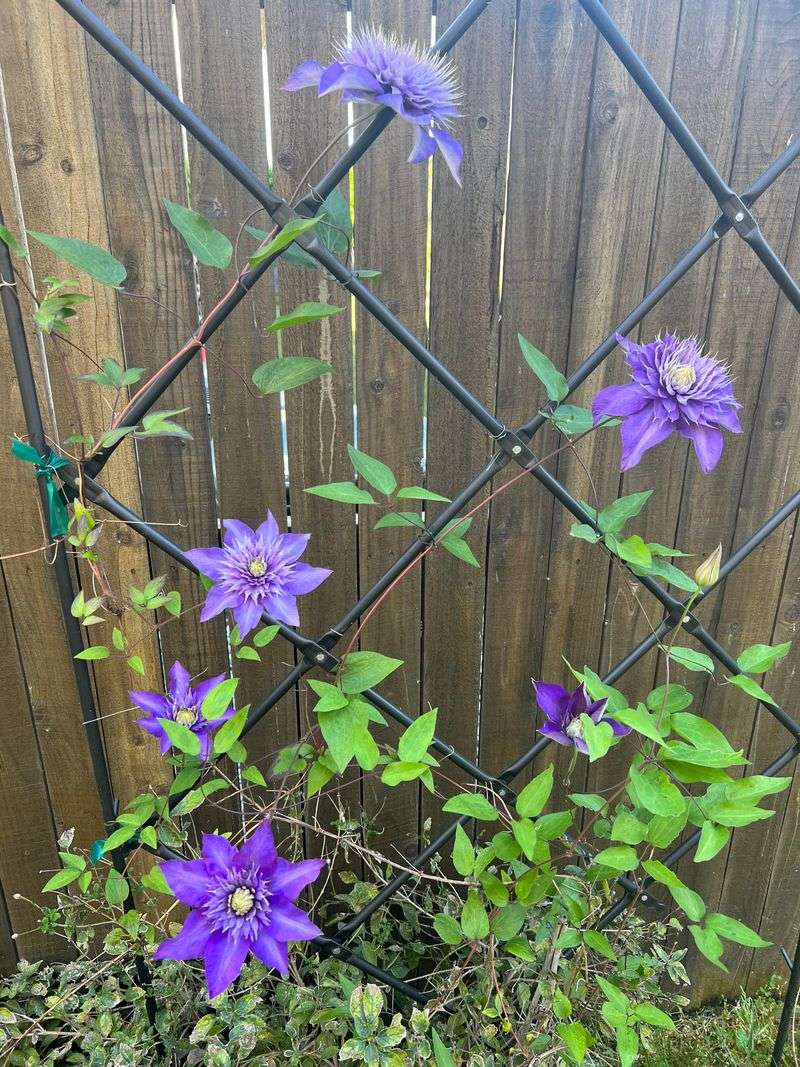
Feeding a plant in fall feels kind, but clematis would rather you hold off. Nitrogen in November can push soft new growth at the worst possible moment.
Those tender shoots have no time to harden before the first hard freeze. When the cold arrives, they get damaged, and the plant wastes stored energy replacing them.
Georgia’s warm fall spells make this risk sneaky. A few mild weeks can fool a well-fed vine into growing when it should be slowing down.
Save the fertilizer for early spring, when new shoots start to stretch. A balanced, slow-release product or a layer of compost around the base works nicely.
Follow the label, because more is not better.
Want to know what your soil truly needs? Fall is an excellent time for a soil test.
The University of Georgia Cooperative Extension offers affordable testing through local county offices.
Clematis tends to prefer soil close to neutral. Many Georgia soils lean acidic, so a test might suggest a little lime.
Lime works slowly, so adding it in fall gives it months to adjust the soil before the growing season begins.
8. A Tidy Clematis Base and Good Drainage Set Up Next Summer’s Show
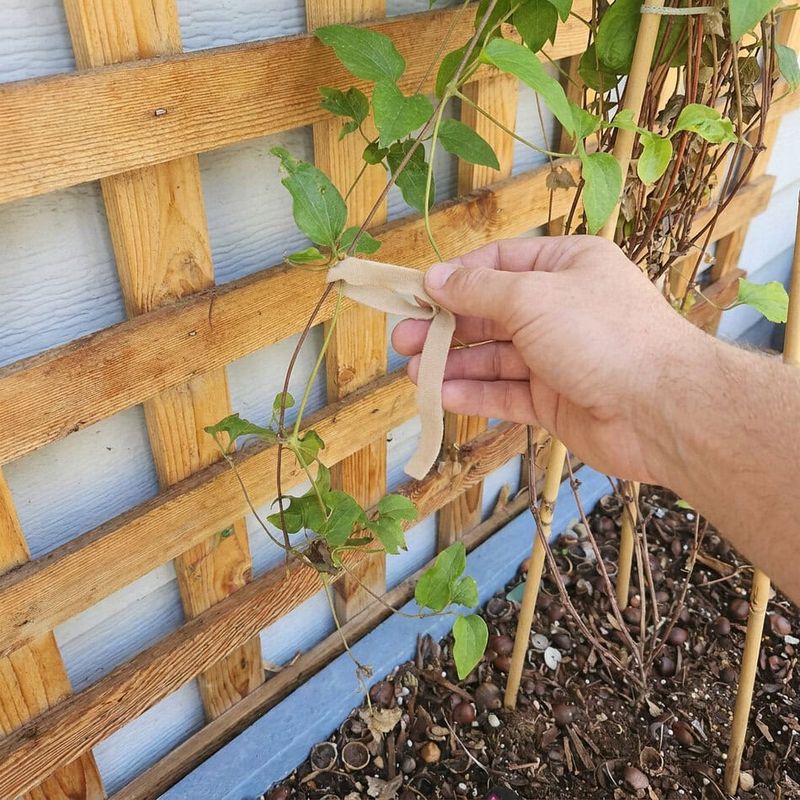
Finish the season with a quick sweep around the vine. Rake away fallen clematis leaves and old flower bits, especially if spots or wilting showed up this year.
Clematis wilt and leaf spot fungi can hang around in old debris. Bagging those leaves instead of composting them lowers the chance of trouble next spring.
Check drainage while you are out there. Clematis roots dislike soggy soil, and Georgia clay can stay wet for days after winter rain.
If water pools near the base, plan to work in compost or move the plant to a raised spot during its dormant season.
Then do one small thing that helps more than you might expect. Tie a weatherproof tag to the trellis listing the variety and pruning group.
Your February self will thank you.
So the full November routine looks like this. Leave the stems, mulch the crown, skip the fertilizer, clean up debris, and confirm the group.
None of it takes long. Yet together these steps let your vine rest well and wake up strong.
Next summer, when the blooms spill over the fence, you will know exactly why.