Dozens Of Tiny Eggs Are Hiding In Your Alabama Soil This November And Now Is The Time To Act
You catch a flash of orange before your mind registers what it is. This insect refuses to flinch when your shadow falls across it. Bold does not describe how firmly it holds its ground before you.
Alabama gardeners are meeting this stubborn muncher in growing numbers. Something about its markings warns you before it moves an inch. Bean leaves in your own garden may still show bite marks from earlier in the season.
Ragged leaves and bare stems in your beds hint at a busy season. Patience seems to be its only real strategy against your swatting hand. Mild Alabama autumns can keep adults active well into November.
Your garden beds have gone quiet now, but something is still happening beneath the surface. Watching it stare back at you feels strangely unsettling, almost personal.
Chewed leaves are a sign this creature has been in your patch, and what it leaves behind matters now. Knowing what this bug wants next will change how you defend your garden.
Meet The Gentle Giant Of The Southern Garden
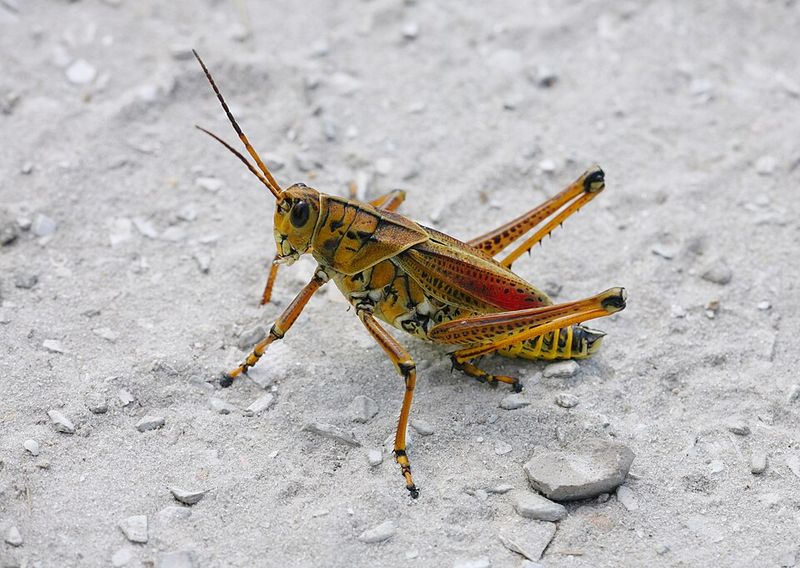
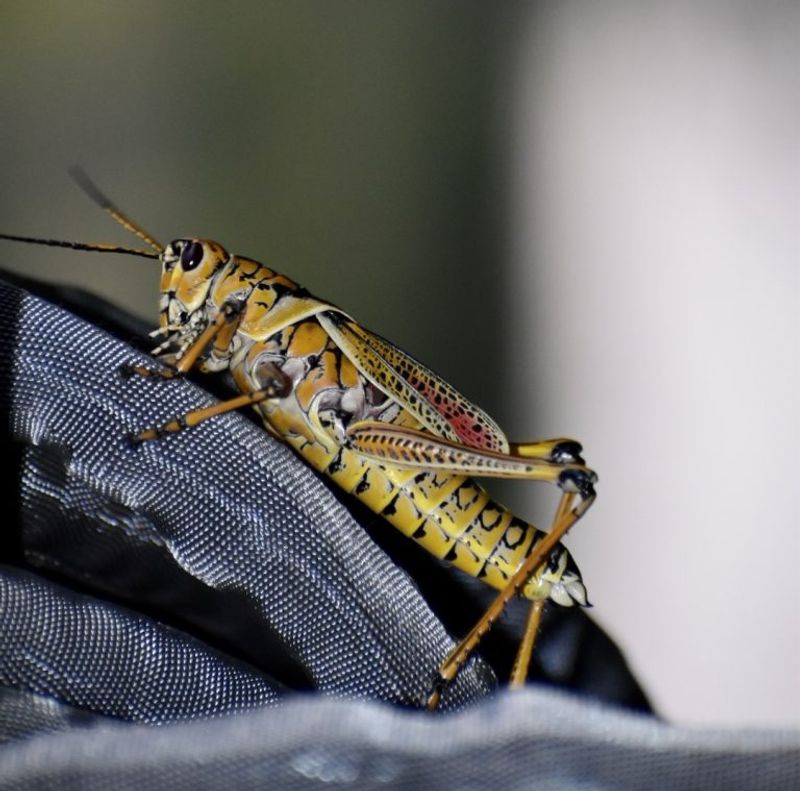
Picture a grasshopper that skipped leg day but doubled down on lunch. The Eastern Lubber Grasshopper, known to scientists as Romalea microptera, can stretch close to three inches long, making it one of the largest grasshoppers in the United States.
Adults wear a dull yellow or tan shell splashed with black spots and rosy pink wing edges. Younger ones look totally different, showing up as coal-black nymphs with thin red or yellow racing stripes down their backs.
The name lubber traces back to an old English word meaning clumsy or lazy, and the label fits. These insects move at an unhurried crawl, hoisting themselves over soil and stems like they are hauling luggage.
Gardeners in the southern half of Alabama spot them most often. Warm, damp lowlands and weedy field edges suit them well, and by autumn the biggest adults have had a full season to grow.
Unlike the small green grasshoppers that ping off your shirt, lubbers gather in loose groups. Where you find one, a handful of relatives are usually nearby.
Their size makes them easy to notice, which is helpful in November. A big insect on a bare stem is much simpler to find than one hiding in a summer jungle of leaves.
Learning to recognize them now gives you a real advantage. Once you can tell a lubber from a harmless hopper, your plan for spring becomes smarter and far less hurried.
Why November Is The Moment That Matters
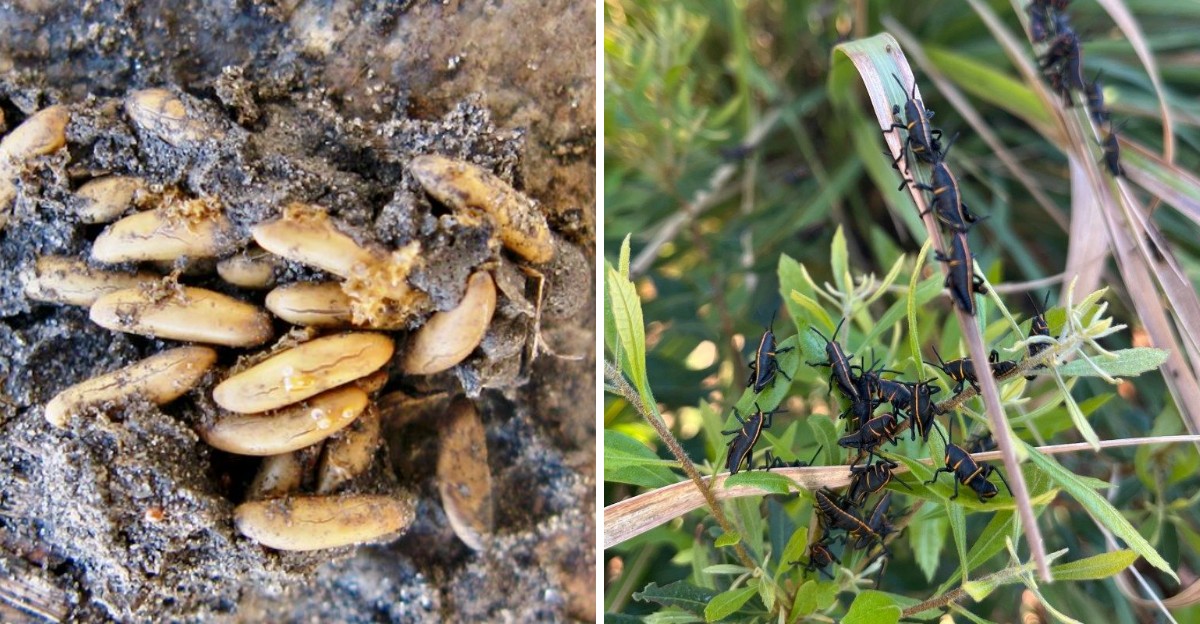
Every successful lubber effort begins months before the giants show up. The whole cycle starts underground, where females push clusters of eggs into loose, sunny soil in late summer and fall.
Each female may lay several egg pods, with dozens of eggs packed into every pod. Those pods are usually tucked an inch or two below the surface, often in bare, sunny patches.
In November, the final batches are still being laid in warm spells. The adults have done their job, and their season is nearly over.
Then comes the first hard frost. Adult lubbers do not survive the freezing nights of winter, so the visible insects you have been watching will gradually disappear.
The eggs are a different story. Protected by soil and a sturdy foamy coating, the pods wait out the cold and sit quietly until warmth returns.
That is why this month is such a strong window for action. The adults are slow, easy to find, and still carrying eggs, while the soil is cool and comfortable to work in.
Every female you remove now may be carrying eggs that will never be laid, which can mean fewer youngsters next spring. Even a few minutes of tidy work in November can mean far fewer youngsters in March.
Frost dates vary across the state, so south Alabama often has adults lingering well into the month. Let the thermometer guide your timing rather than the calendar.
The Wings Are Pretty, But The Walking Is What Counts
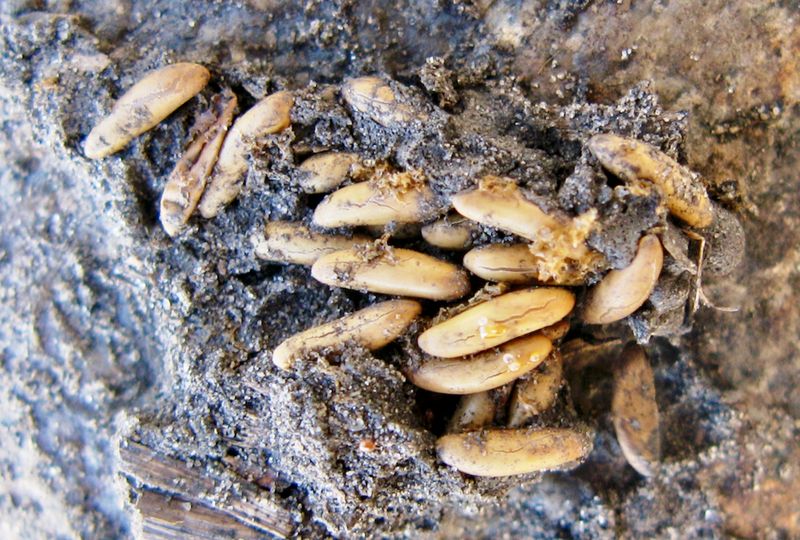
Here is the odd part that surprises so many gardeners. Lubbers have wings, but the wings are far too short and stubby to lift that bulky body off the ground.
Flip out a wing and you will see a pretty flash of rose pink underneath. Lovely, yes, but functionally closer to a decorative cape than a working aircraft.
So instead of flying, they walk. They plod along stems, drop clumsily off leaves, and manage only short, awkward hops when startled.
That grounded lifestyle changes how they spread. Rather than drifting across the county on a breeze, lubbers expand slowly, marching from weedy ditches into nearby yards over a few seasons.
It also means your garden’s trouble spots are predictable. Eggs laid this fall will hatch close to where the mother stood, so the places you see adults now are the places to watch in spring.
Slowness works in your favor. A hopper that cannot flee is a hopper you can pick off a plant with a gloved hand and drop into a bucket of soapy water.
Barriers help too. Row cover fabric, fine mesh around prized beds, and a tidy border can slow their approach in ways that would be useless against flying pests.
Fun bit of trivia: the pink wing linings are a handy way to confirm you are looking at a lubber. Once you spot the pink linings, identification gets easy.
Those Bright Colors Are A Friendly Heads-Up
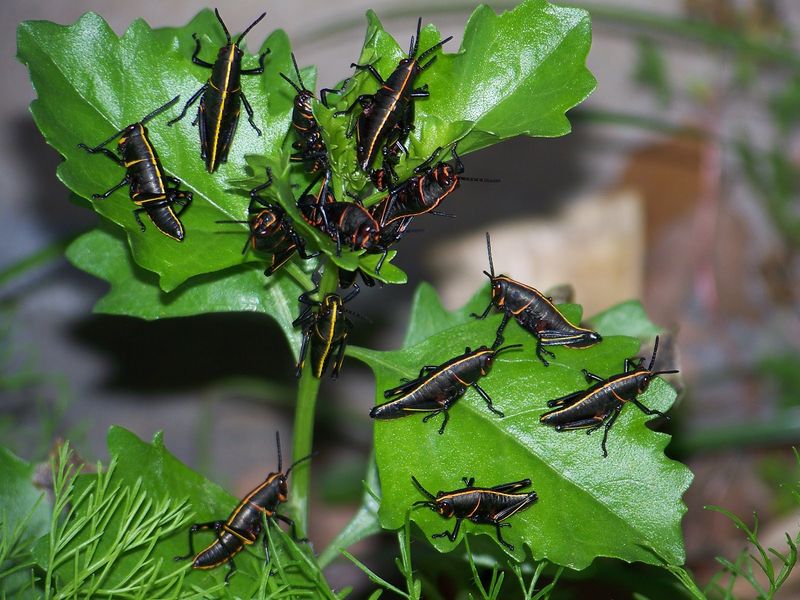
Nature rarely paints an animal in traffic-cone colors by accident. The bold yellow, red, and black pattern on a lubber is a billboard that reads: please skip this snack.
Scientists call that signaling aposematism, and plenty of critters use it. Monarch butterflies and coral snakes rely on the same trick, advertising that they are a poor meal.
Lubbers back up the message with chemistry. They gather bitter compounds from the plants they eat and store them in their own tissues.
When a bird, lizard, or curious dog grabs one, the grasshopper hisses and releases a frothy, smelly liquid from its thorax. It can also spray a brownish fluid that stains and may irritate.
Pets that mouth one usually spit it out quickly, though some dogs drool or vomit afterward. If your dog seems unwell after meeting one, a quick call to your vet is a sensible precaution.
Handling them barehanded is not ideal either. The spray can bother eyes and skin, so a pair of gloves makes your November patrol much more comfortable.
Their chemical defense explains the calm confidence you notice in the garden. Predators mostly leave them alone, so there is little reason for the insect to hurry away from you.
Understanding the warning colors turns a surprising encounter into a manageable one. You know what you are looking at, and you know to keep your hands protected.
Where To Look For Next Year’s Eggs
Lubbers prefer sunny, loose, bare soil for egg laying. That makes certain spots in your yard worth a closer look this month.
Check the edges of vegetable beds, the soil beside bulb plantings, and sunny strips along fences. Gravel borders, bare patches near mailboxes, and the margins of weedy ditches are popular too.
Egg pods are hidden underground, so you will not see them directly. Instead, watch where females linger, since they often crouch low and push their abdomens into the dirt.
Late-season adults tend to drift toward irrigated ornamental beds when other food runs short. Amaryllis, crinum lilies, hostas, daylilies, and caladiums are common favorites.
Vegetable growers report visits to beans, peas, okra, sweet potato vines, lettuce, and young corn. Citrus trees and figs in southern Alabama can show ragged leaf edges too.
Keep a simple note on your phone listing the places you spotted adults. That short list becomes your spring map, saving you time and guesswork when the nymphs appear.
Interestingly, some gardeners report that heavily aromatic herbs seem to bother them less. Rosemary or lavender nearby will not solve everything, though they may make an area less appealing.
Mature shrubs usually shrug off the nibbling and push new growth. Young plants and tender bulbs deserve your attention first.
Simple November Steps That Make A Real Difference

Good news first: you rarely need heavy chemicals for these insects. Their size and slow pace make hand removal surprisingly effective.
Pull on sturdy gloves, carry a bucket of soapy water, and walk the garden in the cool morning. Lubbers are sluggish before the sun warms them, so plucking them off stems is simple.
Some gardeners prefer long-handled tongs or a small net to avoid the defensive spray. Either tool works fine and keeps your hands clean.
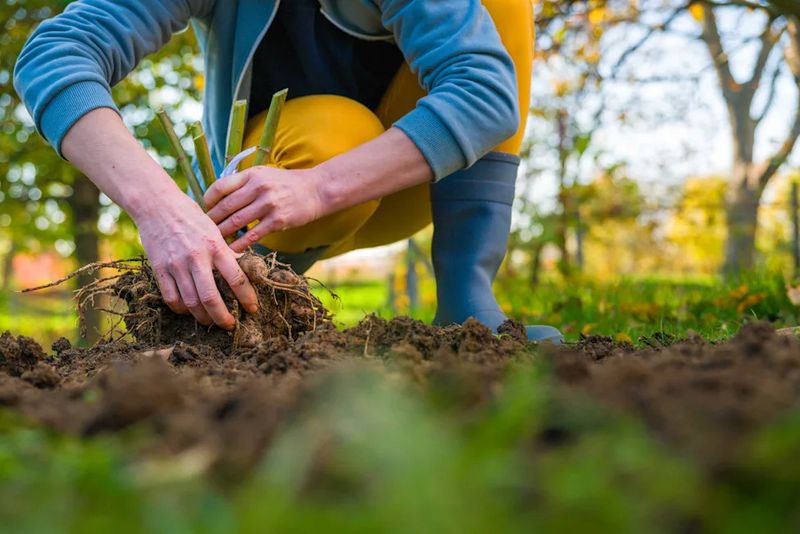
Next, turn your attention to the soil. Lightly cultivating bare, sunny patches where adults gathered can expose egg pods to cold air and hungry birds. Many gardeners find this a useful, low-effort step.
Tidy the edges as well. Mowing weedy borders, clearing tall grass along fences, and covering bare ground with a layer of mulch can make egg laying less appealing next fall.
Barriers still help, so keep row covers handy for the spring planting season. Fine mesh around prized amaryllis beds can block access reasonably well.
If populations ever become overwhelming, insecticides labeled for grasshoppers are an option, though adults resist many products because of their size and tough shell.
Treatments work far better against small spring nymphs. Baits with carbaryl or products with spinosad have shown decent results on younger stages, and labels deserve a careful read, especially around edible crops and pollinators.
Encouraging natural balance helps too. Loggerhead shrikes and certain parasitic flies do take lubbers, and a garden with diverse habitat supports those helpers.
Your Spring Plan Starts Now
Gardeners who work the calendar instead of reacting in a rush tend to see far fewer chewed leaves. A few well-timed visits beat a dozen frustrated ones later on.
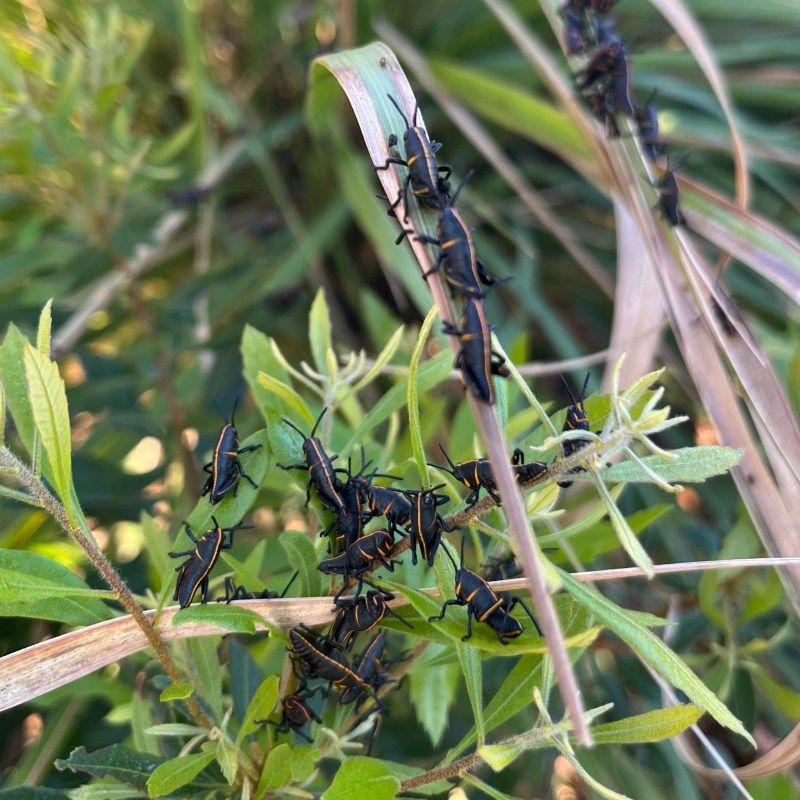
Around March and April in south Alabama, tiny black nymphs emerge together in tight clusters. At that stage they are small, soft, and grouped on a handful of plants.
Set a reminder for mid-March to walk your fence lines and weedy edges, looking for the telltale black-and-red youngsters. A group of newly hatched nymphs can often be handled in one quick pass with a bucket.
Over spring and early summer the nymphs molt several times, gaining their yellow adult coloring and reaching full size by July and August. Catching them early keeps all of that growth from ever happening in your beds.
Established plants typically recover on their own, so a few ragged leaves from this season are no cause for worry. Your real win comes from the quiet work done this month.
Take a stroll this weekend, note where the big adults are lingering, and give those sunny soil patches a little attention. Next year’s garden will thank you.