9 Beautiful Native Florida Vines Most Gardeners Don’t Know About
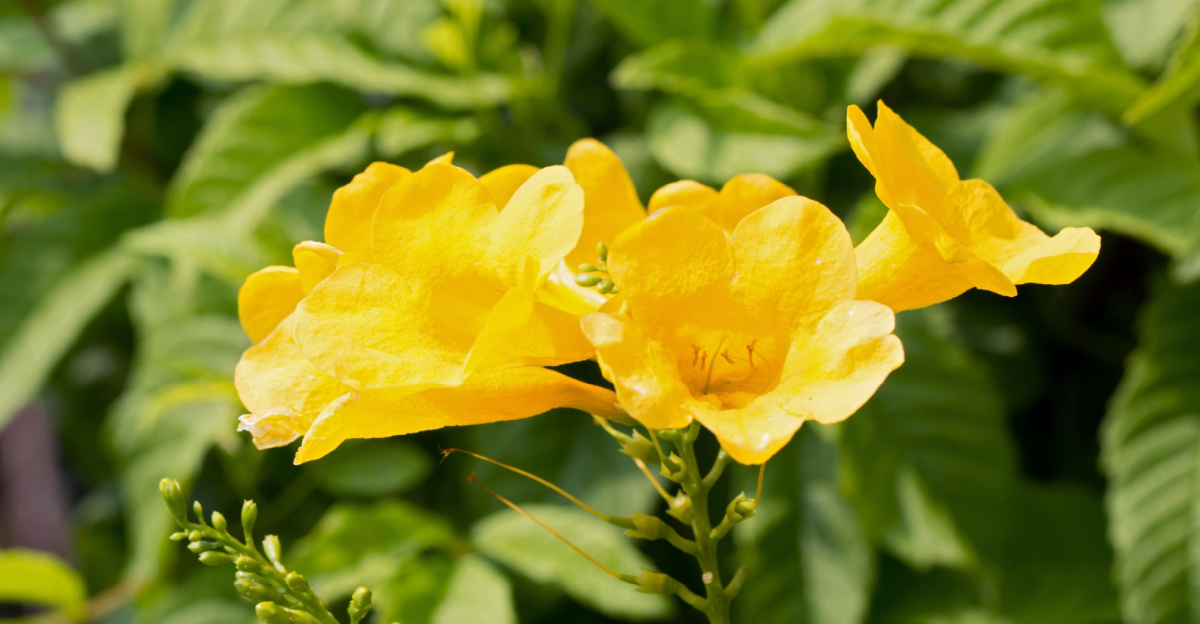
A bare fence or empty arbor can make even a lush Florida garden feel unfinished. Many homeowners rush to plant imported climbers, yet some of the most striking vines already belong to the state’s landscapes.
Hidden along woodland edges, winding through coastal hammocks, and climbing sunny clearings, Florida’s native vines offer color, fragrance, and wildlife value that many gardeners overlook.
Step beyond the usual garden choices and you may discover a vine that becomes the highlight of your entire yard.
1. Coral Honeysuckle Attracts Hummingbirds With Bright Red Blooms
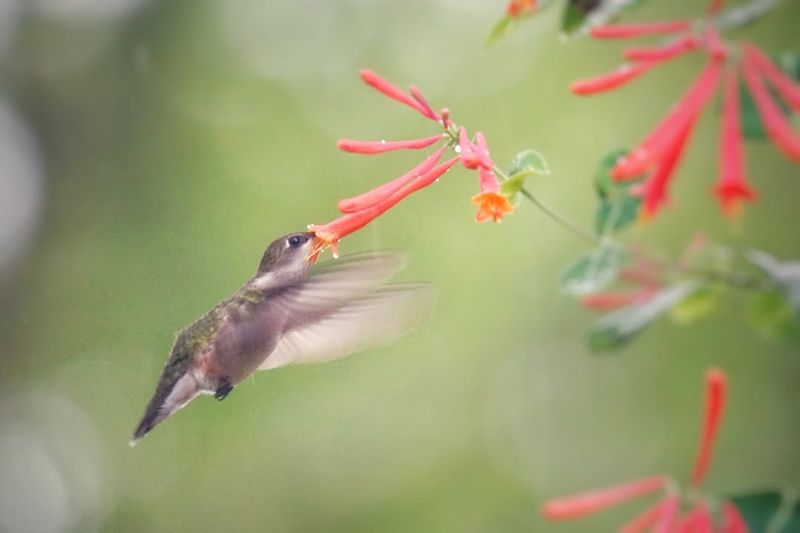
Few sights in a Florida garden are as thrilling as a ruby-throated hummingbird hovering at a cluster of fire-engine red blooms. Coral Honeysuckle, known botanically as Lonicera sempervirens, delivers exactly that kind of magic season after season.
Unlike its invasive cousin, Japanese honeysuckle, this native vine behaves itself beautifully in the landscape and earns high praise from the University of Florida IFAS Extension as a top wildlife plant.
The flowers are long, slender tubes in bold coral-red with soft yellow interiors, blooming most heavily in spring but often continuing into fall across Florida. Hummingbirds are the primary pollinators, though butterflies and native bees also visit regularly.
After flowering, the vine produces small red berries that songbirds eagerly snap up.
Coral Honeysuckle is semi-evergreen across most of Florida, holding its blue-green leaves through mild winters. It grows well in full sun to partial shade and adapts to a wide range of soil types, including the sandy soils so common throughout the state.
Plant it on a fence, trellis, or arbor and give it room to climb six to fifteen feet. Pruning after the main bloom flush keeps it tidy and encourages fresh growth.
2. Crossvine Bursts Into Fiery Spring Color
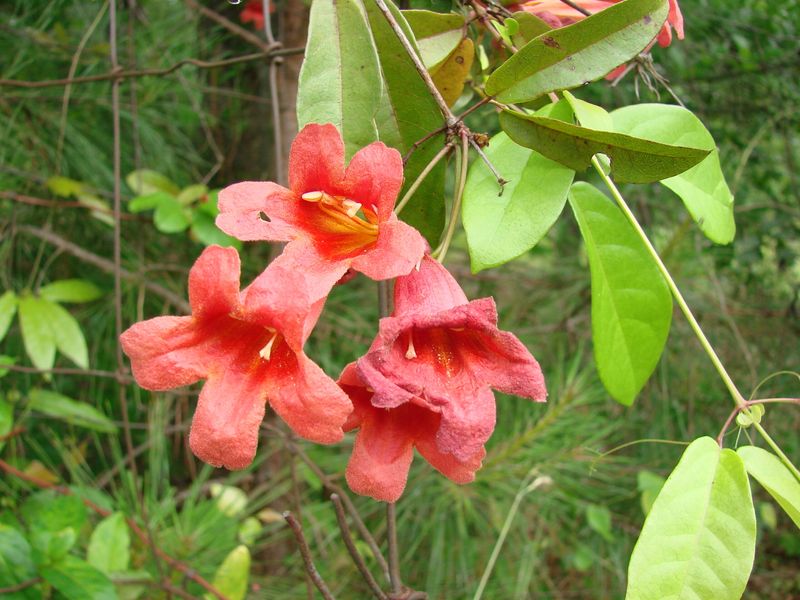
Every spring in Florida, before most vines have even stretched their new growth, Crossvine puts on a jaw-dropping show. Bignonia capreolata explodes with clusters of trumpet-shaped flowers in rich shades of orange-red on the outside and golden yellow within, covering fences, pergolas, and walls with color that looks almost too vibrant to be real.
Crossvine is a woody, high-climbing vine that uses tendrils tipped with adhesive discs to grip surfaces with impressive strength. It can reach thirty feet or more when given a sturdy structure to climb, making it an excellent choice for covering large garden features quickly.
Hummingbirds and native bees are frequent visitors, drawn in by the nectar-rich blooms.
One of the reasons Florida gardeners love Crossvine is its toughness. It handles Florida’s intense summer heat and high humidity without complaint, and established plants show solid drought tolerance.
The University of Florida IFAS Extension notes that it performs well across North and Central Florida, preferring full sun for the best flower production but tolerating partial shade. The semi-evergreen foliage often takes on attractive purplish tones in cooler months, adding seasonal interest even when the vine is not in bloom.
Minimal pruning after flowering keeps the plant shapely.
3. Purple Passionflower Brings Exotic Butterfly Friendly Blooms
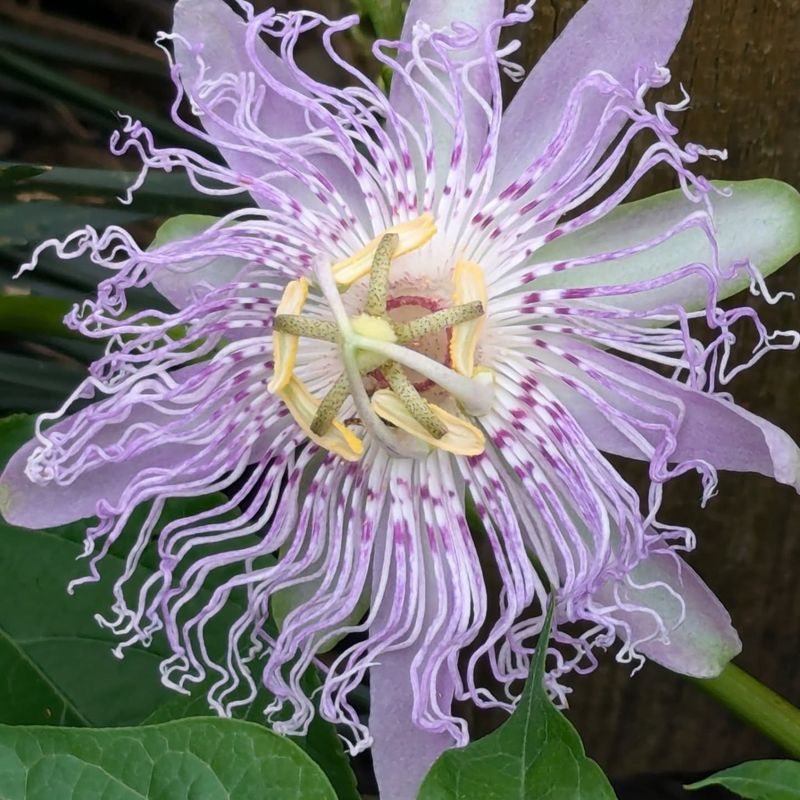
Nothing prepares a new gardener for their first look at a Passionflower bloom. The flower of Passiflora incarnata, commonly called Maypop or Purple Passionflower, looks like something designed by an artist who decided that flowers should be as complex and theatrical as possible.
Rings of lavender fringe surround a central structure so detailed that early explorers famously used it to tell the story of the Passion of Christ.
Beyond its visual drama, Purple Passionflower plays a critical ecological role in Florida gardens. It serves as the primary host plant for Gulf fritillary butterflies and also supports Zebra Longwing butterflies, Florida’s state butterfly.
Female butterflies lay eggs on the leaves, and the caterpillars feed on the foliage before transforming into their next stage. Planting this vine is essentially building a butterfly nursery in your backyard.
The vine thrives in Florida’s sandy, well-drained soils and full sun, spreading readily through underground runners to form loose colonies. Edible egg-shaped fruits called maypops ripen in late summer, tasting mildly sweet and enjoyed by both wildlife and adventurous gardeners.
The Florida Native Plant Society recommends it for wildlife gardens throughout the state. Providing a trellis or fence gives it a structured place to climb while keeping its enthusiastic spread manageable.
4. Carolina Jessamine Covers Trellises In Golden Spring Flowers
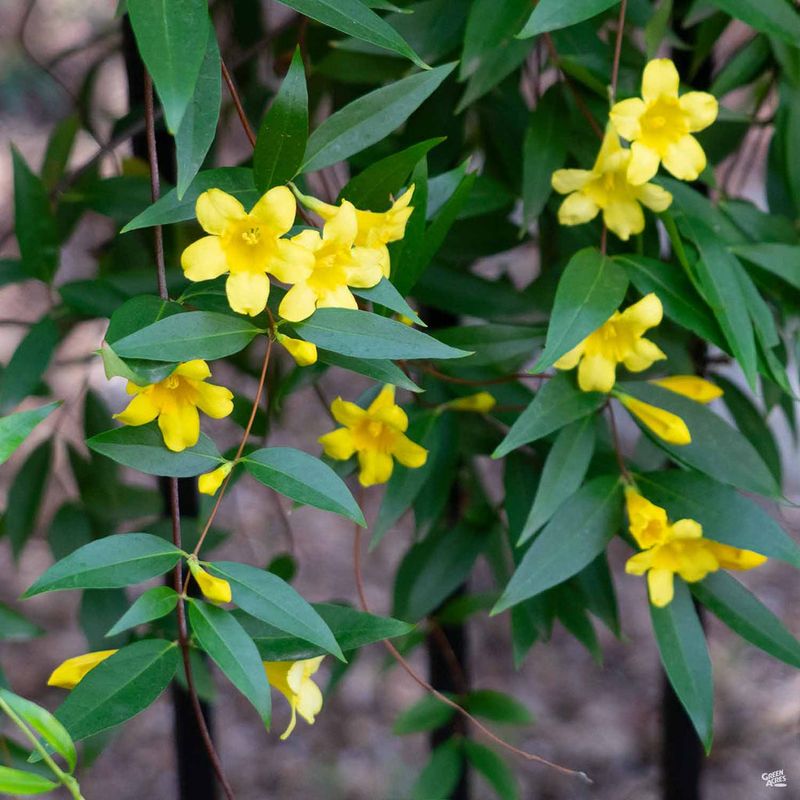
Long before summer arrives in Florida, Carolina Jessamine is already putting on a golden performance that stops people in their tracks. Gelsemium sempervirens bursts into bloom in late winter and early spring, draping trellises, arbors, mailboxes, and fences in cheerful yellow trumpet-shaped flowers with a sweet fragrance that drifts pleasantly through the garden on warm afternoons.
This evergreen vine is a Florida native found naturally in woodland edges, roadsides, and thickets from the Panhandle down through Central Florida. The glossy, lance-shaped leaves stay green year-round, giving the garden structure even when the vine is not in flower.
Established plants are surprisingly tough, tolerating drought, occasional flooding, and Florida’s unpredictable winters with minimal complaint.
Carolina Jessamine grows well in full sun to partial shade and climbs by twining its stems around any available support, reaching heights of ten to twenty feet. The University of Florida IFAS Extension recommends it as a reliable native vine for home landscapes, particularly for covering fences and garden structures quickly.
One important note for families: all parts of the plant are toxic if ingested, so it is best planted away from areas where young children or pets play unsupervised. With proper placement, it is one of Florida’s most rewarding native vines.
5. Muscadine Grape Turns Arbors Into Edible Native Gardens
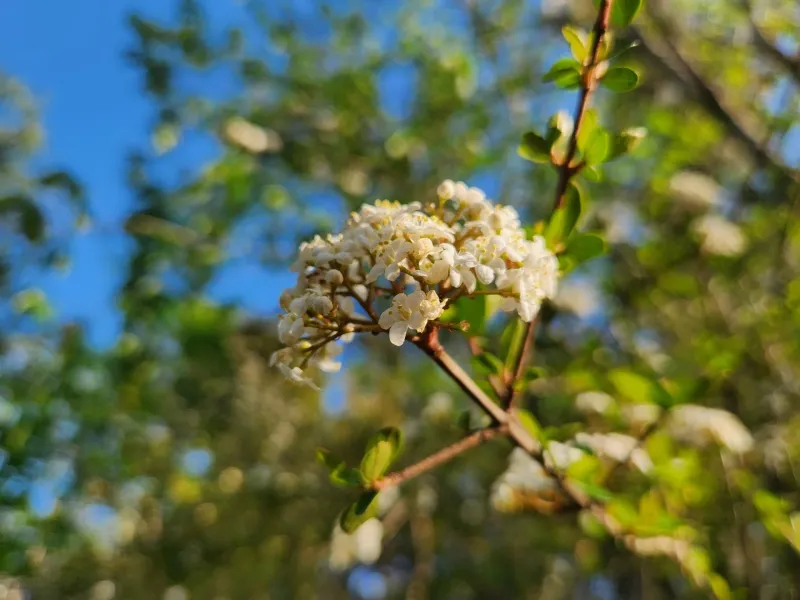
Imagine walking out to your garden in late summer and picking handfuls of sweet, juicy grapes straight from the vine overhead. Muscadine Grape, Vitis rotundifolia, makes that scenario a reality for Florida gardeners, and it does it while supporting wildlife, looking beautiful, and requiring far less fuss than most people expect from a fruiting vine.
Muscadines have been cultivated throughout the American South for centuries, prized for their rich flavor and remarkable adaptability to the region’s warm, humid climate. In Florida, they thrive across the Panhandle, North Florida, and Central Florida, growing vigorously on pergolas, fences, and sturdy arbors.
The thick, woody vines can live for decades and become more productive with age when given proper annual pruning during dormancy.
Wildlife value is considerable. Birds, deer, foxes, and many other animals feast on the fruit, and the dense canopy provides excellent nesting cover.
The USDA Plants Database confirms Muscadine Grape as a native species throughout Florida, and University of Florida IFAS Extension publications offer detailed guidance on growing it for both home fruit production and wildlife habitat. Grapes typically ripen from August through October depending on the variety.
Planting two or more vines improves pollination and fruit set for a more generous harvest each season.
6. Virginia Creeper Delivers Stunning Fall Color On Walls And Fences
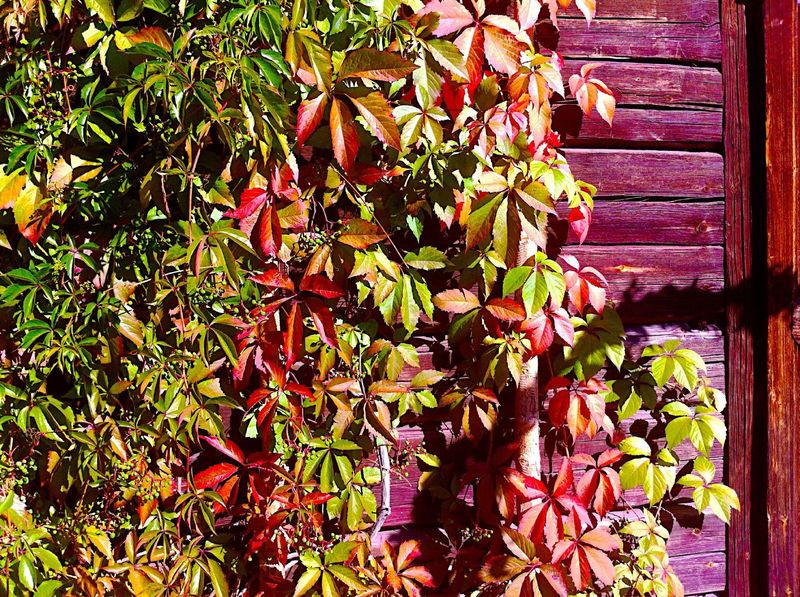
Fall color is not something Florida gardeners expect much of, but Virginia Creeper has a way of proving that assumption wrong in the most dramatic fashion. Come autumn, the five-leaflet leaves of Parthenocissus quinquefolia transform from summer green into blazing shades of red, crimson, and burgundy, turning plain walls, fences, and tree trunks into living tapestries of seasonal color.
The five-pointed leaf pattern makes Virginia Creeper easy to identify and a favorite talking point in any garden. It climbs using adhesive-tipped tendrils that cling firmly to brick, wood, stone, and other surfaces without needing any additional support.
Growth is vigorous, covering large areas quickly, which makes it an excellent choice for hiding unsightly fences or adding greenery to bare walls throughout Florida.
Small blue-black berries ripen in fall and are a valuable food source for mockingbirds, bluebirds, woodpeckers, and other native bird species. The University of Florida IFAS Extension notes that Virginia Creeper grows across nearly all regions of Florida, adapting to a wide range of soil conditions and tolerating both full sun and deep shade.
It is one of the most ecologically generous native vines available to Florida gardeners. Occasional pruning keeps its vigorous growth within the bounds you set for it in the landscape.
7. Trumpet Creeper Draws Hummingbirds With Bold Orange Flowers
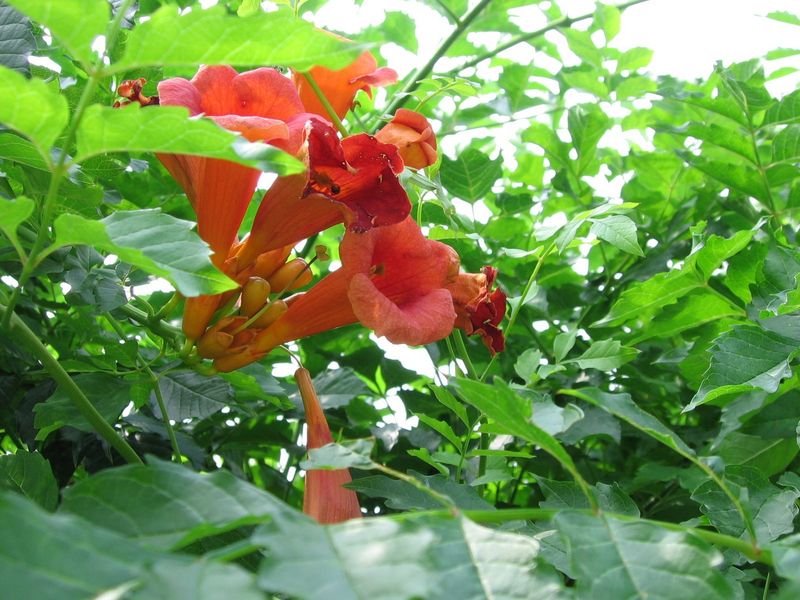
When summer heat settles over Florida and many plants struggle to perform, Trumpet Creeper is just getting started. Campsis radicans blooms most enthusiastically during the hottest months of the year, producing bold clusters of flared, trumpet-shaped flowers in vivid shades of orange and red that hummingbirds find absolutely irresistible.
The flowers are generously sized, sometimes reaching three inches long, and the vine produces them in abundance from summer into early fall. Ruby-throated hummingbirds are the most enthusiastic visitors, and the nectar-rich blooms also attract large butterflies and native bees.
Watching the activity around a blooming Trumpet Creeper on a summer morning is one of the genuine pleasures of Florida wildlife gardening.
A note of honesty for new gardeners: Trumpet Creeper is vigorous, sometimes emphatically so. It climbs by aerial rootlets and can reach thirty to forty feet, spreading through root sprouts if left unchecked.
The University of Florida IFAS Extension recommends giving it a very sturdy support structure and committing to regular pruning to manage its enthusiasm. Plant it on a strong pergola or large fence away from trees and gutters.
With the right placement and a bit of seasonal attention, it rewards Florida gardeners with decades of spectacular summer color and reliable hummingbird activity year after year.
8. Woolly Pipevine Supports Rare Swallowtail Butterflies
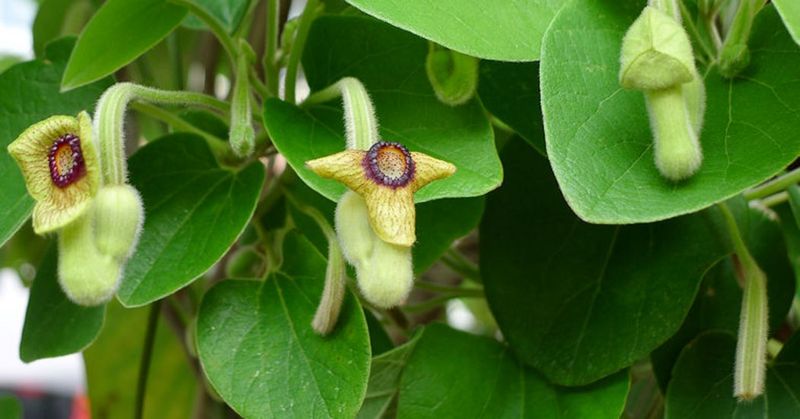
Some plants earn their place in the garden not through showiness but through purpose, and Woolly Pipevine is a perfect example of a native vine that carries enormous ecological weight. Aristolochia tomentosa produces quirky, curved pipe-shaped flowers that look like something from a fantasy novel, greenish-yellow with a purplish mouth, nestled among large, velvety, heart-shaped leaves.
The real reason to grow this vine is the Pipevine Swallowtail butterfly, one of the most stunning insects in Florida. Female Pipevine Swallowtails will seek out Aristolochia species specifically to lay their eggs, as the leaves are the sole food source for their caterpillars.
The caterpillars absorb toxic compounds from the plant that make them unpalatable to predators, a chemical protection they carry into adulthood as butterflies.
Woolly Pipevine grows naturally in moist, shaded areas across North and Central Florida, typically along stream banks and woodland edges. It prefers partial to full shade and consistently moist, rich soil, making it an ideal candidate for shaded garden corners that receive regular irrigation.
The Florida Native Plant Society highlights Aristolochia species as critically important host plants for native butterfly conservation. Plant it near a sitting area and watch for the iridescent blue-black adult butterflies visiting your garden throughout the warmer months.
9. Wild Potato Vine Produces Large White Morning Glory Flowers
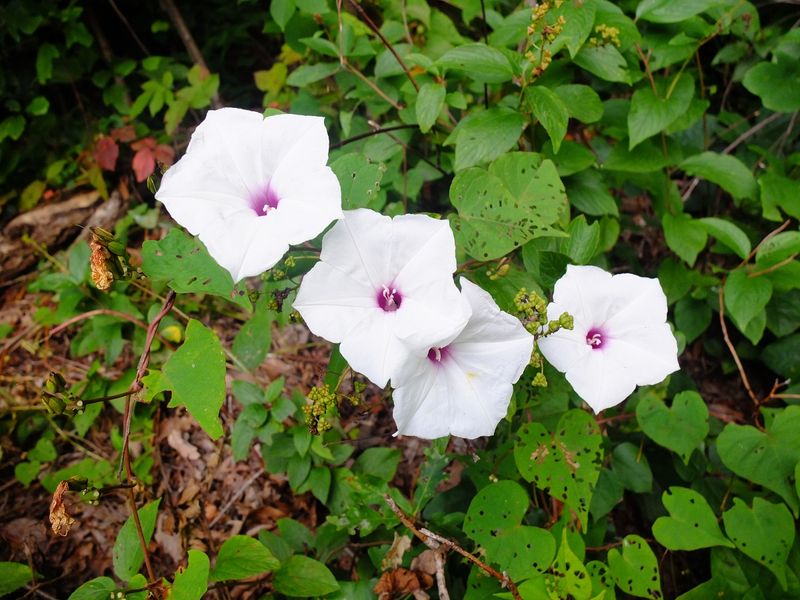
On a bright Florida morning, few sights are as quietly beautiful as the large, white blooms of Wild Potato Vine opening along a sunny fence line. Ipomoea pandurata is a native relative of the familiar morning glory, producing flowers up to three inches wide with soft purple-pink centers that glow in the early light before closing by midday.
What sets this vine apart from ornamental morning glories is its remarkable root system. Underground, Wild Potato Vine develops a massive tuber that can weigh several pounds, storing water and nutrients that allow the plant to push through periods of serious drought with ease.
This adaptation makes it one of the most drought-tolerant native vines available to Florida gardeners, particularly valuable in the state’s dry spring season.
Wild Potato Vine grows naturally across Florida in sandy, well-drained soils along roadsides, woodland edges, and open disturbed areas. It thrives in full sun and spreads by both seed and its persistent root system.
The USDA Plants Database confirms it as a native species throughout the eastern United States, including all regions of Florida. Bees and other native pollinators visit the flowers regularly.
While it can spread assertively, its drought toughness, native status, and generous blooms make it a genuinely rewarding choice for low-maintenance Florida gardens and naturalized landscapes.