6 Beautiful Ways To Use Coral Honeysuckle In Florida Landscapes
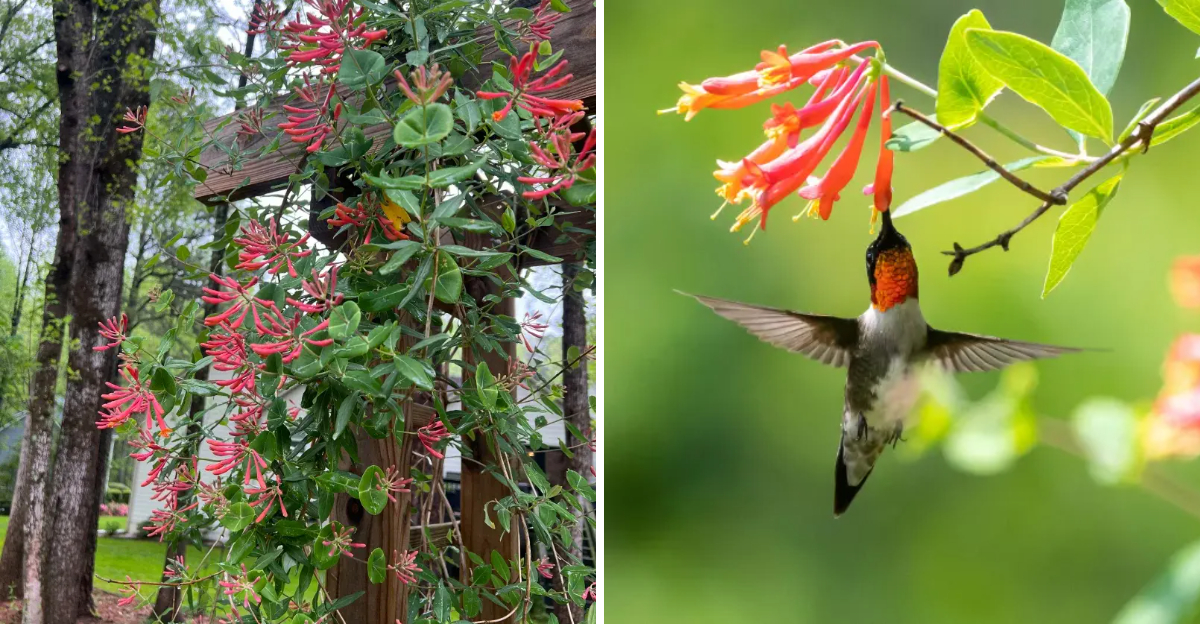
Some plants quietly blend into a garden. Others completely transform the space around them.
Coral honeysuckle belongs to the second group. With its vivid red blooms and graceful climbing habit, it instantly adds movement, color, and a touch of wild beauty to Florida landscapes.
Once it starts to grow, this vine rarely goes unnoticed. Hummingbirds dart toward the flowers, the bright blooms stand out against lush green leaves, and empty corners of the yard suddenly feel alive.
A simple fence, arbor, or garden edge can take on a whole new character. Many Florida gardeners plant coral honeysuckle for its beauty alone.
Then they discover just how many creative ways it can shape and elevate an outdoor space.
1. Train This Native Vine Up A Trellis For A Bright Garden Accent
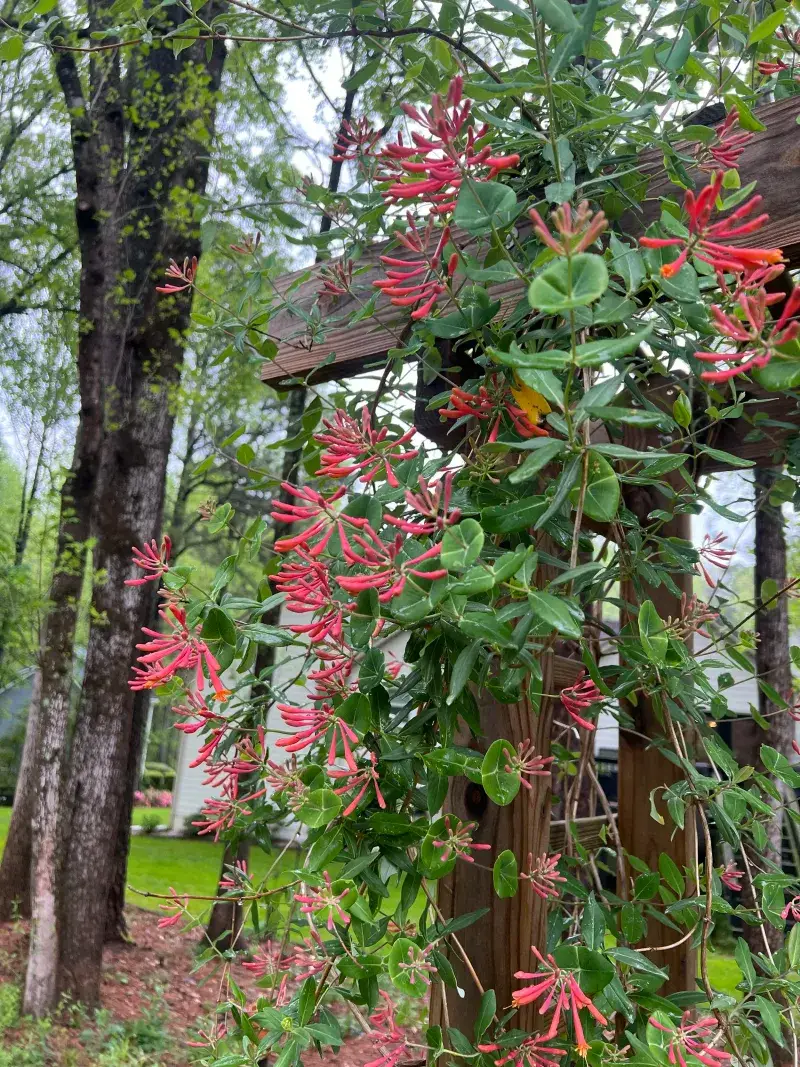
A simple trellis can completely transform a bare corner of your Florida garden into a vivid vertical focal point. Coral honeysuckle is perfectly suited for trellis growing because its twining stems naturally wrap around supports as the plant reaches for sunlight.
Set a trellis in a spot that gets full sun to partial shade, and you will be rewarded with a steady show of coral-red blooms that stand out brilliantly against the green foliage.
According to UF/IFAS Gardening Solutions, this vine can reach 15 to 20 feet in length, so a sturdy trellis gives it room to spread upward without sprawling across the ground. Trellises work especially well along garden walls, beside patios, or at the back of a planting bed where height adds visual depth.
Because the vine stays relatively narrow, it creates a dramatic look without taking over valuable ground space.
To train it properly, gently weave the young stems through the trellis openings when the plant is still small. Once established, the vine will find its own path upward.
Hummingbirds frequently visit the blooms, making a trellis-grown coral honeysuckle one of the most rewarding Florida garden features you can plant.
2. Let It Climb A Fence For A Natural Living Screen
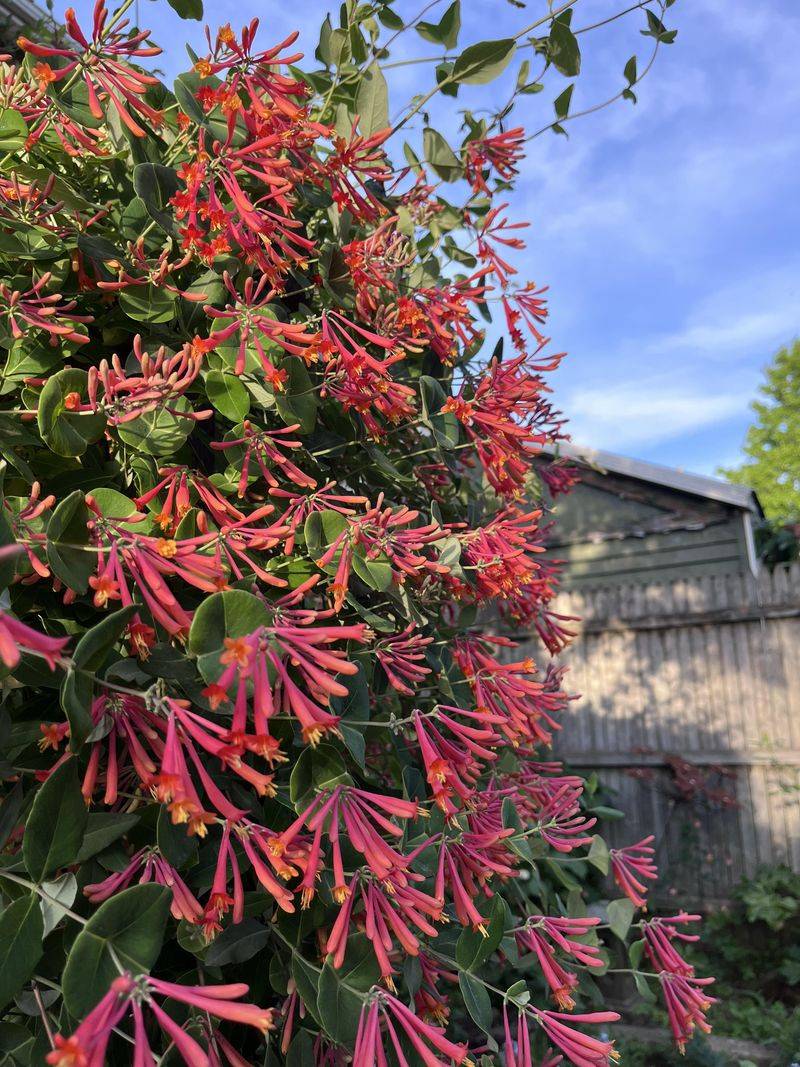
Plain wooden or chain-link fences can look stark and uninviting, but a flowering vine changes that picture completely. Coral honeysuckle softens fence lines with its dense, semi-evergreen foliage and adds seasonal color with its brilliant coral blooms.
In Florida, where outdoor living is year-round, a living fence screen feels far more inviting than bare boards or bare wire.
Positive Bloom and UF/IFAS both highlight coral honeysuckle as an excellent fence vine for Florida properties because it handles full sun and partial shade equally well. Plant it at the base of a fence and give it a few anchor ties to get started.
Within one to two growing seasons, it will begin filling in the fence line naturally, creating a softened, layered look that blends beautifully with surrounding plantings.
The vine provides light screening rather than a solid wall, which actually benefits the garden by allowing airflow while still adding visual privacy. Along property boundaries or around patios, this effect feels relaxed and natural rather than rigid.
Ruby-throated hummingbirds are frequently spotted feeding along fence-grown coral honeysuckle, adding an extra layer of wildlife activity that makes the space feel truly alive throughout Florida’s long warm season.
3. Grow It Over An Arbor For A Colorful Garden Entrance
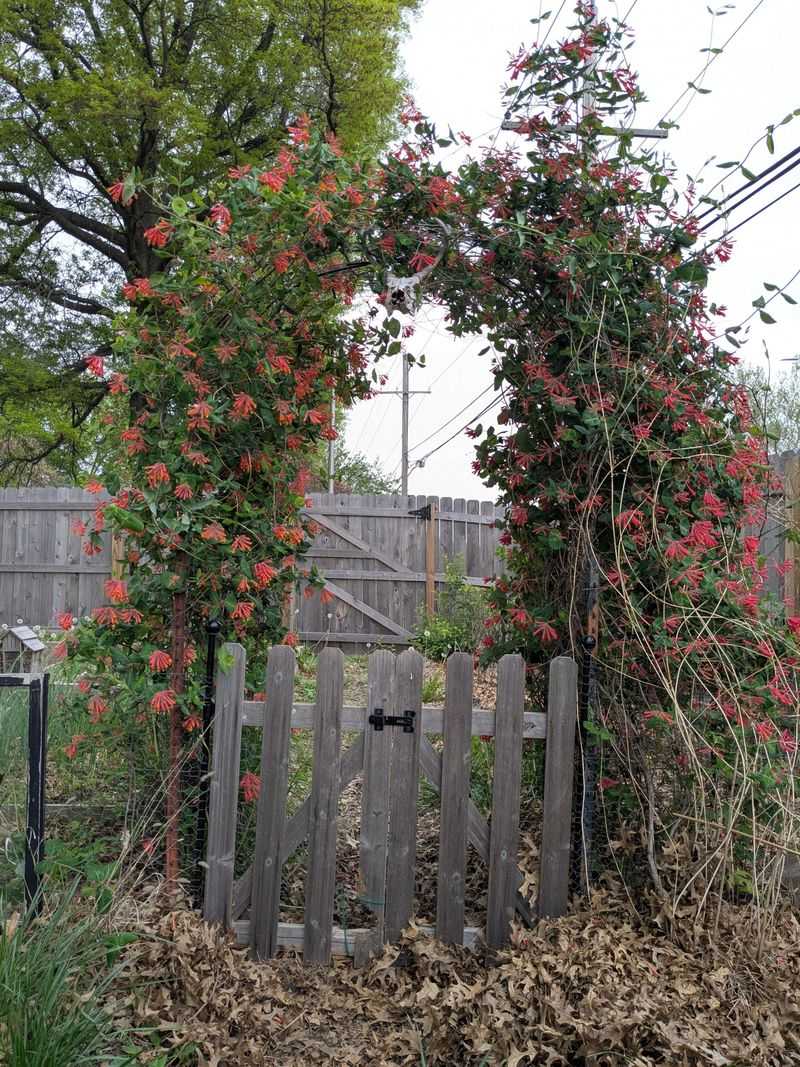
Few things make a garden feel more welcoming than walking beneath an arbor draped in flowering vines. Growing coral honeysuckle over an arbor at a garden entrance creates a canopy of coral-red blooms that greet visitors with color and natural beauty.
Florida gardeners particularly love this look because the vine blooms heavily in late winter and spring, brightening entryways right when the garden is waking up after cooler months.
Arbors placed along garden paths, at driveway edges, or at backyard gates give the vine a strong frame to climb across. Full sun exposure produces the most abundant flowering, though the vine performs well in partial shade too.
Plant one coral honeysuckle on each side of the arbor base and guide the stems upward with loose ties until they begin climbing on their own.
As UF/IFAS notes, the vine is semi-evergreen in North and Central Florida and nearly evergreen in South Florida, which means the arbor stays green even when blooms are between cycles. Hummingbirds and swallowtail butterflies are drawn to arbor-grown plantings because the elevated position of the flowers makes them easy to access.
The result is a garden entrance that feels lush, layered, and genuinely Floridian in character.
4. Use It To Soften A Mailbox Or Entry Post
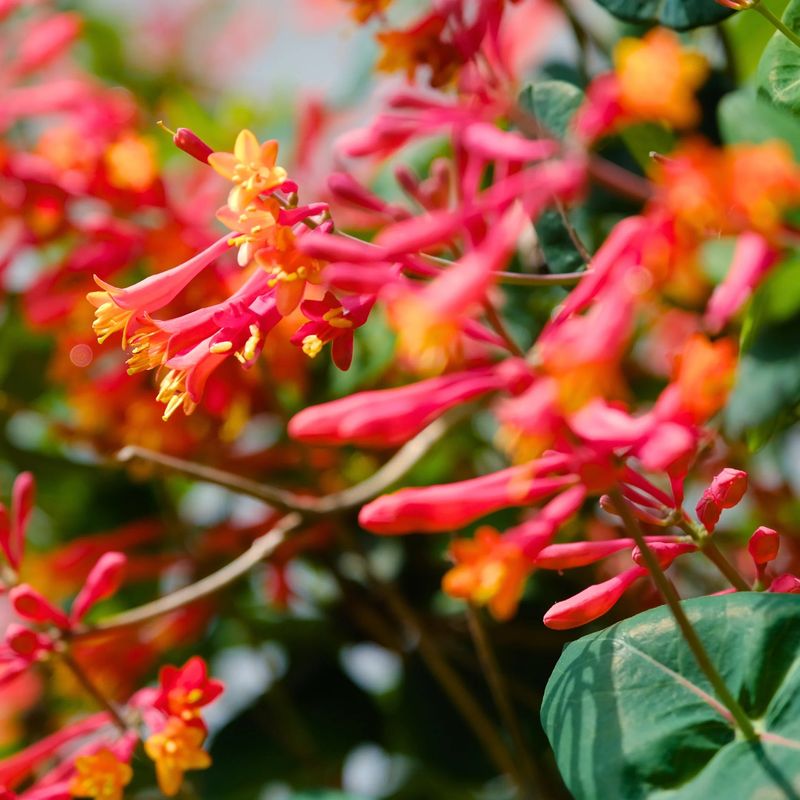
Curb appeal matters, and sometimes the smallest landscape details make the biggest impression. Wrapping coral honeysuckle around a mailbox post or entry column is a charming, low-effort way to add color and life to a Florida front yard.
The vine’s slender stems twine naturally around vertical posts, making them easy to guide without complicated training techniques.
Start by planting one young vine at the base of the post and loosely tying the stems in an upward spiral as they grow. Within a single season, the plant will begin covering the post on its own, eventually producing those signature coral-red flowers that stand out beautifully against a typical neighborhood streetscape.
Full sun is ideal for mailbox plantings since most front yards offer plenty of direct light throughout the day.
UF/IFAS notes that coral honeysuckle is drought-tolerant once established, which is a real advantage in Florida front yards where irrigation may be limited near the street. The vine stays manageable at a mailbox scale with minimal pruning, typically right after the main bloom flush.
Beyond the visual improvement, this planting attracts hummingbirds directly to the front yard, which is a delightful surprise for neighbors and visitors passing by on Florida streets.
5. Allow The Vine To Weave Through Shrubs For A Cottage Garden Look
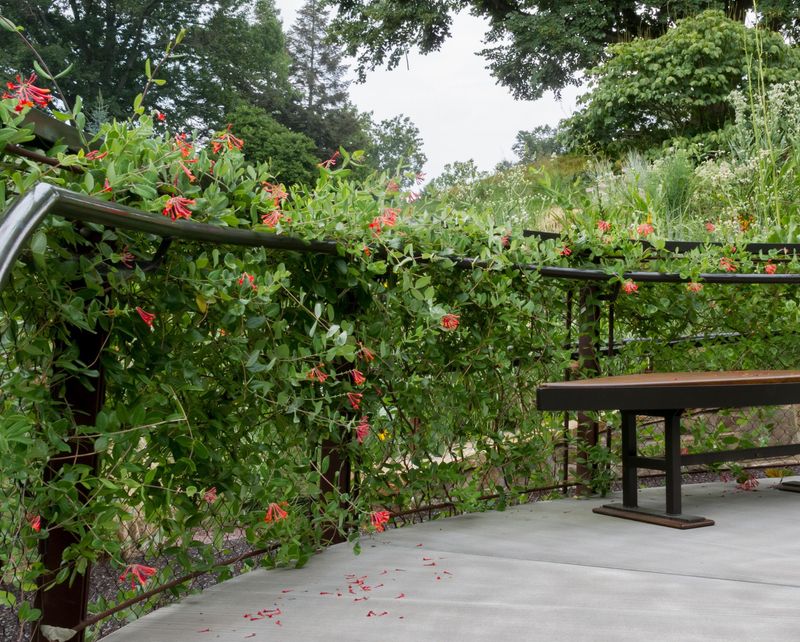
Not every garden calls for rigid structure, and coral honeysuckle thrives in relaxed, naturalistic settings just as well as on formal supports. Letting the vine weave loosely through established shrubs creates a layered, cottage-style effect that feels organic and effortlessly beautiful.
Florida gardeners who love a wild, informal look will find this approach especially satisfying because the vine fills in gaps and adds color without requiring constant management.
Florida native shrubs like beautyberry, firebush, and Simpson’s stopper make excellent companions because they share similar light and water preferences. The coral blooms contrast richly against the deep greens and purples of native shrub foliage, creating a visually complex planting bed that looks intentional without being stiff.
Partial shade situations, which are common under shrub canopies, are well tolerated by this adaptable vine.
According to UF/IFAS, coral honeysuckle supports a wide range of Florida wildlife beyond just hummingbirds. Its red berries feed songbirds in late summer and fall, which means a shrub-woven planting becomes a multi-season wildlife habitat.
Planting this vine through a shrub border also helps suppress weeds naturally as the foliage fills in, reducing maintenance while building a richer, more layered landscape that reflects the beauty of Florida’s native plant communities.
6. Add It To A Pollinator Garden For Native Florida Beauty
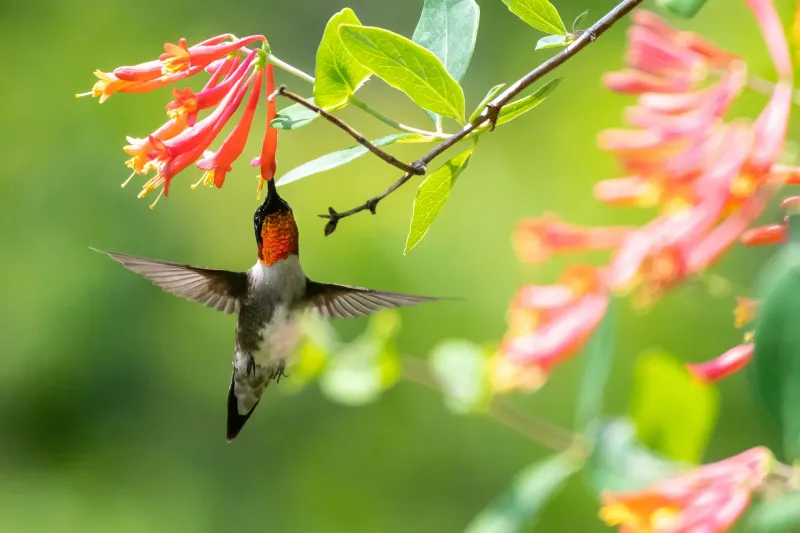
Pollinator gardens have become one of the most popular landscaping trends in Florida, and coral honeysuckle belongs at the center of every one. Few native plants offer the same combination of striking visual appeal and genuine wildlife value that this vine delivers season after season.
Its long tubular flowers are perfectly shaped for ruby-throated hummingbirds, whose bills fit the blooms like a key in a lock.
UF/IFAS identifies coral honeysuckle as a top nectar source for hummingbirds and notes that it also attracts zebra longwing butterflies, which is Florida’s state butterfly. Planting it alongside native wildflowers like blanket flower, lanceleaf coreopsis, and blue porterweed creates a layered pollinator habitat that supports a wide range of beneficial insects and birds throughout the year.
Full sun positions within the garden produce the heaviest bloom cycles.
Beyond attracting pollinators, the vine’s red berries provide late-season food for migrating and resident songbirds, extending its wildlife value well past the bloom period. Because coral honeysuckle is a true Florida native, it requires no pesticides and very little fertilizer once established, making it one of the most environmentally responsible choices a Florida gardener can make.
A pollinator garden built around this vine gives back to the local ecosystem in meaningful, lasting ways.
7. Use These Tips To Make It Thrive
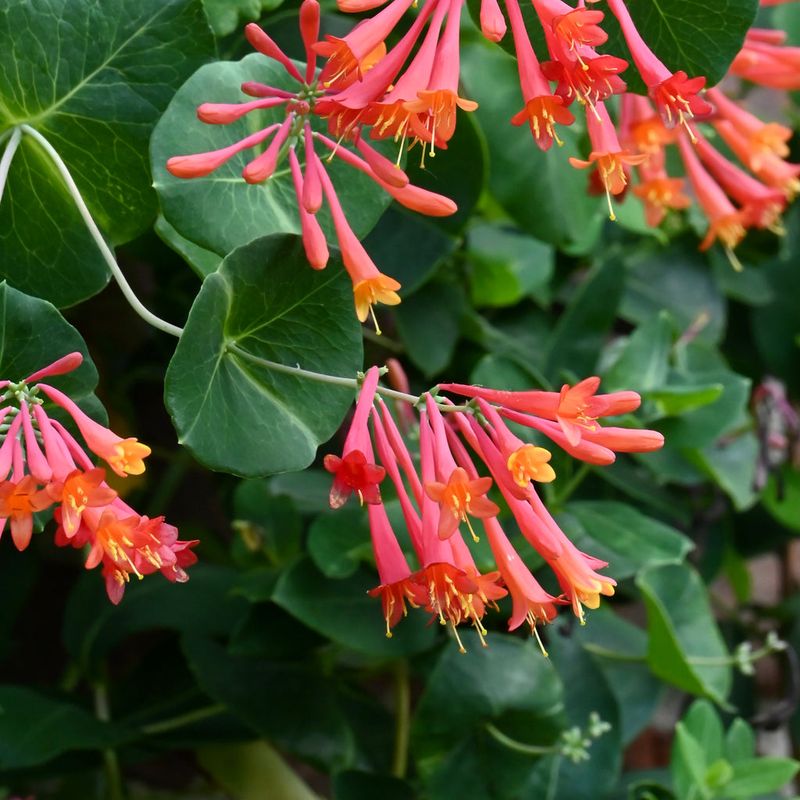
Coral honeysuckle is one of the easiest native vines Florida gardeners can grow, but a few simple care tips will help it reach its full potential. Once established, this plant is remarkably resilient and can thrive for years with minimal attention.
Start by planting coral honeysuckle in a location that receives full sun to partial shade. The vine will tolerate shade, but the most abundant flowering happens when it gets at least six hours of sunlight each day.
Florida’s sandy soils are generally suitable, though adding a bit of organic matter when planting can help young roots establish more quickly.
Water regularly during the first growing season while the plant settles in. After that, coral honeysuckle becomes fairly drought-tolerant, which makes it well suited for Florida landscapes where irrigation may be limited.
A layer of mulch around the base of the plant helps retain soil moisture and keeps the roots cooler during the hottest months.
Pruning is rarely necessary, but a light trim after the main bloom cycle can help shape the vine and encourage fresh growth. According to UF/IFAS Gardening Solutions, coral honeysuckle responds well to occasional pruning and typically rebounds quickly with new stems and flowers.
One of the biggest advantages of this native vine is its natural resistance to pests and diseases. Because it evolved in the southeastern United States, it usually grows vigorously without the need for chemical treatments or heavy fertilizing.
With the right placement and a little early care, coral honeysuckle quickly becomes a low-maintenance highlight of the Florida garden, rewarding gardeners with vibrant blooms, visiting hummingbirds, and lush greenery throughout much of the year.