Best Pennsylvania Plants That Attract Night Pollinators After Dark
Step outside on a warm Pennsylvania evening and the garden feels different, almost like it’s waking up again.
As the sun dips, moths, beetles, and other night pollinators begin moving from bloom to bloom, drawn to soft fragrance and pale flowers that seem to glow in the dark.
Pennsylvania’s summer nights create just the right setting for this quieter kind of activity.
Many gardeners notice it without realizing what’s behind it, a white bloom catching moonlight or a gentle scent drifting through the air.
With the right plants, your Pennsylvania garden can stay active and inviting long after daylight fades.
1. Evening Primrose Opens At Dusk To Welcome Night Pollinators
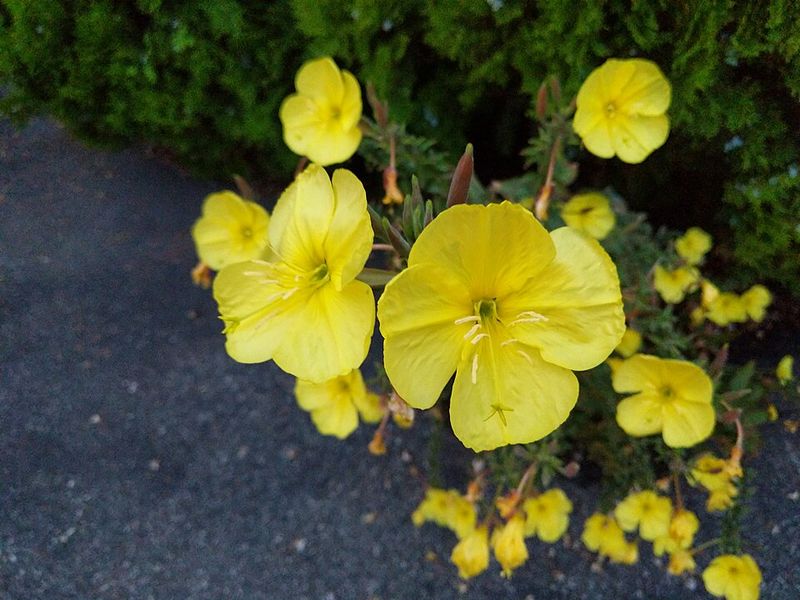
Just as the sky over Pennsylvania shifts from orange to deep blue, evening primrose begins its nightly performance. The pale yellow flowers of this biennial plant unfurl at dusk with a quiet elegance that feels almost theatrical.
Moths are among the first to arrive, drawn in by a light, sweet fragrance that strengthens as temperatures cool.
Evening primrose (Oenothera biennis) is a native Pennsylvania wildflower, which means it is already well-suited to the state’s climate and soil conditions.
It tends to thrive in well-drained soil with full sun to partial shade, and it can often be found growing along roadsides and meadow edges.
In home gardens, it works well planted near a patio or along a path where the evening fragrance can be appreciated up close.
Each individual flower typically lasts only one night, but the plant produces new blooms steadily throughout the summer. This makes it a reliable food source for sphinx moths and other nocturnal visitors over a long season.
Gardeners who let a few plants go to seed will likely see new plants return the following year.
Growing evening primrose in a Pennsylvania garden is a low-effort way to support night pollinators while adding a soft, natural beauty to the landscape after dark.
2. Moonflower Glows Bright And Attracts Moths After Sunset
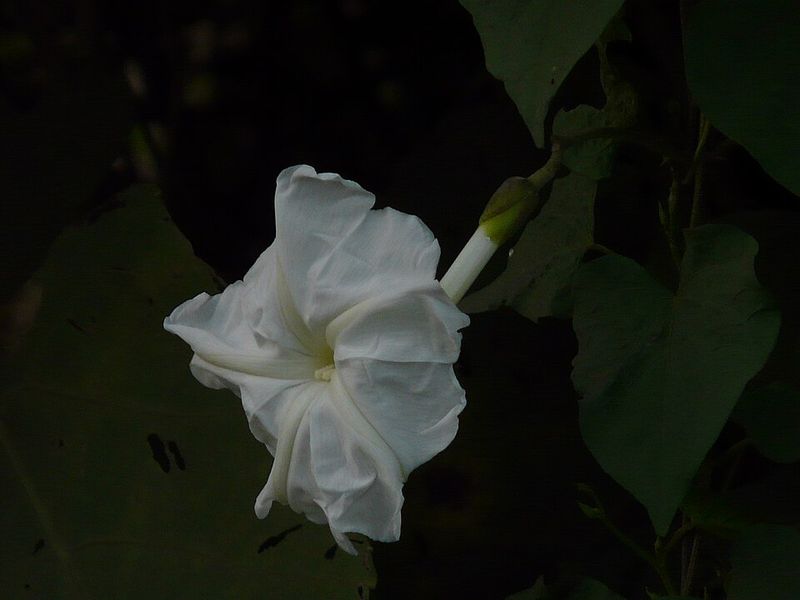
Few sights in a summer garden are as striking as a moonflower vine in full bloom after dark.
The large, white, saucer-shaped flowers open as the light fades, releasing a rich, sweet fragrance that carries across a yard on warm Pennsylvania evenings.
Sphinx moths, in particular, are strongly attracted to moonflower because the pale blooms are easy to spot in low light and the scent signals a reliable nectar source.
Moonflower (Ipomoea alba) is a fast-growing annual vine that needs a trellis, fence, or arbor to climb and prefers full sun with well-drained soil.
In Pennsylvania, it performs best when started indoors a few weeks before the last frost and transplanted once temperatures stay warm.
Once established, it grows quickly and can cover a structure in a single season.
Planting moonflower near an evening seating area or along a garden fence creates a living backdrop that comes alive at night.
The flowers close in the morning, so daytime visitors may not see them at their best, but anyone spending time outdoors after sunset will appreciate the show.
Pairing moonflower with other night-blooming plants extends the visual and fragrant appeal of a Pennsylvania garden well into the evening hours, creating a multi-layered experience for both gardeners and pollinators alike.
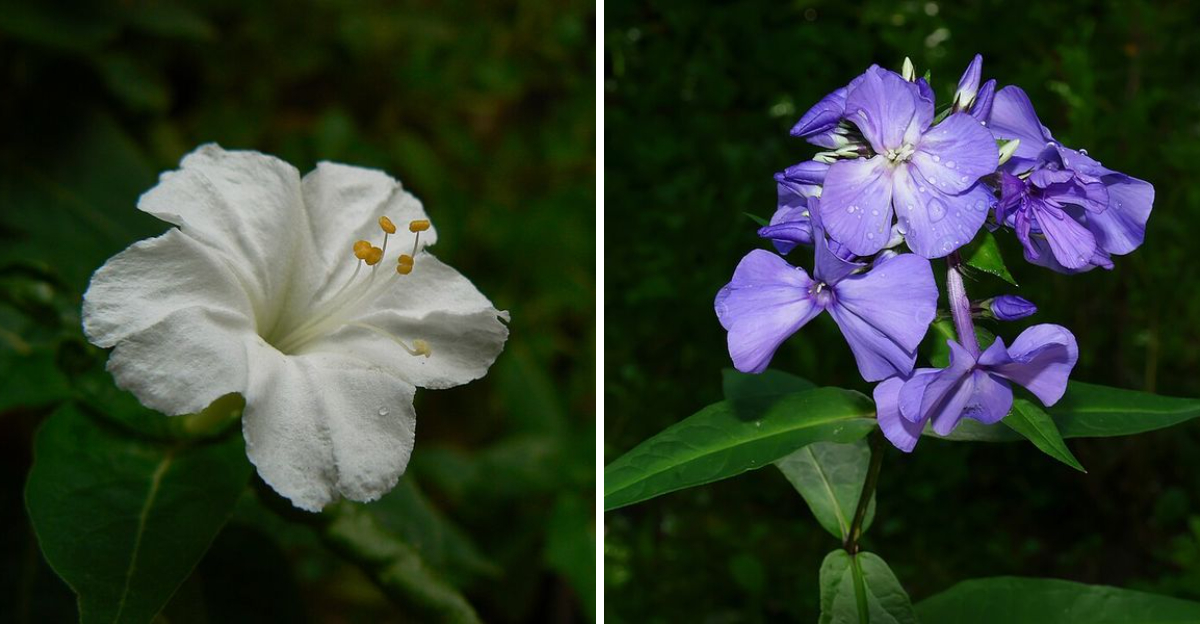
3. Four O’Clocks Release Fragrance As The Sun Goes Down
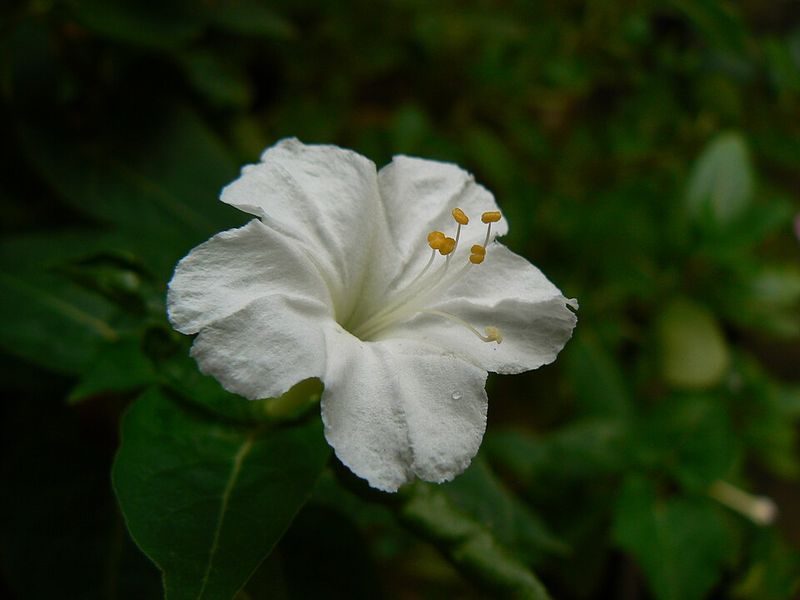
Named for the time of day they open, four o’clocks have a built-in schedule that lines up with the arrival of night pollinators.
As afternoon fades into early evening across Pennsylvania, the trumpet-shaped blooms of Mirabilis jalapa unfurl and begin releasing a spicy-sweet fragrance that intensifies as the air cools.
Moths and hawk moths are drawn to this scent from a surprising distance.
Four o’clocks come in a wide range of colors, including pink, red, yellow, white, and bicolor variations.
The paler shades tend to be more visible to night pollinators in low light conditions, though all colors release fragrance equally well.
These plants grow as tender perennials but are typically treated as annuals in Pennsylvania, where winter temperatures are too cold for the tuberous roots to survive in the ground without protection.
They are fairly easy to grow from seed or from saved tubers, and they do well in containers as well as garden beds.
Placing four o’clocks near a porch or outdoor seating area means the fragrance can be enjoyed by people and pollinators at the same time.
They tolerate heat well and tend to bloom heavily through the warmest parts of Pennsylvania’s summer, making them a dependable addition to any evening garden designed with night visitors in mind.
4. Flowering Tobacco Draws Night Visitors With Sweet Scent
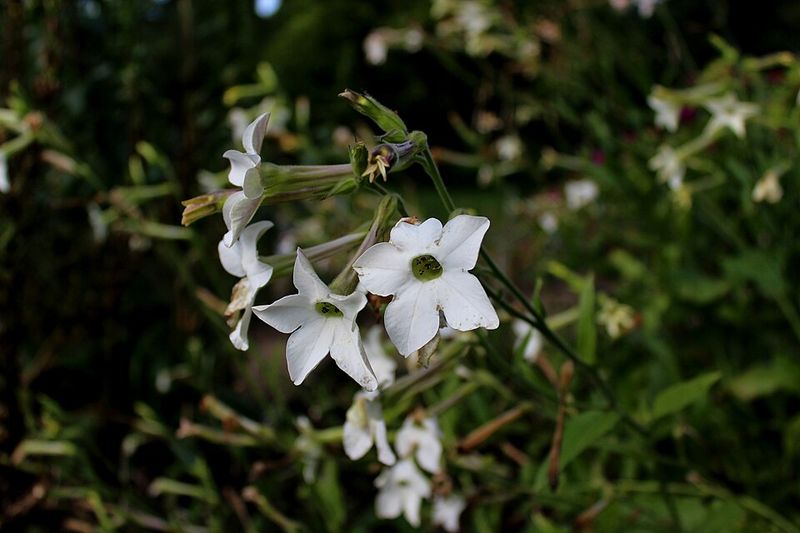
On a warm Pennsylvania evening, the scent of flowering tobacco can stop you in your tracks.
Nicotiana alata, commonly called flowering tobacco, produces slender, star-shaped blooms that release a rich, jasmine-like fragrance almost exclusively at night.
During the day the flowers may look slightly closed and unremarkable, but as dusk settles in, they open fully and begin their nightly fragrant broadcast aimed directly at moths.
White and pale pink varieties are the most fragrant and the most visible to night pollinators, though the brightly colored cultivars developed for daytime garden appeal tend to have less scent.
For a Pennsylvania garden focused on supporting nocturnal wildlife, sticking with the older, white-flowered varieties is a practical choice.
These plants grow as annuals in Pennsylvania’s climate and prefer well-drained soil with full sun to partial shade.
Flowering tobacco grows to about two to four feet tall and works well in mixed borders, cottage-style gardens, or large containers placed near patios and walkways.
Starting seeds indoors before the last frost or purchasing transplants from a nursery gives gardeners a head start on the season.
Sphinx moths are among the most frequent visitors, hovering near the blooms to feed on nectar in a way that almost mirrors the behavior of hummingbirds.
Watching that interaction on a quiet Pennsylvania evening is genuinely memorable.
5. White Phlox Stands Out In Low Light And Evening Gardens
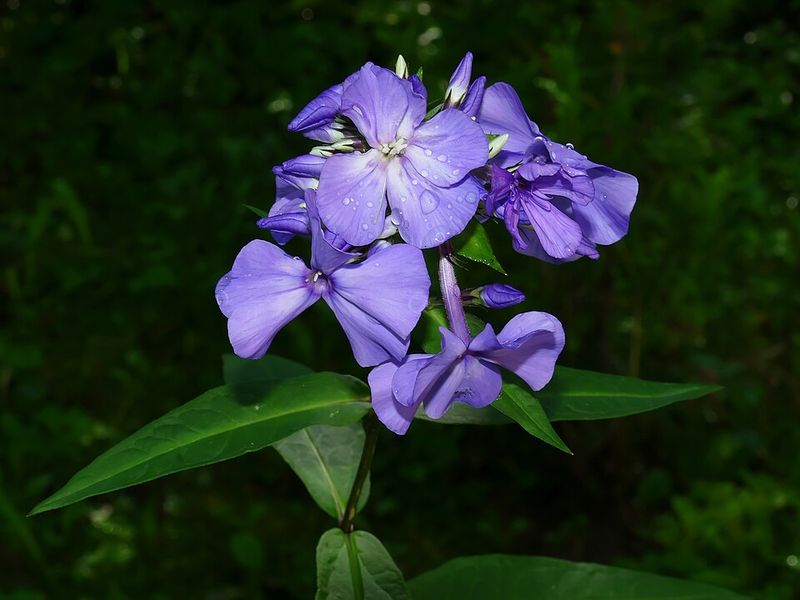
Garden phlox has been a staple of Pennsylvania landscapes for generations, and the white-flowered varieties earn extra points for their ability to catch moonlight and attract night pollinators.
White phlox (Phlox paniculata) produces large, rounded clusters of blooms that seem to glow faintly in low light, making them easy for moths to locate even on overcast evenings.
The flowers also carry a sweet, clove-like fragrance that strengthens noticeably after the sun goes down.
As a hardy perennial, white phlox comes back reliably each year in Pennsylvania gardens, which makes it a long-term investment in nighttime pollinator habitat.
It prefers full sun to light shade and moist, well-drained soil with good air circulation to reduce the risk of powdery mildew, which can be a common issue during Pennsylvania’s humid summers.
Deadheading spent flower clusters encourages the plant to produce additional blooms and extend the season.
Tall garden phlox works well at the back of a border or along a fence line where the height adds structure to the garden.
Planting it near a seating area or path allows the evening fragrance to be noticed easily.
Because white phlox blooms in mid to late summer, it aligns well with the peak of moth activity across Pennsylvania, making it one of the most strategically timed plants for an after-dark garden.
6. Sweet Alyssum Adds Soft Fragrance That Carries At Night
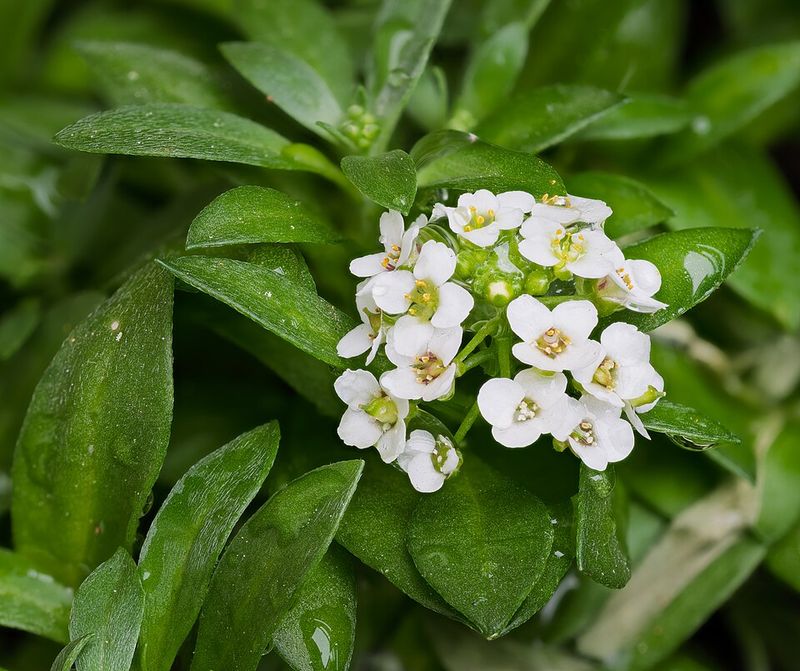
Small in size but surprisingly effective, sweet alyssum punches well above its weight when it comes to attracting night pollinators.
The tiny white or pale lavender flowers of Lobularia maritima release a honey-like fragrance that carries on the evening air across Pennsylvania gardens from late spring through early fall.
Moths and small nocturnal beetles are among the visitors drawn in by this gentle but persistent scent.
Sweet alyssum is an annual that grows low to the ground, rarely reaching more than six inches tall.
That compact habit makes it a natural choice for edging garden beds, lining walkways, or tucking into the front row of a mixed border where it can spill softly over the edge.
It also does well in window boxes and containers placed near porches or outdoor seating areas where the nighttime fragrance can be appreciated at close range.
In Pennsylvania, sweet alyssum can be direct-seeded in early spring or started from transplants.
It tolerates light frost and tends to slow down during the hottest part of summer before bouncing back as temperatures moderate in late August and September.
Shearing plants back lightly during a midsummer slowdown can encourage fresh growth and renewed blooming.
For gardeners looking for an easy, low-maintenance way to add nighttime fragrance and pollinator support to a Pennsylvania garden, sweet alyssum is a reliable and rewarding option.
7. Angel’s Trumpet Fills The Air With Strong Evening Scent
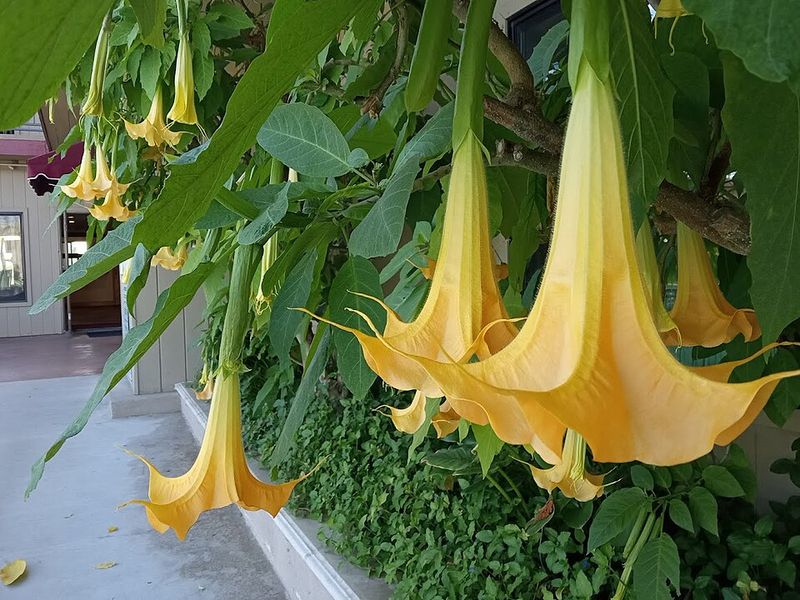
Stepping onto a Pennsylvania patio where angel’s trumpet is in bloom on a summer evening is an experience that is hard to forget.
The enormous, pendulous flowers of Brugmansia hang like soft bells and release one of the most intensely sweet fragrances in the gardening world, and that fragrance reaches its peak after sunset.
Large moths, especially hawk moths with their impressive wingspans, are among the primary nocturnal pollinators attracted to these blooms.
In Pennsylvania, angel’s trumpet is best grown in a container rather than planted directly in the ground.
The plant is not cold-hardy enough to survive Pennsylvania winters outdoors, so keeping it in a large pot allows gardeners to bring it inside before the first frost and overwinter it in a cool, bright location such as a garage or basement with a light source.
This extra effort is well worth it for gardeners who appreciate dramatic, large-scale plants with serious pollinator appeal.
White and pale yellow varieties tend to be the most fragrant and the most attractive to night pollinators.
Angel’s trumpet prefers full sun, consistent moisture, and regular fertilizing during the growing season to produce its best blooms.
Placing the container near a patio door or outdoor seating area allows the evening scent to drift indoors as well as out. Few plants command as much attention in a Pennsylvania summer garden after dark.
8. Yucca Supports A Unique Night Pollinator Relationship
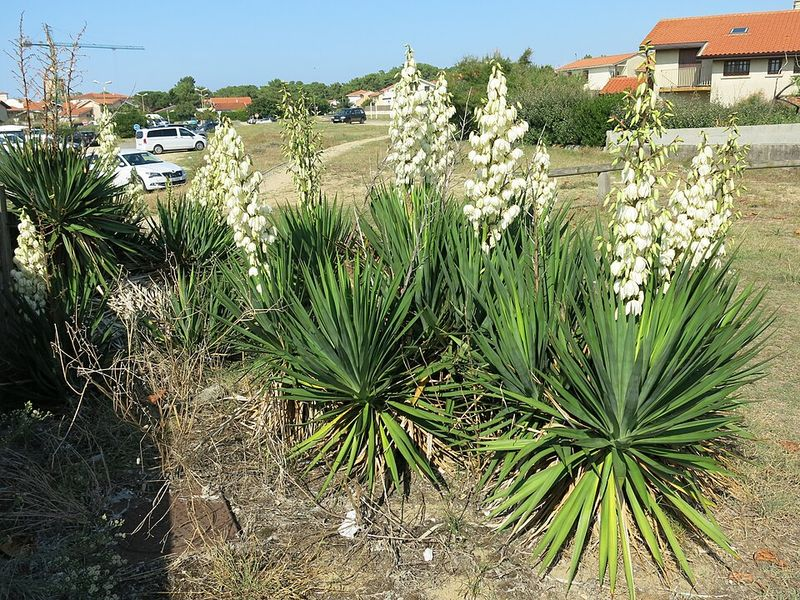
Among all the plants that attract night pollinators, yucca holds a place in its own category because of the remarkably specific relationship it has developed with a single moth species.
Yucca filamentosa, commonly called Adam’s needle, produces tall spikes of creamy white, bell-shaped flowers that bloom in early summer and are pollinated almost exclusively by the yucca moth.
This relationship is one of the most fascinating examples of co-evolution found in North American gardens.
The yucca moth collects pollen from yucca flowers, rolls it into a ball, and deliberately transfers it to other flowers while also laying eggs inside the bloom.
The moth larvae feed on some of the developing seeds, but enough seeds remain to ensure the plant reproduces.
Without the moth, the plant would not set seed, and without the plant, the moth would have no place to reproduce. It is a genuinely interdependent partnership.
In Pennsylvania, yucca is a tough, drought-tolerant perennial that thrives in full sun and sandy or well-drained soil.
It requires very little maintenance once established and works well in dry garden areas, rock gardens, or as a bold architectural accent near a fence or wall.
The dramatic flower spike can reach four to six feet tall and makes a strong visual statement in a Pennsylvania landscape.
For gardeners interested in supporting specialized native pollinator relationships, yucca is an exceptional choice.