8 Best Small Indoor Plants For Limited Light Apartments In Texas
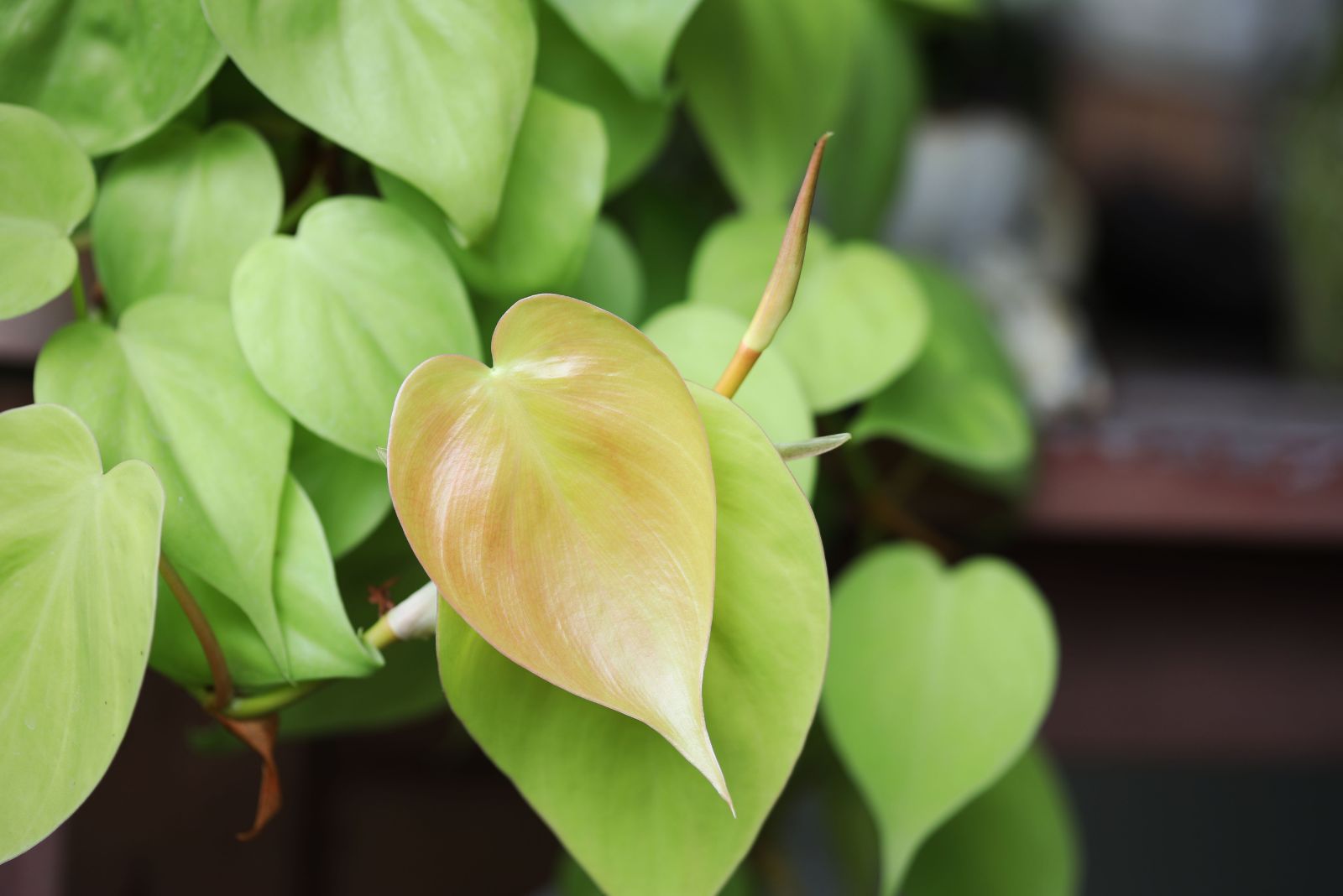
Living in a Texas apartment with limited natural light doesn’t mean you have to give up on plants. Even a small space can feel brighter, fresher, and more inviting with the right greenery.
The trick is choosing plants that thrive without full sun and can handle the lower light levels common in apartments.
Small indoor plants are perfect for tight spaces like shelves, windowsills, or corners. They bring color, texture, and life without taking up much room. Many also help purify the air, improve mood, and create a more relaxing atmosphere.
For Texas apartments, hardy plants that tolerate heat, dry air, and indirect light are especially valuable. With a few carefully selected species, even a darker apartment can feel lush and vibrant.
Choosing the right small indoor plants makes it easy to enjoy greenery and a touch of nature no matter the light conditions.
1. ZZ Plant
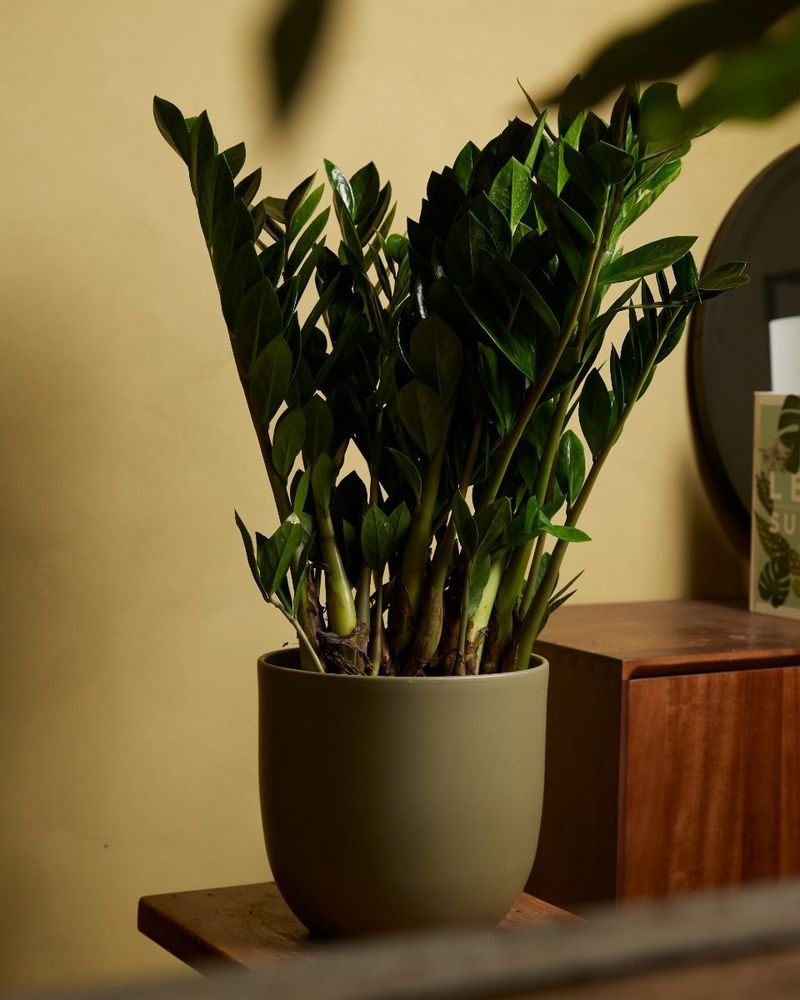
If you’re looking for a plant that practically takes care of itself, the ZZ plant deserves a spot in your Texas apartment. This stunning houseplant features thick, glossy leaves that catch whatever light is available and shine like they’ve been polished.
Its upright growth habit makes it ideal for corners, side tables, or desktop spaces where floor room is precious.
What makes this plant exceptional for Texas living is its remarkable drought tolerance. The ZZ plant stores water in its thick rhizomes underground, meaning it can go weeks without a drink.
In fact, overwatering causes more problems than underwatering with this tough beauty. During those stretches when you’re busy or traveling, your ZZ plant won’t hold it against you.
Texas apartments often suffer from dry indoor air thanks to constant air conditioning, but the ZZ plant handles these conditions without complaint. Its waxy leaves don’t lose moisture easily, so you won’t see the crispy brown tips that plague more sensitive plants.
Even in rooms with just a single north-facing window or only artificial lighting, this plant keeps growing steadily.
Maintenance couldn’t be simpler. Water only when the soil is completely dry, usually every two to three weeks.
Wipe the leaves occasionally to keep them shiny and dust-free. The ZZ plant grows slowly and stays compact, rarely needing repotting.
For apartment dwellers in Austin, San Antonio, or anywhere across Texas, this is one foolproof green companion.
2. Snake Plant
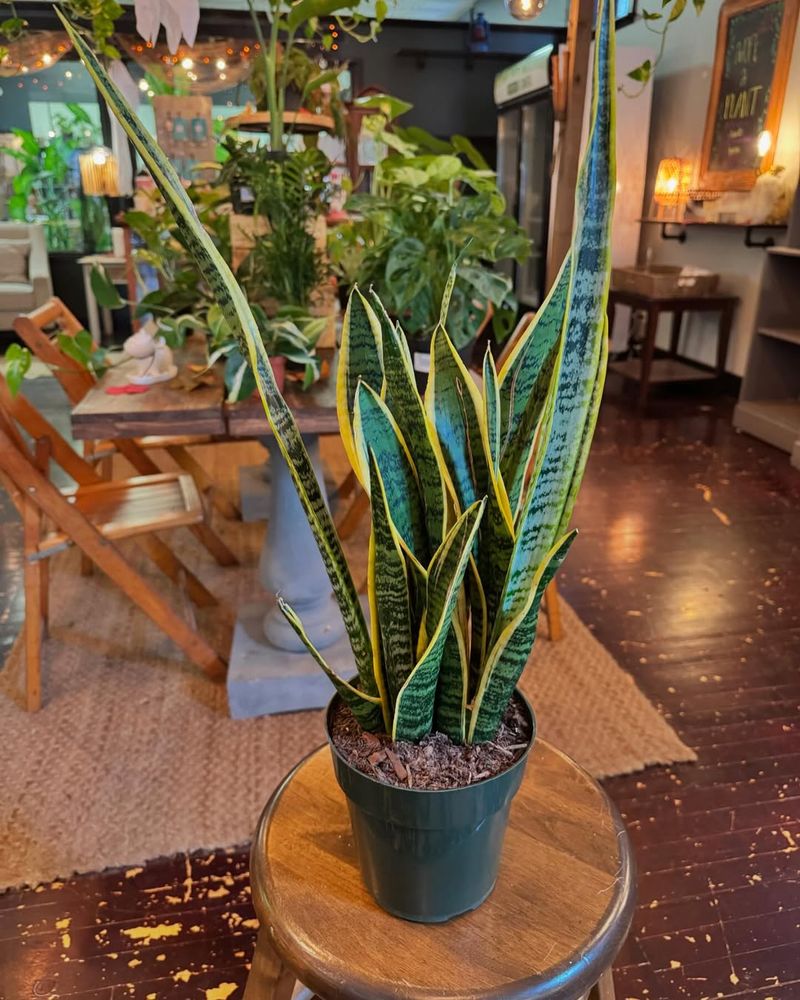
Snake plants have earned their reputation as nearly indestructible houseplants, making them perfect for anyone new to indoor gardening.
Their striking sword-shaped leaves grow straight up, creating bold vertical lines that add architectural interest to any room. The variegated patterns of green and yellow make each plant look like living art.
These plants absolutely excel in Texas apartments where light is limited. They’ve adapted to survive in their native African habitats by tolerating shade and storing water efficiently in their thick leaves.
Your snake plant won’t sulk in that dim hallway or bathroom with just a small window. It simply keeps doing its thing, growing slowly but steadily.
Watering requirements are minimal, which suits the busy Texas lifestyle perfectly. During summer months, watering every two weeks is plenty.
In winter, you can stretch that to once a month or even longer. The biggest mistake people make is watering too often, so when in doubt, wait another week.
Snake plants handle warm indoor temperatures beautifully, never flinching when your thermostat climbs during hot Texas summers. They’re also remarkably compact, with most varieties staying under two feet tall.
This makes them ideal for apartments in Houston, Dallas, or Fort Worth where every square foot counts. Place one on a nightstand, bookshelf, or kitchen counter and watch it thrive with almost zero effort on your part.
3. Pothos
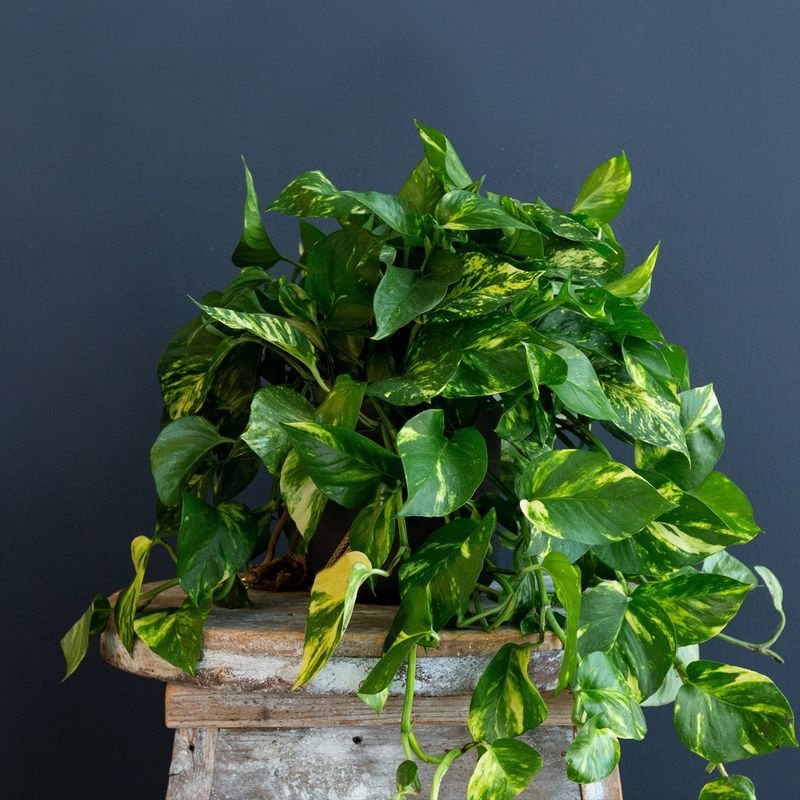
Few plants offer the combination of beauty, toughness, and versatility that pothos brings to your home.
This trailing vine produces heart-shaped leaves splashed with golden yellow or cream, creating a cheerful cascade wherever you place it. Hang it from a shelf, let it trail from a bookcase, or train it to climb a small trellis.
Pothos thrives in low to moderate light conditions, making it absolutely perfect for Texas apartments lacking bright windows. Even in spaces lit mostly by lamps, pothos keeps producing new leaves and growing longer vines.
The variegation might be slightly less pronounced in deep shade, but the plant remains healthy and attractive.
Forgetting to water your pothos occasionally won’t cause disaster. These plants tolerate irregular watering schedules remarkably well, bouncing back quickly after drying out.
When the leaves start looking slightly limp, that’s your signal to water. Simple as that. No complicated moisture meters or strict schedules needed.
One fantastic feature for apartment living is how easily you can control pothos size. Vines getting too long? Just snip them back with scissors. The plant responds by growing fuller and bushier.
Those cuttings can even be rooted in water to create new plants for other rooms or to share with friends. Whether you’re in a San Antonio loft or an El Paso apartment, pothos adapts beautifully and asks for very little attention in return.
4. Peace Lily
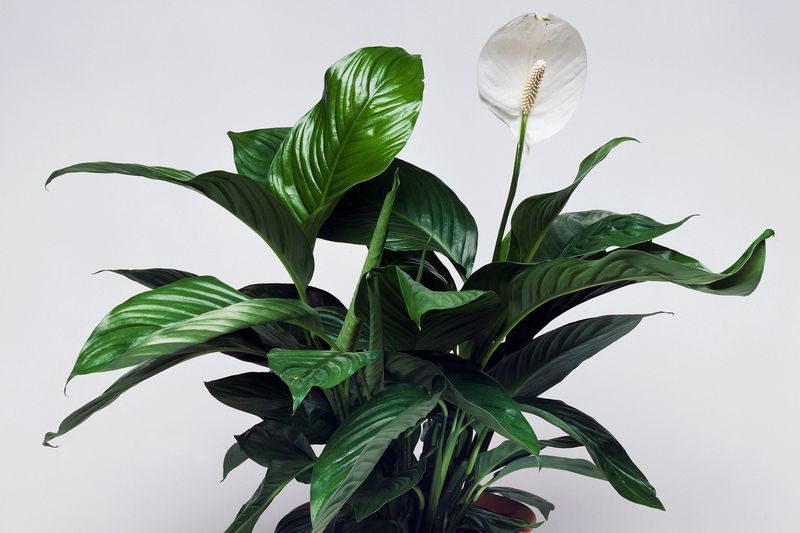
Peace lilies stand out as one of the few flowering plants that actually prefer shadier conditions. Their elegant white blooms emerge like graceful flags above deep green foliage, bringing a touch of sophistication to any room.
Even when not flowering, the glossy leaves create a lush, tropical appearance that brightens dim spaces.
These plants communicate their needs clearly, which takes the guesswork out of care. When your peace lily needs water, the leaves droop noticeably.
After watering, they perk back up within hours, almost like magic. This built-in signaling system makes them excellent choices for beginners or anyone who appreciates clear feedback from their plants.
Texas apartments with limited light become perfect homes for peace lilies. They evolved on forest floors where sunlight filters through thick canopy layers, so your shaded living room or bedroom mimics their natural habitat.
Too much direct sun actually harms them, causing leaf burn and fading. Watering needs are moderate compared to drought-tolerant options, but peace lilies aren’t demanding. Check them once or twice weekly, watering when the top inch of soil feels dry.
They appreciate the humidity from occasional misting, though it’s not essential. The air conditioning that runs constantly in Texas homes during summer doesn’t bother them much.
From Corpus Christi to Amarillo, peace lilies adapt to indoor conditions beautifully while rewarding you with periodic blooms that can last for weeks.
5. Chinese Evergreen
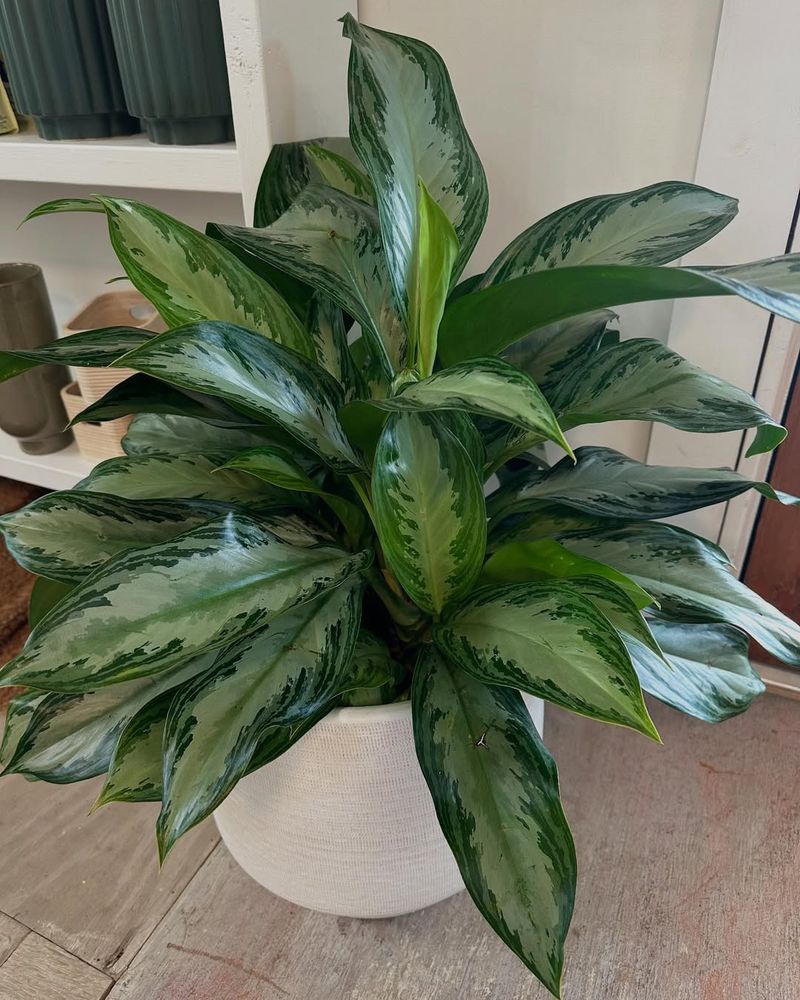
Chinese evergreens pack serious visual punch with their spectacularly patterned leaves. Depending on the variety, you’ll find foliage marked with silver, pink, red, or cream against deep green backgrounds.
These patterns create interest and color even in the darkest corners where other plants would disappear into shadows.
Apartment living in Texas often means dealing with temperature fluctuations when the air conditioning cycles on and off. Chinese evergreens handle these swings without complaint, maintaining their good looks through seasonal changes.
They’re equally unbothered by the dry indoor air that plagues many Texas homes during winter months when heaters run constantly.
Growth happens slowly with Chinese evergreens, which is actually a benefit in small spaces. Your plant won’t suddenly outgrow its spot or require frequent repotting.
It stays compact and manageable year after year. This slow growth also means the plant uses less water and nutrients, translating to easier care overall.
Low light conditions don’t just fail to harm Chinese evergreens; these plants actually prefer shadier spots. Placing them in bright direct sunlight causes leaf bleaching and damage.
That dim corner in your bedroom or the shaded end of your hallway becomes prime real estate for these beauties. Water when the top two inches of soil dry out, usually every week or two.
Whether your apartment is in Lubbock or Galveston, Chinese evergreens deliver reliable beauty with minimal fuss.
6. Parlor Palm
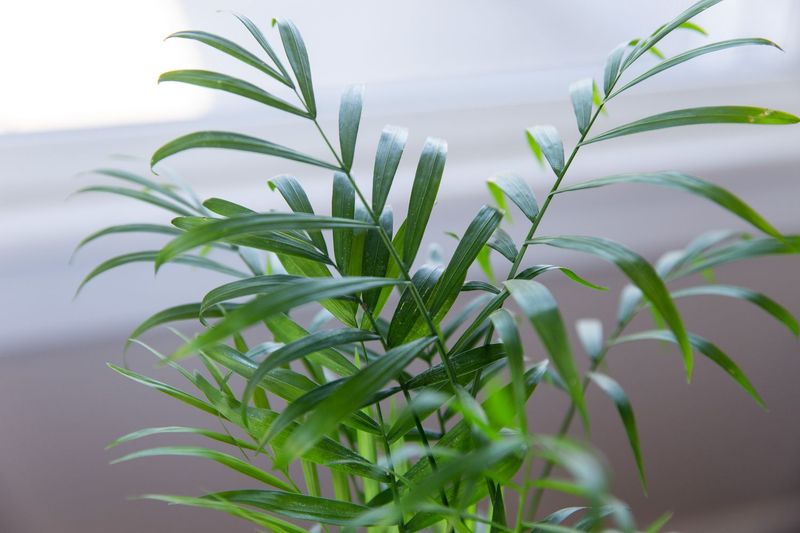
Bringing tropical vibes to your Texas apartment doesn’t require bright sunshine or massive floor space. Parlor palms deliver that vacation-worthy aesthetic while staying pleasantly small and thriving in low light.
Their delicate, feathery fronds arch gracefully, softening hard edges and adding movement to static spaces.
Unlike many palm species that demand intense light and humidity, parlor palms evolved in the understory of Central American forests. This background makes them naturally suited to the shaded conditions inside apartments.
They actually suffer in bright direct sunlight, developing brown, scorched fronds. Your dim living room or bedroom is exactly what they need.
Space-saving qualities make parlor palms ideal for apartment dwellers. Most stay under four feet tall indoors, and their upright growth doesn’t sprawl sideways like some plants.
You can tuck one into a corner, place it beside furniture, or use it to fill an awkward empty spot without worrying about it taking over.
Watering needs are light and straightforward. Let the top inch of soil dry between waterings, then give it a thorough drink.
During cooler months, you’ll water less frequently. The occasional shower in your bathroom helps rinse dust from the fronds and mimics natural rainfall.
Parlor palms don’t need fertilizer often, maybe once during spring and summer. For renters across Texas from Plano to Laredo, these elegant palms offer maximum style with minimum demands.
7. Heartleaf Philodendron
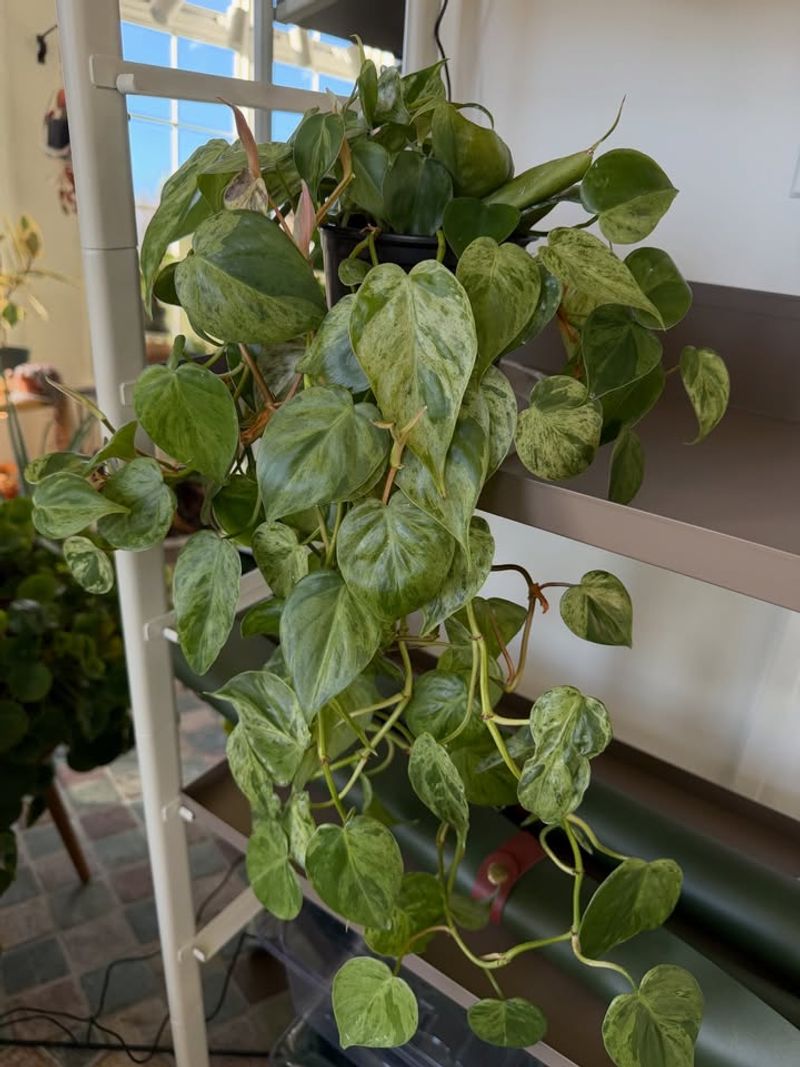
Heartleaf philodendrons combine classic good looks with bulletproof toughness, making them favorites among plant enthusiasts at every skill level.
Their heart-shaped leaves emerge bronze-tinted before maturing to rich green, creating beautiful color variation along each vine. The trailing habit works perfectly for shelves, plant stands, or hanging baskets in tight quarters.
Low light situations don’t slow these philodendrons down. They keep producing new leaves and extending their vines even in rooms where sunshine is scarce.
This adaptability stems from their natural habitat on rainforest floors where light filters weakly through dense canopy layers. Your shaded Texas apartment mimics those conditions perfectly.
Pruning and shaping heartleaf philodendrons is incredibly easy, giving you control over size and appearance. Snip vines that grow too long, and the plant responds by branching out and becoming fuller.
Those cuttings root easily in water, providing free plants to expand your collection or give away. This flexibility means your philodendron never outgrows its welcome.
Care requirements stay refreshingly simple. Water when the top inch or two of soil dries out, usually weekly during warmer months and less often in winter.
These plants tolerate missing a watering or two without drama. They handle the warm temperatures typical in Texas homes beautifully and don’t fuss about humidity levels.
Whether you’re settling into an apartment in Waco or McKinney, heartleaf philodendrons deliver reliable greenery that grows with you.
8. Cast Iron Plant
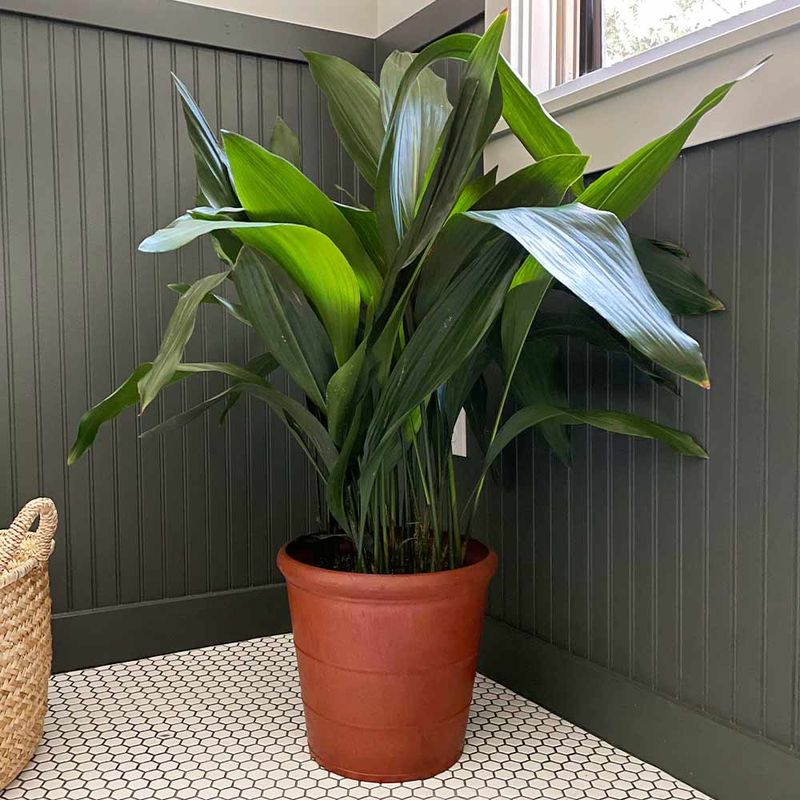
When a plant earns the nickname “cast iron,” you know it’s seriously tough. Cast iron plants have built legendary reputations for surviving conditions that would defeat almost any other houseplant.
Their broad, dark green leaves grow in graceful clumps, creating substantial presence without demanding much space or attention.
Neglect doesn’t faze cast iron plants. Forgot to water for three weeks? They’ll wait patiently. Stuck in a corner that barely sees daylight? No problem. Subjected to temperature swings and dry air? They handle it all.
This resilience makes them absolutely perfect for beginners, busy professionals, or anyone who travels frequently and can’t maintain a strict plant care schedule.
Growth happens at a leisurely pace, which suits apartment living beautifully. Your cast iron plant won’t suddenly triple in size or need constant repotting.
It stays compact and manageable, slowly adding new leaves over months and years. This slow metabolism also means it needs less water and fertilizer than faster-growing plants.
Texas homes present unique challenges with their combination of heat, shade, and dry indoor air from constant climate control. Cast iron plants were practically designed for these conditions.
They tolerate deep shade better than almost any other houseplant, thriving in spots where others would struggle. Water sparingly, allowing soil to dry between waterings.
From Austin condos to Beaumont apartments, cast iron plants prove that sometimes the toughest plants are also the most rewarding.