Build This Owl Box Over Thanksgiving Weekend and Have Tenants by February in Ohio
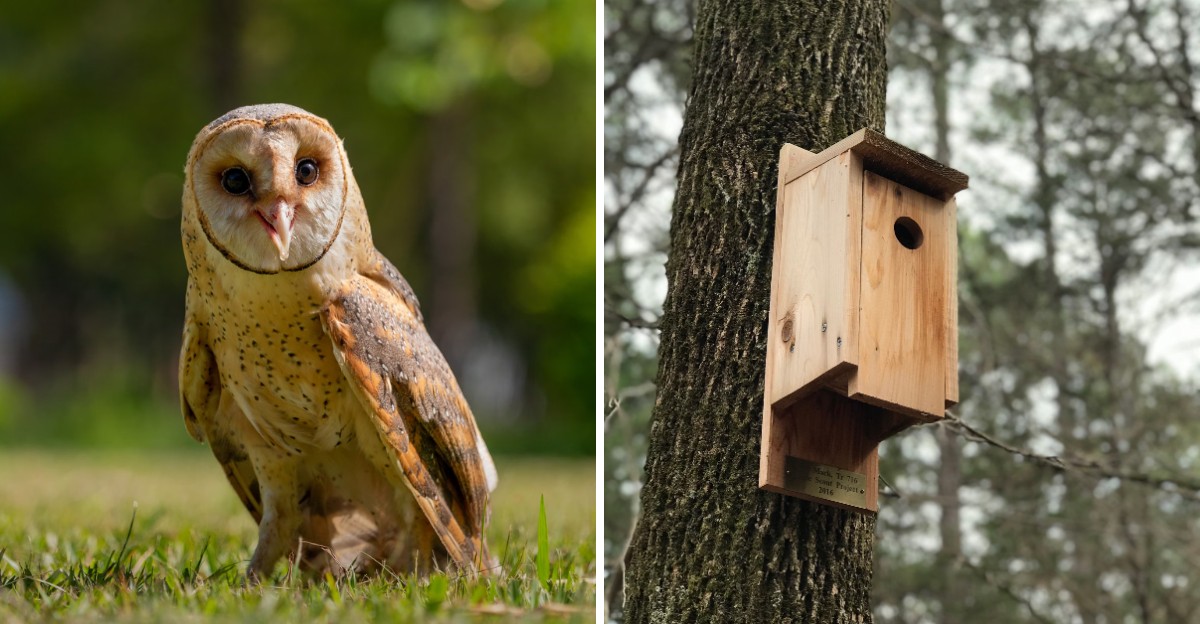
Some owls in the Buckeye State start courting while snow still covers the ground. A few females are already sitting on eggs by late January, when most of us are still scraping ice off our windshields.
That timing surprised me the first time I read about it. I had always pictured nesting as a spring event, full of tulips and robins.
Owls play by their own calendar. Natural tree cavities are often scarce in newer neighborhoods, so a simple wooden box can fill a real housing gap in Ohio.
You probably already have a free weekend coming up, plus leftover pie for fuel. A few boards, a drill, and a ladder could turn that lazy stretch of November into a winter full of whinnies and hoots.
Who wouldn’t want a feathered neighbor that eats mice for a living?
1. Late Fall Is Prime Time to Hang an Owl Nest Box
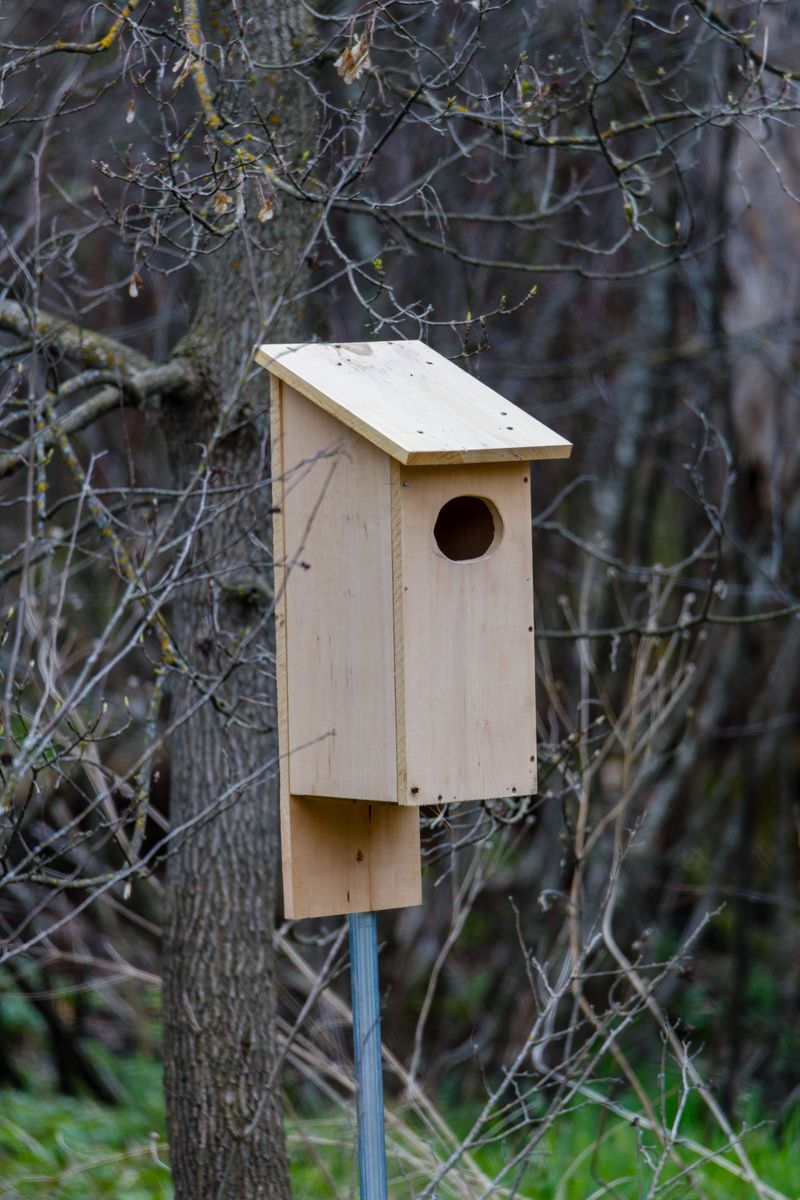
Owls start house hunting much earlier than songbirds. By the time bluebirds show up in March, some owl pairs have already claimed a cavity and settled in.
Late November gives your box several quiet weeks to weather and blend into the landscape. Eastern screech-owls often roost in cavities through winter, so a box hung now may get checked out within days or weeks.
Great horned owls court in early winter and can lay eggs by late January in Ohio.
Barred owls follow close behind, with courtship calls ringing out through February. The Ohio Division of Wildlife suggests having barred owl boxes up by January at the latest.
I love that this project fits the holiday rhythm so well. The leaves are down, so you can see branch structure clearly and spot good mounting trees.
Ground is usually not frozen yet, which helps if you plan to set a pole. Cooler weather also means fewer bugs and less sweat while you work on a ladder.
One honest note belongs here. Owls choose homes on their own schedule, and some boxes sit empty for a season or two before anyone moves in.
Early placement simply gives you the best possible odds.
2. Eastern Screech-Owls Are Your Most Likely February Tenants
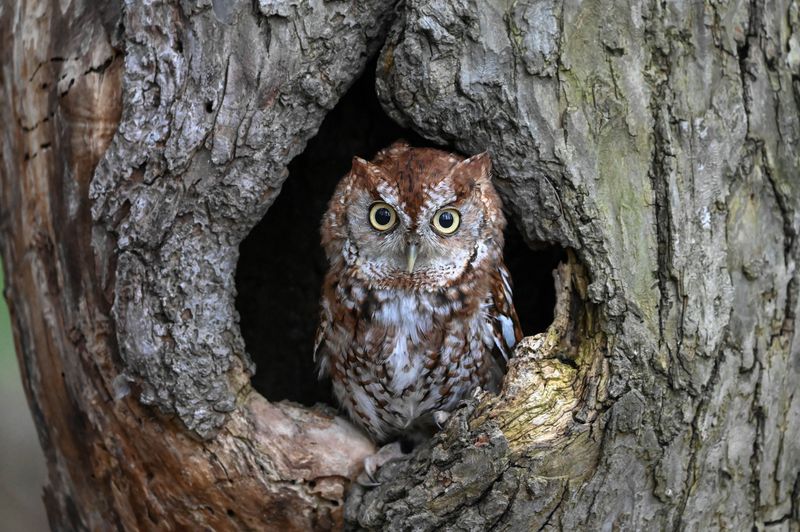
Meet the owl that sounds like a tiny horse. The eastern screech-owl gives a soft descending whinny and a long trill, not a screech at all.
These little birds stand only about eight inches tall, roughly the size of a robin with ear tufts. They come in gray and reddish-brown color forms, and both live across every corner of Ohio.
Screech-owls are the species most likely to use a backyard box. They happily live in suburbs, parks, and farm woodlots, as long as there are trees and a few open patches for hunting.
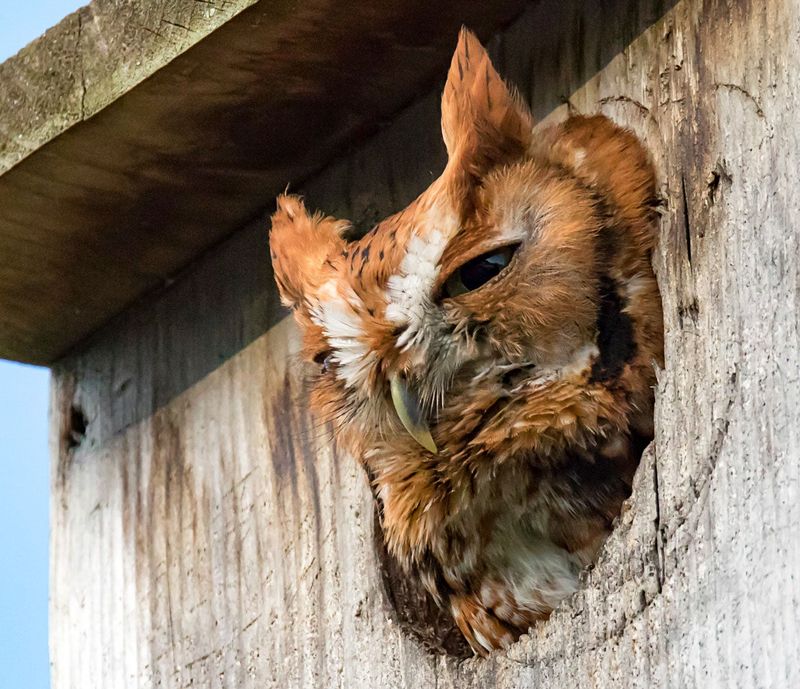
They also use boxes for winter roosting, which is why a November box can see action quickly. You might spot a little face sunning itself in the entrance hole on a calm December afternoon.
Egg laying usually happens in March and April, with some early pairs starting in late winter. A typical clutch holds about four to five white eggs.
So when you hear the promise of tenants by February, this is the realistic candidate. Roosting birds count as tenants in my book, and they often stay to nest if the box suits them.
3. Cut Your Boards to These Screech-Owl Box Measurements
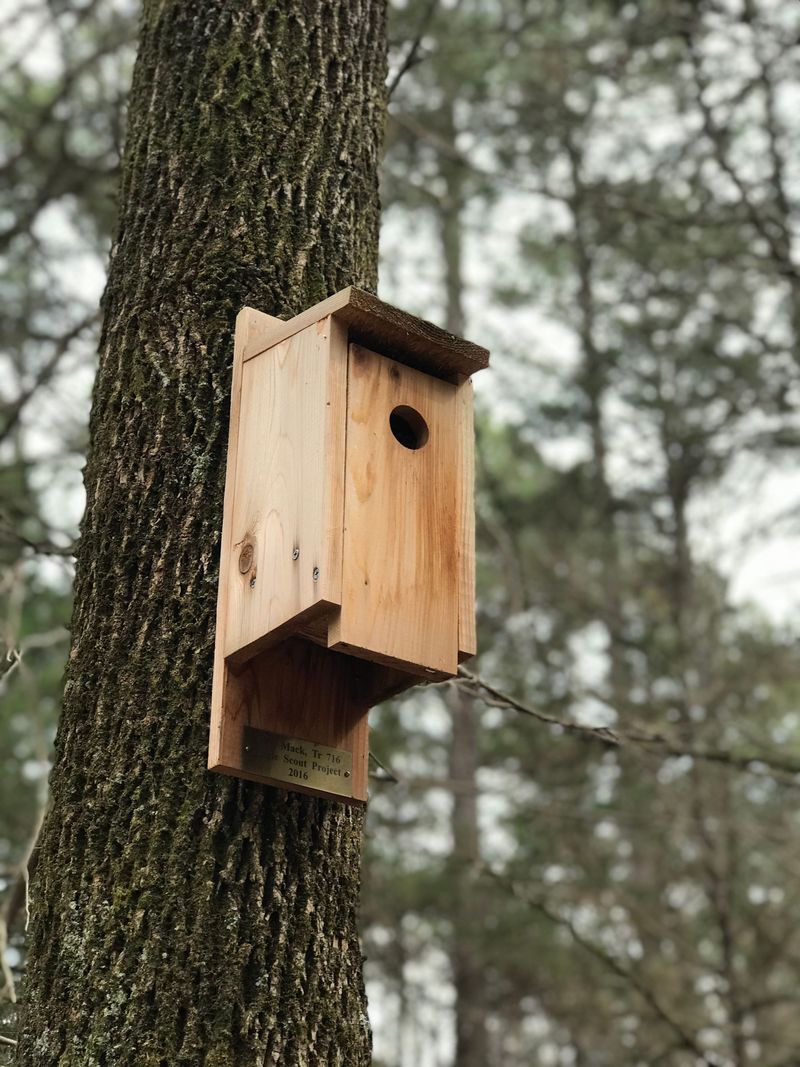
A single eight-foot cedar or pine board can become a cozy owl home. You do not need fancy joinery, just straight cuts and decent screws.
Aim for an inside floor around 8 by 8 inches, with walls about 12 to 15 inches tall. Common plans list a total box height near 17 inches with a sloped roof.
The entrance hole matters most. Cut it about 3 inches across, round or slightly oval, and place it roughly 9 to 12 inches above the floor.
Use untreated lumber only. Pressure-treated wood and fresh paint inside the box can harm developing owlets, so leave the interior raw.
Rough up the inside wall below the hole with a saw or by cutting shallow grooves. Young owls need that grip to climb out when they are ready to leave.
Drill a few small holes in the floor for drainage and a couple near the top for airflow. Attach one side panel with a hinge or pivot nail so you can clean the box later.
Personally, I add a slight roof overhang of a couple inches. Rain drips away from the hole, and the box stays drier through Ohio’s sloppy winter thaws.
4. Mount the Owl Box Ten Feet Up Facing East or South
Location can make or break your owl plans. A perfect box in the wrong spot may stay empty for years.
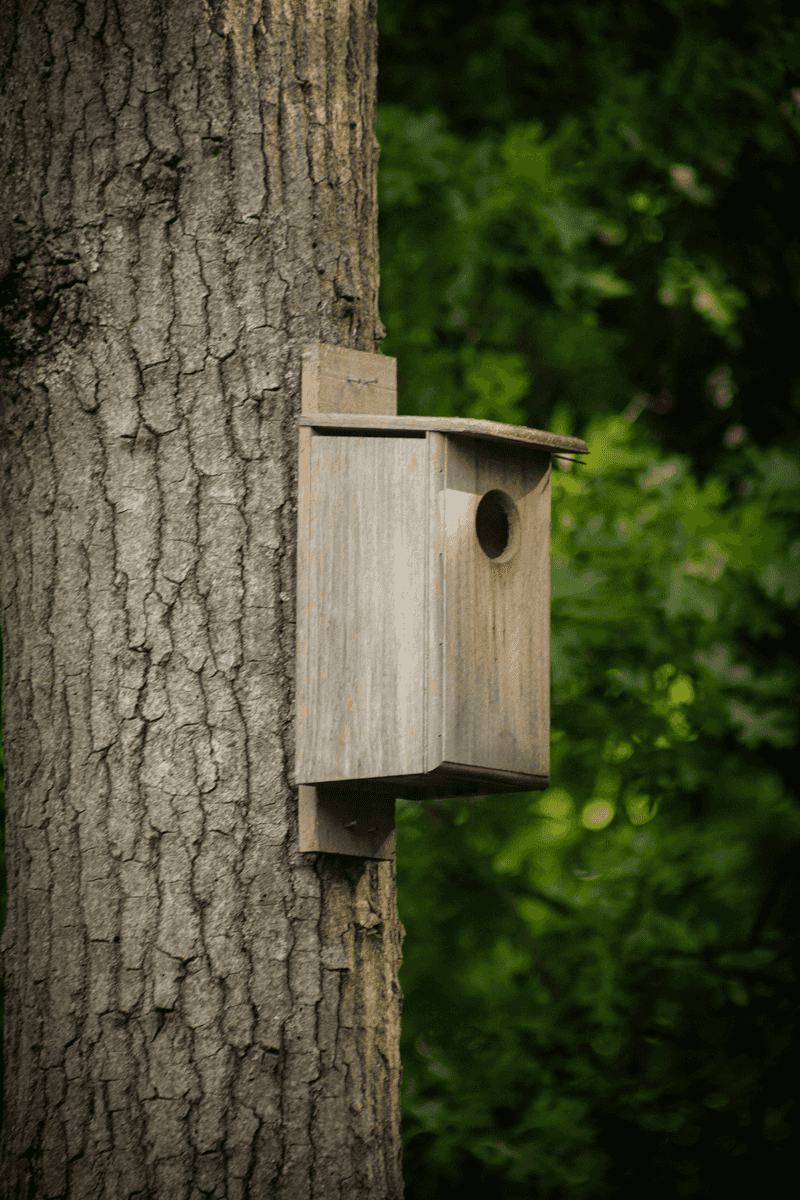
For screech-owls, mount the box 10 to 20 feet high on a sturdy tree trunk or a pole. The edge of a wooded area or a yard with scattered mature trees works nicely.
Face the entrance east or south when you can. That direction catches warm morning sun and keeps cold northwest winds from blowing straight inside.
Keep the hole clear of thick branches so the owl has a clean flight path. A nearby perch branch a few feet away gives a resting spot for watching the yard.
Tilt the box very slightly forward. Rain then runs off the front instead of sneaking back into the nest.
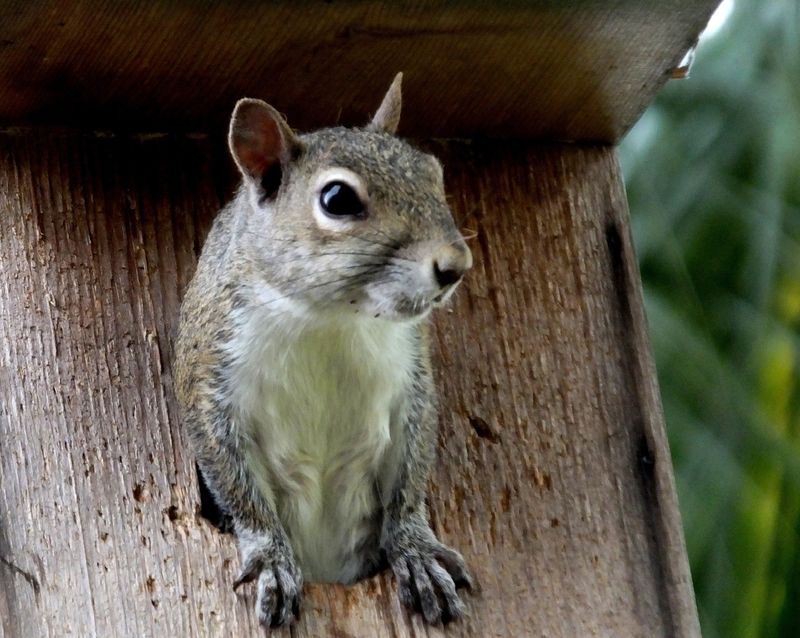
Avoid spots right beside busy bird feeders. Feeders draw squirrels, and squirrels love to steal owl boxes for their own leafy nests.
You can also try a quiet back corner rather than a spot right beside the patio. Screech-owls tolerate people well, but a calmer setting usually wins them over faster.
Grab a buddy to steady the ladder, and you will finish in an afternoon.
5. A Few Inches of Wood Shavings Make the Nest Box Feel Like Home
Owls are famously bad decorators. They do not carry twigs or soft grasses the way robins do.
Instead, screech-owls lay their eggs right on whatever material sits in the cavity floor. In a natural tree hole, that is crumbly old wood and debris.
Give them a head start by adding two to three inches of untreated pine shavings. Coarse shavings from a farm store work well, and so do clean wood chips.
Skip cedar shavings with strong oils, sawdust that packs down, and hay that can mold. You want something dry, fluffy, and able to cradle eggs.
Here is a fun bonus. Over the season, owls add their own fur-filled pellets and prey remains, which slowly build up into a lumpy, natural mattress.
Fill the box once at installation and leave it alone. Fiddling with bedding after a bird moves in can cause stress and may send it looking elsewhere.
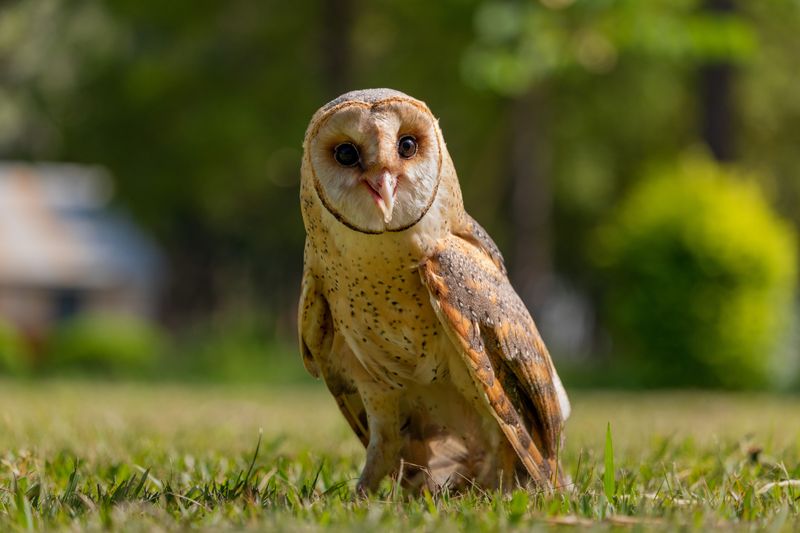
Barn owls, by the way, shred their pellets into nest material all on their own. That trick is one reason barn owl boxes often need no bedding, though a light layer rarely hurts.
6. Raccoons and Squirrels Will Try to Move Into Your Owl House
Raccoons are clever burglars with very nimble hands. A clutch of owl eggs or a box full of fuzzy owlets looks like an easy snack to them.
Black rat snakes also climb trees in warmer months, and they raid cavities across Ohio. A simple guard can block a lot of trouble.
Wrap a band of metal flashing about 24 inches wide around the tree trunk below the box. Mounting on a smooth pole with a cone or stovepipe baffle works even better.
Squirrels pose a different problem. They may stuff your box full of leaves before any owl finds it.
Check the box in late January and gently clear out squirrel clutter if you see it. Do this only when you know no owl is roosting inside.
European starlings sometimes claim screech-owl boxes in spring too. Starlings are non-native and are not protected under federal law, so removing their nests is allowed.
House sparrows fall in the same category. Wood ducks, on the other hand, are protected, so if one moves in, enjoy the surprise and let her raise her brood.
7. Skip the Rat Poison If You Want Owls Hunting Your Yard
A single screech-owl family can eat an impressive pile of mice, voles, and big insects in one season. That is free pest control with feathers.
Rodent poisons work against your new helpers. Owls that eat poisoned mice can get sick or fail to raise young, according to wildlife agencies including the U.S.
Fish and Wildlife Service.
Choose snap traps inside sheds and garages instead. Sealing gaps around foundations and storing birdseed in metal cans also keeps rodents down.
Owls need good hunting ground as much as a good box. Leave some leaf litter under shrubs, let a patch of native grass grow taller, and consider a small brush pile.
Those spots shelter beetles, moths, and small mammals that owls hunt at night. Native plants like oaks and wild cherries support huge numbers of caterpillars, which feed many birds.
Outdoor lighting matters too. Bright floodlights all night can make hunting harder, so motion sensors or warm, downward-facing bulbs are kinder choices.
I like to think of the whole yard as the owl’s home. The box is just the bedroom.
8. Watch Your Owl Box From a Distance and Clean It in Late Summer
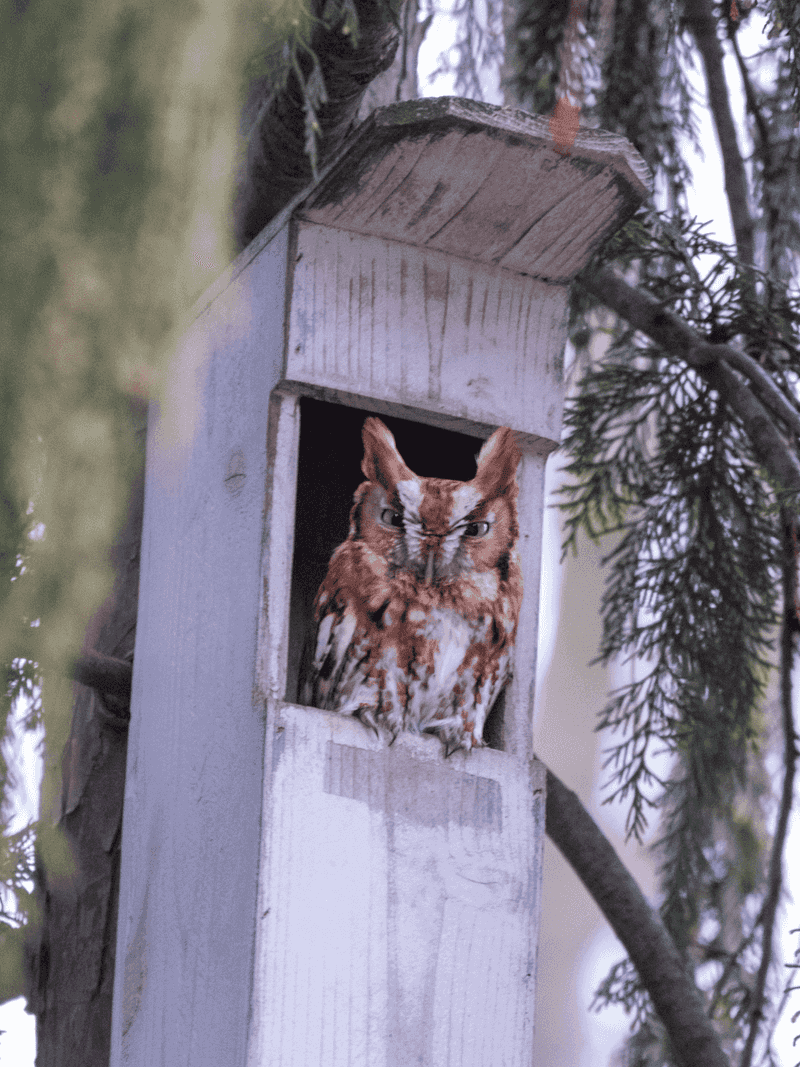
Patience pays off best in owl watching. The quiet thrill of a face appearing in the hole at dusk is worth every chilly evening spent waiting.
Look from a window or a respectful distance, ideally with binoculars. Late afternoon on a sunny winter day is a great time to catch a sunbathing screech-owl.
Resist tapping the box or opening it during nesting season. Owls are protected under the federal Migratory Bird Treaty Act, so disturbing active nests is not allowed.
Listen too. Soft trills after dark in February and March often mean a pair is bonding near your yard.
Once the young have left, usually by early summer, you can clean the box. Late summer or early fall is ideal, before winter roosting starts again.
Wear gloves, scoop out old material, and add fresh shavings. Tighten screws and check for cracks while the ladder is out.
Keep a simple notebook of dates and sightings. Year after year, those notes become a lovely record of your wild neighbors, and next Thanksgiving you might build a second box for a friend.