California Entry Path Plants That Look Expensive But Need Little Water
A front entry path sets the mood before anyone reaches the door, so the plants along it matter more than people think. In California, that space has to look polished without begging for water all summer.
The good news is that low water plants can still feel rich, stylish, and carefully planned. Some have sculptural leaves that look almost designer.
Others bring soft movement, silver tones, or bold blooms that make a walkway feel special. The trick is choosing plants that can handle sun, dry spells, and reflected heat near paving.
A tired path can make the whole yard feel unfinished, but a smart planting strip can do the opposite. It can make a home look more welcoming with far less work.
Fancy does not have to mean fussy. Some of the best entry path plants look like they belong at a boutique hotel, then quietly sip water like total pros.
1. Agave
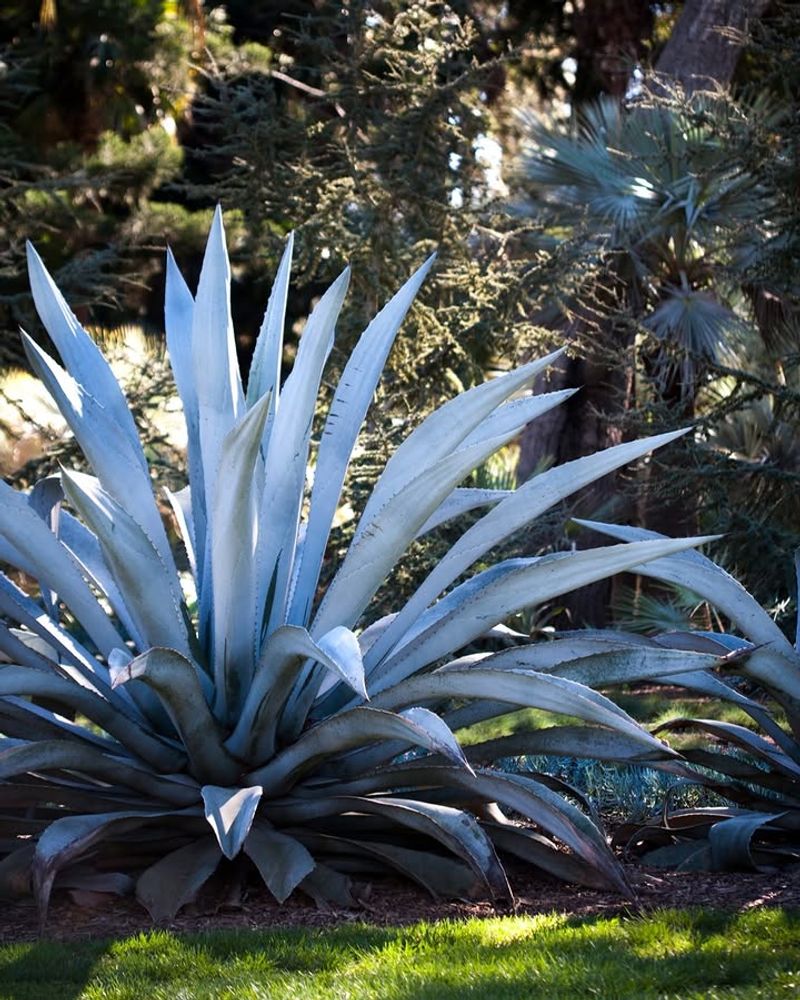
Bold, sculptural, and absolutely unforgettable, agave is one of those plants that makes people stop and stare. It has thick, pointed leaves that fan out in a perfect rosette shape.
That geometric look is exactly what high-end landscape designers love to use. Agave is native to dry, rocky regions, so it is built for life with very little water.
Once it is established in your entry path, you can mostly leave it alone. It handles intense heat, poor soil, and long dry spells without any fuss at all.
The blue-green color of most agave varieties adds a cool, elegant contrast against warm gravel or dark stone paths. It looks like something you would find at a five-star hotel entrance.
Sizes range from small tabletop types to massive statement plants that grow several feet wide.
Plant agave in full sun with fast-draining soil. Avoid overwatering because soggy roots are the one thing this plant truly cannot tolerate. Give it room to grow and let its natural shape do all the work.
A fun fact worth knowing: agave is actually related to asparagus, not cactus. It blooms only once in its lifetime, sending up a towering flower spike that can reach over twenty feet tall. That single bloom is a spectacular event worth waiting for.
2. Kangaroo Paw
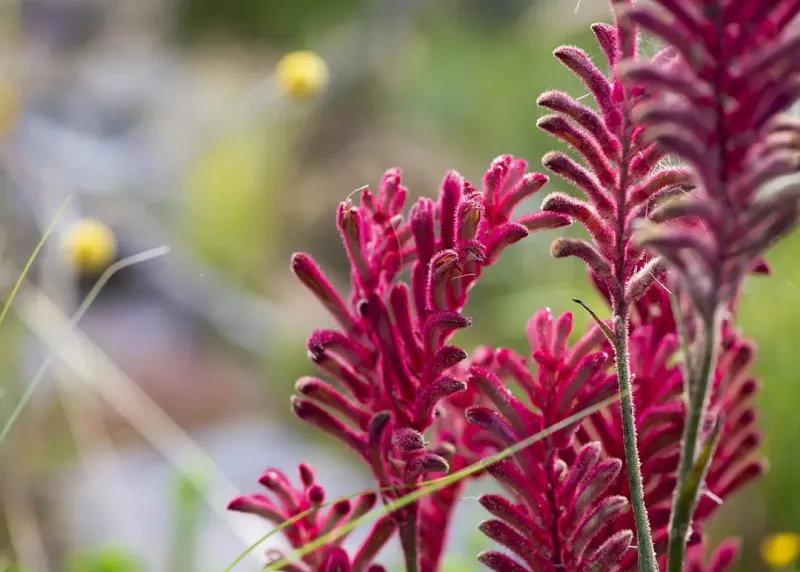
There is nothing quite like kangaroo paw when it comes to showstopping color. Named for its fuzzy, claw-shaped flowers, this Australian native produces blooms in shades of red, orange, yellow, and pink that look almost too vivid to be real.
It brings a tropical energy to any entry path without needing tropical amounts of water. Kangaroo paw thrives in our warm, dry climate. It actually performs better when it is not overwatered.
The long, strap-like leaves stay green and tidy all year, and the flower stalks rise dramatically above the foliage during spring and summer.
Professional landscapers love using kangaroo paw in upscale entry gardens because it has a sculptural quality that most plants lack.
The blooms create vertical interest, which draws the eye upward and makes the whole space feel more dynamic. It is especially striking when planted in groups of three or five.
Your California Garden Changes Every Week. Your Plan Should Too.
Gardening in California changes quickly throughout the season. Every Friday you’ll receive a simple weekly plan showing exactly what to plant, prune, fertilize, harvest, and protect so you never miss the right timing.
Plant it in full sun with excellent drainage. Cut the flower stalks back after blooming to keep the plant tidy and encourage new growth. Divide clumps every few years to keep them looking their best.
Kangaroo paw is also a favorite of hummingbirds. Planting it near your front door means you might have a regular feathered visitor greeting your guests right alongside you. That kind of natural charm is hard to buy.
3. Lavender
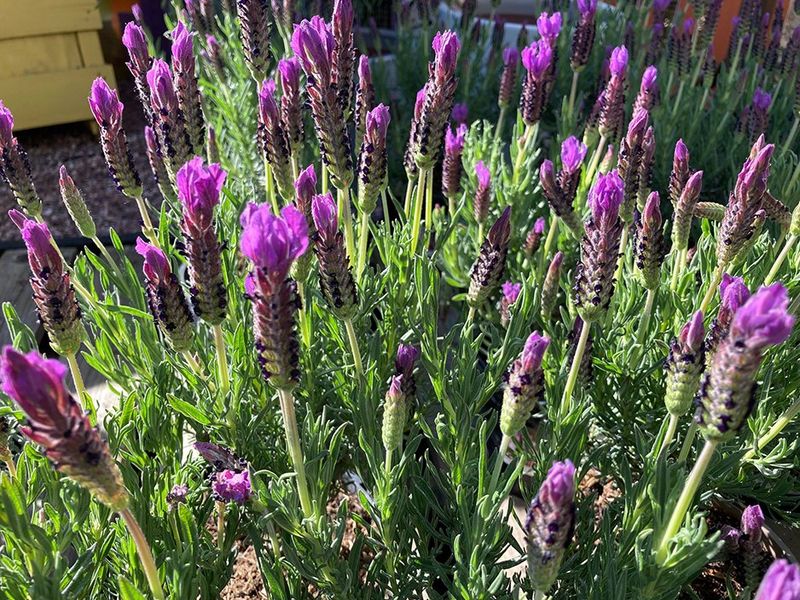
Walking past a row of blooming lavender is one of the most pleasant sensory experiences a garden can offer.
The soft purple flowers, the silvery green foliage, and that unmistakable fragrance all come together to create something that feels both luxurious and completely natural.
It is no wonder lavender shows up in so many high-end landscape designs. Our Mediterranean climate is genuinely perfect for lavender. Hot, dry summers and mild winters mirror the conditions of its native southern Europe.
Once established, lavender needs almost no supplemental watering and can handle poor, rocky soil with ease.
Along an entry path, lavender works beautifully as a low border or edging plant. Varieties like Hidcote and Munstead stay compact and tidy, making them ideal for framing a walkway without overwhelming the space.
The silvery foliage looks elegant even when the plant is not in bloom. Trim lavender lightly after each bloom cycle to keep it from getting woody and to encourage fresh, bushy growth.
Full sun and sharp drainage are the two most important things it needs. Avoid planting it near a drip system that keeps the soil constantly moist.
Lavender has been cultivated for over 2,500 years. The Romans used it to scent their baths, which is actually where its name comes from.
The Latin word lavare means to wash. That long history of elegance translates perfectly to a front entry setting.
4. Aloe
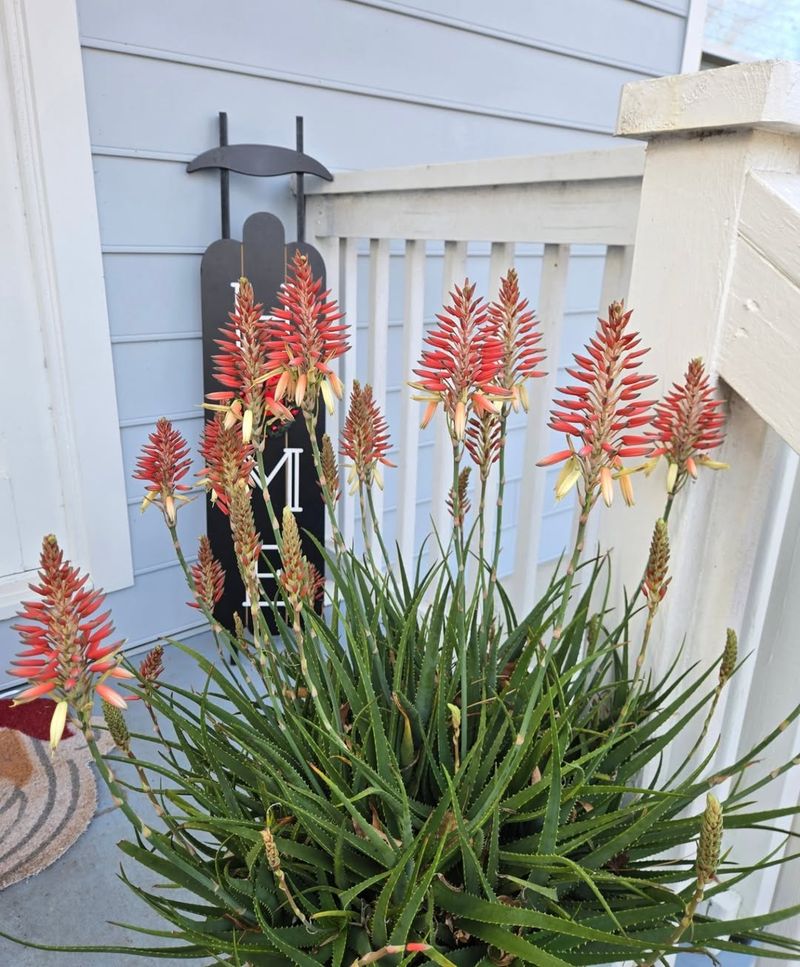
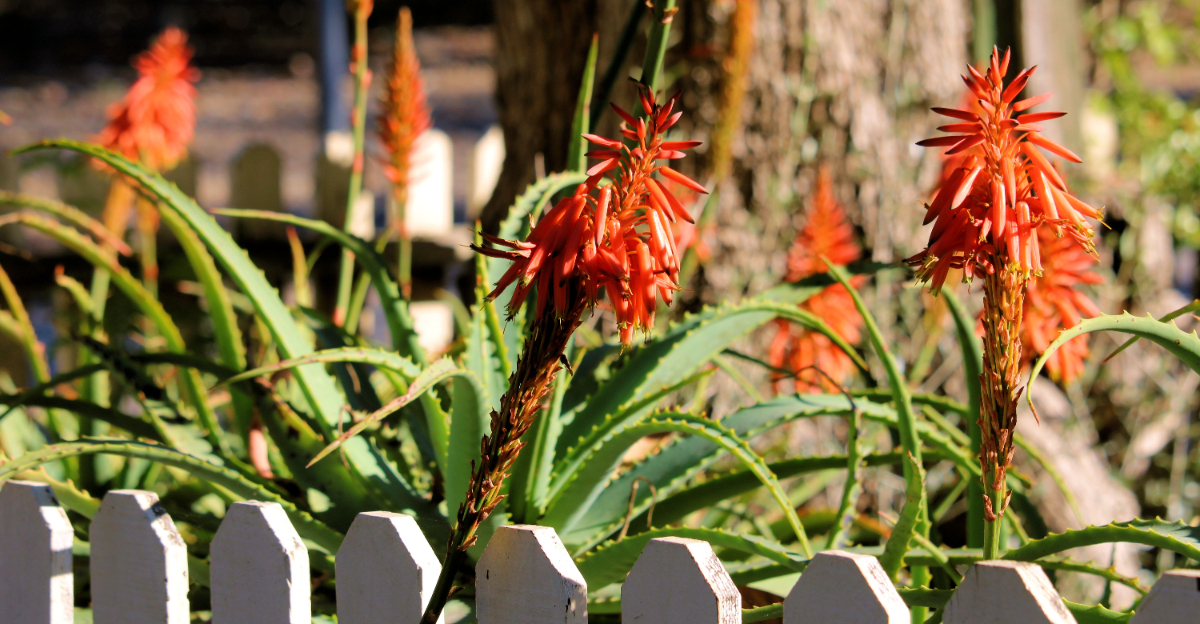
Few plants offer the same combination of good looks and usefulness as aloe. The fleshy, upright leaves have a cool blue-green color with subtle white markings that look almost decorative on their own.
When the bright orange or red flower stalks shoot up in winter, the whole entry path lights up with color.
Aloe is incredibly forgiving. It stores water right inside its thick leaves, which means it can go weeks without rainfall and still look fresh.
That makes it a top choice for entry paths that get full sun and very little attention. One of the best things about aloe is how fast it multiplies. Small offshoots, called pups, grow around the base of the mother plant.
You can pull them off and replant them along your path to fill in gaps without spending extra money at a nursery. It pairs beautifully with dark gravel, terracotta pots, or natural stone.
That contrast between the warm earth tones and the cool leaf color creates a look that feels curated and expensive. Plant it in well-drained soil and a sunny spot for the best results.
Aloe has been used medicinally for thousands of years. Ancient Egyptians called it the plant of immortality. Having it along your entry path means beauty and a little bit of history all in one place.
5. Westringia
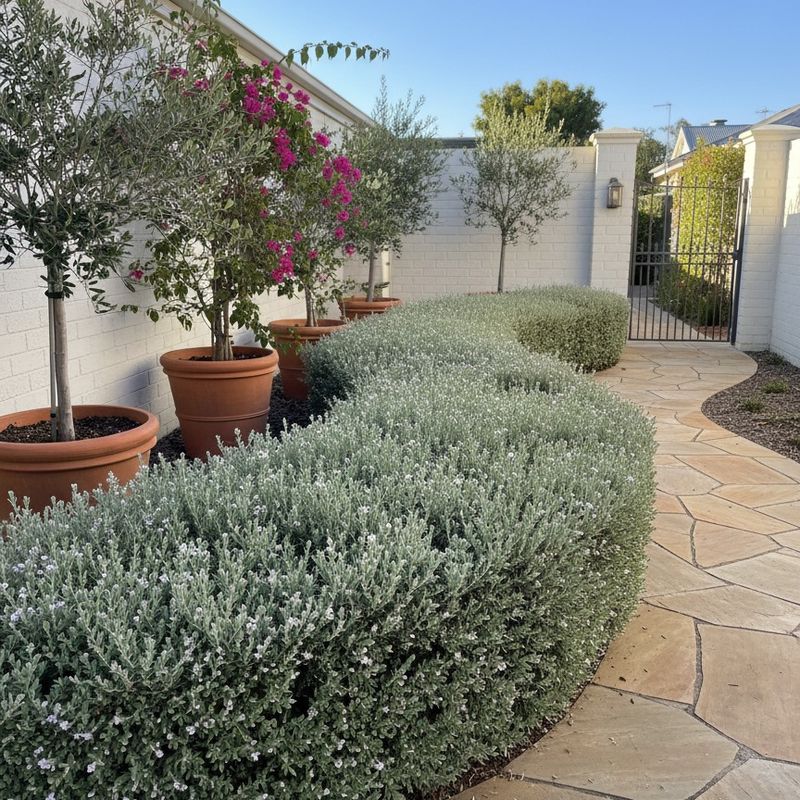
Not every plant on this list announces itself with dramatic spikes or vivid blooms. Westringia earns its place through quiet elegance.
Often called Australian rosemary because of its similar needle-like leaves and upright form, this shrub brings a refined, polished look to any entry path without demanding much in return.
It blooms almost year-round with small white or pale lavender flowers that attract bees and butterflies.
The fine-textured foliage has a soft gray-green color that pairs beautifully with modern architecture, natural stone, and dark metal edging. It looks professionally designed even when you just plant it and walk away.
Westringia handles drought, coastal winds, and poor soil without complaint. Once established, it rarely needs watering beyond what rainfall provides.
It also tolerates light frost, which makes it a reliable choice in both coastal and inland areas of our state.
One of its best features is how well it responds to trimming. You can shape it into a neat hedge, a rounded ball, or a natural flowing mound depending on the style of your home.
It holds its shape well and does not require constant maintenance to look tidy. Plant westringia in full sun to partial shade with good drainage.
Space plants about three to four feet apart if you want a continuous hedge effect along your path.
It fills in quickly and creates a lush, layered look that feels far more expensive than it actually is.
6. New Zealand Flax
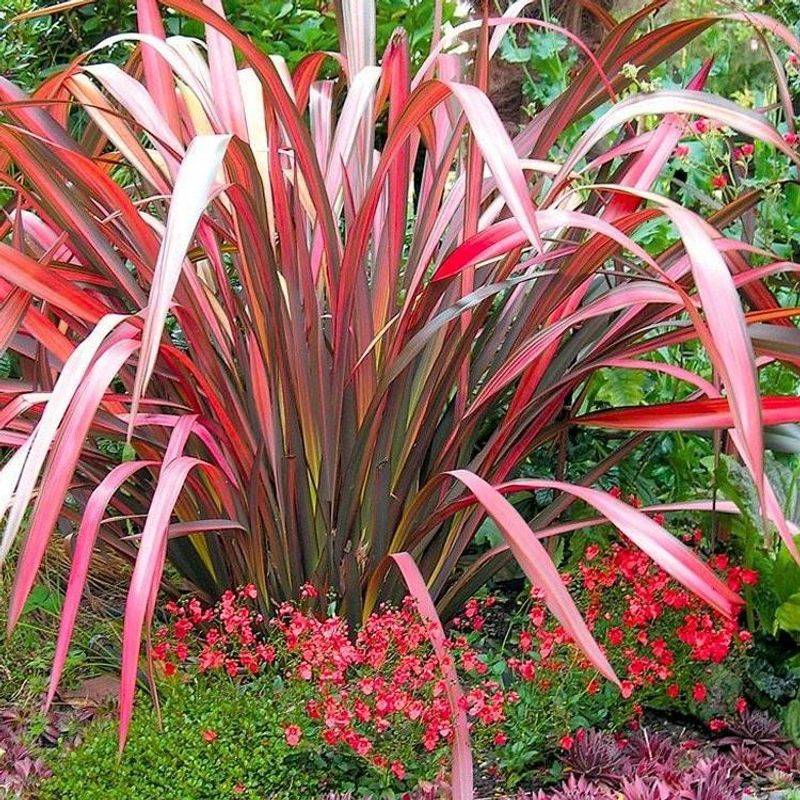
Few plants command attention the way New Zealand flax does. The long, sword-shaped leaves shoot straight up and fan out in bold arcs, creating a silhouette that looks like living sculpture.
Available in colors ranging from deep burgundy to striped bronze and green, it adds an instant designer touch to any entry path.
Despite looking exotic and high-maintenance, New Zealand flax is actually one of the toughest plants available in our state. It tolerates drought, heat, coastal salt spray, and poor soil.
Once established, it needs very little water and almost no care beyond an occasional cleanup of old leaves.
The sheer variety of colors and sizes makes it incredibly versatile. Compact varieties like Platts Black stay under two feet and work well in small entry gardens.
Larger varieties can reach six feet or more and make an unforgettable focal point next to a front door or gate.
It pairs well with gravel, concrete, and dark-stained wood. The bold leaf color creates strong contrast against light-colored walls or pale stone paths.
Landscape designers often use it as an anchor plant around which smaller, softer plants are grouped.
New Zealand flax was used by the Maori people for centuries to weave baskets, clothing, and rope. The fibers inside the leaves are incredibly strong.
That same toughness is exactly what makes this plant such a reliable performer in a water-smart garden.
7. Dwarf Olive
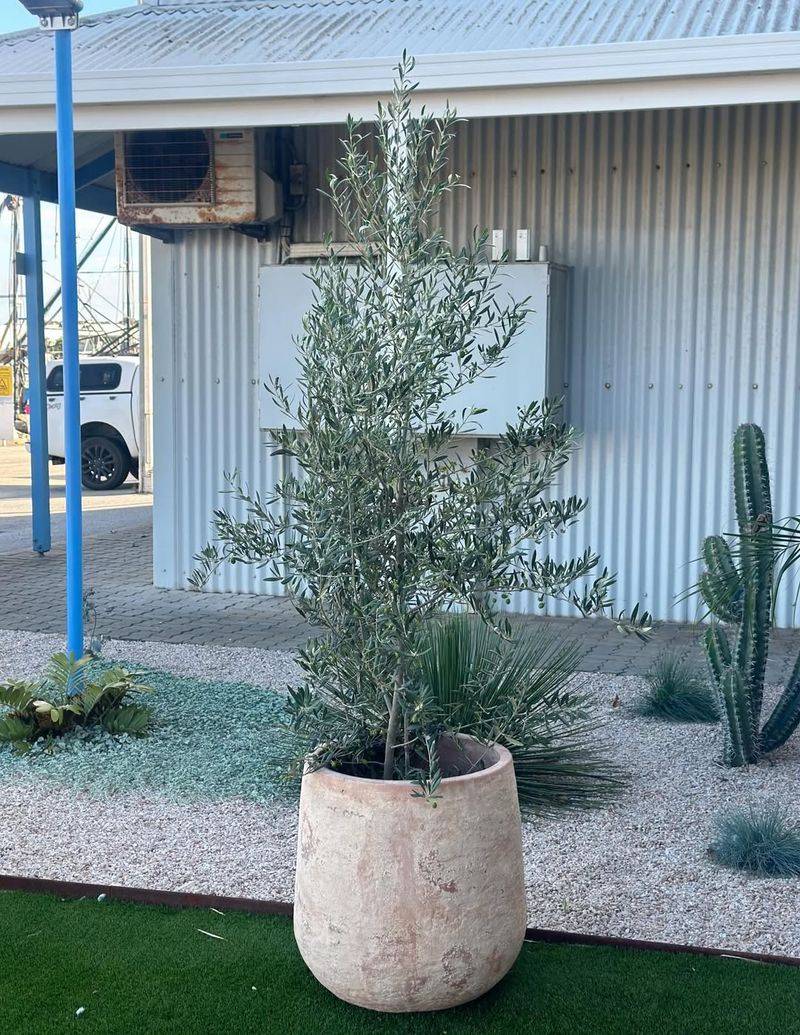
There is something inherently sophisticated about an olive tree. The silvery leaves, the gnarled trunk, and the soft, rustling canopy all carry a sense of timeless Mediterranean elegance.
A dwarf olive brings all of that character to an entry path without growing too large or demanding too much attention.
Varieties like Little Ollie are bred specifically for small spaces. They stay compact, usually under six feet, and produce very little fruit, which means no messy cleanup on your walkway.
The fine-textured silver-green foliage catches light beautifully and moves gracefully in a breeze. Dwarf olive thrives in full sun and fast-draining soil.
It is extremely drought tolerant once established and actually prefers to dry out between waterings. Overwatering is one of the few things that will stress this plant, so less is definitely more.
Use it as a symmetrical pair flanking your front door or gate for a formal, high-end look. Plant two matching specimens in large terracotta pots for a look that is both classic and modern at the same time.
The effect is instantly polished and welcoming. Olive trees have been cultivated for over 6,000 years and were considered sacred in ancient Greece.
Having one at your entry is not just a design choice. It is a small connection to one of the oldest cultivated plants in human history, and that kind of story adds real depth to your home’s curb appeal.
8. Dwarf Pomegranate
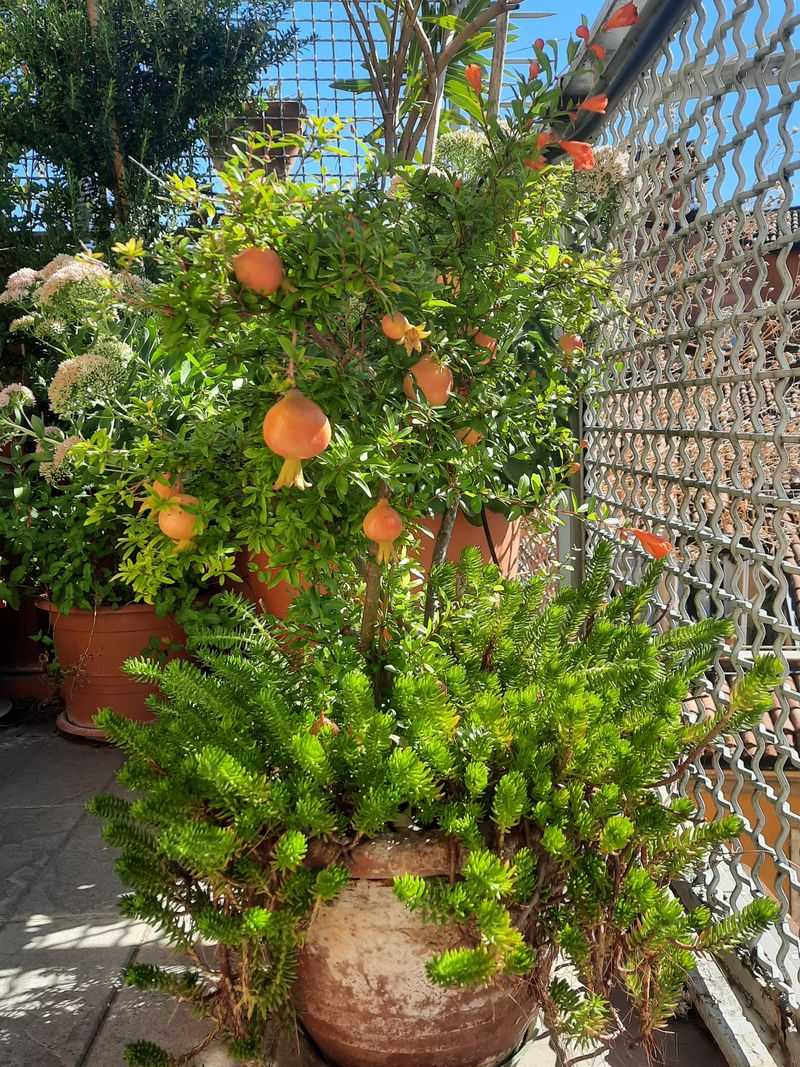
Bright, cheerful, and surprisingly tough, the dwarf pomegranate is one of those plants that earns its place through sheer personality.
In spring and summer, it covers itself in brilliant orange-red flowers that are almost electric in their intensity.
Even when it is not in bloom, the glossy green leaves and compact shape keep it looking neat and attractive.
This miniature version of the full-sized pomegranate tree grows to about three or four feet tall.
That makes it perfectly sized for lining an entry path without blocking windows or crowding the walkway. It can also be grown in a pot near the front door for a portable burst of color.
Dwarf pomegranate is remarkably drought tolerant once it is established. It handles heat and dry conditions well and only needs occasional deep watering during the hottest months.
The small fruits that follow the flowers add another layer of visual interest through fall. Full sun is where it performs best. Plant it in well-drained soil and give it a light trim after the blooming season to keep it tidy.
It responds well to pruning and can be shaped into a neat rounded form if you prefer a more formal look.
Pomegranates have been a symbol of abundance and prosperity in many cultures for thousands of years.
Planting one at your entry path is a nod to that tradition. It brings color, history, and an upbeat energy to your home’s first impression all at once.
9. Blue Fescue
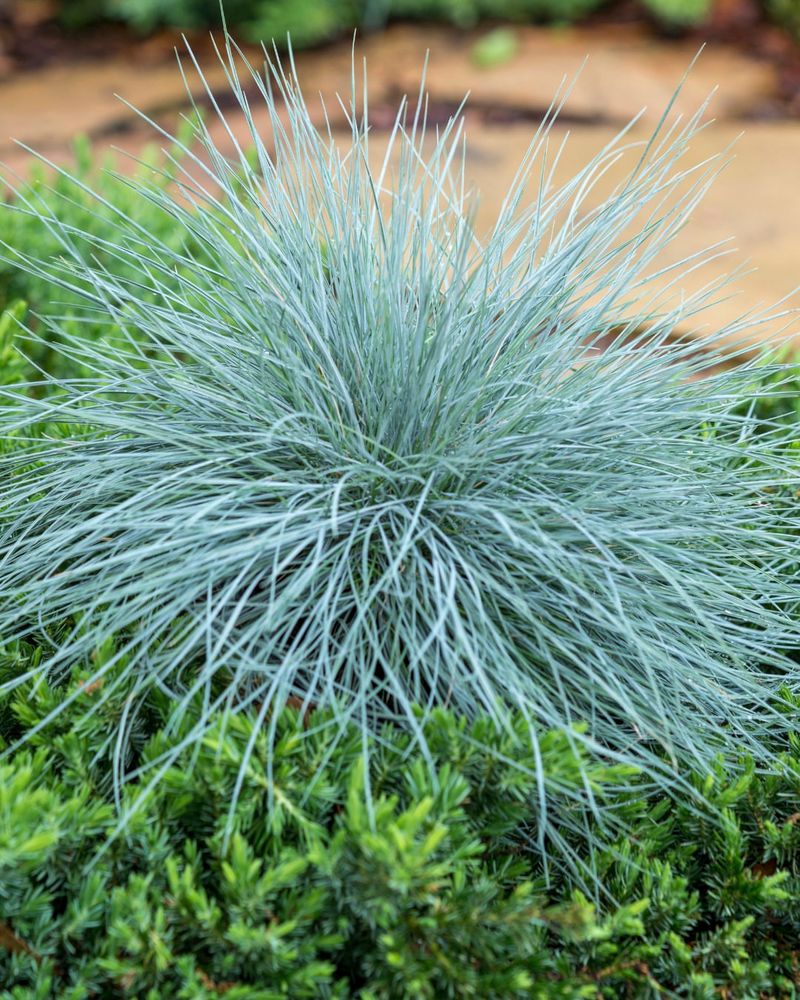
Sometimes the most effective design choice is also the simplest. Blue fescue is a small ornamental grass that forms perfect little mounds of cool silver-blue foliage, and it creates a look that is effortlessly modern and clean.
Used in repetition along an entry path, it produces a rhythm that feels intentional and high-end.
Each clump grows to about eight to twelve inches tall and wide, making it ideal for edging or filling in spaces between larger plants.
The blue color is genuinely striking, especially when planted against warm gravel, dark soil, or terracotta tones.
It creates contrast that catches the eye without being overwhelming. Drought tolerance is one of blue fescue’s strongest qualities. It is adapted to dry, rocky conditions and needs very little water once established.
In fact, too much moisture can cause the clumps to rot from the inside, so dry conditions actually suit it better.
Plant it in full sun for the most intense blue color. In shadier spots, the color tends to shift toward green.
Divide the clumps every two to three years to keep them looking fresh, as the centers can die out over time if left untended.
Blue fescue is native to the mountains of Europe and North Africa, where it grows in poor, dry soils at high elevations. That background explains its toughness perfectly.
It evolved to look beautiful under harsh conditions, and that is exactly what makes it such a reliable performer in a water-smart entry garden.
10. Deer Grass
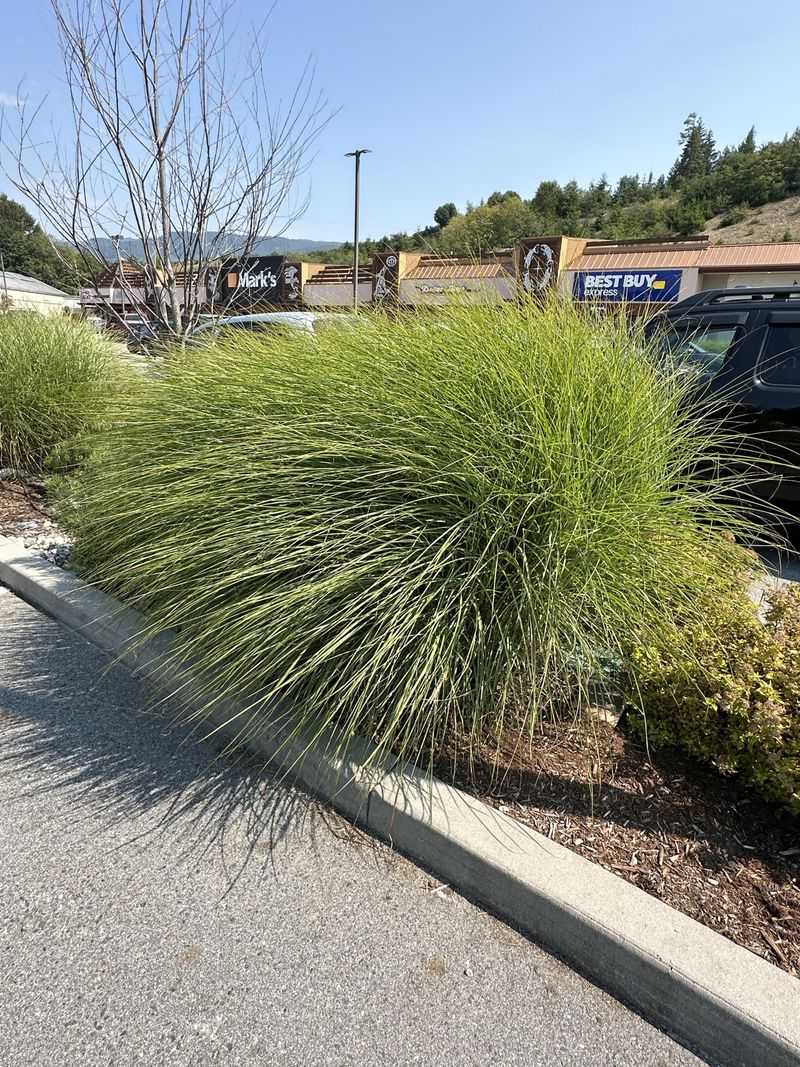
Native plants have a way of looking completely at home in a landscape, and deer grass is no exception.
This California native ornamental grass forms lush, arching clumps of fine green blades that move beautifully in even the lightest breeze.
The tall, slender seed stalks rise above the foliage in late summer, adding a soft, feathery texture that feels both natural and refined.
Deer grass is one of the most water-efficient plants you can put in an entry path. It evolved here, which means it is perfectly adapted to dry summers and sporadic rainfall.
Once established, it needs almost no supplemental irrigation, even during long dry stretches.
The flowing, fountain-like shape works beautifully in both formal and informal garden styles.
It softens hard edges like concrete paths and stone walls, and it adds movement to spaces that might otherwise feel static. Planting several clumps in a staggered row along a walkway creates a lush, layered effect.
Deer grass grows to about three to four feet tall and wide. Give it full sun to light shade and well-drained soil.
Every few years, cut it back hard in late winter to encourage fresh new growth from the base.
Wildlife also loves deer grass. Birds use the seed heads for food, and the dense clumps provide shelter for small creatures.
Choosing this plant for your entry path means supporting the local ecosystem while also creating a landscape that looks genuinely beautiful every single day of the year.