California Front Yard Plants That Look Intentional Even When You Don’t Touch Them
A front yard that looks well kept without constant attention is not luck. It is the result of choosing plants that are naturally tidy, visually structured, and built to thrive in California’s climate without much intervention.
Most people assume a sharp looking front yard requires regular trimming, watering schedules, and weekend maintenance. The right plant selection proves otherwise.
Some plants hold their shape through the dry season, stay full without pruning, and look just as good in August as they did in April. California’s climate actually makes this easier than it sounds.
The heat and dry air that stress out the wrong plants only make the right ones look better. A front yard planted with intention from the start does not need you hovering over it.
It just needs the right combination of plants doing what they were naturally designed to do.
1. Deer Grass
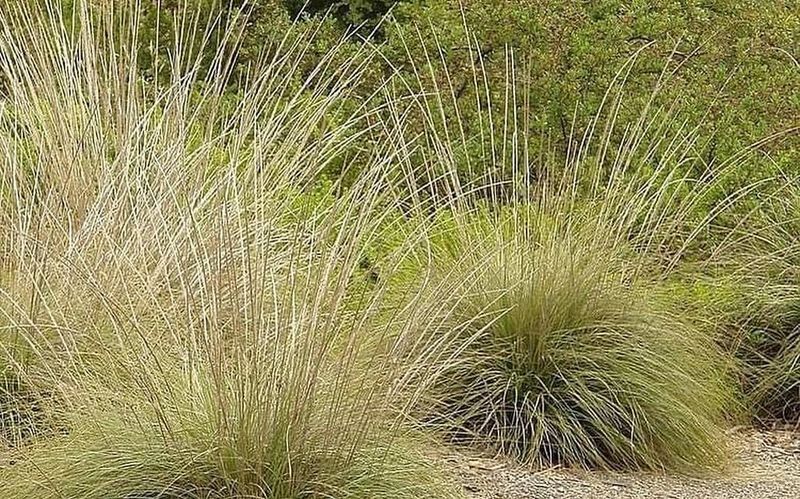
Few plants can pull off looking sculptural without anyone lifting a finger, but deer grass does it effortlessly. This native bunchgrass grows in full, rounded clumps that look like they were placed by a landscape designer.
The long, arching green blades stay tidy and full through most of the year, and in late summer, tall feathery seed stalks shoot up and catch the light beautifully.
Deer grass is native foothills and dry slopes, which means it’s built for heat and drought. Once it gets settled in, it needs almost no water.
It’s one of those plants that actually looks better when you leave it alone. Overwatering or over-trimming can make it look floppy and sad, so the best thing you can do is just let it grow.
It works well as a border plant, a focal point in a dry garden, or even a soft replacement for a traditional lawn patch. The clumps grow two to three feet tall and wide, giving your yard a natural, organized feel without any effort.
Birds love the seeds, so you get a little wildlife bonus too.
Planting deer grass in a sunny spot with well-drained soil is really all it takes. It doesn’t need fertilizer, it doesn’t need much pruning, and it handles summers without complaint.
For anyone who wants a front yard that looks put-together without constant upkeep, this grass is one of the smartest choices you can make.
2. California Fescue
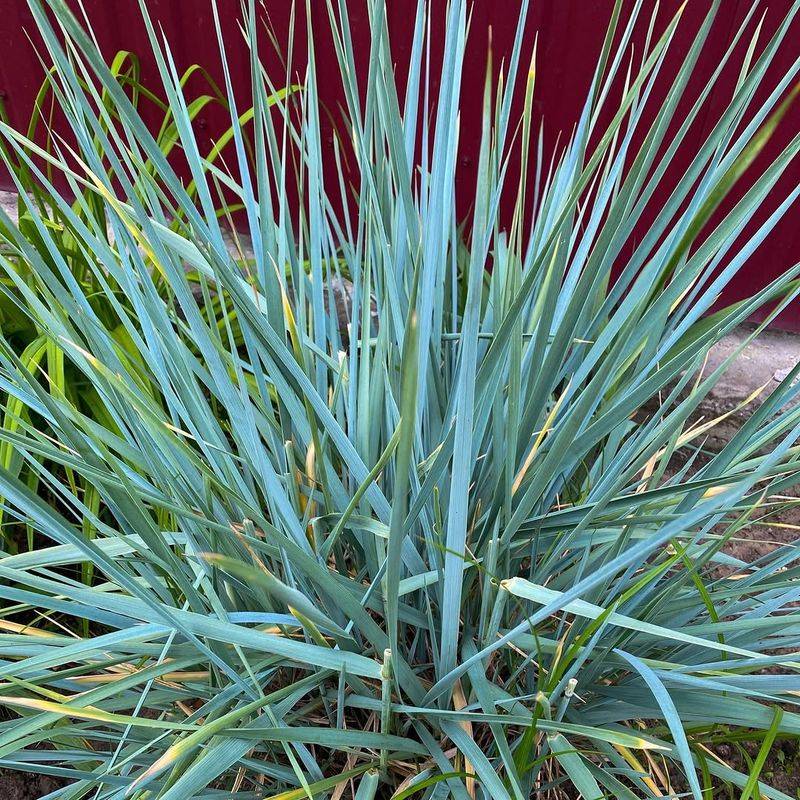
There’s something almost poetic about a plant that looks cool and calm even in the middle of a hot summer. California fescue is exactly that plant.
With its soft blue-green leaves that arch gracefully outward, it brings a relaxed elegance to any front yard. It’s one of those grasses that makes people stop and ask, “What is that?” because it looks expensive without costing much effort.
Unlike many ornamental grasses, California fescue actually prefers a bit of shade. It thrives under oak trees or along the shaded side of a house, making it perfect for those tricky spots where other plants struggle.
It’s native to coastal ranges and wooded hillsides, so it’s already adapted to the state’s dry summers and mild winters.
Your California Garden Changes Every Week. Your Plan Should Too.
Gardening in California changes quickly throughout the season. Every Friday you’ll receive a simple weekly plan showing exactly what to plant, prune, fertilize, harvest, and protect so you never miss the right timing.
The clumps grow about two to three feet tall and stay looking neat and rounded without any trimming. In spring, it sends up thin flower stalks that sway gently in the breeze and add a delicate texture to the yard.
You can leave those stalks on or cut them back, but honestly, they look lovely either way.
Water it occasionally during its first summer to help it get established, and after that, it’s mostly on its own. No fertilizer needed, no frequent watering, and no special soil prep required.
California fescue is proof that a front yard can look thoughtfully designed even when the homeowner hasn’t touched it in weeks.
3. Island Coral Bells
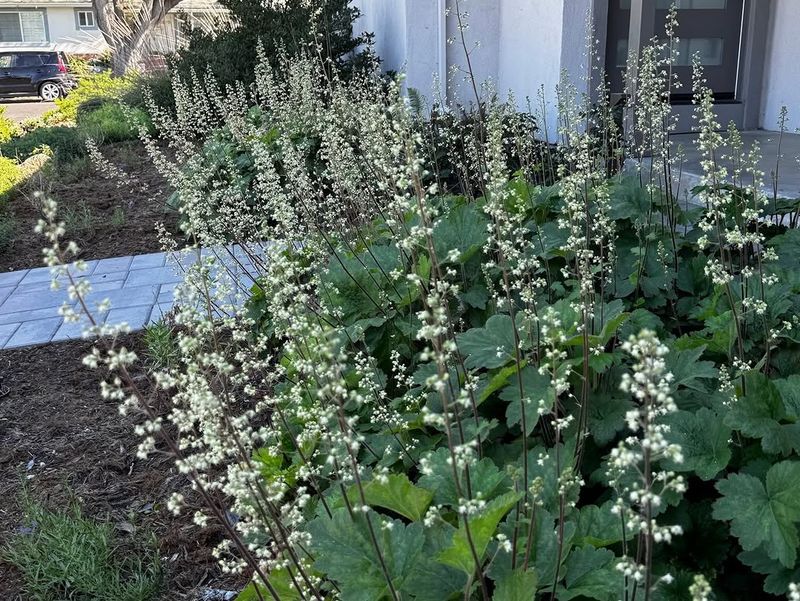
Bold, leafy, and surprisingly tough, island coral bells is one of those plants that commands attention without asking for it. The leaves are large, rounded, and slightly ruffled, growing in a low mound that looks lush and full even during dry months.
When spring arrives, slender flower stalks rise up covered in tiny white or pinkish blooms that hummingbirds absolutely love.
Native to the Channel Islands off the coast of Southern California, this plant evolved to handle dry summers and mild winters. That island background makes it incredibly well-suited for front yards that don’t get much attention.
It handles partial shade beautifully, which makes it a great choice for spots under trees or along the north side of a house where other plants tend to struggle.
One of the best things about island coral bells is how full and intentional it looks even when it’s just sitting there doing its thing. The foliage stays attractive year-round, so your yard never looks bare or empty.
It grows about one to two feet tall and spreads a couple of feet wide, making it a great filler plant or border edging.
Give it well-drained soil, a little shade, and occasional deep watering during the summer, and it will reward you with consistent beauty season after season. It doesn’t need pruning, doesn’t spread aggressively, and keeps its shape naturally.
For a front yard that looks cared for without constant effort, island coral bells earns its spot every single time.
4. Canyon Coral Bells
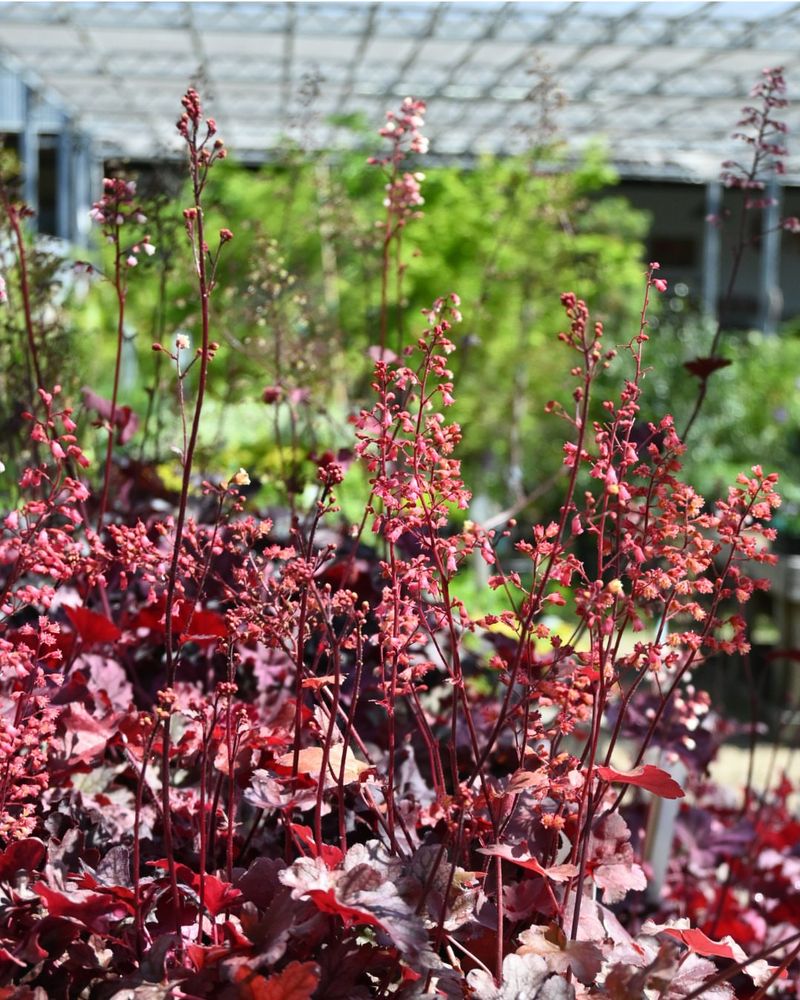
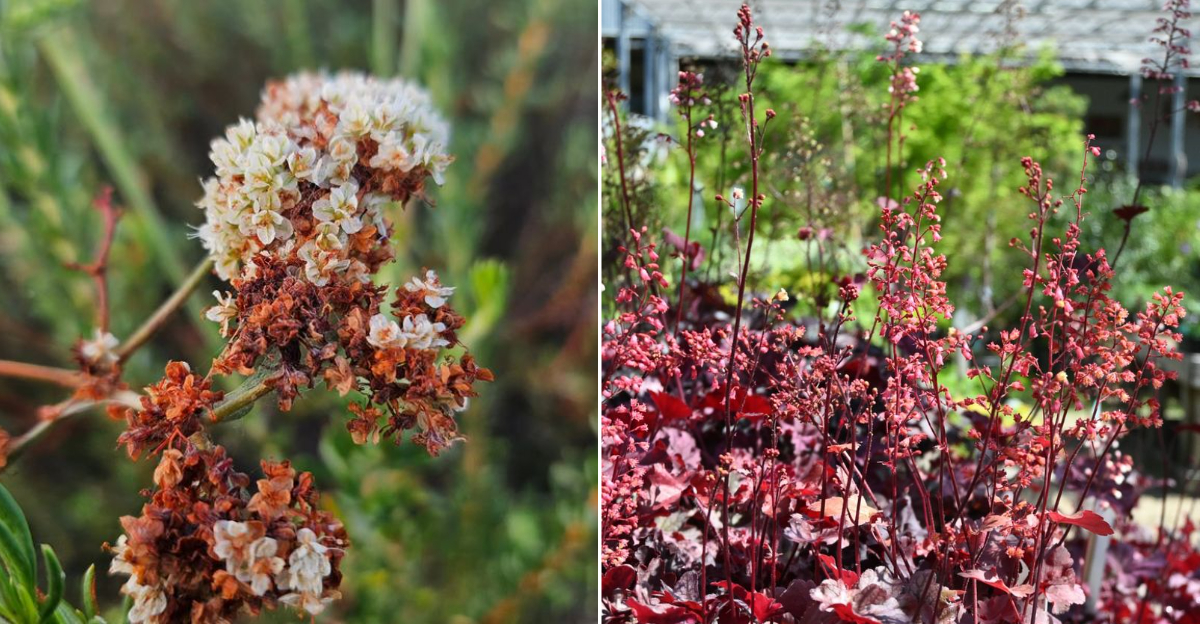
If island coral bells is the calm, leafy cousin, canyon coral bells is the one with a little more drama. The foliage comes in deep burgundy, bronze, or marbled green and purple tones depending on the variety, giving your front yard a rich, layered look that feels very intentional.
It’s the kind of plant that makes your yard look like you put serious thought into the color palette.
Canyon coral bells are hybrids that perform extremely well in our climate, especially in areas with mild temperatures and some afternoon shade. They grow in compact, tidy mounds that don’t flop over or spread out of control.
The colorful leaves are the real star here, but in late spring and summer, tall wiry stalks appear topped with clusters of tiny bell-shaped flowers that attract hummingbirds and bees.
What makes this plant so great for a low-maintenance front yard is its ability to look polished without pruning. The mounds stay naturally rounded and full, and the leaf color deepens beautifully with cooler temperatures in fall and winter.
You get year-round interest without lifting a single tool.
Plant it in a spot with morning sun and afternoon shade for the best color payoff. It needs occasional watering once established but is fairly drought-tolerant compared to non-native alternatives.
Mix different varieties together for a stunning, multi-toned border that looks like it came straight out of a garden magazine, with barely any effort on your end.
5. Douglas Iris
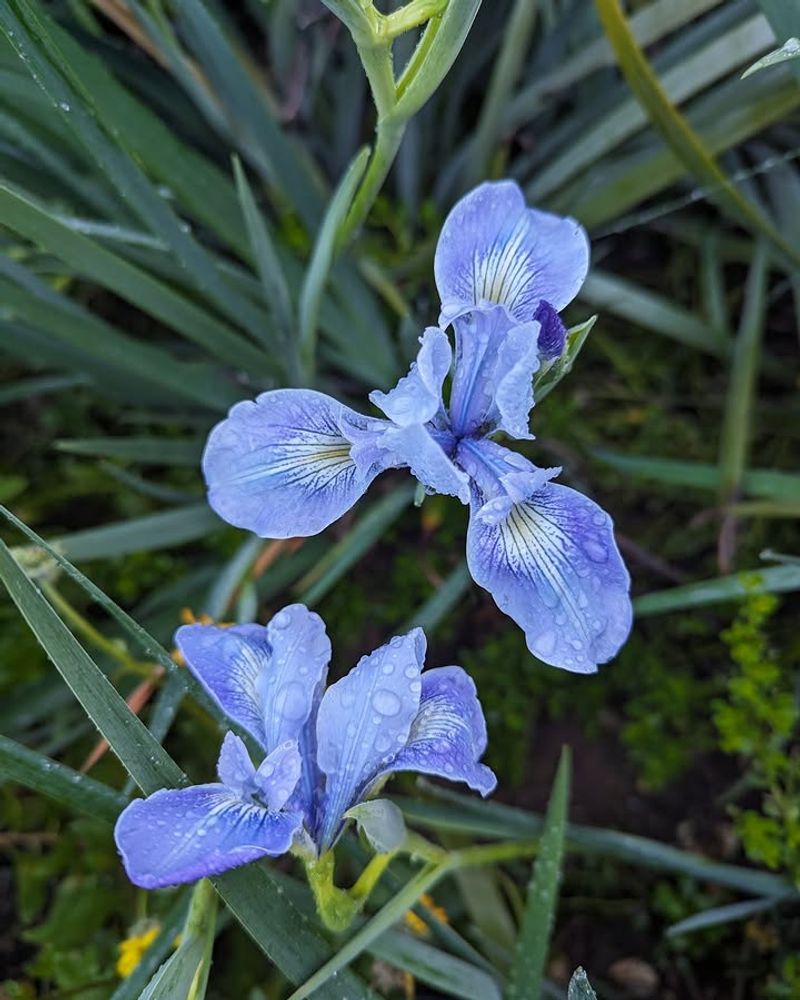
Every spring, Douglas iris puts on a show that stops people in their tracks. The flowers come in shades of purple, lavender, blue, and creamy white, often with delicate veining that makes each bloom look hand-painted.
And the best part? You don’t have to do anything to make that happen.
It just blooms, year after year, because that’s what it does.
Native to coastal California and Oregon, Douglas iris grows naturally along bluffs, meadows, and the edges of forests. It’s perfectly adapted to wet winters and dry summers, which means it fits right into a front yard that doesn’t get much extra water.
Once established, it can survive on rainfall alone in many parts of the state.
The plant forms spreading clumps of narrow, dark green leaves that look neat and organized even when not in bloom. Those evergreen leaves keep the yard looking tidy through fall and winter, so you’re never left with a bare patch.
It spreads slowly over time, gradually filling in areas and creating a lush, naturalistic groundcover effect.
It grows best in partial shade or filtered sunlight, making it ideal for spots under trees or along a shaded fence line. No fertilizer is needed, and very little pruning is required.
Just remove the old flower stalks after blooming if you feel like it, or leave them and let the seedpods add texture. Douglas iris is one of those rare plants that truly takes care of itself while making your yard look absolutely stunning.
6. California Buckwheat
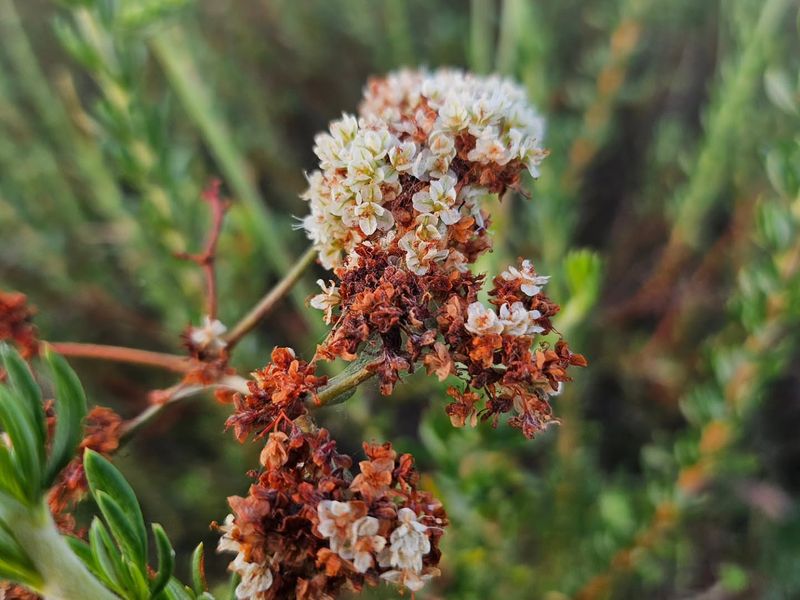
Here’s a plant that plays a long game and wins every season. California buckwheat starts the year with clusters of tiny white flowers that slowly fade to a warm rust-red as summer goes on.
By the time fall arrives, the whole shrub is covered in these coppery dried blooms that look like someone planned a very sophisticated color scheme for your yard. Spoiler: you didn’t have to plan anything.
This native shrub is one of the most wildlife-friendly plants you can put in a front yard. Bees, butterflies, and birds are drawn to it constantly throughout the blooming season.
It’s a key food source for native pollinators, and it stays active and interesting even after the flowers dry out.
California buckwheat is extremely drought-tolerant once established. It grows naturally on dry slopes and chaparral hillsides, so it’s perfectly comfortable in a sunny front yard with poor soil and no irrigation.
It grows about two to four feet tall and wide, forming a loose, mounded shape that looks relaxed but never messy.
One of its most underrated qualities is how good it looks in winter. The dried flower heads cling to the plant through the cold months, adding texture and warmth to a yard that might otherwise look bare.
You can trim it lightly in late winter to encourage fresh growth, but it honestly doesn’t need it. California buckwheat is a hardworking, beautiful plant that rewards you generously for doing almost nothing.
7. Coast Dudleya
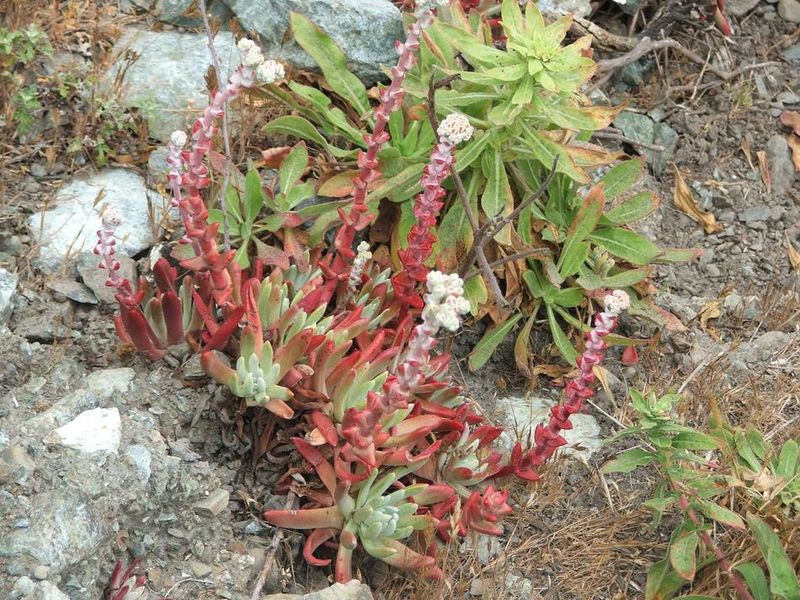
Few plants look as architectural and deliberate as coast dudleya, yet it grows wild on rocky cliffs and coastal bluffs all across the state without any help at all. The rosettes of thick, chalky silver-green leaves are geometric and stunning, like something you’d find in a high-end plant shop.
But this beauty belongs right here in our native landscape.
Coast dudleya is a succulent, which means it stores water in its leaves and can handle long dry periods without any trouble. It’s one of the most drought-tolerant plants on this entire list.
In fact, overwatering is the one thing that can actually cause problems for it. Give it excellent drainage, full sun to partial shade, and very little water in summer, and it will thrive for years.
In spring, it sends up tall reddish flower stalks topped with small star-shaped yellow or orange blooms. Those flowers bring in hummingbirds and native bees, adding life and movement to your front yard.
After blooming, the stalks can be left on or removed, but either way the rosettes continue looking fantastic.
Coast dudleya grows slowly and stays compact, making it a great choice for rock gardens, hillside plantings, or containers near the front door. It pairs beautifully with other succulents and natives, creating a textured, layered look that feels very intentional.
Plant it in a spot with good drainage and step back, because this plant is fully capable of looking spectacular entirely on its own terms.
8. California Poppy
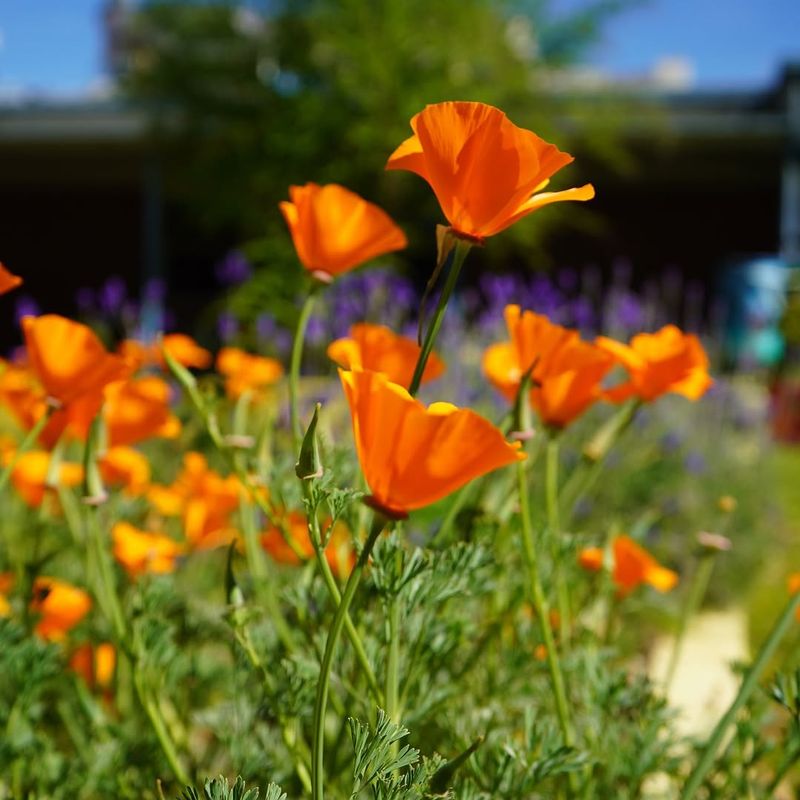
Bright orange, cheerful, and completely self-sufficient, the California poppy is practically the mascot of low-maintenance gardening in this state. It’s the official state flower for a reason.
Once you scatter the seeds in a sunny spot with well-drained soil, it takes over from there. No babying required, no special soil, and definitely no irrigation once it’s up and growing.
What makes the California poppy especially magical is that it reseeds itself every year. Plant it once, and it will come back on its own the following spring, often spreading into a fuller, more colorful patch than the year before.
Over time, a small patch can grow into a sweeping display of orange and gold that looks like it was professionally designed.
The foliage is feathery and blue-green, which looks attractive even when the plant isn’t in bloom. The flowers open wide on sunny days and close up at night or on cloudy days, which gives them a lively, dynamic quality that’s fun to watch.
They bloom from late winter all the way through spring and into early summer depending on your location.
California poppies grow best in full sun and actually prefer poor, dry soil over rich, amended garden beds. Too much water or fertilizer makes them leggy and less floriferous.
Let them do their thing, pull out any that pop up in places you don’t want them, and enjoy one of the most effortlessly beautiful plants California has to offer. It’s practically foolproof.