California Native Plants That Look Exotic But Are Nearly Impossible To Ruin
There’s a particular kind of plant guilt that California gardeners know well. You spot something stunning at the nursery.
Something that looks like it belongs in a tropical greenhouse or a carefully curated botanical garden, and you talk yourself out of it because there’s no way something that beautiful is going to survive your schedule, your soil, or your spotty watering habits.
Here’s the plot twist: some of those showstoppers are actually California natives that practically take care of themselves.
Native plants have an undeserved reputation for looking utilitarian. Scrubby. Practical but not exactly exciting.
The reality is that California’s native flora is genuinely one of the most visually dramatic in the world, and a surprising number of these plants look like they require serious horticultural expertise while actually demanding almost nothing from you.
Full sun, minimal water, terrible soil, complete neglect. They thrive anyway. Looking this good while being this easy is a combination most plants can’t pull off. California natives do it constantly.
1. Catalina Perfume
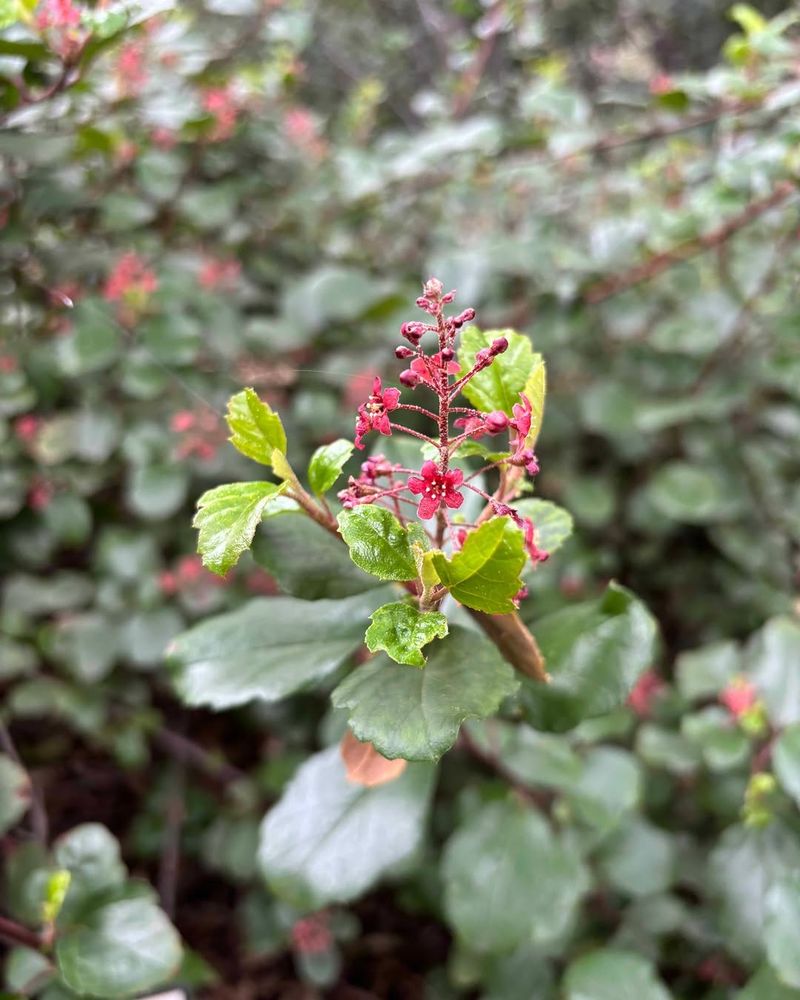
Walk past this plant on a warm California morning and you will catch a sweet, spicy scent that stops you in your tracks. Catalina Perfume, known scientifically as Ribes viburnifolium, is a low-growing shrub that comes from Santa Catalina Island off the Southern California coast.
It spreads slowly along the ground, making it a fantastic choice for shady spots under oak trees or along garden borders.
The dark green, glossy leaves stay on the plant all year long. Tiny reddish-pink flowers appear in late winter and early spring, adding a cheerful pop of color when most plants are still sleeping.
Birds love to nest near this shrub, and it attracts beneficial insects too.
One of the coolest things about this plant is how little water it needs once it settles in. It actually prefers dry shade, which is something many plants simply cannot handle.
No fertilizer is required. No fancy soil preparation is needed.
Plant it, water it a few times during its first summer, and then mostly leave it alone. Gardeners across California have fallen in love with how effortless it is to grow.
2. Island Snapdragon
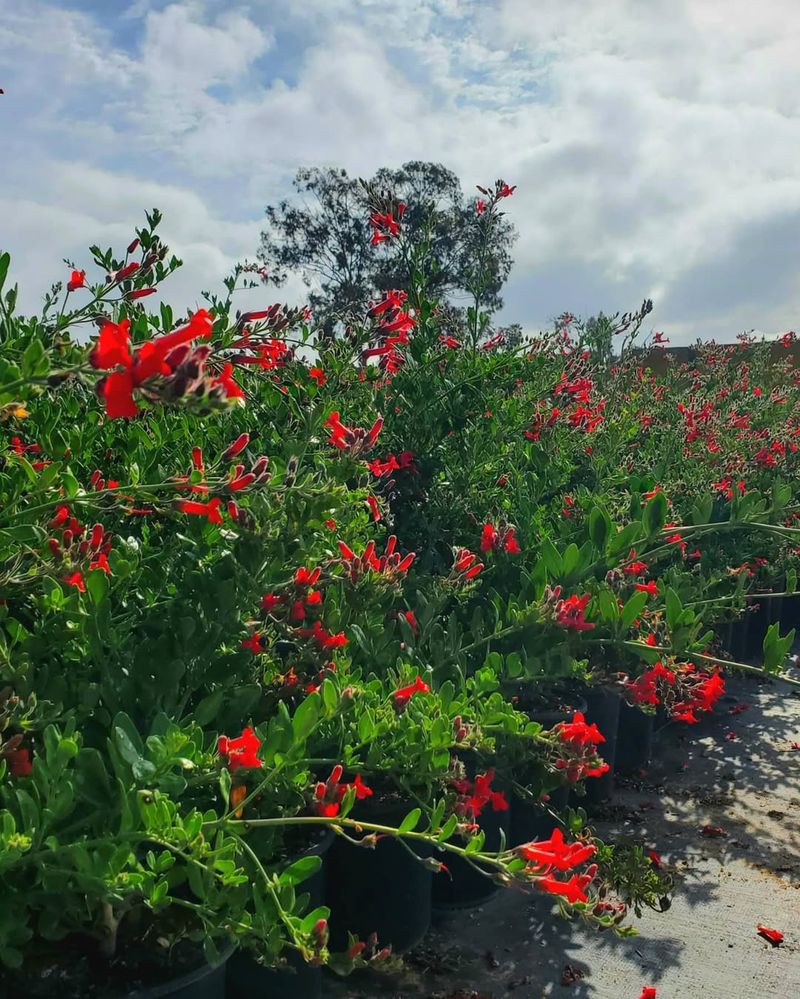
Bright red tubular flowers covering a sprawling green shrub sounds like something you would find in a tropical rainforest. But Island Snapdragon, or Galvezia speciosa, is a true California native that grows naturally on the Channel Islands.
It thrives along the Southern California coast and does surprisingly well inland too, as long as it gets a little afternoon shade during the hottest months.
Hummingbirds go absolutely wild for this plant. The long, narrow red flowers are perfectly shaped for hummingbird beaks, and watching them hover around the blooms is honestly one of the best parts of having this plant in your yard.
It blooms heavily in spring and often keeps flowering on and off through fall.
Island Snapdragon grows fast and fills in empty garden spaces quickly. It can spread up to six feet wide, so give it some room.
Your California Garden Changes Every Week. Your Plan Should Too.
Gardening in California changes quickly throughout the season. Every Friday you’ll receive a simple weekly plan showing exactly what to plant, prune, fertilize, harvest, and protect so you never miss the right timing.
It handles drought well once established and rarely needs pruning unless you want to keep it tidy. Gardeners in California appreciate that it looks like a high-maintenance tropical plant but actually asks for very little.
Water it occasionally during dry summer months and watch it reward you all season long.
3. Chalk Dudleya
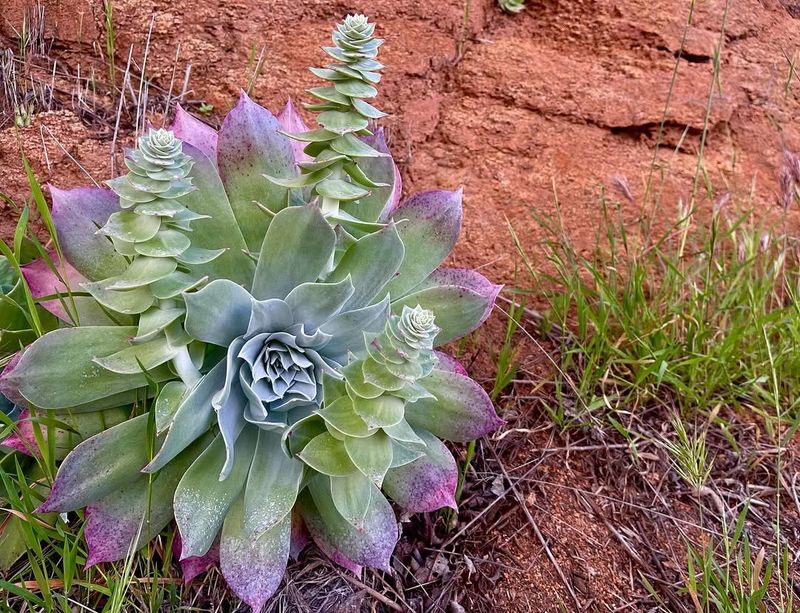
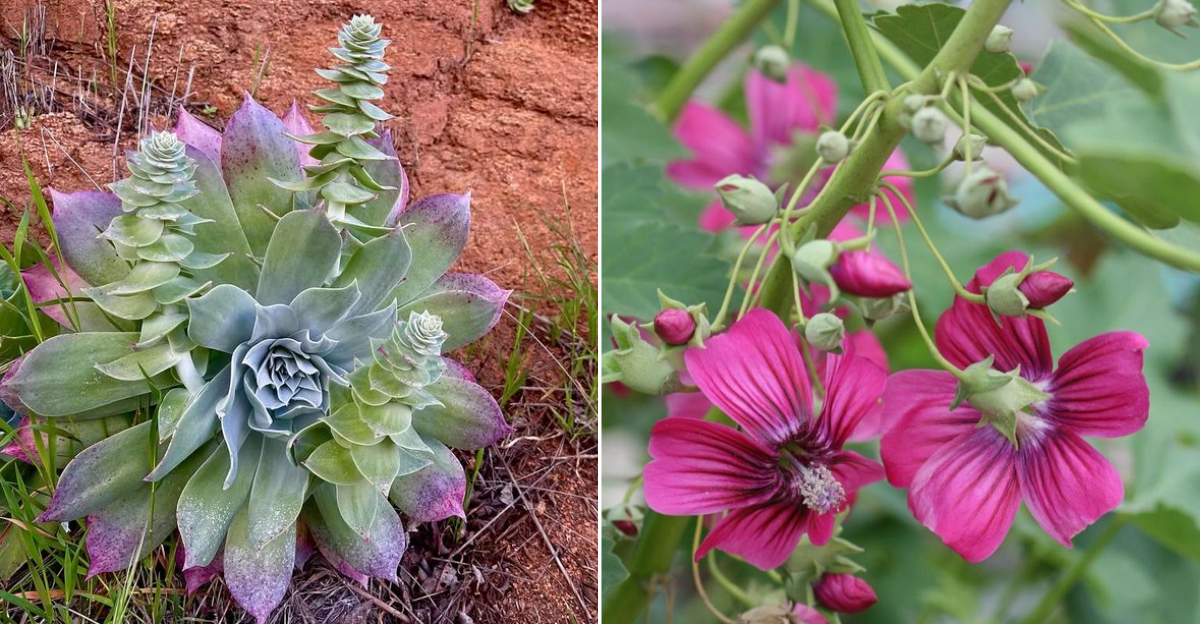
Few plants in California look as otherworldly as Chalk Dudleya. The powdery white coating on its thick, fleshy leaves gives it the appearance of something from a science fiction movie set.
Dudleya pulverulenta grows naturally on rocky cliffs and dry hillsides throughout Southern and Central California, which tells you everything you need to know about how tough it really is.
That white coating is not just for looks. It actually reflects harsh sunlight and helps the plant hold onto water during long dry spells.
The rosette shape can grow impressively large over time, sometimes reaching over a foot across. Tall flower stalks shoot up in late spring, topped with small red or coral-colored blooms that hummingbirds absolutely adore.
Chalk Dudleya is one of the most forgiving succulents you can grow in California. Plant it in fast-draining soil, give it full sun, and water it sparingly.
Overwatering is the one thing to watch out for. It does not like wet roots.
Plant it on a slope or in a raised bed for best results. Gardeners who want a dramatic, sculptural plant that practically takes care of itself will find Chalk Dudleya completely irresistible.
4. Pink Island Mallow
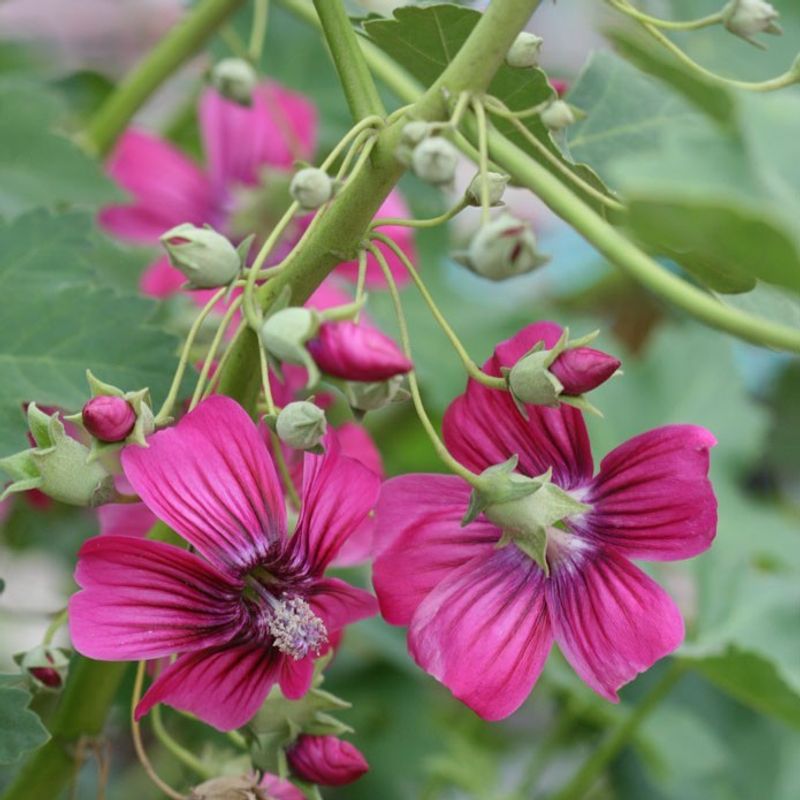
If someone told you this plant was a tropical hibiscus, you would probably believe them without question. Pink Island Mallow, or Lavatera assurgentiflora, produces enormous bright pink blooms that look like something straight out of a Hawaiian garden.
But make no mistake, this beauty is a proud California native, originally from the Channel Islands off the Southern California coast.
It grows fast. Really fast.
In just one season, Pink Island Mallow can shoot up to six or even eight feet tall. This makes it perfect for gardeners who want quick privacy screening or a bold focal point without waiting years for results.
The flowers bloom from spring through fall, giving you months of color with very little effort.
Butterflies and hummingbirds visit the flowers constantly, turning your garden into a lively little habitat. The plant handles coastal winds and salt air better than almost anything else you can grow in California.
Inland gardeners should give it afternoon shade to protect it during heat waves. Prune it back hard in late fall to keep it bushy and full.
Water it deeply but infrequently once established. For sheer visual impact with minimal fuss, this plant is hard to match.
5. Hummingbird Trumpet
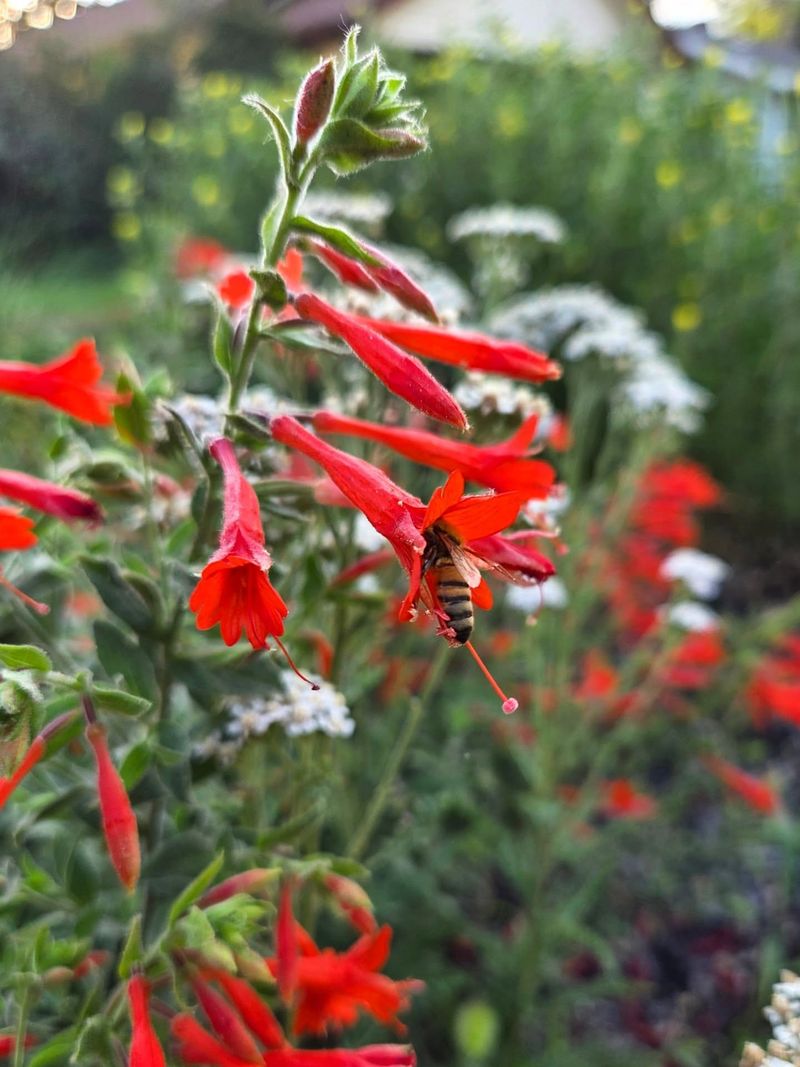
Scarlet red flowers blazing against silvery-green leaves in the middle of a dry California summer sounds almost too good to be true. Hummingbird Trumpet, or Epilobium canum, pulls this off effortlessly every single year.
It blooms from late summer into fall, which is exactly when most other plants in California look tired and sun-beaten. That timing alone makes it a garden superstar.
The name gives away one of its biggest selling points. Hummingbirds treat this plant like their personal fast-food stop.
The tubular flowers are designed perfectly for their long beaks, and you will often see multiple hummingbirds competing for the same patch. Planting a few of these near a window or patio gives you a front-row seat to the action.
It spreads underground through rhizomes, so it can fill in a dry slope or bare patch surprisingly quickly. In fact, it makes an excellent low-water ground cover for sunny California hillsides where erosion can be a problem.
Cut it back to the ground in late winter and it bounces back stronger than ever. No special soil, no fertilizer, no fuss.
Hummingbird Trumpet is the plant that keeps on giving without asking for much in return.
6. Foothill Penstemon
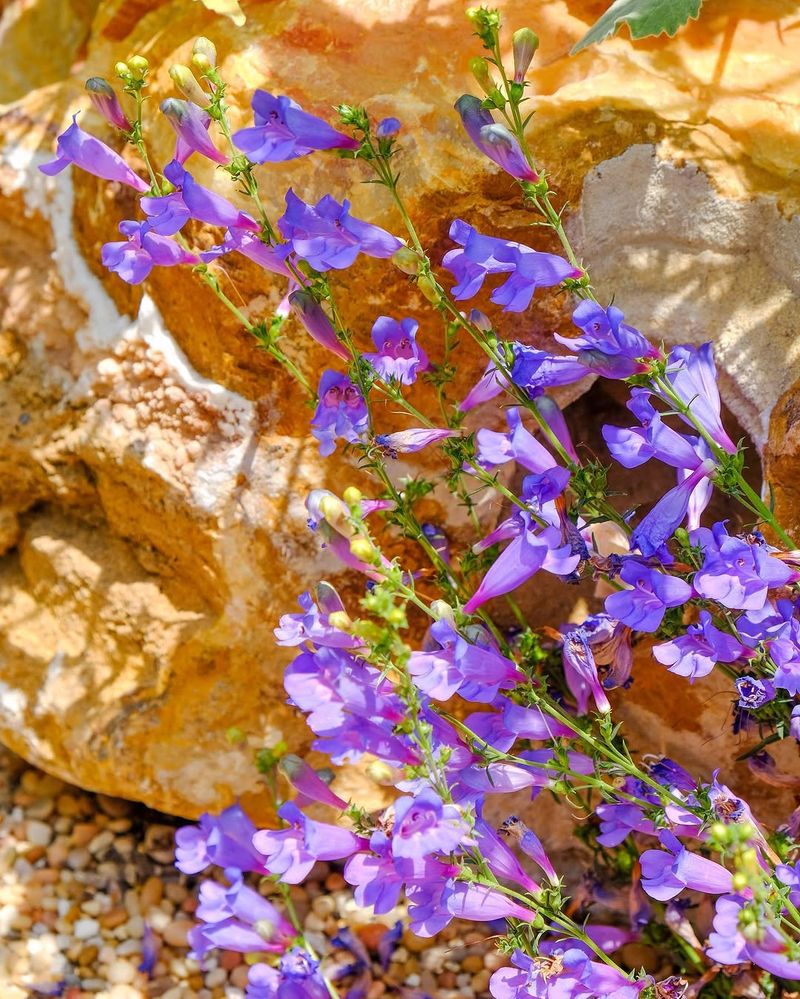
There is something almost magical about the electric blue-purple flowers of Foothill Penstemon rising above a dry California hillside. Penstemon heterophyllus is native to the foothills and chaparral regions throughout California, where it thrives in rocky, well-drained soil under full sun.
It has adapted to survive long dry summers without complaint, which makes it a dream plant for water-conscious gardeners.
The flowers bloom from spring into early summer on tall, graceful spikes. Bees, butterflies, and hummingbirds all show up for the party.
The color is genuinely stunning, ranging from deep violet-blue to soft lavender depending on the variety and growing conditions. It pairs beautifully with silver-leaved plants like Artemisia or Salvia, creating combinations that look professionally designed.
Foothill Penstemon is short-lived by nature, typically lasting three to five years. But it self-seeds readily, meaning new plants pop up around the parent plant and keep the show going.
Deadhead spent flower spikes to encourage more blooms during the season. Plant it in full sun with excellent drainage and avoid overwatering.
Gardeners across California’s inland valleys and coastal foothills have discovered that this plant delivers enormous color payoff for very little effort.
7. Redwood Sorrel
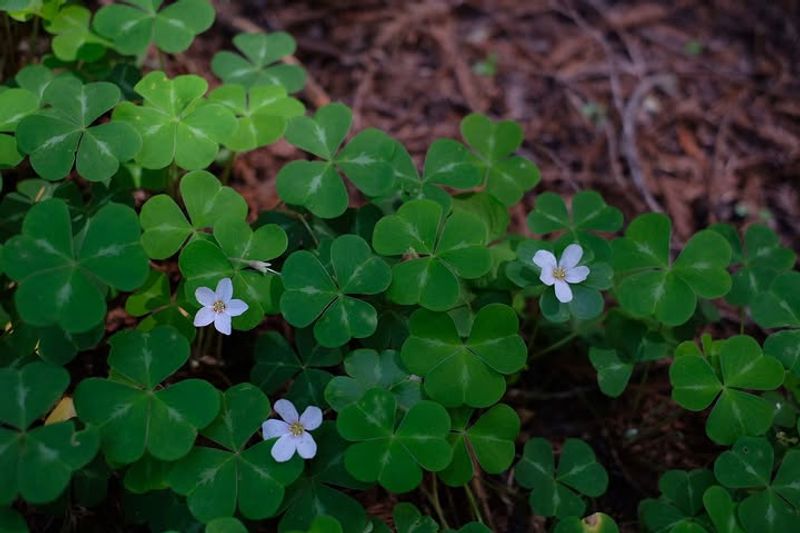
Step into a redwood forest in Northern California and you will almost certainly see a carpet of Redwood Sorrel covering the ground beneath the massive trees. Oxalis oregana creates a lush, emerald-green layer of heart-shaped leaves that looks like something from a fairy tale.
The best part is that it loves deep shade, which means it thrives exactly where most other plants simply refuse to grow.
Delicate pink or white flowers appear in spring, dotting the green carpet with soft color. The leaves themselves are interesting because they fold up at night or during intense heat, almost like the plant is tucking itself in for a nap.
This is a natural adaptation that helps it conserve moisture and protect itself from stress.
Redwood Sorrel spreads gently through underground rhizomes, slowly filling in bare shady spots under trees and along fences. It stays low, usually under six inches tall, making it perfect for areas where you want coverage without height.
Water it regularly during its first year. After that, established plants in coastal California and Northern California gardens need very little supplemental water.
If you have a dark, challenging corner in your yard that nothing seems to love, Redwood Sorrel might be exactly what you have been looking for.
8. Canyon Sunflower
Most sunflowers demand full blazing sun to perform their best. Canyon Sunflower breaks that rule completely and happily.
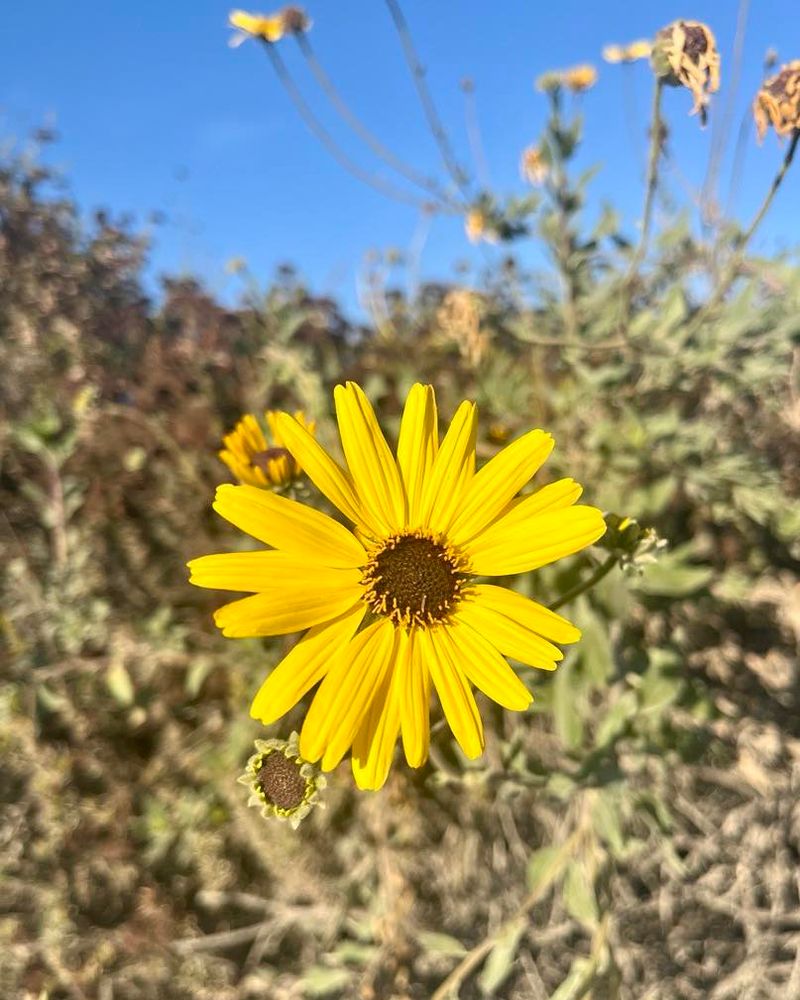
Venegasia carpesioides is a California native that blooms with cheerful yellow flowers in shaded spots where most flowering plants would barely survive. It grows naturally in coastal canyons and shaded hillsides throughout Southern and Central California, which explains its impressive tolerance for low-light conditions.
The flowers are large and daisy-like, bright yellow with a golden center, and they bloom from spring through summer. The leaves are a rich, deep green and stay lush-looking even during dry stretches.
When you put a flowering plant in a shady garden corner and it actually performs, that feels like a small gardening miracle.
Canyon Sunflower grows into a rounded shrub about three to four feet tall and wide. It pairs well with shade-loving ferns, Redwood Sorrel, and other woodland California natives.
Prune it back by about a third after its main bloom period to keep it compact and encourage fresh growth. It handles clay soils better than many other native plants.
Give it occasional deep watering during summer and it will reward you with consistent blooms year after year without much fuss at all.
9. Coral Bells
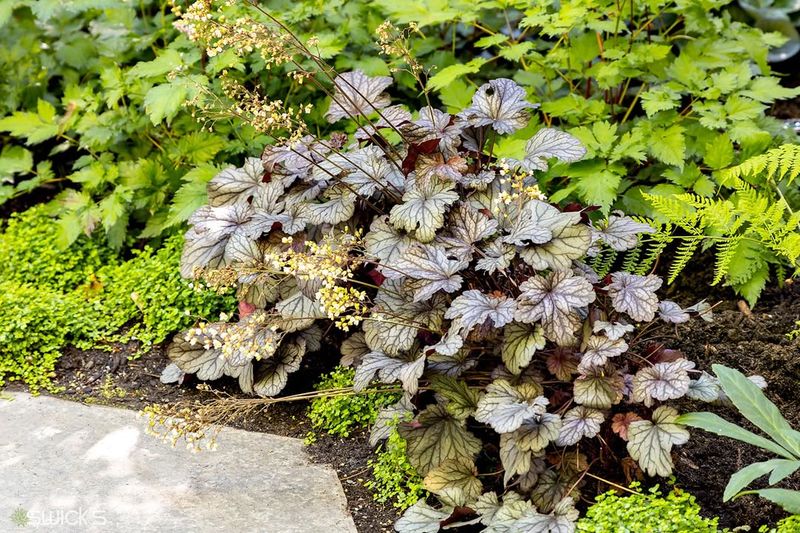
Garden designers across California have been obsessed with Coral Bells for good reason. Heuchera maxima, the California native species, grows naturally on the rocky slopes of the Channel Islands and produces bold, rounded leaves that add texture and drama to any garden space.
Unlike many of its cultivated cousins found in nurseries, this native version is incredibly well-suited to California’s climate and soil conditions.
Tall, wispy flower wands rise above the foliage in spring, covered in tiny bell-shaped flowers that range from white to soft pink. Hummingbirds and bees visit the blooms regularly.
The foliage itself is the main attraction for many gardeners, with large, rounded leaves that catch the light beautifully and provide visual interest all year long.
Coral Bells thrives in partial shade, making it a perfect companion for shady borders, woodland gardens, and spots under large trees throughout California. It handles both coastal and inland conditions with ease.
Water it moderately during summer and cut back old flower stalks after blooming to keep the plant looking fresh. It rarely needs fertilizer and is generally resistant to most common garden pests.
For a plant that delivers year-round beauty with minimal demands, Coral Bells earns its place in any California garden without question.