9 Climbing Plants That Will Cover Your Fence Fast In Georgia
A bare fence in Georgia can look unfinished, especially once everything else in the yard starts filling in. Climbing plants change that quickly.
The right vines do not creep slowly for years. They take hold, stretch upward, and begin covering vertical space within a single growing season.
Georgia’s long, humid summers create ideal conditions for fast growth, which means some climbers can transform a plain fence into a living backdrop sooner than expected.
Strong sun, steady rain, and warm soil push vigorous varieties to climb higher and spread wider in less time.
Choose the right fast-growing climbers, and that empty fence turns into privacy, color, and texture much sooner than you might think.
1. Trumpet Vine Climbs Fast And Covers Large Fences Quickly
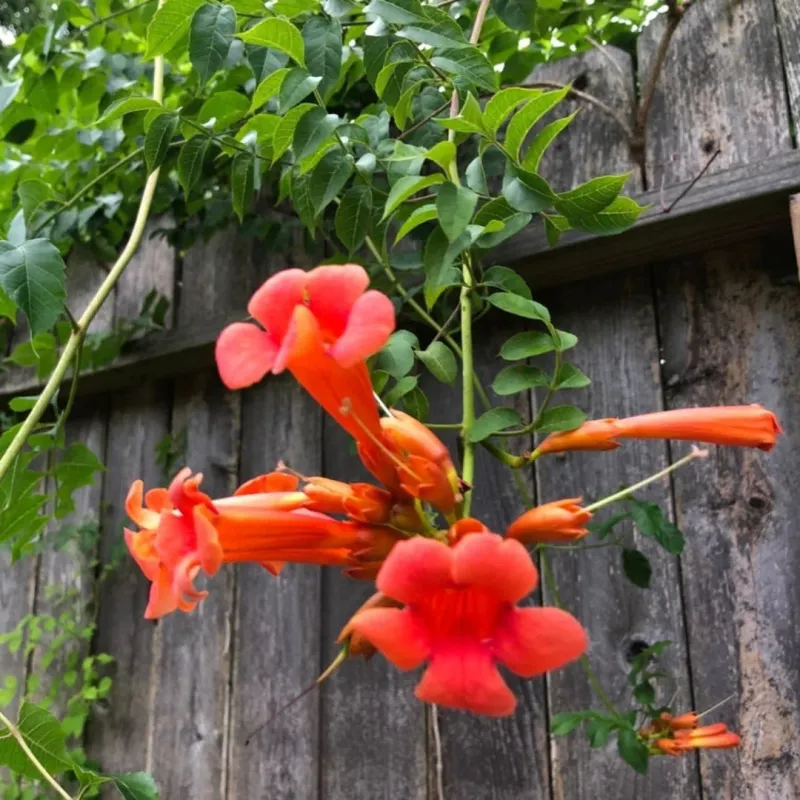
Orange trumpet-shaped blooms catch your eye from across the yard when this powerhouse vine hits its stride.
Growing 10 to 20 feet in a single season, trumpet vine latches onto fences with aerial rootlets that grip wood, metal, or vinyl surfaces without help.
Georgia gardeners love how hummingbirds flock to these nectar-rich flowers from late spring through early fall.
Plant this vigorous grower in full sun for the best flower production and fastest coverage. It tolerates Georgia’s clay soil and handles drought once established, making it perfect for low-maintenance landscapes.
The vine goes dormant in winter but bounces back aggressively each spring.
Watch for suckers spreading from the roots, which can pop up several feet away from the main plant. Prune heavily in late winter to control spread and encourage bushier growth along your fence line.
The woody stems create a thick screen that provides year-round structure even after leaves drop.
Consider this vine for large fences or areas where you need quick coverage and don’t mind regular pruning. Its aggressive nature makes it unsuitable for small spaces, but perfect for covering long stretches of chain-link or privacy fencing across Georgia properties.
2. Crossvine Grows Rapidly And Handles Georgia Heat
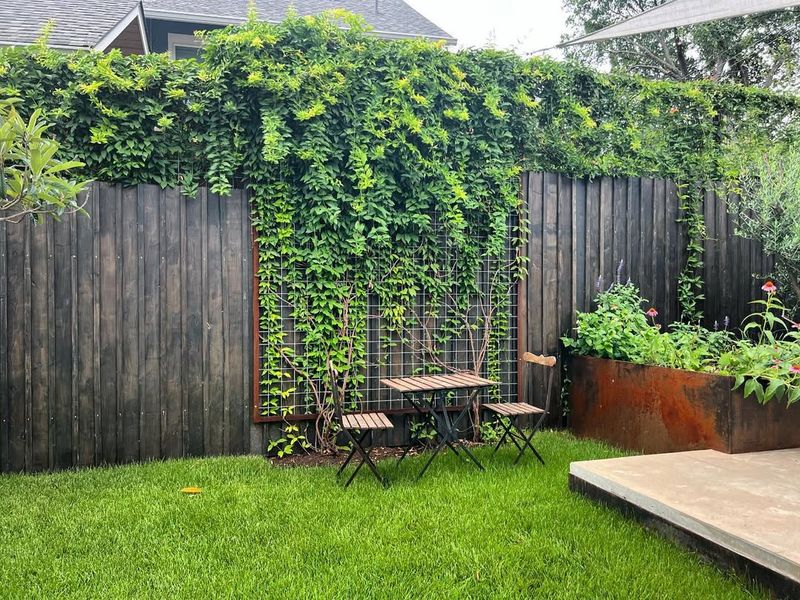
Glossy evergreen leaves stay on the vine year-round in most Georgia locations, providing constant fence coverage through winter months.
Crossvine produces stunning clusters of trumpet-shaped flowers in shades ranging from orange to red, sometimes with yellow throats that attract hummingbirds and butterflies.
Growth rates reach 15 to 20 feet annually once established.
Native to the southeastern United States, this climber handles Georgia’s humidity and heat without breaking a sweat. It climbs using tendrils that wrap around fence wires or wooden slats, creating secure attachment without damaging surfaces.
Partial shade to full sun both work well, though flowering improves with more direct light.
Water regularly during the first growing season to establish deep roots. After that, crossvine tolerates dry spells common in Georgia summers.
The vine blooms heaviest in spring but often produces scattered flowers through fall.
Prune after the main flowering period ends to shape growth and remove any wayward stems. Unlike trumpet vine, crossvine stays more manageable and won’t take over your entire yard.
Its semi-evergreen nature means your fence looks good even during January and February when other vines look bare and lifeless across Georgia landscapes.
3. Coral Honeysuckle Twines Fast Without Becoming Invasive
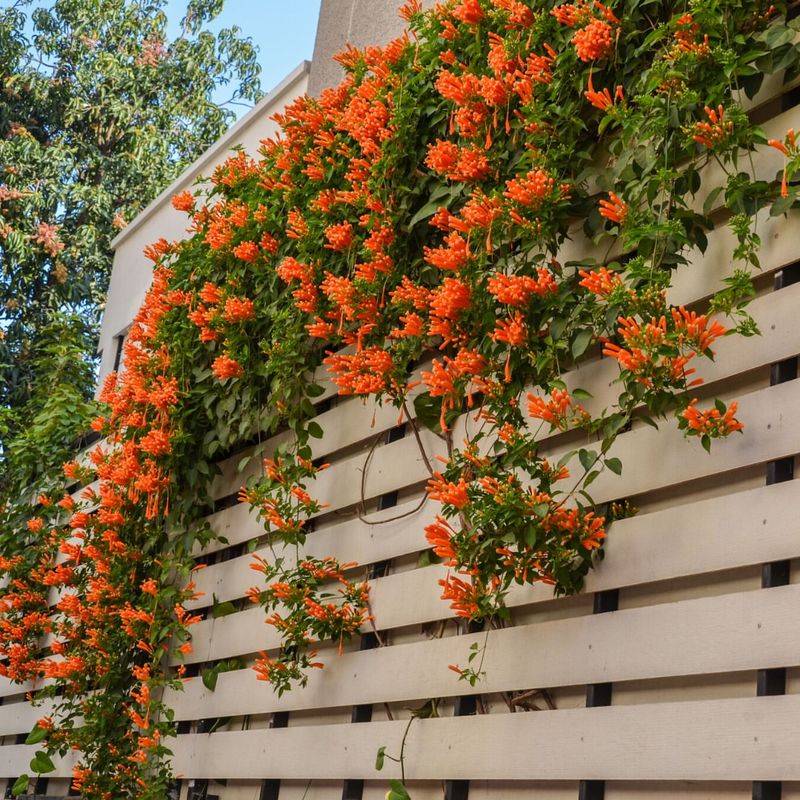
Bright coral-red tubular flowers appear in waves from spring through frost, making this native honeysuckle a standout choice for Georgia fences.
Growing 10 to 15 feet per season, coral honeysuckle twines around supports without the aggressive spreading that gives its invasive cousin, Japanese honeysuckle, such a bad reputation.
Hummingbirds visit the blooms constantly throughout warm months.
Blue-green leaves create an attractive backdrop for the showy flowers, and the vine stays semi-evergreen in southern Georgia locations.
It thrives in full sun but also performs well in partial shade, making it versatile for different fence exposures around your property.
Established plants handle Georgia’s summer heat and occasional drought without complaint.
Plant coral honeysuckle in well-draining soil and water regularly the first year. After establishment, it needs minimal care beyond occasional pruning to keep growth within bounds.
The vine produces small red berries after flowering that birds enjoy eating in fall and winter.
Choose this honeysuckle when you want reliable coverage without constant maintenance or worry about it escaping into natural areas.
Georgia gardeners appreciate how it provides color, wildlife value, and quick fence coverage without becoming a nuisance plant that requires aggressive control measures every season.
4. Carolina Jessamine Spreads Quickly With Evergreen Coverage
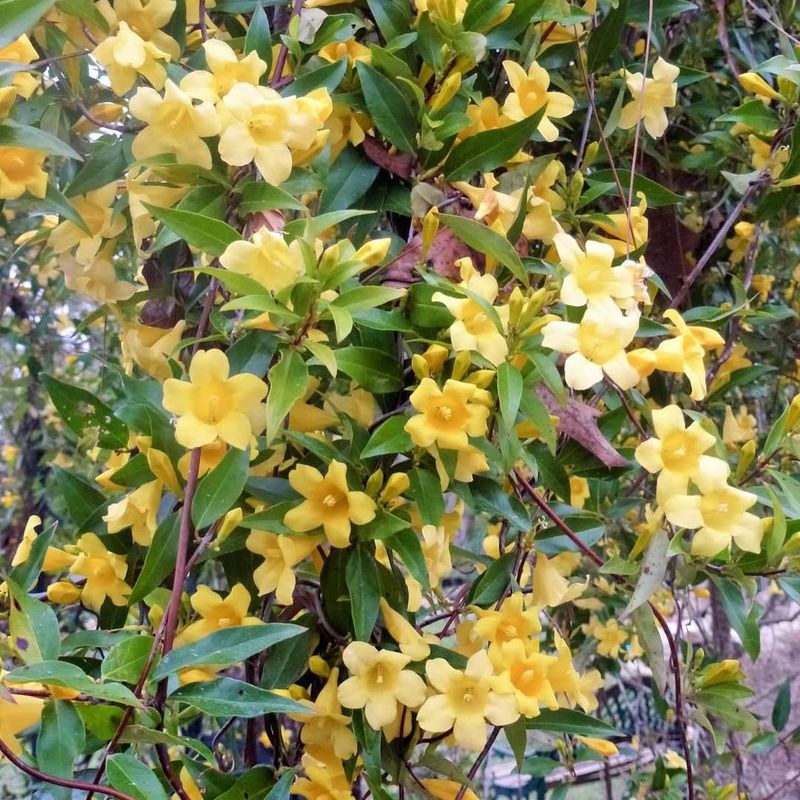
Bright yellow flowers burst open in late winter and early spring, often appearing when snow still covers ground in northern Georgia. This evergreen vine grows 15 to 20 feet annually, creating dense coverage that looks good twelve months a year.
The fragrant blooms smell sweetly of jasmine and signal spring’s arrival before most other plants wake up.
Carolina jessamine climbs by twining stems that wrap around fence rails, wires, or posts without needing ties or training. Full sun produces the heaviest flowering, but the vine also grows well in partial shade across Georgia landscapes.
Its evergreen nature means your fence never looks bare, even during the coldest winter months.
Establish plants with regular watering the first season, then reduce frequency as roots spread deep. The vine tolerates Georgia’s clay soil and bounces back quickly from occasional cold snaps that might damage tender new growth.
Prune after flowering ends to control size and shape.
Keep in mind that all parts of Carolina jessamine contain toxic compounds, so plant it where pets and children won’t be tempted to chew on stems or flowers.
Despite this caution, it remains one of Georgia’s most popular flowering vines for quick fence coverage, reliable performance, and year-round good looks that brighten even dreary winter days.
5. Confederate Jasmine Fills Fences With Dense Growth
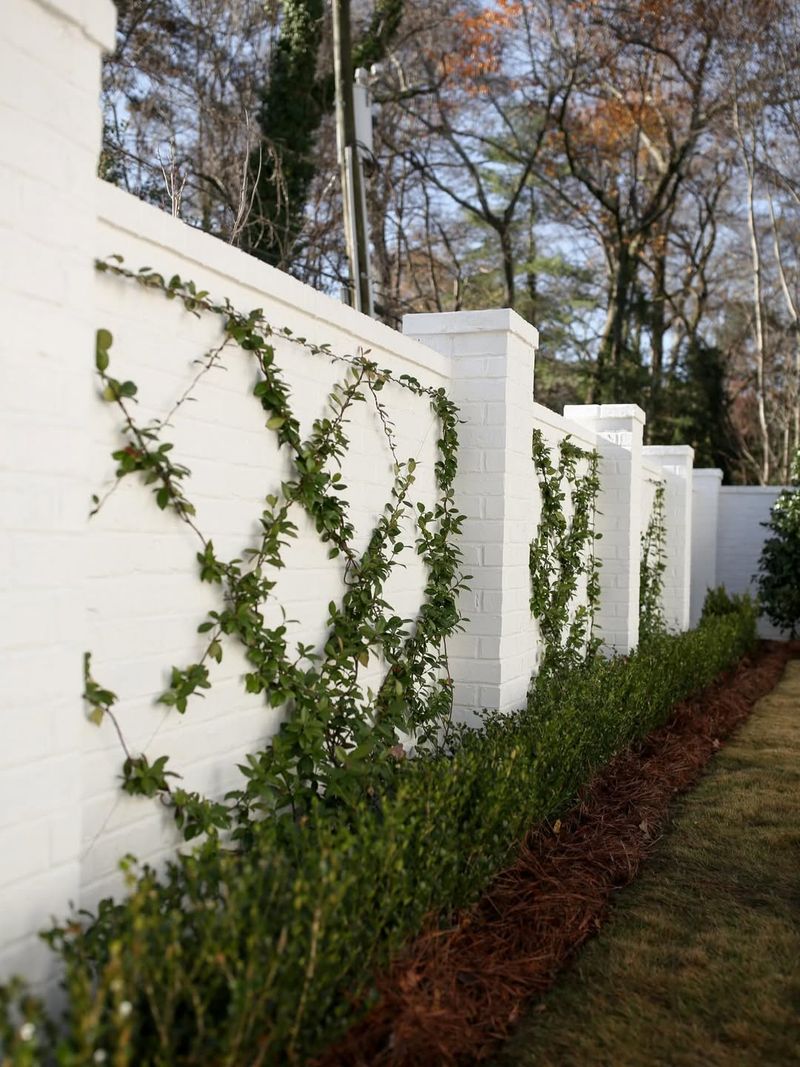
White pinwheel-shaped flowers release an intoxicating fragrance in late spring that fills entire yards with sweet perfume.
Despite its common name, Confederate jasmine isn’t a true jasmine but a vigorous evergreen vine that grows several feet per season once established.
The glossy dark green leaves create thick coverage that blocks views year-round.
Twining stems wrap tightly around fence supports, creating a living wall that provides excellent privacy and noise reduction. Confederate jasmine tolerates full sun to partial shade and adapts to various soil types common across Georgia properties.
It handles heat, humidity, and drought conditions once roots establish deeply.
Plant in spring or fall for best results, spacing multiple plants 3 to 5 feet apart for faster fence coverage. Water regularly during establishment, then reduce frequency as the vine matures.
The flowers attract butterflies and other pollinators during their peak bloom period.
Confederate jasmine occasionally suffers scale insect problems in Georgia, but these usually don’t cause serious damage.
The vine’s dense growth makes it perfect for covering chain-link fences or creating green screens along property lines where you need both beauty and function from your climbing plants.
6. Wisteria Covers Structures Aggressively In A Few Seasons
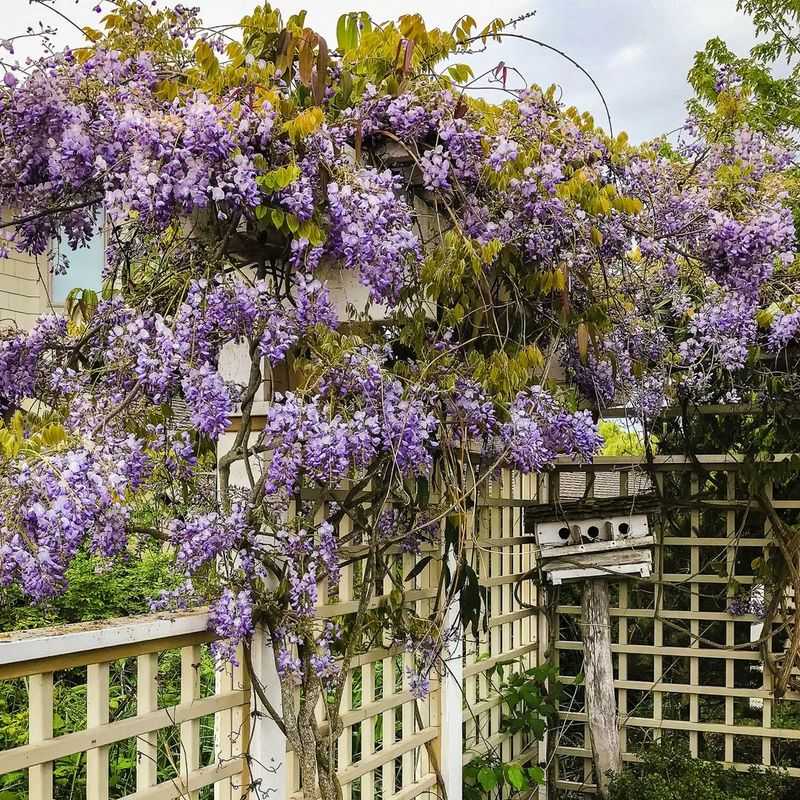
Cascading clusters of fragrant purple, blue, or white flowers create breathtaking displays in spring when wisteria reaches peak bloom.
This woody vine grows with incredible vigor, often adding 10 feet or more per year and eventually reaching 25 to 30 feet in length.
Georgia’s climate suits wisteria perfectly, providing the warm summers and mild winters it needs to thrive.
Strong fence construction becomes essential because mature wisteria vines grow heavy and can damage weak supports. The twining stems wrap around posts and rails with tremendous strength, potentially warping or breaking inadequate structures.
Choose only sturdy wooden or metal fences for this powerful climber.
Plant wisteria in full sun for best flowering and fastest growth. It tolerates various soil types across Georgia but performs best with regular watering during establishment.
Chinese wisteria blooms before leaves emerge, while American wisteria flowers after foliage develops and proves less aggressive.
Heavy pruning becomes necessary twice yearly to control growth and encourage flowering. Summer pruning removes excess vegetative growth, while winter pruning shapes the vine and promotes flower bud development.
Without regular pruning, wisteria quickly overwhelms fences and spreads into trees or onto buildings.
Georgia gardeners who commit to proper maintenance enjoy spectacular spring displays that make this demanding vine worth the extra effort required for success.
7. Passionflower Spreads Rapidly During The Growing Season
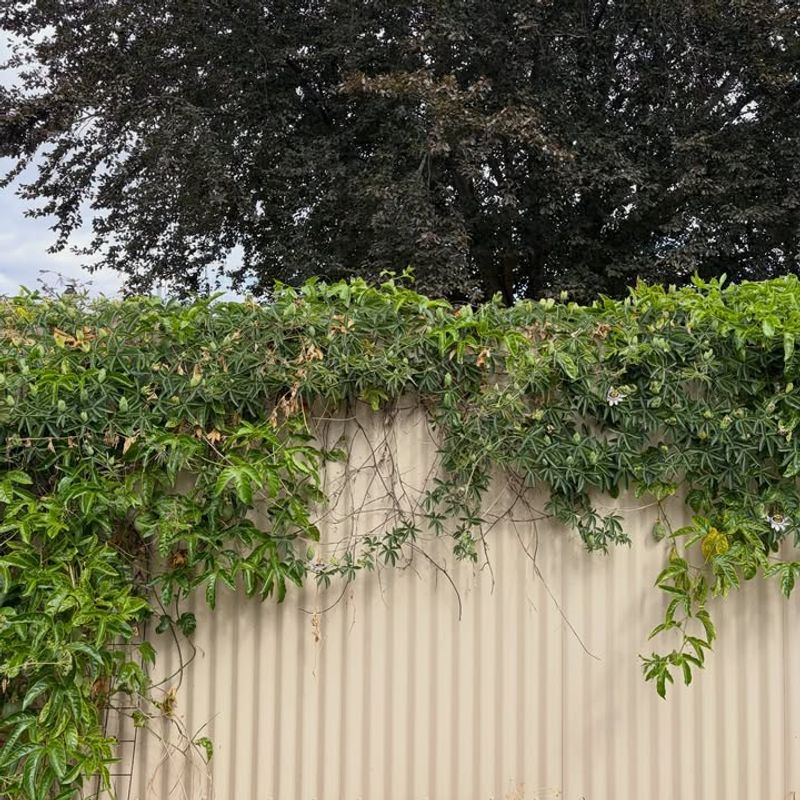
Exotic-looking flowers with purple and white layered petals and prominent corona filaments stop visitors in their tracks. Passionflower vines grow quickly during Georgia’s warm season, often reaching 15 to 20 feet by late summer from spring planting.
The unusual blooms appear continuously from June through September, followed by egg-shaped fruits that attract wildlife.
Tendrils reach out and grab onto fence wires, slats, or nearby plants as the vine climbs upward and outward.
Native varieties handle Georgia’s climate better than tropical species, surviving winter cold in most areas and returning from roots each spring.
The lobed leaves create an attractive texture that contrasts nicely with other garden plants.
Full sun produces the most flowers, though passionflower tolerates partial shade in southern Georgia locations where afternoon sun gets intense. Plant in well-draining soil and water regularly during active growth.
The vine spreads by underground runners that can pop up several feet from the original plant.
Gulf fritillary butterflies lay eggs on passionflower leaves, and their caterpillars feed on the foliage without seriously harming healthy vines. This wildlife connection makes passionflower valuable for Georgia gardeners interested in supporting native pollinators.
Prune back lifeless stems in late winter before new growth emerges, and thin out excessive runners to prevent the vine from spreading beyond desired boundaries around your fence line.
8. Hyacinth Bean Vine Covers Fences In One Warm Season
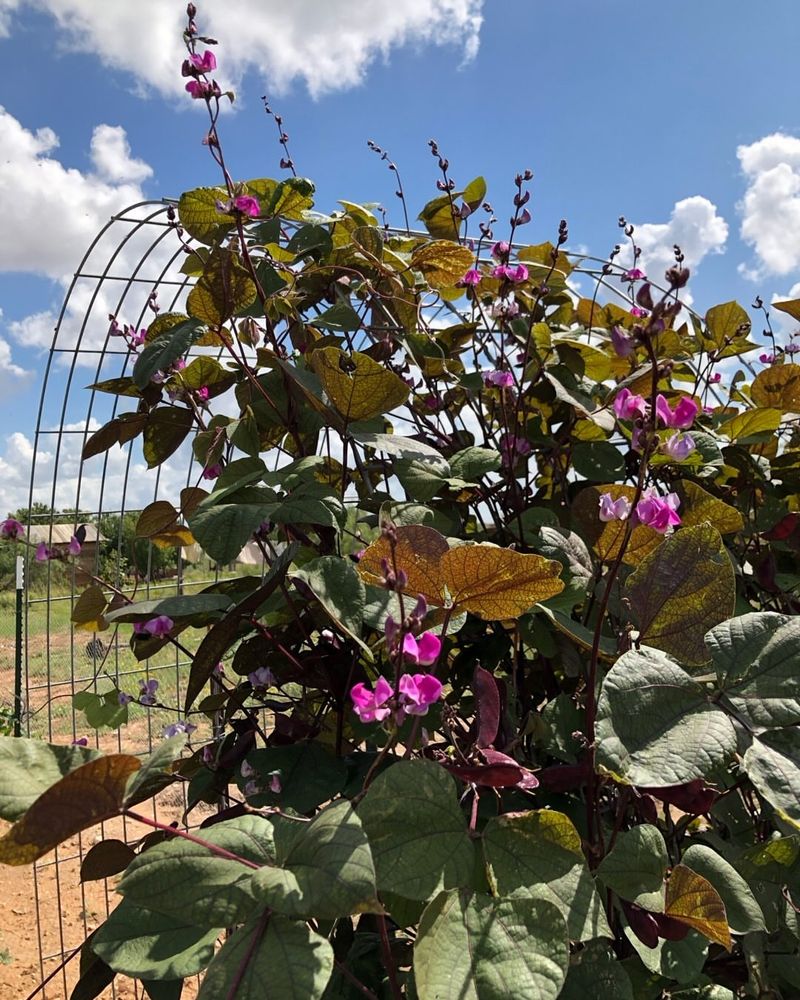
Purple stems and deep green leaves create striking color combinations before flowers even appear on this fast-growing annual vine. Hyacinth bean rockets upward during Georgia’s hot summer months, easily reaching 10 to 15 feet from seed planted in late spring.
Pink-purple flower clusters bloom heavily from midsummer through fall, followed by glossy purple seed pods that add ornamental interest.
Annual growth means you start fresh each year, making hyacinth bean perfect for rental properties or when you want to experiment with different fence coverage options.
Seeds germinate quickly when soil warms above 65 degrees, and vines establish rapidly with regular watering.
Full sun produces the best growth and flowering across Georgia landscapes.
The twining stems wrap around fence supports without help, creating dense coverage by midsummer. Both flowers and pods attract attention from visitors who often ask about this unusual vine.
Save dried pods in fall to collect seeds for next year’s planting, ensuring free plants for seasons to come.
Hyacinth bean tolerates Georgia’s heat and humidity better than many annual vines, continuing to grow and flower even during August’s most oppressive weather. Plant seeds directly where you want vines to grow after the last frost date passes.
Space seeds 6 inches apart along your fence line for quick, continuous coverage that lasts until the first frost ends the growing season.
9. Morning Glory Climbs Quickly And Creates Instant Coverage
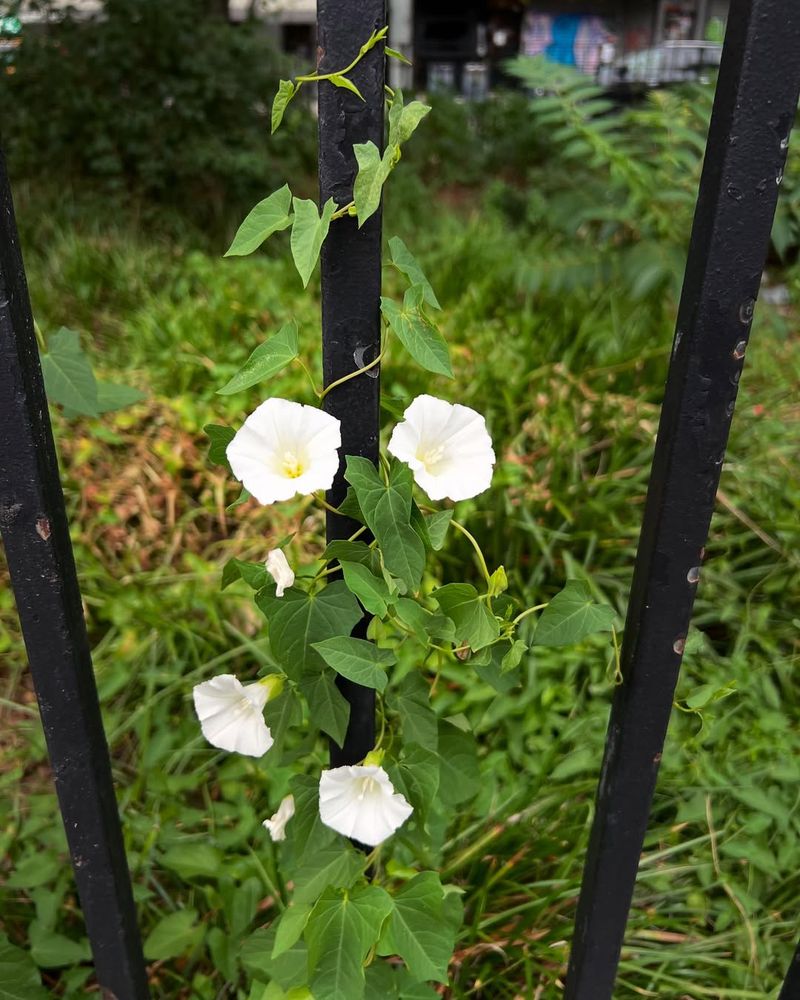
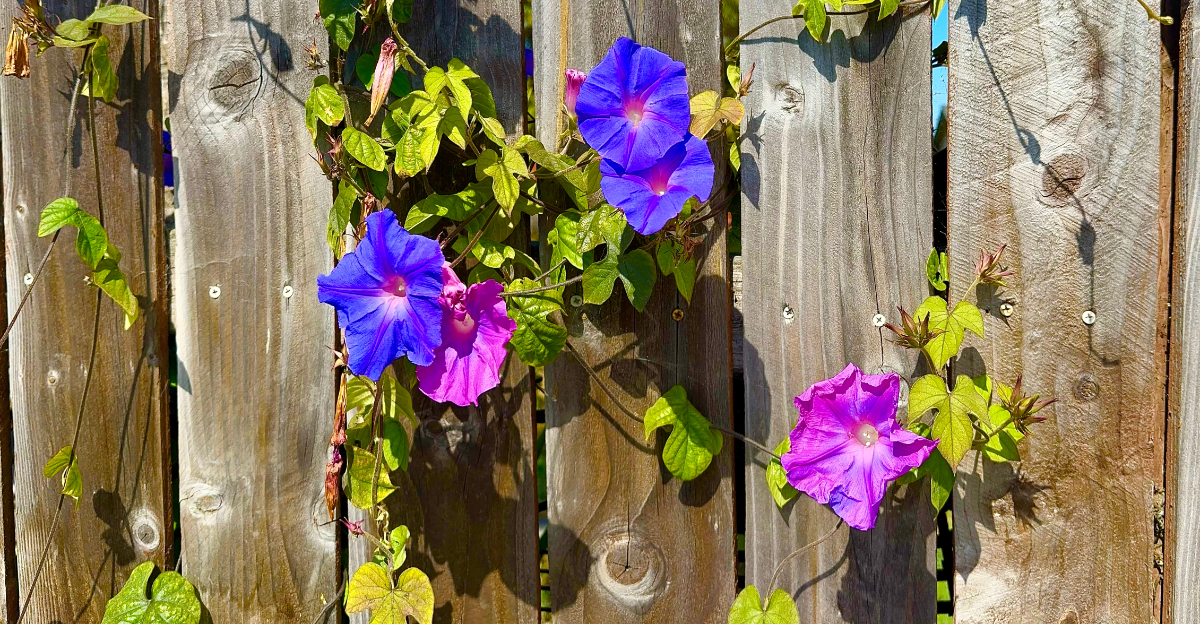
Trumpet-shaped flowers in shades of blue, purple, pink, or white open with sunrise and close by afternoon, giving this annual vine its descriptive common name.
Morning glory grows with amazing speed once warm weather arrives in Georgia, often climbing 10 to 15 feet in just a few months from seed.
The heart-shaped leaves create dense coverage that quickly transforms bare fences into green walls.
Seeds germinate easily when planted directly in garden soil after frost danger passes in spring. Nick hard seed coats with a file or soak overnight in water to speed germination and improve success rates.
Morning glory prefers full sun but tolerates light shade in southern Georgia where summer sun gets particularly intense.
Vines twine counterclockwise around fence supports, wrapping tightly as they climb upward. Water regularly during establishment, then reduce frequency as plants mature and roots spread.
Morning glory handles Georgia’s heat without complaint and continues flowering until frost ends the growing season.
Watch for reseeding in subsequent years, as dropped seeds often germinate the following spring without replanting. Some gardeners consider this convenient, while others view it as weedy behavior requiring control.
Choose sterile varieties if you want flowers without volunteer seedlings appearing throughout your garden. Morning glory provides the fastest coverage of any annual vine, making it perfect for temporary screens or when you need quick results on Georgia fences.