Common Mistakes Texas Plant Owners Make With Alocasia Indoors
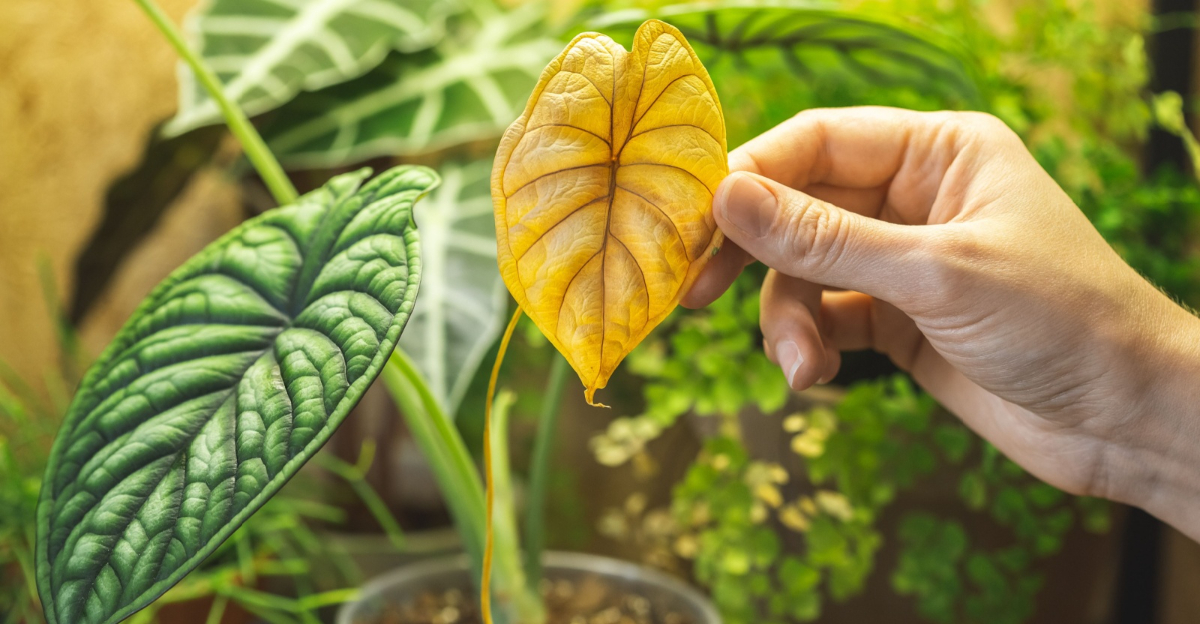
Ever feel like your Alocasia looks great one week and suddenly struggles the next? You are not alone, especially in Texas homes where conditions can shift quickly.
Bright sun pouring through windows, dry air from constant AC use, and changing indoor temperatures can make things tricky for these tropical plants.
Alocasia are especially sensitive to changes in moisture, humidity, and light, so even small care missteps tend to show up fast as yellowing leaves or drooping stems.
The good news is that once you understand what is happening, most of these issues are easy to adjust, helping your plant settle in and look its best again.
1. Giving Inconsistent Water
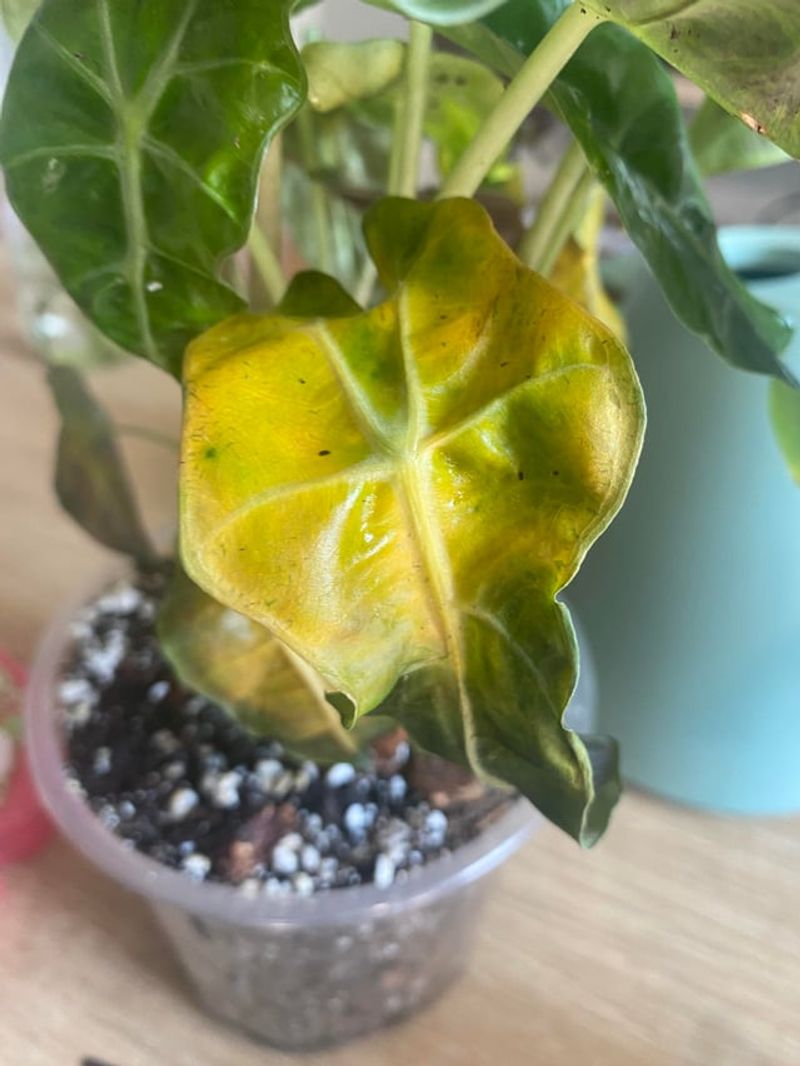
Watering an Alocasia on a random schedule is one of the most common habits plant owners in Texas fall into, and it tends to cause more trouble than people expect. These plants want moisture, but they do not want to sit in wet soil for days on end.
When watering happens too often one week and then gets skipped the next, the roots struggle to find a reliable rhythm, and the plant shows its frustration through yellowing leaves and wilting stems.
In Texas, indoor conditions shift quite a bit depending on the season. During hot summers, the air conditioning runs almost nonstop, pulling moisture from the soil faster than you might think.
In cooler months, the soil may stay damp much longer than expected. Checking the soil before each watering session makes a real difference.
Stick your finger about an inch or two into the soil, and if it still feels moist, give it another day or two before adding more water.
A consistent routine built around what the soil actually needs, rather than a set calendar day, tends to work much better for Alocasia grown indoors in Texas.
Using pots with drainage holes is equally important, since water that pools at the bottom can lead to root rot over time.
Developing a simple checking habit can keep your plant looking healthy and strong through every season.
2. Using Heavy Poor Draining Soil
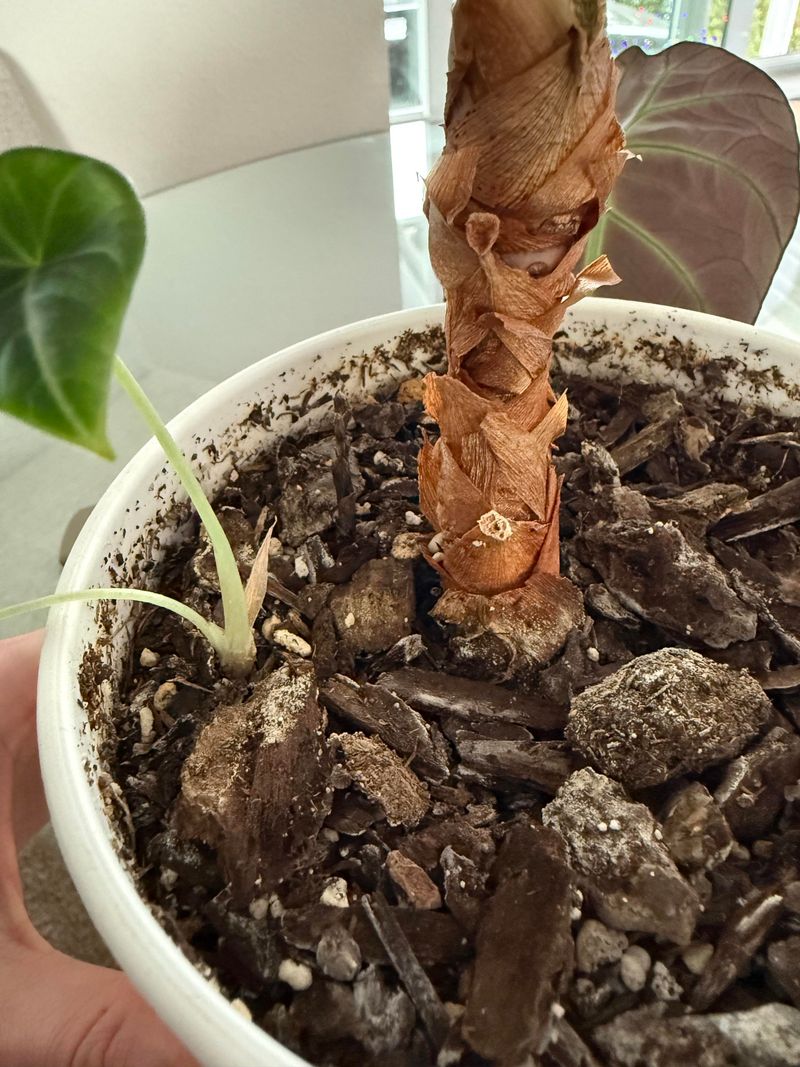
Soil choice might not seem like the most exciting part of plant care, but it makes an enormous difference for Alocasia grown indoors in Texas.
Many plant owners reach for standard all-purpose potting mix straight off the shelf, not realizing that heavy, dense soil holds far too much water for these tropical plants.
When roots sit in compacted, poorly draining soil, they are cut off from oxygen, which weakens the plant steadily over time.
Texas homes can complicate this further. During the long, hot summer months, you might water more frequently to compensate for dry indoor air, and if the soil drains poorly, that extra water just builds up around the roots.
Even during cooler seasons, heavy soil stays wet long after watering, leaving little room for roots to breathe properly.
A well-structured mix designed for Alocasia should feel light and airy in your hands. Combining a quality potting mix with additions like perlite, coarse sand, or orchid bark creates the kind of loose, fast-draining environment these plants thrive in.
The goal is soil that holds just enough moisture to keep roots hydrated while allowing excess water to flow through freely.
Repotting your Alocasia into a better mix, even if the plant looks okay right now, can prevent a lot of future problems and support steadier, more vigorous growth year-round.
3. Not Providing Enough Humidity
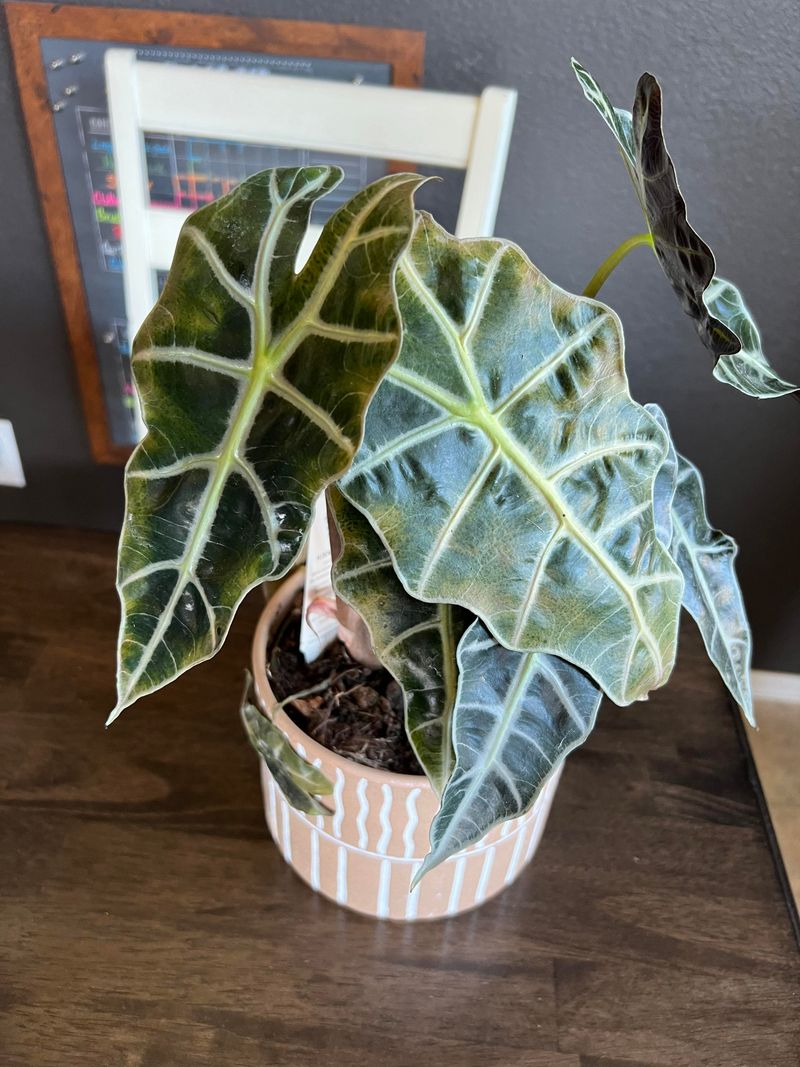
Texas summers are legendary for their heat, but step inside almost any home and you will find the opposite problem for tropical plants: air that is remarkably dry.
Air conditioning systems, while absolutely essential during those scorching Texas months, strip indoor air of moisture at a steady rate.
Alocasia come from humid tropical environments, and when indoor humidity drops too low, they respond quickly with brown leaf edges, curling leaves, and a generally tired appearance.
Most Texas homes hover somewhere between 30 and 50 percent relative humidity indoors during peak AC season, while Alocasia genuinely prefer levels closer to 60 percent or higher. That gap might not sound dramatic, but the plant feels it.
Misting leaves is a popular remedy, though it tends to offer only brief relief and can sometimes encourage fungal issues if leaves stay wet too long.
More effective solutions include placing a small humidifier near your Alocasia, grouping it with other houseplants to create a shared pocket of slightly more humid air, or setting the pot on a shallow tray filled with pebbles and water, making sure the pot itself sits above the waterline.
Running the humidifier regularly during the months when AC use is highest can make a noticeable difference in how vibrant and full your Alocasia looks.
Consistent humidity support is one of the more impactful adjustments Texas plant owners can make.
4. Placing In Direct Harsh Sunlight
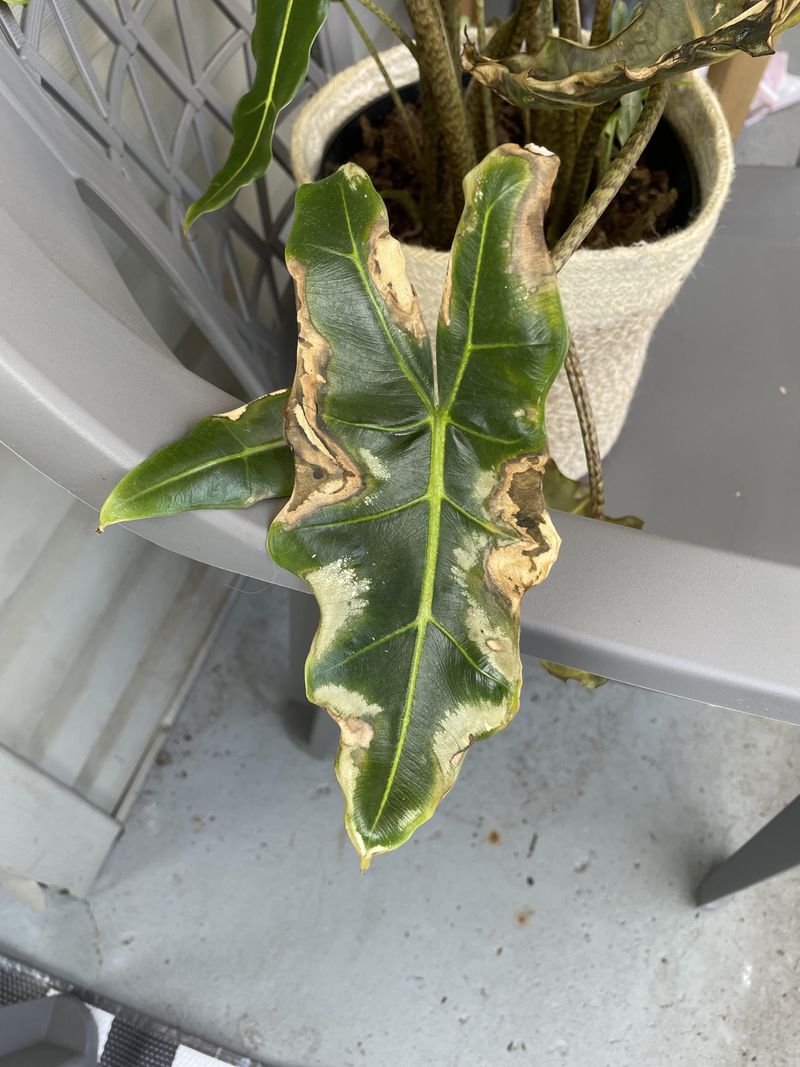
Bright Texas sunlight is something locals know well, and while it feels wonderful on a cool morning, it can be genuinely harsh for tropical houseplants sitting close to a window.
Alocasia prefer bright, indirect light, meaning they want a well-lit room without the direct rays of the sun landing on their large, dramatic leaves.
When direct sunlight hits those leaves for extended periods, the damage shows up fast – bleached patches, scorched brown spots, and crispy edges are all signs the plant is getting too much intense light.
South and west-facing windows in Texas homes can be especially intense, particularly from late spring through early fall when the sun angle is high and the light is strong for most of the day.
Placing an Alocasia directly in front of one of these windows without any filtering is a common setup mistake, even though the bright light might seem like a good thing for a plant that likes light.
Moving the plant a few feet back from a bright window, or using a sheer curtain to soften the incoming rays, tends to work well.
East-facing windows often provide the gentlest natural light in a Texas home, offering bright morning sun that is much less intense than afternoon exposure.
Finding that sweet spot where the plant gets plenty of light without direct sun contact can transform how an Alocasia looks and grows indoors.
5. Keeping It In Low Light
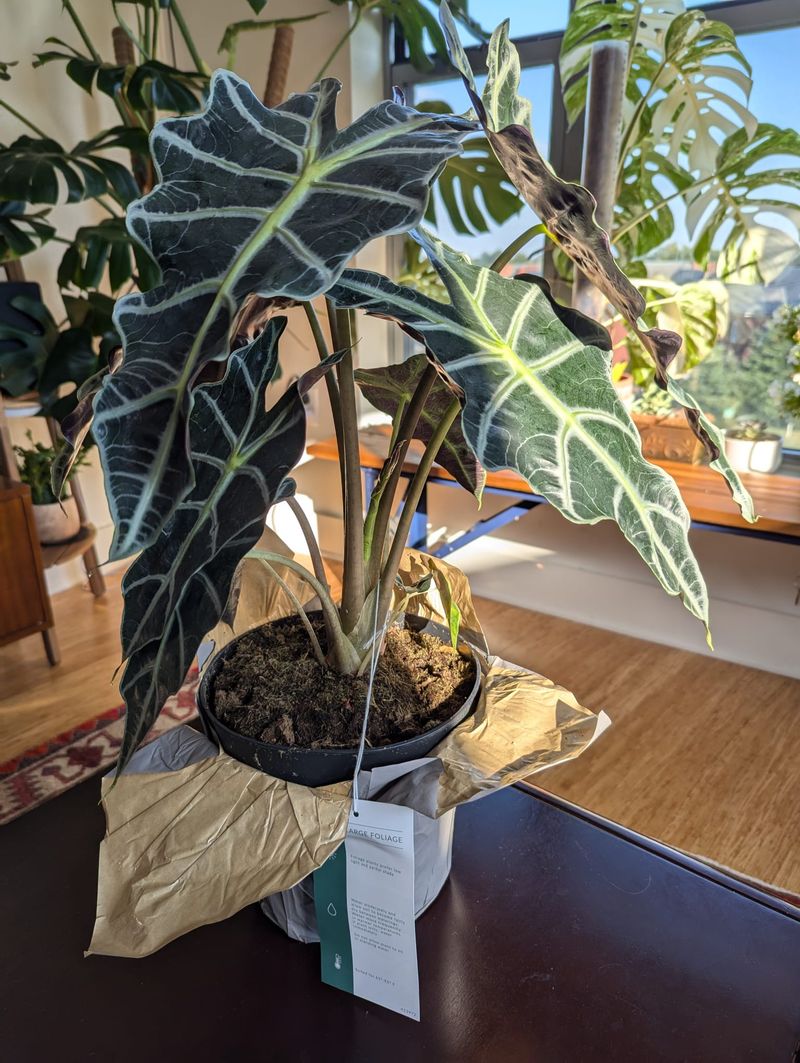
While direct Texas sun can scorch Alocasia leaves, tucking the plant away in a dark corner is equally problematic and perhaps even more common.
Many plant owners choose a spot based on how the plant looks decoratively rather than how much light actually reaches that area.
Alocasia need a meaningful amount of bright, indirect light to fuel their growth, and in low-light conditions, they slow down considerably, sometimes producing smaller leaves, leaning awkwardly toward any available light source, or simply stopping new growth altogether.
Texas homes can be tricky because the same features that keep a house cool, such as deep overhangs, tinted windows, and heavy blinds, also reduce the amount of usable light reaching your plants.
A spot that looks reasonably bright to your eyes might not be delivering enough light energy for a plant that evolved in the open canopy of tropical forests.
Relocating your Alocasia closer to a bright window, ideally one that receives several hours of indirect light throughout the day, can lead to a surprisingly quick improvement.
If natural light is genuinely limited in your space, a simple grow light set on a timer can fill the gap effectively.
Aim for somewhere between 10 and 12 hours of light exposure daily when relying on artificial sources. Giving your Alocasia the light it needs is one of the most straightforward ways to encourage fuller, more vigorous growth indoors in Texas.
6. Overwatering During Dormancy
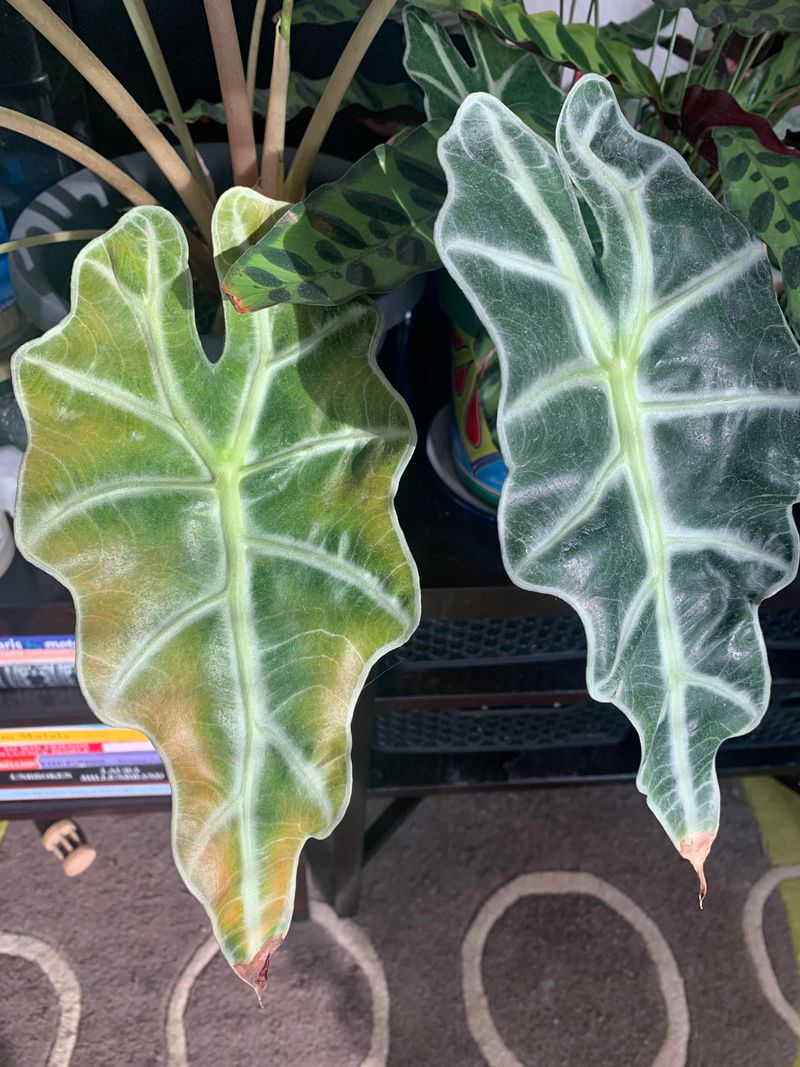
Fall and winter in Texas might not look like a dramatic seasonal shift compared to northern states, but indoor plants still respond to the changes in day length and light intensity that come with cooler months.
Alocasia often enter a slower growth phase during this period, sometimes called dormancy, where they need far less water than they do during the active spring and summer growing season.
Continuing to water at the same frequency year-round is a mistake that catches many Texas plant owners off guard.
When growth slows, the plant is simply not using water at the same rate it does in warmer, brighter months. Soil that drained comfortably in July might stay wet for two weeks in December.
Watering on the same schedule without adjusting for this change leads to soggy soil conditions that stress the root system significantly. You might notice leaves yellowing or the plant looking generally unhappy despite what seems like attentive care.
Scaling back watering during the cooler months and checking soil moisture more carefully before each session is the straightforward fix here.
Some Alocasia may even lose a few leaves during their slower period, which is a normal response rather than a cause for concern.
Letting the top two inches of soil dry out before watering again, and watering less frequently overall from roughly October through February, gives the root system the breathing room it needs to stay healthy through the Texas winter.
7. Ignoring Temperature Fluctuations
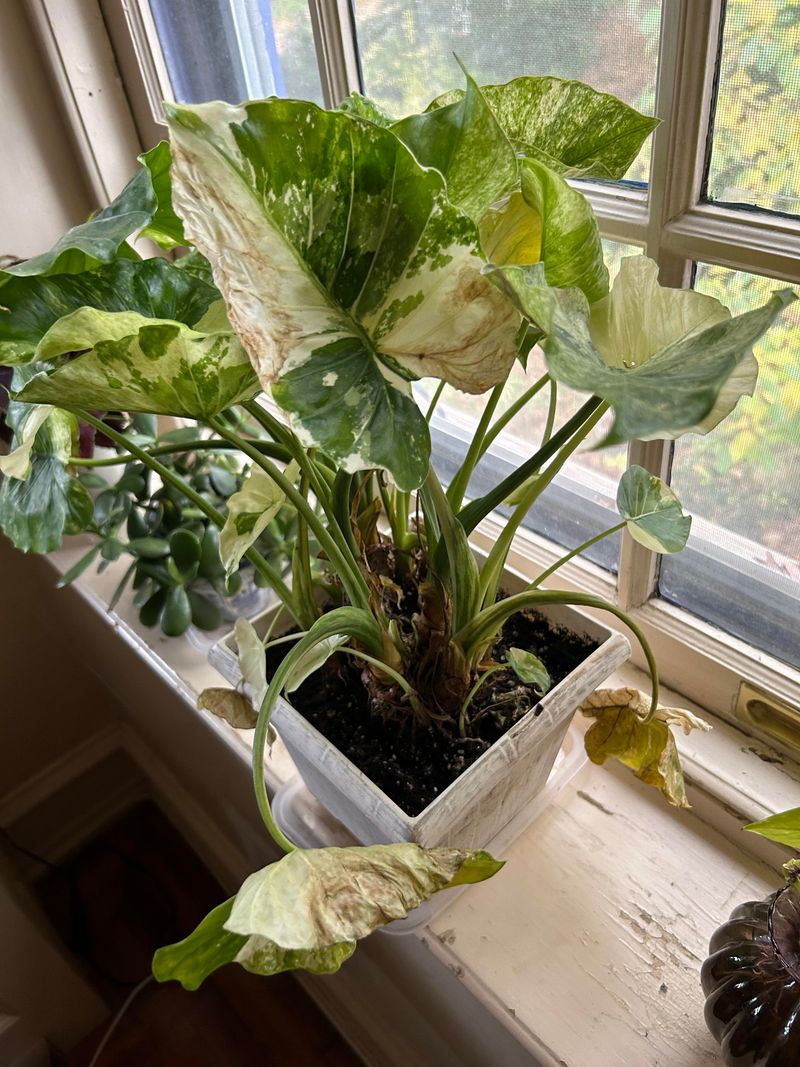
One of the less obvious stressors for Alocasia grown indoors in Texas is temperature inconsistency, and it tends to fly under the radar because the shifts are not always visible to the plant owner.
These tropical plants prefer steady temperatures, generally somewhere between 65 and 85 degrees Fahrenheit, and they are sensitive to sudden changes in either direction.
In Texas homes, that kind of fluctuation happens more often than most people realize.
During summer, air conditioning vents can blast cold air directly onto a nearby Alocasia, creating a chilling effect on leaves even when the outdoor temperature is over 100 degrees. In winter, a plant sitting near a drafty window or an exterior door might experience cold snaps that stress its system.
Even the shift from a warm sunny afternoon to a cool air-conditioned evening can register as a stressor for a sensitive plant.
Checking the placement of your Alocasia in relation to vents, windows, exterior doors, and heating units is a worthwhile step that does not take much time.
Moving the plant away from direct airflow, even just a couple of feet, can reduce the temperature swings it experiences daily.
Keeping your Alocasia in an interior spot where temperatures remain relatively stable throughout the day and night helps it maintain steady, healthy growth.
Texas homeowners who pay attention to these micro-climate details inside their homes tend to see noticeably better results with their Alocasia long-term.
8. Skipping Regular Feeding During Active Growth
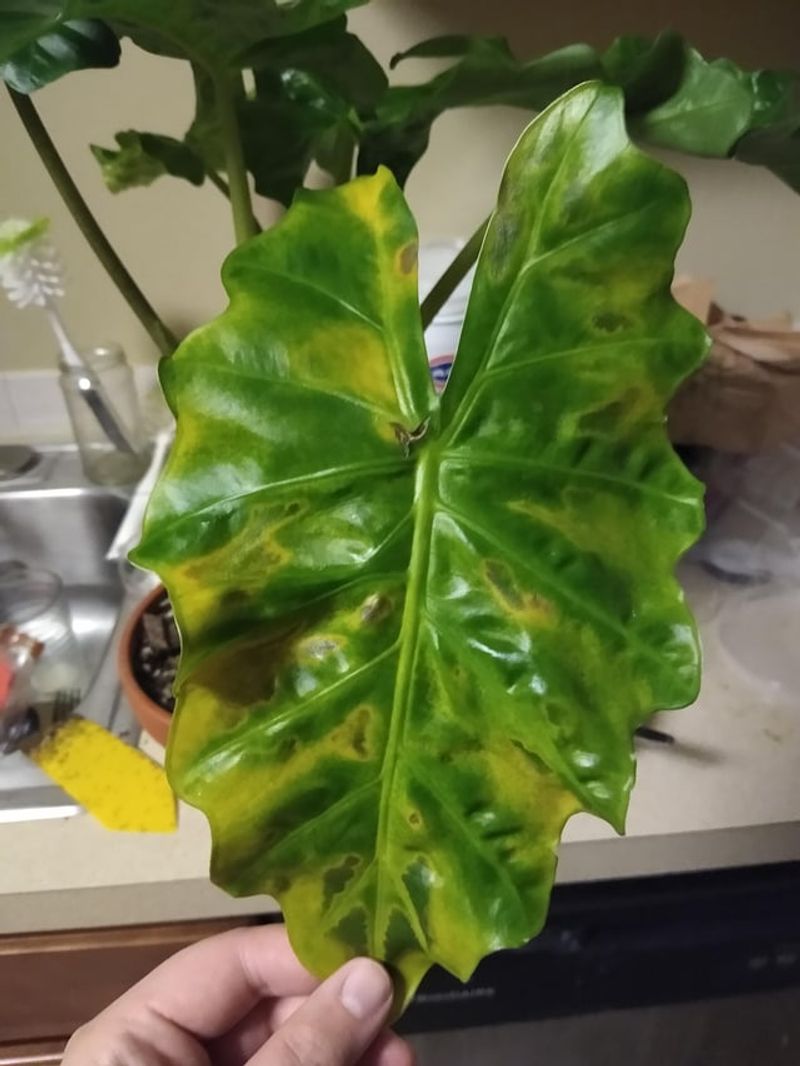
Fertilizing houseplants is one of those care steps that often gets skipped, especially once the initial excitement of bringing a new plant home starts to settle into routine.
For Alocasia, though, skipping regular feeding during the active growing season, which in Texas typically stretches from early spring through late summer, means the plant is working with a limited nutrient supply.
Over time, this shows up as slower growth, smaller new leaves, and foliage that looks a little dull or pale compared to how it should look.
Potting soil comes with a certain amount of nutrients built in, but those reserves deplete over weeks and months, especially with regular watering flushing them out gradually.
Alocasia are relatively vigorous growers when conditions are right, and they benefit from a balanced, water-soluble fertilizer applied roughly every four to six weeks while growth is active.
Diluting the fertilizer to half the recommended strength is a reasonable approach, since these plants can be sensitive to overfeeding, which brings its own set of problems like leaf tip burn.
Feeding should be paused or significantly reduced once the plant enters its slower phase in fall and winter. Pushing nutrients into a plant that is not actively growing just leads to buildup in the soil rather than any real benefit.
Building a simple seasonal feeding routine, active growth gets fertilizer, slower months get a rest, gives your Texas Alocasia the nutritional support it needs to produce those bold, beautiful leaves consistently.