Cucumber Beetles Are Destroying California Gardens Before Anyone Notices
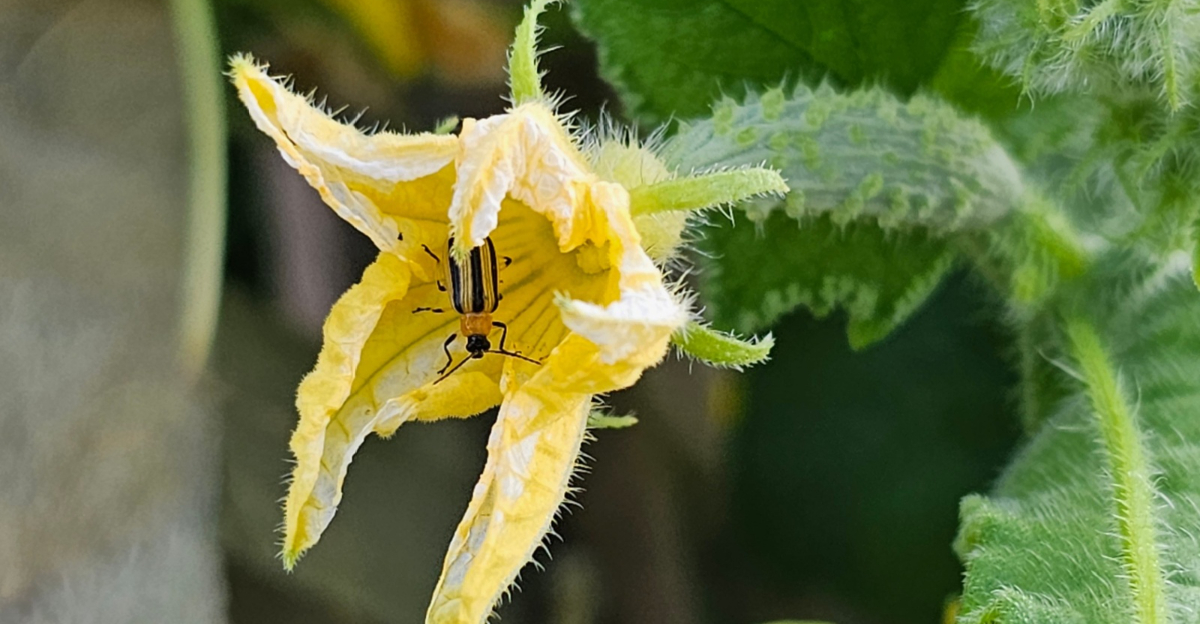
There is a decent chance something is already snacking on your California vegetable garden right now, and it is small enough that you might not have noticed yet.
Cucumber beetles are one of those pests that seem to appear out of nowhere once warm weather arrives, and by the time the damage on your cucumbers, melons, squash, or pumpkins becomes obvious, they have usually been at it for a while.
Ragged leaf holes, feeding scars on flowers and fruit, and underground root damage that slows plants down before anything looks wrong on the surface.
It is a sneaky situation, and California’s warm summers give these beetles exactly the conditions they love.
The good news is that catching them early makes a real difference. And early starts with knowing exactly what you are looking for.
1. Tiny Beetles Hide In Plain Sight
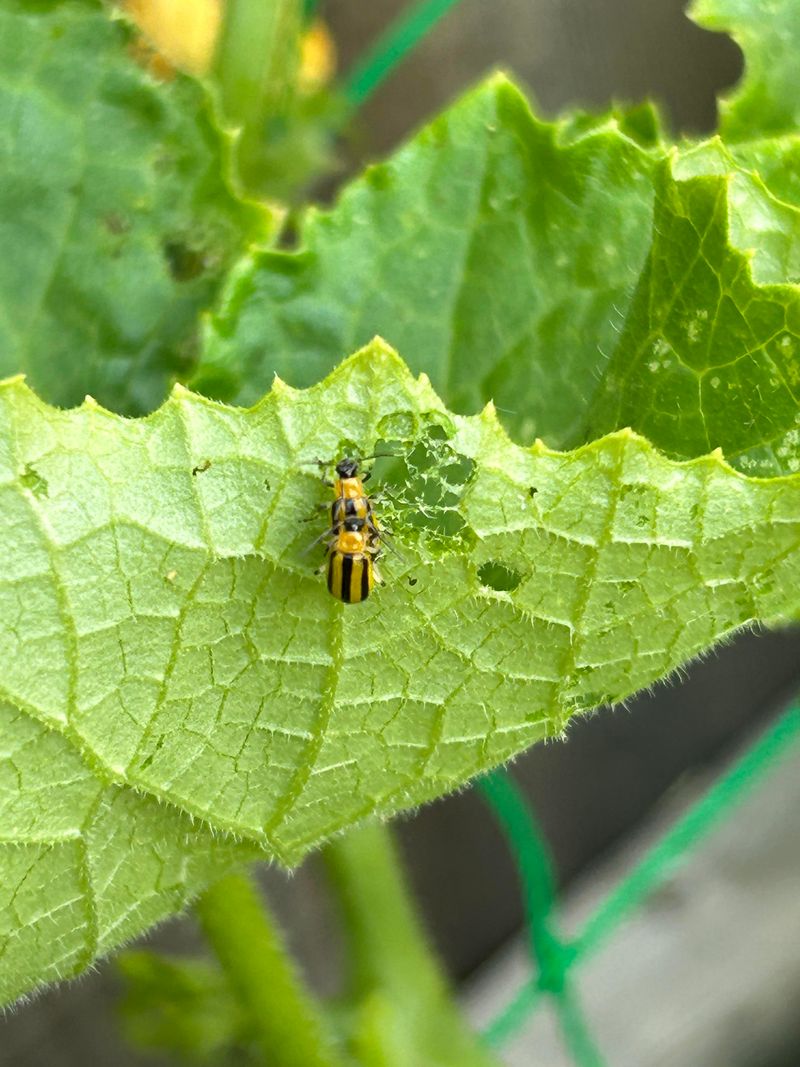
Warm vegetable beds in California are full of activity, and that makes it surprisingly easy to overlook a beetle the size of a watermelon seed.
Cucumber beetles are small enough to tuck into leaf folds, hide beneath blossoms, or rest along stems without catching a gardener’s eye during a quick walk-through.
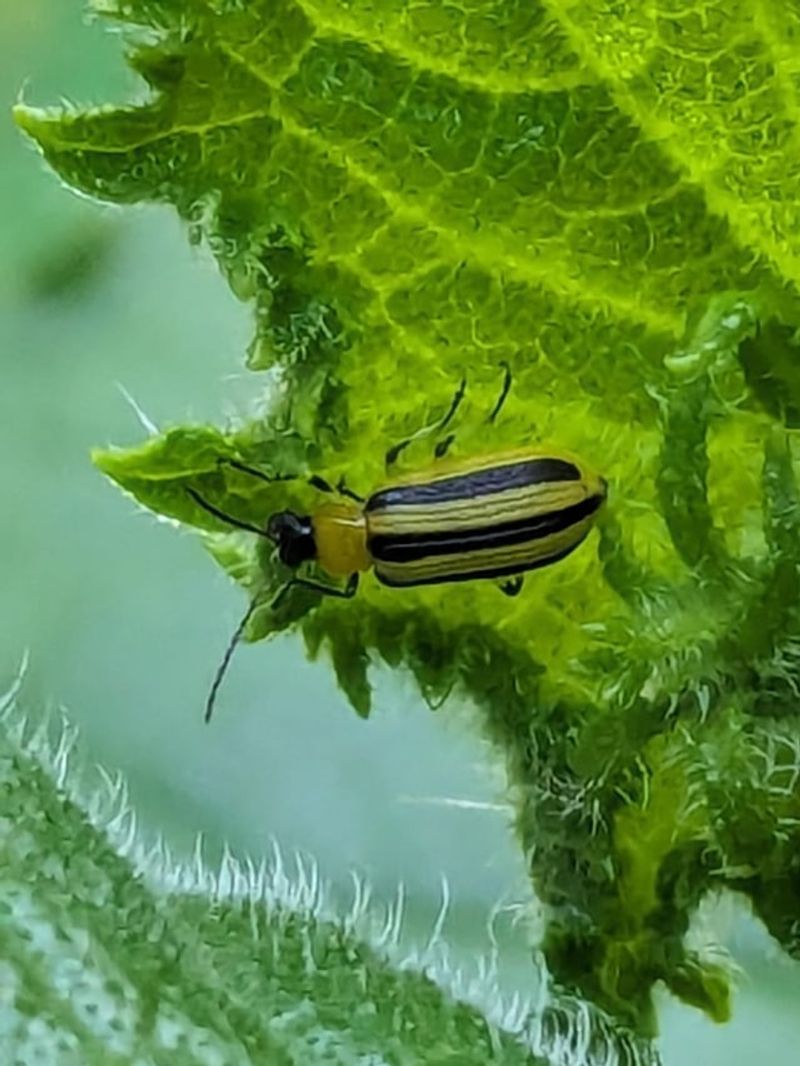
Their yellow-green coloring blends in with foliage, especially on young plants with dense, overlapping leaves.
Most gardeners notice other pests first, like aphids or caterpillars, because those insects leave more obvious trails. Cucumber beetles tend to feed quietly, moving from leaf to flower to fruit without drawing much attention.
By the time damage becomes visible, a small population may have already grown into a larger one.
Backyard gardens in California’s warm inland areas can support beetle activity for much of the growing season. Checking plants carefully, including the undersides of leaves and inside blossoms, gives gardeners a better chance of spotting beetles early.
A hand lens can help when beetles are very small or when you are not sure what you are seeing on a leaf surface.
2. Spotted And Striped Beetles Need Different Attention

Not every cucumber beetle in a California garden behaves the same way, and knowing which type you have can shape how you respond.
The spotted cucumber beetle and the striped cucumber beetle are the two most common species seen in California vegetable gardens, and while both feed on cucurbit plants as adults, their larvae behave quite differently.
Striped cucumber beetle larvae can feed on the roots of cucurbit plants, including cucumbers, squash, and melons.
Spotted cucumber beetle larvae, on the other hand, tend to feed on corn roots and grasses rather than cucurbit roots, so underground damage in a cucurbit bed is more likely tied to the striped species.
Adult beetles from both species can chew on leaves, blossoms, and soft fruit surfaces.
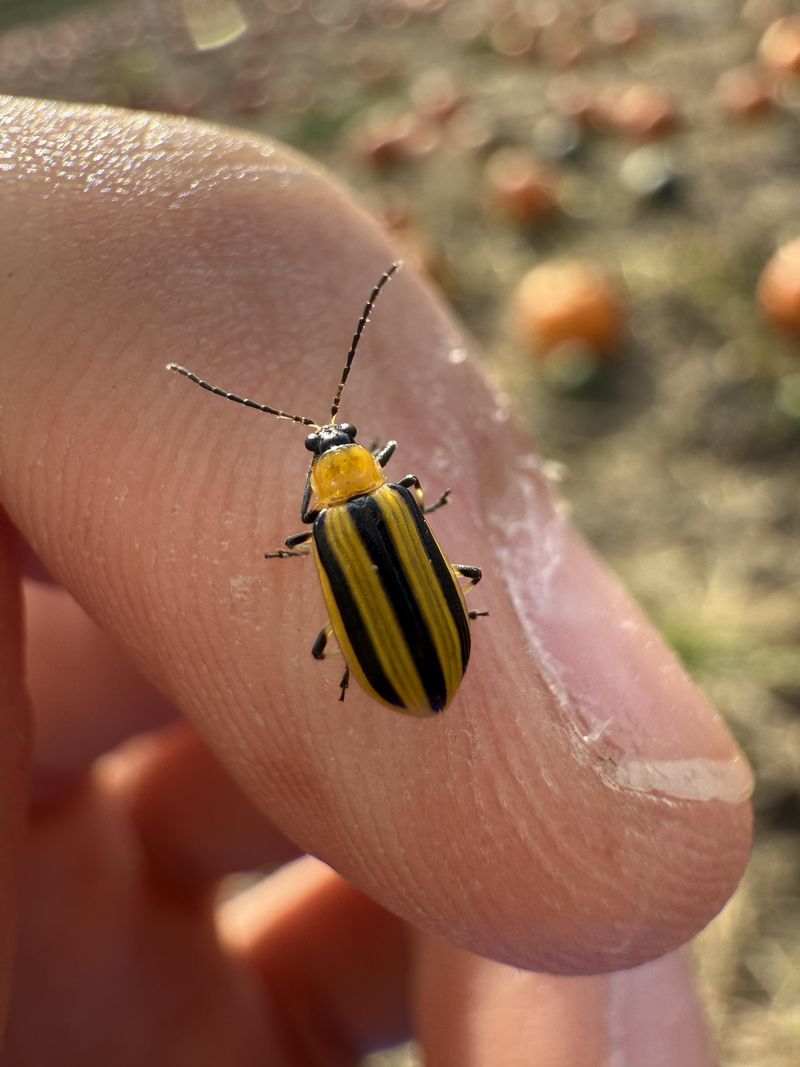
Telling them apart is straightforward once you know what to look for. Striped beetles have three bold black stripes running along a yellow body.
Spotted beetles have twelve black spots on a greenish-yellow background.
Paying attention to which species is present in your California garden helps you make better decisions about monitoring and management, especially when you are watching for root damage or tracking population levels through the season.
Your California Garden Changes Every Week. Your Plan Should Too.
Gardening in California changes quickly throughout the season. Every Friday you’ll receive a simple weekly plan showing exactly what to plant, prune, fertilize, harvest, and protect so you never miss the right timing.
3. Young Cucurbit Plants Show Damage First
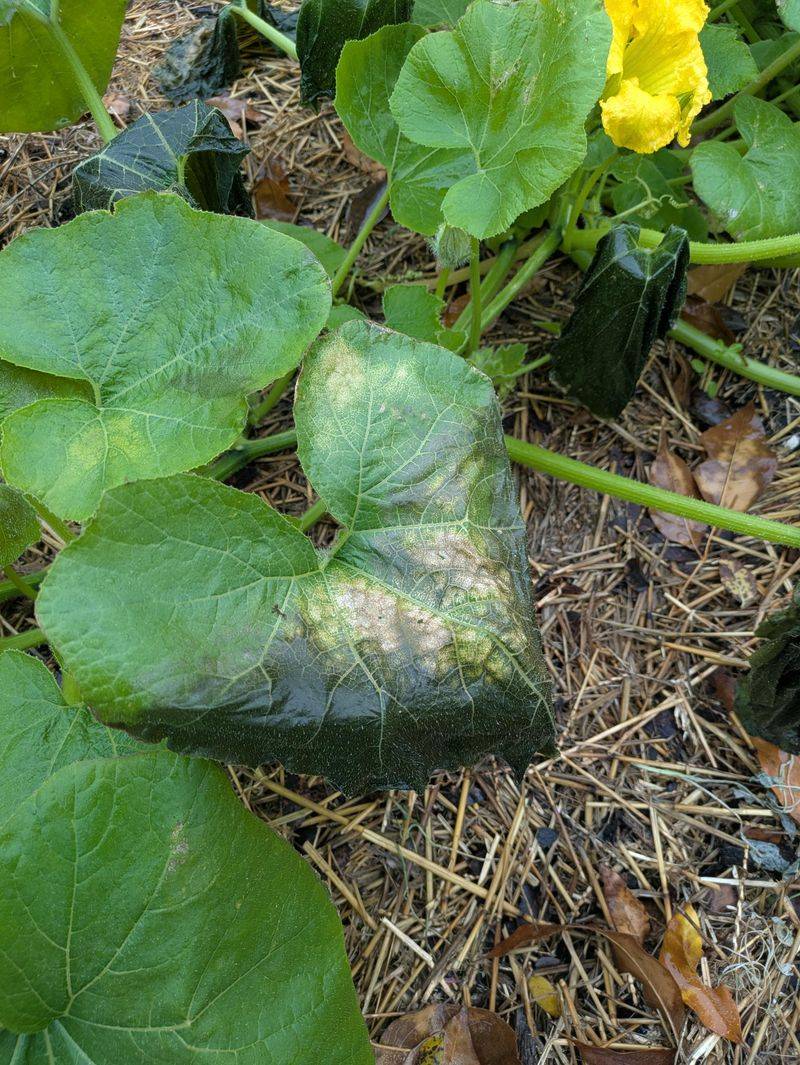
Seedlings are some of the most vulnerable plants in any California vegetable garden, and cucumber beetles seem to find them quickly.
Young cucurbit plants, including squash, cucumbers, and melons, have soft stems and tender leaves that beetles can chew through with little effort.
A seedling that looked healthy in the morning can show notched leaf edges or wilted stems by afternoon if beetles are feeding actively.
The first true leaves on a young cucurbit plant are often where feeding begins. Beetles may chew irregular holes or ragged edges into these early leaves, which can slow the plant’s ability to grow and develop.
When seedling damage is heavy, plants may struggle to establish properly, especially in warm inland California areas where pest pressure tends to build faster during summer.
Gardeners who start cucurbit seedlings indoors and transplant them outside may find their young plants targeted quickly once they go into the ground.
Checking transplants daily during the first few weeks after planting gives you the best chance of catching beetles before populations grow.
Row covers placed over seedlings right after transplanting can reduce early feeding while plants are still getting established in the garden bed.
4. Ragged Leaf Holes Are An Early Clue
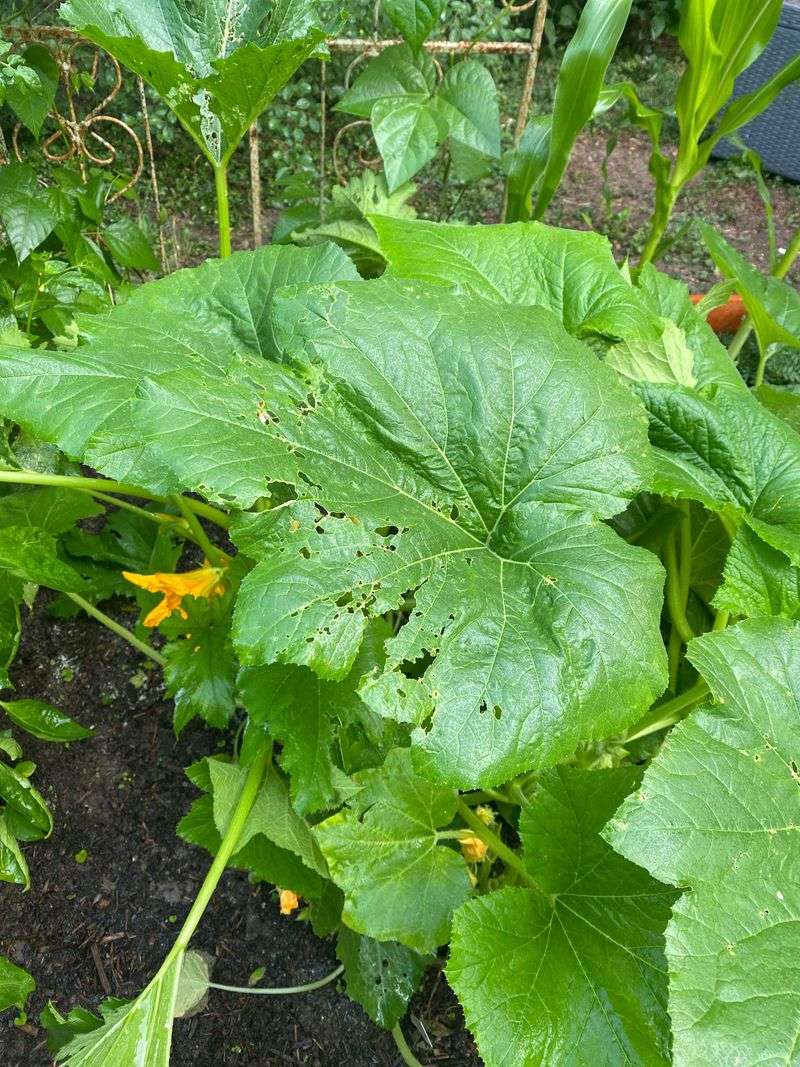
Ragged holes in cucurbit leaves are one of the first signs that cucumber beetles may be present in a California garden. Unlike the clean, round holes that some caterpillars leave, cucumber beetle feeding often creates irregular, chewed-out patches with rough edges.
These holes can appear on the edges of leaves or scattered across the leaf surface, and they may show up on multiple plants at once if a group of beetles is moving through the garden.
Leaf holes alone do not confirm cucumber beetles, since other chewing insects can cause similar damage. Slugs, earwigs, and certain caterpillars also leave holes in cucurbit leaves.
The key is to look for the beetles themselves alongside the damage, checking the undersides of leaves and inside blossoms where they often rest during the day.
In California gardens, ragged leaf holes that appear suddenly on cucumber, melon, or squash plants during warm months are worth investigating right away.
Early feeding damage on leaves may seem minor, but it signals that beetles are present and active.
Catching them at this stage, before they move into blossoms or begin laying eggs, gives gardeners more options for slowing their spread through the vegetable bed.
5. Flowers And Fruit Can Show Feeding Scars
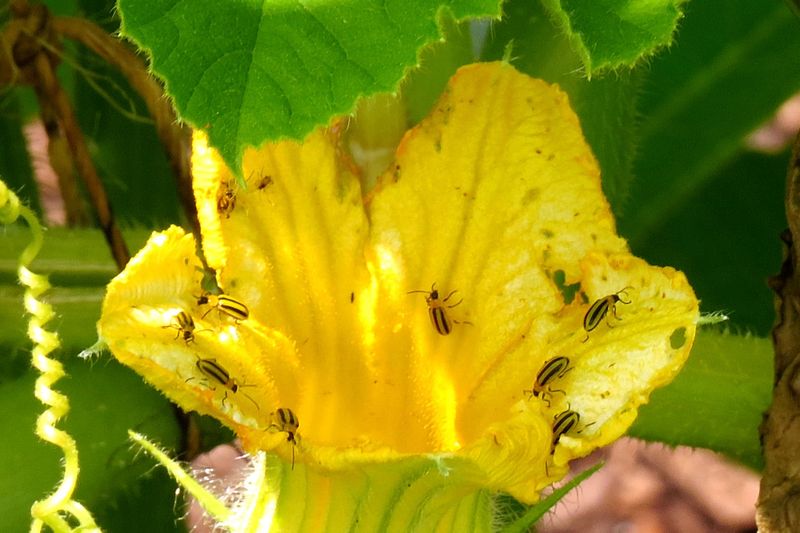
Cucumber beetles do not limit their feeding to leaves. Blossoms and developing fruit are also targets, and the damage there can affect both the look and the productivity of cucurbit plants.
Adult beetles often feed inside or around flowers, chewing on petals and the soft tissue at the base of blossoms. Heavy feeding in flowers can reduce pollination success, since damaged blossoms may drop before fruit has a chance to set.
On young fruit, beetles can leave shallow scars or rough patches on the skin surface.
These scars may not go deep, but they can create entry points for mold or bacteria, and they affect the appearance of cucumbers, melons, squash, and pumpkins that gardeners are hoping to harvest.
Fruit that forms with surface damage may still be edible, but the blemishes can be frustrating after a full season of care.
California gardeners growing summer squash or cucumbers in raised beds or containers may notice pitted or scarred fruit without immediately connecting it to beetles.
Checking blossoms regularly during the flowering stage is a practical way to catch adult beetles before they move onto forming fruit.
Early detection at this stage can help protect both pollination and the quality of the harvest later in the season.
6. Striped Beetle Larvae Feed On Cucurbit Roots
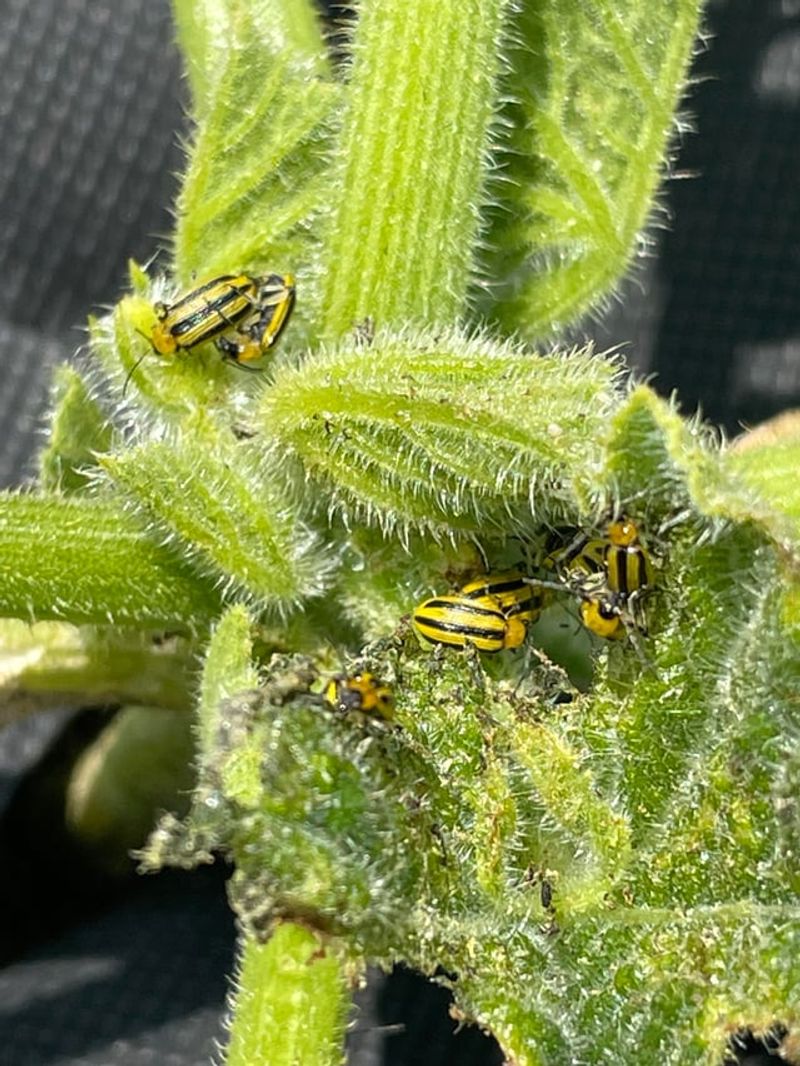
Below the soil surface, striped cucumber beetle larvae can quietly damage cucurbit roots while the rest of the plant still looks normal from above.
Female striped cucumber beetles lay eggs near the base of cucurbit plants, and when the larvae hatch, they move toward the roots to feed.
Root feeding can weaken a plant’s ability to take up water and nutrients, and gardeners may not notice anything unusual until the plant begins to wilt or show signs of stress.
Root damage from striped beetle larvae is one reason why aboveground monitoring alone is not always enough. A plant that shows wilting or slow growth without obvious leaf damage may have root issues caused by larvae feeding below the soil.
This kind of hidden damage can be especially frustrating in California’s warm inland areas, where cucurbit plants are already working hard to stay hydrated during hot summer months.
Spotted cucumber beetle larvae do not typically feed on cucurbit roots, so identifying which species is present in your garden matters when you are trying to understand what is happening underground.
If striped adults have been spotted on your cucurbit plants and a plant begins to decline unexpectedly, root feeding by larvae is worth considering as a possible cause alongside other common root issues.
7. Warm Weather Can Bring Several Generations
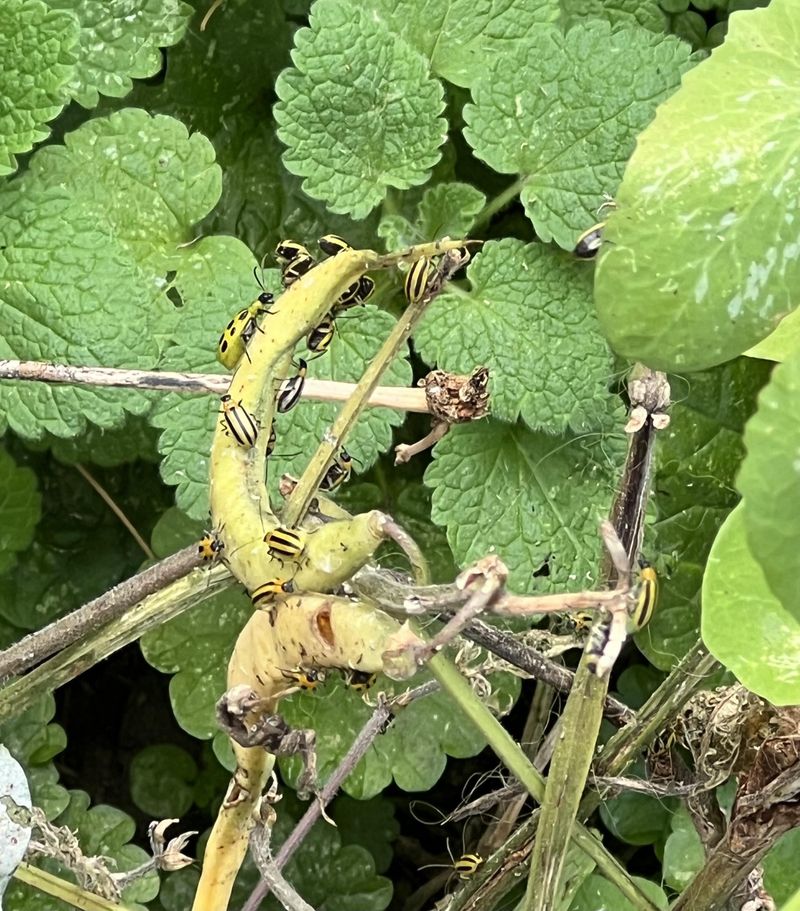
California’s warm climate is one reason cucumber beetles can be a recurring challenge rather than a one-time problem.
In many parts of California, especially warmer inland areas, cucumber beetles may complete more than one generation during the growing season.
Each new generation means another wave of adults feeding on cucurbit plants and laying eggs near their roots.
Cooler coastal areas of California may see less beetle pressure than hot inland valleys, but warm spells during summer can still bring noticeable activity.
Gardeners in both settings benefit from staying alert through the full cucurbit growing season rather than checking once and assuming the problem has passed.
Populations that seem small in early summer can grow by late summer if conditions stay warm and host plants remain available.
Understanding that multiple generations may occur in a single California season helps explain why cucumber beetle damage can seem to reappear even after gardeners have removed beetles by hand or used other management steps.
Consistent monitoring from the time seedlings go in the ground through the end of harvest gives you a much clearer picture of what is happening in your garden over time, and it helps you act before a new generation gets fully established on your plants.
8. Melons, Squash, Cucumbers, And Pumpkins Need Checks
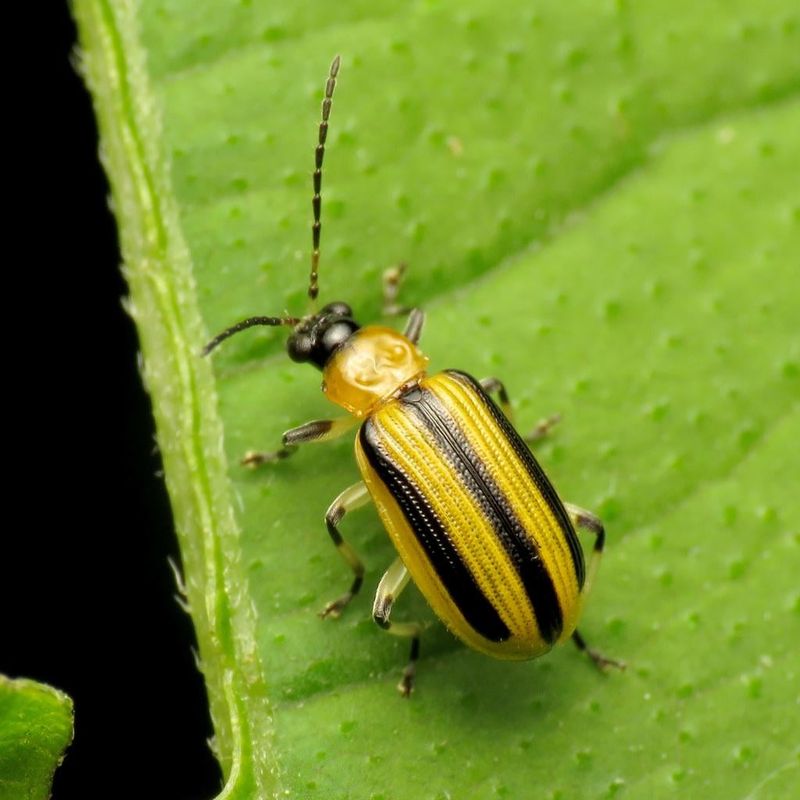
Every cucurbit crop in a California garden is a potential host for cucumber beetles, which means melons, squash, cucumbers, and pumpkins all deserve regular attention during the growing season. Beetles do not tend to stick to just one plant type.
They may move between cucurbit crops in the same garden, feeding on whatever is most accessible or most tender at the time.
Melons can be especially attractive to cucumber beetles when they are in flower or when young fruit is forming. Squash plants, which often have large open blossoms, can harbor adult beetles that feed on pollen and soft flower tissue.
Cucumbers and pumpkins are also common targets, and gardeners growing a mix of these crops in raised beds or container gardens should check all of them rather than focusing on just one.
A simple scouting routine works well for home-scale California gardens. Walking through the garden two or three times a week and checking leaf surfaces, blossoms, and young fruit on each cucurbit crop takes only a few minutes but provides useful information.
Keeping a simple record of where beetles are found and how many you see can help you track whether populations are growing or holding steady through the season.
9. Early Monitoring Matters More Than Late Spraying
Catching cucumber beetles early in the season is far more practical than trying to manage a large population after it has already spread through a California vegetable garden.
Once beetle numbers climb and damage is visible across multiple plants, options become more limited and results less predictable.
Early monitoring shifts the balance in the gardener’s favor by giving you time to act before the situation becomes harder to manage.
Scouting for beetles does not require special equipment or a lot of time. Checking plants in the morning, when beetles tend to be more active, and looking inside blossoms and along stems can reveal adults before they have a chance to lay many eggs.
Finding even a few beetles early is useful information that helps you decide whether to try hand removal, row covers, or other management approaches suited to a home-scale garden.
In California, where warm conditions can support beetle activity for much of the summer, building monitoring into your regular gardening routine makes a real difference.
Waiting until plants show serious leaf damage or wilting before investigating means the population has likely been present for some time.
Starting checks when seedlings first go in the ground and continuing through flowering and fruiting gives you the best overall view of what is happening in your garden.
10. Garden Cleanup May Help Reduce Hiding Places
At the end of the growing season, what you do with your garden can influence how many cucumber beetles are waiting when the next season begins.
Adult cucumber beetles may overwinter in plant debris, leaf litter, weeds, and other garden material near the areas where cucurbit crops were grown.
Removing spent plants and clearing debris from beds after the harvest season may reduce the number of sheltered spots available to overwintering beetles.
California gardens that stay warm through much of the year can support adult beetle activity longer than gardens in colder climates. This makes end-of-season cleanup a reasonable step even in mild coastal areas where winters are gentle.
Pulling up old cucurbit vines, clearing weeds along bed edges, and removing mulch that has accumulated near plant stems are all practical ways to reduce potential overwintering habitat.
Cleanup alone is unlikely to eliminate cucumber beetles from a garden entirely, but combined with early monitoring and other management steps, it can be part of a sensible overall approach.
Rotating cucurbit crops to different beds each season may also help, since larvae in the soil will not find their preferred host plants in the same location.
Small, consistent steps spread across the season tend to produce better results than a single large effort made after problems are already visible.