8 Deep-Rooted Native Flowers That Thrive In Texas Clay
Texas clay soil has a way of testing your patience faster than expected. It can stay sticky after rain, bake into a hard surface under intense sun, and make planting feel tougher than it should be.
Plenty of common garden flowers struggle to settle in, even with extra care. That’s where native plants start to stand out.
Over time, they’ve adapted to these exact conditions, building deep root systems that help them handle both heavy moisture and long dry stretches.
Once established, they tend to stay reliable without constant attention. A closer look at these flowers shows just how well they match Texas soil patterns, especially in spots where drainage, heat, and strong roots make all the difference.
1. Purple Coneflower With Bold Rosy Blooms
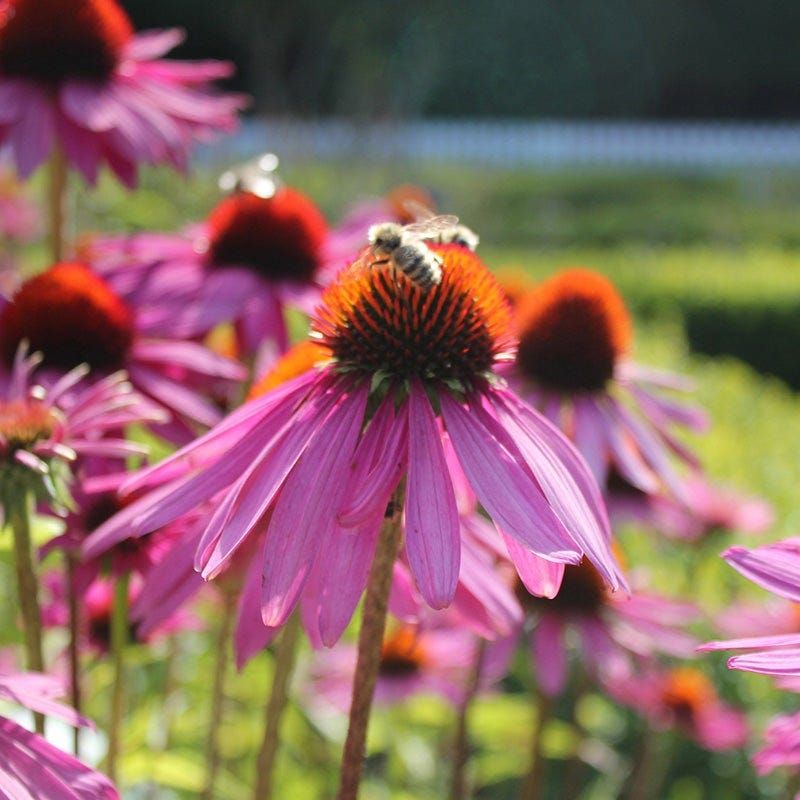
Few wildflowers are as instantly recognizable as Purple Coneflower, with bold, rosy-purple petals surrounding a spiky, copper-toned center. Known scientifically as Echinacea purpurea, this native wildflower appears naturally in parts of East Texas and similar regions.
Its deep taproot is a big reason it performs so well in clay soil, pushing through dense ground to reach moisture and nutrients that shallow-rooted plants miss.
Gardeners across Texas appreciate how low-maintenance this plant becomes once established. After planting and giving it time to settle in, it returns year after year with very little effort.
It blooms from late spring into summer in many parts of Texas, sometimes extending longer with consistent moisture. The flowers attract bees and butterflies, while birds often visit later for the seeds.
In addition to its wildlife value, it is often included in native and pollinator gardens because of its steady performance and ability to handle changing weather conditions across the state.
Purple Coneflower typically grows two to four feet tall, making it a reliable mid-border plant that pairs well with native grasses and other heat-tolerant flowers. It handles Texas heat well once established and can get through dry stretches thanks to its deep roots.
Over time, those roots also help break up compacted clay, improving soil structure around it. Starting with transplants instead of seeds usually leads to quicker blooms, often within the first growing season.
2. Black-Eyed Susan A Burst Of Golden Color
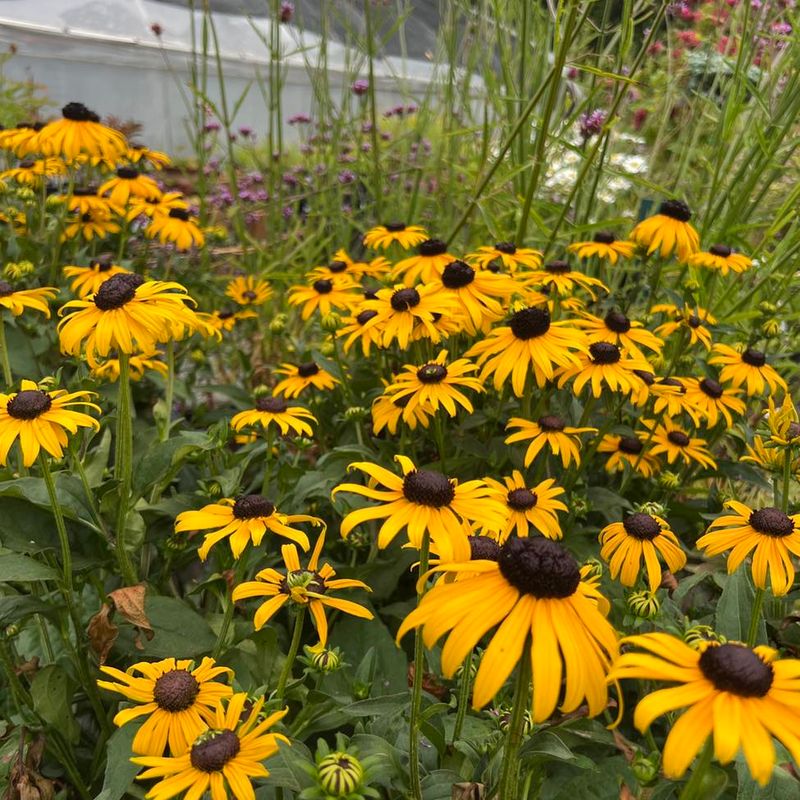
Sunshine on a stem, that is the best way to describe the cheerful Black-Eyed Susan. With its golden-yellow petals circling a rich chocolate-brown center, this Texas-friendly native lights up gardens from late spring well into fall.
Rudbeckia hirta is a tough, adaptable wildflower that has earned a loyal following among Texas gardeners because it holds up well in heavy clay and intense sun.
One of the standout qualities of Black-Eyed Susan is how easily it self-seeds. Plant it once, and you will often see new seedlings filling in nearby spaces year after year.
It typically grows two to three feet tall, adding a relaxed, natural look without much upkeep. Bees and butterflies visit constantly through the warmer months, bringing steady movement and color into the garden.
It also mixes well with native grasses and other heat-tolerant perennials, creating a layered, resilient planting that feels right at home in Texas landscapes.
Your Texas Garden Changes Every Week. Your Plan Should Too.
Gardening in Texas changes quickly throughout the season. Every Friday you’ll receive a simple weekly plan showing exactly what to plant, prune, fertilize, harvest, and protect so you never miss the right timing.
What makes this flower especially useful in Texas clay is its fibrous root system, which spreads through dense soil and gradually improves its structure. It grows best in full sun and handles high temperatures without much trouble once established.
It can also tolerate short dry periods, which is helpful during long stretches of heat. For best results, avoid overworking the soil before planting.
Black-Eyed Susan often performs better in less amended ground, making heavy Texas clay far less of a challenge than it might seem.
3. Blue False Indigo With Strong Upright Structure
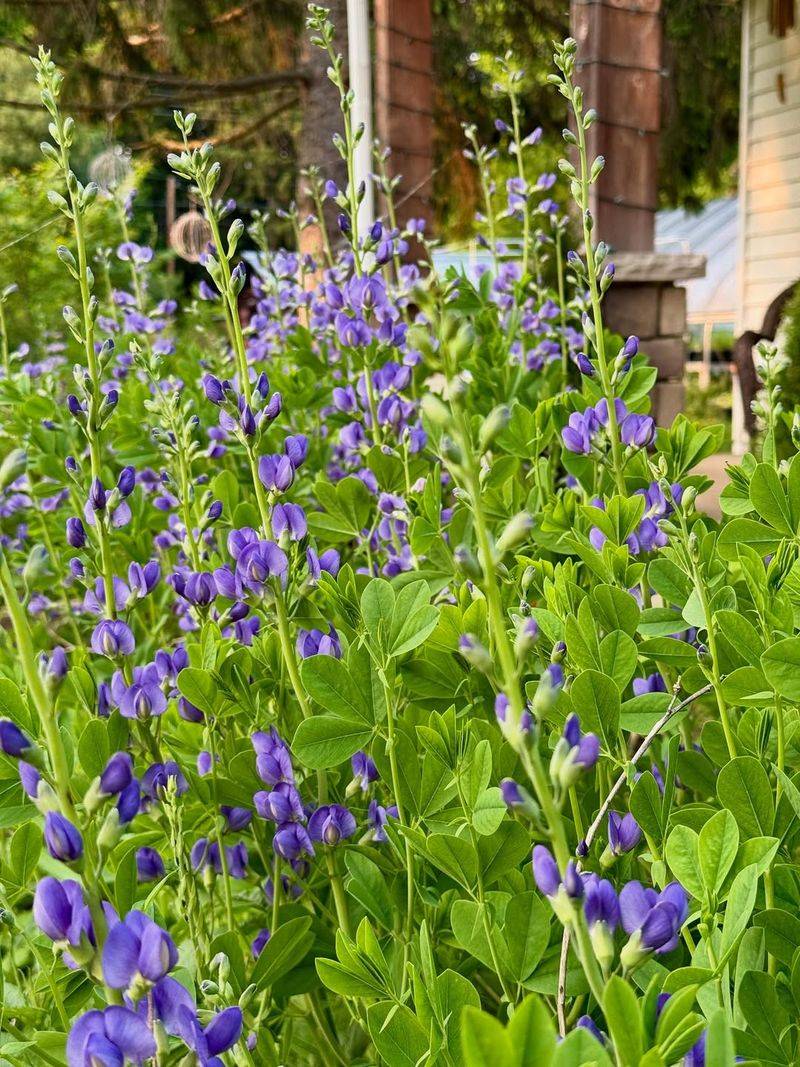
Long before other perennials begin to bloom, Blue False Indigo is already putting on a strong display. Baptisia australis sends up tall spikes of deep violet-blue flowers in late spring, creating a bold presence that draws attention right away.
It is one of the most structurally striking native plants you can grow in Texas, especially in open, sunny spaces where it has room to develop.
The root system of Blue False Indigo stands out for its strength and depth. It forms a deep, woody structure that pushes through compacted Texas clay, gradually improving soil structure and airflow.
This is a plant that works below the surface as much as above it, helping surrounding plants over time. Once established, it handles heat and dry periods well and can remain in place for many years without decline.
Its deep roots also make it highly resilient during extended drought periods across many parts of Texas.
Growing three to four feet tall with blue-green foliage that stays attractive through the season, Blue False Indigo works well as a backbone plant in Texas native landscapes. After flowering, dark seed pods develop and add texture later in the season.
It takes time to establish, so early growth may seem slow. By the third year, it becomes a strong, dependable presence.
Give it full sun to light shade and avoid moving it once planted, since its deep root system prefers to stay undisturbed.
4. Butterfly Milkweed Bright Orange And Monarch Friendly
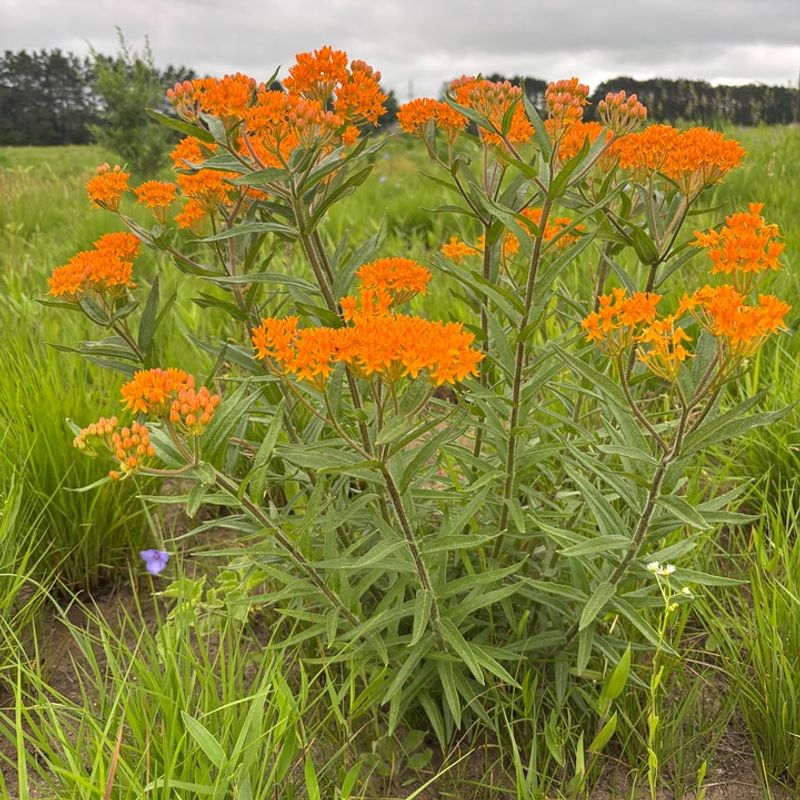
Bright orange is not a color you see often in native plantings, which is exactly what makes Butterfly Milkweed stand out. Asclepias tuberosa comes into bloom in early summer with clusters of vivid orange flowers that add instant color to Texas landscapes.
Beyond its looks, this plant plays an important role for monarch butterflies, serving as a host plant during their life cycle across many parts of Texas.
Ask experienced Texas gardeners about Butterfly Milkweed and you will hear the same thing: patience matters. It is slow to emerge in spring, sometimes not showing up until late in the season.
That delay can be surprising, but below the surface, a thick taproot is storing energy and preparing for growth. This deep root is also what allows the plant to push through dense Texas clay and hold up during dry periods.
In warmer regions, new growth may appear earlier, but timing can still vary.
Once established, Butterfly Milkweed handles heat and drought well and prefers well-drained spots, making it a strong choice for slightly elevated areas in clay-heavy yards. It typically grows one to two feet tall and looks best planted in small groups for stronger visual impact.
Avoid moving it once settled, since the taproot does not respond well to disturbance. Full sun brings out the best flowering, and it pairs nicely with other Texas natives like Blue False Indigo or Blazing Star for a cohesive, low-maintenance planting.
5. Blazing Star Tall Spikes That Stand Out
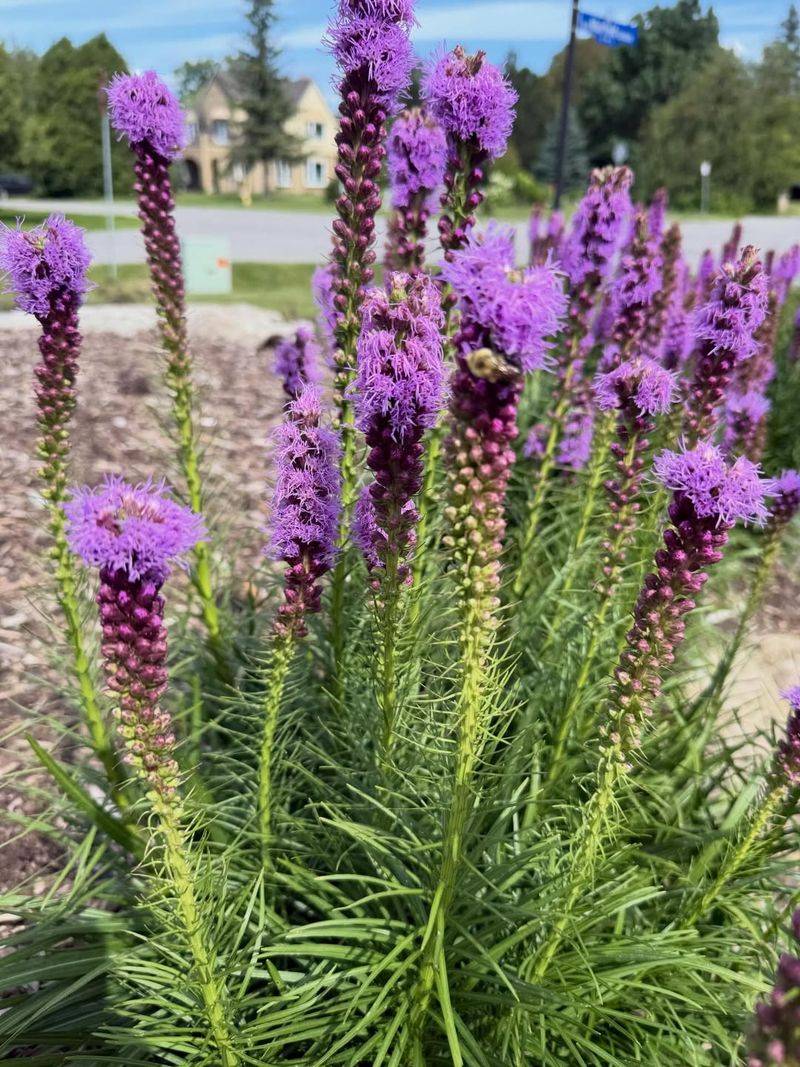
There is something almost magical about the way Blazing Star blooms. Unlike most flowers that open from the bottom up, Liatris spicata blooms from the top down, creating a bold, torch-like effect that stands out in Texas native plantings.
Those tall, rosy-purple spikes rise two to four feet and draw attention from across the yard, making it one of the most striking additions to a warm-season landscape.
Gardeners working with Texas clay will appreciate how well this plant handles tough conditions. Its corm-based root system stores energy underground, helping it push through dense soil and bounce back during dry periods.
These corms also allow it to handle heat and occasional cold without extra care, making it a dependable choice across many parts of Texas. In areas with heavier clay, its ability to establish quickly gives it a noticeable advantage over more delicate perennials.
Butterflies, especially monarchs and swallowtails, are frequent visitors, and hummingbirds often stop by as well. Planting in groups creates a strong visual impact from mid to late summer, helping bridge the gap between spring bloomers and fall flowers.
Full sun brings out the best growth and flowering, though it can tolerate some light shade. One key tip for Texas conditions is to avoid spots that stay soggy after rain, since corms can rot in standing water.
A slightly raised area or a location with decent drainage will keep this plant performing well for years.
6. Goldenrod A Late-Season Wave Of Gold
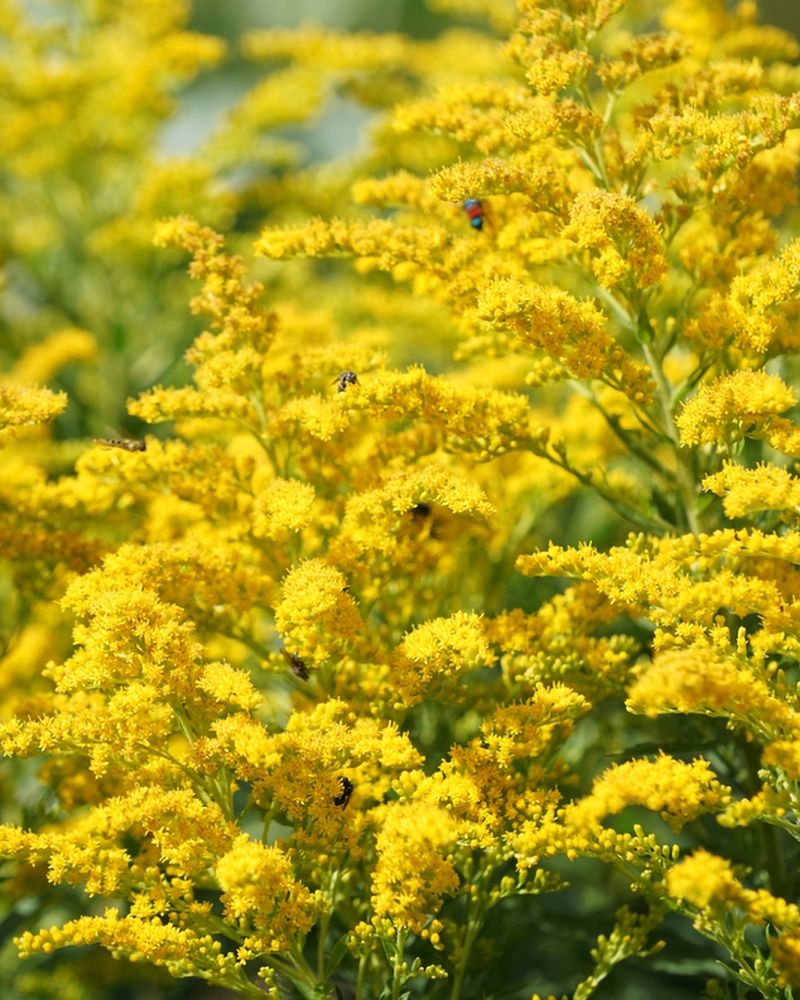
Often misunderstood, this native wildflower gets blamed for allergies when ragweed is usually the real cause. Goldenrod’s pollen is heavier and carried by insects, not the wind, which clears up a common misconception.
Once you look past that, Solidago stands out as one of the most valuable and visually striking native plants growing across Texas landscapes today.
Arching plumes of bright golden-yellow flowers appear from late summer into fall, creating waves of warm color in gardens and open spaces. Goldenrod supports a wide range of pollinators, including bees, butterflies, and beetles throughout its bloom period.
Its deep, spreading root system makes it well-suited to Texas clay, where it not only survives but often spreads to fill open areas naturally. In larger spaces, it can create impressive drifts that bring both movement and color to the landscape.
For Texas home gardeners, choosing clumping varieties like Solidago rugosa or Solidago speciosa helps keep growth more controlled. These selections typically reach two to four feet tall and work well in mixed plantings alongside grasses and other natives.
Full sun encourages the best flowering, though it can handle some light shade. Leaving seed heads through winter provides food for birds and adds texture during cooler months.
Few native plants match its combination of pollinator support, soil benefits, and strong seasonal color.
7. Mealy Blue Sage Cool Blue Color Through Heat
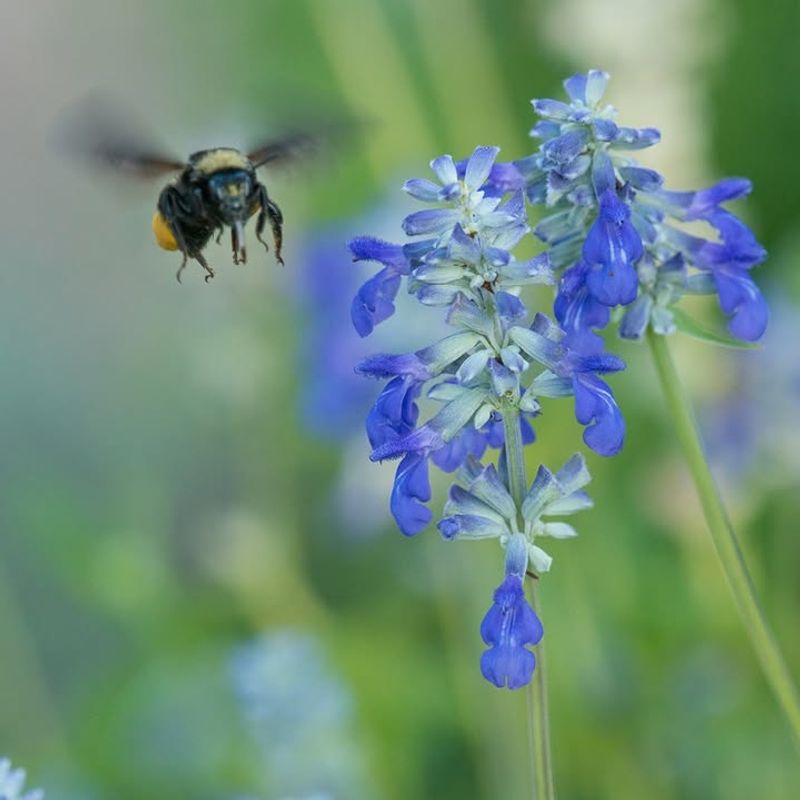
Soft blue color can be hard to find in tough Texas landscapes, which is exactly why Mealy Blue Sage stands out so easily.
Salvia farinacea is a Texas native that produces long spikes of violet-blue flowers from late spring well into fall, often continuing through heat that slows other plants down.
It shows up naturally in prairies and open areas, which makes it a reliable fit for home gardens dealing with strong sun and clay-heavy soil.
One of the biggest advantages of Mealy Blue Sage is its adaptability. It develops a deep, fibrous root system that helps it establish in dense Texas clay while also improving soil structure over time.
Once settled, it handles heat and dry stretches with very little trouble, though occasional watering can keep blooms going longer during extended drought. This balance of toughness and consistent flowering makes it a dependable choice for low-maintenance landscapes.
Growing one to three feet tall, Mealy Blue Sage works well in the middle of garden beds or planted in groups for a stronger visual effect. The soft blue flower spikes create a cooling contrast against warmer tones like yellow, orange, and red, helping balance the overall look of the space.
Bees, butterflies, and other pollinators visit constantly, making it one of the more active plants in a Texas garden.
Full sun brings out the best flowering, and the plant tolerates lean soil without needing heavy amendments. Light trimming during the season can encourage fresh growth and more blooms.
Whether used in a native planting or mixed border, Mealy Blue Sage offers long-lasting color, strong performance in clay, and steady pollinator support without demanding much in return.
8. Maximilian Sunflower Towering Stems With Bright Yellow Blooms
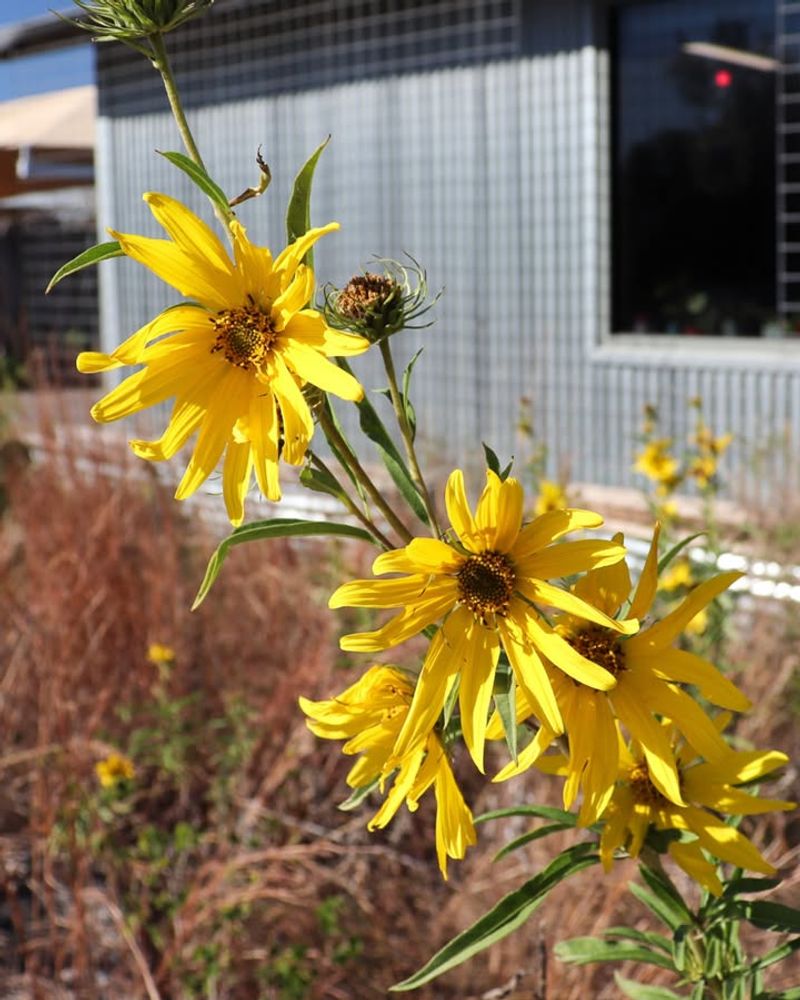
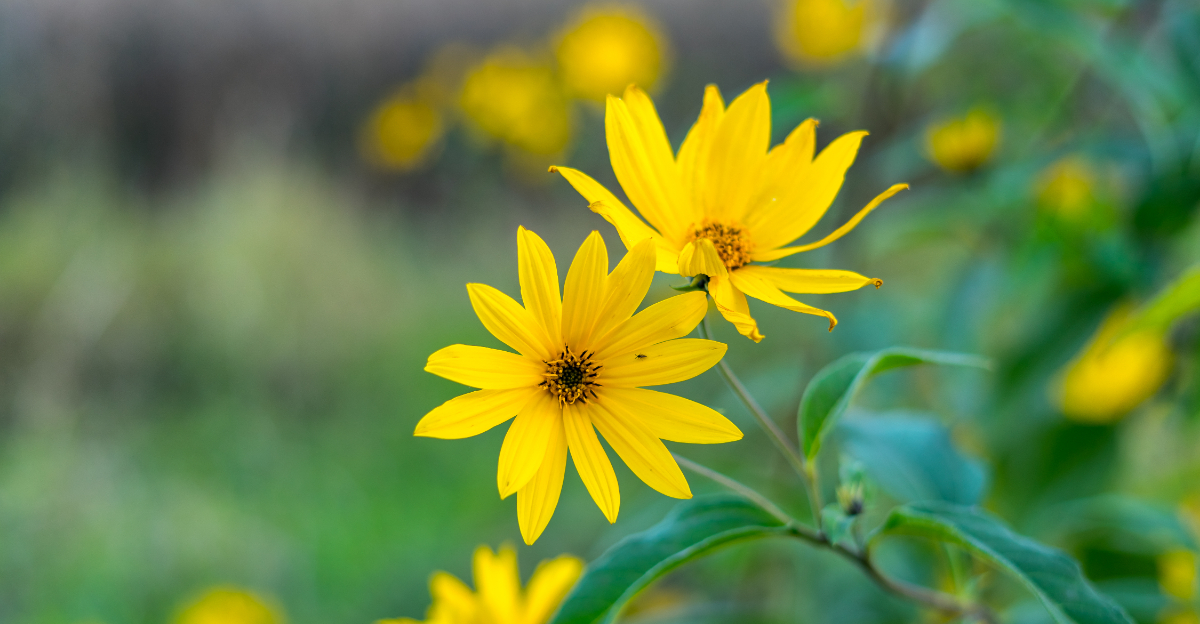
Late-season color can be hard to come by in Texas landscapes, which is where Maximilian Sunflower really stands out. Helianthus maximiliani is a tall, native perennial that produces bright yellow, daisy-like flowers from late summer into fall, often when many other plants are starting to fade.
It is naturally found across prairies and open spaces in Texas, making it well-suited to full sun and challenging soil conditions.
One of the biggest strengths of Maximilian Sunflower is its deep, spreading root system. It develops strong underground growth that helps it establish in heavy Texas clay while also improving soil structure over time.
These roots allow the plant to access moisture deeper in the ground, which makes it more resilient during dry periods. Once established, it requires very little supplemental water and can handle heat without losing vigor.
This plant can grow anywhere from three to eight feet tall, creating a bold vertical presence in the landscape. It works especially well along fences, in the back of garden beds, or planted in groups where it can form a natural screen.
The long stems are lined with narrow leaves and topped with multiple blooms that attract bees, butterflies, and other pollinators late in the season when food sources can be limited.
Full sun is essential for strong growth and flowering. While it tolerates clay well, giving it space to spread is important, since it can expand over time through underground rhizomes.
For gardeners looking to add height, late-season color, and reliable performance in Texas clay, Maximilian Sunflower is a strong, proven choice.