Desert Flowers That Bloom Only After Heavy Rain In West Texas
Have you ever driven through West Texas after a big rainstorm and suddenly noticed flowers appearing where there was nothing but dry ground before? It almost feels like the desert is putting on a surprise show.
For most of the year, the landscape can look quiet, dusty, and nearly lifeless. Then a heavy rain rolls through, and within days the desert floor begins to transform.
Certain desert flowers are built for this exact moment. Their seeds can sit hidden in the soil for months or even years, waiting patiently for the right conditions.
Once enough rain arrives, they wake up quickly and push through the ground, racing to bloom while moisture is still available.
These brief bursts of color are one of the most fascinating parts of the West Texas desert. Fields that looked empty suddenly fill with bright petals, drawing photographers, travelers, and nature lovers eager to witness the short lived spectacle before the heat returns.
1. Desert Marigold (Baileya Multiradiata)
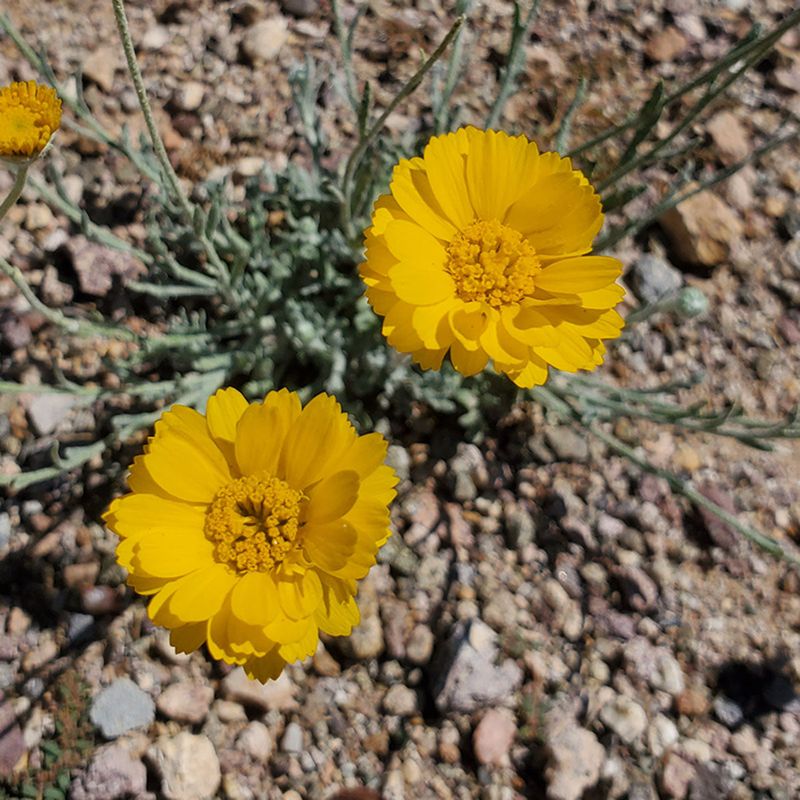
Few desert flowers put on a show quite like the Desert Marigold. After a good soaking rain hits West Texas, these bold, bright yellow blooms seem to pop up almost overnight.
Their cheerful, daisy-like petals fan out around a golden center, and they can carpet entire hillsides with color that almost hurts your eyes in the best way possible.
The Desert Marigold goes by its scientific name, Baileya multiradiata, and it is one of the most common wildflowers you will spot throughout the Chihuahuan Desert region. It loves hot, rocky soil and does not mind the intense West Texas sun one bit.
The plant is actually a tough little survivor, sometimes blooming multiple times in a single year if the rainfall cooperates.
One thing that makes this flower stand out is its woolly, silvery-green leaves. That fuzzy coating helps the plant hold moisture and reflect sunlight, which is exactly what you need when you live in a desert.
The leaves also contain compounds that make them unappetizing to most grazing animals, so herds of deer or cattle tend to leave them alone.
If you are driving through Big Bend country or the Trans-Pecos region of West Texas after a strong summer thunderstorm, keep your eyes open along roadsides and rocky slopes.
You will almost certainly spot clusters of Desert Marigolds swaying in the warm breeze. They are a reliable sign that the desert is alive and doing just fine after the rain.
2. Sand Verbena (Abronia Fragrans)
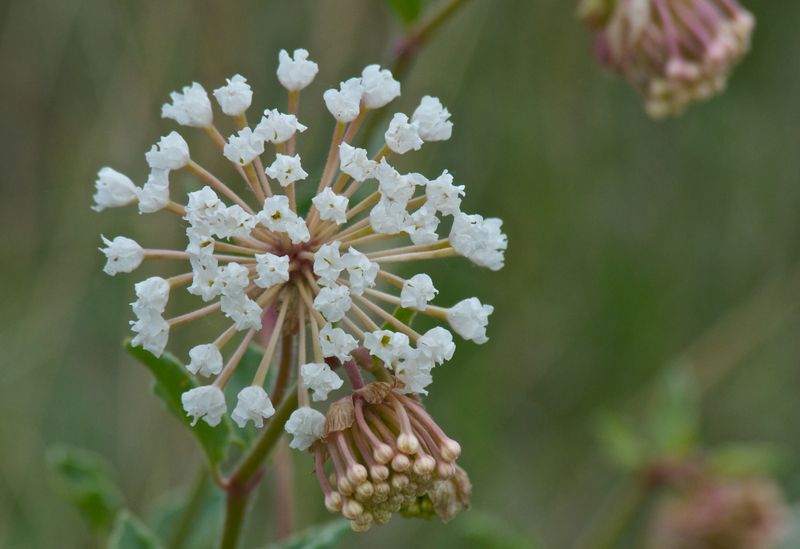
There is something almost dreamlike about stumbling across Sand Verbena in the middle of the West Texas desert.
After a heavy rainstorm sweeps through, these delicate clusters of white or pale pink flowers appear in sandy washes and open desert flats as if someone scattered them there on purpose. Up close, the sweet fragrance is surprisingly strong for such a small plant.
Abronia fragrans, the scientific name for Sand Verbena, is perfectly built for life in sandy desert soils. Its roots reach deep to find water, and its low-growing stems hug the ground to stay out of the drying wind.
The flowers bloom in rounded clusters that look almost like tiny bouquets sitting right on the sand.
Pollinators absolutely love this plant. Moths and hawkmoths are especially drawn to the fragrance, which gets stronger in the evening hours.
This makes Sand Verbena an important nighttime food source for insects in the Chihuahuan Desert ecosystem of West Texas. Without plants like this one, many desert pollinators would struggle to find enough energy to survive.
One fun fact worth knowing is that the seeds of Sand Verbena are wrapped in a papery, winged covering that helps them travel on the wind after they dry out. This clever design means the plant can spread across large areas of sandy terrain over time.
After a wet season in West Texas, you might find entire stretches of sandy ground blanketed in these softly fragrant blooms, making the desert feel surprisingly gentle and welcoming.
3. Desert Bluebells (Phacelia Campanularia)
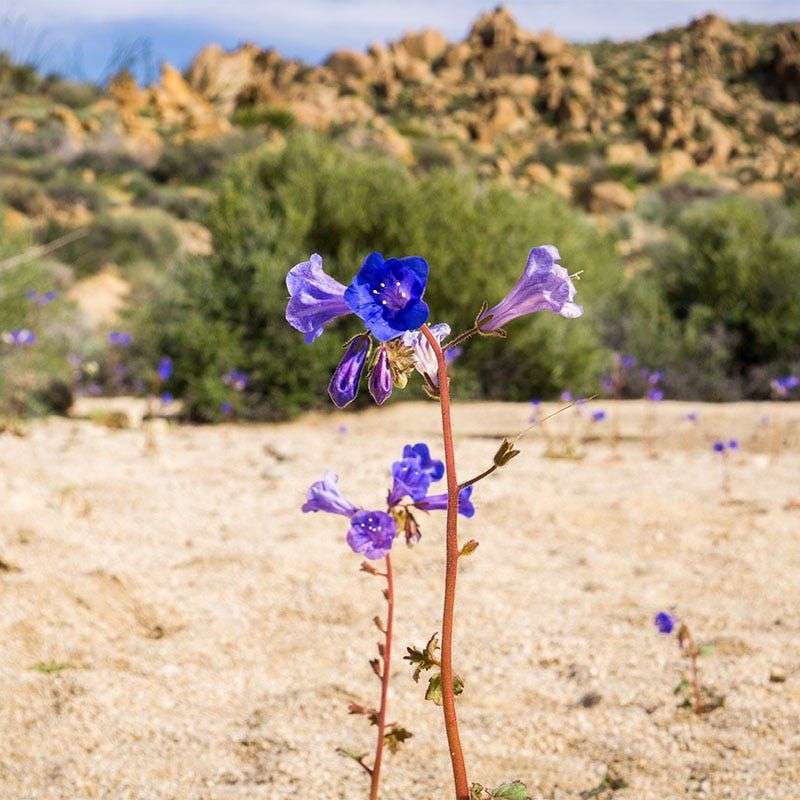
Imagine hiking through a dry, dusty stretch of West Texas and then rounding a bend to find a patch of the deepest, most electric blue flowers you have ever seen. That is exactly the experience Desert Bluebells deliver.
Phacelia campanularia is famous for its jaw-dropping color, a rich cobalt blue that looks almost too vivid to be real in the middle of a desert landscape.
What makes this flower especially fascinating is how fast it responds to rain. The seeds can sit dormant in the soil for years, just waiting for the right conditions.
When a heavy rainstorm finally rolls through the Chihuahuan Desert region of West Texas, those seeds can germinate within days. The plant grows quickly, flowers, and sets new seed all within a short window of time before the soil dries out again.
The bell-shaped blooms are a favorite stop for bees and other native pollinators. Each flower has a small white center surrounded by those brilliant blue petals, and the whole plant tends to grow in low, spreading clusters close to the ground.
You will often find them tucked into rocky crevices or along gravelly desert washes where rainwater collects.
One thing hikers should know is that the leaves of Desert Bluebells can cause a mild skin rash in some people, similar to a reaction from stinging nettles. So admire them from a short distance if you have sensitive skin.
Still, they are absolutely worth seeking out after any significant rainfall event in West Texas. The bloom is short-lived but genuinely spectacular.
4. Chihuahuan Desert Lupine (Lupinus Havardii)
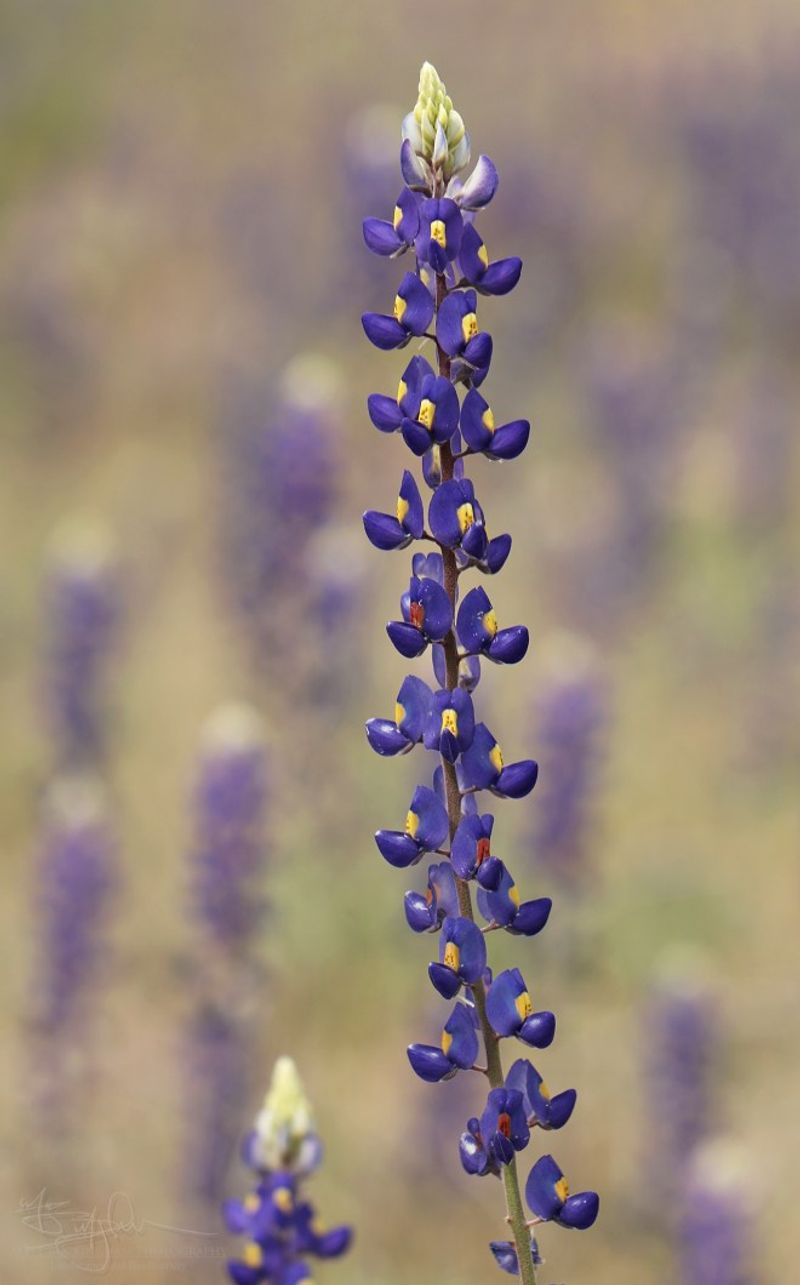
Standing tall above most other desert wildflowers, the Chihuahuan Desert Lupine is hard to miss. Lupinus havardii produces dramatic spikes of purple-blue flowers that can reach several feet high, making it look almost regal compared to its low-growing desert neighbors.
It is native to the Chihuahuan Desert and is found almost nowhere else on Earth outside of West Texas and parts of northern Mexico.
What triggers this lupine to bloom is a very specific combination of conditions. It needs winter or early spring rains to fall in the right amounts, followed by warming temperatures.
When those conditions line up in West Texas, the results can be breathtaking. Fields of lupine stretch across open desert flats, turning the landscape into a sea of purple and blue that photographers travel hundreds of miles to photograph.
The Big Bend region of West Texas is one of the best places to catch a Chihuahuan Desert Lupine bloom. Rangers at Big Bend National Park often track rainfall data through the winter months to predict whether a good bloom year is coming.
When conditions look promising, word spreads fast among wildflower enthusiasts across the state.
Like all lupines, this plant is a legume, which means its roots work with bacteria in the soil to pull nitrogen out of the air and store it underground. This process actually improves soil quality over time, making it easier for other plants to grow nearby.
So the Chihuahuan Desert Lupine is not just beautiful. It is also quietly helping the entire West Texas desert ecosystem stay healthy and productive.
5. Desert Sunflower (Geraea Canescens)
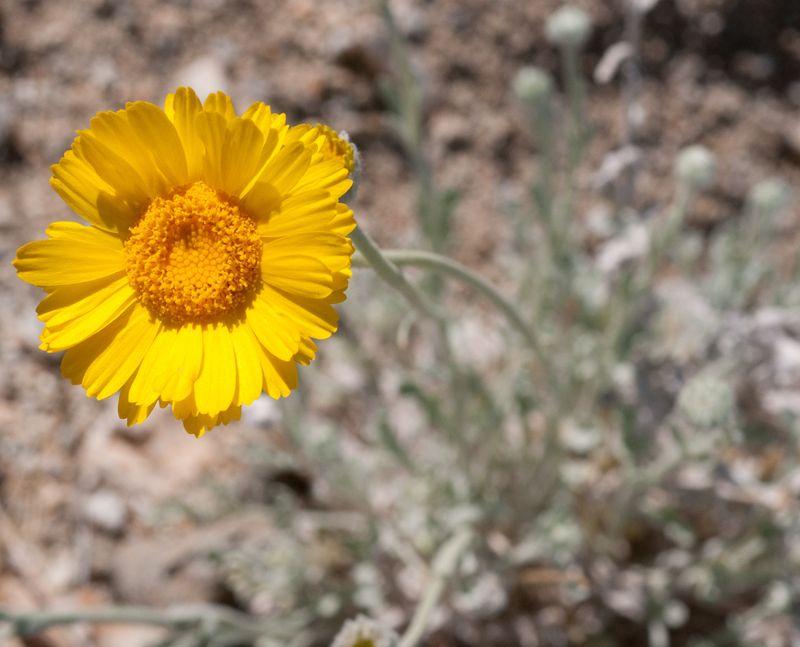
When West Texas gets a truly generous soaking from a heavy rainstorm, the Desert Sunflower steps up and steals the show. Geraea canescens produces brilliant golden blooms that look like miniature sunflowers, and in a good wet year, they do not just appear here and there.
They cover entire desert hillsides and open flats in waves of yellow gold that stretch as far as you can see.
This is one of those flowers that has become legendary among desert wildflower fans. People who have witnessed a full Desert Sunflower bloom in West Texas often say it is one of the most stunning natural sights they have ever experienced.
The flowers attract huge numbers of bees, butterflies, and other pollinators, turning quiet desert areas into buzzing, fluttering hotspots of activity.
Geraea canescens is well-adapted to life in the Chihuahuan Desert. Its stems and leaves are covered in fine hairs that help reduce water loss in the intense West Texas heat.
The plant grows quickly after rain, taking full advantage of the brief window of moisture before the desert dries out again. Seeds can remain viable in the soil for many years, just waiting for the right conditions.
If you are planning a trip to West Texas specifically to see Desert Sunflowers, late summer and early fall are often your best bet, since that is when monsoon rains are most likely to trigger a bloom.
Check local wildflower reports before heading out, because the difference between a spectacular bloom year and a quiet one often comes down to just a few inches of rain falling at the right time.
6. Rain Lily (Zephyranthes Chlorosolen)
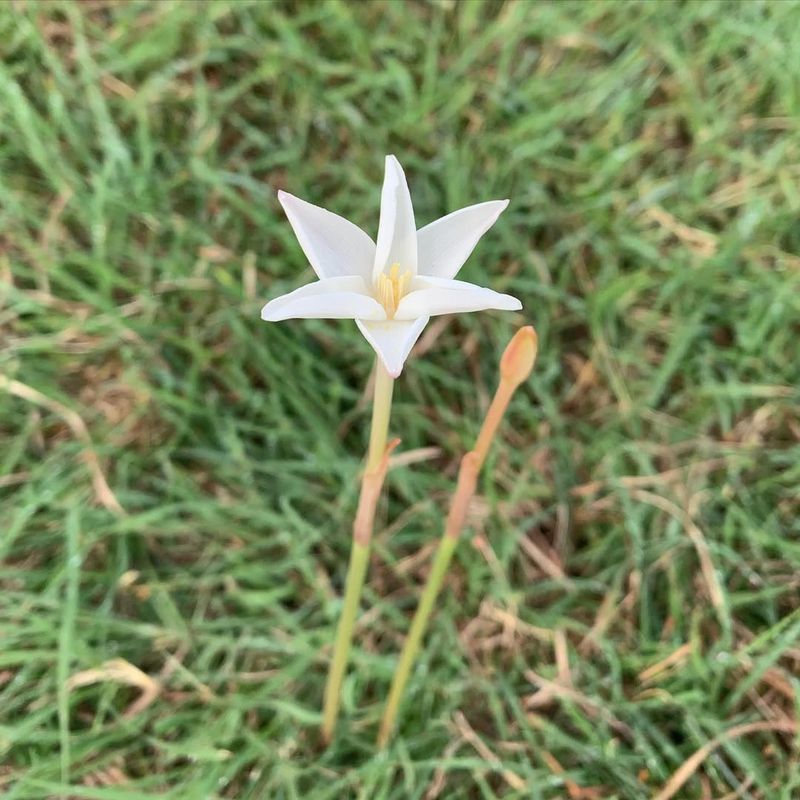
Few plants in West Texas have a more fitting name than the Rain Lily. Zephyranthes chlorosolen earns its nickname, sometimes also called the rainflower, by doing something almost magical.
Within just a day or two after a heavy thunderstorm rolls across the West Texas landscape, these slender white flowers push up through the soil and open their delicate, star-shaped blooms as if they appeared out of thin air.
The speed of the Rain Lily response is genuinely remarkable. The bulbs sit underground through long dry spells, completely invisible and seemingly inactive.
Then the moment enough rainwater soaks into the ground, a chemical signal triggers the bulbs to sprout. Flowers can appear before the leaves even fully emerge, which gives the whole display an almost otherworldly quality.
Rain Lilies grow in grasslands, roadsides, and open desert areas across West Texas and the broader Chihuahuan Desert region. The white blooms have six petals arranged in a perfect star shape, with bright yellow stamens at the center.
They are small flowers, only a few inches tall, but they tend to appear in large groups that create a soft, glowing carpet of white across the ground.
Hummingbirds and bees visit Rain Lilies regularly, making them an important part of the post-storm pollinator rush in West Texas.
After a thunderstorm passes and the air cools down, the sight of Rain Lilies opening across a meadow while birds and insects move between them is one of the most peaceful and beautiful scenes the West Texas desert has to offer. It feels like a reward for waiting out the storm.
7. Devil’s Claw (Proboscidea Louisianica)
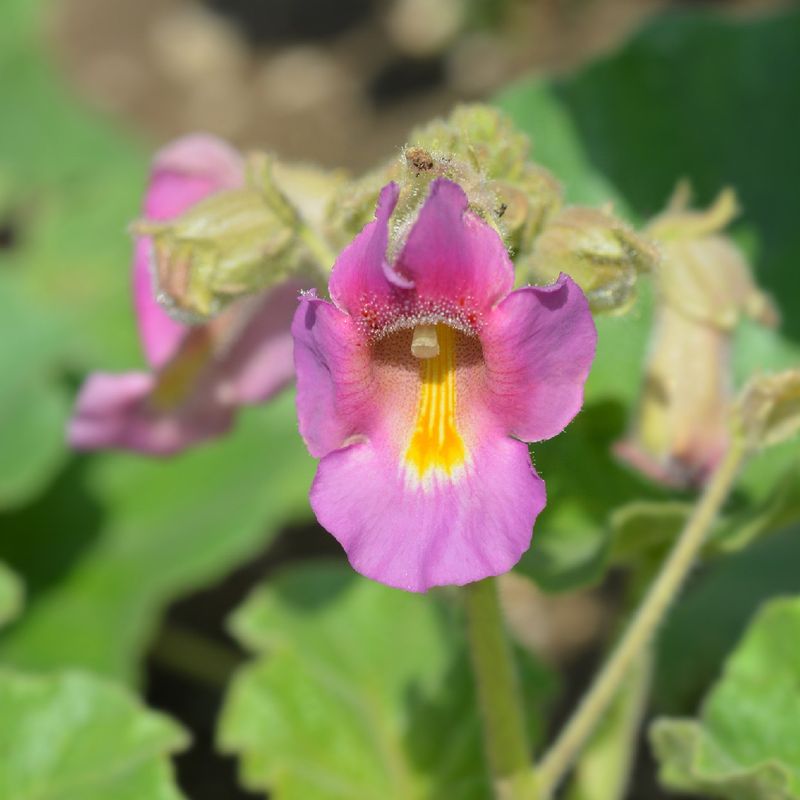
With a name like Devil’s Claw, you might expect something a little intimidating, and honestly, the seedpods of this plant do live up to the dramatic title. But the flowers?
They are absolutely stunning. Proboscidea louisianica produces large, showy blooms in shades of purple, pink, and cream, with intricate spotted patterns inside the petals that make each flower look like a tiny work of art.
After a good rain soaks the desert floor in West Texas, Devil’s Claw seeds germinate quickly and the plants grow with surprising speed. The flowers are trumpet-shaped and can be several inches across, which makes them stand out boldly against the pale desert soil.
Bumblebees are especially attracted to these blooms and are one of the primary pollinators for this species across the Chihuahuan Desert region.
The seedpod is where the plant gets its wild nickname. As the pod dries out after the flower fades, it splits into two long, curved claws that can hook onto the legs of passing animals or the boots of hikers.
This is actually a clever seed-dispersal strategy. The claws carry the seeds far from the parent plant, helping the species spread across new areas of West Texas desert terrain.
Native communities in the Southwest have used Devil’s Claw for centuries. The tough, fibrous pods were traditionally woven into baskets, creating striking black designs against lighter-colored fibers.
Some groups also ate the young seedpods as a vegetable. So this remarkable plant is not just a post-rain spectacle.
It has a deep and meaningful history woven into the culture of the desert Southwest and West Texas alike.