7 Desert Trees And Palms You Can Plant In May In Arizona
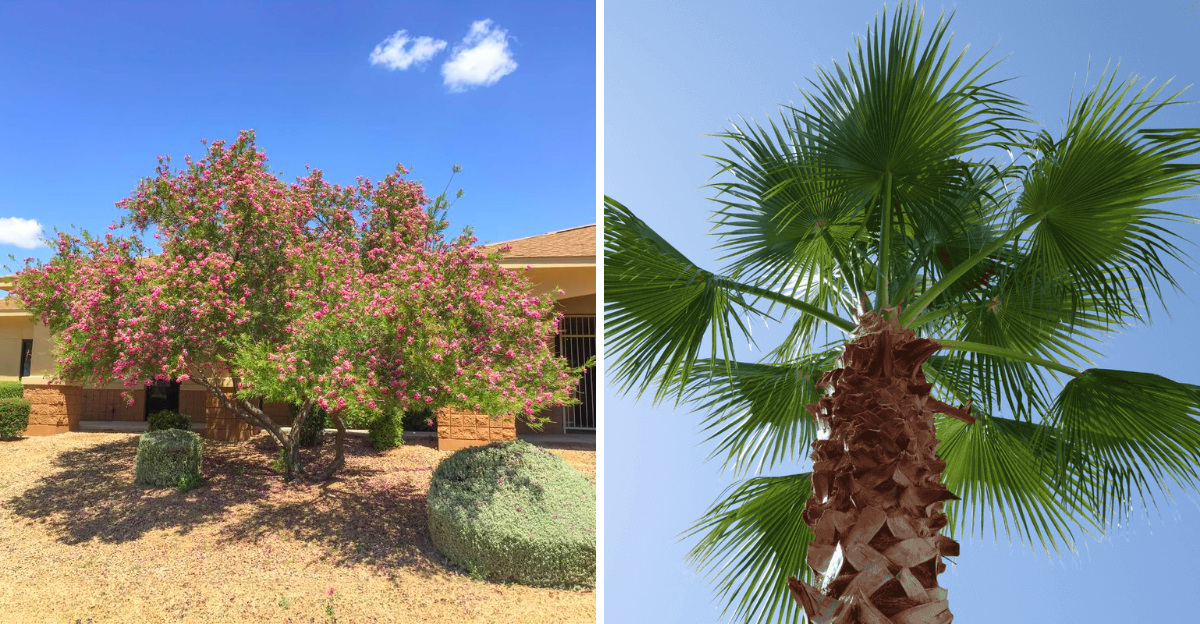
May in Arizona feels like the starting line for serious planting, especially if trees and palms are on your wish list. The soil has warmed up, roots are ready to get moving, and there is still a short window before summer turns up the heat.
It is a bit like giving your plants a head start before the real challenge begins. Walk through any Arizona neighborhood and you will see how much trees and palms shape a space.
A well-placed tree can cool a patio, soften a bright yard, and make everything feel more inviting. Palms add height and a bold desert vibe that stands out against all that open sky.
This is the time to think ahead. A little planning now can turn into years of shade, structure, and visual interest right where you want it.
1. Desert Willow Adds Color Through The Heat
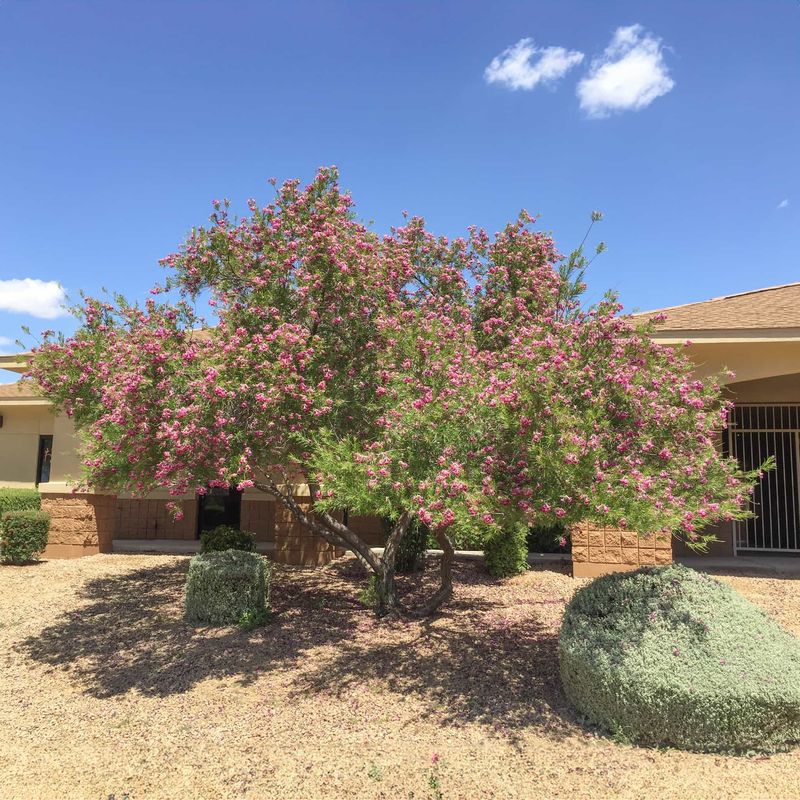
Few trees put on a summer show quite like the desert willow. Known for its long, tube-shaped blooms in shades of pink, lavender, and deep magenta, this tree starts flowering right around the time May planting season kicks off in Arizona.
The blossoms attract hummingbirds and butterflies, making it as lively as it is beautiful.
Desert willow is a native to the Chihuahuan and Sonoran deserts, which means it already knows how to handle Arizona heat. Once established, it needs very little supplemental water, fitting well into low-water landscape designs.
It tends to grow between 15 and 25 feet tall, offering light, filtered shade without overwhelming a small yard.
Planting in May gives roots time to settle into warm soil before peak summer temperatures arrive. Choose a spot with full sun and good drainage, as this tree does not do well in soggy ground.
In a gravel yard or open desert planting, it can anchor a corner or act as a focal point near a patio.
Through winter, desert willow drops its narrow leaves and goes dormant, but by late spring it leafs out and blooms again. The cycle is reliable and rewarding.
For Arizona homeowners looking for a native tree that delivers color, wildlife activity, and low maintenance through the hottest months, desert willow is a strong candidate worth serious consideration.
2. Blue Palo Verde Brightens Yards With Spring Blooms
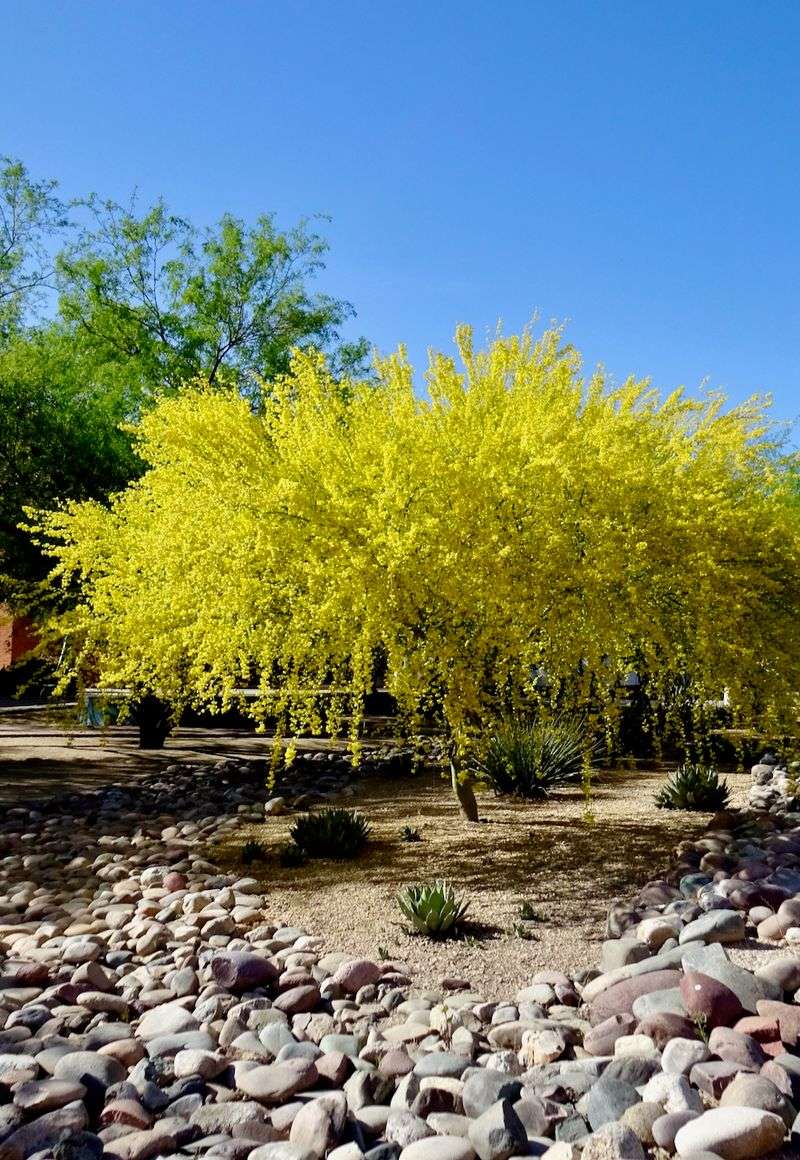
Walking past a blue palo verde in full bloom is hard to forget. Every spring, this tree erupts in a cloud of small, golden-yellow flowers that cover its blue-green branches almost entirely.
By May, the bloom may be winding down, but the tree is entering a phase of active growth, which makes it a great time to get one in the ground across Arizona.
The blue-green color of its bark is one of the most recognizable traits of this tree. That green bark actually performs photosynthesis, which means the tree can keep producing energy even after it drops its tiny leaves during dry spells.
This adaptation makes it remarkably well-suited to Arizona summers.
Blue palo verde grows at a moderate pace and can reach 25 to 30 feet tall with a wide, spreading canopy. That canopy provides dappled shade, which feels refreshing in a desert yard without blocking too much light from surrounding plants.
Your Arizona Garden Changes Every Week. Your Plan Should Too.
Gardening in Arizona changes quickly throughout the season. Every Friday you’ll receive a simple weekly plan showing exactly what to plant, prune, fertilize, harvest, and protect so you never miss the right timing.
It works well as a shade tree near a seating area or as a street-facing specimen in a front yard design.
When planting in May, water deeply and consistently for the first season to help roots spread. After the first year, irrigation needs drop significantly.
This tree is a signature part of the Sonoran Desert and brings authentic Arizona character to any landscape while supporting native bees and other pollinators throughout the season.
3. Foothills Palo Verde Fits Natural Desert Landscapes
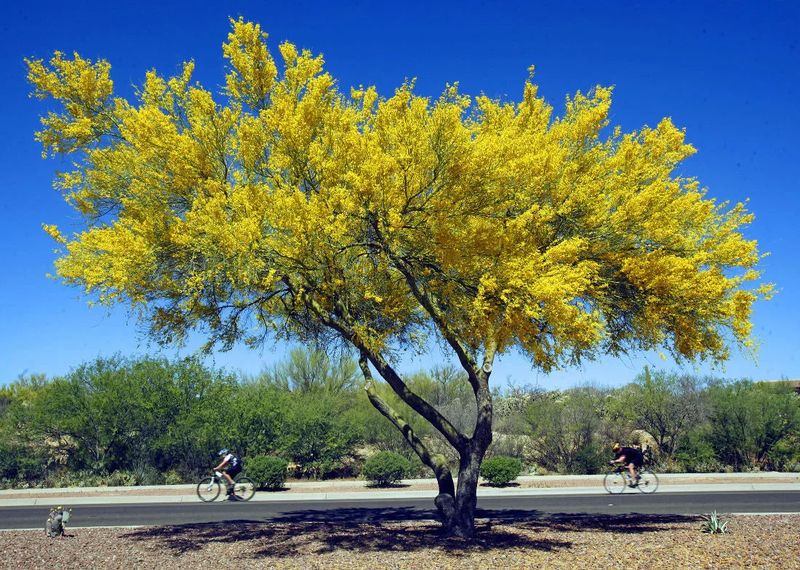
There is something quietly elegant about the foothills palo verde. Smaller and more fine-textured than its blue palo verde cousin, this tree has a naturally sculptural form that looks like it belongs in a rocky Arizona hillside or a carefully designed xeriscape.
Its yellow springtime flowers are slightly paler, but no less charming.
Foothills palo verde is one of the slower-growing native trees in Arizona, which can actually be an advantage in a tightly planned yard.
It tends to top out around 15 to 20 feet, making it a better fit for smaller residential spaces where a full-sized shade tree might feel too large.
The canopy stays open and airy, casting soft, dappled shade.
May is a reasonable time to plant this tree in Arizona because the soil has warmed up and roots can establish before the hottest weeks hit. Choose a well-drained location with full sun exposure.
Rocky or sandy soil is not a problem for this species, and it actually prefers leaner conditions over rich, heavily amended soil.
One thing to appreciate about foothills palo verde is how naturally it fits into desert-style landscapes. It does not demand much attention once it is settled in, and it rarely needs shaping or heavy pruning.
Over time, it develops a graceful, multi-branched structure that adds genuine visual texture to any Arizona yard without requiring much in return.
4. Ironwood Supports Wildlife And Desert Shade
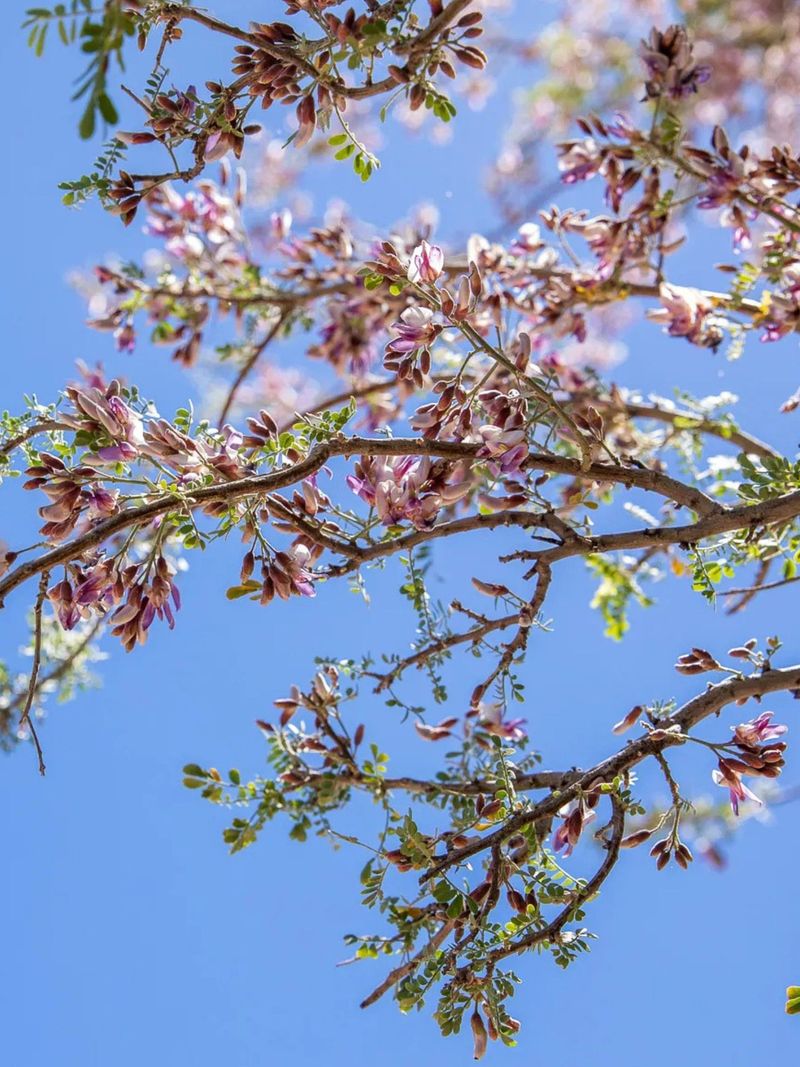
Spend enough time in the Sonoran Desert and you will notice how much life gathers beneath an ironwood tree. Birds nest in its thorny branches, small mammals shelter under its canopy, and its lavender-purple flowers feed native bees each spring.
The desert ironwood is one of the most ecologically important trees in Arizona, and it earns a place in residential landscapes for that same reason.
Ironwood is a slow grower, but the patience pays off. Mature trees can reach 25 feet or more and develop a broad, dense canopy that offers real shade, the kind that actually makes a difference during an Arizona summer afternoon.
The tree is also nearly evergreen, holding onto its small gray-green leaves through most of the year except during cold snaps.
Planting ironwood in May takes advantage of warm soil temperatures that encourage early root development. Water regularly during the first growing season, but avoid overwatering, as ironwood does not tolerate soggy roots.
Full sun and excellent drainage are the two most important factors for long-term success.
In an Arizona yard, ironwood works well as a background tree or canopy anchor in a larger desert planting. It pairs naturally with saguaro, palo verde, and native shrubs.
While it grows slowly, its longevity is impressive, with some wild specimens estimated to be several hundred years old, making it one of the most enduring choices you can make for an Arizona landscape.
5. Mexican Blue Palm Brings Bold Desert Style
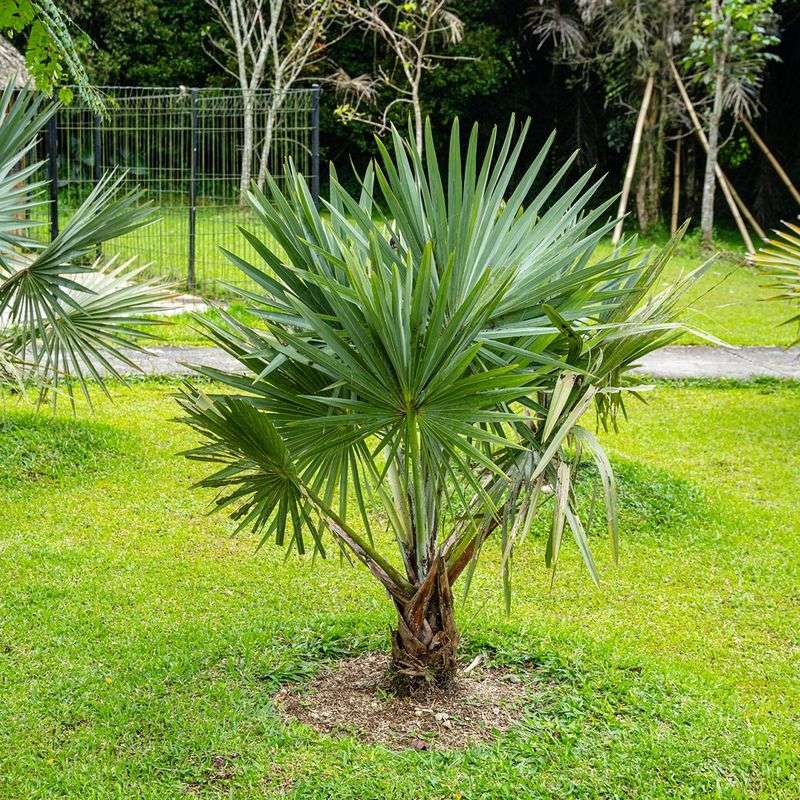
The silver-blue color of the Mexican blue palm is genuinely striking. Its stiff, fan-shaped fronds have a waxy, blue-gray coating that sets it apart from nearly every other palm in Arizona.
In a yard full of green, this palm acts like a cool focal point, drawing the eye and giving the landscape a polished, desert-modern feel.
Native to Baja California, this palm is well-adapted to dry, hot conditions and performs reliably across Arizona.
It grows at a moderate pace and can eventually reach 30 to 40 feet, though it stays fairly compact for many years, making it useful in both smaller and larger yards.
The trunk develops a clean, upright form over time.
May is a suitable month for planting in Arizona because palm roots respond well to warm soil. Water deeply after planting and keep the root zone consistently moist through the first summer without letting the soil become waterlogged.
Once established, the Mexican blue palm is quite drought-tolerant and low-maintenance.
Placement matters with this palm. It looks best with room to be seen, whether standing alone as a specimen near a driveway or grouped with other desert palms for a layered effect.
The fronds hold their color year-round, giving Arizona yards a consistent visual anchor through every season. For homeowners who want something bold, architectural, and genuinely suited to the desert climate, this palm delivers on all fronts.
6. Mediterranean Fan Palm Works Well In Smaller Spaces
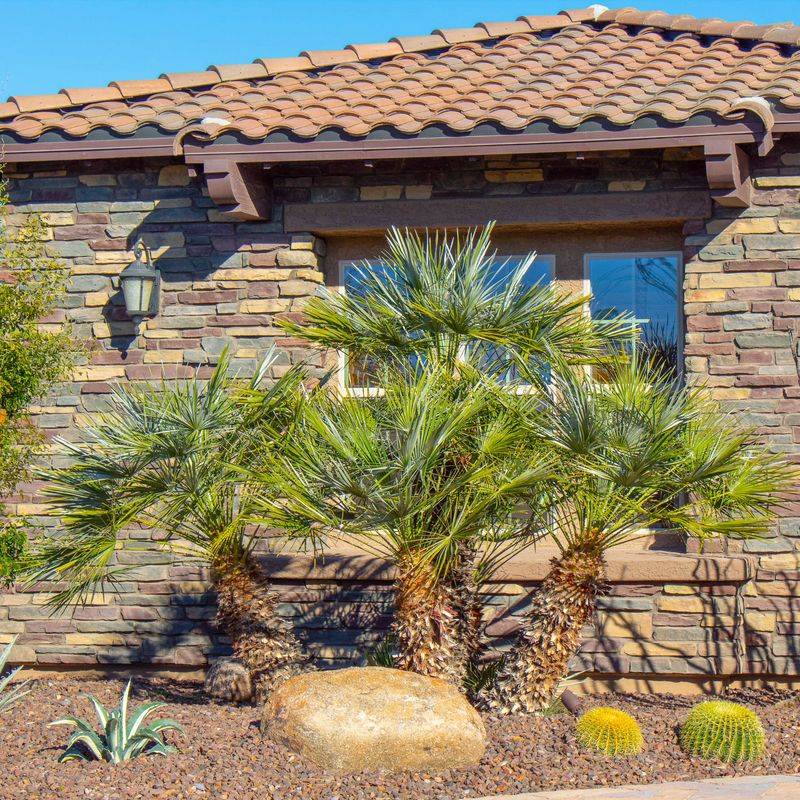
Not every Arizona yard has room for a towering tree, and that is exactly where the Mediterranean fan palm earns its reputation.
This slow-growing, multi-stemmed palm stays relatively compact for years, making it one of the most manageable palm options for tighter spaces like side yards, entryways, or small patio corners.
The Mediterranean fan palm typically reaches 10 to 15 feet tall, though it can grow taller over time.
Its fan-shaped fronds are a deep green with a slightly gray-green tint, and the multiple trunks give it a full, clustered appearance that adds texture without taking over a space.
It has a tidy, contained look that suits both modern and traditional Arizona home styles.
May planting works well for this palm because the warm soil encourages root activity right away. Water it regularly through the first season and make sure it is placed in full sun with well-draining soil.
It handles Arizona heat with ease and is also one of the more cold-tolerant fan palms, which can be helpful during occasional winter cold snaps in higher-elevation Arizona areas.
One practical advantage of this palm is its relatively low litter. The fronds do not drop as frequently as some larger palms, which means less cleanup in a tidy yard.
For Arizona homeowners who want the look and feel of a palm without committing to something massive, the Mediterranean fan palm offers a balanced and rewarding option worth considering.
7. California Fan Palm Adds Height To Open Yards
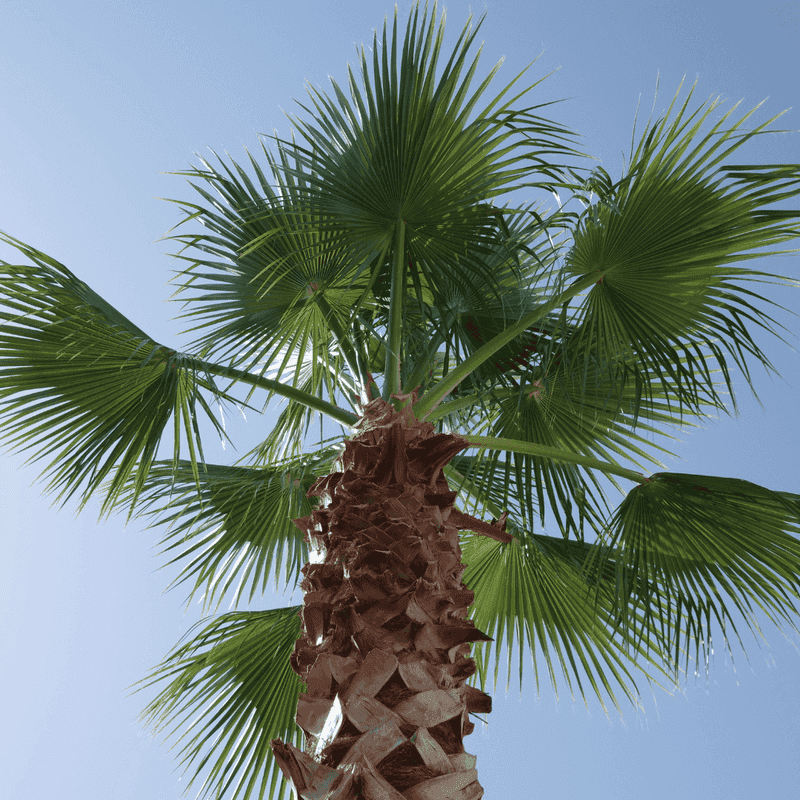
There is a reason California fan palms line so many streets and open spaces across Arizona, they are bold, tall, and unmistakably southwestern.
With their thick, rugged trunks and large green fan-shaped fronds, these palms bring vertical drama to open yards where there is room to let them grow and be appreciated from a distance.
California fan palm is the only palm native to the continental United States, and it naturally occurs in desert oases across the Sonoran region. In Arizona, it thrives in full sun and tolerates the kind of intense summer heat that would stress many other landscape plants.
Mature trees can reach 40 to 60 feet, so placement in a large open yard or along a property edge tends to work best.
Planting in May takes advantage of warm soil and gives the root system several months to develop before the following winter. Water deeply and frequently during the first growing season, tapering off as the palm establishes.
Once settled in, it becomes much more self-sufficient, though some supplemental irrigation during extended dry spells is still beneficial in Arizona.
Over time, old fronds form a thatch skirt around the trunk that some homeowners find charming and others prefer to trim away. Either approach works fine.
What makes this palm special is its scale and presence, standing tall in an Arizona yard, it creates a landmark that gives the whole landscape a sense of place and enduring character.